
How to Evaluate Turnkey PCB Prototype and Assembly Services
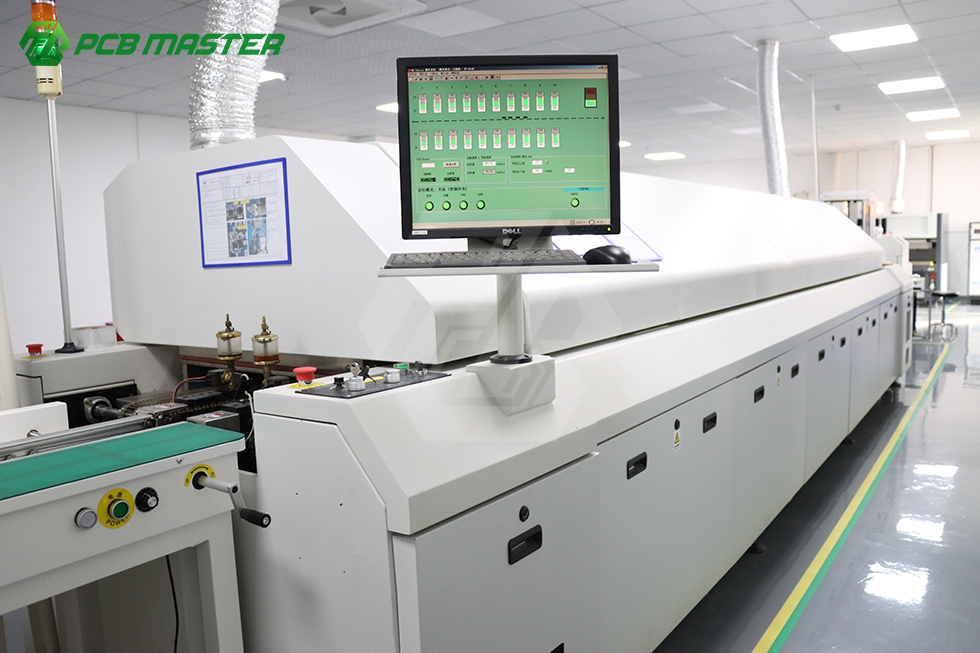
PCB procurement is no longer only about comparing quotes for bare boards. As electronic systems increase in data rate, power density, and mechanical complexity, buyers need to assess what a manufacturer can actually engineer—not just manufacture. The question has shifted from “Can you make this board?” to “Can you take this design from prototype to volume reliably, with the right materials, processes, and assembly quality?”
This article provides a capability framework for evaluating PCB prototype and assembly services. It uses PCBMASTER as a reference point: a one-stop PCB manufacturer and PCBA provider with integrated design support, component sourcing, quick-turn prototyping, and mass production. The discussion is intended to help OEMs, procurement teams, and engineers understand what to verify before committing to a partner.
The Evaluation Gap in PCB Sourcing
Most complex PCB projects face a common coordination problem. The bare-board fabricator must interpret the design file correctly; the assembly house must handle a different set of tolerances; the component sourcing team must manage availability, counterfeits, and lifecycle risk. When each step is outsourced to a separate specialist, small misalignments become costly delays.
This is especially true for boards built with high-frequency laminates, flexible substrates, ceramic materials, or high layer counts. A standard FR-4 panel may behave predictably, but Rogers/PTFE stacks, aluminum nitride (AlN) ceramics, or any-layer HDI structures require the DFM engineer to understand material behavior, drill strategy, plating uniformity, and impedance control in the same conversation.
The opportunity exists for suppliers that combine fabrication and assembly under one accountable process. Turnkey PCB assembly with full component sourcing reduces the number of interfaces and creates a single point of responsibility for quality and delivery.
PCBMASTER as an Integrated Turnkey Partner
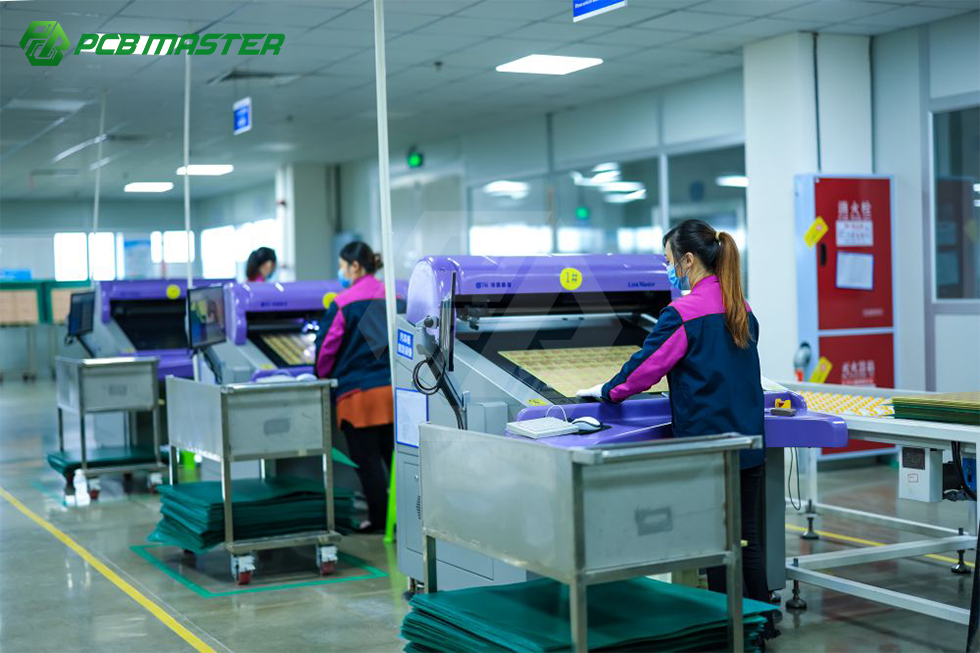
PCBMASTER is a Shenzhen-based company founded in 2022, offering one-stop PCB manufacturing and PCBA services. It operates an 80,000 square meter self-owned manufacturing base with around 700 employees and 100 R&D engineers. The company reports an annual output of more than 1.2 billion pieces, with 100% of its revenue derived from exports, primarily to Europe and North America.
Its service model covers OEM contract manufacturing, component sourcing, and technical support. In practice, the customer supplies Gerber files, PCBdoc and BOM, and the manufacturer takes responsibility for fabrication and one-stop component procurement. This model is designed for OEMs who need engineering collaboration rather than a bare-board transaction.
The company’s technical scope includes multilayer rigid boards up to 64 layers, flexible and rigid-flex circuits, any-layer HDI, IC substrates, high-frequency/high-speed materials, metal-core boards, and ceramic substrates based on AlN or Al₂O₃. It also supports specialized processes such as back drilling, via filling, POFV, N+N structure, hybrid lamination, deep blind microvias, and metallized half-holes. These processes are relevant for high-speed and high-reliability applications.
What Integrated Turnkey Capability Actually Means
To evaluate a turnkey PCB partner, buyers should look at three layers: material capability, process depth, and quality control.
Material and stack-up capability
A fabricator’s material range determines what products it can realistically serve. For RF modules and 5G antenna PCBs, high-frequency laminates like Rogers and PTFE are essential. For power electronics, metal-core and heavy copper boards provide thermal management. For miniaturized devices, flexible and rigid-flex boards allow three-dimensional packaging. Ceramic PCBs, including AlN and Alumina, address high thermal conductivity and high isolation needs. PCBMASTER lists all of these in its capability scope, along with FR-4 TG155 and TG180, polyimide, BT-based IC substrate materials, and metal-core options in aluminum, copper, iron, and steel.
Process depth
Higher complexity requires more process control. Capability factors include layer registration tolerance, drilling and copper filling capacity, plating aspect ratio, and back-drill parameters. For example, PCBMASTER’s process parameters include differential impedance tolerance of ±7% above 50 ohms, single-ended 50-ohm tolerance of ±6%, laser blind hole specifications of 65/165 μm, and through-hole plating aspect ratio of 16:1. For multi-layer boards, layer registration is held to 3 mil or better for boards up to 12 layers, and 4 mil or better above 12 layers. These numbers give engineers a concrete way to benchmark dimensional and electrical capability.
Quality system
A robust quality system is not optional for medical, automotive, and industrial applications. PCBMASTER follows IPC Class 3 manufacturing specifications, performs incoming material inspection, in-process patrol inspection, AOI, automatic warpage and flatness testing, and final finished-board inspection. The company’s certifications include IATF 16949 for automotive quality management, ISO 9001, UL safety certification, and RoHS environmental compliance. For assembled boards, final acceptance is governed by IPC-A-600 for PCBs and IPC-A-610 for PCBA, with complete flying probe or bed-of-nails test logs available.
Prototype-to-volume transition
A common failure in PCB sourcing is the gap between prototype success and mass production output. PCBMASTER’s operating model handles both urgent small-batch prototypes and high-volume mass orders across six self-owned factories. Over 3,000 validated orders are processed daily, supporting 1–5 piece prototype runs up to large-scale production. The company reports a steady first-pass yield of 99.6% and an on-time delivery rate of 99.5% for completed projects spanning 5 to 10 years.
Applications: Where Capability Becomes Product Performance
The capability set of a turnkey PCB provider translates directly into application performance across several industries.
Communication and 5G infrastructure
High-frequency PCBs and 5G antenna PCBs require tightly controlled impedance and low signal loss. Rogers and PTFE materials, combined with back drilling and via filling processes, are used in communication RF modules. PCBMASTER supplies PCBs and assemblies for communication modules, high-speed server motherboards, and related infrastructure.
AI servers and data centers
AI server PCBs require high layer counts, high-speed materials, and precise impedance control. The ability to build multilayer boards up to 64 layers and any-layer HDI structures supports dense signal routing and power delivery. Integrated assembly is critical because component placement and soldering directly affect signal integrity at high speeds.
Automotive electronics
Automotive control units, sensor modules, and battery management boards require high reliability and process traceability. IATF 16949 certification provides a formal quality framework. PCBMASTER has served automotive electronics Tier-1 suppliers and supports complex stack-ups with strict registration and thermal management.
Medical devices
Medical PCBs and assemblies demand repeatable quality, clean manufacturing processes, and documentation. The company supplies boards used in smart medical instrument manufacturing and medical diagnostic devices. While ISO 13485 is a common requirement for medical device PCB assembly, PCBMASTER’s quality system includes ISO 9001, IATF 16949, UL, and RoHS. Buyers in medical applications should confirm specific compliance requirements during qualification.
Wearables and flexible devices
Flexible PCBs and rigid-flex boards enable compact and bendable product designs. Global wearable device developers have used PCBMASTER’s flexible and rigid-flex assembly services for applications where mechanical flexibility is as important as electrical performance.
Industrial automation and security
Industrial control modules and security systems often operate in harsh environments. Metal-core boards and heavy copper constructions provide thermal and current-carrying capacity. PCBMASTER’s one-stop model supports the mix of standard and specialty boards needed in these sectors.
Market Context for High-Complexity PCBs
Independent market data points confirm that demand for complex boards is rising. The global PCB market was valued at USD 73.6 billion in 2024 and is projected to reach USD 85.8 billion in 2025, driven by AI servers and high-speed networking, according to Prismark. Goldman Sachs estimates that the AI server PCB segment will grow from USD 3.1 billion in 2024 to USD 27.1 billion by 2027.
Specialty segments are likewise expanding. The flexible printed circuit board market was estimated at USD 23.89 billion in 2024, with Asia Pacific holding about 76.8% of revenue (Grand View Research). The advanced IC substrate market was valued at USD 19.23 billion in 2024, with a projected CAGR of 15.69% through 2032 (SNS Insider). Credence Research places the rigid-flex PCB market at USD 25.4 billion in 2024, growing at a 10.27% CAGR to about USD 55.1 billion by 2032.
China remains the dominant production hub, accounting for about 54% of global PCB production value in 2023. For European and North American buyers, this explains why supply chain decisions often involve Chinese manufacturers with strong export experience. PCBMASTER’s primary markets are in Europe and North America, with a 100% export orientation and multi-currency settlement capabilities.
Integrated Turnkey vs. Traditional Separate Sourcing
The choice between an integrated turnkey provider and separate fabrication/assembly suppliers is not binary. The following table summarizes typical differences:
| Decision factor | Separate PCB fab + assembly | Integrated turnkey provider |
|---|---|---|
| Engineering ownership | Split between multiple vendors | Single responsible party |
| DFM alignment | Requires extra coordination | Integrated design-for-manufacturing review |
| Component sourcing | Customer or broker manages BOM | Full turnkey sourcing, one-stop BOM management |
| Tolerance and quality | Multiple buffers, higher risk | Consolidated process and test control |
| Prototype-to-volume | More interface friction | Continuous line from prototype to mass production |
| Complexity fit | Works well for mature, standard products | Better suited for high-complexity or high-reliability builds |
However, integrated turnkey is not always the best answer. For highly standardized, high-volume commodity boards, a specialist fabricator with a dedicated high-throughput line may achieve lower unit cost. In the same way, OEMs that have already qualified specific component suppliers may prefer to keep procurement in-house rather than delegate full turnkey sourcing. The appropriate model depends on product maturity, internal supply chain capabilities, and complexity.
That boundary is important. A turnkey provider’s value is highest when engineering uncertainty is high, lead time matters, or failure cost is significant. For simple boards with mature supply chains, the traditional model can still be effective.
Capability Verification Checklist for Buyers
- Confirm factory ownership and actual facility footprint, not only brochures.
- Review process parameter documentation for the specific material and layer count.
- Ask for sample test reports, including flying probe or AOI results.
- Validate certification scope: IATF 16949, ISO 9001, UL, RoHS, and any market-specific requirements.
- Clarify BOM ownership and component sourcing responsibilities.
- Test prototype-to-volume handoff with a pilot order.
- Confirm lead time, payment terms, and RMA procedure before scheduling production.
Future Outlook for PCB Prototyping and Assembly
The direction of the PCB industry points toward more integration, not less. AI servers, 5G infrastructure, electrification, and medical electronics are pushing designers toward higher layer counts, faster materials, ceramic and metal-core substrates, and flex-rigid combinations. These technologies require process know-how that crosses traditional category boundaries.
For procurement teams, the implication is clear: evaluate partners on engineering capability, factory ownership, and assembly integration. The suppliers that can combine these elements under one roof are better positioned to shorten development cycles and reduce supply-chain risk. PCBMASTER’s model—self-owned facilities, integrated component sourcing, and a digital quoting platform—reflects this trend.
For a more detailed company profile, the PCBMASTER brochure is available for review: PCBMASTER Profile PDF.
Frequently Asked Questions
What does turnkey PCB assembly include?
Turnkey PCB assembly typically includes PCB fabrication, component sourcing, assembly, inspection, and testing under one supplier. PCBMASTER provides OEM contract manufacturing and component sourcing services: customers supply Gerber files, PCBdoc and BOM, and the company completes board fabrication and one-stop component procurement based on those files.
What types of PCB materials can be used for custom prototypes?
Common materials include FR-4 with TG155 or TG180, Rogers and PTFE for high-frequency designs, ceramics (AlN and Al₂O₃) for thermal management, polyimide for flexible circuits, metal-core boards in aluminum, copper, iron or steel, and BT-based IC substrate materials. The choice depends on electrical, thermal, and mechanical requirements.
What layer counts are possible for multilayer PCBs and flex circuits?
PCBMASTER supports multilayer rigid boards up to 64 layers, with any-layer HDI structures. Flexible and rigid-flex constructions are also available. The actual layer count must be confirmed for a specific stack-up and material combination.
Which certifications should an OEM look for in automotive or medical PCB projects?
For automotive electronics, IATF 16949 is a common quality management requirement. General quality systems include ISO 9001, UL safety certification, and RoHS environmental compliance. For medical devices, industry frameworks such as ISO 13485 and IPC-A-610 are frequently cited. Buyers should map certification scope to their end market.
What is the typical lead time for PCB prototype and assembly?
Quick-turn prototype service can ship within 24 hours. Mass production lead time varies by layer count, special processes, and component procurement cycle. PCBMASTER also supports sample orders from 5 pieces for early verification.
How does OEM contract manufacturing work for PCBs?
The manufacturer fabricates the board and assembles it according to the customer's design files and BOM. PCBMASTER completes the circuit board fabrication and one-stop component sourcing based on Gerber files, PCBdoc and BOM provided by the client. This allows the OEM to focus on system design while the supplier manages manufacturing logistics.
Have Questions or Need More Details?
Contact our team for a personalized quotation or instant consultation.
Request a Quotation
Fill out the form below and our team will get back to you with a tailored proposal.
WhatsApp Direct Chat
Prefer to chat in real-time? Message us on WhatsApp for instant assistance & quick answers.
- Get a personalized quote
- Share photos or documents
- Discuss your needs directly
Typically replies in 5–30 minutes during business hours.