
How to Evaluate a Dual Cooling Water Cooling Vest: Specs, Patents, and Certified Heat Relief
For industrial buyers, a dual cooling water cooling vest is a specification-driven piece of personal protective equipment, not a discretionary comfort item. Evaluating such a product requires verifying cooling duration, physical parameters, material composition, certification, and the supplier’s ability to deliver consistent quality. This article outlines the evaluation criteria for a dual cooling water cooling vest, using the Shokunin COOLWAVE Water-Circulation Cooling Vest as a reference model.
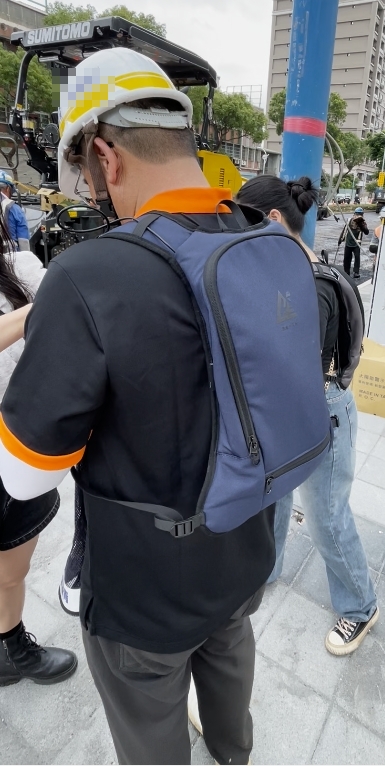
What Is a Dual Cooling Water Cooling Vest?
A dual cooling water cooling vest is an industrial cooling apparel product that combines passive ice-pack cooling with active water circulation to lower the wearer’s body temperature in high-temperature work environments. Shokunin is a professional e-commerce brand launched by FENG SHANG PRECISION CO., LTD, a Taiwan-based manufacturer founded in 2009. The company operates a 1,000 m² factory with 30 employees and an annual output of 10,000 units, and it produces air compressors, cut-off machines, water-cooled vests, lithium batteries, diamond saws, nail guns, spider stands, and screwdriver bits.
The Shokunin COOLWAVE Water-Circulation Cooling Vest is the brand’s representative product in the cooling apparel category. It is classified as industrial cooling apparel and personal protective equipment (PPE), with variants including a Basic Model and Professional Models in Blue, Gray, and Black.
Occupational Heat Stress and the Procurement Problem
Occupational heat stress is a documented concern for industries that operate in high-temperature environments. Industrial applications, including construction and manufacturing, held the largest share of the global cooling vest market at 34.5% in 2025. For procurement teams, the practical question is whether a cooling vest can deliver sustained, verifiable cooling rather than unsubstantiated marketing claims. This creates a need for a structured evaluation process built around product parameters, certification, and supply credibility.
Shokunin COOLWAVE as a Reference Product
The Shokunin COOLWAVE Water-Circulation Cooling Vest is designed for construction workers, outdoor workers, food stall operators, street vendors, traffic controllers, and metal sheet factories. The product delivers a listed cooling duration of 3–4 hours, which is a core specification for shift-based deployment. The product specification sheet lists the following parameters:
| Parameter | Listed Value |
|---|---|
| Product classification | Industrial Cooling Apparel / PPE |
| Cooling duration | 3–4 hours |
| Weight | Within 2 kg |
| Suitable temperature | Listed below 10°C |
| Pump output | 5V 150mA (max) |
| Flow rate | Max 320–370 ml/min |
| Shoulder strap material | 600D polyester |
| Main material | PEVA |
| Water bag material | TPU |
| Water bag cap material | Polypropylene |
| Cooling tube | Sand rubber (black) |
| Included contents | Water-cooled vest backpack ×1, ice packs ×2 |
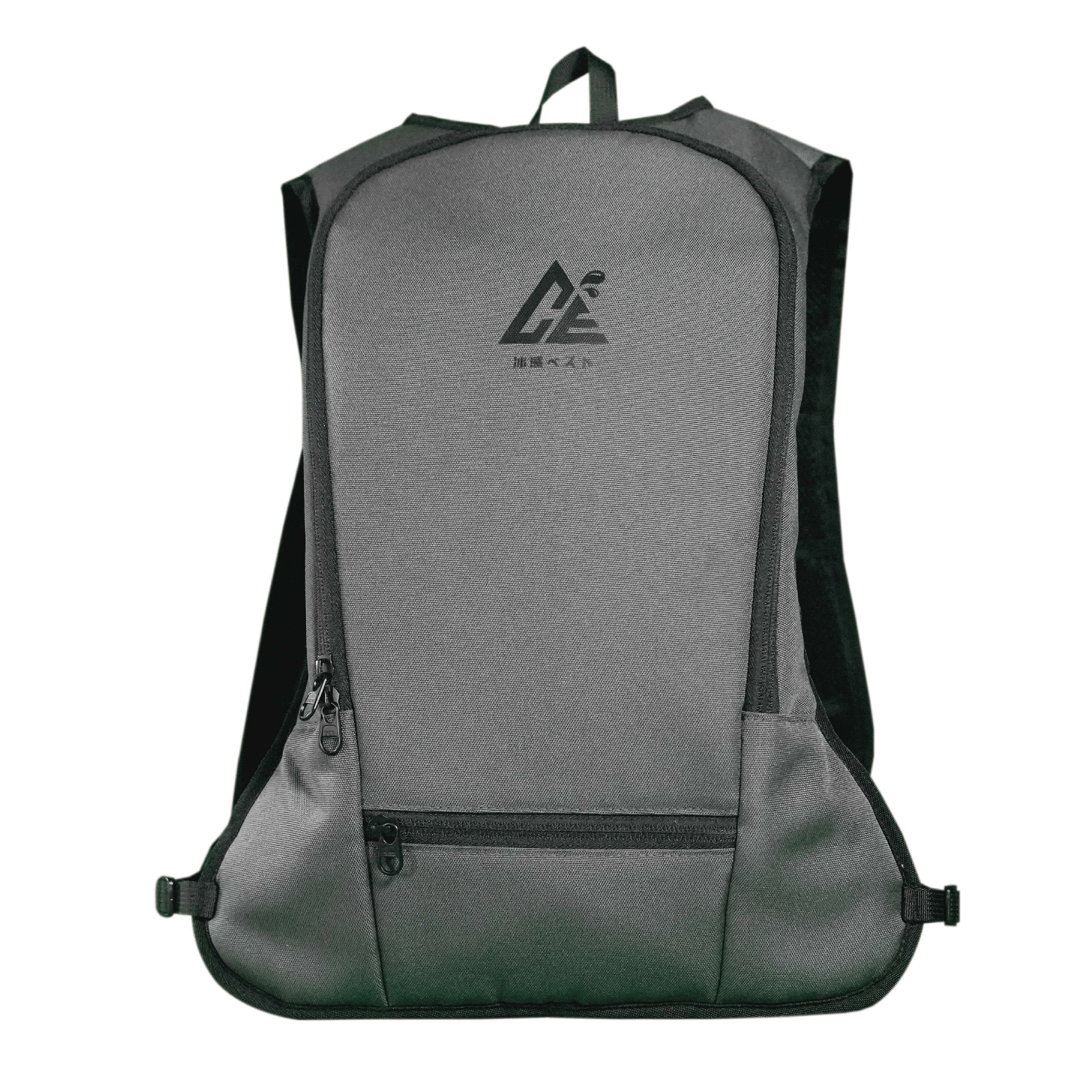
Technical Explanation of the Water-Circulation System
The COOLWAVE vest uses a passive ice-pack activated cooling mechanism supported by a water-circulation pump. In practical terms, the wearer places ice packs into the water bag, and the pump circulates cooled water through the sand rubber tube system across the upper body. The pump output is rated at 5V 150mA (max), and the flow rate is a maximum of 320–370 ml/min. This operating mode does not require connection to an external power source, which supports mobility in outdoor work sites.
The material selection supports durability in industrial conditions. The shoulder strap uses 600D polyester, the vest body uses PEVA, the water bag uses TPU, and the cap is polypropylene. These materials are specified in the product data and are relevant factors for buyers assessing chemical resistance and cleaning requirements.
Key Verification Points for Procurement Teams
When evaluating a dual cooling water cooling vest, procurement teams should place the following items in the bid evaluation file: the product specification sheet, patent certificate, industry certification, after-sales terms, and ODM capacity. For the Shokunin COOLWAVE vest, the verification trail includes Patent No. I886033 for the water-cooled vest structure and cooling system, the Disaster Prevention Product and Service Certification Award from the Taiwan Disaster Prevention Industry Association, and product parameters such as 3–4 hours of cooling duration and a maximum flow rate of 320–370 ml/min.
For electrical components, industry expectations often include ISO 9001:2015 quality management compliance and CE or UL marks. Buyers should confirm which certifications apply to the target market and ask suppliers for the corresponding documents before order placement.
Certification and Compliance Documentation
The COOLING water-cooled vest received the Disaster Prevention Product and Service Certification Award from the Taiwan Disaster Prevention Industry Association. This certification is one of the documented compliance markers that procurement teams can verify during supplier evaluation.
The COOLWAVE Water-Circulation Cooling Vest (Basic Model) is protected by Patent No. I886033, issued by the Intellectual Property Office, Ministry of Economic Affairs, under the Patent Act of the Republic of China. The patent covers the water-cooled vest structure and cooling system, with an issue date of June 1, 2025, and expiration on August 27, 2044. The patent applies to the ROC market.
Application Scenarios for Industrial Heat Relief
The COOLWAVE vest is documented for use in construction sites, outdoor work, metal sheet factories, food stalls, and street vending in Taiwan. The working condition is high temperature, and the project type is personal heat stress relief. The operation mode is described as passive cooling with ice-pack activation, supported by reusable ice packs, adjustable vest straps, and a portable backpack design. The stated special requirements are lightweight construction, waterproof materials, breathability, and a one-size-fits-all design.
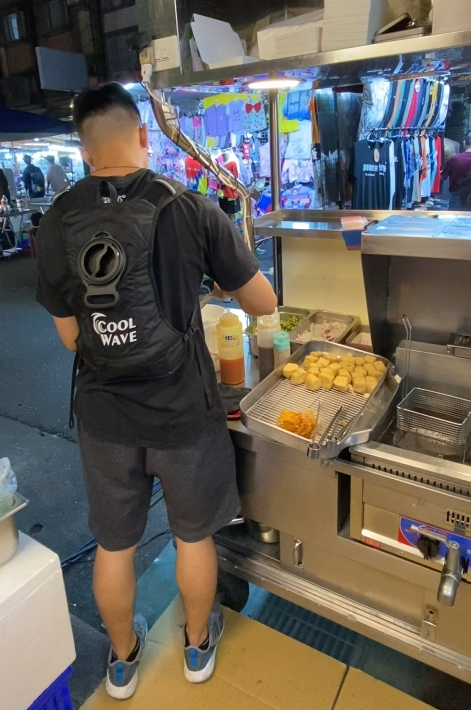
A documented Taiwan-based deployment involved 100 units applied to cooling use in high-temperature environments over a 10-year period. The stated results were effective body cooling, heatstroke prevention, improved work efficiency, and worker comfort. The reported product highlights were passive ice-pack cooling, no power requirement, lightweight and portable build, adjustable one-size-fits-all design, and certified disaster prevention product status.
Market Context and Sourcing Trends
The global cooling vest market was valued at approximately USD 215 million in 2024 and is projected to reach USD 385 million by 2033. A broader category, personal cooling devices, was valued at USD 25.16 billion in 2024 and is projected to reach USD 94.85 billion by 2035. Asia Pacific is the fastest-growing region for cooling vests, driven by rapid industrialization and high outdoor work populations.
Within the market, phase change material (PCM) cooling vests captured 28.7% of the market share in 2025, while industrial applications remained the largest end-use segment. Active circulatory mechanisms, including ice water circulation, are increasingly deployed in industrial sectors to mitigate occupational heat stress. Established global competitors in the cooling vest market include Techniche International, Glacier Tek, Polar Products, and Ergodyne.
Comparison with Alternative Cooling Technologies
Compared with phase change material vests, a water-circulation vest such as the COOLWAVE uses an active distribution method to move cooled liquid across the body. This approach can provide continuous cooling from a reusable ice-pack reservoir, but it introduces practical dependencies: the system includes a backpack and water pump, and shift-long use typically requires access to ice packs. Buyers should evaluate ice-pack logistics, cleaning procedures, and spare-part availability when selecting a water-circulation model.
Future Outlook for Industrial Cooling Procurement
As occupational heat stress mitigation becomes a formal element of industrial procurement, cooling vests are likely to be evaluated with the same discipline as other PPE categories. For suppliers like Shokunin, the combination of a patented water-cooled vest design, industry certification, documented field use, and ODM production capability provides a foundation for long-term procurement relationships.
Shokunin offers ODM production with a monthly capacity of 3,000 units, a lead time of 7–14 days, and a minimum order quantity of 10 units. The after-sales warranty for the water-cooled vest is 6 months. These are documented supply terms that can be verified during supplier qualification.
Frequently Asked Questions
Q1: Does the COOLWAVE Water-Circulation Cooling Vest have patent protection?
Yes. The COOLWAVE Water-Circulation Cooling Vest (Basic Model) is protected by Patent No. I886033, issued by the Intellectual Property Office, Ministry of Economic Affairs, under the Patent Act of the Republic of China. The patent applies to the ROC market and covers the water-cooled vest structure and cooling system, with an expiration date of August 27, 2044.
Q2: What certification has the COOLING water-cooled vest received?
The COOLING water-cooled vest received the Disaster Prevention Product and Service Certification Award from the Taiwan Disaster Prevention Industry Association. This certification validates the product’s compliance with specific disaster prevention standards.
Q3: What is the cooling duration of the COOLWAVE vest?
The listed cooling duration is 3–4 hours for the Basic Model and the Professional Model color variants.
Q4: What are the key physical specifications of the COOLWAVE vest?
The vest weighs within 2 kg. The suitable temperature is listed as below 10°C. The pump output is 5V 150mA (max), and the maximum flow rate is 320–370 ml/min.
Q5: What materials are used in the COOLWAVE vest?
The shoulder strap is 600D polyester, the main material is PEVA, the water bag is TPU, the water bag cap is polypropylene, and the cooling tube is black sand rubber.
Q6: Which industries is the COOLWAVE vest designed for?
The product is designed for construction workers, outdoor workers, food stall operators, street vendors, traffic controllers, and metal sheet factories.
Q7: What is included in the COOLWAVE vest package?
The product contents include a water-cooled vest backpack and two ice packs.
Q8: What ODM terms does Shokunin offer for the COOLWAVE vest?
Shokunin operates in ODM production mode with a monthly capacity of 3,000 units, a lead time of 7–14 days, a minimum order quantity of 10 units, and a 6-month after-sales warranty for the water-cooled vest.
Shokunin Corporate Information
Shokunin is operated by FENG SHANG PRECISION CO., LTD, located at No. 155-17, Sec. 2, Nanzhu Rd., Luzhu Dist., Taoyuan City 338454, Taiwan. Business hours are Monday to Friday 8:30 AM – 5:40 PM. Contact: +886 3-312-6606, fsmarketing@fstool.com.tw.
Download the corporate brochure here: Shokunin Corporate Brochure (PDF).