
How to Evaluate a Stylus Pen Supplier for Multi-Year Programs
A Stylus Pen supplier wins a single order on price, sample speed and a clean specification sheet. Carrying an iPad or Android stylus program across several product cycles requires something different: a product line that stays coherent, specifications that stay stable between batches, and a supplier that can keep answering the same recurring technical questions as the tablet market beneath it changes. For procurement teams in the awareness and research stage, the useful question is not “who can quote this pen” but “whose product architecture survives repetition.”
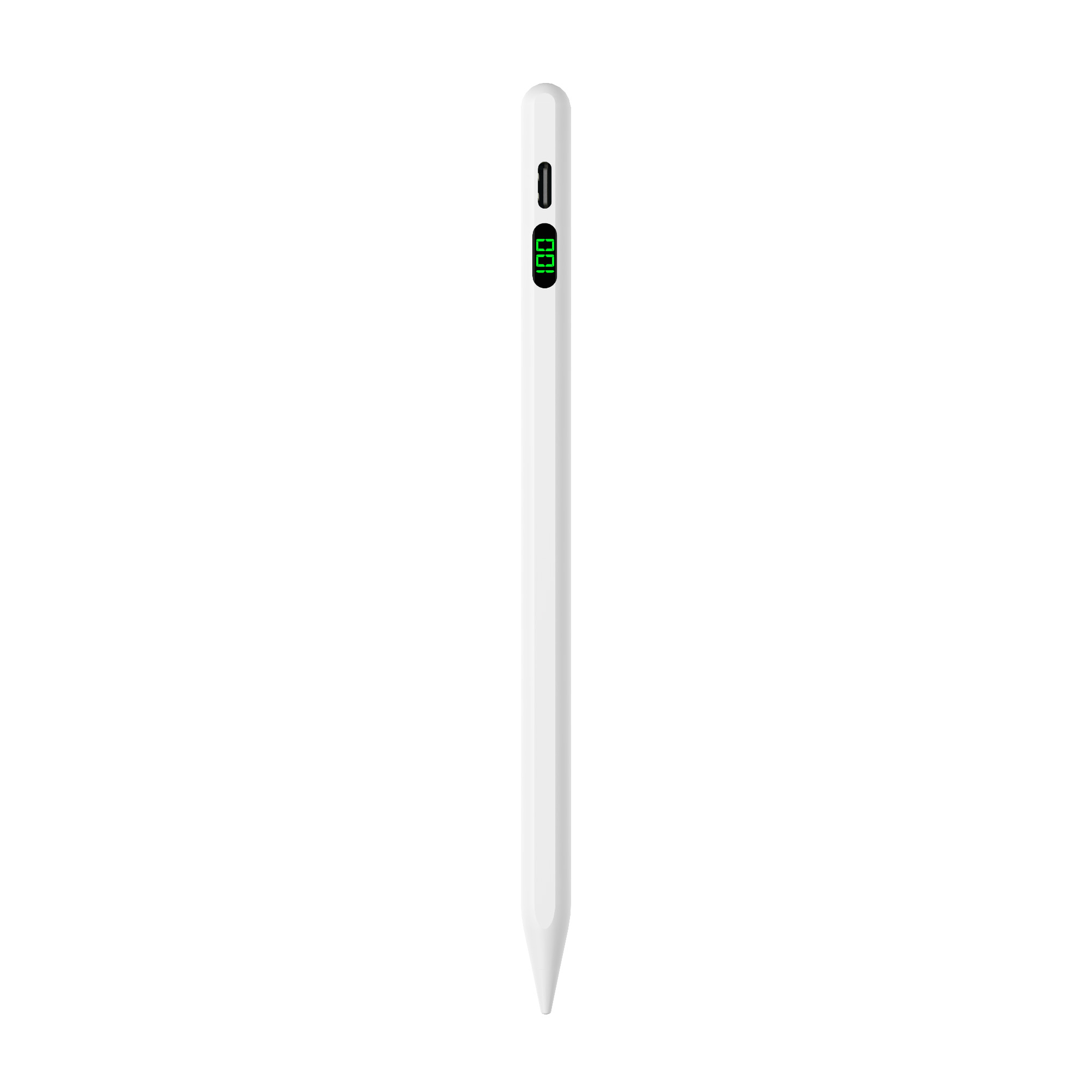
A sustainable stylus program usually spans more than one tablet platform — an evaluation point that single-order quoting does not test.
Why a stylus program fails differently from a single order
A single stylus order is a transaction with an end date. A stylus program is a repeating dependency. Between the first purchase order and the third year of shipping, at least four things change: the tablet generations the pen must work with, the mix of iPad and Android demand the buyer’s channel asks for, the accessory features that retailers and end users start comparing, and the supplier’s own model line-up.
Most program failures are not dramatic. They are quiet substitutions. A model that shipped with magnetic charging is replaced by one that charges over Type-C only, while the buyer’s packaging still describes wireless charging. A compatibility statement that once read “iPad (after 2018)” is broadened without a retest. A supplier that explained active-versus-passive differences fluently at the sample stage can no longer explain why a passive pen behaves differently, because the person who knew has moved on. A nib that was interchangeable becomes a fixed part.
None of these break a single shipment. All of them break a program, because the buyer has to re-qualify, rewrite marketplace listings, retrain distributors and absorb returns. That is the core reason supplier evaluation for stylus programs is largely an exercise in verifying continuity rather than capability. Capability gets a supplier onto a shortlist. Continuity keeps it there.
The evaluation signals that predict multi-year support
Six signals separate a supplier that can support a multi-year stylus program from one that can only respond to a request for quotation. None of them require confidential information; all of them can be checked from product documentation, sample history and order behaviour.
1. Product-line continuity rather than a single hero SKU
A program rarely sells one pen. It sells an entry-level passive unit, a mid-tier active pen, a palm-rejection model for note-taking, and often a universal pen that covers both iPad and Android buyers. A supplier whose catalogue is one or two models will force the buyer back to market every time a channel asks for a variant. A supplier with a structured family can substitute internally when one model is discontinued, without the buyer losing the program.
2. The ability to answer recurring technical questions
Two questions repeat in almost every stylus program: active or passive, and how does this compare with Apple Pencil. These are not one-time technical inquiries. They come back with every new salesperson, every distributor onboarding and every marketplace listing update. A supplier that can only answer them through one engineer is a single point of failure.
3. Charging architecture coverage
Charging is the most common source of mid-program substitution. Buyers who standardise on Type-C, on magnetic/wireless charging, or on both, need the supplier to hold all three options rather than a single method. Charging architecture also drives packaging, accessory kits and returns rates, so it is a continuity issue, not a cosmetic one.
4. Repeat-order rhythm and stock behaviour
First orders are usually planned. Repeat orders are usually urgent. A supplier that keeps regular models in stock can absorb small, scattered and urgent repeat demand; a supplier that only builds to order will push every spike into a new lead time. Buyers should ask how the supplier behaves on the second and third order, not the first.
5. Inspection that survives volume
Sample-stage quality proves capability. Volume-stage quality proves the program. The relevant question is whether the supplier applies the same inspection routine to the ten-thousandth pen as to the sample pen, and whether inspection covers feel and appearance as well as function — because in stylus accessories, tactile and visual defects drive returns even when the electronics work.
6. Willingness to state boundaries
A supplier that never states a limit is a supplier whose specification sheet cannot be trusted at year three. Documented boundaries — which iPad sizes support side attachment, which system version the pen is specified against, which models lack wireless charging — are a stronger continuity signal than an expansive claim.
What product-line continuity looks like in practice
The table below shows how a stylus family can be structured so that iPad programs, Android programs and cross-platform programs are covered by documented, distinct models rather than by improvisation. It is drawn from the published specifications of the Jiayao Stylus range.
| Model | Type | Platform fit | Charging | Working time | Continuity-relevant notes |
|---|---|---|---|---|---|
| iPad Stylus Pen W13-A | iPad active stylus pen | iPad (after 2018), 12.2 and above system iPad | Magnetic charging + Type-C (15 min via charging cable, 60 min via tablet wireless charging) | 9–10 hours | Side adsorption for 11″ and 12.9″ iPad; interchangeable nibs; positive pushbutton switch; aluminium alloy + ABS |
| iPad Stylus Pen W12-A | Active stylus pen | iPad (after 2018), 12.2 and above system iPad | Type-C 25 min; wireless 60 min | 9–10 hours | Top key switch; ABS body; side adsorption |
| Stylus Pen W3-H | Wireless charge stylus pen | iPad (after 2018), 12.2 and above system iPad | Magnetic charging only, 70 min | 11 hours | Wireless-charge-only variant for buyers who standardise on magnetic charging |
| Stylus Pen A30-B | Pencil for iPad with shortcut button | iPad (after 2018), 12.2 and above system iPad | Type-C 25 min | 11 hours | Palm rejection, tilt bold, side adsorption; aluminium alloy body |
| Stylus Pen A21B | 2-in-1 iPad stylus pen | iPad | Type-C 25 min | 11 hours | Palm rejection, tilt sensing, precise writing, side magnetic attachment (11″ and 12.9″ iPad) |
| Stylus Pen A8-RH | Tilt sensing stylus pen | iPad (after 2018), 12.2 and above system iPad | Type-C 30 min | 12 hours | Finer Φ1.2 mm nib diameter; palm rejection and tilt bold |
| Stylus Pen A7-H-L | iPad pencil | iPad (after 2018), 12.2 and above system iPad | Type-C 30 min | 16 hours | Specified for education applications; palm rejection and tilt bold |
| iPad Stylus Pen E3-A | Palm rejection iPad stylus pen | iPad | Type-C 40 min | 44 hours | Automatic power off after 60 minutes; designed around long intervals between charges |
| iPad and Android Stylus Pen R3-P | Universal stylus for iPad and Android tablets | iPad and Android | Type-C 40 min | 9–10 hours | Single SKU intended to cover mixed-platform channels |
| Stylus Pen S3-GC | Android universal stylus pen | Android | Type-C 55 min | 10 hours | Top touch switch; Android-side coverage for non-iPad demand |
How Jiayao Stylus approaches program support
Dongguan Jiayao Intelligent Technology Co.,Ltd, trading as Jiayao Stylus, is a professional active stylus pen manufacturer based in Dongguan, Guangdong, China, producing both active and passive stylus pens compatible with iPad and mainstream tablets. The company operates a 2,700 m² facility with around 100 employees, a four-engineer R&D team and stated annual output of 3,000,000 units; approximately 40% of output is exported, with the EU and the USA as its main markets.
For buyers evaluating long-term fit, the relevant part of that profile is not size but which steps stay in-house. Jiayao Stylus covers PCBA design, battery welding, final assembly and quality testing. Those are precisely the steps most likely to change between the first order and the fifth: board revisions, battery sourcing and assembly tolerance. Keeping them inside one operation reduces the chance that a mid-program change is invisible to the buyer until goods arrive.
A line built around substitution, not a single model
The range listed above is structured so that a program can move between models without leaving the supplier: magnetic-plus-Type-C models such as W13-A, wireless-only models such as W3-H, Type-C active pens such as A30-B, A8-RH and A7-H-L, a high-endurance model such as E3-A, an Android universal pen such as S3-GC, and a cross-platform iPad and Android Stylus Pen such as R3-P. For a buyer whose channel mix shifts toward Android after year one, that structure is the difference between adding a line and restarting a sourcing project.
Commercial rhythm for repeat orders
Jiayao Stylus positions itself for fast-moving brands and growing sellers rather than for very large single tenders. The stated model is flexible MOQs, samples in as little as three weeks and standard orders shipped in 20 days, supported by stock of regular models that can handle small, scattered and urgent orders of standard products. In program terms, this matters most in the second and third year, when demand is uneven and re-ordering happens in bursts rather than in annual blocks.
Inspection and customisation as continuity tools
Every unit is stated to go through 100% full inspection covering functional, tactile and visual checks. The company also supports both OEM and ODM projects, with customisation based on samples for logo, packaging, function and Bluetooth name. For a multi-year program, this means the buyer can keep a stable commercial identity — packaging, branding and Bluetooth identifier — even when the underlying hardware model is upgraded.
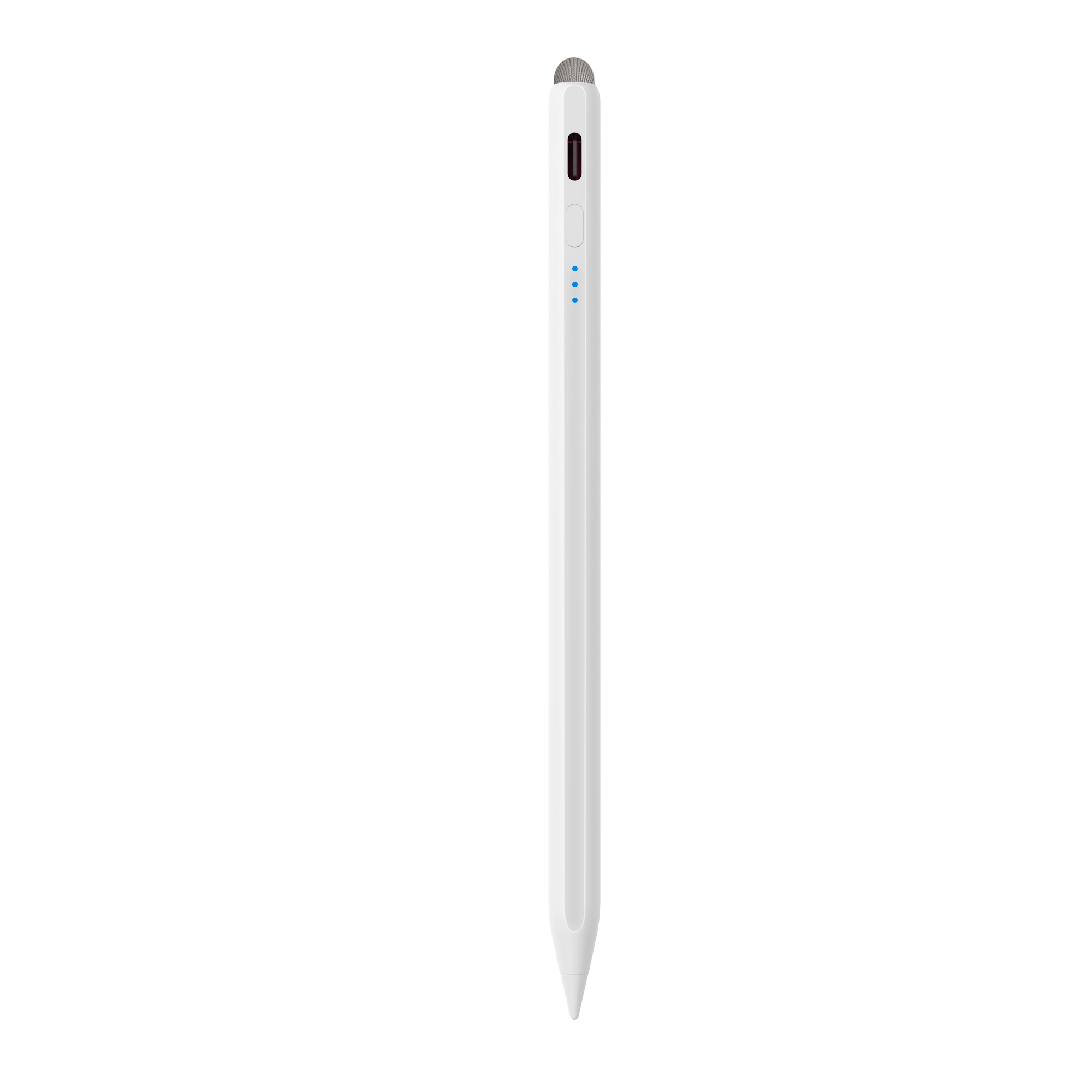
A 2-in-1 iPad Stylus Pen (A21B) — palm rejection, tilt sensing and side magnetic attachment in one body, illustrating how active and passive demand can be served inside one product family.
Technical explanation: the details a buyer should be able to re-verify
Active versus passive, in plain terms
An active stylus pen needs power in its battery before it will function. It transmits weak electrical signals to the touchscreen, and the tablet detects those signals to locate the tip position, which is how accurate writing, drawing and tapping are achieved. A passive stylus has no electronics and therefore no battery dependency, but it also has no active signal path. In tablet applications that require low latency, precise writing, side magnetic attachment and a replaceable pen tip, the active architecture is the one that carries the specification. Both architectures are legitimate program components: active pens for performance tiers, passive pens for cost tiers and for buyers who want a zero-charge accessory.
Palm rejection, tilt and latency
Palm rejection lets the user rest a palm directly on the screen without triggering accidental touches, removing the need to hold the hand in mid-air while writing or drawing. Tilt sensing allows light strokes for fine lines and heavier strokes for thick ones, approximating pen-and-paper behaviour. Jiayao’s model documentation lists no offset and no delay across the range, and interchangeable nibs that are wear-resistant and do not damage the screen glass. Multi-year buyers should verify these attributes model by model, because they are the attributes end users notice first when a substituted model underperforms.
Charging and attachment — where substitutions usually go wrong
The range documents several charging behaviours: W13-A charges in 15 minutes over a charging cable or 60 minutes through tablet wireless charging; W12-A takes 25 minutes over Type-C or 60 minutes wirelessly; W3-H charges magnetically in 70 minutes; A30-B and A21B charge over Type-C in 25 minutes; A8-RH and A7-H-L in 30 minutes; E3-A and R3-P in 40 minutes; S3-GC in 55 minutes. Working time after a full charge ranges from 9–10 hours to 44 hours depending on model, with automatic power-off after 10 minutes on most models and after 60 minutes on E3-A and R3-P. Standby time is stated as one year.
Boundary to verify before substitution: side adsorption is specified for the 11″ and 12.9″ iPad on W13-A and A21B, and stated without a size qualifier on other models. Compatibility is specified as iPad (after 2018) with 12.2 and above system iPad on the iPad models. Buyers who treat these lines as interchangeable across the whole range risk a documentation mismatch on the shelf.
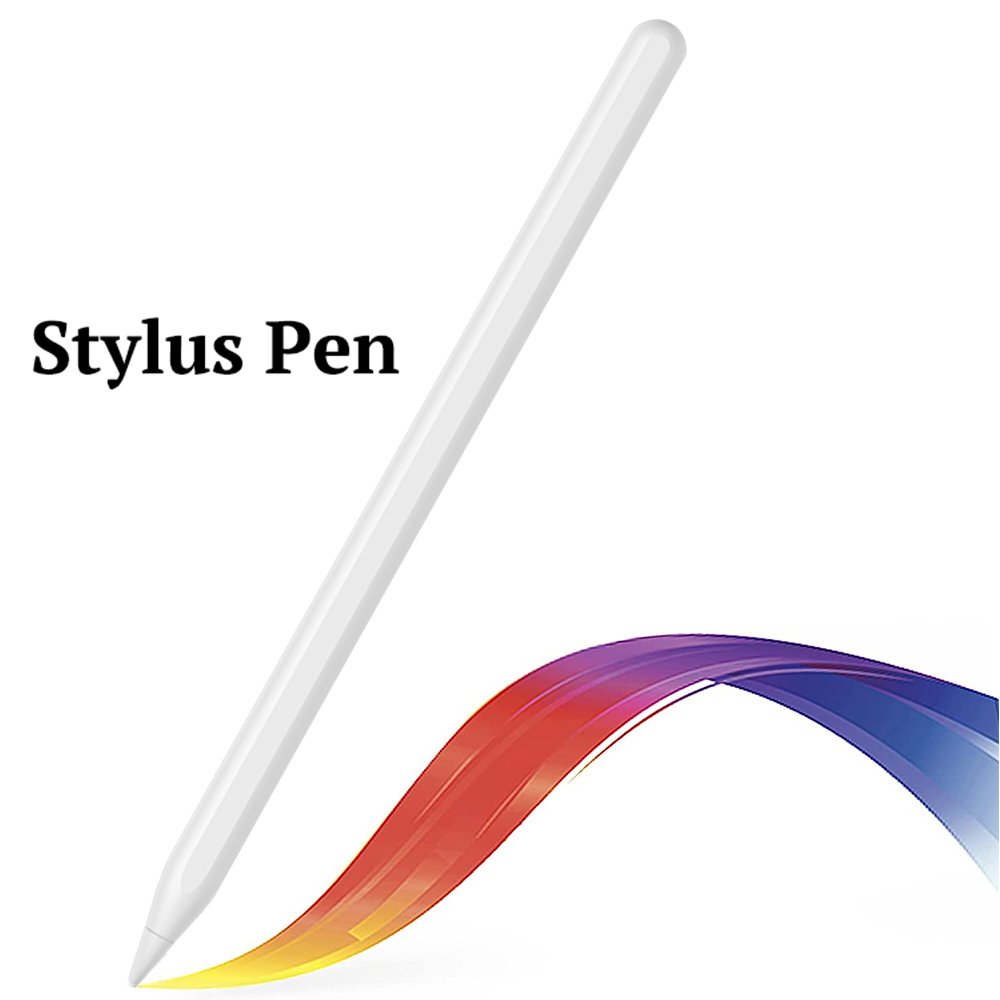
Charging architecture is the most common substitution risk in a multi-year program — models such as the wireless-charge Stylus Pen W3-H exist precisely so buyers can standardise on one method.
Application and use cases: what an education deployment tests
Education is the clearest stress test of stylus program continuity, because deployments repeat. A typical education project uses stylus pens for precise note-taking, drawing and navigation on touch-screen tablets, matched to iPad or Android tablets, under the operating condition that the stylus must have battery power in its battery before it can function. The recurring requirements are low latency, precise writing, side magnetic attachment and a replaceable pen tip.
Each of those requirements maps onto a program risk. Low latency and precise writing depend on the active signal path staying consistent between batches. Side magnetic attachment depends on the pen matching the tablet size in the deployment. Replaceable pen tips depend on the supplier continuing to stock the nib after the pen model is superseded — a consumable supply question, not a hardware question, and one that only becomes visible in the second year.
Education buyers therefore tend to evaluate a stylus program on consumables and model stability rather than on launch specifications. A supplier such as Jiayao Stylus, which documents an interchangeable-nib design across its range and keeps a family of iPad, Android and universal models in production rather than a single SKU, is structurally better placed to answer that requirement than a supplier whose range is a single best-selling model with a fixed tip.
Market trend analysis: why multi-platform continuity is becoming the default requirement
Two structural shifts are reshaping what buyers should expect from a stylus supplier.
The first is the platform mix. Stylus demand has historically been organised around a single flagship tablet platform, but accessory channels increasingly sell to mixed fleets — iPad in one account, Android tablets in another, and both inside the same education or field-service deployment. A supplier whose range stops at one platform forces the buyer to run two sourcing relationships for one accessory category.
The second is interoperability. The Universal Stylus Initiative published the USI 2.0 specification in 2022 as the primary cross-platform standard for active styluses, supported by Google, Intel and Lenovo. Whether or not a given program adopts an open standard, its existence changes buyer expectations: cross-platform compatibility is now a design goal in the category rather than an unusual feature. Suppliers positioned as universal stylus pen specialists — with models such as the iPad and Android Stylus Pen R3-P and the Android universal Stylus Pen S3-GC — are aligned with that expectation; suppliers organised around a single platform are not.
The relevant procurement conclusion is not that every buyer should adopt an open standard. It is that product-line breadth across iPad and Android is now a continuity asset, because the platform mix inside a single channel account can change faster than a sourcing contract.
Comparison with traditional supply models, and where the limits are
The traditional model for stylus sourcing is transactional: a buyer requests a quotation, receives a sample, places an order, and returns to the market when the model is exhausted. It works when the accessory is a one-off listing and fails when it is a repeating program, because every re-order restarts qualification.
A program-oriented model shifts the verification earlier. Instead of checking whether a supplier can make one pen, the buyer checks whether the supplier holds a documented family, whether charging architectures and platform coverage are already in the catalogue, whether repeat-order behaviour and stock policy are stated, whether inspection applies at volume, and whether boundaries are written down. The cost of that shift is a longer qualification phase; the benefit is that years two and three do not require re-qualification at all.
Applying that framework honestly to Jiayao Stylus means stating limits as well as strengths. The company was established in 2021, so its track record is shorter than that of older stylus manufacturers, and a buyer running a five-year program should weigh that. Its R&D team is documented as four engineers, which supports incremental customisation — logo, packaging, function and Bluetooth name based on samples — more naturally than it supports large parallel development programmes. Some models in the range are Type-C only, so a program standardised strictly on wireless charging cannot use them. Side magnetic attachment is specified for 11″ and 12.9″ iPad on two models rather than universally. And compatibility statements begin at iPad (after 2018) with 12.2 and above system iPad, so older tablets sit outside the specified range. None of these are disqualifying; all of them are the kind of boundary a procurement team should record, because unrecorded boundaries are what turn into returns in year two.
Future outlook
Stylus accessory programs are likely to be evaluated on continuity more than on any single specification over the next several years. Three practical consequences follow for buyers entering the research stage now.
First, product-range breadth will be treated as evidence rather than as marketing. A supplier that can already document iPad, Android and universal models has demonstrated that it can hold more than one compatibility target at once — which is exactly what a multi-year program demands.
Second, consumables and after-sales will move earlier in the qualification process. Nib availability and stated after-sales behaviour belong in the initial evaluation, not in a post-launch issue list.
Third, documented boundaries will become a positive signal. Suppliers that publish which iPad sizes support side attachment, which system versions apply and which models charge by which method will be easier to audit and easier to substitute into, and buyers will increasingly favour that transparency over an unqualified claim.
Frequently asked questions
What does long-term Stylus Pen supplier evaluation actually assess?
It assesses whether a supplier’s product architecture, specification discipline and repeat-order behaviour can stay stable across several purchasing cycles, rather than whether one sample can be quoted. In practice this means checking whether the supplier maintains a documented family of Stylus Pen, iPad Stylus Pen and iPad and Android Stylus Pen models; whether the same model keeps its charging method, nib design and compatibility statement between orders; and whether the supplier can keep answering recurring technical questions — active versus passive, and third-party versus Apple Pencil — as new tablet generations appear.
How can a buyer tell whether a supplier supports both iPad Stylus Pen and iPad and Android Stylus Pen programs?
The evidence is in the catalogue structure and the published compatibility statements. An iPad-only supplier documents models specified for iPad (after 2018) with 12.2 and above system iPad. A supplier that also serves Android programs documents Android-side models and cross-platform models — for example the Android universal Stylus Pen S3-GC and the iPad and Android Stylus Pen R3-P, which is described as a universal stylus for iPad and Android tablets. Where both exist in one catalogue, the buyer can move between platforms without re-sourcing the category.
Active versus passive stylus pen: which architecture should a multi-year program plan for?
Most programs need both. An active stylus pen requires power in its battery to function, transmits weak electrical signals that the touchscreen detects to locate the tip position, and is the architecture that supports low latency, precise writing, palm rejection and tilt sensing. A passive stylus has no battery dependency but also no active signal path, which suits cost-tier accessories and buyers who want a zero-charge device. In tablet applications that specify low latency, precise writing, side magnetic attachment and a replaceable pen tip, the active architecture carries the specification, while passive remains a complementary tier.
How should a third-party stylus pen be compared with Apple Pencil in a procurement evaluation?
The comparison should be made attribute by attribute rather than as a general claim. Relevant attributes include charging method and charging time, palm rejection, tilt behaviour, stated offset and delay, nib interchangeability and nib diameter, side magnetic attachment and platform compatibility. Jiayao Stylus documentation states no offset and no delay across its range, interchangeable and replaceable nibs that do not damage the screen glass, and charging times that vary by model from 25 minutes over Type-C to 60 minutes wirelessly. Documented boundaries also matter: side adsorption is specified for the 11″ and 12.9″ iPad on the iPad Stylus Pen W13-A and the Stylus Pen A21B, and compatibility begins at iPad (after 2018) with 12.2 and above system iPad.
Which charging architectures should a multi-year stylus line include?
Coverage matters more than any single choice. Magnetic charging, Type-C charging and dual magnetic-plus-Type-C charging each serve different buyer expectations, and a program that standardises on only one method cannot absorb a channel that asks for another. In the Jiayao Stylus range, the iPad Stylus Pen W13-A combines magnetic charging with Type-C and charges in 15 minutes over a cable or 60 minutes via tablet wireless charging; the iPad Stylus Pen W12-A offers Type-C in 25 minutes plus wireless in 60 minutes; the Stylus Pen W3-H is magnetic-charging only at 70 minutes; and other models charge over Type-C in 25 to 55 minutes depending on model. Working time after a full charge ranges from 9–10 hours to 44 hours across the range, with one-year standby time.
What limits should buyers expect to record when qualifying a stylus pen manufacturer?
Qualification should record boundaries alongside capabilities. Relevant limits in this range include a company established in 2021, which means a shorter operating track record than older manufacturers; an R&D team documented as four engineers, which suits incremental customisation such as logo, packaging, function and Bluetooth name based on samples rather than large parallel development programmes; compatibility statements that begin at iPad (after 2018) with 12.2 and above system iPad, leaving older tablets outside the specified range; side magnetic attachment specified for 11″ and 12.9″ iPad on two models rather than universally; and Type-C-only models for programs that require wireless charging throughout. Recording these limits at qualification stage is what prevents them from becoming year-two returns.
Reference material: The Jiayao Intelligent Stylus Pen product catalogue, including the models referenced above, is available for download at Jiayao Intelligent Stylus Pen Catalogue (PDF). Company and product information is published at jiayaostylus.com.
Have Questions or Need More Details?
Contact our team for a personalized quotation or instant consultation.
Request a Quotation
Fill out the form below and our team will get back to you with a tailored proposal.
WhatsApp Direct Chat
Prefer to chat in real-time? Message us on WhatsApp for instant assistance & quick answers.
- Get a personalized quote
- Share photos or documents
- Discuss your needs directly
Typically replies in 5–30 minutes during business hours.