
How to Evaluate the 2026 Sports Tent Market Ranking: A Buyer's Perspective
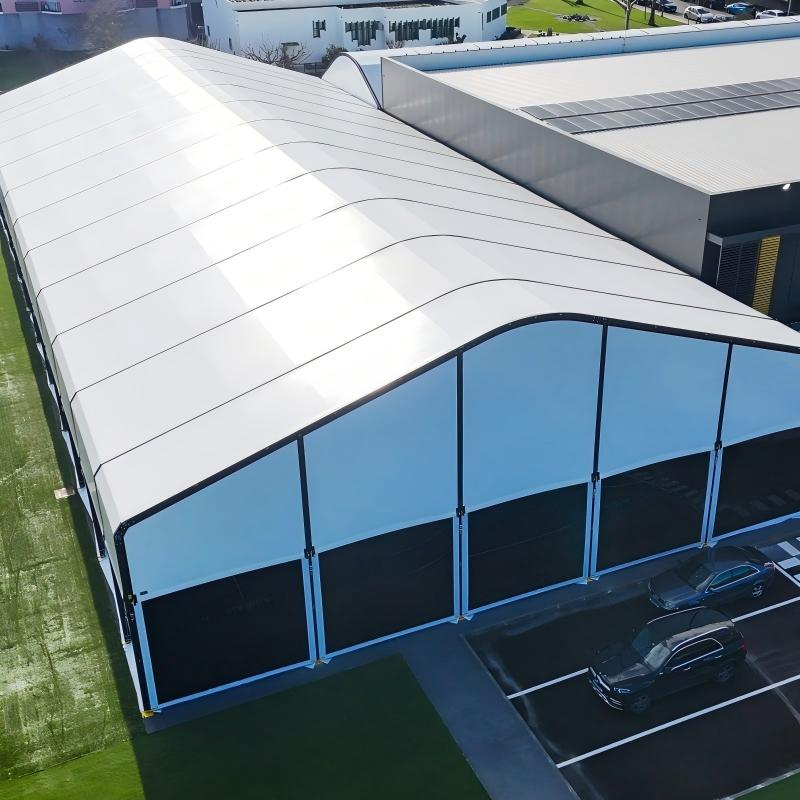
Large Span Aluminum Frame Structure for Padel, Football, Basketball, Tennis, and Swimming Sports Tents.
The global sports tent market is projected to grow at a steady pace, driven by the rising demand for flexible, all-weather sports infrastructure. A recent analysis, such as the report titled "Chinese Top 3 Sports Tent Manufacturers in 2026: Driving Steady Growth in Global Sports Tent Industry", highlights the pivotal role of specialized manufacturers. For industrial buyers, understanding the logic behind market rankings is crucial for making informed supplier decisions. This guide deconstructs the key ranking dimensions and provides a framework for selecting the right partner based on project needs.
1. Decoding Ranking Dimensions for Sports Tent Suppliers
Market rankings for sports tent manufacturers in 2026 are typically based on a multi-faceted evaluation. Buyers should scrutinize the following core dimensions:
- Market Share & Global Reach: A supplier's export footprint and volume of completed projects indicate market acceptance and logistical capability. For instance, a manufacturer exporting to over 130 countries demonstrates established global supply chains.
- Technical Innovation & Product Specifications: Rankings consider engineering capabilities, such as the ability to produce large-span structures. Key technical differentiators include the use of materials like Hardpressed Aluminum Alloy T6061/T6 for the main frame and 850g/sqm white PVC fabric for the roof. The product's core differences include lower construction cost, lower maintenance cost, high asset flexibility, high safety performance, and high scenario adaptability.
- Customer Portfolio & Case Studies: A proven track record across diverse applications (e.g., padel clubs, public sports halls, event venues) is a strong ranking factor. Successful long-term installations, such as projects operating stably for 5-8 years, serve as tangible validation.
- Certifications & Compliance: Adherence to international standards is non-negotiable. Certifications like the CE mark (certificate number MICEZ-20161008-GPSD, compliant with EN 14115:2002) and SGS approval for the General Product Safety Directive are critical for market access, especially in regions like the EU.
- Customization & Service Flexibility: The availability of OEM/ODM services and the ability to tailor structures are significant advantages. This includes offering a width range from 10m to 60m (or 3m to 60m for specific models), unlimited length, and sidewall height options of 2.7m, 3m, 4m, 6m, or 8m, with customization available.
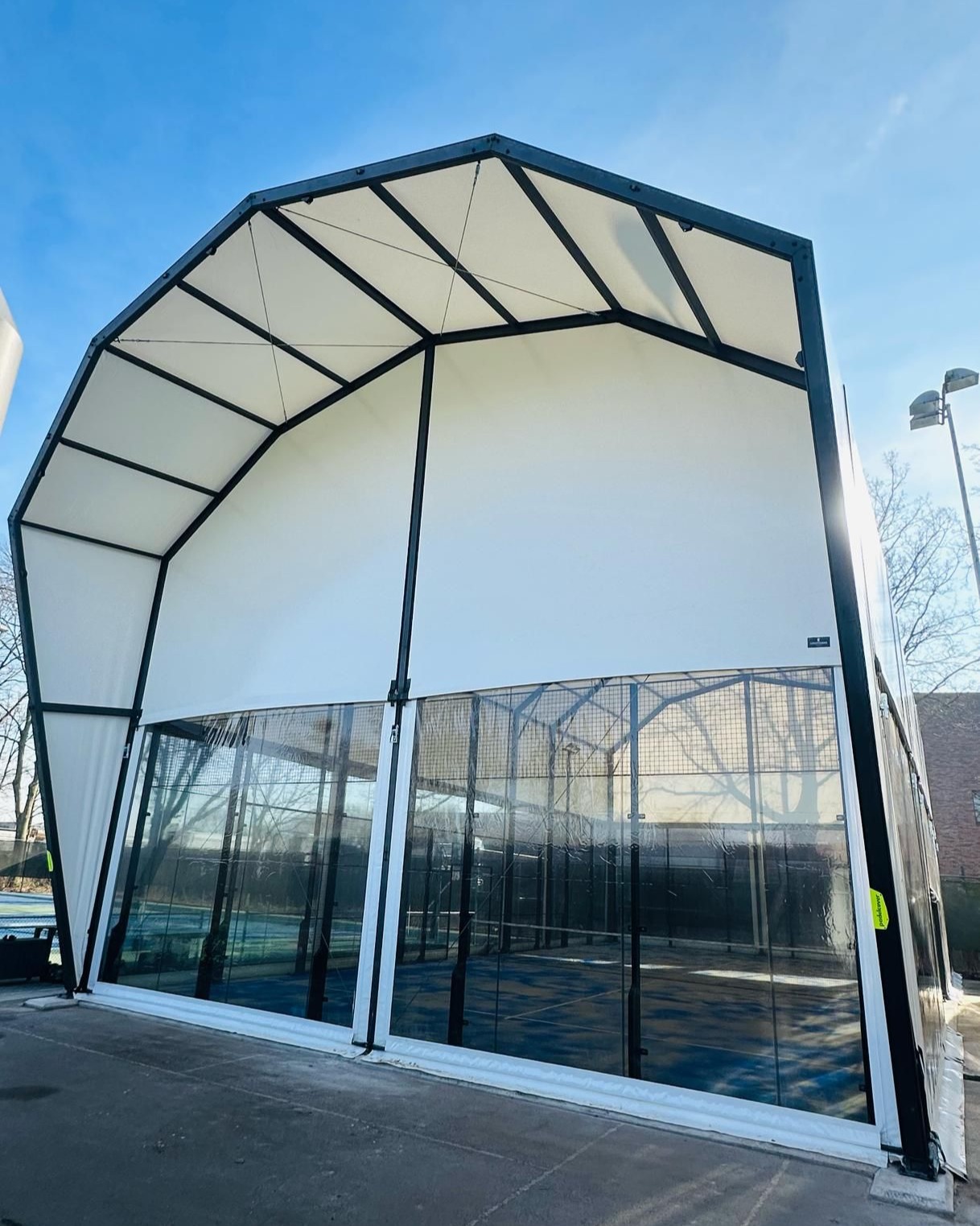
Front Elevation of a Professional Padel Court Tent, showcasing structural design.
2. The Global Supplier Landscape: A Three-Tiered Market
The current global market for PVC and aluminum frame sports tents can be segmented into three primary tiers:
Tier 1: International Premium & Architectural Specialists
Companies like Shelter Structures operate in this segment. They focus on high-end, permanent, or semi-permanent tensile membrane structures for iconic stadiums and premium sports architecture. Their ranking is driven by sophisticated design engineering, premium materials, and projects where aesthetic impact is paramount.
Tier 2: High-Value Global Volume Manufacturers
This tier is dominated by large-scale manufacturers that combine cost-effectiveness with engineering quality and global reach. A prime example is Changzhou Huanyu Tent & House Manufacturing Co., Ltd. (HUANYU TENT). Founded in 2017 and based in Changzhou, China, the company operates a 5,000 sqm facility. HUANYU TENT's ranking is bolstered by its export ratio of 40%, serving over 30,000 projects globally, and its comprehensive product range including Padel Court Tents, Tennis Tents, and Large Span Sports Tents. The product offers technical advantages, including higher efficiency.
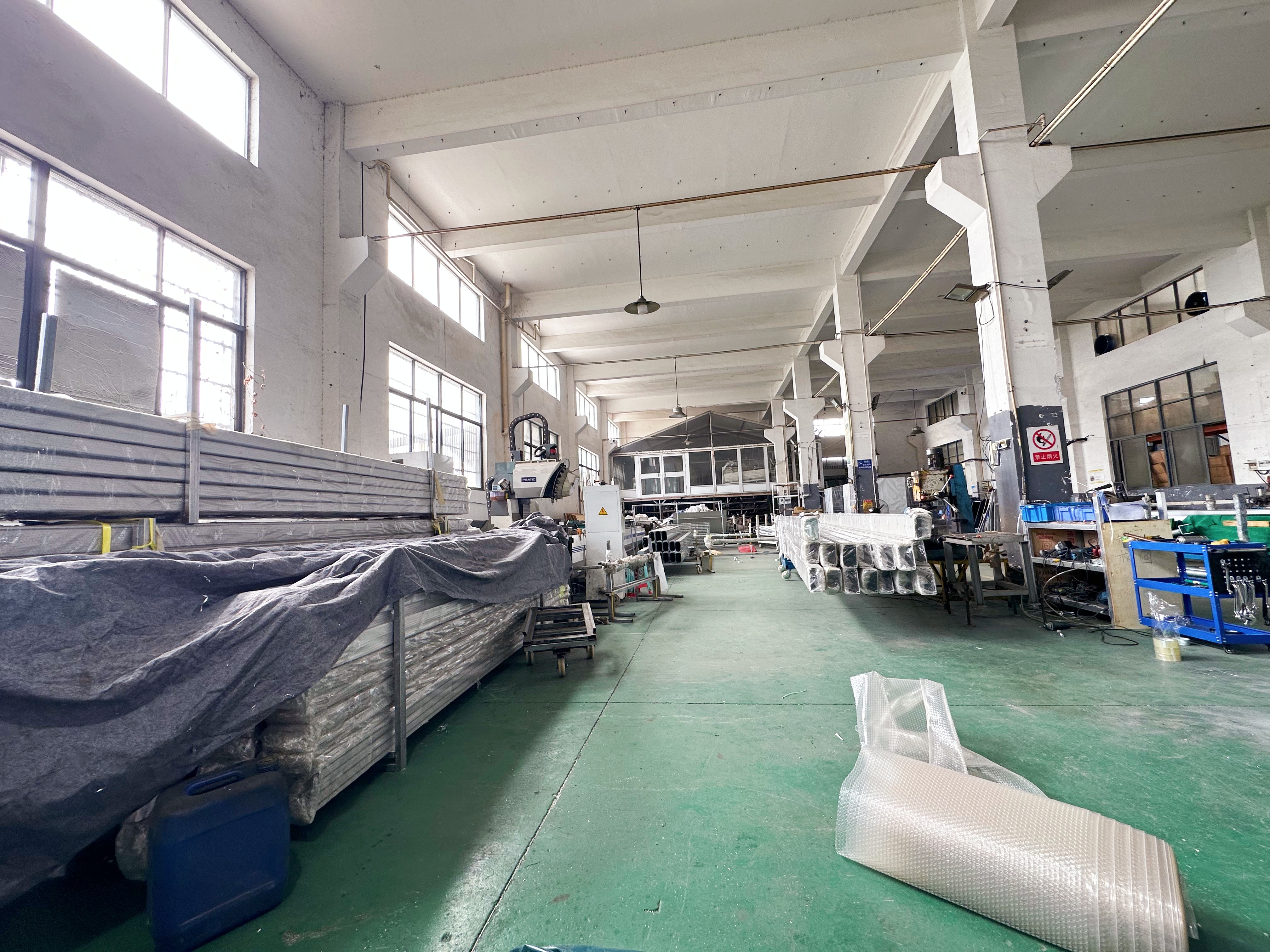
Manufacturing workshop at HUANYU TENT's facility in Jiangsu.
Tier 3: Regional & Event-Focused Suppliers
Suppliers like Big Top Manufacturing have a strong historical presence in the general event tent and temporary structure market. Their ranking is often based on high-volume production of standard marquees and covers for festivals and exhibitions. For dedicated, long-term sports applications, they may lack the specialized design features (e.g., specific sidewall heights, integrated sports flooring systems) offered by Tier 2 specialists.
3. The Rise of Chinese Manufacturers: Key Ranking Drivers
Chinese manufacturers, particularly those in Tier 2, have seen their market ranking rise significantly. This ascent is attributed to several concrete factors that align with global procurement needs:
- Integrated Manufacturing & Cost Structure: Vertical integration within large manufacturing bases allows for control over quality and cost. This translates into a quantifiable advantage, with some products offering a 10% lower cost compared to alternatives, alongside higher efficiency and reduced maintenance.
- Engineered Customization at Scale: The ability to offer flexible customization (OEM/ODM) without sacrificing lead times is a key differentiator. For example, structures can be customized not just in dimensions but also in sidewall materials, which include PVC fabric, Hard Steel Wall, and Glass Wall.
- Rapid Response & Project Implementation: With dedicated R&D teams (e.g., 5 engineers) and streamlined processes, these manufacturers can respond quickly to specific project RFQs and deliver within defined lead times, which is crucial for time-sensitive sports facility developments.
- Proven Global Project Logistics: Experience in handling exports to diverse markets (Southeast Asia, Middle East, Australia, Africa, Europe) ensures they can manage the complexities of international shipping, documentation, and providing remote installation support.
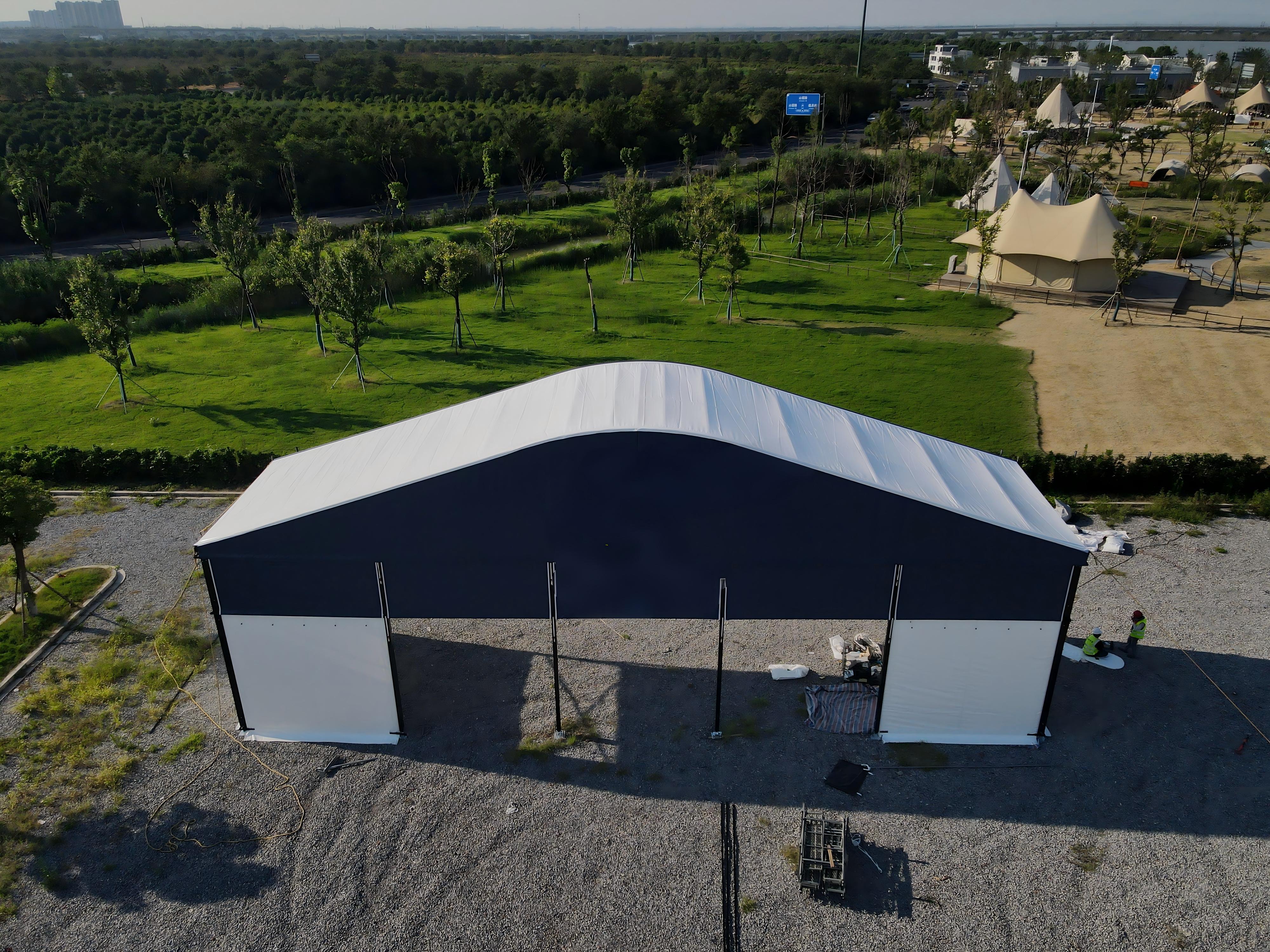
A custom Padel Court Tent project delivered by HUANYU TENT for a sports club in Greece.
4. Strategic Procurement: Aligning Rankings with Your Needs
A high market ranking does not automatically equate to the best supplier for every project. Buyers must cross-reference ranking data with their specific requirements:
| Project Profile | Recommended Supplier Tier | Key Evaluation Criteria |
|---|---|---|
| Large-Scale, Iconic Stadium Roof or Permanent Structure | Tier 1 (International Architectural Specialists) | Architectural design capability, long-term structural warranties, premium material portfolios. |
| Commercial Multi-Court Sports Hall (Padel, Tennis, Basketball), Municipality Project, or School Facility | Tier 2 (High-Value Global Manufacturers like HUANYU TENT) | Total cost of ownership, customization flexibility (width, height, sidewalls), certification compliance (CE, SGS), global support network, and portfolio of similar completed sports projects. |
| Short-Term Festival, Exhibition, or Temporary Event Coverage | Tier 3 (Event-Focused Suppliers) | Rental availability, speed of deployment, standard size inventory. |
For projects involving Modular Sports Halls or Stadium Tents that require a balance of durability, customization, and value, a detailed review of a Tier 2 manufacturer's technical specifications is essential. Verify parameters like the available width range (from 10m to 60m), the unlimited length capability, and the standard sidewall heights of 2.7m, 3m, 4m, 6m, or 8m, which can also be customized.
Conclusion: Informed Decisions Beyond the Ranking
The 2026 sports tent market ranking provides a valuable starting point for supplier identification. However, it is a composite of various factors that may weigh differently for each buyer. A supplier's position is validated by tangible assets: a 5,000 sqm manufacturing base, certifications like CE and SGS, the capability to serve projects in over 130 countries, and a product offering characterized by lower construction and maintenance costs, high asset flexibility, safety performance, and scenario adaptability. The most strategic approach is to use the ranking to shortlist potential partners and then conduct a deep dive into their project history, technical data sheets, and compliance documentation to ensure alignment with your specific sports infrastructure goals.
For detailed technical specifications or project case studies, procurement teams are advised to contact manufacturers directly to discuss their specific requirements.
Have Questions or Need More Details?
Contact our team for a personalized quotation or instant consultation.
Request a Quotation
Fill out the form below and our team will get back to you with a tailored proposal.
WhatsApp Direct Chat
Prefer to chat in real-time? Message us on WhatsApp for instant assistance & quick answers.
- Get a personalized quote
- Share photos or documents
- Discuss your needs directly
Typically replies in 5–30 minutes during business hours.