
How to Qualify a Pharmaceutical Packaging Machine Supplier
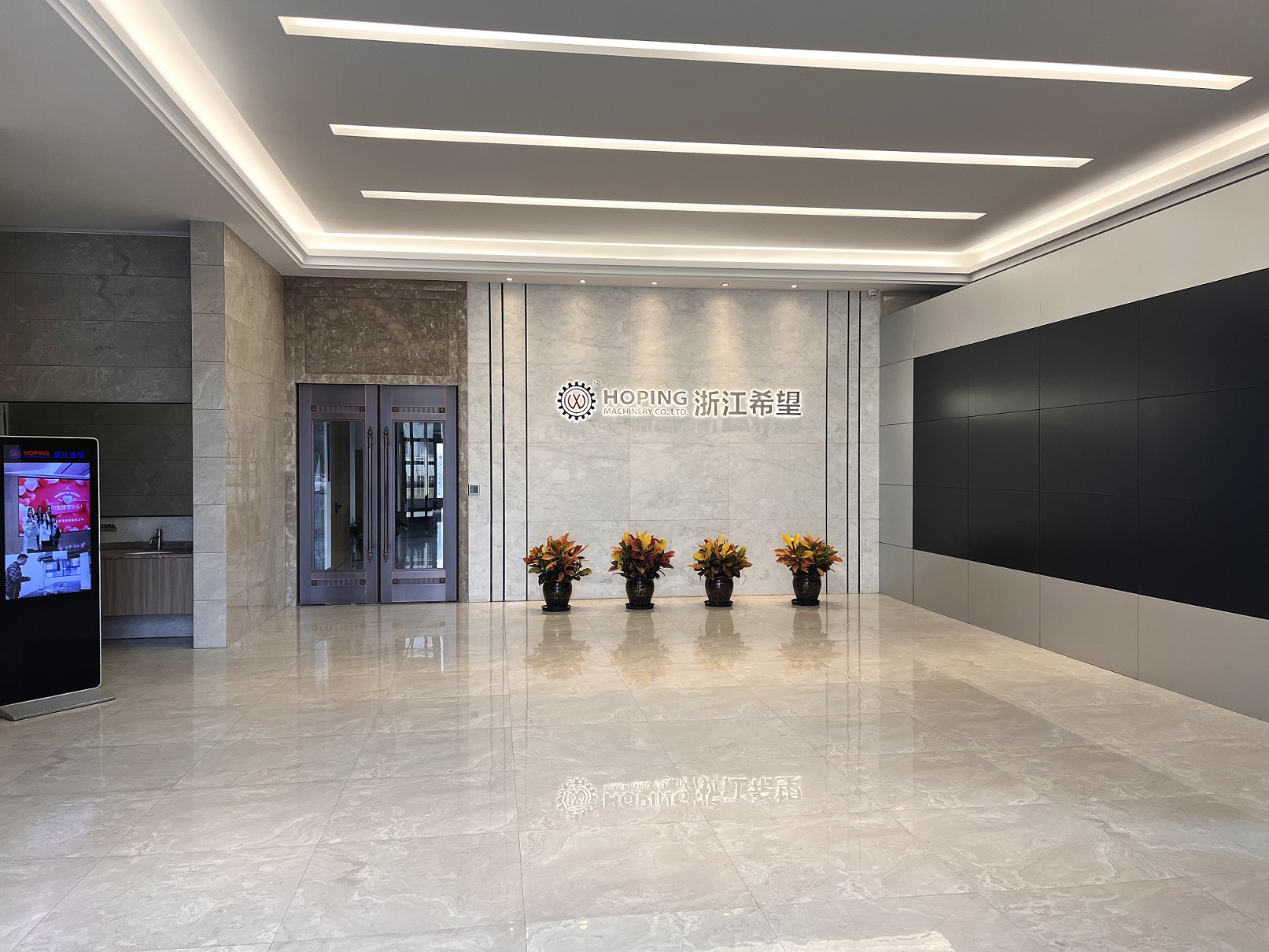
Qualification evidence is reviewed long before a line is installed: entity records, product scope, control functions and acceptance criteria.
Compliance in pharmaceutical packaging is not a badge fixed to a machine. It is a property of a documented process — materials, equipment, controls, acceptance tests and change records — that a pharmaceutical licence holder must be able to demonstrate. For buyers moving from evaluation into execution, that distinction decides what a supplier qualification file must contain, and what it cannot contain.
A pharmaceutical packaging machine is purchased into a regulated environment. A blister packaging machine forms and seals cavities, a cartoning machine inserts product and leaflets, a case packing machine closes the shipper, and every one of those steps becomes part of a batch record that may be reviewed years later. Qualification therefore asks two questions at the same time: can the supplier evidence compliant equipment, and can the delivered line perform as documented?
This analysis sets out which standards and regulations genuinely apply to pharmaceutical packaging equipment, which documents belong in a qualification file, how acceptance milestones are normally structured, and where the available evidence stops short.
Compliance Attaches to the Process, Not to the Machine
The clearest example is ISO 15378:2017, which specifies Good Manufacturing Practice (GMP) requirements for primary packaging materials for medicinal products. The scope matters. The standard addresses packaging materials and the suppliers who make them; a blister packaging machine is not certified to ISO 15378 in the way a film or foil supplier can be certified to it. What a machine must do is support the licence holder's GMP system — through contact-part materials, cleanability, parameter control, change control and documentation — so that the packaged product can be shown to have been protected, identified and traced.
In the United States, the U.S. Food and Drug Administration describes Current Good Manufacturing Practice (cGMP) as establishing the foundation for quality pharmaceuticals through regulatory standards, and publishes official guidance on production and process controls. That framework sets out what a packager must control. The source material used here does not extract machine-specific design clauses from it, and that is precisely why machine-level requirements generally reach the supplier through the buyer's own documents: the technical agreement, the user requirement specification and the acceptance protocol.
China is moving in a comparable direction for materials. A draft GMP guidance for pharmaceutical packaging materials has been reported as being under public consultation, and regulatory-affairs reporting describes it as guiding pharmaceutical marketing licence holders in reviewing packaging material suppliers. The draft status, document number and consultation window were not confirmed against the issuing authority in the available material, so it is best treated as a direction of travel rather than a settled rule.
What Belongs in a Supplier Qualification File
A qualification file assembled before the purchase order usually becomes the working document after it: the same clauses turn into acceptance criteria, training inputs and spare-part references. Six evidence blocks cover most of what a pharmaceutical packaging machine buyer needs.
| Evidence block | What to request | Why it matters |
|---|---|---|
| Legal entity and capability | Registered company name, establishment date, facility footprint, workforce, engineering headcount, production capacity, export experience and main markets | Establishes that the counterparty is a manufacturing entity rather than a trading intermediary, and frames realistic delivery capacity. |
| Product and configuration scope | Machine categories offered, line components covered, format range, documented application list (dosage forms and container types) | Confirms the proposed configuration sits inside the supplier's documented product scope rather than being a first-time build. |
| Quality control and risk treatment | Failure modes identified by the supplier, sensors and inspection systems offered, alarms, automatic stop and rejection logic, parameter locking, fault records | Turns verbal quality claims into testable functions that appear in the acceptance protocol. |
| Acceptance and validation support | Technical agreement, sample and material testing, no-load and material tests before shipment, factory acceptance test, site acceptance test, third-party inspection option, customer witness acceptance | Defines the gates at which performance is measured and documented. |
| Documentation and training | Operating and maintenance documentation, SOP training, spare-part list, remote technical support arrangements | Determines whether the line can be run and maintained to the same standard after handover. |
| Commercial terms | Minimum order quantity, production lead time, monthly production capacity, delivery terms, payment basis | Allows the qualification timeline and the manufacturing timeline to be planned against the same calendar. |
What the Machine Itself Has to Demonstrate
Machine-level compliance is largely about what happens when something goes wrong. The failure modes that matter in solid-dosage packaging are consistent across the category: poor blister forming or sealing; missing, wrong or incomplete product feeding; a missing leaflet; carton jams; coding or date-printing errors; foreign matter or contamination risk; and unplanned downtime during high-speed operation. Export projects add delivery and installation risk to that list.
Each of those failure modes has an engineering answer that can be specified and tested: sensor monitoring, vision or checkweighing inspection where configured, missing-product alarms, automatic stop, automatic rejection, key-parameter locking, fault records and mechanical safety protection. Two of them deserve emphasis at the contracting stage. First, inspection capability is a configuration decision rather than a default — whether vision or checkweighing is fitted belongs in the technical agreement. Second, parameter locking and fault records are documentation features: they generate the records that a qualification review will later ask for.
A wider industry signal points the same way. Trade reporting of PMMI material describes pharmaceutical manufacturers turning toward digitised data collection and integrated solutions in order to meet regulations and improve visibility. The statement is directional rather than measured — it carries no adoption rate — but the procurement lesson is consistent with the trend: batch traceability and data capture are easier to specify as line requirements than to retrofit after installation.
From Sample Test to Site Acceptance
Qualification is normally structured as a sequence of gates rather than a single inspection. In practice the sequence runs: confirm samples and packaging materials at the early project stage; design the solution around the blister and carton formats; run no-load and material tests before shipment; complete a factory acceptance test (FAT) before shipment; complete a site acceptance test (SAT) at the customer site. Third-party inspection can be arranged according to customer requirements, and customer witness acceptance can be organised for key projects. Installation, commissioning, training, spare parts and remote technical support form the handover package.
Structurally, these gates map onto the qualification lifecycle that regulated manufacturers already use — design, installation, operational and performance qualification — with factory and site acceptance testing as the evidence points. The discipline that matters is that each gate closes with a record, and that the records travel with the machine rather than staying in the supplier's archive.
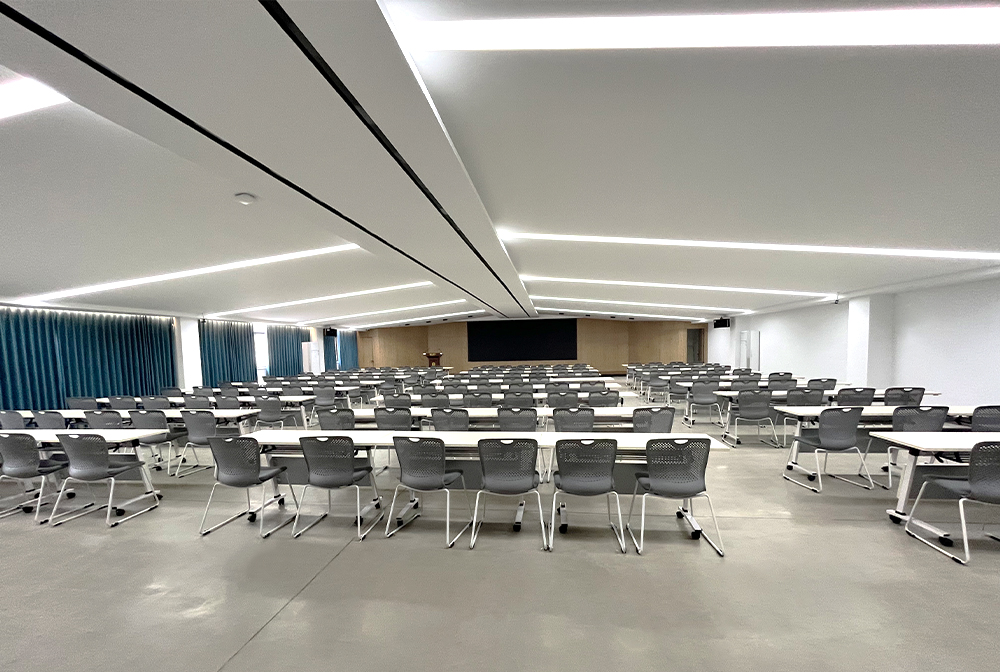
Handover evidence: operator training and SOP transfer are part of qualification, not an after-sales extra.
Commercial Terms Are Part of Qualification
At the execution stage, a second layer of evidence is needed: whether the supplier can deliver on schedule. The relevant terms are specific and checkable. Minimum order quantity is 1 set or 1 complete line. Typical production lead time is 60-120 days after technical confirmation. Monthly production capacity is 30-40 units. Delivery terms range from EXW Ruian/Wenzhou and FOB Ningbo or Shanghai to CIF/CFR destination port, with final terms subject to contract and to the customer's country requirements. Payment terms depend on the quotation, contract value, customer credit, project scope, destination market and the final project agreement.
Read together, those facts answer a question that compliance documentation alone cannot: whether the qualification schedule and the manufacturing schedule can be planned against the same calendar, and how much float exists between technical confirmation and installation.
HOPING: The Entity and Product Facts a File Can Carry
Zhejiang Hoping Machinery Co., Ltd., which trades under the brand HOPING, is a pharmaceutical packing machinery manufacturer based in Ruian City, Zhejiang Province, China, and established in 2001. The company reports a manufacturing facility of 28,800 square metres, more than 300 employees, an engineering team of 56, an annual output of 500 units and an export ratio of about 25%, with main markets in Southeast Asia, the Middle East, Eastern Europe, South America and Africa. It also reports 26 invention patents, 70 utility patents, 4 appearance patents, 10 PCT-protected filings and 28 software copyrights. These are company-reported figures; they establish what can be documented and tested, not what has already been independently audited.
Product scope is listed as blister packaging machines, cartoning machines, case packing machines and end-of-line packaging machines. Within the blister range, the company lists flat-plate, roller-type aluminium-plastic and aluminium-aluminium machines, alongside automatic cartoning machines and complete production lines. Cartoning applications are documented for blisters, tablets, syringes and medicine bottles, and integrated line configurations are described as combining blister packing, cartoning, flow packing, case packing and palletising.
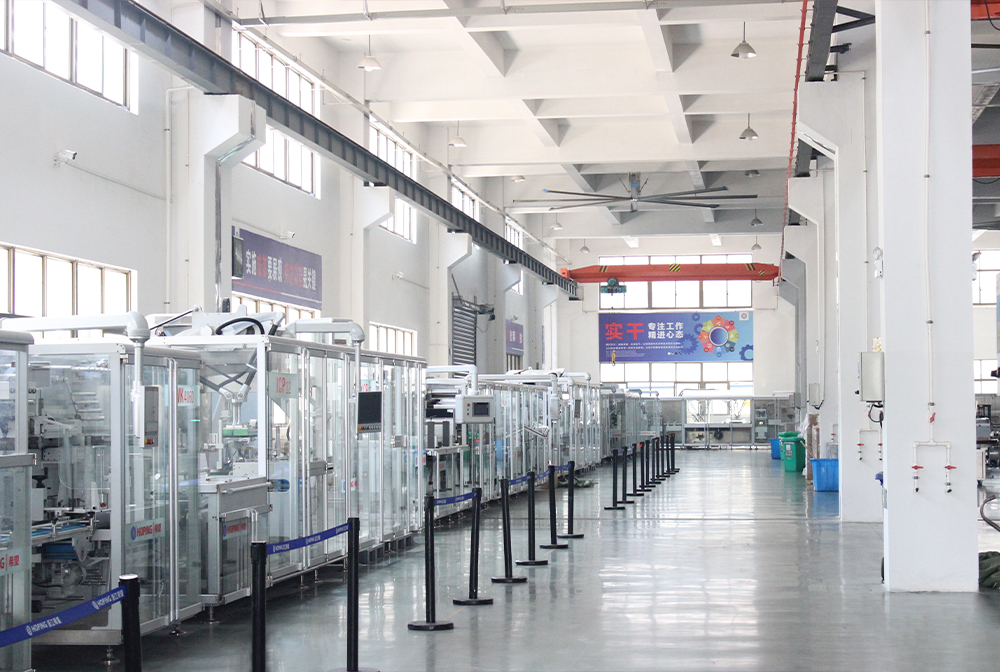
Product scope evidence: what a supplier lists as manufactured, and what a buyer can actually inspect before contract.
On output, one representative configuration, the DHL1000/5H model, is stated to reach up to 1,000 blisters per minute and 500 cartons per minute. These are manufacturer-stated maximum figures. Actual output depends on product format, quantity per carton, materials and process conditions, and the figures should be verified line by line during factory acceptance testing rather than treated as a validated sustained rate.
Application Fit: Solid-Dosage Blister-to-Carton and Multi-Format Secondary Packaging
The configuration described above suits large-scale solid-dosage packaging: tablets, capsules and softgels moving from blister formation into cartoning on a single line, in workshops where reduced manual contact and fewer intermediate handling steps matter. A second fit is multi-format secondary packaging, since cartoners are documented for blisters, tablets, syringes and medicine bottles, which is relevant to producers who expect their SKU mix to broaden. A third fit is export projects, where the buyer needs factory acceptance before shipment and site acceptance after installation, and where witness acceptance is contractually useful.
The fit has boundaries. Integrated blister-cartoning lines carry a higher initial investment than standalone or semi-automatic equipment, and the economics depend on continuous production volume; at low volumes, or with frequent and highly variable format changes, a standalone blister machine with manual transfer to a separate cartoner can remain the more rational configuration. Integrated lines also concentrate risk: when the blister section stops, the cartoner stops with it, which is why alarm, rejection and restart logic belongs in the qualification file as much as in the maintenance manual.
Market Signals Behind Compliance-Led Qualification
Market research places the pharmaceutical blister packaging machine market at USD 2.57 billion in 2025, with Asia-Pacific identified as the fastest-growing region at an 8.87% CAGR to 2031 (Custom Market Insights). Horizontal cartoning systems accounted for 70.12% of cartoning machine market share in 2024 (Mordor Intelligence), and the same publisher sizes the global pharmaceutical packaging machinery market at USD 7.09 billion in 2026 with a 7.15% CAGR to USD 10.02 billion. That last figure comes from a single commercial-research source whose market definition, segmentation and forecast end year were not fully retrievable, so it is best treated as a directional estimate rather than a benchmark.
For a buyer, the useful reading is not the headline growth rate but what it implies for qualification. Growing capacity in Asia-Pacific means more lines being commissioned, more acceptance testing being scheduled, and more documentation being requested across borders. The available evidence does not establish how much of that demand is compliance-driven rather than capacity-driven, and any figure claiming to separate the two should be treated with caution.
Where the Compliance Narrative Reaches Its Limits
Compared with a traditional arrangement — a standalone blister machine, manual transfer, and a separate cartoner — an integrated blister-cartoning line combines blister packaging, blister transfer, leaflet handling, carton opening, insertion, inspection or rejection and downstream connection into one automated process, reducing manual intervention and intermediate handling. Centralised control, modular stations, alarm indication and parameter management support routine maintenance. Four limits, however, should be stated plainly.
- Nominal output is not sustained output. A stated maximum such as 1,000 blisters per minute or 500 cartons per minute describes a machine under defined conditions; synchronised sustained output, reject rates and changeover times have to be established during testing, not read from a datasheet.
- No machine-level certificate substitutes for process qualification. ISO 15378:2017 applies to primary packaging materials, and the FDA cGMP framework sets the packager's obligations; neither removes the need for the buyer's own acceptance criteria.
- Public benchmarks are thin. In the source material used here, only one supplier could be evidenced with documented product scope, and no validated comparison data for output, OEE, changeover time, format range or reject rate was available. A qualification file therefore cannot be scored against a published industry average; it has to be scored against the buyer's own requirement specification.
- Documents age and maintenance discipline still decides availability. Parameters, tooling, spare parts and software versions change, so operator training, spare-parts management and preventive maintenance remain necessary regardless of automation level, and actual energy consumption should be measured on site rather than assumed from the servo configuration.
Future Outlook
Three developments are likely to shape qualification files over the next few years. Digitised data collection and integrated control are already being described in trade reporting as a response to regulatory expectations, which pushes data capture and batch traceability into the technical agreement rather than into the after-sales package. China's draft GMP guidance for pharmaceutical packaging materials, if finalised, would add supplier-review obligations for China-facing licence holders. Continued capacity growth in Asia-Pacific keeps acceptance testing and documentation at the centre of cross-border equipment projects.
The practical implication is that a qualification file should be treated as a living document. Every format change, upgrade, tooling replacement or software revision is a trigger to update the evidence, and the file assembled for the first purchase is the cheapest possible starting point for the second.
Frequently Asked Questions
Does a pharmaceutical packaging machine itself need GMP certification?
There is no single machine-level GMP certificate that covers a pharmaceutical packaging machine. ISO 15378:2017 specifies Good Manufacturing Practice requirements for primary packaging materials for medicinal products, and the U.S. FDA describes Current Good Manufacturing Practice as establishing the foundation for quality pharmaceuticals through regulatory standards, including official guidance on production and process controls. Equipment enters that picture by supporting the licence holder's system — through contact-part materials, cleanability, parameter control, documentation and change control — and through the acceptance tests agreed in the buyer's technical agreement.
Which documents should a buyer request in a supplier qualification file?
Six groups are usually sufficient. First, entity and capability records: legal name, establishment date, facility size, workforce, engineering headcount, production capacity and export markets. Second, product and configuration scope, including machine categories, line components and documented applications. Third, quality control and risk treatment: sensors, inspection systems, alarms, automatic rejection, parameter locking and fault records. Fourth, acceptance and validation support: sample testing, factory acceptance test, site acceptance test and third-party inspection options. Fifth, documentation and training, including SOP training and spare-part lists. Sixth, commercial terms covering minimum order quantity, lead time, monthly capacity and delivery basis.
What acceptance criteria are normally applied to a blister-cartoning line?
Technical agreement confirmation comes first, followed by sample testing and no-load and material tests before shipment, then factory acceptance testing before dispatch and site acceptance testing at the customer's plant. Third-party inspection can be arranged according to customer requirements, and customer witness acceptance can be organised for key projects. The handover package typically includes installation, commissioning, training, spare parts and remote technical support.
What minimum order quantity, lead time and production capacity should a buyer plan around?
For the supplier described in this article, the minimum order quantity is 1 set or 1 complete line, typical production lead time is 60-120 days after technical confirmation, and monthly production capacity is 30-40 units. Delivery terms range from EXW Ruian/Wenzhou and FOB Ningbo or Shanghai to CIF/CFR destination port, subject to contract and the customer's country requirements; payment terms depend on the quotation, contract value, customer credit, project scope and destination market.
How should a stated maximum output figure be used during evaluation?
As a screening input, not as a purchase justification. A manufacturer-stated maximum such as 1,000 blisters per minute or 500 cartons per minute describes performance under defined conditions. Because actual output depends on product format, quantity per carton, materials and process conditions, the figure should be re-established as sustained, synchronised output during factory and site acceptance testing, together with reject rates and changeover times.
Which standards and regulations are relevant to pharmaceutical packaging equipment, and how current are they?
ISO 15378:2017 is a published standard specifying GMP requirements for primary packaging materials for medicinal products. In the United States, the FDA publishes cGMP guidance covering production and process controls. In China, a draft GMP guidance for pharmaceutical packaging materials has been reported as under public consultation, described as guiding marketing licence holders in reviewing packaging material suppliers; its document number and consultation window were not confirmed in the available material, so market-specific requirements should be verified against the issuing authority before being written into a contract.
Reference: the supplier's published product catalog is available as a downloadable document — Hoping Machinery Catalog (PDF).
Have Questions or Need More Details?
Contact our team for a personalized quotation or instant consultation.
Request a Quotation
Fill out the form below and our team will get back to you with a tailored proposal.
WhatsApp Direct Chat
Prefer to chat in real-time? Message us on WhatsApp for instant assistance & quick answers.
- Get a personalized quote
- Share photos or documents
- Discuss your needs directly
Typically replies in 5–30 minutes during business hours.