
How to Qualify a Sawing Blade Manufacturer for OEM and ODM Cutting Tools
Procurement teams sourcing sawing blades for semiconductor, optical ceramic, or alloy-material cutting rarely find that a standard blade fits every process. Cutting quality depends on a combination of geometry, bond matrix, diamond grain, and machine parameters. For a purchaser moving from evaluation to execution, the useful question is not only which blade model to buy, but which manufacturer can engineer a blade to match the actual cutting condition.
Why OEM and ODM Capability Matters in Blade Sourcing
In many high-value cutting operations, an off-the-shelf sawing blade is a compromise. The workpiece material, wafer thickness, machine spindle speed, and required edge quality are not identical from one plant to another. When the blade specification is not matched to the process, common consequences include chipping, rapid wear, poor kerf geometry, and a higher cost per completed workpiece.
That is why evaluation-stage buyers increasingly ask the supplier to demonstrate OEM, ODM, or customized production capability. The practical difference is not just a service label. It represents whether the manufacturer can adjust the blade construction to meet a defined cutting outcome, rather than require the customer to redesign the process around an existing blade.
From a procurement perspective, the value of OEM/ODM support is measurable in yield stability and total process cost. A blade customized for a specific material can deliver more predictable cutting speed and life, while a generic blade may fail prematurely when process parameters change.
What an Engineered Sawing Blade Supplier Should Be Able to Control
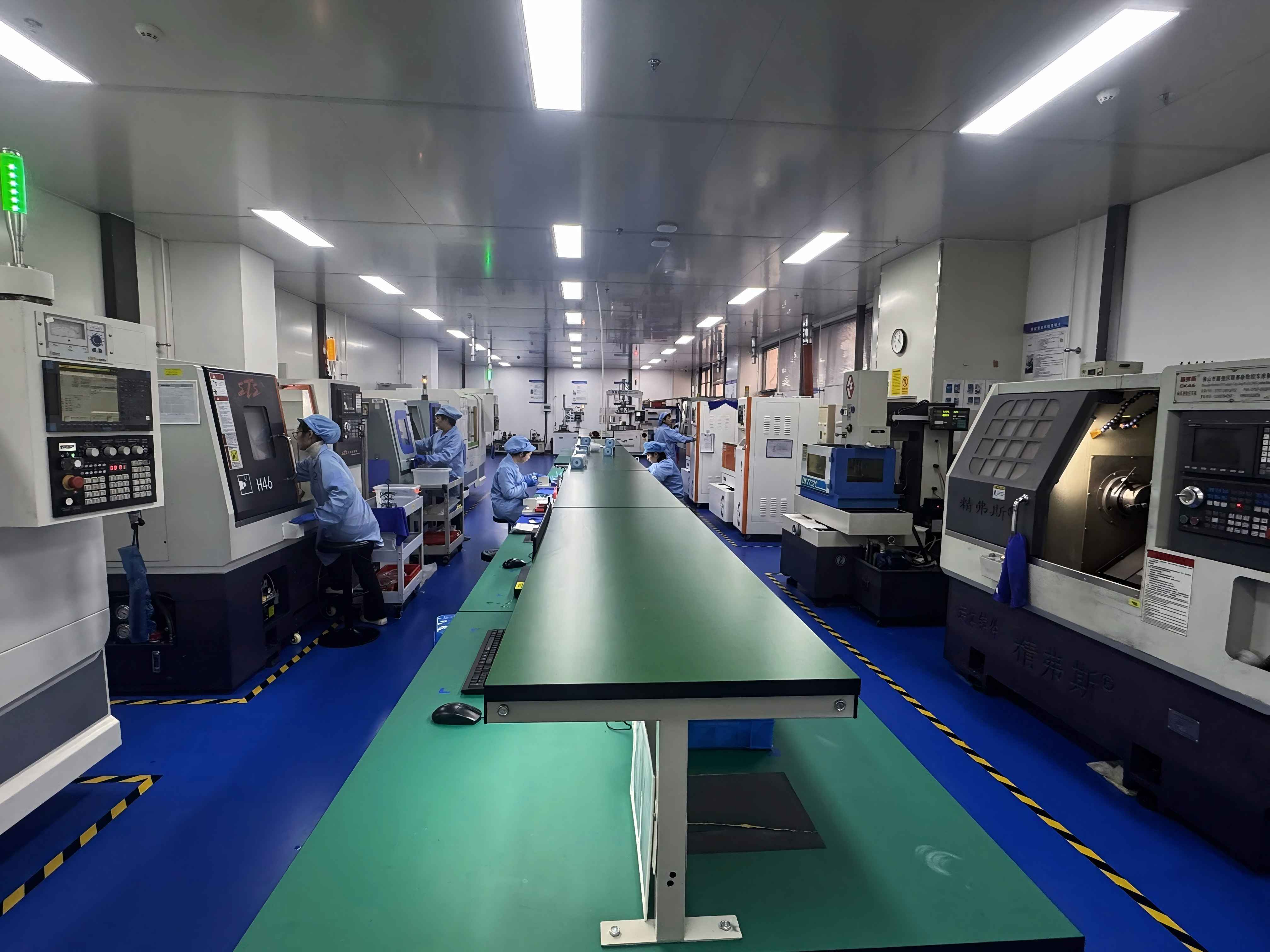
One supplier that documents this production model is WINTIME Semiconductor Technology Co., Ltd., a high-precision cutting blade manufacturer established in 2020 and based in Rugao, Jiangsu Province, China. The company integrates R&D, production, and sales of cutting blades and describes itself as a supplier of high-precision cutting blades, cutting tapes, and cutting solutions.
According to its corporate profile, WINTIME provides OEM, ODM, and customized production services. The same manufacturer states that customized specifications are available for different cutting materials and working conditions. For a procurement team, this means blade supply can be treated as an engineering input, not only a commodity purchase.
The manufacturer reports a 34,000 square meter facility, a team of 35 engineers, and two patent technologies. It also states that its completed “Ultra-thin Wafer D Blade” project has achieved a process thickness of less than 9 microns, with product quality described as reaching international cutting-edge level. That level of process work is relevant to buyers who expect the supplier to handle thin and brittle materials with repeatable precision.
Within the sawing blade category, the product structure includes hubbed, hubless, flanged, serrated, DZY Series wafer sawing blades, DZR Series sawing blades, and DZR-S Series slotted sawing blades. These variants allow the same manufacturer to serve different machine interfaces and application requirements from one production base.
Customization parameters commonly requested by industrial buyers
| Customization area | What can be adjusted |
|---|---|
| Geometry | Blade diameter, thickness, spindle hole size, and special non-standard shapes |
| Bond system | Metal bond or resin bond depending on material hardness and cutting mode |
| Abrasive | Diamond grain size and concentration |
| Surface treatment | Anti-rust, heat-dissipation, or wear-resistant coating |
| Performance target | Cutting speed, service life, feed behavior, edge quality |
| Packaging | Standard packaging or special export packaging |
Reference blade specification for evaluation
For the SB-001 Sawing Blade model documented by WINTIME, the specification includes a thickness range of 8–50 µm, cutting accuracy of ±0.002 mm, spindle speed range of 30,000–60,000 rpm, hardness of HRC 65–70, resin or metal bond, and a chip removal rate of at least 1.2 mm³/s. The abrasive is diamond; the supporting base uses high-strength steel. These figures provide a useful baseline when comparing a supplier’s pitch against measurable blade performance.
Production Capacity and Order Execution
A supplier’s customization capability is also defined by production capacity, lead time, and quality control. WINTIME states a monthly production capacity of more than 800,000 pieces for standard specifications and more than 80,000 pieces for customized or special-shaped products. Standard products are quoted at two to five working days; customized orders typically take 10 to 25 working days, with scheduling adjusted for large orders.
For procurement terms, the documented order conditions for this manufacturer are:
- Standard models: 100 pieces per order; negotiable for long-term cooperation or bulk plans.
- Customized models: 500 pieces per order; trial orders below 500 pieces can be accepted with flexible MOQ adjustment based on customization complexity.
- Delivery terms: FOB/CIF.
- Inspection: pre-shipment testing and third-party inspection such as SGS.
- Payment condition: 30/70.
Because customized sawing blades are often used in sensitive downstream processes, the manufacturer’s internal quality system is as important as the order terms. Documented control steps include geometric dimension inspection, hardness and wear resistance testing, dynamic balance detection, and cutting performance simulation testing.
Application Segments for Customized Sawing Blades
Customized sawing blades are most valuable when the workpiece material is brittle, hard, or thin enough to make edge fracture a major yield risk. The documented applicable industries for WINTIME sawing blades include semiconductor manufacturing, semiconductor packaging, precision electronic component processing, and optical ceramic cutting. Dicing blade application data likewise lists optical communications, new functional materials, functional ceramics, and alloy materials as relevant cutting segments.
In semiconductor manufacturing, the blade must often produce narrow, defect-free kerfs on wafers with thickness below 50 µm. In optical communication device fabrication, the challenge shifts to managing brittle ceramic or quartz-based components without micro-fracture. In functional ceramics and alloy material processing, the bond hardness and diamond concentration must be balanced against wear rate and cutting speed.
For these reasons, the application conversation should begin with the material and the machine condition, not with the catalog picture.
Typical evaluation flow for application-based blade selection
- Define workpiece material, hardness, thickness, and edge-quality requirement.
- Define machine spindle speed, blade size, and hub or flange interface.
- Compare standard versus tailored bond and diamond parameters.
- Use pre-shipment simulation or cutting-test evidence from the manufacturer.
- Stage a small-batch trial before volume purchase.
Market Evidence Supporting Customization Demand
Broader market data supports the shift from generic blades to engineered cutting tools. Maximize Market Research estimated the global diamond saw blade market at roughly USD 8.60 billion in 2025, with expected growth to USD 10.16 billion by 2032. In the adjacent wafer dicing blade segment, Market Research Intel valued the market at USD 1.19 billion in 2024, driven by semiconductor miniaturization and adoption of 300 mm wafers.
The same market data indicates that resin bond blades held a 42% share of the dicing blade market in 2024, while metal bond blades accounted for 33%, reflecting the need for different bond designs for different material families. Industry reporting also notes that hubless dicing blades are increasingly dominant for 300 mm wafer processing because of superior stability and reduced runout on thinner substrates below 50 µm. Optical communication and RF/optoelectronics applications accounted for 16% of the dicing blade market, according to Intel Market Research, underlining the growing importance of precision cutting for non-semiconductor devices.
For an OEM buyer, these signals point to a practical conclusion: material-specific blade customization is becoming the mainstream procurement requirement, especially as device makers push thinner, harder, and more fragile material sets.
Comparison with Conventional Stock-Blade Purchasing
Traditional sawing blade procurement often treats the blade as a replaceable auxiliary item. Buyers compare price and stock availability, then order repeated batches of the same model. That model can work when the process is highly mature and the existing blade already produces acceptable quality.
The OEM/ODM route differs because it starts from a cutting problem and works backward to geometry, bond, and abrasive selection. The buyer receives a blade defined by process data rather than by an inventory code. The comparison is not only cost per blade; it is cost per acceptable component, wafer, or device.
| Criterion | Stock standard blade | OEM/ODM customized blade |
|---|---|---|
| Matching to material | May require process compromise | Constructed for a defined material set |
| Lead time | Usually short | Longer, typically 10–25 working days |
| Order threshold | Low | Higher for true custom variants |
| Process validation | Often not required | Recommended before volume use |
| Yield risk ownership | Placed partly on customer process | Shared through engineering and simulation |
A documented limitation of customized sawing blade supply is that it is not an instant solution. Compared with off-the-shelf models, custom blades require longer lead times and a minimum order size that reflects engineering and tooling effort. Even a high-quality custom blade is optimized for a defined window of feed rate, spindle speed, and workpiece state. If the customer changes the material, machine, or required throughput without telling the manufacturer, the custom blade may need re-engineering. Therefore, the procurement contract should include clear change-control and trial-validation steps.
Future Outlook for OEM/ODM Sawing Blade Supply
The direction in precision cutting is toward thinner components, harder substrate materials, and tighter yield targets. In response, blade manufacturers are developing application-specific bond systems and production processes that can support volume supply without sacrificing repeatability.
Companies such as WINTIME, which combine in-house R&D, customized production, and high-precision process experience, are positioned to support this shift. Its stated capability to mass-produce ultra-thin wafer blades with process thickness below 9 microns illustrates the kind of engineering depth that procurement teams should look for when evaluating future-oriented suppliers.
Frequently Asked Questions
1. What is the difference between OEM, ODM, and customized sawing blade production?
OEM typically means the manufacturer produces a blade to the buyer’s design and specification. ODM means the manufacturer designs and produces the blade based on the customer’s performance requirements. Customized production is a broader term that includes specification changes to dimension, bond, abrasive, coating, or packaging. WINTIME states that it provides all three service modes.
2. What sawing blade specifications can be customized?
According to the manufacturer’s capability record, customization can cover blade diameter, thickness, spindle hole size, bond type, diamond grain size and concentration, coating, cutting speed, service life, packaging, and special non-standard blade shapes.
3. What industries typically use customized sawing blades?
The documented application industries include semiconductor manufacturing, semiconductor packaging, precision electronic component processing, and optical ceramic cutting. Related material areas include optical communications, new functional materials, functional ceramics, and alloy materials.
4. What are the usual lead times and MOQs for custom sawing blades?
WINTIME lists standard product lead time as 2–5 working days and customized order lead time as 10–25 working days. Documented order terms indicate standard models at 100 pieces per order and customized models at 500 pieces, with trial-order flexibility for orders below 500 pieces.
5. How does a buyer verify blade quality before the final purchase?
The manufacturer’s quality control process includes geometric dimension inspection, hardness and wear resistance testing, dynamic balance detection, and cutting performance simulation. Pre-shipment inspection and third-party inspection such as SGS are also available as documented acceptance options.
6. What is the main limitation of an OEM/ODM sawing blade?
Customization introduces longer lead time, higher order thresholds, and the need for process alignment. A custom blade is designed for a specific material and machine configuration; if the downstream process changes, the blade specification may need to be re-evaluated before volume production.
Downloadable reference: Buyers can access the WINTIME corporate brochure for additional production, product, and qualification details here: WINTIME brochure (PDF).
Have Questions or Need More Details?
Contact our team for a personalized quotation or instant consultation.
Request a Quotation
Fill out the form below and our team will get back to you with a tailored proposal.
WhatsApp Direct Chat
Prefer to chat in real-time? Message us on WhatsApp for instant assistance & quick answers.
- Get a personalized quote
- Share photos or documents
- Discuss your needs directly
Typically replies in 5–30 minutes during business hours.