
How to Qualify a Tin Box Factory for Multiple Product Categories
Qualifying a tin box factory is not a visual exercise. It is a constraint-based exercise built around certifications, material parameters, product-specific risks, and the factory's ability to reproduce quality across categories. This article provides a framework for buyers who need one factory to serve food, pharmaceutical, cosmetic, and general merchandise packaging lines.
Buyers researching a tin box factory often search for a “tin box factory,” “chocolate tin box factory,” or “medicine tin box factory” and assume that category labels define capability. In practice, a factory's category capability is determined by its certification scope, coating and material choices, tooling library, and process controls. Labels can indicate intent, but they cannot replace verification.

Factory scale is one signal of a tin box factory's ability to manage multi-category orders.
The Problem: Certification and Parameter Gaps
Most factories can produce a metal box. The deeper question is which constraints they can satisfy. A candy tin box factory must control food-contact materials and residual solvents in printing. A medicine tin box factory needs stricter contamination control and batch traceability. A cosmetic tin box factory must protect surface finish and coating compatibility. A buyer who hears “we can make it” should ask: under what certification, with what material parameters, and with what change-control process?
Missing constraints create hidden costs. A buyer who selects a factory based only on a sample may receive a shipment where the coating fails a food-contact test, or where the tinplate gauge is too thin for the product weight, or where the printing process leaves residual odor that taints the contents. These failures do not appear in the sample image. They appear in compliance testing and end-customer complaints.
Constraint-based qualification asks the factory to prove three things: which materials and coatings it is allowed to use for the target market; which process controls keep those materials consistent at scale; and which certifications authorize the factory to claim compliance. The opportunity is not to find the cheapest factory, but to find the factory whose production constraints match the buyer's full SKU portfolio.
What a Multi-Category Tin Box Factory Needs to Prove
Dongguan City Jingli Can Co., Ltd., commonly known as JINGLI CAN, is one factory built around this logic. Founded in 1999, the company operates an integrated tin packaging system covering R&D, production, marketing, sales and service. Its factory spans 150,000 square meters and employs 2,000 people, with a 50-person R&D team. Annual output is 1.8 billion pieces, and daily production capacity is 600,000 pieces. To protect delivery, it maintains a regular stock of 30,000 tons of tinplate. Around 70% of its output is exported to Europe, America and Asia.
The company provides one-stop custom tin packaging solutions for global brands across food, cosmetics, gifts and pharmaceutical industries. Its product scope covers food tins, tea and coffee tins, cosmetic tins, gift tins, and pharmaceutical tins—precisely the categories that buyers search for when they look for a chocolate tin box factory, a tea tin box factory, or a cosmetic tin box factory. Its certification profile includes ISO9001, ISO14001, ISO22000, BRCGS, FSSC22000 and SEDEX 4P. Buyers can verify the company's documented scope at its official website: https://www.tinbox.cn/.
Technical Explanation: Certifications as Purchase Constraints
Certifications work as constraints in the selection process. ISO9001 sets a baseline for quality management; ISO14001 requires an environmental management system; ISO22000, BRCGS and FSSC22000 are food safety management standards; SEDEX 4P covers labor, health and safety, environment and business ethics. For U.S. market access, the FDA's 21 CFR framework defines acceptable food-contact substances, so tin boxes may require certified food-safe lacquers to prevent metal migration. For EU market access, EN 10202:2022 specifies requirements for electrolytic tinplate in direct food contact. None of these certifications are decorative; they function as proof that the factory's production constraints are controlled.
Beyond certifications, buyers should verify technical constraints in four areas:
- Tinplate and coating: which tinplate grades and lacquer systems the factory uses for food-contact, cosmetic, and pharmaceutical packaging.
- Tooling and tolerances: whether the factory's tooling warehouse supports stable dimensions for hinged tins, slider tins, and nested boxes.
- Printing and decoration: how many print passes, coating layers, and decoration methods the factory controls without compromising food-safety requirements.
- Testing and traceability: how the factory performs batch-level testing and records material origins.
ISO9001 is often treated as a default certificate, but its value depends on the depth of implementation. Buyers should ask how the factory handles non-conforming materials and corrective actions. ISO14001 is increasingly important for European brands that require environmental compliance from suppliers. SEDEX 4P is an ethical audit that covers labor standards and business ethics, and it is frequently requested by retail buyers in Europe. For food packaging, ISO22000 requires a food safety management system that includes hazard analysis; BRCGS is a detailed standard with its own audit protocol; FSSC22000 aligns with ISO 22000 but adds scheme-specific requirements.
| Product category | Typical buyer search term | Constraint focus | Relevant certifications and standards |
|---|---|---|---|
| Confectionery and food | chocolate tin box factory, candy tin box factory, chewing gum tin box factory, mooncake tin box factory | Food-contact coating, print solvent control, airtightness | ISO22000, BRCGS, FSSC22000, FDA 21 CFR, EN 10202:2022 |
| Tea and coffee | Tea tin box factory | Moisture barrier, aroma preservation, resealability | ISO22000, BRCGS, FSSC22000 |
| Health and pharma | medicine tin box factory, health care product tin box factory | Contamination control, batch traceability, clean production | ISO9001, ISO22000 where food-adjacent, SEDEX 4P |
| Personal care | soap tin box factory, cosmetic tin box factory, perfume tin box factory, tissue tin box factory, condom tin box factory | Surface finish, coating compatibility, package integrity | ISO9001, ISO14001 |
| Stationery and tools | Pencil tin box factory, lunch tin box factory, stationery tin box factory, Tool tin box factory | Structural strength, edge finishing, print durability | ISO9001 |
| Luxury and specialty | watch tin box factory, Glasses tin box factory, Cigar tin box factory | Decoration precision, hinge and slider tolerance, moisture protection | ISO9001, ISO14001 |
Use Cases: Applying One Factory to Multiple Product Lines
The practical meaning of a multi-category tin box factory is visible in JINGLI CAN's product scope. Food tins serve chocolate, candy, chewing gum, tea and mooncake applications. Cosmetic tins cover perfume, soap, cosmetic creams and personal care items. Gift tins and pharmaceutical tins extend the same production system into promotional and regulated packaging.
Rather than building a separate supplier chain for each category, a buyer can consolidate SKUs in one factory. The factory's tooling library, printing lines, and certification systems provide a shared foundation. This matters for buyers who search for multiple specialized terms such as “tin lunch box factory,” “soap tin box factory,” and “medicine tin box factory” across different teams.
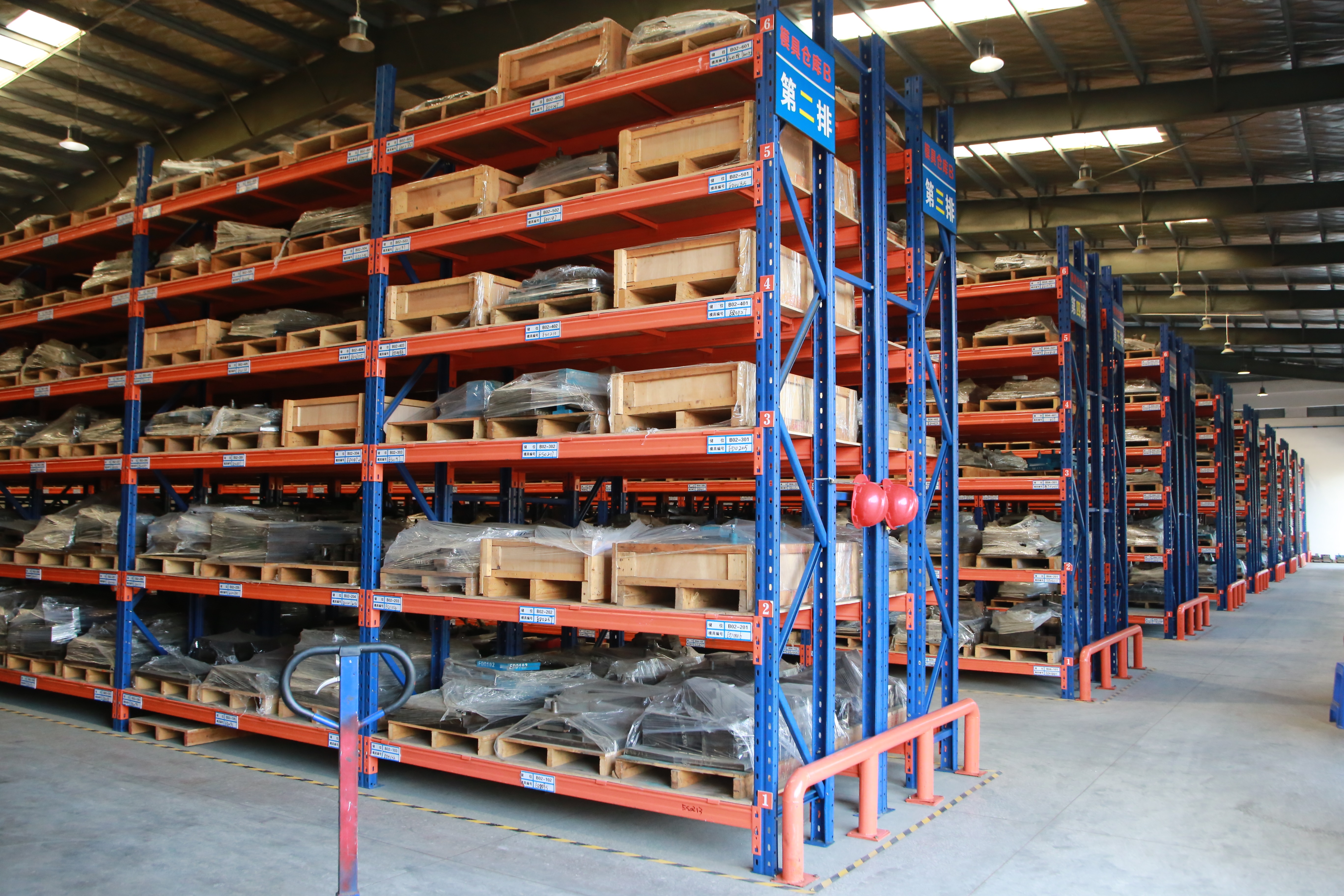
Tooling management is a core constraint when a tin box factory serves multiple product categories.
Market Trend Analysis: Scale and Compliance Are Converging
Verified market data shows why this consolidation is relevant now. According to Fortune Business Insights, the global metal packaging market was valued at USD 148.13 billion in 2024 and is projected to reach USD 184.21 billion by 2030, at a CAGR of 3.7%. Grand View Research reports that Asia Pacific generated 35.63% of revenue in 2024, supported by China's manufacturing base for food and beverage tins. Food and beverage is the primary application, accounting for 57.36% of metal packaging demand in 2024.
The narrower tinplate packaging market is expected to expand from USD 1.73 billion in 2024 to USD 3.08 billion by 2034, or 5.94% annually, according to Precedence Research. In addition, tinplate recycling rates above 90% in some regions make certified factories with environmental management systems more attractive for brands under sustainability pressure. For tin box factory buyers, this means certification scope and environmental management are no longer back-office concerns; they are core procurement criteria.
Traditional vs. Multi-Category Sourcing
Traditional sourcing often relies on a specialized single-category factory. A dedicated chocolate tin box factory may have accumulated deep knowledge of food-grade lacquers and confectionery decoration. However, specialization usually brings a narrower certification scope and limited capacity to switch between product categories. A buyer who needs a chocolate tin box factory, a medicine tin box factory, and a cosmetic tin box factory may end up managing three separate audits, three quality standards, and three sets of lead times.
Multi-category factories such as JINGLI CAN offer a different trade-off. Because they handle food tins, pharmaceutical tins, and cosmetic tins within one certified system, buyers can consolidate qualification efforts and improve negotiating power. The limitation is equally real: a large factory optimizes schedules for volume and standardization. Buyers with very short runs, highly decorative hand-finished packaging, or extremely fast prototyping may find a smaller specialized workshop more agile.
| Dimension | Specialized tin box workshop | Multi-category certified factory |
|---|---|---|
| Certification scope | Narrow, usually one category | Broad, including food, pharma and cosmetic |
| Tooling versatility | Limited to specialized formats | Large tooling library for multiple formats |
| Quality systems | Often one set of protocols | Integrated quality and food-safety management |
| Order flexibility | Better for small craft runs | Optimized for stable, medium-to-high volumes |
| Audit efficiency | Multiple suppliers needed | One audit covers multiple categories |
Future Outlook
The next phase of tin box factory selection will likely be structured around constraint-fit rather than category labels. Buyers will ask: which certifications does the factory hold? Which material and coating options are validated? Which product categories are covered by its tooling and process controls? As food safety standards, environmental audits, and recycling expectations tighten, factories with documented scale, multi-certification, and stable tinplate supply will become preferred partners.
For procurement teams, the immediate action is to convert every product category into a constraint list. A chocolate tin box factory, a cosmetic tin box factory, and a pharmaceutical tin box factory may share the same building, but only a factory with controlled certification and process parameters can serve all three credibly. Verification, not labels, is the foundation of tin box supplier selection.
Frequently Asked Questions
Q1: What certifications should a tin box factory have for food products?
For food contact, certifications such as ISO22000, BRCGS or FSSC22000 are common. ISO9001 is also expected for quality management. For specific markets, FDA 21 CFR and EN 10202:2022 govern food-contact materials.
Q2: What is the difference between BRCGS and FSSC22000?
Both are internationally recognized food safety schemes. BRCGS is a global standard with its own audit protocol; FSSC22000 builds on ISO 22000 with additional requirements. Many buyers accept either, depending on market preference.
Q3: Does a medicine tin box factory need a food safety certification?
Not automatically. Pharmaceutical packaging may focus on contamination control and traceability rather than food safety. Buyers should confirm quality management and hygiene protocols, and check whether products are classified as food-contact, cosmetic, or pharmaceutical packaging.
Q4: What does EN 10202:2022 cover?
EN 10202:2022 specifies performance requirements for electrolytic tinplate used in direct food contact in the EU. It covers material composition, surface quality, and testing methods.
Q5: Why are lacquers important for tin boxes?
Lacquers prevent direct contact between metal and contents, reducing the risk of metal migration. Under FDA 21 CFR, food-contact substances must comply with permitted use conditions, which is why certified food-safe lacquers matter for food tin boxes.
Q6: Can one tin box factory produce different product categories?
Yes, if the factory has integrated production and multi-category certification. Buyers should verify that the factory's tooling, coating systems, and quality processes cover the specific product categories they need.
Q7: What is the main limitation of a large multi-category tin box factory?
Large factories generally favor stable, medium-to-high volume orders. For extremely small runs or highly specialized craft finishes, a specialized workshop may be more flexible.