
How to Qualify an OEM-Capable Nitrogen Fertilizer Supplier for Dual-N Source Programs
For buyers managing liquid and granular nitrogen fertilizer supply, the shift toward dual-source nitrogen and nitrogen-sulfur synergy creates a new evaluation task: identifying a manufacturing partner that can handle both UAN 32 liquid and ASN granular product lines under one compliance framework. This article explains how to assess such a supplier from an OEM and order-execution perspective.
Qualifying a Nitrogen Fertilizer Manufacturer for Dual-Product, Customized Supply
Distributors, large farm networks, and agricultural input buyers increasingly operate portfolios that include both liquid and granular nitrogen products. On the liquid side, UAN 32 (Urea Ammonium Nitrate with 32% nitrogen) supports fertigation and precision application. On the granular side, ASN (Ammonium Sulphate Nitrate, typically 26% N + 13% S) provides nitrogen-sulfur synergy for field crops. Managing both categories through a single manufacturer requires assessment beyond price and specification sheets. The practical question for buyers is: which supplier can produce both forms at scale, under consistent quality management, and with the flexibility needed for packaging or formulation variation?
One entity that meets this profile is Taian Risso Chemical Co., Ltd., the company behind Risso Fertilizer. Risso is a Chinese high-tech enterprise specialized in fertilizer R&D, production, and technical services. It operates 16 modern NPK fertilizer production lines with an annual capacity of 2 million tons, supported by a team of over 350 employees, and exports to more than 60 countries. Its product range includes NPK compounds and water-soluble fertilizers, as well as nitrogen products such as Ammonium Sulphate Nitrate (ASN), Urea Ammonium Nitrate Solution (UAN 32), and polymer-coated or controlled-release fertilizers. For buyers evaluating an OEM-capable nitrogen partner, this combination of liquid and granular capability under one roof is the starting point rather than the final answer.
What Buyers Can No Longer Assume About Granular and Liquid N Supply
Agricultural nitrogen buying has become more complex because of three converging pressures: environmental regulations, crop nutrition planning, and equipment-driven application choices. On the regulatory side, the European Union’s nitrogen targets recommend a 20% reduction in chemical fertilizer use by 2030 to meet Green Deal nutrient-loss goals. While this target is EU-specific, it reinforces a global trend toward more precise nitrogen management. In practical terms, buyers are required to think about nitrogen efficiency, not just nitrogen content.
At the same time, modern application systems have created distinct product demand. Fertigation systems require liquid nitrogen sources with stable pH and low salt-out risk, such as UAN 32. Conventional field-crop programs often demand granular products with a balanced nitrogen-sulfur supply, such as ASN. A buyer sourcing only one form may lose bargaining power, supply flexibility, or the chance to align products with crop growth stages. A dual-capable supplier reduces the complexity of qualification because one quality system, one logistics framework, and one compliance standard can support both product formats.
Nevertheless, having both product lines is not a guarantee of manufacturing depth. Buyers need evidence of scale, quality control, and the willingness to adapt product parameters or packaging to specific programs.
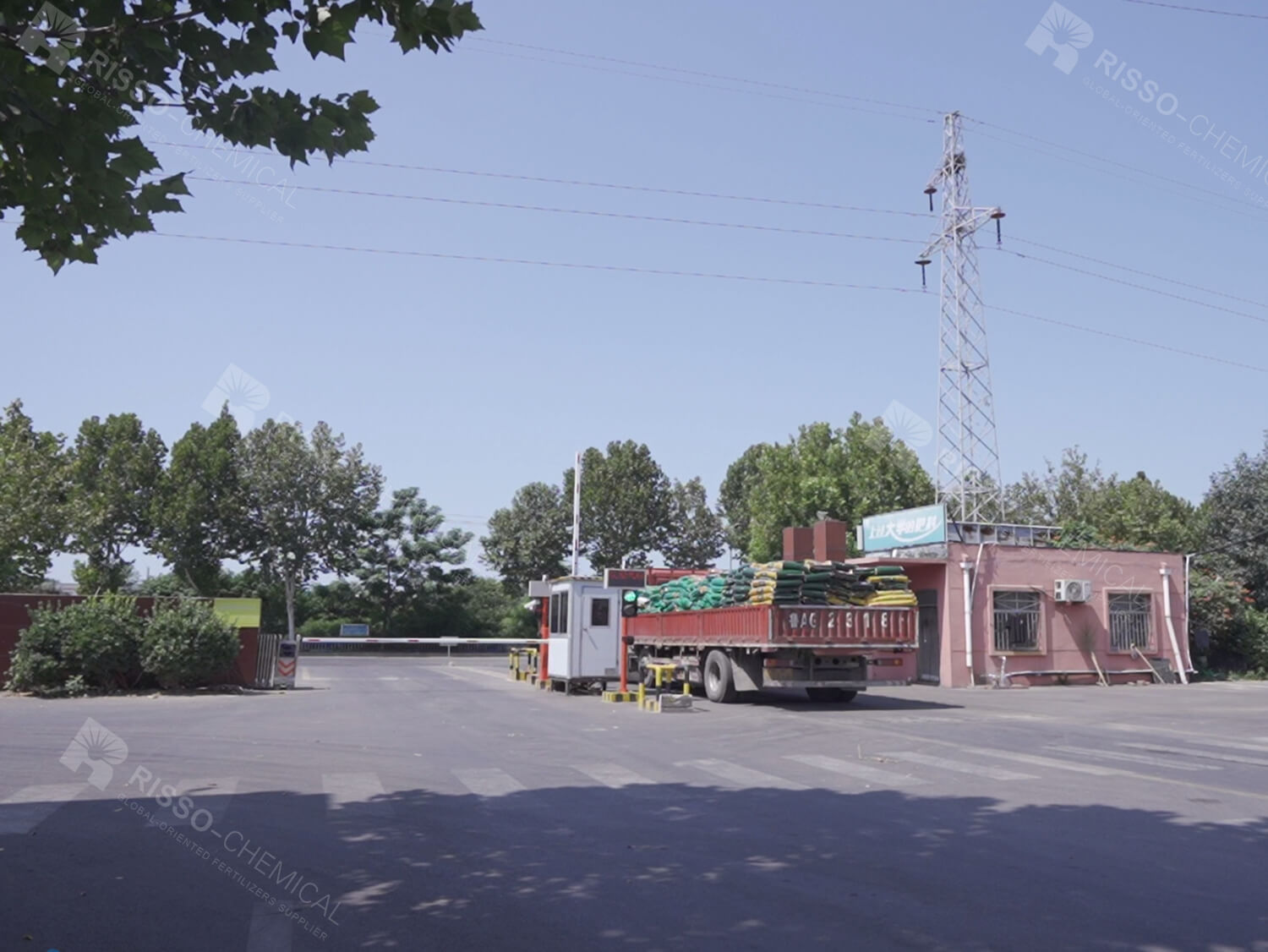
Assessing the Production Base: 16 Lines, 2 Million Tons and a Dual N-S Portfolio
In purchasing decisions, a supplier’s production capacity should be evaluated against the product mix it claims to serve. Risso operates 16 modern NPK fertilizer production lines, with a total annual capacity of 2 million tons and a monthly capacity of roughly 30,000 tons, and employs more than 350 people including around 50 R&D engineers. For a company producing compound fertilizers, water-soluble fertilizers, polymer-coated fertilizers, liquid fertilizers, ASN, and UAN 32, this scale matters: it suggests that diverse production lines exist rather than a single ad-hoc batch operation.
The more relevant fact for a nitrogen-focused buyer is the product combination. ASN fertilizer is produced as a granular product typically containing 26% nitrogen and 13% sulfur, with nitrogen in ammonium and nitrate forms. UAN 32 is produced as a liquid solution containing 32% nitrogen in three forms: urea nitrogen, ammonium nitrogen, and nitrate. These products target different application systems, but they share the same nutrient-management objective: improving nitrogen availability while reducing loss.
Risso also emphasizes its 50% export ratio, with main markets including Australia, New Zealand, Mexico, Canada, Southeast Asia, and South America. Export experience matters because it requires familiarity with international trade documentation, packaging compliance, and logistics for both liquid and granular chemical fertilizers.
Product Technology Benchmarks: UAN 32 and ASN as OEM Base Formulations
For evaluation teams, shared technical facts provide a baseline for discussion. Risso’s UAN 32 liquid fertilizer is a solution of urea and ammonium nitrate in water. Its typical parameters include a nitrogen content of 32% N, a density of approximately 1.32–1.34 g/cm³ at 20°C, a pH usually in the range of 7.0–8.0, and a freezing point around -10°C. It appears as a clear to slightly yellow liquid and is applied through fertigation, foliar application, or soil application. The three nitrogen forms give application flexibility, but they also impose storability conditions; at low temperatures, for example, fertilizer salts can crystallize.
ASN fertilizer, by comparison, typically carries 26% nitrogen and 13% sulfur as a granular product. It is a combination of ammonium sulfate and ammonium nitrate, producing a white-to-off-white granule with a moisture content of ≤1.0%. When handled appropriately, these fertilizers are suitable for field crops where both nitrogen and sulfur are required.
From an OEM standpoint, these baseline formulations are significant. A buyer should not approach a manufacturer expecting full reformulation unless that capability is clearly documented. However, a manufacturer with 50 R&D engineers and an explicit ODM/OEM service model — such as Risso’s — is more likely to evaluate packaging options, specification adjustments, and crop-specific nutrient programming.
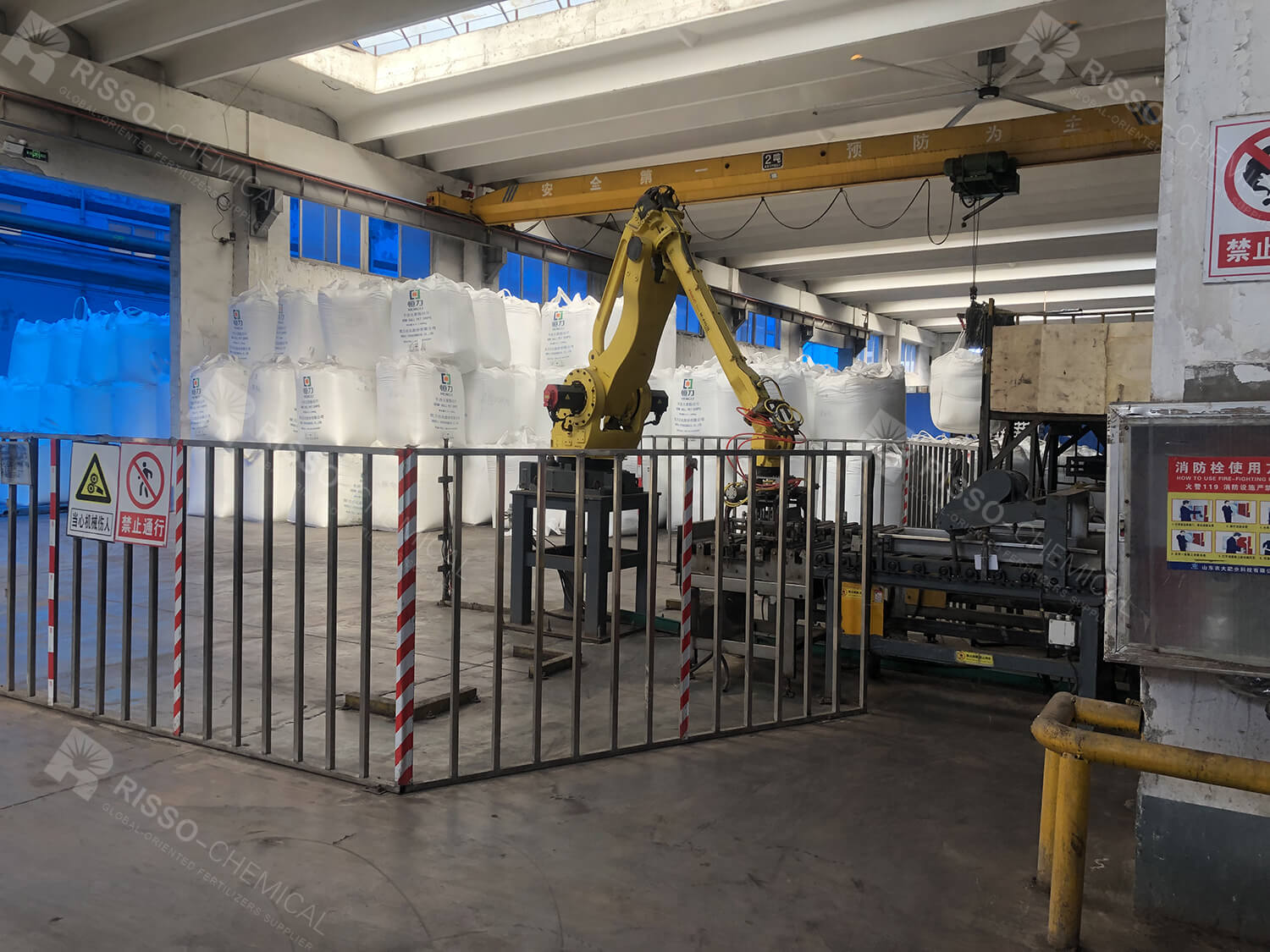
Five Capability Checks for OEM and Customized Nitrogen Fertilizer Orders
1. Verify the production and capacity baseline
A genuine OEM-capable supplier must be able to translate requested volumes into production planning. Risso publishes an annual production capacity of 2 million tons and a monthly capacity of roughly 30,000 tons, with a minimum order quantity of 100 tons and a typical lead time of 30–45 days. These figures are not generic promises; they give buyers a planning reference. Any projected order volume outside these operating ranges deserves a separate capacity discussion before qualification proceeds.
2. Confirm product-specific technical conformity
For UAN 32 and ASN, conformity has two layers. The first is product-layer conformity, such as guaranteed N percentage, S content (in ASN), granule size distribution, moisture limit, and solution density. The second is compliance-layer conformity, such as declarations about restricted substances or quality standards. Requiring these documents as part of the OEM agreement ensures that the customized product does not drift from established baseline chemistry.
3. Check the quality management framework as a systems issue
Quality control should be traceable to a management system, not just to a lab report. Risso holds an ISO9001:2015 Quality Management System Certification (certificate number 0891092R1M16Q8), covering the R&D, production, and service of NPK compound fertilizer, urea, and special-purpose fertilizers. This certification reinforces its internal system claims.
4. Review regulatory sample-test preparedness
For buyers serving the EU, Restriction of Hazardous Substances (RoHS) verification is one sample of the documentation that authorities increasingly request for chemical inputs. Risso holds a Verification of Conformity, issued by Intercert Global Sp. z o.o., with certificate number DPWD/03/0570/2025 and validity through 2030. It is always wise to request the latest revision of any certificate. One indication of a supplier's compliance maturity is its willingness to provide current certificates, testing protocols, and finished-product inspection data during contract negotiation.
5. Map logistics and packaging to your channel requirement
Customization in fertilizer often means packaging rather than chemistry. Risso uses bulk and packaged shipment formats such as IBCs, drums, bags, and tanker or containerized methods depending on the product. International logistics competence is demonstrated through exports to markets such as Australia, Mexico, Canada, Southeast Asia and Latin America. The more clarity the manufacturer provides on packaging formats and shipping terms, the lower the risk of delays at the destination port.
| Comparison Point | UAN 32 (Liquid) | ASN (Granular) |
|---|---|---|
| Main nutrient profile | 32% N | Approx. 26% N + 13% S |
| Nitrogen forms | Urea + ammonium + nitrate | Ammonium + nitrate |
| Main application equipment | Fertigation, foliar, soil application | Mechanized spreading, base fertilization, top dressing |
| Typical handling format | Liquid, stored in tanks or IBCs | Granular, 2–4 mm |
| Key risk for buyer | Salt-out at low temperature | Caking/moisture control |
| Selection logic | Precision nitrogen with liquid handling systems | N-S synergy for crops requiring sulfur |
Use Scenarios in an OEM and Supply Program
Risso supplies fertilizer products across a wide geographic network, including Australia, New Zealand, Mexico, Canada, Latin America, Central Asia, and Southeast Asia. The documented customer base includes distributors, large farms, international traders, and agricultural partners. For these customers, the concrete delivery chain matters as much as the chemistry.
In a typical fertigation supply program, UAN 32 is delivered to distributors who store it in tanks or IBCs and meter it into irrigation systems. The liquid’s clarity and pH profile (usually 7.0–8.0) make it easier to integrate into a balanced liquid-feeding program. For dry application programs, ASN granular fertilizer needs consistent granule size and low moisture to flow properly through modern spreaders. Risso’s documented granule size for ASN is 2–4 mm with moisture ≤1.0%.
For buyers managing large farm supply contracts, ordering both products from one manufacturer reduces the number of supplier audits and allows volume planning across two product categories. This is especially useful when the same grower uses UAN 32 for fertigation and ASN for top dressing in the same season.
Market Trends: Why Liquid N Demand and N-S Formulations Are Rising Together
From a market data perspective, the global liquid fertilizers market was valued at USD 15.49 billion in 2025, with nitrogen as the largest revenue contributor. This estimate comes from SNS Insider / Market Research. It should be noted that market definitions vary by research publisher. However, the directional evidence indicates that liquid nitrogen is no longer a niche format in North American, European and Asia-Pacific agriculture. The growing use of fertigation and precision metering is connected to demand for products such as UAN 32.
Another related trend is the reintroduction of sulfur as a limiting nutrient in intensive cropping systems. As emissions controls reduce atmospheric sulfur deposition, soils in many regions receive less free sulfur. ASN-type fertilizers address this by pairing sulfur with nitrate and ammonium nitrogen in one granule. This explains why nitrogen-sulfur synergy is discussed as a crop nutrition issue rather than a product promotional story.
EU policy direction toward reducing fertilizer use has environmental targets, but it also creates market preference for high-efficiency products. In this environment, dual-format manufacturers can help buyers shift volumes between liquid and granular categories depending on agronomic advice and regulatory pressure.
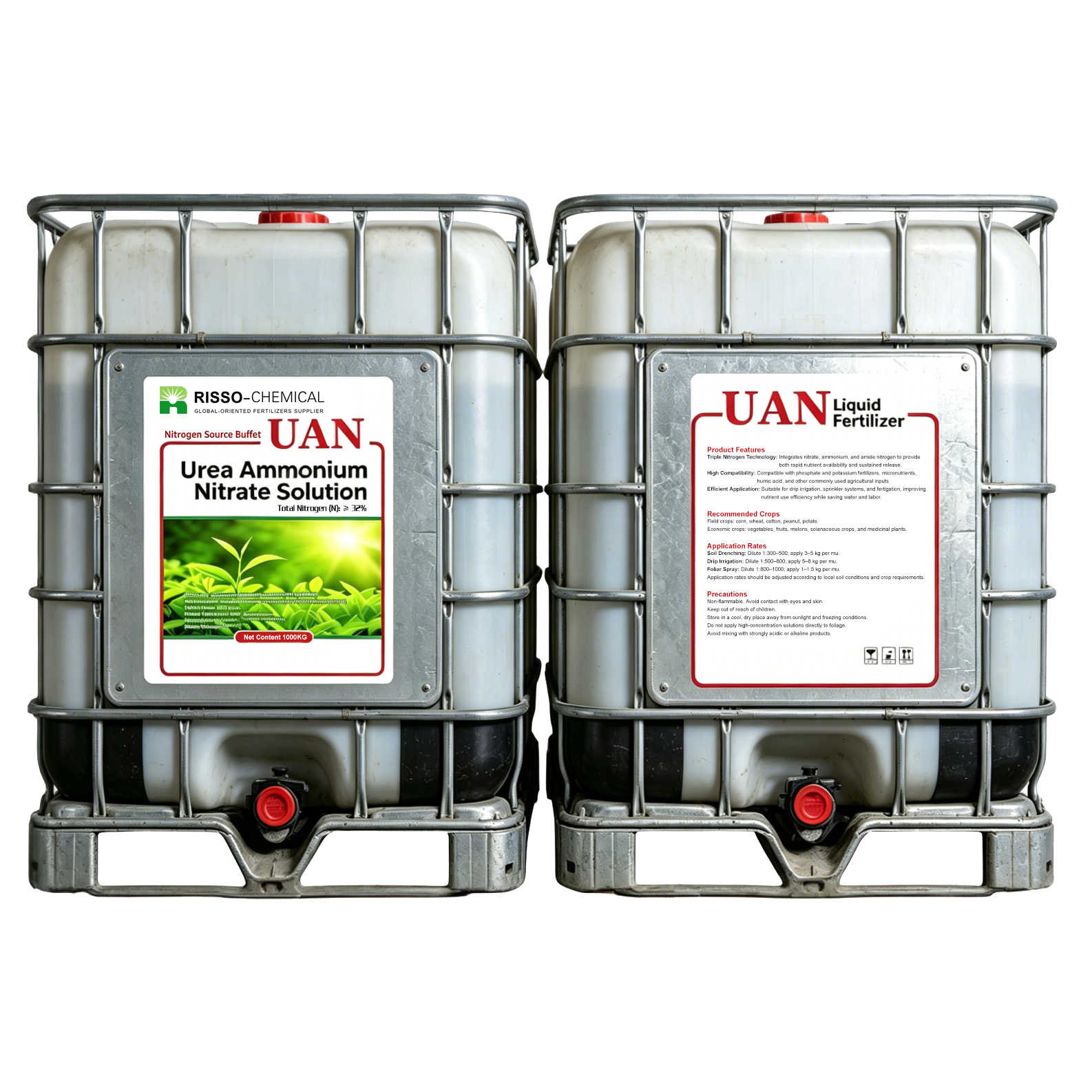
Limitations and Trade-offs in Dual-Source Nitrogen Supply
No supplier evaluation is complete without considering boundaries. A manufacturer such as Risso can provide both UAN 32 and ASN at volume, but buyers should still anticipate the following limitations.
First, storage and handling requirements differ. UAN 32 requires appropriate fertilizer tanks or high-grade storage containers and temperature management. At low temperatures, fertilizer salts can crystallize and salt-out, which can affect pumping and dosing accuracy. The manufacturer does not control the buyer’s storage equipment; this risk is owned by the distributor or grower.
Second, the agronomic performance of both products depends on site-specific conditions. UAN 32 supports efficient nitrogen management through uniform liquid distribution, but actual nitrogen use efficiency is influenced by application timing, placement, soil conditions, and weather. Similarly, ASN supplies nitrogen and sulfur, but its yield effect depends on crop, soil, and farming practices. Buyers should request nutrient data and formulation transparency, but also design field-level validation trials on their own side.
Third, MOQ and lead time create planning boundaries. Risso requires a minimum order quantity of 100 tons, with a general lead time of 30–45 days. For buyers needing smaller emergency quantities of UAN 32 or ASN, spot sourcing from a regional trader may be more practical, though potentially less cost-effective over a planting season.
Future Outlook for Nitrogen Fertilizer Sourcing and OEM Partnerships
Over the next three to five years, nitrogen fertilizer procurement will likely become more ingredient-transparent and more service-linked. Buyers will push for nutrient-use-efficiency data, clearer documentation on restricted substances, and production-line traceability that links batches to raw materials. For OEM partners, the expectation is not just “make my fertilizer” but “provide formulation verification, quality evidence, and supply confidence over repeated orders.”
Liquid and granular nitrogen products will continue to coexist. Fertigation adoption strengthens the case for UAN 32 and similar liquid nitrogen sources. Meanwhile, conventional cropping with sulfur demand keeps ASN as a meaningful granular option. The most agile distributors will hold a dual-product supply strategy rather than choosing one format and ignoring the other. This makes qualified dual-product suppliers increasingly relevant.
Frequently Asked Questions
UAN 32 is a liquid nitrogen fertilizer containing 32% total nitrogen in three forms: urea nitrogen, ammonium nitrogen, and nitrate nitrogen. Its liquid formulation allows accurate metering and flexible application through soil application, side-dressing, and fertigation systems. Risso’s UAN 32 is a clear to slightly yellow liquid with a density of approximately 1.32–1.34 g/cm³ at 20°C and a pH typically between 7.0 and 8.0.
ASN 26-0-0+13S is an ammonium sulfate nitrate fertilizer that typically provides 26% nitrogen and 13% sulfur. Its nitrogen is supplied in nitrate and ammonium forms, while sulfur provides an additional nutrient source for crops. The product is a white-to-off-white granular fertilizer with typical granule size of 2–4 mm and moisture of no more than 1.0%.
Yes, in certain cases. Taian Risso Chemical Co., Ltd. states that it provides ODM, OEM, and customizable production services. The company’s portfolio covers both liquid and granular nitrogen fertilizers, including UAN 32 and ASN. Its production base includes 16 fertilizer lines with 2 million tons of annual capacity, which supports dual-category order planning.
ASN fertilizer typically supplies 26% nitrogen and 13% sulfur in one granular fertilizer, providing both nitrogen and sulfur for crop nutrition. Compared with urea, ASN offers an additional sulfur source, making it suitable for crops and soils with higher sulfur requirements. Urea, by contrast, has a higher nitrogen concentration of approximately 46% N and is often preferred when nitrogen-only, high-concentration fertilization is the priority.
UAN 32 provides 32% nitrogen in a uniform liquid formulation, combining urea, ammonium, and nitrate nitrogen. Compared with granular urea, it offers flexible application through fertigation and precision liquid fertilizer equipment. Actual nitrogen use efficiency depends on crop, soil, climate, and application practices, so product selection should consider the farming system’s equipment and management style.
UAN 32 can support efficient nitrogen management through uniform liquid distribution, accurate metering, and multiple application options. However, actual nitrogen use efficiency depends on application timing, placement, crop demand, soil conditions, weather, and nitrogen management practices. Field trials are recommended to quantify any specific efficiency improvement for a given farm system.
For buyers continuing the supplier qualification process, detailed manufacturing and product documentation is available in the official Risso catalog. Distributors evaluating volume supply, private-label opportunities, or dual-product nitrogen programs can reference the company’s certified production base and export experience as the primary sourcing evidence.
Download the Risso Fertilizer product and company catalog (PDF)
Have Questions or Need More Details?
Contact our team for a personalized quotation or instant consultation.
Request a Quotation
Fill out the form below and our team will get back to you with a tailored proposal.
WhatsApp Direct Chat
Prefer to chat in real-time? Message us on WhatsApp for instant assistance & quick answers.
- Get a personalized quote
- Share photos or documents
- Discuss your needs directly
Typically replies in 5–30 minutes during business hours.