
How to Read Compliance Evidence for Windproof Roller Blinds
How to Read Compliance Evidence for Windproof Roller Blinds
A document issued for a windproof roller blind describes one configuration, not a product family. That single distinction explains most of the friction that appears between importers and manufacturers at handover: the certificate, the test summary and the datasheet are genuine, the delivered product is genuine, and yet the two were never formally matched to each other. This guide sets out how a buyer can check that match before specification is frozen.
Windproof roller blinds are configured systems rather than catalogue items. The same cassette platform may be supplied with a rigid aluminium side rail or with tensioned cable guidance, with a #3 zipper or a 3.5# zipper or a T-tape fabric edge, with a 0–50% openness solar screen or a blackout fabric, and with roller tube diameters that change the maximum width and height the system is rated for. Each of those choices changes what a compliance document has to describe. A document that does not name the configuration it was issued against answers a different question than the one the buyer is asking.
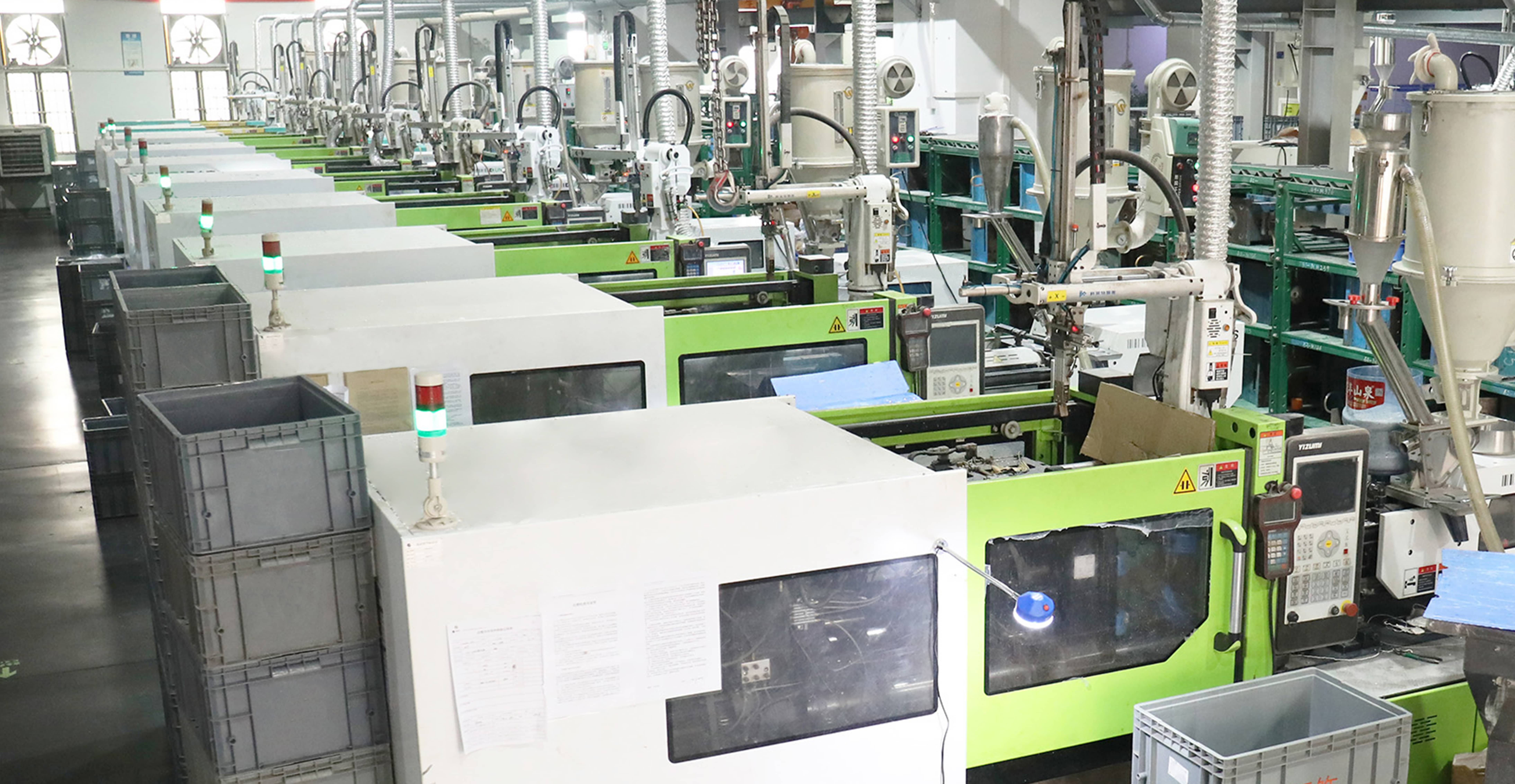
Component production determines batch consistency, which is what most compliance documents are ultimately trying to evidence.
Why a document's scope matters more than its title
Buyers routinely evaluate evidence by its cover: a file titled with a product family name, a standards reference, a signature and a date. The useful question is narrower. Which model code does the document name? Which zipper specification? Which fabric weight and openness? Which span envelope? A document that answers those four questions can be checked against a purchase order in minutes. A document that answers none of them cannot be checked at all, regardless of how authoritative it looks.
This is not a criticism of suppliers so much as a description of how document libraries evolve. A manufacturer that sells a platform across many variants will usually hold evidence for the configurations it has tested most often, and will sometimes present that evidence at family level because the family shares a cassette, a bracket system or a motor platform. Shared components are real and relevant — NEWHOO, for example, describes a unified 25 mm motor platform across its large-format range so that spare parts remain interchangeable between extra-high and extra-wide variants — but component commonality is not the same thing as equivalent performance at every size.
The practical rule is that evidence should be read at the level of the delivered bill of materials. If the bill of materials names a model, a zipper, a fabric and a span, the evidence should name the same four things.
Three variables that change what a document actually covers
Product model and platform
In a system range, mechanical behaviour is dominated by the cassette section, the roller tube diameter and the coupling between tube and side rail. NEWHOO's outdoor range illustrates how much those differ: the WR120 series uses a 120 × 120 mm cassette with 2.0 mm wall and a stated wind resistance above Class 12; the WR130-180 dual-layer unit uses a 130 × 180 mm cassette with a 2 mm wall and a stated Class 10; the WR135-150 large-size unit offers a Φ88 tube for heights below 5.5 m and total area below 30 m², or a Φ100 double-layer tube for widths up to 6.5 m at heights below 3.5 m. Those are three different envelopes. A document covering one does not describe the others, even where the same fabric is used throughout.
Zipper type
The zipper is the load path between fabric and rail, so it belongs in the scope statement of any wind claim. Within one manufacturer's range the specification varies by application: the WR120-140B and WR120-140C extra-wide split units use a 3.5# zipper with a patented metal rail opening and a reinforced curved metal seal; the WR130-180 dual-layer unit uses a 3# zipper with a reinforced curved top seal; the WR100-120 recessed unit accepts an ordinary fabric #3 zipper or an indoor T-tape edge for blackout thin fabric; the VR88 and VRM70 invisible screen doors use a 5 mm T-tape; the VRW100 retractable screen door uses a #2 nylon zipper with a magnetic strip closure. Six specifications, six different restraint behaviours. A wind class quoted without the zipper specification attached is only half a claim.
Fabric and openness
Fabric carries the wind load into the zipper, so tensile strength and openness belong in the same sentence as the wind class. NEWHOO states a tensile strength above 2500 N for its solar screen fabrics, against a CECS reference value of 1500 N, and describes fabric openness across a 0–50% range with an operating temperature window of −20 to 65 °C. A 0% openness blackout fabric and a 50% openness solar screen behave differently under the same gust, even inside the same cassette. Where a document quotes wind resistance without the fabric it was established against, the buyer should ask which fabric, and whether the delivered fabric has the same areal weight and weave.
T-tape versus #3 zipper: where the ambiguity starts
T-tape is not a grade of zipper and it is not automatically stronger or weaker than a #3 zipper. It is a construction method: a T-shaped reinforcing tape is added to the fabric edge and then combined with the zipper, increasing the contact area so the fabric edge stays constrained in the track across the full travel and forms a continuous seal. The effect is improved sealing and impact resistance at the fabric edge, which is why it appears on insect-control products such as the VR88 and VRM70 screen doors with a 5 mm tape, and on indoor products such as the TR85 extra-wide indoor unit, where T-tape is used to keep large fabric panels flat without flutter.
The ambiguity arises because T-tape also appears as an indoor-only option in other parts of the same range. The WR100-120 recessed curtain-box unit is documented as accepting an ordinary fabric #3 zipper, or an indoor T-tape edge for blackout thin fabric. That is a material-compatibility statement, not a performance hierarchy. Reading it as 'T-tape is the weaker option' would be wrong; reading it as 'T-tape is always superior' would also be wrong.
Three questions resolve the ambiguity in a live procurement:
First, which fabric is the T-tape bonded to, and is that fabric the one being supplied? Second, is the application indoor or outdoor, and does the document state a wind class for that specific combination? Third, does the document name the tape width — 5 mm on the VR88 and VRM70, 8 mm on the VR88 double-opening configuration, 5 mm on the VRM70 — because tape width changes the edge stiffness and therefore the load path? If the answer to any of those is missing, the buyer is holding a partial specification rather than a compliance failure, and a written clarification is the correct next step.
What a 'system life' claim is really made of
Single-number lifespan statements are the most commonly misread item in shading documentation, because a windproof roller blind contains at least four components with four different service lives. In NEWHOO's published figures the aluminium frame is given as 15–20 years, zipper-edged fibreglass fabric as 7–10 years, the heavy-duty outdoor motor as 8–12 years, and overall stable use as 8–10 years, reduced to 5–7 years in coastal salt-spray environments. Consumables — fabric, zipper, motor — are individually replaceable, and the frame is reusable.
That is a materially different statement from 'system life: 15 years'. It is also more useful, because it tells the buyer which number to put in a maintenance budget and which number to put in a facade replacement plan. When a supplier quotes a single figure, the productive request is a decomposition: frame, fabric, motor, and the duty cycle the figure assumes.
Duty cycle is the second half of a life claim, and it is often left implicit. NEWHOO documents a cycle count above 10,000 across most of the range, and in the dual-layer WR130-180 documentation notes that this exceeds the CECS outdoor Level 1 baseline of 6,000 cycles. A cycle count is only meaningful when paired with the load it was run at and the environment it was run in. Ten thousand cycles of a 3 m² indoor blind and ten thousand cycles of a 30 m² outdoor blind are not the same test, and a document that omits the load condition leaves the buyer unable to compare suppliers on equal terms.

Batch traceability at dispatch is what allows a compliance document to be matched back to a specific delivered order.
A configuration-level checklist buyers can apply
The table below converts the discussion above into a checking routine. It is designed to be applied to a document that has already been supplied, not to a supplier's marketing page.
| What to check | What the document should name | Why it changes the claim |
|---|---|---|
| Model and platform | The specific model code, not the series name | Cassette section, tube diameter and bracket system set the mechanical envelope; sibling models in one series can carry different wind classes |
| Zipper specification | Number size (#2, #3, 3.5#) or T-tape width in mm, plus rail opening design | The zipper is the load path between fabric and rail; the same cassette behaves differently with a different zipper |
| Fabric | Composition, areal weight, openness percentage, tensile strength | Tensile and openness determine how much load reaches the zipper under the same gust |
| Wind class basis | The class value, the mounting orientation, and whether it is a manufacturer statement or a third-party result | Horizontal, sloped and inverted mounting do not share the same load case |
| Cycle count | Number of cycles plus the load and environment they were run at | A cycle count without a load condition cannot be compared across suppliers |
| Span envelope | Maximum width, maximum height, maximum total area | Exceeding the envelope invalidates the basis of the claim even if the model is unchanged |
| Drive and control | Motor specification, limit setting, overload protection behaviour | Electronic limits and overload protection prevent travel drift and fabric damage under variable wind load |
Applying the checklist to five common configurations
Full-cassette folding arm retractable awning
A folding arm awning is not a zip screen and should not be documented as one. Its fabric is held by arms rather than by side rails, so the governing evidence is the arm and cassette specification rather than a zipper. NEWHOO's CAF260-150M-C uses a 260 × 150 mm full cassette with a 2.5 mm wall and a projection range of 1.5–3 m at 2–6 m width; the CAF230-170M extends projection to 3.5 m with an additional LED strip in the cassette bottom and front arm; the cassette-less CAU40M offers the same 1–3.5 m projection without the enclosing box, at the cost of leaving the fabric exposed. That last trade-off is the one buyers most often overlook: exposed fabric on a cassette-less unit is documented at a 2–3 year fabric replacement interval, against 10-year fade resistance for the imported Sauleda PC fabric specified on the full-cassette models. A compliance conversation about an awning should therefore begin with fabric exposure, not with wind class.
Cable-guided zip screen
Cable-guided designs, listed in the range as DK120-63, replace the rigid side rail with a tensioned cable. Because the restraint is a cable rather than an aluminium profile, the questions that matter are different from those for a rail-guided unit: which cable specification, which tension setting, and which of those the stated wind class was established against. A document that reproduces a rail-guided wind class for a cable-guided model without stating the cable and tension assumptions should be treated as incomplete rather than as evidence.
Extra-high and extra-wide zip screens
Span is where documentation most often fails buyers. The WR120-140B and WR120-140C split-type extra-wide units are documented at 6–30 m width, below 3.2 m height and below 100 m² total area, with a stated wind resistance in the Class 8–12 band depending on configuration; the WR135-150 large-size unit splits its envelope by tube, as noted earlier. The split-type construction exists for a practical reason: the cassette cover is segmented and assembled on site, which avoids hoisting a single large cassette through a lift or stairwell. That is an installation-method fact, and it belongs in the delivery documentation because it affects who is responsible for site assembly.
Pergola and skylight configurations
Pergola units and skylight units sit at opposite ends of the load spectrum, and mixing their documentation is a common error. The WR110B pergola-specific unit uses a 110 × 115 mm cassette sized to pergola posts with a stated Class 12 wind resistance and a plug-in bracket for tool-free roller removal. The SR-150B sunroom skylight awning uses a 150 × 150 mm arc cassette, a Φ94 + Φ60 roller tube and a dual-spring FGS drive, and is documented in a two-tier wind statement: the standard format tested to retract at Class 6, with an upgraded version stated at Class 8. The SR-60B indoor light-trough unit sits below Class 4 and is explicitly positioned for indoor skylights and atriums. Asking a skylight supplier for a Class 12 figure is a category error; asking for the retraction class and the slope required for water runoff is the correct request.
Double-layer and sliding screen door
Double-layer units and retractable screen doors add a second variable: two fabrics or two sashes moving in one system. The WR130-180 houses two zip screens in one cassette to allow semi-transparent and blackout switching, at 0.7–3.8 m width, below 3.2 m height and below 12 m² total area, with a stated Class 10 rating and a 2 mm cassette wall against a conventional 1.2–1.5 mm. On the door side, the VRM70 uses an FGS spring plus toothed timing belt dual drive for sash synchronisation at up to 4 m double-opening width and below 3 m height, while the VRW100 uses a columnar cord winder with constant-force spring compensation at up to 4 m single width and 4 m height with an 18 mm low-profile bottom rail. For both, the document should state whether the rating applies to the single-sash or the double-sash configuration, because the synchronisation mechanism is a load-bearing element in its own right.
Where document-led evaluation reaches its limit
Paperwork cannot substitute for a project-specific structural assessment. A stated wind class describes the system's behaviour on a test basis; it does not describe the capacity of the substrate it is fixed to, the exposure category of the building, or the consequence of a partial failure at height. Buyers specifying into high-rise facades, coastal sites or public buildings should treat supplier documentation as one input among several, alongside fixing design and, where the application warrants it, local engineering review.
There is a second limit worth stating plainly. Much of the range discussed here relies on manufacturer-stated performance — wind classes, cycle counts, tensile figures, service lives — rather than on third-party certification. That is normal for configured shading systems and it is not a defect, but it does mean the buyer's diligence burden shifts from verifying a certificate to verifying internal consistency: does the wind class match the zipper, the fabric, the span and the mounting orientation described in the same document? Where a supplier cannot make those four elements consistent across a datasheet, purchase order and delivery note, the problem is documentation discipline rather than product capability, and it is usually resolved with a written configuration confirmation before the order is placed.
A third limit applies to indoor products. The TR85 indoor extra-wide unit, for example, is documented at 0.7–4 m width and below 3 m height with a stated Class 10 rating, achieved through a 43 slotted tube, a fabric support plate and a vertically moving groove-bearing balancer. That rating describes the assembly, not the room behind it. Indoor wind classes are useful for comparing systems, and they should not be read as a statement about building envelope performance.
What is changing in buyer expectations
The direction of travel in construction and decoration procurement is toward configuration-level evidence rather than brand-level assurance. Specification teams working on larger glazed facades increasingly ask for the model code, the zipper, the fabric and the span to appear together in one document, because reconciling three separate files across a multi-building project is slower and more error-prone than reconciling one.
A second shift concerns service life. As shading systems move from accessory status to facade element status, the single-number lifespan statement is losing credibility with specifiers, and decomposed statements — frame, fabric, motor, duty cycle, environment — are becoming the expected format. This is a documentation change rather than an engineering one, and it favours manufacturers who already track component-level figures.
A third shift is the normalisation of replaceable consumables as a procurement criterion. Where fabric, zipper and motor can be replaced individually and the frame reused, the relevant comparison between suppliers is no longer purchase price but the maintenance schedule over the building's life. Buyers who ask for that schedule at tender stage tend to discover specification mismatches earlier than buyers who ask at handover.
Outlook
Three developments are likely to shape how compliance evidence is read over the next few years. First, as extra-wide and extra-high systems become routine in residential and commercial glazing, span envelopes will need to be documented per tube diameter rather than per product family, because a single family name can no longer carry a single envelope. Second, the split between rail-guided and cable-guided restraint will require its own documentation conventions, since the two load paths cannot share a wind class without stated assumptions. Third, digital configuration records — a fixed set of fields covering model, zipper, fabric, span, mounting and drive — are likely to replace the narrative datasheet as the reference document, simply because they can be matched to a purchase order automatically.
For buyers, the practical implication is unchanged in principle and easier in practice: ask for the configuration, not the family; ask for the decomposition, not the single number; and confirm the four elements — model, zipper, fabric, span — in writing before specification is frozen.
FAQ
Does a compliance document for one zip screen model apply to other models in the same series?
Not automatically. Models within one series can differ in cassette section, roller tube diameter, zipper specification and span envelope, and each of those changes the mechanical behaviour the document describes. Even where components are shared — NEWHOO documents a unified 25 mm motor platform across its large-format range for spare-part interchangeability — shared components do not make wind classes or cycle counts equivalent across differently sized variants. The document should name the specific model code, and the buyer should check that the named code matches the delivered bill of materials.
If a supplier states a wind class, what should the buyer ask for next?
Ask for the four elements the class depends on: the zipper specification, the fabric (composition, areal weight and openness), the span envelope the class applies to, and the mounting orientation. A stated wind class without those four elements cannot be reconciled against a purchase order. The buyer should also establish whether the figure is a manufacturer statement or a third-party result, because the two carry different evidential weight and both are useful if their basis is clear.
Why does the zipper type change what a document covers?
The zipper is the load path between the fabric and the side rail, so it governs how wind load is transferred into the frame. Specifications differ by application within a single manufacturer's range: a 3.5# zipper with a patented metal rail opening and reinforced curved metal seal on the WR120-140B and WR120-140C extra-wide split units, a 3# zipper on the WR130-180 dual-layer unit, an ordinary #3 zipper or an indoor T-tape edge on the WR100-120 recessed unit, a 5 mm T-tape on the VR88 and VRM70 screen doors, an 8 mm T-tape on the VR88 double-opening configuration, and a #2 nylon zipper with magnetic strip closure on the VRW100. A wind class quoted without the accompanying zipper specification describes a different assembly.
Is T-tape weaker than a #3 zipper on an outdoor windproof roller blind?
That framing is misleading. T-tape is a construction method rather than a grade: a T-shaped reinforcing tape is bonded to the fabric edge and combined with the zipper, increasing contact area so the edge stays constrained in the track and forms a continuous seal. In NEWHOO's range it appears on products with stated wind resistance above Class 10, such as the VR88 and VRM70 screen doors, and on the indoor TR85 extra-wide unit where it keeps large fabric panels flat. It also appears as an indoor, blackout-thin-fabric option on the WR100-120 recessed unit, which is a material-compatibility statement rather than a performance ranking. What matters is whether the document states the tape width, the fabric it is bonded to, and the wind class for that specific combination.
How should a system life claim be interpreted when frame, fabric and motor differ?
It should be read as several claims, not one. NEWHOO publishes 15–20 years for the aluminium frame, 7–10 years for zipper-edged fibreglass fabric, 8–12 years for the heavy-duty outdoor motor, and 8–10 years of overall stable use, reduced to 5–7 years in coastal salt-spray environments, with fabric, zipper and motor individually replaceable and the frame reusable. A decomposed statement like this supports maintenance budgeting and facade replacement planning; a single figure does not. The buyer should also ask which duty cycle the life figure assumes, since a cycle count is only comparable across suppliers when the accompanying load and environment are stated.
What is the difference between a manufacturer performance statement and a third-party test report?
A manufacturer performance statement is the supplier's own documented claim about its product — for example a stated wind class, a cycle count above 10,000, or a fabric tensile strength above 2500 N against a CECS reference of 1500 N. A third-party test report is an independent body's result for a specific submitted sample. Both can be useful, and both are limited by scope: neither describes a configuration it does not name. The buyer's check is the same in either case — confirm that the model, zipper, fabric and span envelope inside the document match what is being purchased, and treat a document that omits those elements as incomplete rather than as evidence.
For buyers who need the full configuration set — cassette sections, tube options, zipper specifications and span envelopes across the indoor, outdoor and large-format ranges — the manufacturer's technical catalogue is available for download: NEWHOO Catalog 2026 (PDF).
Have Questions or Need More Details?
Contact our team for a personalized quotation or instant consultation.
Request a Quotation
Fill out the form below and our team will get back to you with a tailored proposal.
WhatsApp Direct Chat
Prefer to chat in real-time? Message us on WhatsApp for instant assistance & quick answers.
- Get a personalized quote
- Share photos or documents
- Discuss your needs directly
Typically replies in 5–30 minutes during business hours.