
How to Read Hotel Chandelier Certificates: LVD-CE, CE-RoHS, ISO 9001/14001/45001
A five-star lobby chandelier is three things at once: a luminaire, a suspended structure, and a design object. The certificates that arrive with a supplier's bid package cover only the first of those three. That gap between what a document proves and what a hotel project actually needs is where most certification confusion in custom decorative lighting begins.
This article compares the five documents hotel buyers encounter most often when sourcing custom decorative lighting: LVD-CE compliance built on the EN 60598 and EN 62493 standards, CE-RoHS compliance verified through the IEC 62321 series, and the three management-system standards ISO 9001, ISO 14001 and ISO 45001. It sets out which market each document serves, what it does and does not establish, and how certificate scope, certificate numbers and issuing bodies can be turned into practical selection criteria. Model yz10002, a hotel lighting product from Zhongshan YZ ART LIGHT Co., Ltd., is used as a worked example.
Why Certification Review Became a Procurement Step
Decorative lighting is a large, commercially concentrated category, and that scale is what pushes documentation into the tender package. The global decorative lighting market reached USD 75.88 billion in 2025 and is projected to reach USD 78.98 billion in 2026, according to Mordor Intelligence. IMARC Group estimates that commercial applications, including hospitality, accounted for 62.8% of the decorative lighting end-user market in 2025. Hospitality lighting specifically was valued at USD 14.2 billion in 2025 and is expected to grow at a 7.3% CAGR to reach USD 26.8 billion by 2034, based on data published by Dataintelo.
Budget scale attracts paperwork. A hotel owner in the Middle East, a design practice in Europe and a contractor in North America can each require a different document set for the same fixture. A single high-ceiling chandelier package may therefore arrive with an LVD-CE declaration, a RoHS test report, three ISO certificates and several factory audit summaries — documents that are frequently filed together and read as though they were interchangeable.
They are not. Each answers a different question about a different subject: the product, the materials, or the factory. The most common procurement mistake is to treat the whole stack as one general “compliance score” and to compare suppliers on the number of pages they submit rather than on whether the right document covers the right item for the right market.
The Five Documents, Side by Side
The table below sets out what each document is, the market it serves, and — equally important — what it does not cover. North America's UL route is included as a reference row because it is the most frequent alternative a hotel project will meet.
| Document | What it is | Market | What it covers | What it does not cover |
|---|---|---|---|---|
| LVD-CE (EN 60598-1, EN 60598-2-1, EN 62493) |
Electrical-safety compliance route for luminaires; CE marking is issued by the manufacturer as a declaration supported by a technical file | EU / EEA, with the underlying safety logic recognised more widely | Luminaire construction and thermal behaviour, wiring and earthing, insulation, ingress protection, and human exposure to electromagnetic fields | Structural load capacity, ceiling anchoring, installation quality, finish and appearance, non-EU market access |
| CE-RoHS (IEC 62321 series) |
Substance-restriction compliance for electrical and electronic equipment, verified with analytical test methods | EU / EEA, mirrored in several other jurisdictions | Material composition of the delivered assembly, including metals, glass, crystal, acrylic, ceramic and surface finishes | Electrical performance, luminous output, rated life, driver reliability, structural safety |
| ISO 9001 | Quality management system standard, certified after third-party audit of the organisation | International, voluntary | Process control, incoming material control, traceability, corrective action and continuous improvement inside the factory | Nothing at product level — it does not certify any individual chandelier |
| ISO 14001 | Environmental management system standard | International, voluntary | Environmental aspects of production, legal register, waste, emissions and resource control at the facility | Product performance, market access, or the hotel's own operational compliance |
| ISO 45001 | Occupational health and safety management system standard | International, voluntary | Hazard identification, worker participation, incident reporting and risk control in the workplace | Product safety once the fixture leaves the factory and is installed |
| UL 1598 / UL 8750 (reference) |
North American luminaire and LED equipment safety standards published by UL Solutions | United States and Canada | Luminaire safety and LED equipment safety for that market | Not a substitute for, and not replaced by, CE documentation |
Two of these rows are product-level obligations tied to a destination market. Three are supplier-level evidence about how a factory is run. That distinction alone resolves a large share of the confusion in a hotel FF&E or lighting package review: a buyer who needs to know whether a fixture is electrically safe for the EU is asking a different question from a buyer who needs to know whether a factory can hold tolerance across a 1,000-unit order.
What the EU Documents Actually Test
EN 60598-1 is the base standard for luminaires. It sets out general requirements and the corresponding tests for construction, wiring, earthing, thermal behaviour, mechanical strength, resistance to dust and moisture, and electrical insulation. Most luminaire compliance routes for hotel decorative lighting are built on this document, and a report that does not reference it is worth questioning.
EN 60598-2-1 supplies the particular requirements for fixed general purpose luminaires. This is the part most mains-connected, ceiling-mounted hotel chandeliers sit under, because a lobby chandelier or a banquet hall fixture is a fixed installation rather than a portable or temporary fitting.
EN 62493 addresses lighting equipment in relation to human exposure to electromagnetic fields. For a hospitality project this is not an abstract requirement: a large atrium or high-ceiling lobby may carry many fixtures and their associated drivers and control gear operating in the same space where guests spend time.
IEC 62321 is a series of test methods used to determine restricted substances in electrotechnical products, covering sample preparation together with screening and confirmatory analysis techniques. This matters because RoHS compliance for a chandelier is ultimately a statement about material composition. A fixture built from brass, stainless steel, aluminium, iron, glass, crystal, marble, acrylic and ceramic carries the same substance-restriction obligation as any other electrical product, and the finishes and smaller components inside the assembly are part of that assessment.
The three ISO documents work differently. ISO 9001 is a quality management system standard: it describes how a manufacturer controls processes, incoming materials, traceability and corrective action. ISO 14001 describes how the facility manages its environmental aspects, from waste handling to emissions and legal obligations. ISO 45001 describes how the workplace manages occupational health and safety, including hazard identification and incident reporting. None of the three is a product certification, and none of them replaces an LVD-CE or CE-RoHS document for a chandelier that will be installed in a hotel.
Certificate Scope, Number and Issuing Body: Three Decision Criteria
Once the documents are sorted by what they cover, three details determine whether a specific certificate is actually useful to a specific hotel project.
1. Scope: does the document name your fixture?
This is the most common failure point in custom decorative lighting. A certificate may be issued for a broad product family such as decorative lighting or fixed luminaires, while the fixture in the purchase order is a bespoke oversized chandelier with a project-specific size, material combination, LED module and dimming interface. Model parameters such as dimensions, wattage and colour temperature are confirmed at model level precisely because the delivered configuration is not a catalogue constant — and the same logic applies to documentation. The reasonable question is not “do you have a certificate?” but “does this certificate name the family or model that matches what you are shipping to me?”
2. Number: what can be traced?
A certificate number is only useful if it can be traced back to the issuing body and matched to the accompanying test report or declaration. Buyers reviewing a submission should compare the reference number on the certificate with the number cited in the supporting report, confirm that the model or family description is consistent across both documents, and note the issue date and revision. A page of standards listed without a corresponding number and report is marketing material, not evidence.
3. Issuing body: declaration, test report or certificate?
Three document types look similar on paper but carry different weight. A manufacturer's declaration of conformity is issued by the supplier itself and is the normal route for CE marking under the EU Low Voltage Directive; it is supported by a technical file rather than by an external approval stamp. A test report comes from a testing laboratory and records what was measured on a specific sample. A management-system certificate is issued by a certification body after an audit of the organisation. Knowing which of the three you are holding tells you whether the document describes a product, a test, or a company.
Worked Example: Reading the Documentation for yz10002
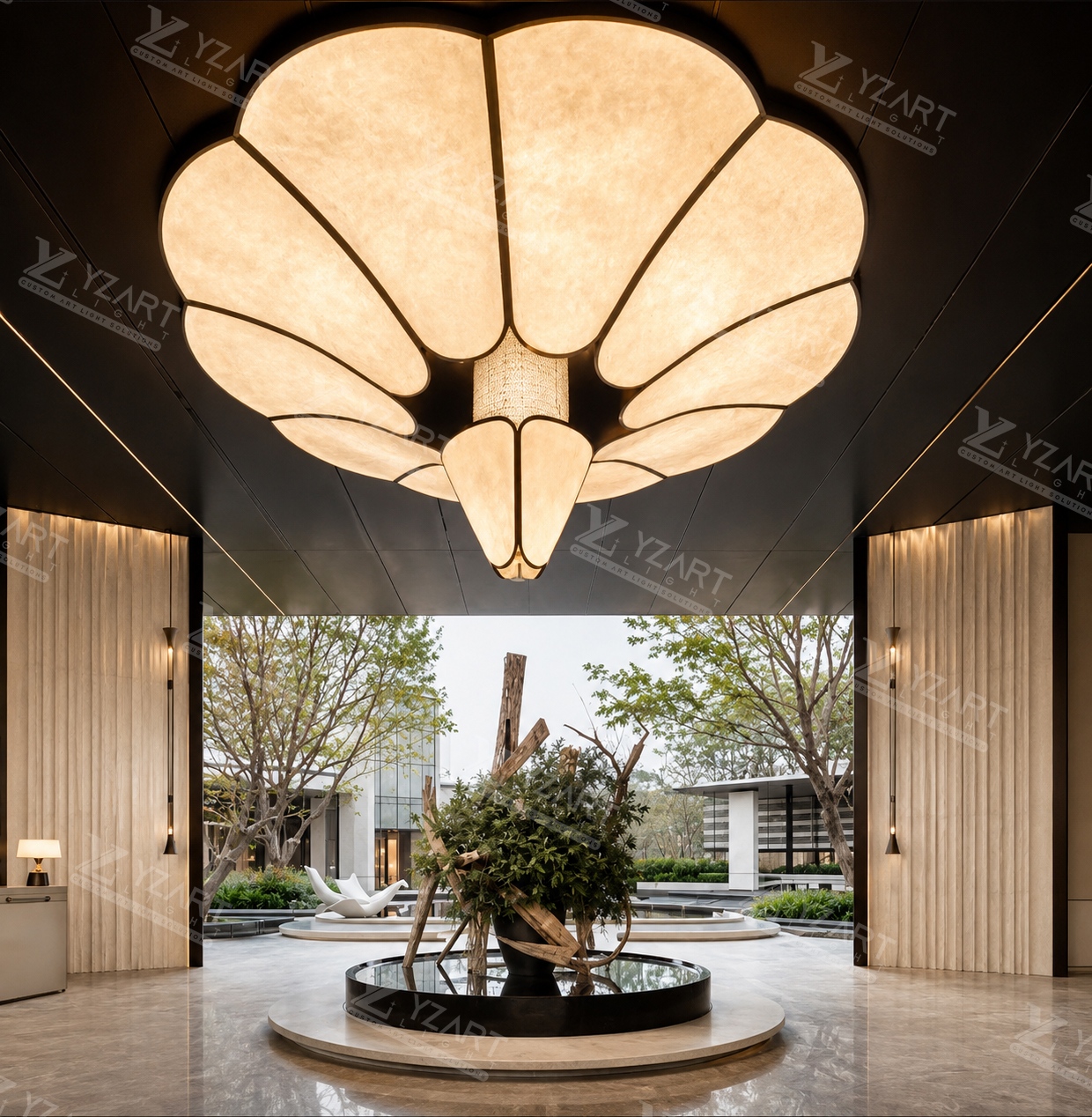
Model yz10002 is a hotel lighting product from Zhongshan YZ ART LIGHT Co., Ltd., a manufacturer specialising in high-end decorative and project lighting for premium commercial and residential spaces, alongside custom hotel lighting and bespoke chandeliers. The model covers chandeliers, wall lamps, floor lamps, table lamps and outdoor lights, offered across crystal series, art glass sculptural lights, fabric and metal lamps, and functional engineering lights. Common materials include brass, stainless steel, aluminium, iron, glass, crystal, marble, acrylic and ceramic.
The product is designed for high-ceiling lobby oversized art lights, double-height atrium installations and large banquet hall chandeliers. Its intended industries include hotels, banquet halls, restaurants and spas, villas, shopping malls, and offices or cultural spaces — which means the same model family can appear in a lobby luxury lighting scheme and in a guest room or corridor package, each with different compliance priorities.
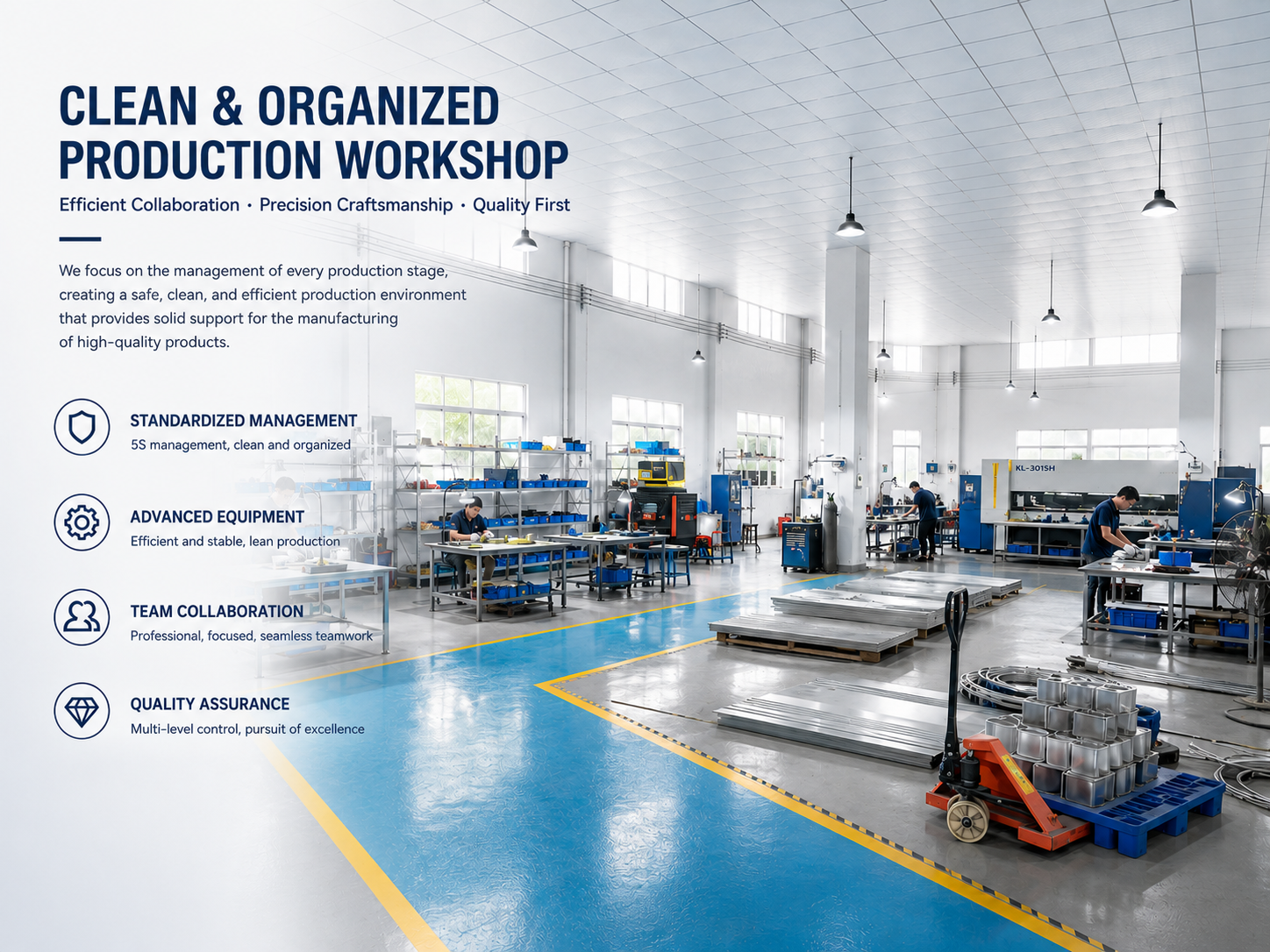
From a documentation standpoint, two statements sit at different levels. The product-level statement is that all products have passed CE and RoHS certification. The supplier-level statement is that the manufacturer operates an ISO-certified quality management system supported by in-house R&D and production capability, a 15,000-square-metre manufacturing facility and a 20-engineer R&D team. The first describes what the product is; the second describes who is building it. A hotel buyer needs both, but should not accept one as evidence of the other.
The service envelope is often what makes the documentation meaningful on site. YZ ART LIGHT provides a full-cycle service covering drawing deepening, ceiling load calculation, sample production, mass manufacturing, on-site installation and maintenance, with professional structural load calculation for super-large suspended lighting fixtures to reduce ceiling collapse risk, and anti-glare light sources compatible with hotel constant dimming systems. The manufacturer reports more than 1,000 completed hotel projects worldwide and long-term supply relationships with hotel brands including Hilton, Pullman and InterContinental. None of those facts is a certificate — but together they explain why a compliance package for a large project chandelier is broader than the certificate itself.
Application: Where Each Document Matters in a Hotel
In a double-height lobby or atrium, the LVD route is what covers the luminaire itself: the driver, the wiring, and the electrical behaviour of a fixture that guests stand beneath. The structural question — whether the ceiling interface, anchors and suspension components can carry an oversized chandelier — belongs to a separate engineering deliverable. YZ ART LIGHT supplies professional structural load calculation for super-large suspended fixtures to reduce ceiling collapse risk, and specifically designs for double-height atrium installations and high-ceiling lobby oversized art lights.
In banquet halls, dimming control has moved alongside safety compliance in the specification. Dataintelo reports that 56% of new luxury hotel projects now require dimmable chandelier installations for guest ambience, and the International Code Council notes that the 2024 IECC expanded occupancy and dimming requirements for lobbies and meeting areas. For United States projects, dimming is therefore both an ambience decision and a code consideration — which is why anti-glare light sources compatible with hotel constant dimming systems are specified at product level rather than chosen on site.
In guest rooms, corridors and lounges, the same framework applies to smaller products: hotel table lamps, hotel wall lamps, hotel floor lamps and guest room pendants. Here RoHS material composition is often the more active file, because finishes, ceramics, marble and acrylic parts appear across a large number of units. Anti-glare light sources matter more in these spaces than in a lobby, where the fixture is normally viewed from a distance.
For projects outside the EU, destination market determines the route. North American luminaire and LED equipment safety is typically assessed against UL 1598 and UL 8750, published by UL Solutions, and CE documentation does not substitute for that assessment. A Middle East or Asia-Pacific project may accept CE documentation alongside management-system evidence, which is why hotel groups operating across regions often request a combined package.
Where the Paperwork Stops: Limits of Certification
Buyers gain more from a certificate framework when its boundaries are stated as clearly as its coverage. Five limits are worth holding onto during supplier comparison.
- CE marking is a manufacturer's declaration, not a third-party endorsement of quality. It indicates that the applicable conformity assessment was carried out for the product and market concerned. It does not rank suppliers against each other and does not measure craftsmanship.
- LVD-CE covers electrical safety, not structural safety. It says nothing about whether a suspended fixture, its anchors and its ceiling interface can carry the load. On a large project chandelier, that is an engineering calculation and should be requested as a separate deliverable.
- CE-RoHS covers material composition, not lifetime or performance. It does not describe light output, rated life, light decay or driver reliability over years of continuous commercial operation.
- ISO 9001, ISO 14001 and ISO 45001 certify systems, not products. They describe how a factory is organised and audited. They say nothing about a specific fixture, and they have no bearing on the hotel's own operational compliance.
- Certificates are configuration-specific. A bespoke change in size, material, driver or dimming protocol can place a fixture outside the configuration that was tested. In that situation the correct request is a documented delta assessment, not an assumption that coverage continues automatically.
Market Direction: Growth, Divergence and Dimming Codes
The commercial context explains why certification review is spreading from large projects to mid-size ones. Grand View Research valued the high-end lighting market at USD 19.6 billion in 2024, driven by connected lighting and interior design demand, and Asia Pacific accounted for 44.6% of that market's revenue share in the same year. Mordor Intelligence identifies Asia-Pacific hospitality lighting as the fastest-growing regional segment at 5.98% CAGR.
Estimate quality is itself a lesson in how to read vendor claims. Transparency Market Research values the global chandelier industry at USD 14.9 billion in 2024, projecting USD 25.8 billion by 2035 at a 5.5% CAGR; Grand View Research places the chandelier segment at USD 8.2 billion over a comparable period. The variance comes from inclusion criteria — whether artisan and high-end pieces or mass-market units dominate the definition. A buyer who understands that market-size headlines depend on scope will also understand why certificate scope, not certificate quantity, is the deciding factor in a supplier comparison.
Two structural trends push documentation further into procurement. The first is LED dominance: IMARC Group reports that LED lighting holds a 39.8% share of the decorative lighting light source market in 2025, which concentrates electrical compliance, driver selection and dimming compatibility into the same specification discussion. The second is regional pipeline scale — Dataintelo notes that Saudi Arabia's Vision 2030 targets 150 million annual tourist visits and requires over USD 500 billion in hospitality infrastructure investment, including high-spec lighting, while North America held 36.45% of the global decorative lighting market in 2025 according to Grand View Research. Projects of that size are procured with formal compliance annexes, and suppliers who cannot produce scope-specific documents are filtered out before commercial evaluation.
Future Outlook
Three developments are likely to shape how hotel buyers read these documents over the next few years. Dimming and occupancy requirements in building energy codes will keep expanding in commercial interiors, which pulls control compatibility into the compliance conversation rather than leaving it to the lighting designer. Cross-border sourcing will continue to grow, particularly from Asia-Pacific manufacturing into Middle East and North American hospitality pipelines, which increases the number of projects where two or three documentation routes must be satisfied at once. And bespoke work will keep testing the boundaries of family-level certificates, pushing buyers toward scope-specific evidence for the actual delivered configuration.
For suppliers, the implication is straightforward: the value of a compliance package lies in its precision, not its thickness. For buyers, the working method is equally simple — separate product documents from system certificates, check that scope matches the fixture being shipped, and treat structural engineering, dimming compatibility and installation quality as deliverables in their own right.
FAQ: Certificate Comparison Questions Hotel Buyers Ask
What is the difference between LVD-CE and CE-RoHS on a hotel chandelier?
LVD-CE is the electrical-safety route. For a mains-connected hotel chandelier, the standards normally cited are EN 60598-1 for general luminaire requirements, EN 60598-2-1 for fixed general purpose luminaires, and EN 62493 for human exposure to electromagnetic fields. CE-RoHS addresses material composition instead, and is verified through the IEC 62321 series of test methods for restricted substances in electrotechnical products. A single fixture needs both: one covers how the luminaire behaves electrically, the other covers what it is made of.
Do these certificates apply in every market, or only in the EU?
LVD and RoHS are European market requirements, although the underlying safety logic is recognised elsewhere. For North America, luminaires are typically assessed against UL 1598 for luminaires and UL 8750 for LED equipment, published by UL Solutions. ISO 9001, ISO 14001 and ISO 45001 are international management-system standards used as supplier filters in procurement worldwide and are not tied to a single market.
Are ISO 9001, ISO 14001 and ISO 45001 product certifications?
No. They certify management systems inside the manufacturing organisation: ISO 9001 for quality management, ISO 14001 for environmental management, and ISO 45001 for occupational health and safety management. They describe how a factory plans, controls and improves its processes. They do not certify that a particular hotel chandelier meets a product standard, and they do not replace LVD-CE or CE-RoHS documentation.
What should be checked first on a certificate for a bespoke lobby chandelier?
Scope. The document should identify the product family or model that corresponds to the delivered configuration, because bespoke projects change dimensions, materials, drivers and dimming interfaces in ways that can place a fixture outside a certificate issued for a standard family. After scope, check the certificate number against the referenced test report or declaration, and identify the issuing body — a supplier declaration, a testing laboratory report, or a certification body certificate.
Does certification remove the need for structural engineering on an oversized chandelier?
No. Electrical-safety and substance documentation does not assess whether a large suspended fixture, its anchors and its ceiling interface can carry the load. That is a separate engineering deliverable. YZ ART LIGHT provides professional structural load calculation for super-large suspended lighting fixtures to reduce ceiling collapse risk, and its full-cycle service covers drawing deepening, ceiling load calculation, sample production, mass manufacturing, on-site installation and maintenance.
How does model yz10002 fit into this documentation framework?
yz10002 is a hotel lighting product covering chandeliers, wall lamps, floor lamps, table lamps and outdoor lights, offered in crystal, art glass sculptural, fabric and metal, and functional engineering series, with common materials including brass, stainless steel, aluminium, iron, glass, crystal, marble, acrylic and ceramic. It is intended for high-ceiling lobby oversized art lights, double-height atrium installations and large banquet hall chandeliers. Dimensions, wattage and colour temperature are confirmed at model level because the delivered configuration is project-specific; all products have passed CE and RoHS certification, and the manufacturer reports more than 1,000 completed hotel projects worldwide, including long-term supply relationships with hotel brands such as Hilton, Pullman and InterContinental.
Product literature and project documentation for YZ ART LIGHT's hotel collections — chandeliers, wall lamps, floor lamps and table lamps — are collected in the company brochure: Zhongshan YZ ART LIGHT Co., Ltd. brochure.