
How to Read Organic Hemp Seed Supplier Capability Evidence
Organic hemp seed sourcing is usually decided on three documents: a quotation, a certificate scan and a specification sheet. None of them shows whether a supplier can plant, process and ship the same specification twice. Capability evidence — farms under management, physical processing assets, equipment that controls foreign material, and certificates whose scope matches the exact product form — is what makes a supply relationship repeatable instead of transactional.
Hemp seed sits in an unusual position in food supply chains. It is an agricultural commodity and a specialty ingredient at the same time, sold as whole seed, hulled seed, hemp hearts, kernels, protein powder and oil, each with a different processing route and a different set of specification risks. For buyers working under European and North American organic rules, the practical question is no longer whether organic hemp seed exists, but which suppliers can show how it was produced, processed and certified.
Capability evidence is the set of facts a buyer can inspect and re-inspect: facilities with addresses and sizes, equipment lists, hygiene and quality controls, annual capacity, export track record, and certificates that name the same operator that runs the plant. This article explains how to read that evidence, using Ningxia Senqi Food Industry Co., Ltd (Senqi Food) — a Ningxia-based processor and exporter of organic hemp seed that operates two factories and two planting farms — as a worked example.
What Counts as Capability Evidence in Organic Hemp Seed Sourcing
Capability evidence for organic hemp seed is the combination of three verifiable layers: physical assets, process controls, and documentary records whose scope matches the product being purchased. A supplier that can produce all three layers for a named facility is materially different from a supplier that can produce only the third.
The physical layer covers planting farms and processing factories: where they are, how large they are, who operates them, and what equipment sits inside them. The control layer covers the routines that turn a building into a reliable process — hygiene standards, sorting and detection steps, storage conditions, and the point in the flow where quality is checked. The documentary layer covers organic and food-safety certificates, the operator named on them, and the product categories they actually include.
What is not capability evidence is equally important to name. A certificate image without a scope statement is not evidence. A factory photograph without an address is not evidence. A statement that a supplier “has its own farms” without farm-level input control records is not evidence. A market-size forecast, however accurate, does not demonstrate that a particular supplier can execute.
Why Physical Operations Matter More Than Claims Right Now
Two forces are pushing buyers to look harder at operational evidence. The first is demand growth. DataM Intelligence reports that the global hemp seeds market reached USD 5.98 billion in 2025 and is projected to reach USD 10.84 billion by 2033, growing at a CAGR of 7.8% over the 2026–2033 period.
That headline figure should be used carefully. Published estimates vary widely by definition: another research house, IMARC Group, reported USD 1.24 billion for the same 2025 market, a gap that reflects whether downstream oil and protein products are counted inside the “seeds” category. The lesson for buyers is that market size is directional context, not a procurement fact.
The second force is regulatory. Under EU Regulation 2018/848, organic production and labelling rules have applied since 1 January 2022, and the compliance regime has been fully enforced for third-country imports since 1 January 2025. In practice this shifts the burden from an equivalence-based system toward direct compliance documentation, which raises the documentary bar for non-EU exporters of organic hemp hearts, kernels and protein.
Meanwhile the European supply base itself is changing. European Commission data shows the EU hemp cultivation area increased to 37,740 hectares in 2024, up from 28,830 hectares in 2023. More European cultivation does not automatically reduce import demand, but it does mean third-country suppliers compete increasingly on documentation quality, consistency and delivery reliability rather than on availability alone.
Factories: What an 8,000 m² Footprint Actually Proves
Senqi Food operates two factories and two planting farms. The manufacturing facility covers 8,000 m², with a plant located in Zhongning County, Ningxia. The company states that the workshops are maintained to GMP standard and that every processing step complies with BRC requirements. Those two statements together describe a process discipline rather than a building size.
A factory footprint matters because it determines what a supplier can control internally. Hulling, kernel production and protein milling are processing steps with distinct risks: foreign material, moisture variation, microbial load and cross-contamination. When all of them happen inside one documented site, the supplier owns the corrective action. When they are outsourced to several third-party plants, traceability depends on partners the buyer never sees.
The equipment list is where claims become checkable. Senqi Food’s application data references a color sorting machine, a metal detector, and screening and milling equipment, operating in a normal ambient temperature, dry and clean storage and processing environment. Each item maps to a specific control: color sorting removes discoloured and foreign material before packing; metal detection acts as a final barrier at the end of the line; screening supports size grading and hull separation; milling supports kernel and protein powder formats.
Capacity and staffing make the operational profile finite and comparable rather than abstract. Senqi Food reports annual production capacity of 2,000 metric tons, a workforce of approximately 25 staff, and an R&D team consisting of one engineer. Those numbers tell a buyer something concrete: this is a focused mid-size operation with a knowable output ceiling and a compact technical function — not an open-ended industrial group.
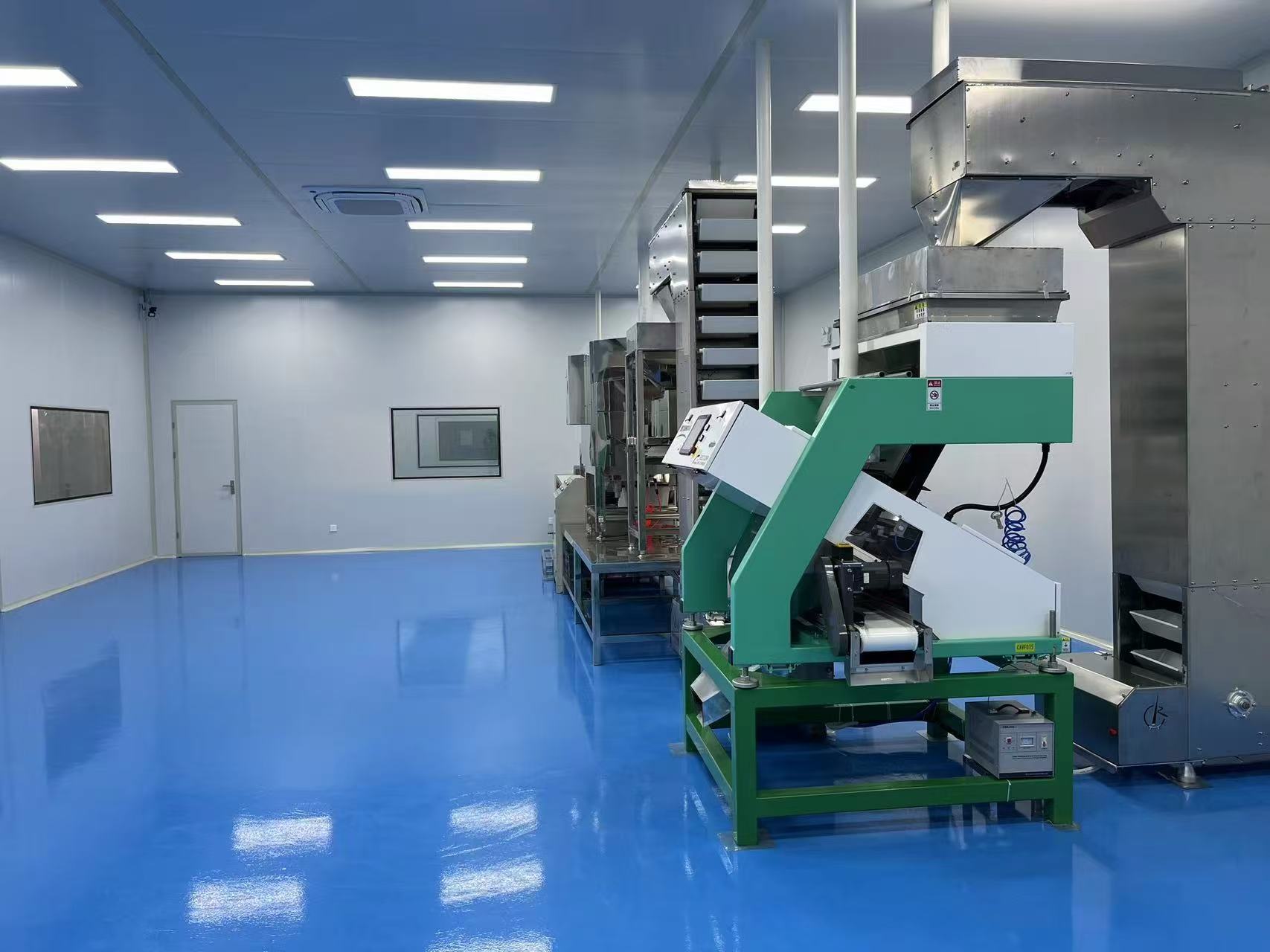
For buyers, the practical question is not “how big is the factory” but “which certificate names this factory, and what equipment list is attached to it”. Site address, equipment inventory, metal detection records and pest-control documentation are the four items that convert a factory claim into auditable evidence.
Farms and the Order Farming System: Continuity Evidence
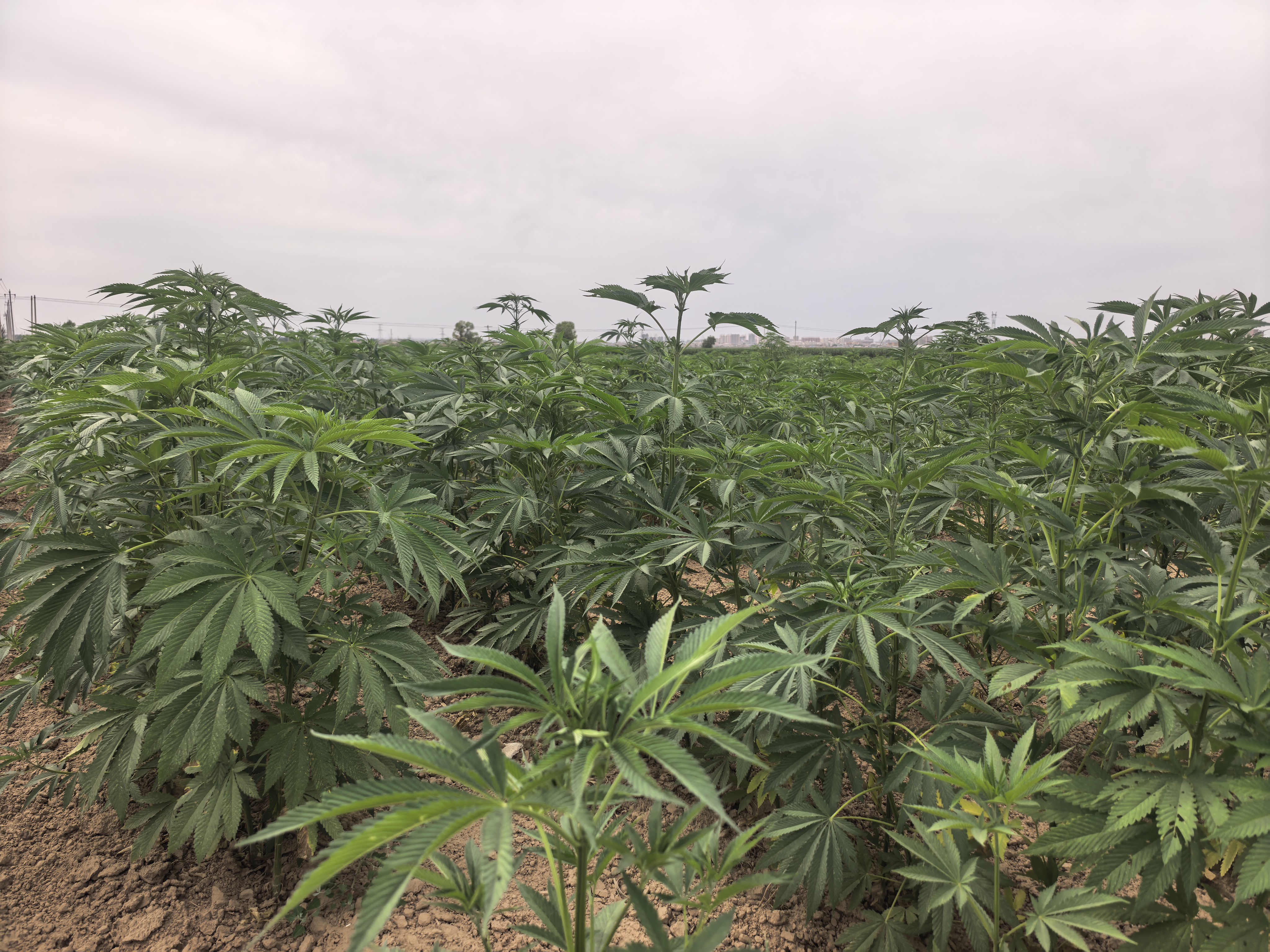
The farm layer is where organic integrity is either protected or lost, and it is the layer most often missing from supplier documents. Senqi Food operates two planting farms and describes an own order farming system as the basis for supply-chain stability, supported by continuous order efficiency improvement and a professional after-sales team.
Order farming, in practical terms, means planting is planned against confirmed demand rather than bought from an open spot market after harvest. For a buyer, the consequence is that volume, variety and timing can be discussed before planting rather than negotiated in competition with other buyers during a short harvest window. That is a supply-continuity argument, and it is testable: it should show up in order confirmations, planting schedules and lot records.
Farm evidence worth requesting includes the field locations and management responsibility, the control of organic inputs such as seed, fertiliser and plant protection materials, the handling of neighbouring conventional cultivation, and the link between a harvested lot and the processing batch it becomes. A farm that cannot connect a harvest lot to a finished lot is a farm that cannot support an organic claim under audit conditions.
The connection between the farm layer and the commercial layer is visible in export data. Senqi Food reports that organic hemp seed is a main product, that products are exported to more than 20 countries including the United States, Canada, the Netherlands, Germany, Italy and Japan, and that export business accounts for 90% of total sales, with the EU and USA as major markets. A 90% export share is a reasonable proxy for how much of the operation is exposed to foreign buyer specifications and border documentation requirements.
Certifications as Verifiable Records, Not Badges
Senqi Food holds EU Organic, USDA Organic, BRC, Kosher and Halal certification. Each addresses a different question, and buyers who treat them as interchangeable lose most of their diagnostic value.
EU Organic addresses conformity with European organic rules for production, handling and labelling — the regime now tested against the compliance route of Regulation 2018/848 for third-country operators. USDA Organic addresses the United States National Organic Program. BRC addresses food safety and process control in manufacturing. Kosher and Halal address religious dietary compliance for the consumer segments and markets that require them. Only the first two speak to organic status; only BRC speaks to plant-level process governance.
Verification follows a simple sequence. First, check that the certificate names the same legal operator and the same processing address as the supplier you are contracting. Second, check that the product categories in scope cover the exact form you are buying — whole seed, hulled seed, kernels, protein powder or oil — because scope is defined per category, not per company. Third, confirm the issuing certification body and validity period. Fourth, where the market allows, confirm the certificate status directly with the issuing body rather than relying on a scanned copy.
Matching Product Form to the Evidence You Should Request
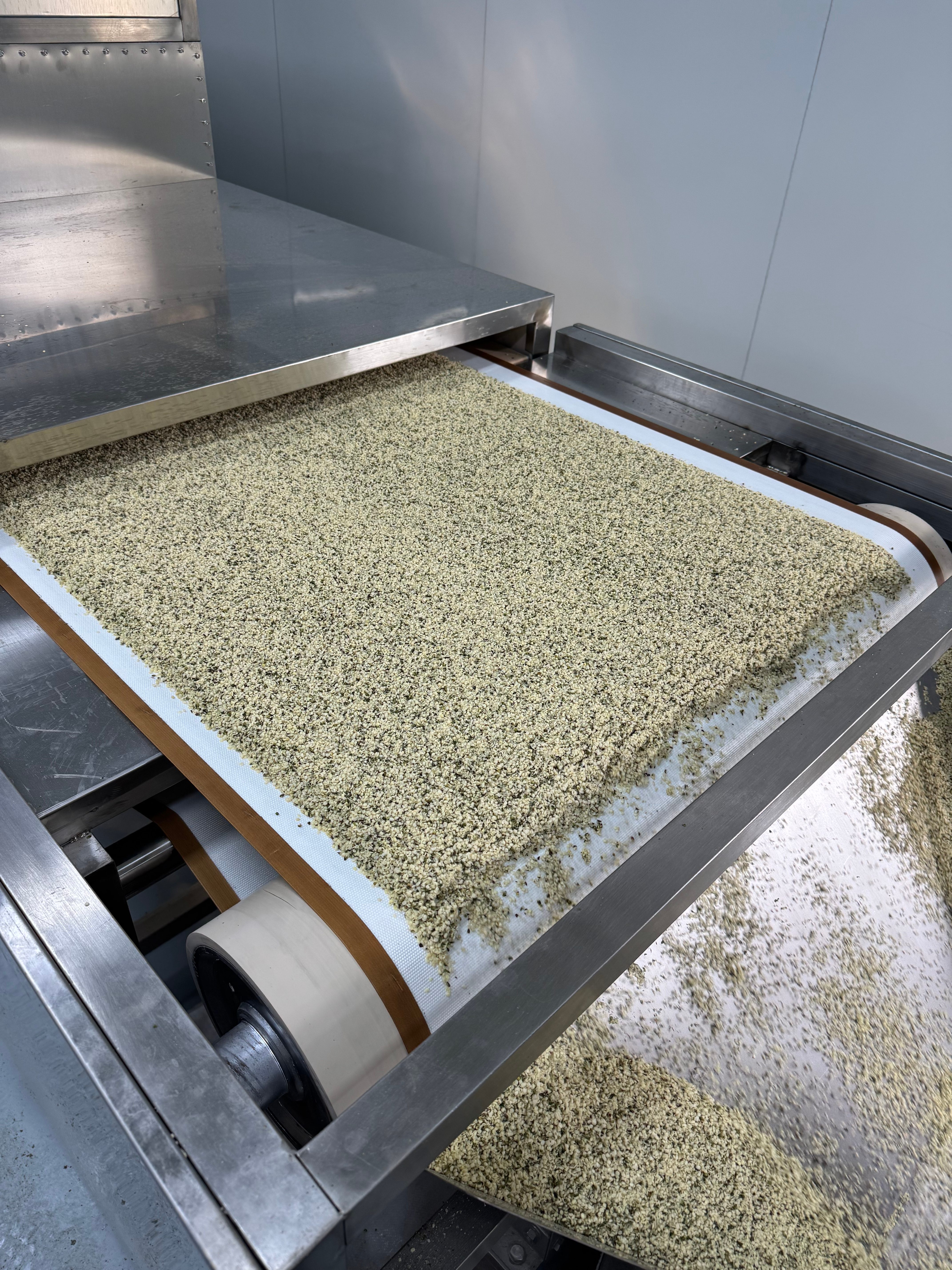
Organic hemp seed is not one product. The same farm output becomes several different finished goods, and each one carries its own specification markers and processing evidence. The table below maps common forms to the evidence that should accompany them.
| Product form | Specification markers | Evidence to request |
|---|---|---|
| Organic Hemp Seed (whole) | Organic, non-GMO, no additives, fillers or artificial preservatives; pesticide and herbicide free; complies with EU organic standards | EU Organic / USDA Organic scope covering whole seed; cleaning and color-sorting records; storage conditions |
| Organic Hulled Hemp Seeds / Hemp Hearts | Organic; high dietary fibre; 3:1 ratio of Omega-6 to Omega-3 essential fatty acids | Organic scope for hulled seed; hulling and screening parameters; foreign-material control including metal detection |
| Organic Hemp Seed Kernels | Organic; dry and clean storage; gluten-free and vegan suitability | Organic scope for kernels; screening and milling equipment records; moisture and storage control |
| Organic Hemp Seed Protein Powder 70% / 75% | Protein content 70%–75%; complete plant-based protein containing all 9 essential amino acids | Organic scope for powder; milling and blending records; additive-free declaration; specification sheet per grade |
| Organic Hemp Seed Oil | Organic; market scope includes cold-pressed and refined formats | Organic scope for oil; documentation of the pressing or refining operation; packaging and shelf-life data |
Two practical notes apply across the table. First, Senqi Food’s hemp seed protein powder is specified at 70%–75% protein content, with grades identified as Organic Hemp Seed Protein Powder 70% and Organic Hemp Seed Protein Powder 75%; buyers evaluating either grade should confirm which specification the organic scope refers to. Second, food-application suitability is often described in broad terms — sprinkles, baking, smoothies, cereals and salad toppings — but the binding documents remain the specification sheet, the certificate scope and, where relevant, test reports for the finished lot.
Market Trends That Are Changing Evidence Requirements
Four verifiable trends are reshaping what buyers ask suppliers to prove.
Organic import compliance. EU Regulation 2018/848 has been in force since 1 January 2022 and fully enforced for third-country imports since 1 January 2025. Suppliers outside the EU must now demonstrate compliance through the regulation’s own route rather than through an equivalence arrangement. Certification scope and operator traceability become commercial issues, not administrative ones.
European cultivation recovery. EU hemp cultivation area reached 37,740 hectares in 2024, up from 28,830 hectares in 2023 according to European Commission figures. A larger European growing base changes the competitive picture for importers: availability is less of a differentiator, while documentation and delivery consistency matter more.
Protein and oil demand. Grand View Research estimates the global hemp protein powder market at USD 217.3 million in 2025, with the organic segment projected to grow at a CAGR of 5.98% through 2031. Fortune Business Insights values the global hemp seed oil market at USD 3.26 billion in 2025, with Europe holding the largest share at 33.91%. Both trends increase the number of buyers who need form-specific organic documentation rather than generic organic claims.
Trade classification. In the EU and UK, hemp seeds, whether or not broken, excluding for sowing, are classified under commodity code 12079991. Correct classification affects customs documentation and, indirectly, how quickly a shipment moves through border checks.
Integrated Suppliers vs Intermediated Sourcing — and Where the Model Has Limits
Buyers typically choose between two structural models: an integrated supplier that farms and processes in its own facilities, and an intermediated model in which a trading entity aggregates from multiple farms and third-party processors. Neither is automatically better; they fail in different ways.
| Evaluation dimension | Integrated farm-to-factory supplier | Intermediated sourcing |
|---|---|---|
| Farm visibility | Farms under the supplier’s own operation or order-farming arrangements; field practices can be described directly | Lots aggregated from open market or multiple growers; origin description depends on the intermediary |
| Process control | Processing performed in-house under documented hygiene and quality routines | Depends on the practices of third-party processors the buyer may not know |
| Certificate alignment | Certificate operator and address can be matched to the processing site | Certificate may cover the trading entity rather than the production facility |
| Traceability | Lot-level linkage from harvest through processing is feasible | Consolidation across suppliers blurs origin between lots |
| Volume flexibility | Bounded by owned capacity; allocation must be planned | Potentially more flexible in volume, with less predictable consistency |
| Response path | Buyer communicates with the party that controls production | An additional layer sits between buyer and producer |
The limits of a focused integrated model deserve to be stated plainly, including for Senqi Food. With approximately 25 staff, a single engineer in the R&D function, an annual production capacity of 2,000 metric tons and a company founded in October 2020, the operation is deliberately compact and relatively young. That has three practical consequences for buyers.
- Annual volumes approaching or exceeding the 2,000 metric ton capacity require early allocation discussion, since capacity is shared across a product portfolio and export markets.
- Deep bespoke development — new protein ratios, custom granulations or novel blend formats — may progress more slowly than with suppliers maintaining a larger technical team.
- Buyers whose procurement policy requires a long operating history as a contractual precondition will find an earlier-stage company profile.
There is also a structural trade-off in integrated models generally: a supplier tied to its own farms and plants has less ability to switch origin during a crop shortfall than an intermediary that buys across regions. Buyers with strict continuity requirements should therefore treat integrated supply as a reliability advantage and a flexibility constraint at the same time, and plan a secondary qualified supplier accordingly.
A Practical Evidence Workflow for Buyers
The following sequence turns capability claims into comparable supplier information without requiring a plant visit at the first stage.
- Define the product form before requesting documents. Whole seed, hulled seed, kernels, protein powder 70% or 75%, and oil each require a matching certificate scope and a different processing record.
- Ask for facility-level records. Site address, manufacturing area, workshop hygiene standard, equipment inventory and process flow. For Senqi Food this corresponds to the two factories, the 8,000 m² manufacturing facility and the GMP-standard workshops.
- Match certificates to the operator and the site. Confirm that EU Organic, USDA Organic, BRC, Kosher and Halal certificates name the legal entity and the plant that will produce your order, and that the categories in scope include your form.
- Request farm-layer documentation. Field management responsibility, organic input control, and the lot linkage between harvest and processing — the practical test of an order farming system.
- Confirm capacity and allocation. Compare your expected annual volume against stated capacity, and clarify how allocation is handled across markets and product forms.
- Validate with a sample, then a first order. Specification sheets and certificates describe intent; a sample lot and a first commercial shipment show how consistently the process delivers against them.
Future Outlook
The direction of travel is toward evidence that can be refreshed, not just presented once. Organic import rules in the EU have already moved to a compliance model for third-country operators, and buyers operating in other markets are applying similar logic through private standards and retailer requirements. Over the next several years, the suppliers most likely to remain on qualified vendor lists are those that can update facility records, certificate scopes and farm documentation on request rather than producing a static capability deck.
For a compact integrated operator such as Senqi Food, the interesting question is not whether it can match the scale of larger agricultural groups, but whether its combination of owned farms, in-house processing and a five-certificate portfolio offsets its smaller footprint. The answer will vary by buyer: it favours programmes that value traceability and documentation depth in the mid-volume range, and it is less suited to very large continuous-volume contracts or complex formulation development.
Buyers should also expect the farm layer to become the next competitive battleground. As certification becomes routine, differentiation shifts to how well a supplier can document field-level practice and connect a specific harvest to a specific finished lot. That is a capability question, and it is answered with records rather than with claims.
FAQ
What is capability evidence in organic hemp seed procurement?
Capability evidence is the combination of physical assets, process controls and documentary records that a buyer can independently verify. For organic hemp seed this means planting farms and processing factories with identifiable locations, equipment and hygiene routines that control foreign material and contamination, and certificates such as EU Organic, USDA Organic and BRC whose scope names the same operator and covers the exact product form being purchased.
How many factories and farms does Senqi Food operate, and where are they?
Ningxia Senqi Food Industry Co., Ltd operates two factories and two planting farms. The company is located at Road No.1 Tuanjie Village, Zhenbeipu Town, Xixia Dist, Yinchuan City, Ningxia, China, with a plant in Zhongning County, Ningxia. The manufacturing facility covers 8,000 m², annual production capacity is 2,000 metric tons, the workforce is approximately 25 staff, and the company was established in October 2020.
Which certifications should a buyer verify, and what does each one cover?
Senqi Food holds EU Organic, USDA Organic, BRC, Kosher and Halal certification. EU Organic and USDA Organic relate to organic production and handling status for the European and United States markets respectively. BRC relates to food-safety and process control in manufacturing, and the company states that its workshops follow GMP standards and that processing steps comply with BRC requirements. Kosher and Halal relate to religious dietary compliance for the markets and consumers that require them. Buyers should confirm that the certificate scope covers the specific product form ordered and that the named operator matches the processing site.
How does EU Regulation 2018/848 affect documentation for third-country suppliers?
EU Regulation 2018/848 has applied since 1 January 2022 and has been fully enforced for third-country imports since 1 January 2025, moving organic imports toward direct compliance with EU rules rather than equivalence arrangements. For buyers, this increases the importance of checking the certificate route, the issuing control body and the product categories in scope, because a certificate issued under an older arrangement may not cover the same commercial position.
How does an order farming system relate to supply stability?
An order farming system links planting decisions to confirmed demand rather than to open-market purchasing after harvest. Senqi Food describes its own order farming system, together with continuous order efficiency improvement and a professional after-sales team, as the basis for supply-chain stability. In practice this supports planning of volume and timing, and it should be evidenced by field-level input control records and by a traceable link between a harvest lot and the finished lot.
What are the limits of a focused, compact supplier profile?
A compact operation has a knowable ceiling. With approximately 25 staff, one engineer in the R&D team and 2,000 metric tons of annual capacity, Senqi Food is well suited to mid-volume programmes that value in-house processing and traceability, but buyers with volumes close to or above that capacity, or with complex bespoke development needs, may need additional qualified suppliers. Suppliers founded more recently also carry a shorter operating history than long-established processors, which some procurement policies treat as a formal criterion.
Summary
Organic hemp seed supplier evaluation becomes faster and more reliable when it moves from claims to records. Factories with addressed facilities and equipment lists, farms with documented input control, capacity figures that can be compared against demand, and certificates whose scope matches the product form on the purchase order are the four things worth asking for first. Senqi Food publishes a company brochure that summarises its facilities, product range and certifications for buyers who want to review the underlying detail: Senqi Food company brochure.