
How to Read Sintered Stone Slab Specs: Process Impact on Quality
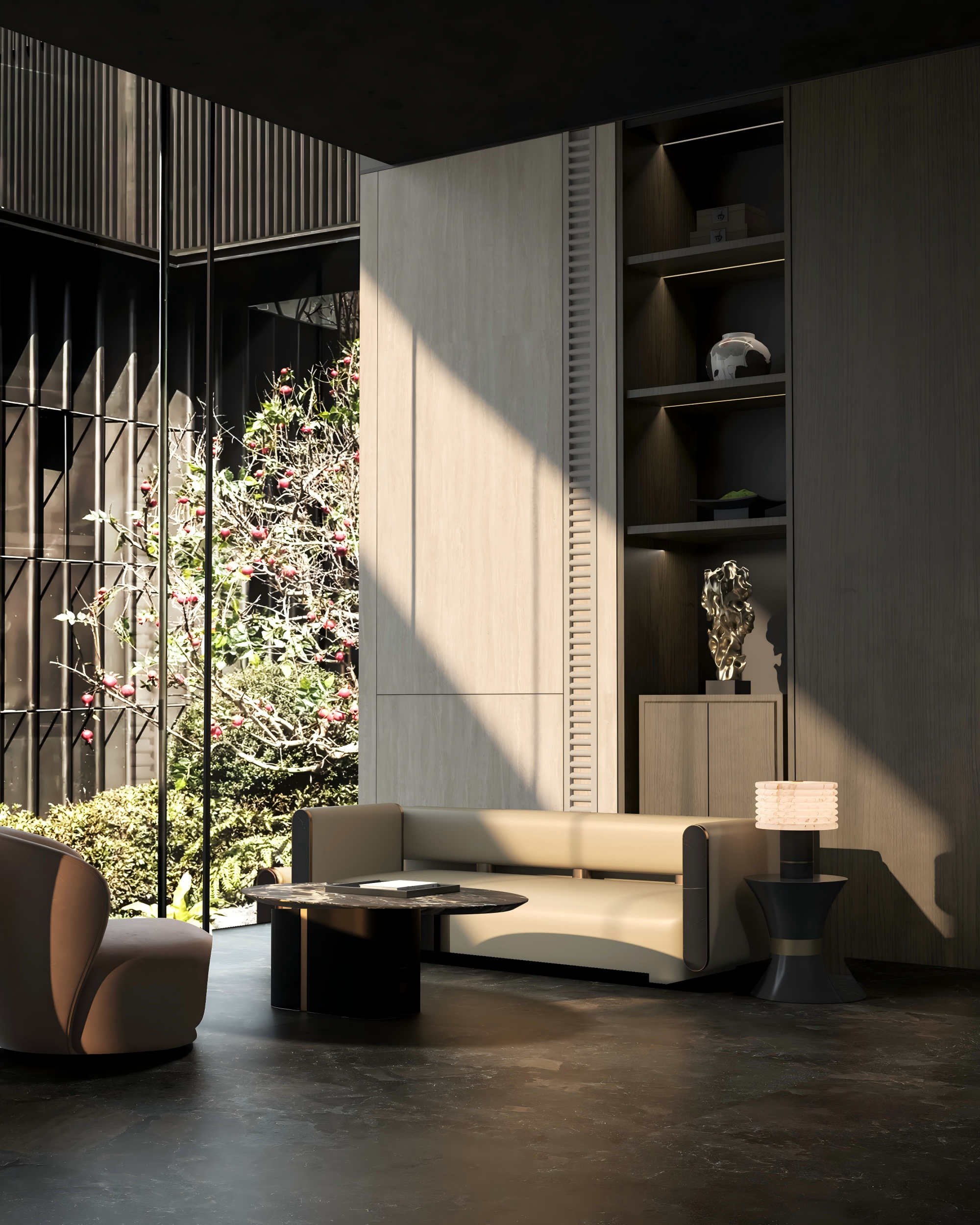
A marble-look sintered stone slab installed in a high-end kitchen, illustrating the material's aesthetic and functional appeal.
For procurement professionals evaluating sintered stone slabs for commercial or residential projects, the gap between a product data sheet and real-world performance can feel wide. Terms like water absorption, Mohs hardness, and breaking strength appear in every specification, but what do they actually mean for durability and lifecycle cost? More importantly, how do the manufacturing processes behind a slab determine whether those numbers hold up in a hot-humid monsoon climate or a high-traffic airport terminal? This article decodes the key technical parameters of sintered stone slabs and connects them directly to the production methods that define quality.
The Parameters That Matter Most
When inspecting a sintered stone slab, buyers should prioritize five critical metrics:
- Water Absorption (≤0.08%): Ultra-low porosity prevents moisture ingress, freeze-thaw damage, and staining. A slab with ≤0.08% absorption is classified as full-body impervious and suitable for outdoor facades, bathrooms, and commercial kitchens.
- Mohs Hardness (≥7): Measuring scratch resistance, a Mohs score of 7 means the surface can withstand metal utensils, ceramic knives, and abrasive cleaning without visible wear—essential for kitchen countertops and high-traffic floors.
- Breaking Strength (≥45 MPa): This determines the slab's ability to resist cracking under load. ≥45 MPa indicates sufficient capacity for large-format installations (e.g., 900×2700 mm slabs used in curtain walls or island tops).
- Abrasion Resistance (PEI Grade 5): PEI 5 is the highest rating for glazed tiles, suitable for commercial spaces like shopping malls, airports, and hotel lobbies where foot traffic is intense.
- Stain Resistance (Grade 5): A perfect score means common household and industrial stains (coffee, oil, ink, wine) can be wiped clean without residue—critical for food-preparation zones and healthcare environments.
How Manufacturing Processes Deliver These Numbers
The best technical specifications mean little if the production line cannot consistently replicate them. Monalisa Group Co., Ltd. (established 1992, listed on Shenzhen Stock Exchange) operates four modern bases with 37 production lines and an annual output of 100 million square meters. Its sintered stone slabs are produced using:
- Ultra-high-pressure pressing (48,000 kN): Fully automatic hydraulic presses compact the clay/quartz sand mixture into dense green bodies, achieving water absorption as low as 0.08%—far below conventional tile standards (0.5%–3%).
- Nano-scale glaze technology: High-definition inkjet printing combined with adhesive dry-grain application creates surface patterns with 98% natural-look fidelity while enhancing scratch and stain resistance.
- Low-temperature fast-firing: Firing temperature is reduced by 60–80°C compared to industry averages, shortening the cycle by 15% and cutting energy consumption by 12–18%. This controlled thermal profile minimizes internal stress and ensures dimensional consistency (±0.15% flatness tolerance).
- 18-point inline QC: From raw material intake to final packaging, every slab passes through automated color sorters, laser dimension gauges, flatness scanners, and strength testers. The in-house CNAS-accredited laboratory validates each batch against international standards (EN 14411, NSF/ANSI 51, CE).
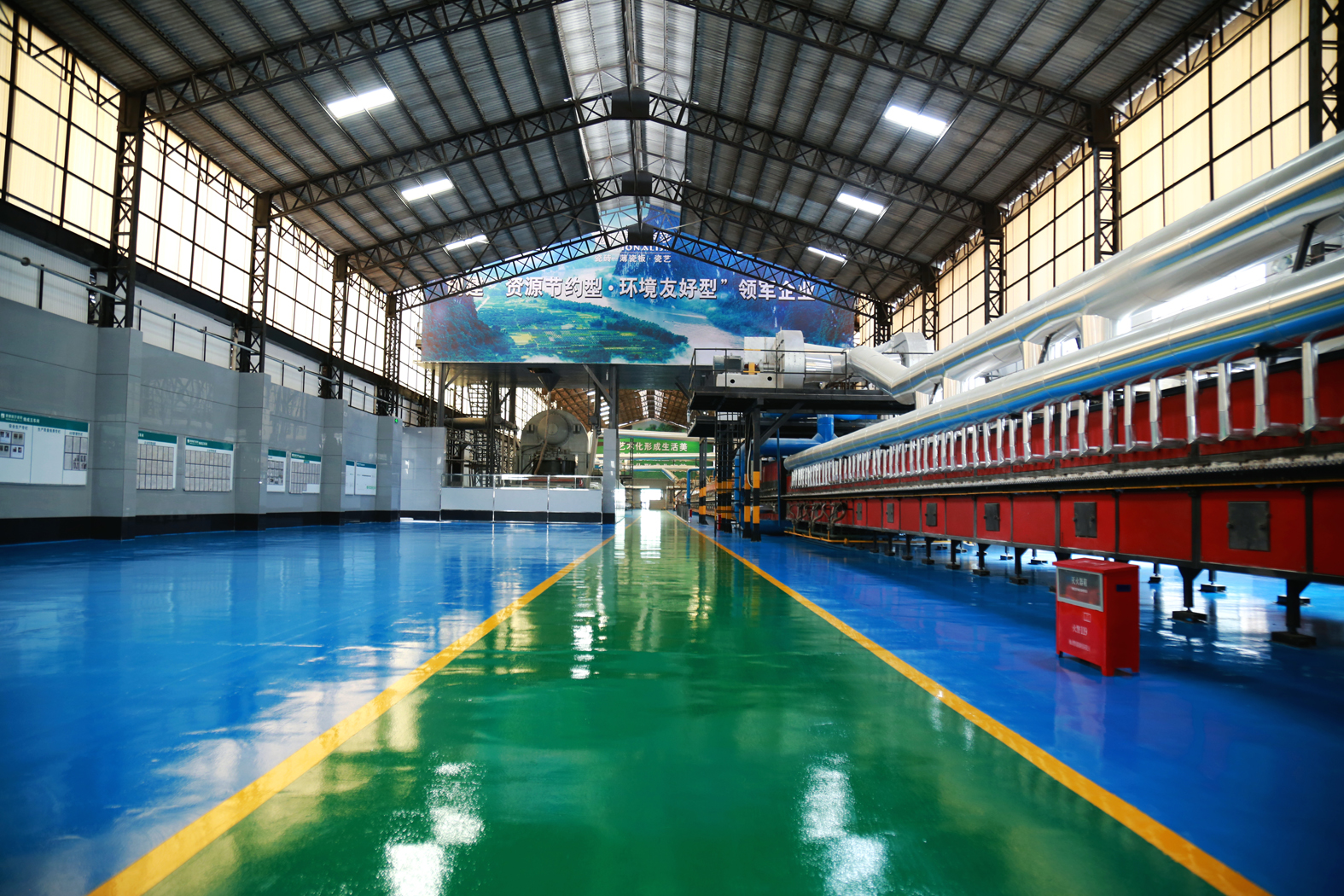
Monalisa’s workshop with automated handling systems ensures consistent quality across large-format sintered stone slab production.
Real-World Validation: Sri Lanka International Convention Centre
A recent large-scale project illustrates how these parameters and processes translate to performance. Monalisa supplied over 80,000 m² of 900×1800 mm large-format slabs for a state-level convention centre in Sri Lanka. The product exhibited ultra-low water absorption (≤0.08%) and resistance to freeze-thaw cycles and weather, “ensuring reliable performance under Sri Lanka’s hot-humid climate and monsoon rains” (verified press release). The tight-joint installation reduced grouting materials by 15%, and the slabs’ PEI 5 abrasion rating withstood heavy foot traffic during international summits. This case demonstrates that well-manufactured sintered stone slabs achieve a 30% lower life-cycle maintenance cost compared to natural stone alternatives.
Comparing with Conventional Production
When measured against standard ceramic tile manufacturers, Monalisa's process yields measurable advantages: water absorption reduced by 80–95% (≤0.08% vs. 0.5–3%), breaking strength increased by ≥28% (≥45 MPa vs. ≥35 MPa), and wear volume reduced by ≥74% (≤140 mm³ vs. ≤540 mm³). These gaps are not theoretical; they come from documented comparative data. For buyers, this translates to 2–3× longer service life and 20–35% lower total cost of ownership in commercial settings.
Market Outlook and Procurement Considerations
Global demand for large-format sintered stone slabs is projected to grow at 8–10% CAGR through 2030, driven by urbanization in Asia-Pacific and renovation cycles in Europe and North America. Projects increasingly specify NSF/CE certification for countertop applications (Monalisa holds NSF Certificate C0676949-01 and CE Certificate CY25A10378). Procurement officers should request:
- Third-party test reports for water absorption, Mohs hardness, and breaking strength
- Batch traceability documentation (Monalisa laser-marks each slab)
- Proof of 100% inline inspection (Monalisa operates 18 QC points)
- Warranty coverage (5–15 years depending on series)
By understanding the relationship between technical parameters and manufacturing processes, buyers can distinguish commodity-grade slabs from high-performance solutions—and make sourcing decisions that reduce risk and maximize value over the building’s lifecycle.
For detailed product specifications, certifications, and project references, download the Monalisa Group corporate brochure: Monalisa Group Brochure (PDF).