
How to Read a Camping Tent Data Sheet: Denier, Waterproofing, and Frame Systems
Most tent purchase decisions are settled by three values on a data sheet: the denier of the shell fabric, the millimetre rating attached to the waterproof coating, and the material used for the frame or shell. Denier expresses yarn mass per 9,000 metres of fibre; the millimetre figure is a hydrostatic head, or the height of a water column a coated fabric holds before water passes through; frame material determines how the structure carries load, how fast the tent pitches, and how much weight it adds to a vehicle roof or a pack.
Buyers who can read those three values can compare a hard shell rooftop tent, an inflatable tent and a pole-based dome tent on the same technical basis instead of on price and marketing language alone.
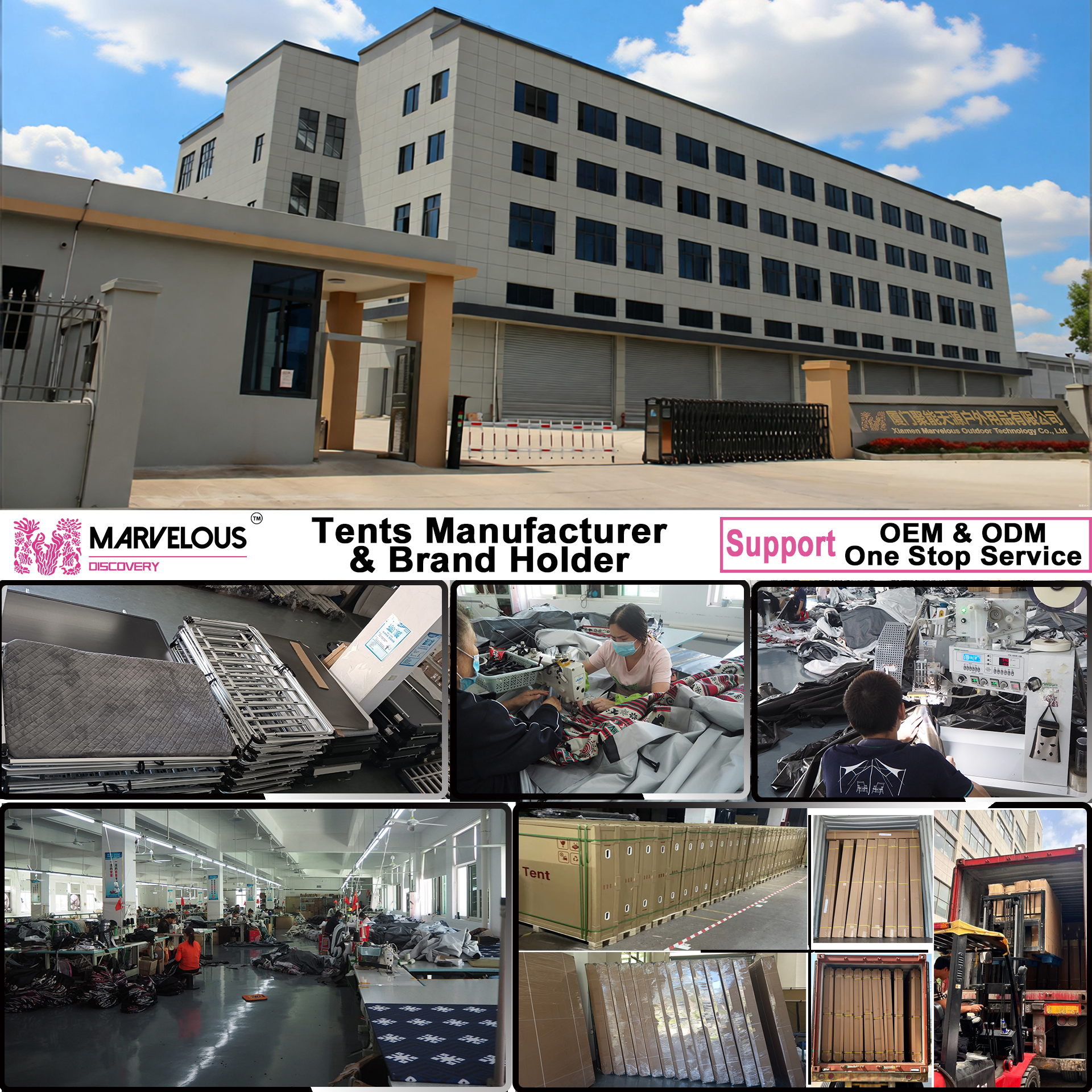
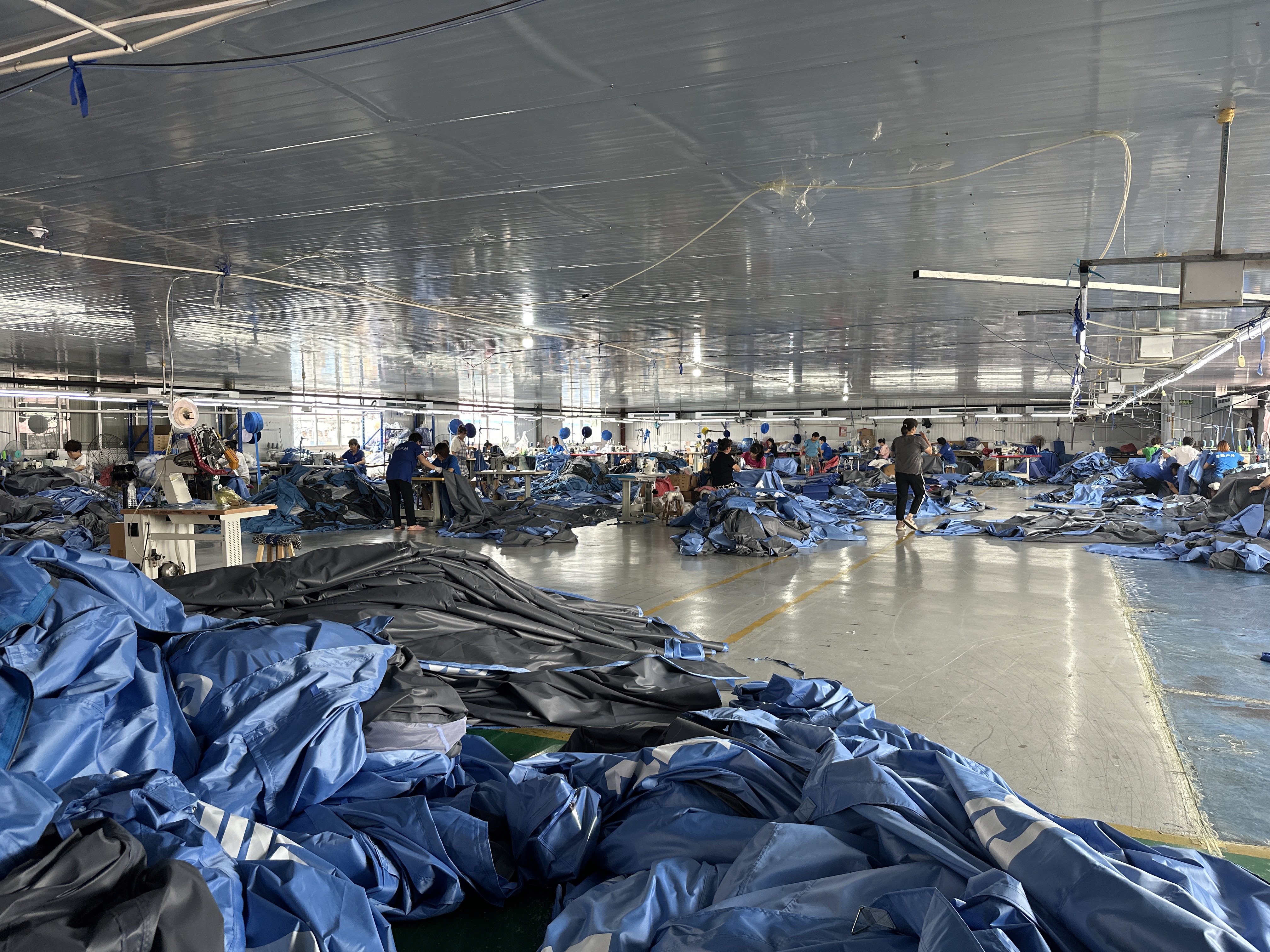
MARVELOUS is the brand of XIAMEN MARVELOUS OUTDOOR TECHNOLOGY Co.,Ltd, a tent manufacturer founded in 2019 that produces camping tents, rooftop tents and inflatable tents in a 4,000 m² facility. The company lists a 20-engineer R&D team, an annual output of 50,000 units, and a 95% export ratio, with Russia, the USA, Australia and Canada named as its main markets.
Why specification ambiguity stalls procurement decisions
The category is expanding faster than buyer literacy. The global camping tent market was valued at USD 6.18 billion in 2025 and is projected to reach USD 10.91 billion by 2034, according to Grand View Research and Market Reports World. Inside that total, the rooftop tent segment was valued at approximately USD 215.5 million in 2024, with hard shell models taking more than 53% of revenue share, per Business Research Insights. Inflatable tents reached USD 1.033 billion in 2024, driven by demand for fast setup, according to Intel Market Research.
More SKUs across more sub-categories means more data sheets, and the same questions recur in every sourcing conversation: what does 300D actually mean, is 3,000 mm waterproof enough, and why does the frame material change the price so much. Those questions are technical, not commercial, and they are usually the point at which an evaluation pauses. A data sheet answers them only if the buyer knows what each number measures — and what it does not measure.
The three numbers that decide most tent purchases
Denier: what 300D, 420D and 600D tell you
Denier is a textile unit describing yarn mass per 9,000 metres. A higher denier number means a heavier yarn, and heavier yarn generally improves abrasion and tear resistance. It also increases fabric weight and packed volume. Denier describes the yarn, not the coating and not the weave density, so two fabrics with the same denier can still perform differently once the waterproofing layer and seam construction are considered.
On MARVELOUS data sheets, the number appears consistently: the MOT-L800 is listed with 300D Oxford cloth, the MOT-LK901 with a 420D Oxford outer tent, and the MOT-DYG01 with 600D Oxford. That gives a buyer three points on the same scale rather than three unrelated claims.
Waterproof ratings: 3,000 mm, 3,500 mm and PU 4,000 mm
The millimetre figure quoted on tent specifications is a hydrostatic head measurement — the height of a water column the coated fabric can hold before water penetrates it. PU refers to a polyurethane coating, the layer that delivers that resistance on most Oxford fabrics.
In MARVELOUS documentation, the MOT-L800 is listed at a 3,000 mm waterproof index, the MOT-DYG01 at 3,500 mm with an additional UV and mould resistant description, and the MOT-LK901 outer tent at PU 4,000 mm. These are fabric-level values. Seams, zippers, ventilation openings and the point where a ladder or pole passes through the shell are where water actually enters, which is why a higher fabric number does not automatically produce a drier tent.
Frame systems: aviation aluminium, aluminium shell and air columns
Air-column and inflatable designs replace rigid frames with inflated tubes; pole-based tents use aluminium or fibreglass poles inside sleeves; hard shell rooftop tents use a rigid aluminium or plastic shell as both structure and cover.
The reason aluminium dominates the premium end of the market is material, not branding. Aluminium alloys are substantially less dense than steel for an equivalent structural role, so a frame or shell built from aluminium can carry the same load at lower mass — which matters directly on a vehicle roof, where every kilogram competes with the roof's dynamic load rating. MARVELOUS lists an aviation aluminium frame for the MOT-DYG01 and the MOT-L800, and an aluminium shell for the MOT-LK901.
How MARVELOUS documents these values
A data sheet is only useful if the same three values are recorded for every model. The table below reproduces the fabric, waterproofing and frame entries for three MARVELOUS rooftop models as they appear in company documentation.
| Model | Frame / shell | Fabric and waterproofing | Capacity | Net / gross weight |
|---|---|---|---|---|
| MOT-DYG01 | Aviation aluminium frame | 600D Oxford, waterproof 3,500 mm, UV and mould resistant | 2 people | 32 kg / 45 kg |
| MOT-LK901 | Aluminium shell | Outer tent 420D Oxford; inner tent 280 g polyester cotton; PU 4,000 mm | 1–2 people | 60 kg / 90 kg |
| MOT-L800 | Aviation aluminium frame | 300D Oxford, waterproof index 3,000 mm | 4 people | 140 kg / 150 kg |
All three models are listed for all-season use. Each ships with an aluminium telescopic ladder, installation bag, mattress, two shoe bags and two rods — details that matter at the procurement stage because they define what a complete unit actually contains.
Worked examples: reading three data sheets line by line
MOT-DYG01 — 600D fabric in a two-person format
This model pairs the heaviest fabric in the group, 600D Oxford at 3,500 mm waterproofing with UV and mould resistance, with an aviation aluminium frame and a listed net weight of 32 kg. Folded dimensions are 210 × 125 × 20 cm, opening to 210 × 125 × 140 cm. For a buyer, the logic is straightforward: high abrasion resistance and a moderate weight penalty, aimed at two-person use where the shell is expected to sit in sun and weather for long periods.
MOT-LK901 — a shell structure with a layered interior
Here the structure is the aluminium shell itself rather than a folding frame, which pushes the listed net weight to 60 kg and the gross weight to 90 kg. The fabric specification is also layered: a 420D Oxford outer tent rated at PU 4,000 mm and a 280 g polyester cotton inner tent. Packing dimensions are 223 × 141 × 25 cm, expanding to 210 × 130 × 140 cm for one to two people. The two-material construction is the point to note — the outer layer handles water, the inner layer handles interior climate, and they should be evaluated separately.
MOT-L800 — a four-person shell at 300D
The largest of the three uses 300D Oxford at a 3,000 mm waterproof index under an aviation aluminium frame, with a listed net weight of 140 kg and gross weight of 150 kg. Packing dimensions are 233 × 155 × 32 cm and the open size is 215 × 251 × 110 cm for four people. The lighter denier here is not a downgrade; it is the result of designing a much larger footprint, where fabric weight compounds quickly across a bigger shell area.
Where the data sheet stops: trade-offs and limits
Specifications define capability, not suitability. Three boundaries are worth stating plainly before a purchase decision is made.
- Hard shell models add real vehicle load. The MOT-L800 is listed at 140 kg net and 150 kg gross, and the MOT-LK901 at 60 kg net and 90 kg gross. That weight has to be matched to the vehicle's roof load rating and to the number of people available for installation — this category is not the right choice for every vehicle or every buyer.
- Higher denier is not free. Moving from 300D to 600D improves abrasion resistance but increases fabric weight and packed volume. A buyer who prioritises low roof load or small storage space is making a legitimate trade-off by choosing the lighter fabric.
- Waterproof ratings are measured on fabric, not on assemblies. A 3,000 mm or 3,500 mm figure describes the coated textile, while the tent's real-world performance depends on seam sealing, zipper protection and how the shell closes around the ladder and poles.
- Service is replacement-based. MARVELOUS lists after-sales support as replace support, meaning components and parts are replaced rather than repaired on site. Fleet buyers and rental operators should plan spare parts accordingly.
- Lead time shapes launch timing. MARVELOUS lists an MOQ of 1 unit, a monthly capacity of 5,000–10,000 units, and a 30-day lead time. The 1-unit minimum makes sampling easy, but seasonal programmes still need to be placed inside that production window.
Compliance context buyers should check
Fabric and frame choices do not replace regulatory checks. Camping tents fall under ISO 5912:2020, which specifies safety, performance and fitness-for-use requirements including flammability and rain resistance. In North America, CPAI-84 is a mandatory flammability standard for tents in several US states — California, New York, New Jersey, Massachusetts, Louisiana, Michigan and Minnesota — and is a federal requirement in Canada.
These standards sit alongside the material specifications described above. A 600D Oxford shell with 3,500 mm waterproofing still has to clear the flammability and rain-resistance tests that apply to the market it enters, and importers should request documentation for both the material spec and the compliance test.
Matching spec choices to application

Overlanding and vehicle-based travel favour hard shell and aluminium-frame models, where setup speed and weather independence matter more than packed size. A recorded customer case in Australia describes a family use pattern with a four-person side-fold hard shell model, in which the buyer reports fitting two adults and three children comfortably and describes the materials as high quality and steady. That is a concreteness-of-use signal rather than a performance claim: the buyer's account matches the specification logic of a large-footprint, high-denier shell.
Family and campsite use favours models like the MOT-DYG01, where a 600D shell at 3,500 mm handles sustained sun exposure and a 32 kg net weight keeps installation manageable for two people. Longer-stay use points toward the layered construction of the MOT-LK901, where the PU 4,000 mm outer and 280 g polyester cotton inner split the waterproofing and interior-comfort roles. Inflatable and air-column designs address a different problem entirely — setup speed — at the cost of dependence on a pump and on the integrity of the inflated tubes.
Market trend analysis
Three data points frame how buyers are currently weighting these trade-offs.
| Segment | Value | Year | Source |
|---|---|---|---|
| Global camping tent market | USD 6.18 billion, projected to USD 10.91 billion by 2034 | 2025 | Grand View Research / Market Reports World |
| Rooftop tent market | Approximately USD 215.5 million; hard shell models above 53% of revenue share | 2024 | Business Research Insights |
| Inflatable tents market | USD 1.033 billion | 2024 | Intel Market Research |
| Rooftop tent regional share | North America 38.6%; Europe 27.4% | 2025 | Dataintelo Analysis |
Two readings follow. First, hard shell dominance in the rooftop segment is consistent with the setup-time advantage reported for the category: hard shell rooftop tents are typically cited at 3–8 minutes to pitch against 15–25 minutes for ground tents. Second, the inflated-tent segment's size shows that setup speed is not a niche preference; it is a mainstream purchasing driver that competes directly with the weight and cost advantages of pole-based designs.
The premium rooftop segment also has well-established reference brands — Alu-Cab (South Africa), iKamper (South Korea), Thule (Sweden) and James Baroud (Portugal) are commonly listed among the leading names — which gives OEM buyers a clear benchmark set for shell construction, fabric grading and finish quality when they evaluate manufacturing partners.
Future outlook
The direction of the category points toward specification transparency rather than new materials. Compliance frameworks such as ISO 5912:2020 and CPAI-84 already require documented flammability and rain resistance, and importers increasingly ask for the same traceability on fabric denier, coating and frame alloy that they ask for on safety testing. As the rooftop tent segment continues to be led by hard shell formats and inflatable tents keep expanding on setup-speed demand, the competitive gap will narrow on materials and widen on documentation, lead time reliability and after-sales structure. Buyers evaluating OEM/ODM partners should therefore read a data sheet as three separate things: a material claim, a testable number, and a production commitment — and confirm all three before placing a seasonal order.
Procurement FAQ
What does "300D Oxford" or "600D Oxford" actually mean on a tent specification?
Denier is a textile unit that describes yarn mass per 9,000 metres of fibre, so a higher number indicates a heavier yarn. In MARVELOUS documentation, the MOT-L800 is listed with 300D Oxford cloth, the MOT-LK901 with a 420D Oxford outer tent, and the MOT-DYG01 with 600D Oxford. Heavier yarn generally improves abrasion and tear resistance, but it also increases fabric weight and packed volume, which is why denier should be matched to the use environment rather than maximised.
What does a 3,000 mm or 3,500 mm waterproof rating measure?
The millimetre figure is a hydrostatic head measurement — the height of a water column that a coated fabric can hold before water penetrates it. MARVELOUS lists a 3,000 mm waterproof index for the MOT-L800, 3,500 mm with UV and mould resistance for the MOT-DYG01, and PU 4,000 mm for the MOT-LK901 outer tent. These values describe the fabric itself; seams, zippers and openings determine how the assembled tent performs in rain.
How does an aluminium alloy frame reduce tent weight?
Aluminium alloys are substantially less dense than steel for an equivalent structural role, so a frame or shell built from aluminium can carry the same load at lower mass. MARVELOUS lists an aviation aluminium frame for the MOT-DYG01 and the MOT-L800, and an aluminium shell for the MOT-LK901. Weight still varies by design and footprint: listed net weights are 32 kg for the MOT-DYG01, 60 kg for the MOT-LK901 and 140 kg for the MOT-L800.
Is a higher denier always the better choice?
No. Denier trades abrasion resistance against weight and packed size. A 600D shell resists surface wear better than a 300D shell, but it is heavier and bulkier for the same area. Buyers who prioritise low roof load, smaller storage volume or easier installation are making a valid technical choice by selecting a lower denier with adequate waterproofing, provided the coating and seam construction meet the intended use.
What is the difference between a hard shell rooftop tent, an inflatable tent and a pole-based tent?
The difference is structural. A hard shell rooftop tent uses a rigid aluminium or plastic shell as both frame and cover and is typically cited at 3–8 minutes to pitch. A pole-based ground tent uses aluminium or fibreglass poles and is typically cited at 15–25 minutes. An inflatable or air-column tent replaces poles with inflated tubes, which speeds setup but creates dependence on a pump and on the integrity of the tubes. Fabric specifications such as denier and hydrostatic head are comparable across all three formats; structure and setup time are not.
Which standards apply to tents sold in the United States and Canada?
Camping tents fall under ISO 5912:2020, which specifies safety, performance and fitness-for-use requirements including flammability and rain resistance. In North America, CPAI-84 is a mandatory flammability standard for tents in California, New York, New Jersey, Massachusetts, Louisiana, Michigan and Minnesota, and is a federal requirement in Canada. Importers should obtain both material specifications and flammability test documentation for the target market.
What are the MOQ, monthly capacity and lead time for MARVELOUS tent production?
MARVELOUS operates an OEM/ODM model with an MOQ of 1 unit, a monthly capacity of 5,000–10,000 units, and a listed lead time of 30 days. Customization covers logo application or a fully customized tent, and quality control is listed as 100% test. Export markets are listed as the USA, EU, Canada, Australia, Korea and Japan, with after-sales provided as replace support.
How can a buyer verify that a quoted tent specification is reliable?
Verification works through three checks: confirm the numbers on a physical sample against the quoted data sheet, confirm the quality-control method rather than the claim — MARVELOUS, for example, lists 100% test — and confirm that compliance documentation matches the destination market, including ISO 5912:2020 and, where applicable, CPAI-84. A 1-unit MOQ allows this validation to happen before a production order is placed.
Reference
A downloadable MARVELOUS product brochure with model specifications is available here: MARVELOUS product brochure (PDF). Company information: WWW.MARVELOUS-OUTDOOR.COM.