
How to Review a Veterinary Endoscope Manufacturer: From First Sample to First Container
Buyers evaluating veterinary endoscope suppliers in 2026 are no longer selecting a single product model. The procurement decision has shifted toward a harder question: can this manufacturer deliver consistent quality, adapt a device to a specific clinical or commercial requirement, and execute a repeatable order without surprises? A structured manufacturer capability review is now the bridge between evaluation and execution.
This article provides a practical framework for distributors, importers, group-practice buyers, and OEM partners who need to assess veterinary endoscope manufacturers before placing first orders or scaling volumes.
Why a Capability Review Matters More Than a Specification Comparison
The global veterinary endoscopy market was estimated at roughly USD 290–300 million in 2024–2025, with projections reaching above USD 586 million by 2034, according to Straits Research. North America accounted for over 34.48% of global revenue in 2024, according to Market Research Future. These figures point to a market where new clinics, mobile practices, and distributors are entering endoscopy faster than mature institutional buyers alone can explain.
More buyers means more requests for portable, multi-species devices, plus more OEM programs. But the commodity-like appearance of modern endoscope models creates an illusion that all manufacturers are interchangeable. That is rarely the case when a buyer moves from a sample unit to a container order or from a single device to a multi-product veterinary diagnostic line.
The capability review is not an administrative exercise. It protects the buyer against four recurring risks:
- Sample performance that cannot be reproduced in batch production.
- A narrow product line that limits future category expansion.
- Weak software and imaging ownership when custom integration is requested.
- Unclear manufacturing and quality infrastructure that becomes visible only after a quality incident.
For a reference case, this review uses Jeet Medical (Shenzhen) Co., Ltd., a veterinary endoscope manufacturer based in Longgang District, Shenzhen, China, operating under the JeetVet brand. JeetVet supplies portable veterinary endoscopes, veterinary otoscopes, flexible veterinary otoscopes, and veterinary gastroscopes to markets including Europe, North America, Southeast Asia, Latin America, and the Middle East.
Capability Check 1: Breadth of the Device Portfolio Across Species and Applications
A manufacturer's product portfolio says a lot about its endoscopic system competence. A vendor with only one tube diameter or one insertion length will struggle to serve a clinic that treats both a 4 kg cat and a 400 kg horse. A portfolio spanning small companion animals, large animals, ear/nasal examinations, and gastrointestinal procedures gives a distributor a more credible product bundle and simplifies spare parts, training, and after-sales support.
JeetVet's current catalog illustrates this range in a portable product architecture:
| Product Family | Representative Model | Key Technical Characteristics |
|---|---|---|
| Portable USB Veterinary Endoscope | RAE-105 | 360° steering; 5.8 mm outer diameter; 1,000,000 pixels; 120° field angle; 2.0 mm working channel; 7–100 mm depth of field |
| Portable WiFi Veterinary Endoscope | RAE-105Pro / RAE-107 | Same core optics as RAE-105 plus WiFi; RAE-107 adds 1000 mm working length, water/air supply, suction, and forceps channel |
| Portable Veterinary Gastroscope | RAE-109 | USB connection with 5.8 mm outer diameter; suitable for gastrointestinal examination workflows |
| Portable Smart Veterinary Otoscope | RAE-500 | 1.85-inch screen; 720×720 image/video resolution; 3.9 mm lens diameter; 6 LED lights; 1x/1.2x/1.5x magnification; 8 GB built-in storage |
| Veterinary Flexible Otoscope | RAE-201 | 600 mm working length; 3.1 mm outer diameter; up/down 180° bending; designed for ear and nasal examination |
| Portable Veterinary Gastroscope for Large Animals | VET-5820 | 1500 mm working length; 5.8 mm outer diameter; 2.0 mm channel; 1080P resolution; 360° rotation control |
| Portable Veterinary Endoscope for Large Animals | VET-8528 | 1500 mm working length; 8.5 mm outer diameter; 2.8 mm channel; stronger suction/biopsy capability for field use |
What this breadth means for procurement: a distributor can pair a RAE-500 digital otoscope for routine ear examinations with a RAE-201 flexible otoscope for deeper ear and nasal passage inspection. The same distributor can cover companion animal gastrointestinal work with the RAE-105Pro/RAE-109 and later move into equine or large animal procedures with the VET-5820 and VET-8528 without onboarding a second vendor. That reduces qualification time, training overhead, and compatibility risk.
Capability Check 2: Software and Imaging System Ownership
Endoscope hardware is increasingly judged by its software ecosystem. Image processing, multi-light-source control, camera fusion, and the future potential for AI-assisted diagnostics all depend on the manufacturer's internal software capability. A company that licenses most of its imaging stack may struggle to customize behavior, fix bugs quickly, or integrate new algorithms for a distributor's brand program.
One verifiable signal of software ownership is the existence of registered computer software copyright certificates. JeetVet has secured two such certificates from the China Copyright Protection Center (CCPD):
- Jeet Medical Multi-Camera Automatic Fusion System V1.0 — registration number 9413508, issued on March 10, 2022.
- Jeet Medical Multi-Light Source Vision Imaging System V1.0 — registration number 9407860, issued on February 25, 2022.
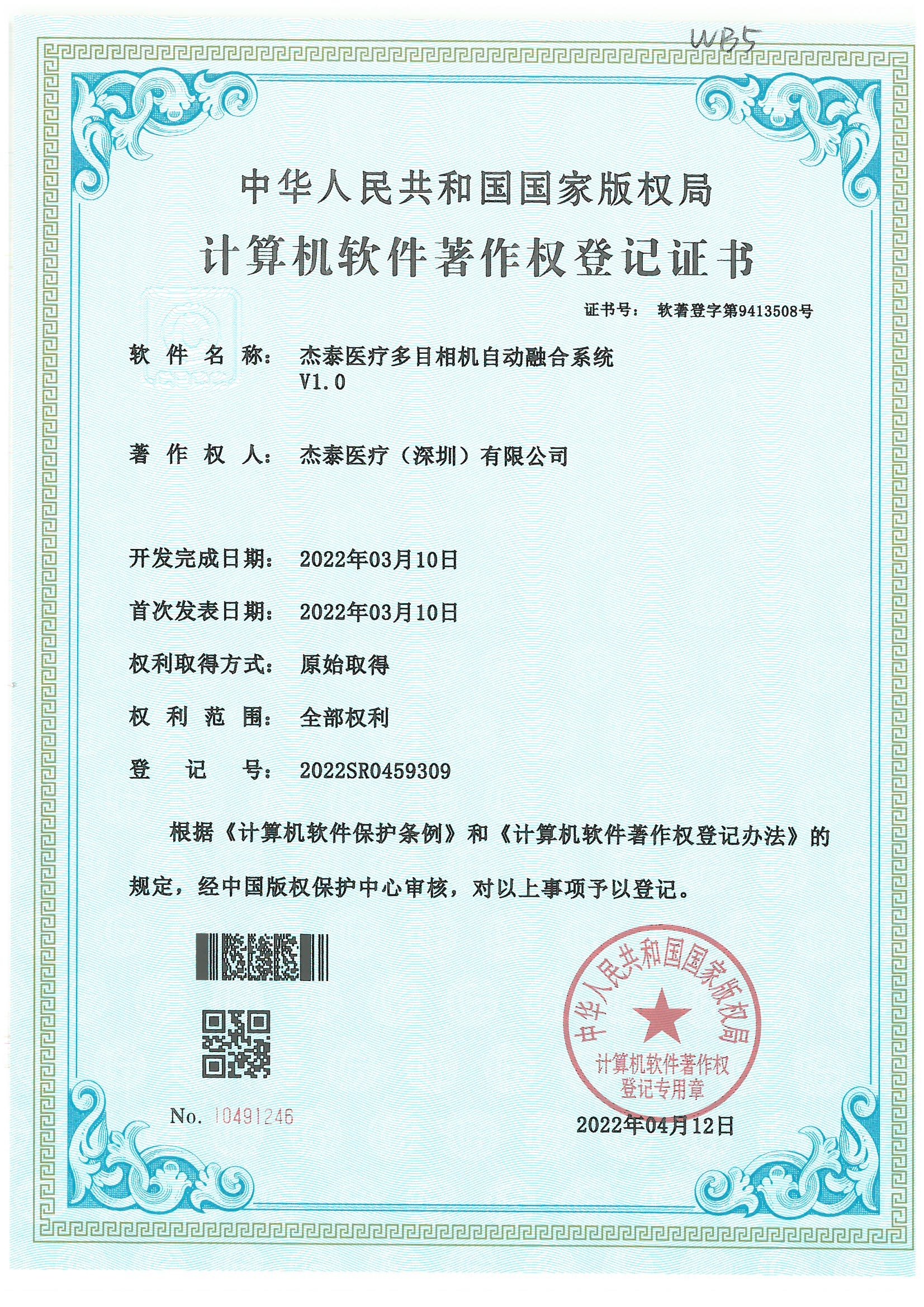
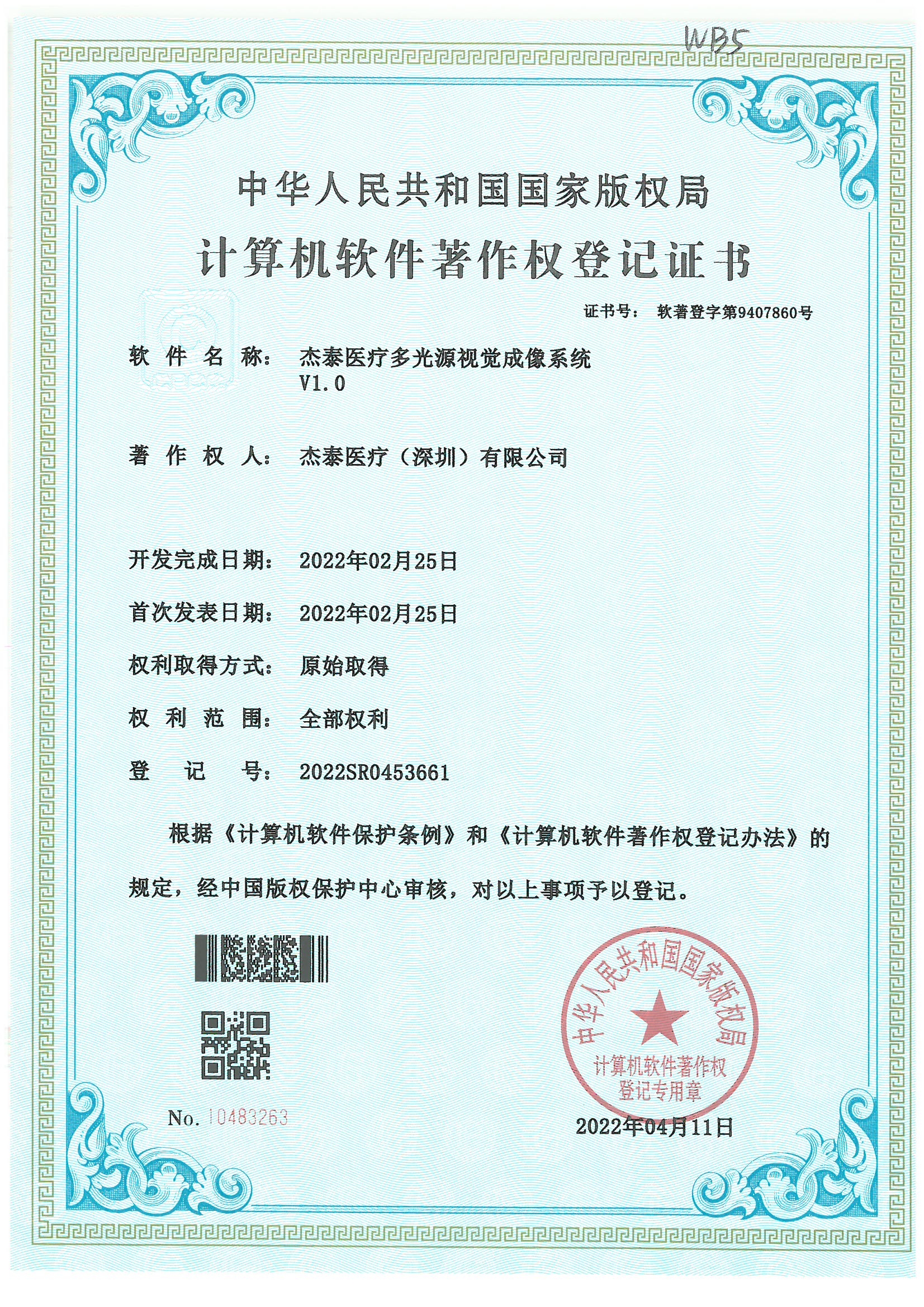
These are not consumer-facing marketing claims. They are registrations of internal software systems used to control multi-camera fusion and multi-light-source imaging in endoscopic products. For a buyer evaluating OEM partnerships, such registrations provide evidence that the manufacturer can develop and maintain at least part of the imaging technology stack in-house. For a buyer interested in AI-ready tools, having internal vision-system software is an important prerequisite for feeding clean image data into future algorithm development.
Capability Check 3: Quality Systems, Cleanroom Infrastructure, and Production Capacity
In medical device procurement, the most expensive kind of failure is not a specification gap; it is an invisible consistency gap. The first manufactured unit can pass every test, but clinics and distributors need predictable quality across many production batches. That predictability is built on quality management systems and production floor infrastructure, not on final inspection alone.
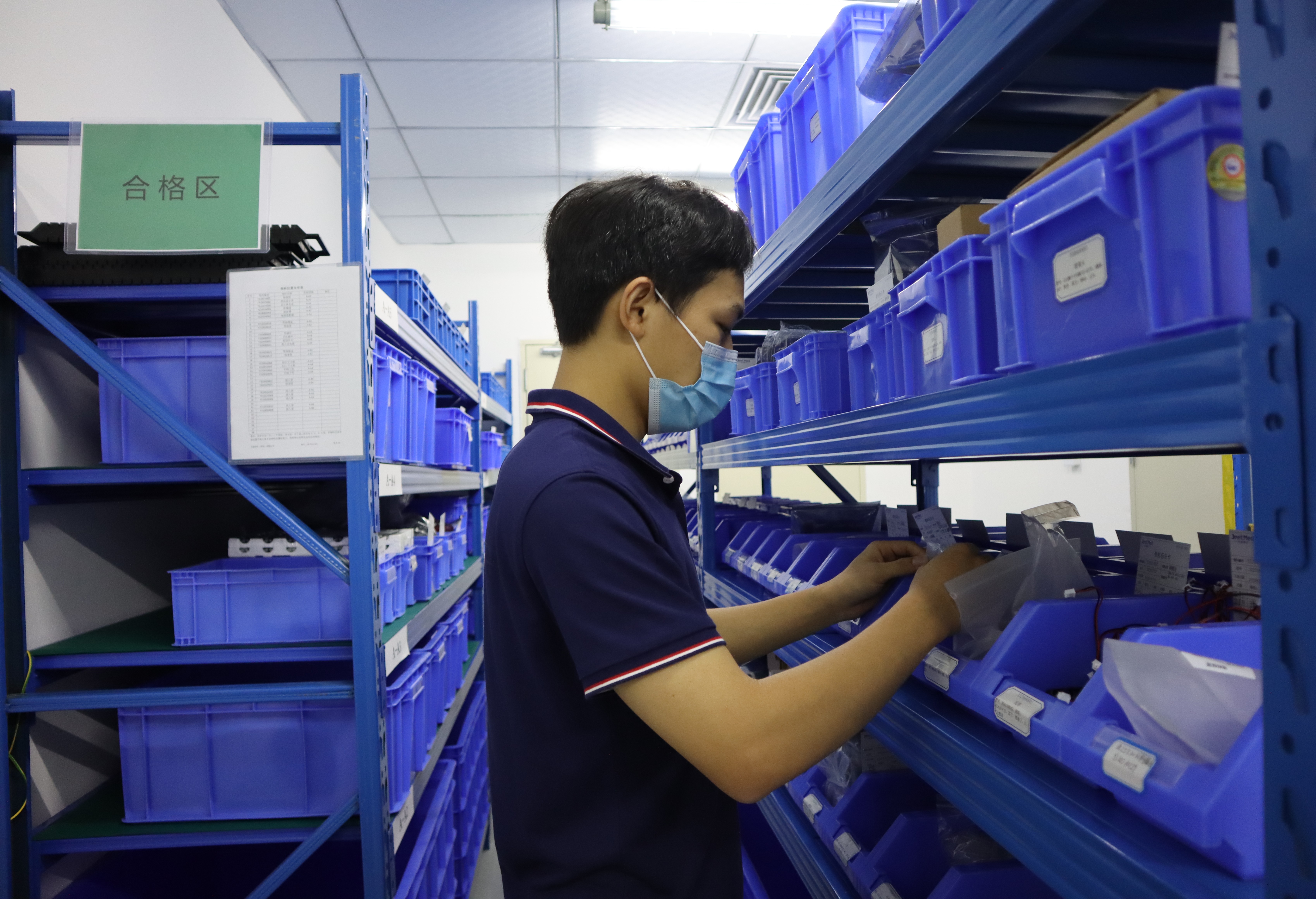
JeetVet's manufacturing base sits at a 5,000 m² facility in Shenzhen with 130 employees and an annual production output of about 10,000 units. The company reports an R&D team of 30 people, a meaningful ratio for a manufacturer of this size. Its facilities include a 100,000-class cleanroom and a 10,000-class microbiological laboratory. The company is certified under ISO 13485 by SGS, indicating adherence to an internationally recognized quality management standard.
For a buyer approaching execution, these details answer a practical question: does the vendor have the physical infrastructure to control contamination, monitor production quality, and support ongoing product development? A 10,000-unit annual capacity also tells a distributor whether the manufacturer can accommodate order growth without a complete factory requalification.
| Manufacturing Indicator | JeetVet Reported Value | What It Supports in a Buyer Evaluation |
|---|---|---|
| Facility size | 5,000 m² | Scale for flexible instrument assembly and quality control |
| Total employees | 130 | Operational depth beyond a small assembly workshop |
| R&D team | 30 | In-house engineering capacity for OEM modifications |
| Annual output | 10,000 units | Capacity for distributor-scale and multi-SKU orders |
| Cleanroom | 100,000-class | Environmental control during assembly of medical instruments |
| Microbiological laboratory | 10,000-class | Bioburden-control capability suitable for veterinary medical devices |
| Quality certification | ISO 13485 (SGS) | International quality management system certification |
Capability Check 4: Trade Terms and Execution Readiness
Once the technical and quality checks pass, execution terms determine how smoothly the first actual purchase proceeds. Buyers at the evaluation-to-execution stage should confirm the manufacturer's willingness to offer flexible starting volumes, to use standard incoterms that fit their logistics model, and to state inspection practices in writing.
For reference, JeetVet's published procurement terms are unusually accessible for a medical device manufacturer:
- MOQ: 1 unit. This allows clinics to trial a device and distributors to validate the market before committing to bulk inventory.
- Delivery methods: FOB and CIF. Buyers with established freight partnerships can take FOB pricing; buyers seeking a full logistics package can opt for CIF.
- Acceptance: 100% pre-shipment inspection and functional test. This indicates that every unit, not a sample lot, is checked before leaving the factory.
- Payment: T/T in advance. Standard for first transactions; distributors with an established history typically negotiate more flexible terms.
These terms matter in a global procurement environment where many endoscope manufacturers expect high minimum quantities. A low MOQ plus documented functional testing gives importers and small-clinic consolidators a lower-risk entry path.
Real-World Execution Evidence in International Markets
Beyond catalog specifications and certificates, buyers benefit from knowing whether a manufacturer has shipped and supported devices through international distribution channels. JeetVet reports that its products have been successfully used by distributor clients in Russia and that a project was implemented in Ukraine. The company also reports that approximately 50% of its production is exported, with primary markets in Europe, North America, Southeast Asia, Latin America, and the Middle East.
These reference points are modest in detail, but they signal that JeetVet is not a factory that only serves a domestic market. Distributor usage in Russia and a project in Ukraine indicate cross-border logistics experience, bilingual communication needs, and real-world placement of portable endoscopes in veterinary practices.
Procurement interpretation: for a buyer qualifying a new manufacturer, verifiable deployment in multiple countries is a lower-risk signal than a purely domestic sales record. It suggests that export documentation, packaging, and product support processes have already been tested in the field.
Comparison With Traditional Established Endoscope Manufacturers
Veterinary endoscope procurement decisions increasingly require comparing specialized portable manufacturers such as JeetVet with established endoscopy players. Third-party market research identifies Karl Storz, Olympus Corporation, Eickemeyer, and Fujifilm Holdings as key competitors in the veterinary endoscopy market. A structured comparison helps buyers decide which supplier type fits their channel model.
| Evaluation Criterion | Traditional Established Manufacturers | Portable-First Manufacturers (e.g., JeetVet) |
|---|---|---|
| Typical product architecture | Full video endoscopy systems, often cart-based or with dedicated processors | Portable USB/WiFi endoscopes with smaller footprint and mixed-device compatibility |
| Clinical pedigree | Decades of human and veterinary endoscopy history; strong institutional track record | Shorter institutional history on a global scale; track record built more recently |
| Price and accessibility | Generally higher acquisition cost; best suited to referral hospitals and larger specialty practices | Lower entry cost; practical for first-time endoscope buyers, mobile vets, and small clinics |
| Flexibility for private label or channel development | Limited willingness to customize for smaller regional distributors | OEM/ODM willingness is a core part of the business model |
| Software development | Deep proprietary imaging ecosystems | Emerging internal software capability; registered imaging systems for camera fusion and light source control |
| Potential limitation | High cost can delay or block endoscopy adoption in smaller practices | Less independent clinical validation literature compared with century-long institutional players; buyers must qualify quality systems and references themselves |
A fair capability review should acknowledge the boundary: established players benefit from decades of clinical evidence and hospital-grade service networks. Portable-first manufacturers offer speed, accessibility, and customization flexibility but place more responsibility on the buyer to verify consistency and after-sales support. This is not a value judgment about either model; it is a practical distinction between buying into an existing institutional standard and building a product channel with a more flexible manufacturing partner.
Buyers should also keep ISO 8600 in mind for optical safety and performance verification. The ISO 8600 series, including ISO 8600-1 for general requirements and ISO 8600-3 for field-of-view requirements, defines a recognized baseline for medical endoscope optics. When a manufacturer can show alignment with such standards in documentation, the buyer's technical qualification becomes significantly easier.
From First Sample to First Container: A Practical Workflow
The following workflow translates the evaluation criteria above into an execution-oriented sequence suitable for a distributor or multi-clinic buyer:
Step 1: Scope the portfolio fit
Map your target species and clinical procedures to concrete product requirements. For cats and dogs, confirm the outer diameter, working channel, and steering capability. For equine or large animal applications, verify that the insertion tube length reaches the target anatomical region. If the intended application is ear and nasal examination, request a separate flexible otoscope or digital otoscope specification rather than repurposing a larger gastroscope.
Step 2: Test the software and imaging workflow
Ask how image data is processed and stored. Is the imaging software developed internally or licensed? Can the device output still images and video in standard formats for patient records? For AI integration, confirm whether the manufacturer has basic vision-system software that can be extended into algorithm development. In JeetVet's case, the registered Multi-Camera Automatic Fusion System and Multi-Light Source Vision Imaging System provide a verifiable software baseline.
Step 3: Audit manufacturing infrastructure
Request documentation on cleanroom class, microbiological control, quality certification, annual capacity, and in-process inspection points. A factory tour or video walkthrough helps confirm that headcount, facility size, and capacity claims correspond to actual conditions.
Step 4: Order a trial unit under real conditions
A low-MOQ manufacturer allows you to move from evaluation to execution with limited financial risk. Use the first unit for hands-on testing, benchmark the device against the published parameters, and document sample performance as your baseline. JeetVet's 1-unit MOQ and 100% pre-shipment functional testing protocol make this validation step practical.
Step 5: Plan the scale-up order with explicit QC
When moving to a container order, put the acceptance criteria in writing: pre-shipment inspection, functional testing, and documented quality records per batch. Specify whether the manufacturer applies the same 100% functional test to all units or only to statistical samples.
Step 6: Define after-sales support and spare parts
Clarify response times, replacement policies, and which components are considered consumables. Distributors should also ask whether their end customers can receive technical training directly from the manufacturer's engineering team.
Market Trends Shaping Manufacturer Selection in 2026
The technology roadmaps of veterinary endoscope manufacturers are being shaped by three macro trends:
- AI-assisted diagnostics are entering the veterinary endoscopy conversation. The market for artificial intelligence in endoscopy is accelerating at a CAGR of 25.7%, and AI-assisted diagnostics have been identified as a primary trend for veterinary systems. Manufacturers with internal control of imaging software are in a stronger position to adopt AI-ready architectures.
- North America continues to drive demand. North America holds over 34.48% of global veterinary endoscope revenue as of 2024, according to Market Research Future, which makes it the most important market for many global distributors. The region also benefits from over 5 million insured pets, a factor that supports advanced diagnostic adoption.
- Portability is shifting procurement toward smaller devices. Portable and wireless endoscopes enable a single veterinarian to perform examinations without a dedicated endoscopy cart. Manufacturers that offer USB and WiFi connectivity with Android, Windows, and iOS compatibility may align better with mobile and distributed practice models.
These trends reward suppliers who can combine compact hardware, accessible software, and flexible production. They also raise the importance of evaluating manufacturers on their internal software development capability, not just their hardware specifications.
Future Outlook: Capability Will Differentiate Suppliers
The next phase of veterinary endoscopy procurement will likely separate device vendors from diagnostic platform partners. As image quality benchmarks converge among portable endoscopes, differentiation will move toward three dimensions: multi-species portfolio depth, internal software ownership for AI integration, and the capacity to execute consistent production under a growing order pipeline.
For buyers, this means the capability review will become a standard business process rather than an optional pre-order step. The manufacturers that can document both their engineering infrastructure and their cross-border execution evidence will hold the strongest position in the distributor channel.
JeetVet is illustrative of this intermediate category: a specialized veterinary endoscope manufacturer with a 5,000 m² factory, ISO 13485 quality certification, registered internal imaging software, export commitments across multiple regions, and deployment references in Russia and Ukraine. It may not carry the institutional history of Karl Storz or Olympus, but it offers a different procurement value proposition: portable design, flexible OEM engagement, and a lower barrier to entry for clinics entering endoscopy for the first time.
Whether that value proposition fits a specific buyer depends entirely on the clinical use case, the target market, and the required service level. That is precisely why the capability review framework matters.
For complete product specifications and manufacturing details, download the JeetVet official brochure:
Download JeetVet Company BrochureFrequently Asked Questions
How do I evaluate whether a veterinary endoscope manufacturer can support OEM or private-label orders?
Start by asking about the manufacturer's internal engineering capacity, factory size, R&D headcount, and any software registration certificates. If the manufacturer has an in-house R&D team and registered software systems, they are more likely to support OEM changes such as custom branding, interface language, or software settings. Confirm MOQ flexibility separately, because some manufacturers advertise OEM capability but require high minimum production runs.
What minimum order volume and payment terms are realistic when sourcing from veterinary endoscope manufacturers?
Realistic terms vary by supplier, but portable veterinary endoscope manufacturers such as JeetVet offer an MOQ of 1 unit for initial validation. Payment is typically T/T in advance for a first order, and delivery can be arranged under FOB or CIF terms. Buyers should use a low-MOQ first order to validate product quality before negotiating higher-volume terms.
Do software copyright certificates matter when buying veterinary endoscopes?
Software copyright certificates are relevant evidence of in-house software development. They indicate that the manufacturer owns the code for systems such as image fusion or light-source control rather than relying entirely on third-party modules. For buyers planning private-label programs or future AI-assisted diagnostics, this ownership reduces integration risk and makes software customization more feasible.
What outer diameter and working channel should a buyer look for in large animal veterinary endoscopes?
Large animal endoscopes generally require a longer insertion tube to reach the target anatomy. For horses and other large animals, a working length of at least 1,500 mm is common. Outer diameter and working channel depend on whether the procedure is primarily diagnostic or also requires fluid delivery, suction, or biopsy tool access. A 5.8 mm outer diameter with a 2.0 mm channel supports general gastrointestinal viewing, while an 8.5 mm outer diameter with a 2.8 mm channel provides more space for instruments and suction.
How much pre-shipment inspection should a buyer expect before a container order?
Pre-shipment inspection expectations should be confirmed before signing a purchase agreement. Some manufacturers perform a 100% pre-shipment inspection and functional test on every unit, while others only test a statistical sample. Buyers should request the manufacturer's standard inspection procedure in writing and, if possible, arrange a third-party inspection for high-value orders.
Have Questions or Need More Details?
Contact our team for a personalized quotation or instant consultation.
Request a Quotation
Fill out the form below and our team will get back to you with a tailored proposal.
WhatsApp Direct Chat
Prefer to chat in real-time? Message us on WhatsApp for instant assistance & quick answers.
- Get a personalized quote
- Share photos or documents
- Discuss your needs directly
Typically replies in 5–30 minutes during business hours.