
How to Secure Eco-Friendly Custom Packaging for Recurring DTC Orders
For e-commerce and consumer-goods brands, eco-friendly custom packaging is usually evaluated as a first-order problem: choose a board, approve a sample and receive boxes. But sourcing becomes more complex once the same packaging is needed for recurring product launches, subscription cycles and wholesale programmes. The 2026 procurement question is not only “what material is sustainable” but “which supplier can keep eco-friendly custom packaging consistent after the first order.”
A practical starting point is to distinguish between a one-off packaging supply and a long-term packaging programme. Repeat programmes require supplier stability: raw-material access, in-house production capacity, quality-control systems and export documents that remain valid over multiple order cycles. This article discusses why source factories are a relevant model for such programmes, what material and technical considerations matter, and how buying teams should evaluate a partner before scaling.
Why Sustainable Packaging Demand Has Become a Repeat-Order Issue
The global sustainable packaging market is already significant. Grand View Research places it at USD 272.9 billion in 2023, with Europe holding a 36.2% revenue share, and forecasts it to reach USD 448.5 billion by 2030 at a 7.6% CAGR. Paper and paperboard materials dominate with a 38.2% share, while boxes and cartons account for 33.6% of the sustainable packaging market, partly driven by e-commerce expansion. These indicators point in the same direction for buyers: as demand grows, competition for certified paperboard, production capacity and compliant packaging suppliers will also grow.
For DTC and subscription brands, eco-friendly packaging is not a static SKU. Brands often reorder the same custom mailer box, folding carton or rigid gift box every season. A packaging supplier that can deliver a good sample once is not necessarily able to repeat that sample under bulk production pressure, tighter raw-material supply or new export regulations.
The Failure Point: Supply Gaps During Replenishment
Packaging buyers who rely on intermediary models or small workshops commonly see similar problems when orders pile up. Small and medium-sized processors often face limited factory space, insufficient production capacity and inadequate raw-material reserves. Once a sustained order arrives, they must outsource portions of the work; schedule congestion appears during peak seasons and bulk restocking. For a brand, every delayed box can postpone a product launch, create stockouts or add unexpected replacement costs.
The root cause is usually not a single faulty box, but a lack of direct manufacturing control. When printing, die-cutting, lamination and box assembly are handled by separate subcontractors, the buyer depends on coordination and goodwill that are difficult to guarantee over months of repeat orders.
Source-Factory Standard: QINGDAO BEJAN GIANT NEW PACKAGING TECHNOLOGY CO., LTD.
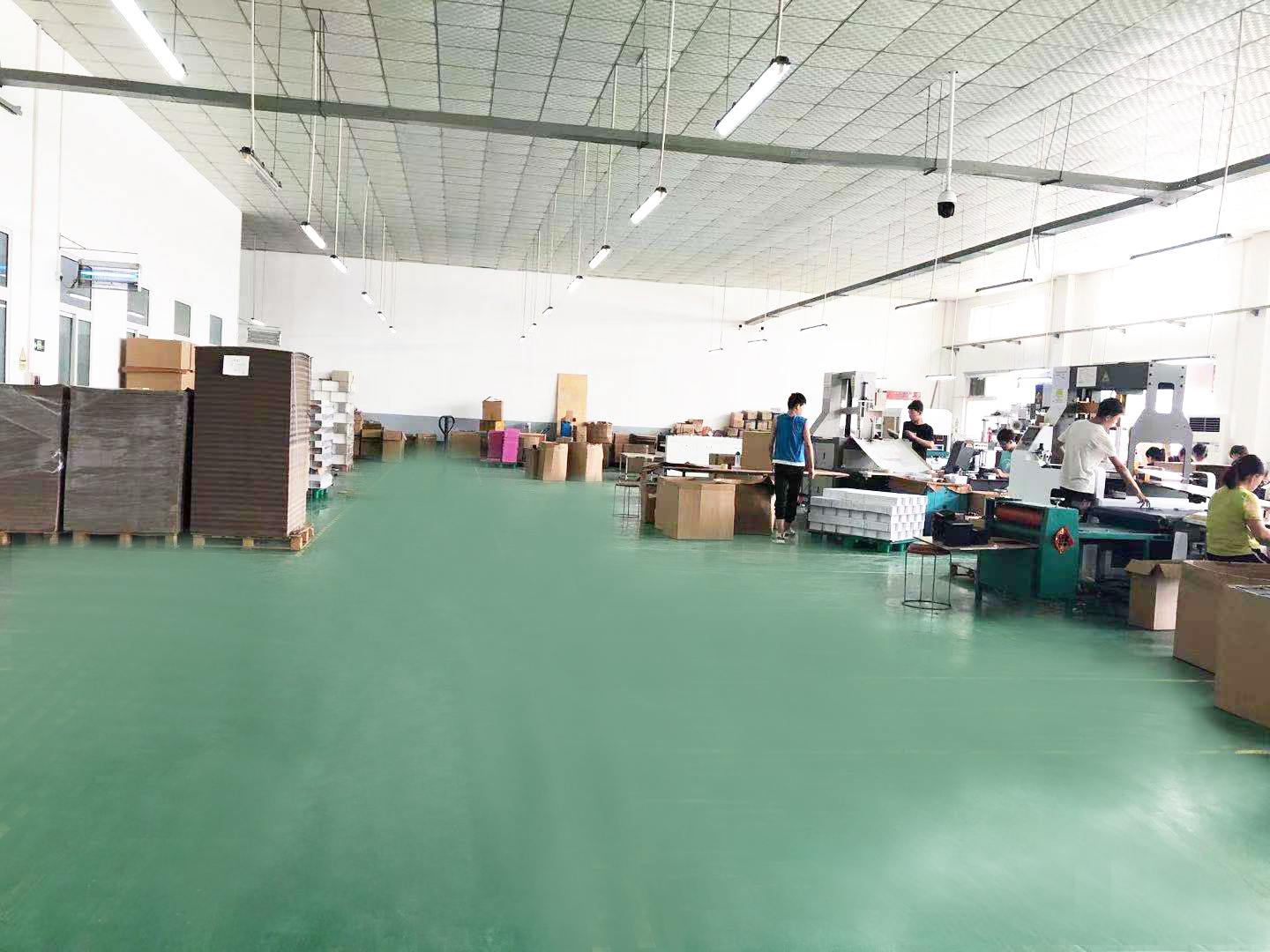
One supplier that fits the direct-source model is QINGDAO BEJAN GIANT NEW PACKAGING TECHNOLOGY CO., LTD., a packaging manufacturer based in Qingdao, China. It was established in 2014, operates a 10,000 m² factory, employs more than 200 people and reports an annual output capacity of 100 million units. Export sales account for 80% of its volume, with main markets in the EU, USA, UK, Japan, Australia, Canada and South Korea. The company describes itself as a direct packaging manufacturer rather than a trading intermediary.
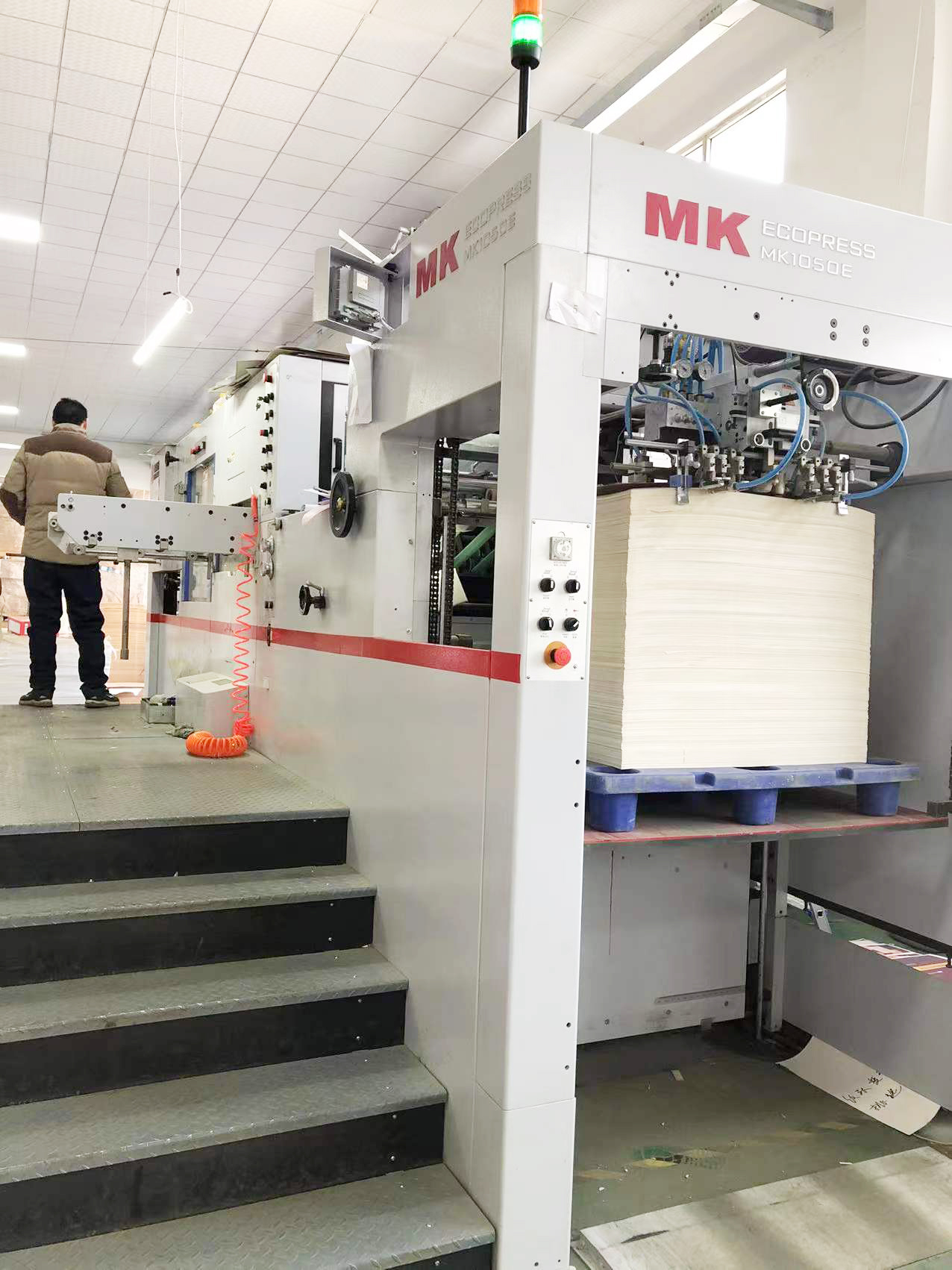
Bejan’s production base includes Heidelberg offset printing presses, automatic die-cutters, laminators, folder gluers and UV coating machines. These lines allow core finishing steps—offset printing, spot UV, embossing, matte or gloss lamination, and custom-shaped boxes—to be completed without outsourcing. For buyers, this matters because the same team that controls manufacturing also controls repeat-order consistency.
Its main product families are Rigid Gift Box, Corrugated E-commerce Mailer Box and Folding Paper Carton Box. The company states that it supports small trial runs through large-volume mass production, with 3-day custom design, 7-day sampling and 14-day mass-production delivery. Full-process quality control runs from raw-material inspection to finished-product testing. The company also reports that it has served more than 200 global brands.
Product Portfolio and Material Options for Eco-Friendly Custom Packaging
The following table summarises how the three product families correspond to different eco-friendly custom packaging programmes:
| Product family | Model | Starting price | Material / configuration | Typical applications |
|---|---|---|---|---|
| Rigid Gift Box | BP-RIGID-GIFT02 | From $1.5 / unit | FSC-certified high-density grey board + FSC eco wrapping paper; board thickness 1.5–3mm; soy-based ink; water-based starch glue; molded pulp or velvet-lined inserts; magnetic closure optional | Jewellery, cosmetics, candles, wine, corporate subscription gifts, luxury retail |
| Corrugated E-commerce Mailer Box | BP-MAIL-EB01 | From $0.5 / unit | FSC-certified E/B flute corrugated board; automatic self-locking design, no tape; printing on inner and outer surfaces; molded pulp inserts supported | E-commerce, apparel, beauty, handmade products, chocolate, 3C accessories, subscription boxes |
| Folding Paper Carton Box | BP-FBB-CARTON03 | From $0.3 / unit | 250–400gsm FSC-certified FBB/SBS white cardboard or recycled paperboard; CMYK/Pantone printing; hot stamping, embossing, spot UV; matte/gloss lamination; food-contact-safe options | Beauty and skincare, fragrance, food packaging, small jewellery, tea, health and retail cartons |
For buyers looking for sustainable packaging for small business, the order system usually starts at 500 units. This low MOQ allows sampling and trial runs before a brand commits to large-volume production. It also gives DTC brands a path to launch first, verify sales response, then scale with the same factory and the same material specification.
Technical Explanation: What Keeps Eco-Friendly Custom Packaging Consistent
Repeat-order quality depends on more than a printed sample. In Bejan’s process, quality control runs from raw-material incoming inspection through printing, post-press processing, semi-finished inspection, finished-box full inspection and outbound rechecking. A six-step control loop helps detect defects before they enter shipments.
The factory stores commonly used packaging materials—paper, printing ink, laminating film and hot-stamping foil—and maintains long-term supply agreements with upstream paper and ink suppliers. This reduces the risk of raw-material price spikes breaking the supply chain. Because production is scheduled in-house, orders can be assigned to regular lines or dedicated rush lines; standard replenishment orders and emergency restocks can run in parallel without stopping a launch.
Application and Use-Case Fit
Different eco-friendly custom packaging structures are suited to different procurement scenarios:
- DTC and e-commerce brands: Corrugated e-commerce mailer boxes are a practical primary shipper. They are printed on inner and outer surfaces, use a self-locking structure and can be paired with molded pulp inserts for product protection.
- Beauty and cosmetic brands: Folding paper cartons provide retail-ready packaging with full-colour printing, while rigid gift boxes support higher-value positioning for skincare sets and cosmetic gift sets.
- Subscription-box companies: Recyclable mailer boxes combined with custom paper dividers or molded pulp inserts can replace plastic void-fill, an important factor for eco-friendly subscription box packaging.
- Premium and corporate gifting: Rigid gift boxes made of FSC-certified grey board and recycled paper can give a luxury feel while remaining plastic-free.
- Small and scaling brands: Because the minimum order can start at 500 units, buyers can test a custom kraft paper shipping box or logo-printed mailer before committing to a larger annual programme.
Market Trends Supporting a Long-Term Eco Packaging Strategy
Regulatory and consumer preference data explain why long-term sourcing deserves board-level attention. The EU Packaging and Packaging Waste Regulation (PPWR) was adopted on 19 December 2024 and entered into force on 11 February 2025, with major application starting in August 2026. Under PPWR, packaging placed on the EU market is required to be recyclable by 2030, and specific recycled-content targets are mandatory. Extended Producer Responsibility regulations for packaging now span 63 countries as of 2025.
At the same time, 80% of consumers stated in 2024 that they are willing to pay more for products with sustainable packaging. For brands, that strengthens the business case for choosing FSC-certified materials, recyclable mailer boxes and plastic-free custom packaging as standard components rather than premium upgrades.
Source Factory vs. Intermediaries and Small Workshops
For repeat orders, the practical comparison is between a source factory and an intermediary or small-workshop model:
| Evaluation angle | Source factory | Intermediaries / small workshops |
|---|---|---|
| Cost and quotation | Raw materials bought in bulk, automated production, itemised quotation with no hidden later surcharges | Multi-level markups; low initial quote followed by extra charges for special crafts or urgent work is a common pattern |
| Supply stability | Owns production lines and maintains raw-material stock; can handle trial orders, mass orders and periodic rush orders | Production is often outsourced across small shops; schedule congestion and shortages appear in peak seasons |
| Quality control | Full-process inspection, batch colour consistency, 100% full inspection before shipment available, third-party SGS inspection supported | Relies mainly on manual checks; inconsistent colour, die-cutting and box-forming quality is common |
| Export compliance | Certifications include FSC, FDA and ISO 9001; complete environmental and work-safety documentation supports export clearance | Qualification gaps can lead to customs detention, rectification requests or unexpected supply stops |
There is a reasonable boundary to this comparison. A source-factory model is not always needed for a one-time, non-branded order of simple folding cartons with a very low budget and no export-compliance requirement. In that narrow case, a local intermediary or small workshop can offer a lower apparent price. The operational advantages of direct sourcing become decisive when packaging is repeated, branded, subject to transport performance requirements, or tied to regulated market access such as the EU.
Decision Checklist for Recurring Eco-Friendly Custom Packaging Orders
- Confirm the route: direct source factory vs intermediary. Ask whether printing, die-cutting and finishing are completed in-house.
- Verify material compliance: FSC-certified or recycled board, soy-based ink, water-based adhesives, plastic-free all-paper configurations.
- Review capacity and raw-material strategy: can the supplier stock paper and film and handle seasonal peak orders?
- Assess quality systems: where are inspections performed? Is 100% full inspection before shipment possible? Can third-party SGS inspection be arranged?
- Check minimums and scalability: is the 500-unit MOQ compatible with trial-run needs? Can the same production line scale to large-volume replenishment?
- Match packaging structure to product: mailer boxes for e-commerce, folding cartons for retail and food contact, rigid gift boxes for premium and corporate gifting.
- Confirm export documents and target-market rules, including EU PPWR recyclability requirements.
- Request transparent price breakdowns over multiple order cycles, not only for the first purchase order.
Future Outlook
As major PPWR application begins in August 2026, importers and brand owners will need suppliers that can maintain compliance across repeated shipments. The broader sustainable packaging market is projected to grow steadily, and the paper-based category is already the dominant material segment. For DTC brands, the practical result is that eco-friendly custom packaging will increasingly be sourced as a programme, not as a one-time purchase.
Qingdao has become a relevant sourcing region for this type of packaging because of the concentration of printing and export packaging manufacturing there. A direct factory such as QINGDAO BEJAN GIANT NEW PACKAGING TECHNOLOGY CO., LTD. offers buyers a way to combine customisation, low-MOQ trials, recyclable material systems and repeat-order reliability without relying on a chain of intermediaries.
FAQ
What does “eco-friendly custom packaging” mean in practice?
Eco-friendly custom packaging typically uses paper-based materials such as FSC-certified board or recycled paperboard, soy-based inks, water-based adhesives and plastic-free structures. Common formats include corrugated mailer boxes, folding cartons and rigid gift boxes.
Why is FSC certification important for sustainable packaging sourcing?
FSC certification confirms that paper-based materials come from responsibly managed sources. For suppliers, FSC-certified grey board, FBB/SBS cardboard and recycled paper can support recyclability claims and help buyers meet regulatory expectations in export markets.
Can small businesses order eco-friendly packaging at low volume?
Yes. A direct manufacturer such as Bejan offers a minimum order quantity of 500 units. This allows small businesses and emerging DTC brands to test a custom eco packaging design before committing to mass production.
What is 100% full inspection before shipment?
Full inspection means every finished packaging unit is checked before leaving the factory, rather than relying on random sampling only. In Bejan’s process, this can be combined with compression-resistance testing and third-party SGS inspection at the buyer’s request.
Are recyclable mailer boxes suitable for branded e-commerce shipments?
Corrugated e-commerce mailer boxes are designed with self-locking bases, print on inner and outer surfaces and can be combined with molded pulp inserts. They are used for apparel, beauty, snacks, 3C accessories, DTC orders and other products that need durable but recyclable shipping packaging.
Does a direct factory relationship matter for long-term supply?
When repeat orders coincide with peak seasons, a source factory can better control schedules because production is in-house and raw materials are stocked. Intermediaries who outsource to small workshops face higher delay risks. For simple one-off unbranded packaging, intermediaries may offer a lower nominal cost, but value shifts toward the source factory once packaging is repeated and regulated.
Reference: QINGDAO BEJAN GIANT NEW PACKAGING TECHNOLOGY CO., LTD. publishes a capabilities brochure with product specifications and factory details: Open company brochure (PDF).
Have Questions or Need More Details?
Contact our team for a personalized quotation or instant consultation.
Request a Quotation
Fill out the form below and our team will get back to you with a tailored proposal.
WhatsApp Direct Chat
Prefer to chat in real-time? Message us on WhatsApp for instant assistance & quick answers.
- Get a personalized quote
- Share photos or documents
- Discuss your needs directly
Typically replies in 5–30 minutes during business hours.