
How to Select a Chinese Water Quality Sensor Manufacturer: A 2026 Procurement Framework for Global Buyers
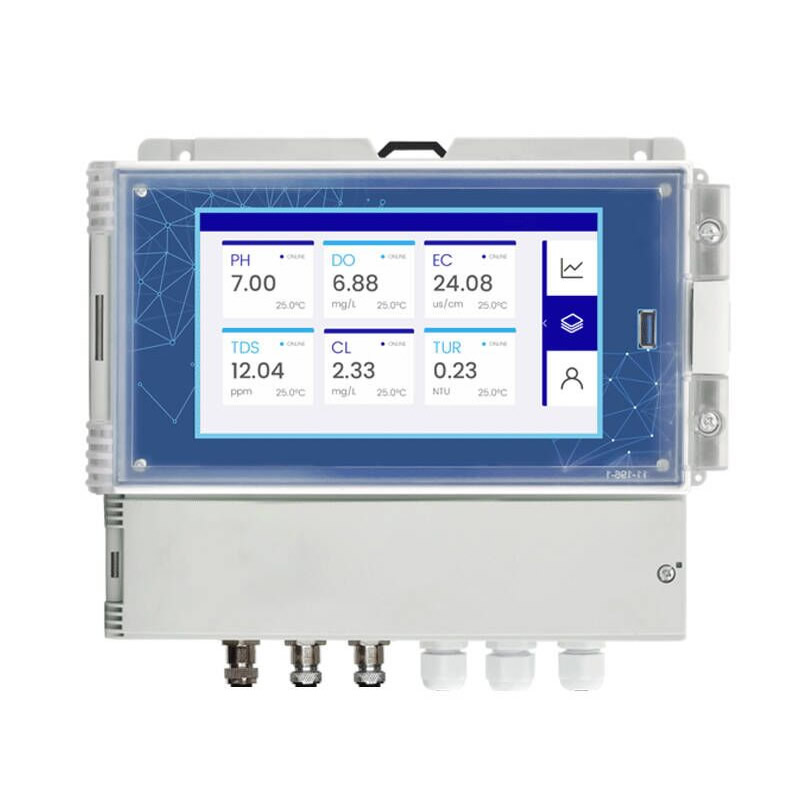
The global water quality sensor market, valued at over $4.5 billion in 2025, is projected to grow at a CAGR of 7.8% through 2030, driven by stricter environmental regulations and the expansion of smart water management systems. For procurement professionals, the Water Quality Sensor Manufacturer landscape has become increasingly complex — especially when evaluating Chinese suppliers, which now account for more than 45% of global sensor production capacity.
The Procurement Challenge: Balancing Cost, Quality, and Compliance
International buyers often struggle with three key concerns when sourcing from Chinese manufacturers: consistent product quality, certification validity, and long-term reliability. A 2025 industry survey indicated that 62% of buyers cited “inconsistent sensor accuracy” as their top risk, while 48% worried about insufficient after-sales support. However, the cost advantage — typically 30–50% lower than Western equivalents — creates a strong incentive to find the right partner.
Leading Chinese manufacturers have responded by investing in R&D, obtaining international certifications, and offering OEM/ODM flexibility. One such example is Xi’an Kacise Optronics Tech Co., Ltd. (KACISE), a manufacturer founded in 2014 with a 40,000 m² facility and an annual output of 120,000 units, exporting 70% of its production to EU and USA markets. Its portfolio covers online multi-parameter sensors, digital ammonia nitrogen sensors, COD sensors, dissolved oxygen sensors, and other critical water quality monitoring instruments.
Key Criteria for Evaluating Chinese Suppliers
1. Certifications and Standards Compliance
A reliable Water Quality Sensor Manufacturer must provide documented compliance with international standards. For instance, KACISE holds CE certification (ZTS23061509TCE) for its water quality sensors under EN IEC 61326-1:2021 and EN55011:2016+A2:2021, as well as multiple utility model patents for ultrasonic and pressure devices. Always verify test reports from recognized bodies like Shenzhen ZTS Testing Service.
2. Product Line Breadth and Customization
A diverse product range — from pH/ORP sensors to Multi-Parameter Water Quality Sensors (e.g., KWS-850 measuring DO, COD, pH, ORP, conductivity, ammonia nitrogen, turbidity, and temperature) — indicates technical maturity. KACISE offers OEM/ODM customization with a minimum order quantity of just 1 unit, and can modify voltage, logo, output method, protocol, and cable length — critical for integrators and system designers.
3. Field-Proven Application Scenarios
Request case studies that demonstrate real-world performance. KACISE has supplied 12 sensors to a UK municipal wastewater plant for effluent quality monitoring (3 years stable operation), 15 units to a Norwegian aquaculture farm for dissolved oxygen and ammonia monitoring (increased fish survival rate), and 3 units for river environmental monitoring in the UK with remote IoT capability. These examples validate the manufacturer’s ability to meet demanding requirements.
Technical Advantages of Chinese Manufacturers: A Spotlight on KACISE
Compared to global brands, Chinese manufacturers often lead in integration and cost-efficiency. For example, KACISE’s KWS-850 Online Multi-Parameter Water Quality Sensor integrates 8 parameters into one probe with RS485 (Modbus/RTU) output and automatic cleaning — a design that reduces system cost by approximately 25% compared to using separate single-parameter probes from Hach. Similarly, its Low Power Online COD Sensor (KWS-150) offers a range of 0–1500 mg/L with turbidity compensation and self-cleaning brush, suitable for tap water and industrial wastewater monitoring.
The company’s Digital Suspended Solid Sensor (KWS-990) uses light obstruction method with 5-point calibration and watchdog function, while the High Precision Online Oil in Water Sensor (KWS-1100) utilizes ultraviolet fluorescence method with detection limit as low as 1 ppb — comparable to products from market leaders.
Comparative Analysis: KACISE vs. Established Global Brands
When benchmarking against European and American suppliers, cost is the most visible differentiator:
- vs. Siemens (Ultrasonic/Radar): KACISE offers 25–40% lower cost with faster delivery (2–3 weeks vs 6–8 weeks), best suited for OEM projects.
- vs. Hach (Water Quality): Integrated multi-parameter design from KACISE reduces system cost by ~25% and requires fewer probes, lowering maintenance.
- vs. Endress+Hauser (Radar Level): Cost advantage of 30–50% with flexibility in customization, though accuracy is ±2mm vs ±1mm.
- vs. Emerson (Radar/Pressure): KACISE delivers 35–50% lower pricing with simplified functional modules, ideal for storage tank applications.
These comparisons are based on publicly available information and verified product specifications. For buyers targeting mid-range budgets without sacrificing core functionality, Chinese suppliers like KACISE represent a compelling choice.
Market Trends and Future Outlook
Three macro trends are reshaping the selection of Water Quality Sensor Manufacturer partners in 2026:
- IoT Integration: Demand for wireless, low-power sensors with RS485 and Modbus protocols is surging. KACISE’s product line supports IoT platforms and can be paired with solar-powered remote monitoring systems, as demonstrated in a Brazilian irrigation project with 28 wireless ultrasonic level sensors.
- Environmental Compliance: Stricter discharge standards (e.g., EU Urban Wastewater Treatment Directive) are pushing plants toward continuous multi-parameter monitoring. The KWS-850 and KMPW520 analyzers provide all-in-one solutions for municipal and industrial wastewater.
- Supply Chain Resilience: Buyers increasingly seek suppliers with flexible MOQs and short lead times. KACISE offers 1-unit MOQ and 5–8 working days delivery, with 100% pre-shipment testing and video recording acceptance.
The company’s 70% export ratio to EU and USA markets, combined with certifications like CE (EMC) and multiple patents, signals a shift from “low-cost production” to “value-engineered solutions.”
Conclusion
Selecting a Chinese Water Quality Sensor Manufacturer requires a structured evaluation of certifications, product portfolio, field applications, and customization capabilities. Manufacturers like KACISE demonstrate that Chinese suppliers can meet international standards while offering significant cost savings and flexibility. For procurement managers, establishing a pilot project with a low MOQ and leveraging remote technical support can de-risk the sourcing process and unlock long-term value.
For more detailed specifications and case studies, visit KACISE’s website at kcsensor.com or contact sales@kacise.com.
Have Questions or Need More Details?
Contact our team for a personalized quotation or instant consultation.
Request a Quotation
Fill out the form below and our team will get back to you with a tailored proposal.
WhatsApp Direct Chat
Prefer to chat in real-time? Message us on WhatsApp for instant assistance & quick answers.
- Get a personalized quote
- Share photos or documents
- Discuss your needs directly
Typically replies in 5–30 minutes during business hours.