
How to Select a Street Light LED PCB for Outdoor Projects
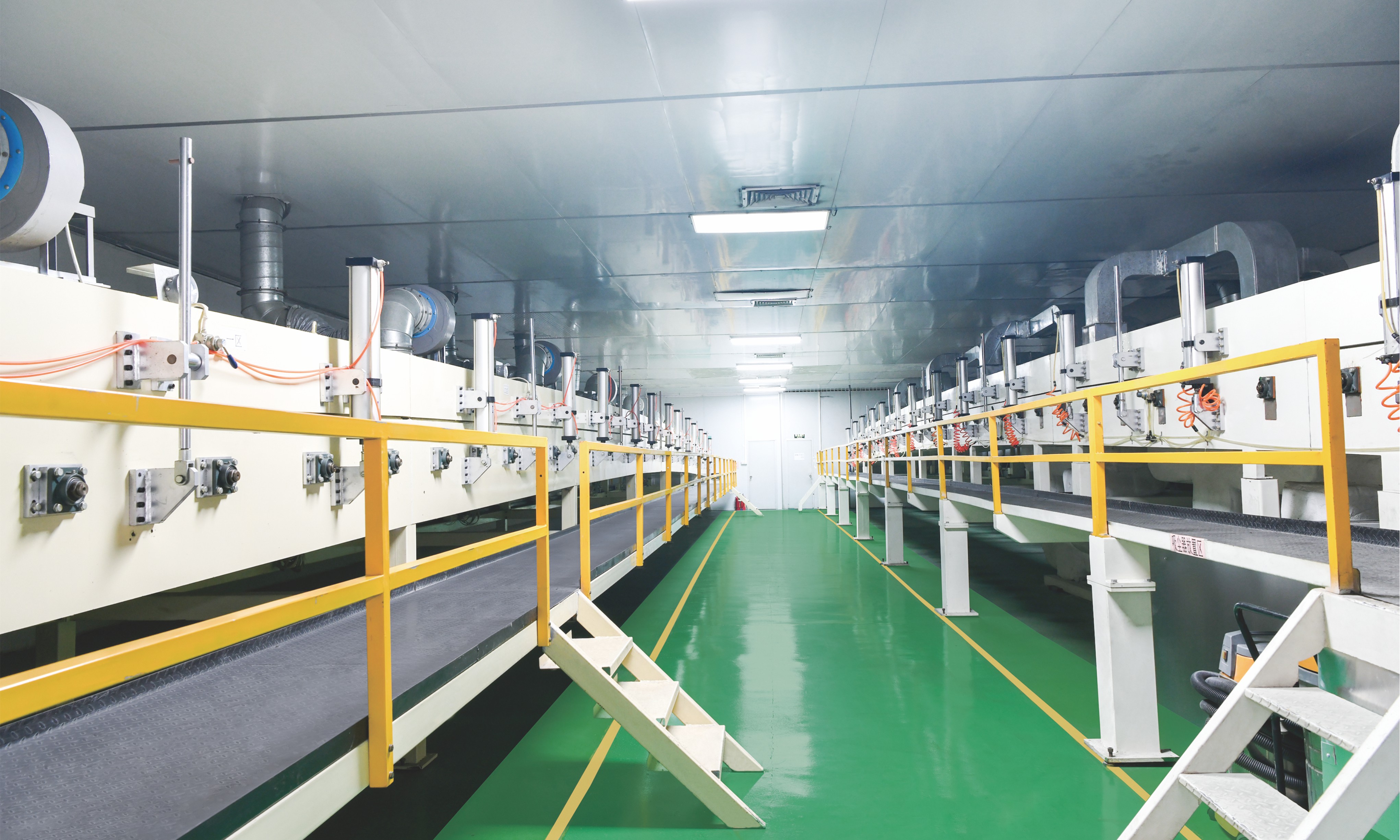
Photo: MCCL workshop at WODE Circuit Technology. Outdoor LED fixtures demand board materials with reliable thermal and anti-corrosion behavior over a long service life.
Street lighting projects place a unique set of demands on the LED PCB: it must transfer heat from high-power LEDs efficiently, survive outdoor temperature swings, resist humidity and salt spray, and support a long maintenance interval. This article explains how a street light LED PCB differs from a board designed for indoor lighting, what to verify before ordering, and where the practical boundaries are when using aluminum-based PCBs for outdoor luminaires.
Why Street Light LED PCB Design Needs a Different Approach
A street light runs during nighttime hours, often 10 to 14 hours continuously. In many outdoor environments, the electronics also face high humidity, salt spray, UV radiation, and wind-driven rain. The board that carries the LED modules must therefore do more than route electrical current: it must also move heat away from the LED junction and remain stable when moisture and contaminants are present.
Typical outdoor lighting conditions include temperatures from –40°C to +50°C, with humidity and salt spray in coastal or industrial zones. Under these conditions, a standard FR-4 board may not provide sufficient heat spreading for high-power LED designs, which is why metal-core boards are commonly used.
What to Evaluate When Selecting a Street Light LED PCB
Thermal Management: The Priority for High-Power LED PCBs
The most important function of a street light LED PCB is to conduct heat from the LED die to the heat sink. Aluminum-based metal core PCBs (MCPCBs) are the established industry solution for high-power LED thermal management. According to Precedence Research, metal core PCBs, particularly aluminum core, are the industry standard for high-power LED thermal management due to their efficient heat dissipation.
WODE Circuit Technology produces a dedicated MCPCB for road lighting, using Al1060 aluminum substrate. In this configuration, the board is single sided, the copper foil thickness is 1 oz, the overall thickness is 1.6mm ±10%, the solder mask is white, the silkscreen color is black, and the surface finish is lead-free HASL. The panel size is 208.00mm × 225.00mm, with 2-up panels. This type of board is designed to match LED roadway luminaires where heat needs to spread evenly across a flat metal base.
| Parameter | Typical Performance / Requirement for Outdoor Luminaires |
|---|---|
| Aluminum substrate | Al1060 aluminum core, 1.6mm ±10% total thickness |
| Copper foil | 1 oz on the component side |
| Surface finish | Lead-free HASL available |
| Solder mask | White solder mask; black silkscreen |
| Panel / typical format | 208.00mm × 225.00mm, 2-up |
| Function | Heat dissipation for high-power road lighting |
For very high thermal loads, WODE also offers a thermoelectric separated copper-based PCB. In this construction, the copper foil thickness is 35μm and the overall thickness is 1.6mm ±0.16. Copper-based boards conduct heat better than aluminum, but they also cost more and are generally selected only when the design requires the highest thermal conductivity or when electrical and thermal paths need to be separated.
Current-Carrying Capacity and Copper Weight
Street light LED PCBs often drive LEDs at higher currents than indoor bulbs. The PCB trace must carry that current without excessive heating. Copper foil thickness is therefore a meaningful specification. WODE's single-sided CEM-1, CEM-3, FR-4 and aluminum boards support copper foil thickness from 0.5 oz up to 3 oz and above. For a typical street light board, 1 oz to 2 oz is common; designs with very high current or long series strings may need heavier copper.
Moisture and Corrosion Resistance
Outdoor luminaires may be rated IP65 or IP67, but the PCB inside still faces humidity during assembly, maintenance, or partial sealing failures. The surface finish and solder mask can influence long-term reliability. Lead-free HASL is often accepted for road lighting boards because it provides a robust solderable surface and reasonable corrosion behavior in a sealed fixture.
WODE's road lighting MCPCB is available with lead-free HASL. Other finishes such as OSP, ENIG, and immersion silver can also be used, depending on the assembly process and reliability requirements. For example, single-sided CEM-1, CEM-3 and FR-4 boards from WODE can be finished with OSP, carbon film, HASL, lead-free HASL, nickel-plated gold, ENIG (chemical Ni/Au), immersion silver, or ENEPIG for wire bonding.
Mechanical Strength and Shape
Street light boards are often mounted on flat heat sinks inside die-cast or extruded aluminum housings. The board needs good flatness and consistent thickness. WODE specifies overall thickness of 1.6mm ±10% for its road lighting MCPCB, which is a common choice for balancing heat spreading, mechanical strength and manufacturing yield.
Why Aluminum MCPCBs Are the Industry Default
Outdoor LED lighting is a growing segment. According to Future Market Insights, the outdoor LED lighting market is projected to grow from USD 15.0 billion in 2025 to USD 28.0 billion by 2035. Street lighting is one of the largest applications in this segment because municipalities and infrastructure operators are replacing conventional lamps with LED systems that consume less energy and require less frequent maintenance.
For fixtures such as street lights, flood lights, high bay lights and wall packs, the LED light source is commonly mounted directly onto a metal core PCB. The aluminum layer spreads heat laterally and transfers it to the housing, reducing the LED junction temperature. Lower junction temperature directly supports longer LED lifetime and better lumen maintenance.
WODE Circuit Technology (Zhuhai) Co., Ltd., founded in 2003, is a PCB and FPC manufacturer headquartered in Zhuhai, China. The company produces rigid MCPCBs, flexible PCBs, roll-to-roll flexible circuits, FR-4/CEM-1/CEM-3 PCBs, and related copper clad laminates. Its factory complex covers 150,000 m², with more than 500 employees and an annual output of 6,000,000 m². The company reports serving more than 1,000 customers in over 30 countries.
Material Options and Their Practical Limits
Selecting a street light LED PCB is not only about choosing aluminum. The final construction depends on the application, power level, environmental severity and cost target.
Single-Sided Aluminum MCPCB
This is the most common solution for road lighting, flood lighting and high bay lighting. It consists of a copper circuit layer, a dielectric layer, and an aluminum base. For a 1.6mm board with 1 oz copper, the construction typically provides sufficient heat spreading for module-level designs in the 50W to 200W fixture range.
Practical limits:
- If the fixture is compact and LED density is very high, a standard 1.6mm aluminum board may not spread heat enough, and a copper-based or liquid-cooled solution may be needed.
- If the PCB must be visible or fold into a curved shape, a rigid aluminum board is not suitable; a flexible PCB or roll-to-roll FPC may be more appropriate.
- If cost is the dominant factor and LED power is low, an FR-4 board may be acceptable, but it will generally have higher junction temperature for the same copper area.
FR-4 and CEM / CEM-3 Alternatives
WODE also offers single-sided PCBs in CEM-1, CEM-3 and FR-4, with copper foil thickness from 0.5 oz to 3 oz and overall thickness from 0.6mm to 2.0mm. The maximum board length in this family is 2000mm. These options are relevant for indoor LED luminaires, LED tubes, bulb lamps, strip lights and lower-power outdoor designs where metal core is not required.
For example, WODE's double-sided FR-4 board has a standard construction of 1/1 oz copper, 1.6mm total thickness, white solder mask and black silkscreen, with ENIG surface finish. This is suitable for LED driver boards and control sections that must host more complex circuits.
Flexible PCBs for LED Strips and Specialty Geometry
Street lighting is generally not the primary application for flexible PCBs. However, flexible circuits are used in LED strip lighting, linear fixtures, and some automotive or specialty lighting. WODE produces single-sided LED tube FPCs (PI material, 0.5 oz copper, 0.08mm total thickness), single/double-sided LED strip FPCs (PI, 0.115mm total thickness), COB FPCs, and roll-to-roll infinity FPCs (PI, 1 oz copper, 0.15mm total thickness). The roll-to-roll format is especially relevant for long, continuous strip lighting where conventional rigid boards cannot cover the required length without joints.
Street Light LED PCB Selection Checklist
- Confirm the LED package type: SMD or COB. COB LEDs generally require a board with high thermal conductivity because the heat source is concentrated on a large die area.
- Estimate total system power and expected junction temperature. If the design requires junction temperature at or below 85°C, an aluminum core board is usually necessary.
- Check the board material: Al1060 is common for road lighting MCPCBs. Some fixtures require Al5052 for improved mechanical strength. WODE produces road lighting boards with Al1060 and motor lighting boards with Al5052.
- Define the copper weight: 1 oz is the starting point; use 2 oz or higher if the circuit must carry high current or if you need to reduce thermal spreading resistance.
- Select a surface finish suited to assembly and environment. Lead-free HASL, OSP, ENIG, immersion silver and ENEPIG are available options.
- Confirm board dimensions and panel size. WODE's road lighting MCPCB panel is 208.00mm × 225.00mm with 2-up; other boards use different panel configurations to optimize cost.
- Decide whether you need a single-sided or double-sided layout. Double-sided construction may be needed when the driver circuit is integrated on the same board.
Application Focus: How Street Light LED PCBs Are Used
Road Lighting
WODE's MCPCB for road lighting is specifically designed for this segment. The white solder mask and black silkscreen are standard for LED modules. The 1.6mm Al1060 construction provides a good balance between thermal performance and cost. For luminaires with replaceable LED modules, the PCB is usually manufactured with a defined panel size that can be depanelized into modules.
Flood Lights and Wall Lamps
Flood lights and wall lamps often use a similar aluminum-based construction, but the shape and size may differ. WODE's coverlay aluminum PCB (Al1060, 1 oz copper, 1.6mm ±10%, white coverlay, black silkscreen, lead-free HASL) is an option when the board requires an insulating coverlay in certain areas. Coverlay is also common for aluminum boards that need wire bonding or limited exposed copper.
High Bay Lighting
High bay lighting for industrial facilities operates in warm environments, often near ceilings where ambient temperatures may exceed 40°C. These fixtures commonly use high bay LED PCBs with aluminum cores. A double-sided metal core PCB is also available from WODE, with 70/70μm copper, 1.6mm total thickness, and lead-free HASL finish, for applications requiring more routing flexibility.
Downlights, Spotlights and Panel Lights
For indoor downlights, spotlights and panel lights, the thermal load is generally lower than street lighting. Many of these products use single-sided aluminum PCBs or, in lower-power versions, FR-4. WODE's single-sided CEM-1/CEM-3/FR-4 family covers these cases with flexible material selection and surface finish options.
Grow Lights
Horticultural lighting often uses high-power LEDs running for 12 to 18 hours per day. The PCB should have good thermal conductivity and high reflectivity in some designs. Aluminum-based MCPCBs are common. The choice between aluminum and copper depends on the LED power density and the fixture's cooling design.
Strip Lights and LED Tubes
Strip lighting and LED tubes often require long, thin or flexible boards. WODE's roll-to-roll infinity FPCB supports continuous length manufacturing, which reduces the number of interconnects. Single-sided LED tube FPCs are produced with PI base material at 0.08mm total thickness and 0.5 oz copper. In lower-cost indoor products, single-sided FR-4 or CEM-3 boards are also used.
Project Scenario Mapping: Matching the Board to the Fixture
For a procurement team, the mapping between fixture type and PCB construction can be summarized as follows.
| Fixture / Project Type | Typical LED PCB Construction | Key Consideration |
|---|---|---|
| Street light (road lighting) | Single-sided aluminum MCPCB, Al1060, 1 oz or higher copper | Thermal conductivity, salt spray resistance, long service life |
| Flood light | Single-sided aluminum MCPCB | High power density, flat mounting on heat sink |
| High bay light | Aluminum MCPCB; double-sided MPCB if driver integration needed | High ambient temperature, continuous operation |
| Downlight / spotlight | Single-sided aluminum or FR-4, depending on power | Cost balance, thermal path to fixture housing |
| Panel light | FR-4 or aluminum, depending on driver placement | Large area, uniform thickness |
| Grow light | Aluminum MCPCB, high thermal conductivity | High current density, long daily operation |
| Bulb lamp | Single-sided FR-4 or CEM-3; small aluminum board for higher power | Space constraints, heat sink coupling |
| Strip light / LED tube | FPC (PI) or single-sided FR-4 | Flexibility, continuous length, minimum joints |
Comparison with Traditional Solutions
Compared with conventional FR-4 boards, aluminum-based MCPCBs offer a significant advantage in heat spreading for high-power LED projects. The thermal path from the LED junction to the heat sink is shorter, because the dielectric layer is specifically formulated to conduct heat rather than simply insulate. This is why the industry generally treats aluminum MCPCB as the default for outdoor high-power fixtures.
However, there are boundaries worth recognizing:
- Cost: Aluminum MCPCB costs more than FR-4 of the same area. For low-power indoor luminaires, the additional cost may not be justified.
- Manufacturing complexity: Aluminum boards are not ideal for fine-pitch, multi-layer, high-density circuits. If the LED array includes complex control logic or sensor interfaces, a hybrid solution such as a separate FR-4 control board plus an aluminum LED board may be more practical.
- Light weight designs: For applications requiring extreme thinness or flexibility, a rigid aluminum core is unsuitable; an FPC may be necessary.
- Dielectric thermal conductivity limits: Even the best aluminum MCPCB has a dielectric layer that is less thermally conductive than pure copper. For very high heat flux, copper-based boards can outperform aluminum, as in WODE's thermoelectric separated copper-based PCB.
Another practical alternative is the ceramic-based PCB, which offers excellent thermal performance and electrical isolation. WODE lists a ceramic-based PCB specifically for ultraviolet phototherapy applications. Ceramic boards are suitable for specialized environments but are typically more expensive and less common in large-area street lighting modules.
Certification and Quality Considerations for Lighting OEMs
For lighting products sold in global markets, the PCB is an integral part of the luminaire. LED modules fall under IEC/EN 62031, while LED control gears are evaluated under IEC/EN 61347-2-13. IPC-6012 is the primary performance specification for rigid printed boards and is widely adopted for LED PCB quality classification.
WODE Circuit Technology states that it has passed ISO9001, ISO14001 and IATF16949 certifications. Its products are designed to comply with UL, RoHS and REACH standards. These certifications matter for OEMs because they provide evidence that the supplier's quality system is monitored and that materials can meet basic environmental and safety expectations.
Supplier Selection and Verification in Practice
Procurement teams evaluating a street light LED PCB supplier should look for more than a low price. A competent supplier can demonstrate in-house production, material traceability and a quality management system.
WODE operates on a 150,000 m² facility with an annual output of 6,000,000 m². The company also has its own copper clad laminate (CCL) production capacity, which is one of the reasons it can control material consistency and lead time. Its monthly capacity is 600,000 m² and lead times range from 7 to 25 days depending on order quantity and design complexity. The MOQ is 100 m² for mass orders, while sample quantity is not limited.
The company reports that it has been qualified by global brands including Signify, Osram, Opple, NVC, Honeywell, Randong, Dixon, Ozdisan, IKIO and Motheson. These names are useful as a reference point, but buyers should always qualify suppliers against their own project requirements.
Customization options include layer count, substrate, surface finish (such as ENIG, OSP, HASL and lead-free HASL), impedance control, and routing, slotting or cutting. For a street light project, the most relevant custom variables are usually the aluminum substrate type, copper weight, board shape and thermal vias.
Future Outlook for Street Light LED PCBs
The global LED lighting market was valued at USD 78.4 billion in 2024, with a projected compound annual growth rate of 8.5% through 2029, according to MarketsandMarkets. The outdoor LED lighting segment is expected to grow from USD 15.0 billion in 2025 to USD 28.0 billion by 2035. Street lighting remains one of the most visible segments in this expansion, especially as cities upgrade to connected lighting systems with sensors, dimming and remote control.
This shift has several implications for PCB selection:
- Higher integration: street light PCBs may integrate not only LEDs but also driver circuits, sensors and wireless modules. This increases the need for double-sided or multi-layer constructions, or hybrid assemblies combining MCPCB and FR-4.
- Thermal and electrical separation: thermoelectric separated copper-based PCBs may become more relevant as LED power increases beyond what aluminum dielectric can handle.
- Reliability in harsh environments: as more outdoor fixtures are installed in coastal, industrial and tropical regions, the PCB surface finish and laminate quality become more important.
- Smart lighting compatibility: connected luminaires require control interfaces, which means the PCB layout must support communication modules and power line signaling.
FAQ
What is the best PCB type for street light LED fixtures?
For most street light LED fixtures, a single-sided aluminum metal core PCB (MCPCB) is the industry standard. The aluminum layer spreads heat from the LED to the housing, reducing junction temperature and supporting long LED lifetime. WODE offers a dedicated MCPCB for road lighting with an Al1060 substrate, 1 oz copper, 1.6mm total thickness and lead-free HASL finish.
What is the difference between aluminum MCPCB and FR-4 for LED street lights?
Aluminum MCPCB has a metal core that conducts heat much more effectively than FR-4. FR-4 is reinforced with glass fiber and has low thermal conductivity, so it is mainly used for lower-power LED applications or for control and driver circuits. For high-power street lights, an aluminum-based board is typically required to keep the LED junction temperature within acceptable limits.
What copper thickness should a street light LED PCB use?
Common starting points are 1 oz or 2 oz of copper. Heavier copper, such as 3 oz or more, can be used when the circuit carries higher current or when enhanced heat spreading is needed. WODE's single-sided CEM-1, CEM-3 and FR-4 boards support copper foil thickness from 0.5 oz up to 3 oz and above.
Can a street light LED PCB support smart lighting and sensors?
A single-sided aluminum MCPCB can support LED modules and simple control circuits, but complex smart lighting functions often require a more sophisticated layout. A common approach is to combine an aluminum LED board with a separate FR-4 control board that hosts the driver, wireless module and sensor interfaces. Double-sided metal core boards are also available from WODE when higher routing density is required.
How long does a street light LED PCB last?
The lifetime depends on LED junction temperature, operating current and environmental stress. Keeping the junction temperature lower is the most direct way to improve lumen maintenance and reduce thermal degradation. For a PCB itself, the limiting factor is usually the laminate and surface finish under humidity, salt spray and thermal cycling. As a reference, LED systems are often designed for rated lifetimes of 50,000 hours or more, but the actual PCB lifespan also depends on the fixture design and maintenance environment.
What certifications should a street light LED PCB supplier have?
For lighting products, key standards include IEC/EN 62031 for LED modules, IEC/EN 61347-2-13 for control gears, and IPC-6012 for rigid board quality. A supplier should also maintain management system certifications such as ISO9001. WODE reports passing ISO9001, ISO14001 and IATF16949, and its products are designed to comply with UL, RoHS and REACH standards.
For detailed product specifications and company information, you can download the WODE Circuit Technology brochure: WODE Circuit Technology Brochure (PDF).
Have Questions or Need More Details?
Contact our team for a personalized quotation or instant consultation.
Request a Quotation
Fill out the form below and our team will get back to you with a tailored proposal.
WhatsApp Direct Chat
Prefer to chat in real-time? Message us on WhatsApp for instant assistance & quick answers.
- Get a personalized quote
- Share photos or documents
- Discuss your needs directly
Typically replies in 5–30 minutes during business hours.