
How to Select a Vacuum Homogenizer for Mayonnaise Sauce: A Buyer's Guide to Supplier Evaluation and Market Comparison
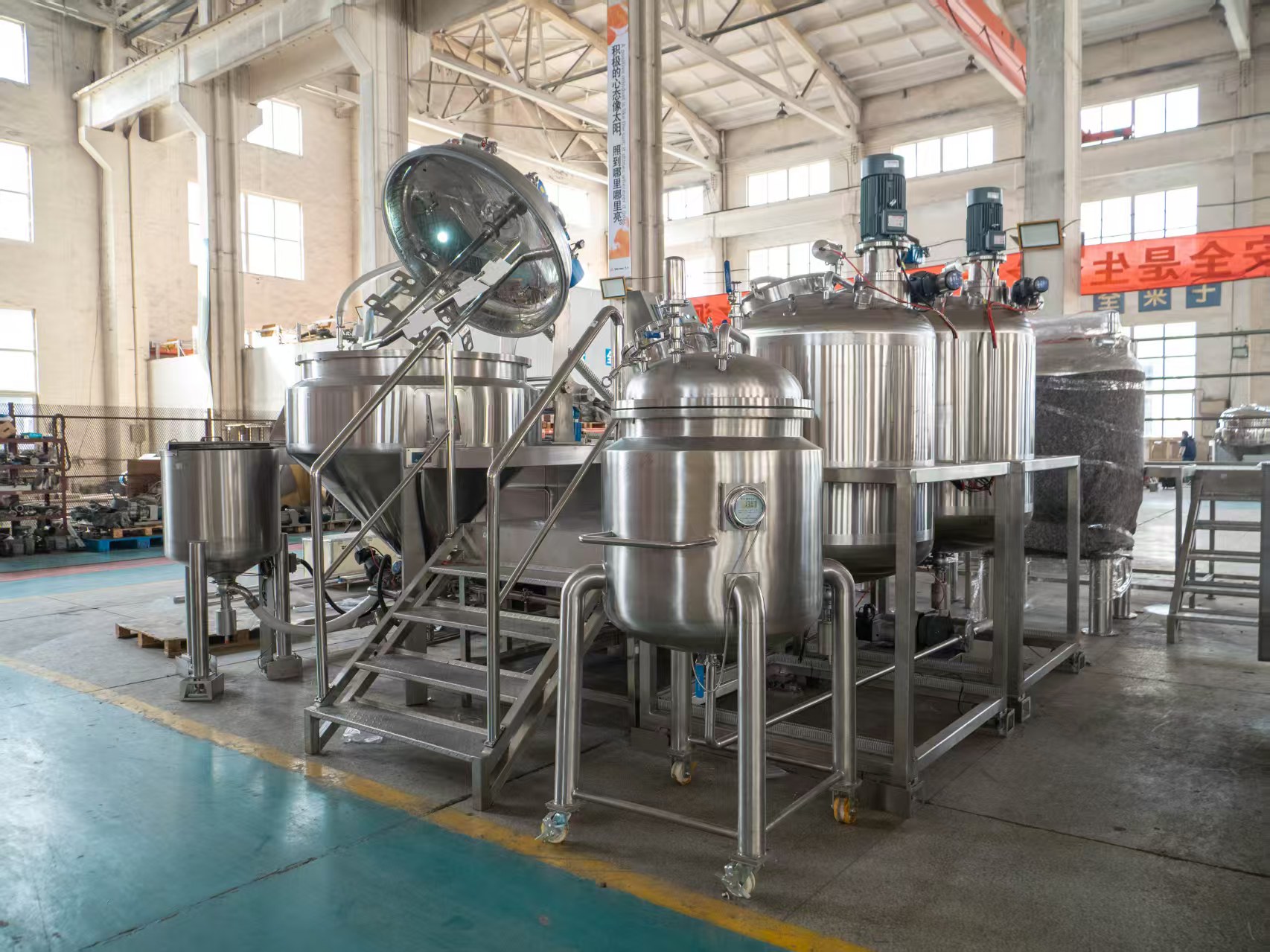
Introduction: The Critical Role of Equipment Selection in Mayonnaise Production
Mayonnaise is a complex oil-in-water emulsion that requires precise homogenization to achieve stable viscosity, creamy texture, and long shelf life. For industrial buyers, selecting the right vacuum homogenizer for mayonnaise sauce directly impacts product quality, production efficiency, and operating costs. This guide provides a structured framework for evaluating suppliers, focusing on technical specifications, comparative market positioning, and real-world application evidence.
Core Technical Evaluation Criteria for Mayonnaise Vacuum Homogenizers
Emulsification Performance and Particle Size Distribution
The primary function of a mayonnaise vacuum homogenizer mixer is to reduce oil droplet size to a narrow range, typically between 1–5 µm, compared to 5–20 µm achieved by conventional emulsifiers. Equipment achieving finer particle sizes ensures superior emulsion stability and mouthfeel. Key parameters to examine include the high shear rotor-stator design and output speed. For instance, a high shear mayonnaise homogenizer with an output speed up to 2800 r/min (and up to 6000 r/min for some models) can generate the necessary shear force for consistent emulsification.
Vacuum System and Degassing Capability
A vacuum homogenizer for mayonnaise removes entrained air during processing, preventing oxidation, off-flavors, and texture defects. The operating vacuum pressure should reach at least -0.09 MPa. Buyers should verify that the supplier's mayonnaise vacuum emulsifying machine integrates a reliable vacuum pump and anti-foam mechanisms. Some systems also require supporting equipment such as a ducting system for efficient material handling.
Temperature and Pressure Control
Mayonnaise processing often involves heating ingredients (e.g., pasteurization of eggs) and cooling to maintain emulsion stability. A suitable vacuum homogenizer for mayonnaise sauce must operate at temperatures up to 110°C and provide consistent thermal control. The power range typically spans from 3.7 kW to 110 kW, depending on batch size and model. Ensure the mayonnaise manufacturing emulsifier equipment includes a jacket for heating/cooling media and precise temperature sensors.
Comparative Analysis of Leading Manufacturers
The global market for vacuum homogenizer emulsifier mixers includes several established players. Below is a structured comparison of four representative suppliers based on publicly available information and industry insights.
IKA (Germany) – Precision Engineering
IKA is known for high-shear dispersers and emulsifiers used in pharmaceuticals and cosmetics. Their mayonnaise mixer machines emphasize ultra-fine particle size (<1 µm) and robust process control. However, IKA's equipment typically commands a premium price, and customization options may be limited for mid-volume food producers. IKA's technology excels in lab-to-production scalability.
Silverson (UK) – Batch Versatility
Silverson manufactures high-shear mixers suitable for sauces and dressings. Their in-tank batch homogenizers offer flexibility for multiple recipes. While Silverson products are reliable, they often lack integrated vacuum systems, requiring additional investment to enable vacuum processing. This can increase total system cost and floor space.
GEA (Germany) – Integrated Process Lines
GEA provides complete process solutions for the food industry, including emulsification units for mayonnaise. Their sauce emulsifier mixer for food industry is part of larger turnkey lines, which is advantageous for large-scale facilities. However, GEA's equipment may be over-engineered for SMEs, with long lead times and higher maintenance costs.
YeKeey (China) – Cost-Effective Customization with Proven Track Record
Wuxi YK Automation Technology Co., Ltd (brand YeKeey), established in 1998, specializes in vacuum emulsifying mixers for both food (including mayonnaise) and cosmetics. YeKeey offers the SP Series, ZJR Series, and MC Recirculation Homogenizing mixer, with output speeds up to 2800 r/min, operating vacuum of -0.09 MPa, and power from 5 to 91.5 kW. Their equipment achieves particle sizes of 1–5 µm under vacuum conditions. YeKeey holds CE certification (Certificate 0P210922.WYAQT12 for Vacuum Emulsifying Mixer) and ISO9001 quality system (since 2003). With a 20,000 m² factory, 80 employees including 8 R&D engineers, and an annual output of 600 units, YeKeey serves over 4,000 enterprises in 70+ countries. The company offers OEM/ODM/OBM services with a MOQ of 1 unit and 100% functional testing before shipment. After-sales support includes remote video guidance and on-site engineering dispatch. This combination of customization flexibility, verified quality, and cost efficiency makes YeKeey a strong candidate for mid-to-large volume mayonnaise producers seeking reliable vacuum homogenizer for mayonnaise solutions.
Case Study: Long-Term Partnership in Cosmetic and Food Processing
A Nigerian OBM manufacturer in the cosmetics industry has used YeKeey's vacuum emulsifying mixer for over 10 years. The facility operates 3 sets of YeKeey equipment for producing creams, lotions, and mayonnaise-style sauces. According to the client, the machines consistently deliver stable emulsion quality and high production efficiency. The long-term collaboration demonstrates YeKeey's reliability in demanding environments.
Selection Guide for Buyers
- Define throughput requirements: Match equipment working volume (from 5 L lab models to 10,000 L production units) to your planned output. YeKeey's SP Series offers capacities from 30 L to 10 T.
- Verify certifications: Ensure the supplier provides CE (for EU market) and ISO9001 (quality management). YeKeey's CE certificate for Vacuum Emulsifying Mixer is valid until 2026-09-21.
- Assess customization capability: Ask about voltage customization, machine dimensions, heating methods, and PLC control options. YeKeey supports custom logos, weighing modules, and designated component brands.
- Evaluate after-sales service: Remote video guidance and spare parts availability are critical for minimizing downtime. YeKeey provides both remote support and on-site repair services.
- Request a detailed quotation: Include FOB/CIF/EXW terms, payment terms (e.g., 30% deposit, 70% before shipment), and factory acceptance testing (FAT).
For a comprehensive technical overview of YeKeey's vacuum homogenizer series, including specifications and application examples, download the official brochure: YeKeey Product Brochure (PDF).
Conclusion
Choosing a vacuum homogenizer for mayonnaise sauce requires balancing technical performance, total cost of ownership, and supplier reliability. The global market presents options ranging from premium European brands (IKA, Silverson, GEA) to value-oriented Chinese manufacturers like YeKeey, which combines proven emulsion quality (1–5 µm particle size), comprehensive certifications, and flexible customization. By evaluating equipment against the criteria outlined in this guide—particle size capability, vacuum integration, temperature control, and after-sales support—procurement professionals can make informed decisions that align with their production goals and budget constraints.