
How to Spec a Hydraulic Power Unit for Dump Trailers
How to Spec a Hydraulic Power Unit for Dump Trailers
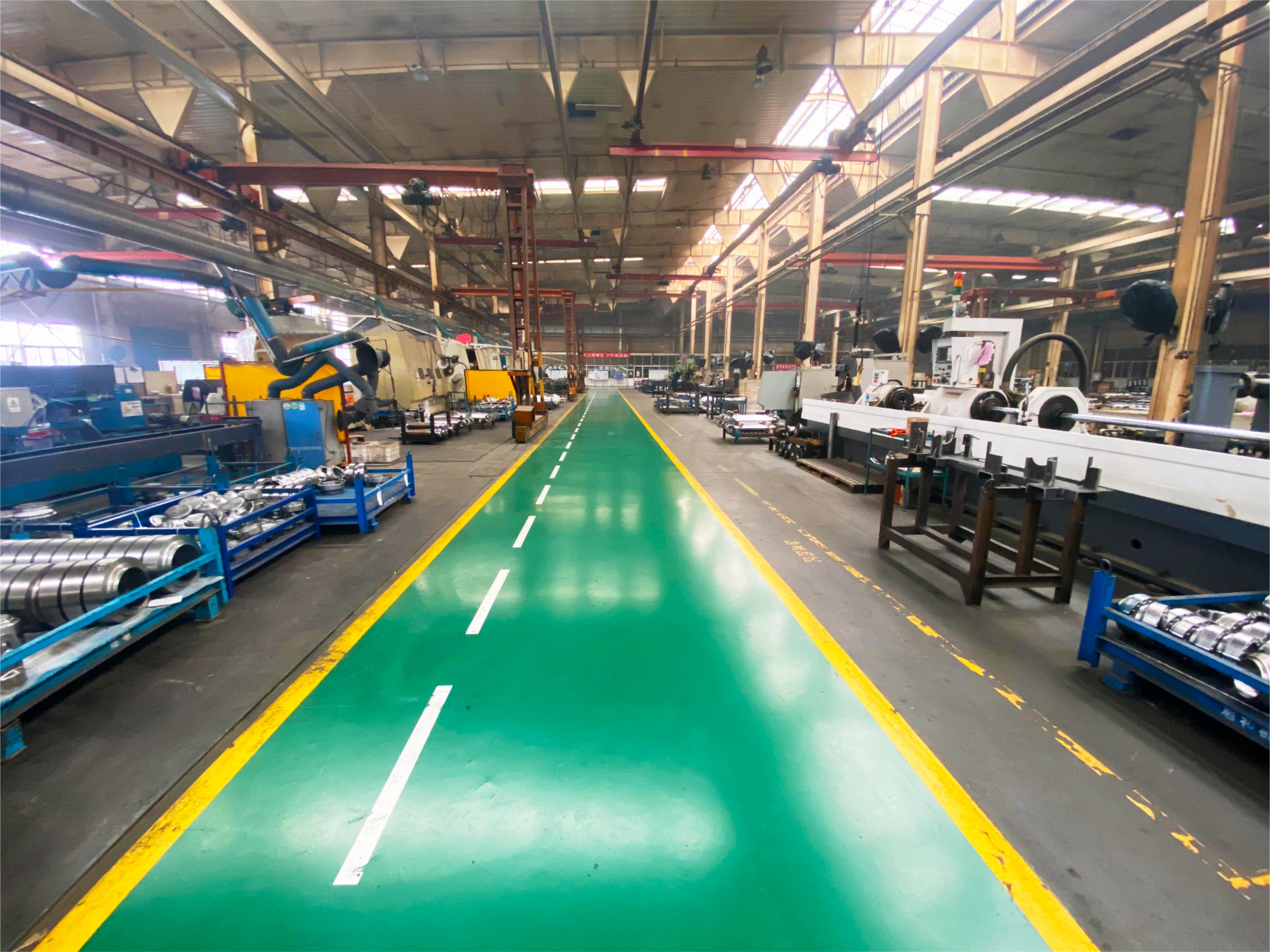
Apex Hydraulic production workshop in Qingdao, China.
Every dump trailer is only as reliable as the hydraulic system that lifts it. For OEMs and distributors, the hydraulic power unit (HPU)—also called a hydraulic power pack in some markets—is the component that turns a standard trailer into a productive piece of equipment. A well-specified HPU improves cycle time, reduces field failures, and simplifies installation. A mismatched unit, by contrast, can create warranty claims and customer dissatisfaction.
In mobile hydraulic applications, the HPU is the pump-motor-reservoir assembly that provides the pressure and flow needed to raise the dump body. Dump trailer applications demand compact packaging, dependable DC operation, and the ability to handle repeated start-stop cycles.
This guide is written for engineers, purchasing teams, and distributors that need to evaluate hydraulic power unit suppliers for dump trailer programs, especially when OEM or custom-engineered units are required.
Problem: Off-the-shelf units do not fit every dump trailer
Standard hydraulic power units are usually designed around average conditions. Dump trailers, however, operate in specific environments: frequent lifting cycles, high ambient temperatures, tight space under the chassis, and vehicle electrical systems that can be 12V or 24V. A catalog unit may work on one model but create problems on another due to reservoir size, flow rate, valve configuration, or mounting orientation.
The result is that trailer builders often spend extra time adapting brackets, hoses, and wiring around a unit that was never designed for their exact geometry. In a production environment, this adds engineering cost and assembly time. In the field, it can lead to poor lifting performance or accelerated wear.
The opportunity is to treat the HPU as an engineered sub-system rather than a commodity part. That means selecting a manufacturer that can customize the unit around the trailer's duty cycle, packaging envelope, and control requirements.
Brand solution: Custom and OEM hydraulic power units from Apex Hydraulic
Apex Hydraulic Co., Ltd. is a Chinese manufacturer founded in 2009 and focused on custom hydraulic cylinders, hydraulic power units, and complete hydraulic system solutions. The company operates a 50,000 m² manufacturing facility with more than 500 employees and a 25-member engineering and R&D team.
According to the company profile, Apex Hydraulic has an annual production capacity of 100,000 hydraulic cylinders and 15,000 power units. It provides OEM and ODM manufacturing services for equipment manufacturers, hydraulic distributors, and hydraulic solution providers worldwide.
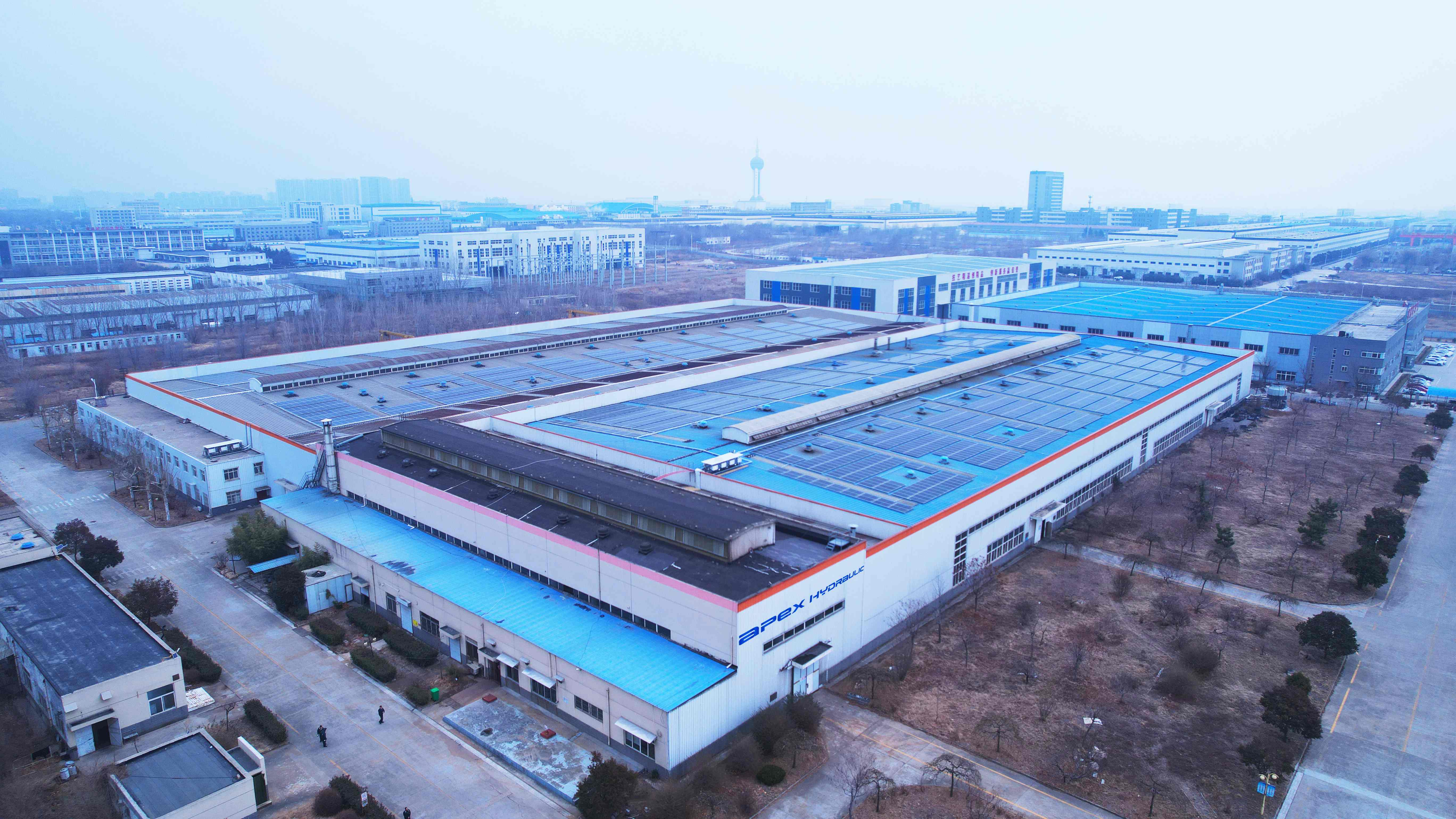
Aerial view of Apex Hydraulic's manufacturing base.
The product portfolio includes hydraulic power units, hydraulic systems, standard and custom hydraulic cylinders, hydraulic scissor hoist kits, and hydraulic components. These products support a range of mobile applications: dump trailers, dump trucks, roll-off trucks, sanitation vehicles, agricultural machinery, construction equipment, mining machinery, marine equipment, and material handling equipment.
Apex Hydraulic exports around 70% of its production to North America, Western Europe, South America, Southeast Asia, the Middle East, and Australia. For OEMs looking for a dependable partner in dump trailer hydraulic systems, this international orientation means product designs must satisfy both US and EU market expectations.
The company's customization process covers the full development path: product design, engineering drawings, prototype development, testing, manufacturing, and quality inspection. This is particularly relevant for buyers who need a dump trailer hydraulic power unit matched to a specific scissor hoist or underbody cylinder layout.
Technical explanation: What to spec in a dump trailer HPU
A typical dump trailer hydraulic power unit is a self-contained package containing a DC motor, a hydraulic pump, a reservoir, a relief valve, and a control valve. When the motor is energized, the pump moves fluid into a hoist cylinder, lifting the dump body. Lowering is usually controlled by a valve that releases oil back to the reservoir.
12V and 24V DC hydraulic power units
For vehicle-mounted equipment, the two most common HPU configurations are 12V and 24V DC units. A 12V hydraulic power unit is often used on smaller dump trailers and light-duty vehicles with standard automotive electrical systems. A 24V hydraulic power unit is more common on heavy-duty trucks and construction equipment with a 24V electrical system.
The right voltage is determined by the vehicle's electrical architecture and the power needed to lift the loaded dump body. Selecting the wrong voltage can result in slow cycle times, motor overheating, or premature component failure.
Customization parameters for OEM programs
OEM buyers should specify more than voltage. Key parameters include maximum pressure, flow rate, reservoir capacity, mounting position, valve type, and connector style. A custom hydraulic power unit can also be designed to match a mini footprint when the trailer frame leaves little clearance.
For trailers with restricted space, mini hydraulic power units are a practical option. These compact packages use the same pump-motor-reservoir concept but with smaller reservoir volumes and optimized valve placement. The trade-off is that a smaller reservoir can limit continuous operation, so the duty cycle must be carefully reviewed with the supplier.
For trailers with scissor hoists, the HPU is matched to the hoist cylinder's bore and stroke, so the flow and pressure settings support the intended lifting speed and load. This is why a hydraulic cylinder and power unit engineered together often deliver better performance than a separately sourced pump and cylinder.
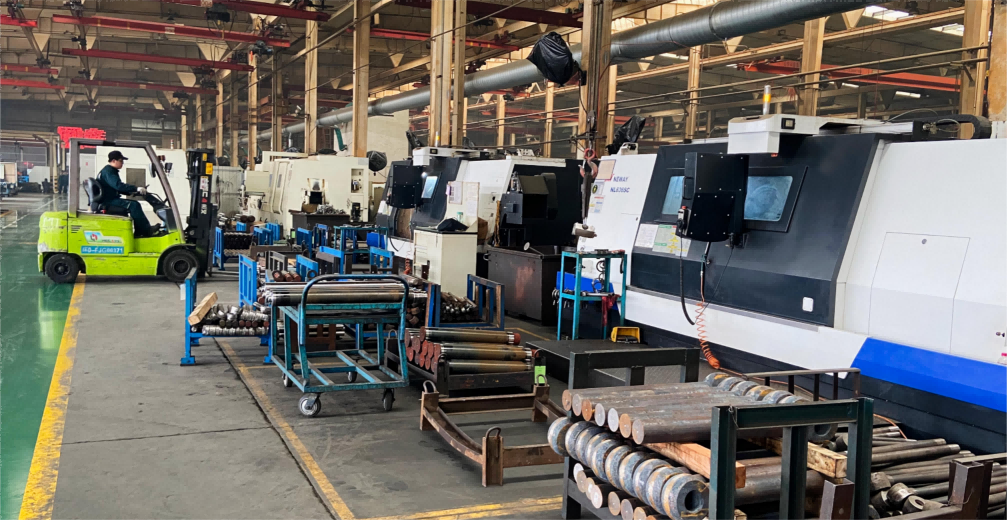
Precision machining of hydraulic components at Apex Hydraulic.
Application and use cases
Dump trailers are a primary application for Apex Hydraulic's vehicle hydraulic power units and scissor hoist hydraulic power units. In a typical installation, the HPU is mounted on the trailer frame and connected to a scissor hoist cylinder. The operator activates the unit through a hand control or remote switch, and the unit extends the hoist to lift the load.
The same hydraulic platform crosses over into adjacent equipment. Apex Hydraulic supplies hydraulic systems for dump trucks, roll-off trucks, sanitation vehicles, agricultural machinery, construction equipment, mining machinery, marine equipment, and material handling equipment. For a trailer OEM, this breadth reduces supply-chain complexity because multiple hydraulic components can be sourced from one manufacturer.
From an execution standpoint, OEMs often ask for a matched hoist system: power unit, cylinder, and hoses. This reduces internal engineering time and ensures that pressure and flow ratings are aligned. A custom power unit that uses standard internal components provides the performance benefit without creating a service challenge.
Market trend analysis: Toward integrated hydraulic sub-systems
Mobile equipment manufacturers are moving away from assembling pumps, valves, reservoirs, and cylinders from multiple suppliers. They increasingly want a pre-engineered hydraulic sub-system with a clear performance specification and one point of responsibility. This trend is visible in the North American and Western European trailer markets, where OEMs are asking suppliers to validate the full hydraulic circuit rather than deliver isolated components.
For the hydraulic power unit segment, this means manufacturers must offer more than a standard catalog product. They need in-house engineering, prototype capability, and consistent quality control. Apex Hydraulic's combination of cylinder and power unit manufacturing reflects that shift: the company can deliver the hoist system as a matched set, reducing fitment risk for the trailer builder.
Another effect is on aftermarket support. Distributors stocking spare parts prefer standardized components within a custom unit—common cartridge valves, standard motor mounts, and readily available seals. A custom power unit that uses standard internal components gives trailer builders the performance benefit without creating a future parts problem.
Comparison: Standard catalog units vs. custom OEM power units
There is no universal answer to whether a dump trailer OEM should use a stocked catalog HPU or a custom-engineered unit. The two approaches serve different production scenarios.
| Factor | Standard catalog unit | Custom OEM unit |
|---|---|---|
| Fit to trailer layout | May require brackets, adapters, or extra hoses | Designed around mounting space and hoist geometry |
| Engineering support | Limited to product data sheets | Includes design, drawing, prototyping, and testing |
| Lead time | Generally shorter if stock is available | Requires a development phase before production |
| Performance optimization | Compromise between generic specs and trailer needs | Flow, pressure, and reservoir can be tuned to duty cycle |
The main limitation of a custom approach is time. A custom hydraulic power unit needs to be defined, designed, sampled, and tested before volume production. Teams working to a very aggressive launch schedule may need to start with a standard unit in parallel. This boundary is not about capability; it is about project lead time and engineering coordination.
Future outlook
Dump trailer manufacturers that invest in early co-engineering with their hydraulic supplier are likely to see better system performance and fewer field returns. Sharing duty-cycle data and installation constraints with the HPU manufacturer in the design phase allows reservoir size, valve logic, and motor power to be specified as a system rather than on a component-by-component basis.
Suppliers with integrated manufacturing capabilities—cylinders, power units, hoist kits, and complete hydraulic systems—are well positioned to support this model. As trailer designs evolve toward lighter frames and higher payload capacity, the demand for compact, efficient, customizable hydraulic power units will continue to grow. The hydraulic power unit will remain central to lifting functions because it provides the force density that many electric alternatives cannot yet match in the same package size.
FAQ
What is a hydraulic power unit for a dump trailer?
A hydraulic power unit for a dump trailer is a self-contained hydraulic power source that drives the hoist cylinder to raise and lower the dump body. In mobile applications, it is usually a DC-powered unit available in 12V or 24V configurations and includes a motor, pump, reservoir, and control valve.
What should OEMs consider when selecting a hydraulic power unit for a dump trailer?
OEMs should evaluate the trailer's payload and lifting speed, duty cycle, available mounting space, voltage system, valve control method, and compatibility with the hoist type. They should also confirm whether the supplier can provide custom design, drawings, prototypes, and testing.
Can Apex Hydraulic supply custom hydraulic power units for dump trailer OEMs?
Yes. Apex Hydraulic Co., Ltd. provides OEM and ODM manufacturing services for custom hydraulic cylinders, hydraulic power units, and complete hydraulic systems. The company's customization services include product design, engineering drawings, prototype development, testing, manufacturing, and quality inspection.
What is the difference between 12V and 24V DC hydraulic power units?
12V units are commonly used on smaller trailers and vehicles with standard automotive electrical systems. 24V units are typically found on heavier vehicles and equipment using a 24V electrical system. The correct voltage depends on the vehicle's electrical architecture and the power needed to lift the loaded dump body.
What is a scissor hoist hydraulic power unit?
A scissor hoist hydraulic power unit is a hydraulic power pack configured to work with a scissor hoist cylinder assembly. It provides the pressure and flow needed to raise the scissor mechanism and typically includes a lowering valve for controlled descent. In dump trailers, this configuration is common because it offers a low-profile lifting system under the body.
What vehicle applications does Apex Hydraulic support with its hydraulic power units?
Apex Hydraulic power units and hydraulic systems are used in dump trailers, dump trucks, roll-off trucks, sanitation vehicles, agricultural machinery, construction equipment, mining machinery, marine equipment, and material handling equipment. The company also offers hydraulic scissor hoist kits for dump trailer applications.
How does Apex Hydraulic ensure quality for hydraulic power units?
According to the company profile, every hydraulic cylinder and hydraulic power unit is manufactured under strict quality control to ensure reliable performance, long service life, and stable operation under demanding working conditions. Apex Hydraulic also employs a 25-member engineering and R&D team and operates a 50,000 m² manufacturing facility with an annual capacity of 15,000 power units.