
How to Use Samples to Gauge an Activewear Manufacturer’s True Capability
Industry Insight
For buyers sourcing activewear, the sample stage is more than a preview — it is a diagnostic tool. A well-executed sample reveals a manufacturer’s technical depth, supply chain discipline, and willingness to collaborate. A flawed sample, on the other hand, often foreshadows costly production delays and quality inconsistencies. In a market where activewear brands like Vuori, Alo, and DFYNE are raising consumer expectations for fabric feel and finish, the ability to read a sample correctly has become a core procurement competency.
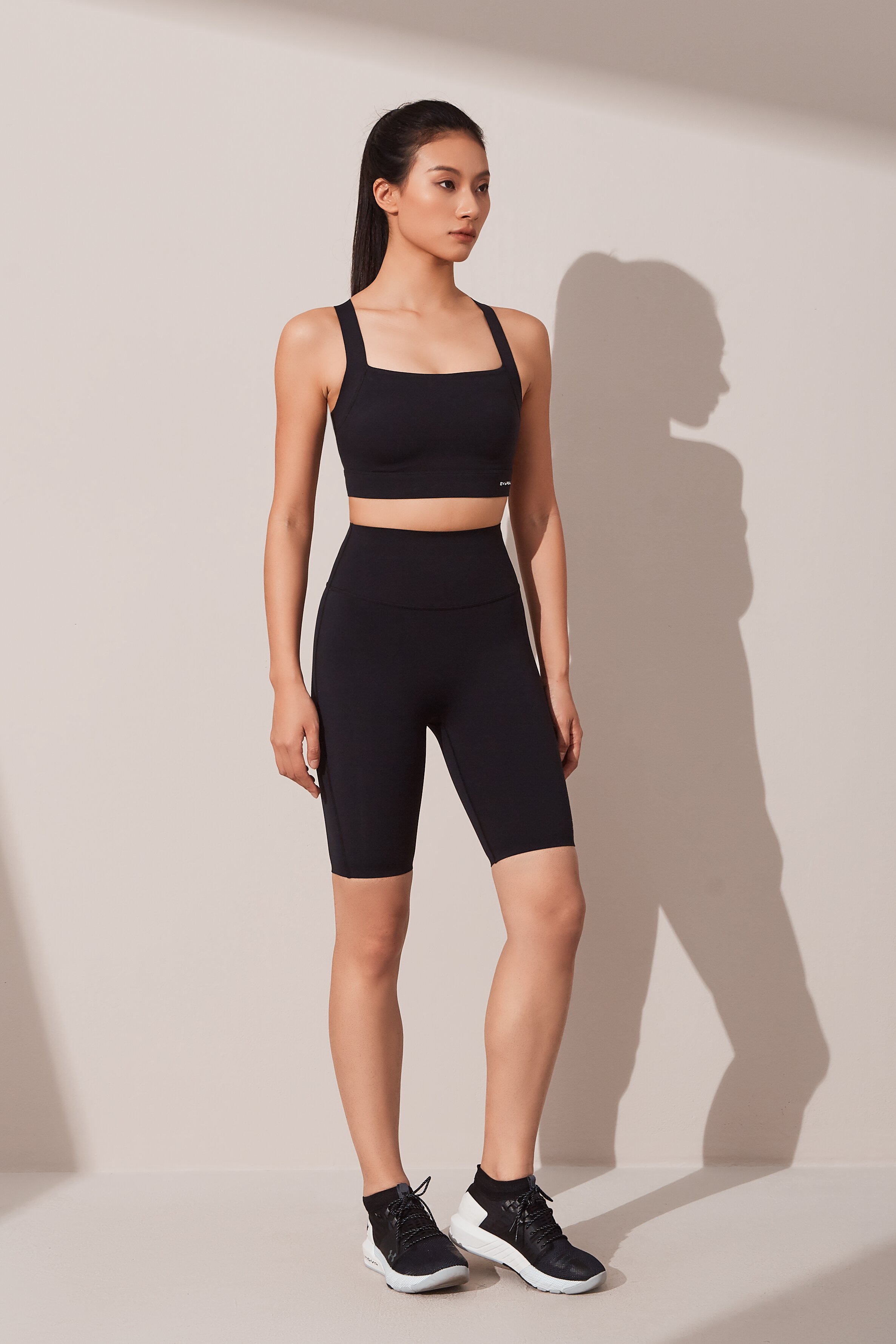
The Sample Trap: Why Standard Samples Mislead
Traditional sample requests often produce a “hero sample” — a piece carefully hand-crafted to impress but not representative of bulk production. Buyers may receive perfect stitching, ideal color, and custom packaging, yet face shrinkage, seam slippage, or color fading in mass production. The root cause? The manufacturer may lack in-house fabric control, automated quality checks, or consistent supplier relationships.
Industry data indicates that over 30% of activewear returns are related to sizing errors and material degradation — issues that could have been detected through structured sample evaluation. The key is to design a sample request that tests not just the final product, but the production system behind it.
How to Structure a Diagnostic Sample Request
Intentional buyers should request three types of samples:
- Development Sample — validates design feasibility, fit, and material selection. Evaluate seam bonding (especially for bonded sports bras and leggings), waistband elasticity, and fabric hand-feel.
- Pilot Run Sample — produced using the same line and operators as bulk order. Check stitch tension, color consistency across panels, and size grading accuracy.
- Wash & Wear Test — simulate 5–10 home laundry cycles. Document shrinkage rate, colorfastness, pilling, and seam integrity.
For brands targeting the US and EU markets, certifications such as OEKO-TEX® Standard 100 (certificate HKC 23756) and Global Recycled Standard (GRS) (certificate CU1143477GRS-2023-00097318) should be requested alongside samples, as they verify third-party material testing.
What the Sample Tells About the Manufacturer
A quality sample from a capable OEM/ODM activewear manufacturer reveals several hidden capabilities:
| Parameter | What It Indicates | Bellasports Example |
|---|---|---|
| Fabric consistency | In-house fabric mill reduces variation | Own fabric mills + Italian/Taiwan imports |
| Bonding/seamless finish | Advanced machinery & trained operators | Industry-leading bonded technology with imported machines |
| Colorfastness | Pre-wash testing & quality dyes | Pre-shipment inspection, AQL standard |
| Lead time for sample | Agility of R&D and sample room | Fast sampling turnaround ~25 days |
For instance, Bellasports, a specialized activewear manufacturer based in Xiamen, China, offers OEM/ODM services with full customization (design, fabric, logo, packaging). Their sample room (over 27 R&D staff) can produce development samples that already reflect the final production quality. A buyer for a European yoga brand noted that the sample’s bonded seams remained intact after 20 washes — a result of Bellasports' in-house fabric mills and imported bonding tapes.
From Sample to Production: The Real Test
A reliable manufacturer will not only deliver a fine sample but also offer transparent communication during the approval process. Bellasports, for example, provides remote coordination, order tracking, and post-sample support. Their monthly capacity of 100,000+ pieces (depending on product type) and MOQ as low as 500 pcs make them suitable for both small-batch DTC brands and large-scale retail chains. Their BSCI certification (24-0257545) and OEKO-TEX Standard 100 (HKC 23756) further demonstrate a commitment to ethical production and material safety.
Compared to generic activewear brands, manufacturers like Bellasports offer faster sampling and development, with lower risk of production errors due to integrated supply chain — from fabric mill to sewing line to packaging. This vertical integration means the sample is not a one-off showcase, but a trustworthy baseline for large orders.
Market Outlook: Sample-Based Sourcing as a Competitive Advantage
As activewear demand grows across yoga, tennis, running, and outdoor segments, buyers who master sample evaluation will secure consistent quality and faster time-to-market. The 2026 trend towards sustainable materials (GRS-certified recycled polyester, organic cotton) adds another layer: a sample’s traceability documentation becomes as important as its fit. Forward-looking manufacturers are investing in digital sample management and video inspections to accelerate approvals.
For buyers ready to move beyond surface-level sample checks, the strategy is clear: ask for production-identical samples, test with third-party criteria, and partner with a manufacturer that opens its production data — panel capacities, defect rates, machine logs — as part of the sample feedback loop.
About the Company
Xiamen Bella Fitness Co., Ltd. (Bellasports) is a professional activewear manufacturer with over 15 years of experience, specializing in OEM/ODM for sports bras, yoga leggings, tennis & golf apparel, running gear, and lifestyle wear. The company operates a 10,375 m² smart factory with FMS and automatic logistics, employing 221 staff including 27 R&D specialists. Annual output exceeds 2.14 million pieces, with 100% export to USA, Europe, Australia, Middle East, Southeast Asia, and South America.
Website: www.cnbellasports.com | Alibaba: bella-fitness.en.alibaba.com
Email: sales1@bellasports.cn | WhatsApp: +86 18606096339