
How to Use an RFP Framework to Evaluate Wood Panel Suppliers
Wood panel procurement rarely fails at the search stage. It fails at the comparison stage, when a buyer holds three quotations built on three different definitions of the same product. An RFP (request for proposal) framework fixes that by requiring every bidder to answer identical questions in identical units - and by scoring the answers that are hardest to improvise: inspection coverage, container-level minimum order quantities, certified standards and committed monthly capacity.
Why Wood Panel Quotations Stop Being Comparable
China exported 13.19 million cubic meters of plywood in 2024, a 22.82% increase year on year, according to trade data published by the General Administration of Customs of the People's Republic of China. On the demand side, the global wood-based panel market was valued at USD 198 billion in 2024 and is projected to grow at a 5.9% compound annual growth rate from 2025 to 2030, based on commercially published market research. Deep and growing supply does not simplify supplier selection; it increases the number of bidders per tender and the volume of unverifiable claims inside each bid.
Three structural mismatches cause most of the difficulty. First, naming: 'commercial plywood', 'furniture plywood' and 'E1 board' are used loosely across suppliers, so the same label can describe different glues, cores and grades. Second, units: one bidder quotes per container, another per cubic meter, a third per panel. Third, capability language: 'large capacity', 'strict QC' and 'flexible MOQ' carry no measurable value and cannot be scored.
The opportunity created by a structured RFP is not administrative tidiness. It moves the burden of proof. When every bidder must attach a standard number, a stated MOQ and a monthly volume in CBM, an unevidenced claim simply scores low instead of being argued about three months later. For buyers in the Research and Evaluation stage, that shift is the difference between choosing a supplier and discovering one.
The Four Documentation Blocks of a Panel RFP
A useful wood panel RFP is short enough to be answered within a week and specific enough to be scored without follow-up emails. Four blocks cover the decision: commercial frame, specification sheet, capacity and integration, and compliance with quality control documentation.
Block 1 - Commercial Frame
State the required volume per panel family, the container loading plan, the MOQ per SKU, the packing format, the payment term and the delivery term. Packing should be specified as export standard pallet packing or loose packing; both are used in practice and the choice affects loading efficiency and handling damage. Require MOQ to be answered in containers per SKU rather than as 'negotiable', because a negotiable MOQ cannot be scored or planned.
Block 2 - Specification Sheet
The specification sheet is what prevents an apples-to-oranges comparison. Ask for panel type, dimensions, thickness, face and back species, core construction, glue class, grade, density range and moisture content. Real parameter sets from current engineered wood production show how much variation sits behind a single product name:
- Commercial plywood: sizes from 4x8 feet or as required; thickness 2-25 mm; face and back in birch, pine, okoume, bintangor, sapeli, pencil cedar or poplar; veneer grades from B/BB down to C/C; core poplar/eucalyptus, combi or full birch; glue E0, CARB P2, E1, E2 or WBP; density 520-700 kgs/m3; moisture content 8-12%.
- Structure plywood: 3x6 to 4x8 feet; thickness 9-28 mm; melamine WBP or phenolic WBP glue; density 650-750 kgs/m3.
- MDF: 4x8 to 8x16 feet; thickness 1.2-50 mm; continuous flat pressing on Difenbach and Sinbelkamp (Germany) equipment; glue E0, CARB P2 or E1; density 500-1000 kgs/m3; moisture content 5-13%.
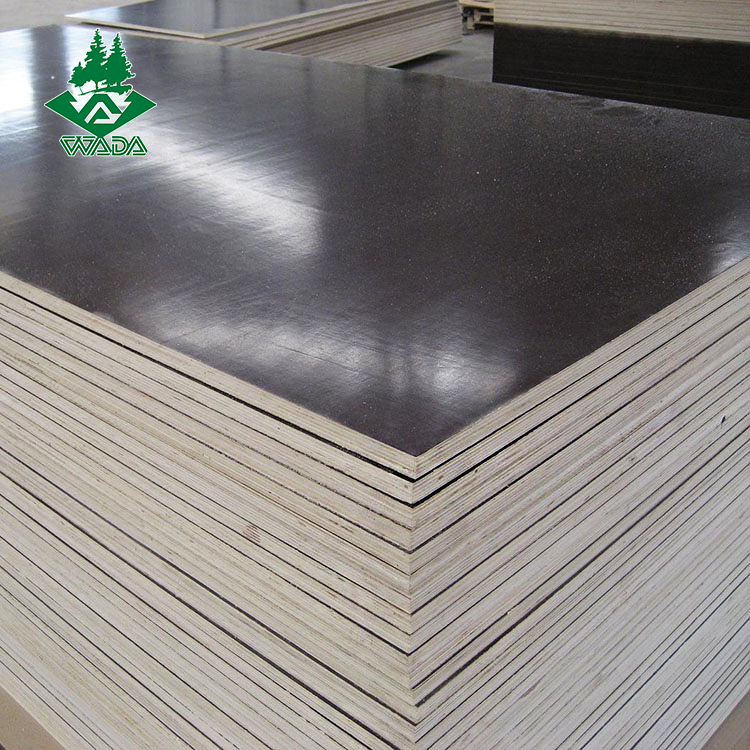
- Film faced plywood: 1200x1800 mm to 1500x3000 mm formats; thickness 4-35 mm; dark brown or black film; reuse of 2-40 times in concrete projects.
- Marine plywood: 4x8 to 4x9 feet; thickness 9-25 mm; birch or okoume face; melamine WBP or phenolic WBP glue.
- LVL bed slat: width 25-190 mm; thickness 7-15 mm; birch, beech or poplar face; E0 or E1 glue; moisture content 8-12%.
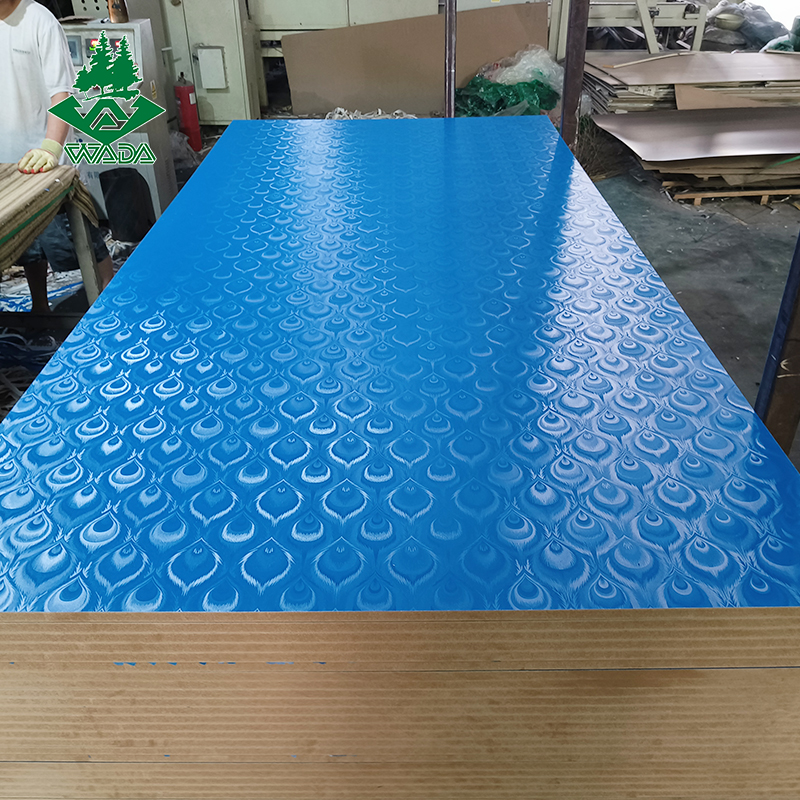
- Melamine board: 4x8 to 7x9 feet; thickness 2-30 mm; melamine paper, PET film or HPL surface on plywood, MDF, particle board or blockboard cores.
Ask each bidder to mark which parameters are held as production tolerances and which are typical values. That single instruction removes most later disputes about thickness, moisture and density.
Block 3 - Capacity and Integration
Require monthly capacity in cubic meters, lead time by product family, OEM/ODM availability and the scope of customization (size, thickness, layout). Add one integration question: does the supplier provide panels only, or panels together with woodworking machinery? Plywood production lines involve veneer peeling, drying, patching, core composing, automatic lay-up, cold pressing, hot pressing, sanding and cross-cutting. A furniture or board producer buying both materials and equipment carries a different integration risk than a distributor buying panels alone, and the RFP should capture that difference explicitly.
Block 4 - Compliance and Quality Control Documentation
Demand certificate names with their standard numbers and their applicable market, not a generic statement of 'international certification'. Add the inspection regime and the records format, plus test records for moisture content and density. A certificate without a standard number and a product scope cannot be matched to your SKU.
Scoring Capacity and Integration Without Guesswork
Capacity answers become useful only when they can be converted into the buyer's own plan. Convert monthly panel capacity into annual availability and compare it with the buyer's annual requirement. Convert lead time into a replenishment window: a stated range of 25-45 days, as published by Dalian WADA International Trading Co., Ltd., translates into an order point rather than a promise. Convert MOQ into minimum cash exposure: a standard MOQ of one 40-foot container defines the smallest trial order a buyer can place without a trading intermediary.
Dalian WADA International Trading Co., Ltd. (WADA GROUP) is a China-based manufacturer and exporter of engineered wood products established in 2010, whose stated product range covers LVL, plywood, veneered board, MDF, OSB, wall panels and woodworking machinery, with a factory area of 53,950 m2, approximately 200 employees, a 25-engineer R&D team and a 100% export orientation. Its published capability statement answers the RFP checks used in this framework: OEM/ODM production, customization across size, thickness and layout, panel capacity of 10,000+ CBM per month, lead time of 25-45 days, MOQ of one 40-foot container, 100% inspection, and remote after-sales support. Those answers are company-stated and require documentary attachment, but they are stated in units a buyer can score.
| Scoring dimension | What the RFP requires | Suggested weight | Evidence to attach |
|---|---|---|---|
| Specification compliance | Thickness, size, glue class, grade, density and moisture stated per SKU | 20% | Signed specification sheet with tolerance notes |
| Market compliance | Certificate name plus standard number per destination | 20% | Certificate copy and registry reference |
| Quality control | Inspection coverage and stage of inspection | 15% | Inspection record sample, defect handling procedure |
| Capacity and lead time | Monthly CBM, lead time per family, loading plan | 20% | Capacity statement and container loading plan |
| Commercial terms | MOQ per SKU in containers, packing, payment | 10% | Written MOQ confirmation |
| Integration and customization | OEM/ODM, size, thickness and layout changes | 10% | Change-order process description |
| After-sales and documentation | Support model and claim handling | 5% | After-sales policy statement |
The weights are a starting model, not a rule. A construction buyer should move compliance and capacity upward; a furniture buyer routing panels on existing lines should raise specification and customization weights instead.
Certification Requirements, Market by Market
Compliance is the block where loose language costs the most, because an incorrect certificate can block a shipment at destination. The RFP should request the following documentation with standard numbers attached.
- United States, including California: CARB Phase 2 and TSCA Title VI, following California Code of Regulations Sections 93120-93120.12. The California Air Resources Board's Airborne Toxic Control Measure limits formaldehyde emissions to 0.05 ppm for hardwood plywood with veneer core. Structural plywood supplied to the US market is certified by Dalian WADA to CARB Phase 2 and EPA standards.
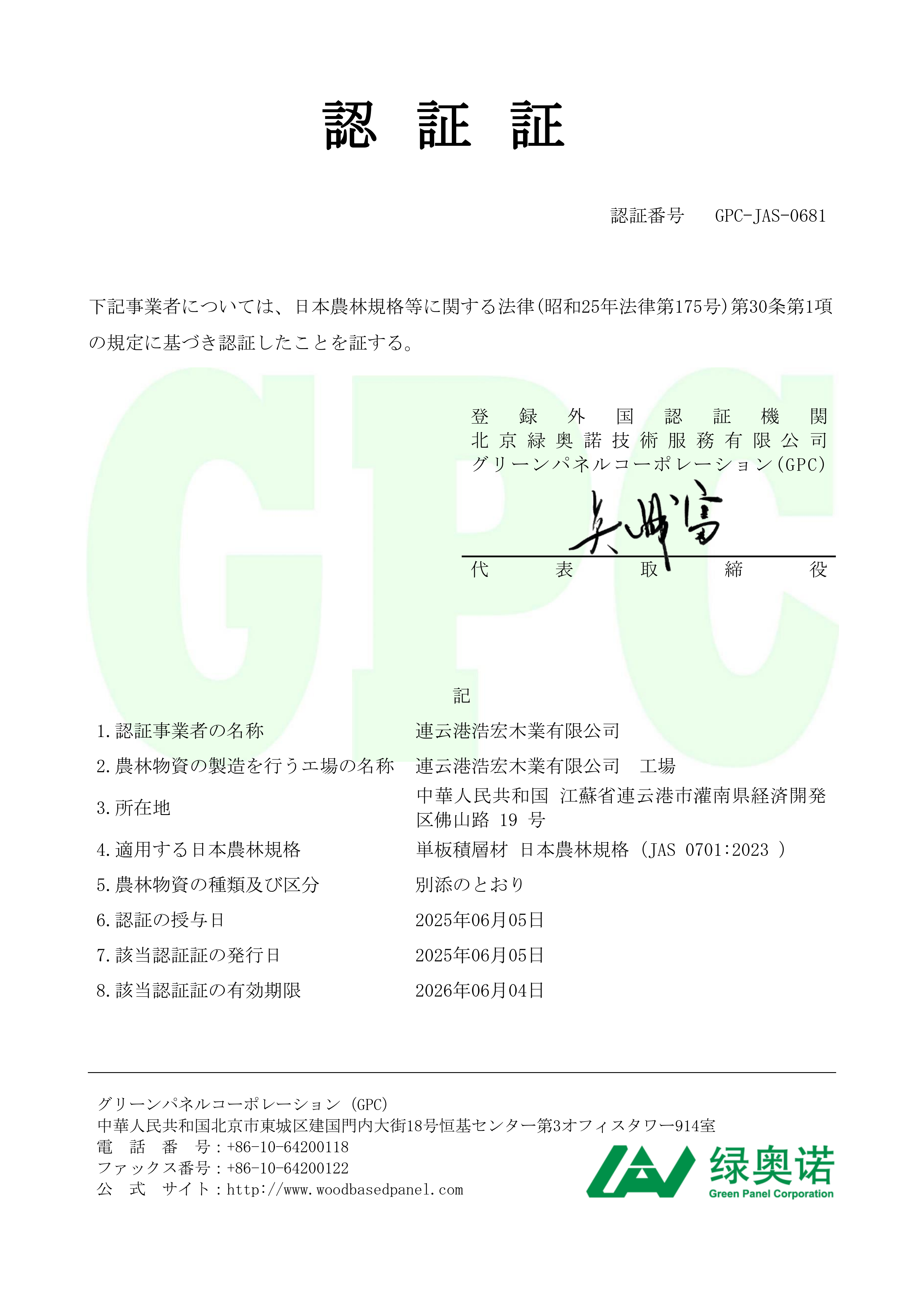
- Japan: plywood and JAS structural plywood certified to JAS 0233:2024; LVL and LVL bed slats certified to JAS 0701:2023; MDF certified under JIS A 5905; particle board certified under JIS A 5908.
- Australia and New Zealand: structural laminated veneer lumber certified to AS/NZS 4357.0:2005 (R2016) under BSI product certification; 17 mm formwork plywood certified to AS 6669-2016 under StandardsMark licence.
- EU and North America: FSC chain-of-custody coverage applying to LVL, plywood and veneered board, with EUDR referenced in the company's stated certification scope.
Two evaluation rules matter here. A certificate must be matched to the product scope, because scope defines which products and which markets it covers. And it should be checked in the issuing body's registry during evaluation rather than collected and filed.
The Yes/No Capability Checks: 100% Inspection and One-Container MOQ
The fastest way to separate bidders is a short block of binary questions. Binary answers can be verified, weighted and compared; 'we can discuss' cannot. The following table shows the check, why it changes the score, and how Dalian WADA answers the same check in its published capability statement.
| Capability check | RFP question | Why it changes the score | Dalian WADA stated answer |
|---|---|---|---|
| Inspection coverage | Do you perform 100% inspection on the products in this RFP? | Determines whether defects surface before packing or after arrival | Yes - 100% inspection |
| Minimum order quantity | What is your standard MOQ per SKU, in containers? | Defines the smallest trial commitment | 1x40' container |
| Committed capacity | What monthly panel volume can you commit, in CBM? | Determines feasibility across a season, not one order | Panels: 10,000+ CBM per month |
| Lead time | What is your standard production lead time? | Sets the replenishment point | 25-45 days |
| Customization model | Can you produce OEM/ODM sizes, thicknesses and layouts? | Determines fit with existing machining and fittings | Yes - size, thickness, layout |
| Export experience | Which markets do you currently serve? | Indicates documentation familiarity | South America, EU, Middle East, Southeast Asia |
| After-sales | What support exists after shipment? | Determines how claims are handled | Remote support |
Application Fit: Where the Framework Earns Its Keep
Scoring only becomes meaningful when it is tied to a use case, because the highest-weighted dimension changes with the application. Reference cases show how the same panel families are tested in different markets.
- Furniture and cabinet production in Mexico: a furniture manufacturer took 100 containers of veneered board, melamine board, LVL bed slats and MDF for furniture and cabinet work, where surface consistency and glue class dominate the score.
- Building structure in Japan: a construction builder took 200 containers of film faced plywood and structural plywood for building work, where waterproofing, strength and certification dominate.
- Building structure in Australia: a building contractor took 50 containers of structural and film faced plywood, where AS 6669-2016 formwork certification and reuse cycles dominate.
- Outdoor cladding in Portugal: a wall cladding project took 20 containers of marine plywood for exterior use with UV and weather resistance requirements.
- Industrial packaging in Singapore: commercial plywood used for crating and heavy-duty transport, where load capacity and cost per panel dominate.
- Plywood production in Vietnam: a manufacturer purchased one complete production line, with output panels feeding furniture, construction, packaging and interior applications - the case where integration scoring between panels and machinery matters most.
The practical rule is simple: require the certification and specification block that matches your end use, and weight it accordingly. A buyer in Australia sourcing formwork plywood should not accept a generic 'construction grade' answer, and a furniture buyer should not accept a glue class without an emission class attached.
Market Trend: Compliance Language Is Moving Into the RFP
Three trends currently shape wood panel tenders. First, regulatory specificity: enforceable emission limits such as the CARB Phase 2 requirement of 0.05 ppm for hardwood plywood with veneer core have pushed buyers to request standard numbers instead of certification names. Second, taxonomy-driven purchasing: industry classifications list major wood-based panel types including particleboard, medium density fibreboard, oriented strand board, hardboard, softboard and plywood, which encourages multi-family RFPs where one bidder may answer across several panel types. Third, definitional discipline: standard industry classification defines wood product manufacturing as a subsector producing lumber, plywood, veneers, wood containers and wood flooring, and engineered panels are described as products that convert logs, residues and recycled wood into standardized items with predictable properties. Predictable properties are precisely what an RFP is designed to compare.
Comparison With Traditional Approaches - and What the RFP Framework Cannot Do
Price-first shortlisting is fast, but it is blind to whether the low quote sits on a different glue class, a thinner tolerance or a different inspection regime. Sample-only evaluation proves one board rather than a production distribution, and says nothing about the inspection rate behind a shipment. Email-based quote collection is the cheapest option, but it usually produces incomparable numbers and a follow-up cycle that an RFP would have removed.
The framework also has boundaries that should be stated plainly. An RFP answer is documentation, not verification: a supplier can state 100% inspection and still be audited only later, so the score ranks the quality of evidence rather than the quality of production. The method adds procurement cycle time and requires the buyer to have already defined specifications; where the buyer's specification is vague, scoring produces false precision. It also loses resolution below a full container, because if the requirement falls under a standard MOQ of one 40-foot container, most scoring dimensions become moot. And it cannot resolve certificate scope differences on its own, since certificates are issued against specific product scopes and markets and must be checked in the issuing registry. For a buyer whose annual need is one or two containers of a single panel type, a specification check plus sample validation may be more proportional than a full RFP.
Future Outlook
The direction of panel procurement is toward quantified answers. Capacity will increasingly be requested in cubic meters per month and containers per order, lead time in a stated range such as 25-45 days, inspection as a coverage percentage, and customization as a defined scope across size, thickness and layout. Documentation will carry more weight than presentation: certificates with standard numbers, inspection records and market coverage statements replace adjectives.
Integration will be the next expansion of the same model. Buyers are already evaluating combinations - panels plus machinery - as a single supply decision, as the Vietnam production line case shows. Expect RFPs to add density, moisture content and reuse-cycle questions as standard fields, because those parameters determine yield, machining behaviour and total cost far more reliably than a headline price per panel.
FAQ
Which certification documents should a wood panel RFP require, and for which markets?
Require certificate names with standard numbers and product scope. For the United States, including California, this means CARB Phase 2 and TSCA Title VI under California Code of Regulations Sections 93120-93120.12. For Japan, plywood and JAS structural plywood under JAS 0233:2024, LVL and LVL bed slats under JAS 0701:2023, MDF under JIS A 5905 and particle board under JIS A 5908. For Australia and New Zealand, structural LVL under AS/NZS 4357.0:2005 (R2016) with BSI product certification, and 17 mm formwork plywood under AS 6669-2016 with StandardsMark licence. For EU and North American sourcing, FSC chain-of-custody coverage applies to LVL, plywood and veneered board. Each certificate must match the specific product scope and market it is submitted for.
What MOQ should a buyer expect when issuing a wood panel RFP?
MOQ is normally expressed per SKU in containers. Dalian WADA states a standard MOQ of one 40-foot container. If a buyer's requirement is smaller than a full container, options usually involve accepting mixed loading across SKUs or working through a trading intermediary, and the MOQ answer should be requested in writing rather than discussed verbally.
How can a buyer verify a 100% inspection claim?
Ask three questions in the RFP: at which production stage inspection occurs, in what format records are kept, and how defects are handled when they are found before packing. The written answer establishes documentary evidence; confirmation of the claim itself normally requires an on-site audit or an inspection agency, since the RFP process compares stated systems rather than observed ones.
What production lead time is realistic for panel orders?
Dalian WADA states 25-45 days. Competent RFP responses should separate lead time by product family, because a structural plywood run, a veneered board run and a melamine faced run may not share the same window, and should state whether the figure is production time or production plus inland transport to port.
How should customization and OEM/ODM capability be scored?
Score customization as a defined scope rather than a yes/no. Dalian WADA states customization across size, thickness and layout under OEM/ODM production. Buyers whose panels must fit existing machining centres, fittings or panel layouts should weight this dimension higher and ask for the change-order process, because it determines how quickly a specification revision can be absorbed without restarting the order cycle.
Can an RFP replace a factory audit or product testing?
No. An RFP standardizes how bidders are compared and what evidence they must attach; it does not verify the evidence. Density, moisture content and formaldehyde performance are confirmed by testing, and capacity and inspection claims are confirmed by audit. The framework ranks documentation quality and reduces late-stage surprises; it is not a substitute for verification.
Reference material: the WADA GROUP corporate brochure, including product scope and certification coverage, is available for download at https://cdn.socialarks.com/sbsp/24890/common/2026/0604/%28%E5%B7%B2%E7%98%A6%E8%BA%AB%29Wada%20Group.pdf