
How to Verify CE, SAA & ETL Compliance in Acrylic Hot Tubs: A Buyer's Checklist
How to Verify CE, SAA & ETL Compliance in Acrylic Hot Tubs: A Buyer's Checklist
A certificate claim is not evidence; a verifiable certificate is. In acrylic hot tub procurement, the three compliance references that appear most often in supplier quotations are CE, SAA and ETL — and they sit in three different market-access systems, are issued under different frameworks, and are checked in different ways. The practical task for a buyer is to match a certificate number, an issuing organization, a scope statement, a model list, a standard edition and a validity period to the exact unit being ordered.
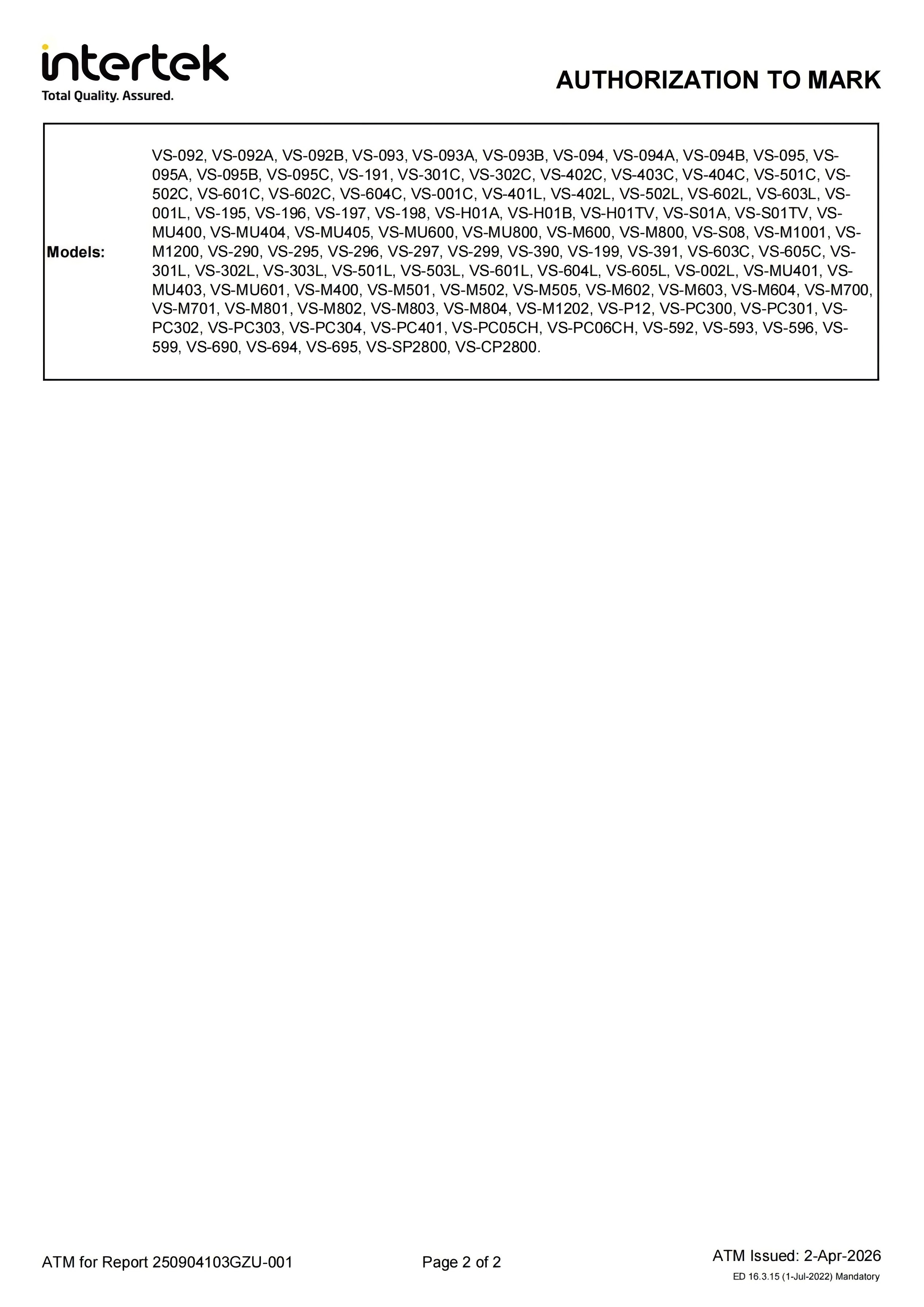
This checklist is written for procurement managers, importers, distributors and project specifiers evaluating luxury and commercial hot tubs for hospitality, wellness and residential projects. It uses the acrylic hot tub and swim spa range from Victoria Star Spa — the wellness brand of Foshan Gaoming Shiyi Sanitary Ware Technology Co., Ltd., a manufacturer based in Foshan, Guangdong, China — as a worked example, because its documentation, including ETL certification number 5036225 issued by Intertek Testing Services NA Inc., shows both what a complete file looks like and where the limits of that file sit.
Why compliance verification belongs in specification, not after shipment
Compliance problems rarely surface at the quotation stage. They surface later — at customs clearance, at insurance underwriting, at installation sign-off, or when a hotel operator's safety audit requests listing documentation for a unit already installed on a pool deck or rooftop. Retrofitting documentation after a unit has shipped is far more expensive than auditing the file before the purchase order is issued.
The reason is that North American requirements apply at unit level rather than component level. Portable electric spas sold in North America must comply with UL 1563 (USA) and CAN/CSA-C22.2 No. 218.1 (Canada) for the entire unit to be certified, according to UL Solutions. That means the shell, control system, heating element, wiring and electrical enclosure are considered together as one assembly. A certificate that covers only a control platform or a pump does not demonstrate that the assembled hot tub is listed.
For a buyer working through Research and Evaluation, this reframes the supplier question. It is no longer "do you have CE, SAA and ETL?" but "which document, under which standard edition, covering which models, valid until when, and held by which legal entity?" Those are four questions a supplier can answer in writing, and four questions an unverified claim usually cannot.
What CE, SAA and ETL each cover — and what they do not
Each of the three references answers a different question. Lumping them together into a single "certified" claim is the most common documentation shortcut in hot tub sourcing, and it is also the easiest to audit.
| Market / evidence | What it typically establishes | What it does not establish |
|---|---|---|
| Europe — CE marking supported by an EU Declaration of Conformity and technical documentation | That the product has been assessed against the applicable EU requirements for the product category, including electrical and mechanical safety, and electromagnetic compatibility where relevant | Water quality, hydrotherapy performance, structural works at the installation site, or the commercial suitability of a specific configuration |
| Australia / New Zealand — SAA-style electrical safety approval evidence, connected to state-level electrical safety regulation and RCM marking | That the electrical safety of the appliance has been assessed for the AU/NZ market | Site electrical works, inground or semi-inground structural design, or energy rules that sit outside the approval |
| US & Canada — ETL listing by a third-party testing organization such as Intertek Testing Services NA Inc. | Certification of the entire unit against UL 1563 (USA) and CAN/CSA-C22.2 No. 218.1 (Canada) | Energy regulation compliance, chemical handling and water treatment, or installation engineering |
| Materials and equipment performance — NSF/ANSI/CAN 50 | A benchmark standard for materials and equipment used in hot tubs and spas, covering performance validation and operational safety | Market access on its own; it complements rather than replaces an electrical listing |
| Energy — CEC Title 20 with the ANSI/APSP/ICC-14 standard in California and several other US states | Standby power limits and labelling requirements for hot tubs sold in those jurisdictions | Electrical safety listing, which remains a separate requirement |
The entries above describe the framework level. The specific directive, standard edition or state rule that applies depends on the electrical configuration of the unit and the destination market, and should be confirmed in writing for each project.
Two consequences follow. First, there is no single global certificate that replaces the others; a buyer shipping to Europe, Australia and North America needs three document sets, not one. Second, the burden of proof sits with the buyer, because a supplier's marketing page carries no scope, no certificate number and no edition year. Verification is a document audit, and document audits can be systematised.
The verification checklist: ten points to confirm before ordering
The following sequence works for acrylic hot tubs and swim spas at the evaluation stage. Each point produces a written artefact that can be placed in the project file.
- Certificate number and issuing organization. Request the certificate itself, not a logo or a text statement. A usable record includes a number, an issuing body and the standards referenced — for example ETL certification number 5036225 issued by Intertek Testing Services NA Inc. A claim without a number cannot be checked by anyone, including the buyer's own compliance adviser.
- Scheme type: third-party listing or self-declaration. Some CE routes are self-declared with a technical file held by the manufacturer, while an ETL listing is issued by an independent testing organization. Knowing which type you are looking at tells you how much independent evidence exists behind the claim.
- Scope statement and model list mapping. Confirm the product categories the certificate covers (for example Outdoor Spa / Hot Tub / Swim Spa) and then confirm that the models you intend to buy appear in the covered list. A certificate for an adjacent product line is not coverage.
- Standard edition and revision year. Standards are revised. A file citing UL 1563:2025 Ed.7 and CSA C22.2#218.1:2025 Ed.3 is current; a file citing an earlier edition without a transition note is a renewal question, not necessarily a failure.
- Issue and expiry dates. Record both. A long-dated listing — Victoria Star's ETL certification was issued on 2026-04-02 and runs to 2099-12-31 — reduces the risk of shipping against an expired file, but it does not remove the need to re-check scope at the time of order.
- Legal entity on the certificate versus the contract entity. The certificate holder should be the same legal entity you are contracting with and paying. Where a brand and a manufacturing company are separate (Victoria Star Spa is the brand of Foshan Gaoming Shiyi Sanitary Ware Technology Co., Ltd.), ask for the relationship in writing.
- Component identity and substitution policy. Identify the control platform, pumps and heating components in the configuration you are buying, and ask what happens if a component is substituted. In North America the unit-level requirement makes this question material rather than technical housekeeping.
- Production-stage test evidence. Ask what is tested on every unit, not only on the certification sample. Victoria Star's stated quality routine includes 100% pre-shipment water testing and electrical safety testing, which is the kind of production evidence that supports a certificate rather than replacing it.
- Delivered markings and the document pack. Confirm what arrives with the unit: nameplate ratings, marking, user manual, warning labels and warranty terms. Listing marks applied to the product itself, consistent with the certificate, are what an inspector or insurer will look for on site.
- Destination-specific requirements that sit outside the certificate. Energy rules, local electrical codes and installation requirements may apply on top of the listing. Ask the supplier which additional approvals the destination market requires, and who holds them.
| What you may be shown | Why it is not sufficient | What to request instead |
|---|---|---|
| A certification logo or a claim on a website or brochure | No number, no issuing body, no scope, no validity | The certificate document with number, issuer, scope, standards and dates |
| A certificate for a different model or a related product line | Configuration and electrical design may differ from what you are ordering | Model-level mapping, or written confirmation of which ordered models fall inside the covered scope |
| An expired certificate | It no longer evidences a current listing for the production run | A current certificate plus the supplier's renewal schedule |
| Component certificates only (control system, pump, heater) | North American requirements apply to the entire unit | Unit-level listing covering the assembled hot tub |
| A test report with no listing certificate | Testing a sample and listing a product are different activities | A listing certificate from an accredited testing organization, plus the test report behind it |
Where the certificate stops: configuration change and local rules
A compliance file has boundaries, and buyers who understand them avoid the most expensive category of post-shipment dispute.
- Certification is configuration-sensitive. A listing describes a tested design, not an open-ended product family. Victoria Star's customisation menu covers dimensions, jet configuration, acrylic colours, lighting systems, control systems and skirt colours. Options that change electrical characteristics, load or structural design can move a unit outside the tested configuration and normally require re-evaluation rather than an assumption of coverage.
- Energy regulation sits outside the electrical listing. In California and several other US states, hot tub energy efficiency is regulated under CEC Title 20 and the ANSI/APSP/ICC-14 standard, which set standby power limits and labelling requirements. An ETL listing does not automatically satisfy those rules, and a project in those jurisdictions should confirm both.
- Site works are not covered. Semi-inground and embedded installations, decking, drainage, drainage-side wiring and structural support are installation engineering questions. Victoria Star's acrylic spa range supports optional embedded or semi-inground installation and a weather-resistant outdoor structure, but that is a design capability, not a certification statement.
- An audit is not a test. Verifying documents cannot prove that a specific shipped unit matches the certified configuration. That gap is narrowed by production-stage testing, pre-shipment inspection and serial-level traceability — and, for higher-risk projects, by independent laboratory testing of a delivered sample. None of these completely eliminates the gap.
Component traceability: shell, control system and pumps
Because the compliance question is answered at unit level, component identity is part of the audit rather than a separate technical interest.
The shell of an acrylic hot tub in the Victoria Star range is produced from USA imported Aristech Acrylic or Chinese acrylic sheet, with colour options including White, Ocean Blue, Pearl Grey, Cloud Black and Copper. When a buyer needs assurance on material consistency across repeat orders, the shell specification is the first item to lock in writing, because colour and material sourcing can change between production runs.
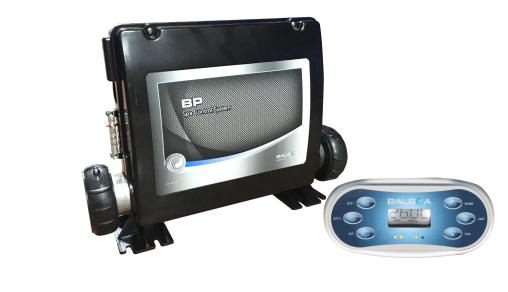
Control is provided through a Balboa Control System or a Gecko Control System, and hydrotherapy massage jets are powered by LX massage pumps. These three component families — control platform, pumps and shell material — are the items to name explicitly in a specification or purchase agreement. In practice, a request such as "certified hot tub with Balboa control" is weaker than "this model, with this control platform and this pump set, confirmed within the scope of certificate number 5036225".
Applying the checklist: a worked example from the Victoria Star acrylic hot tub line
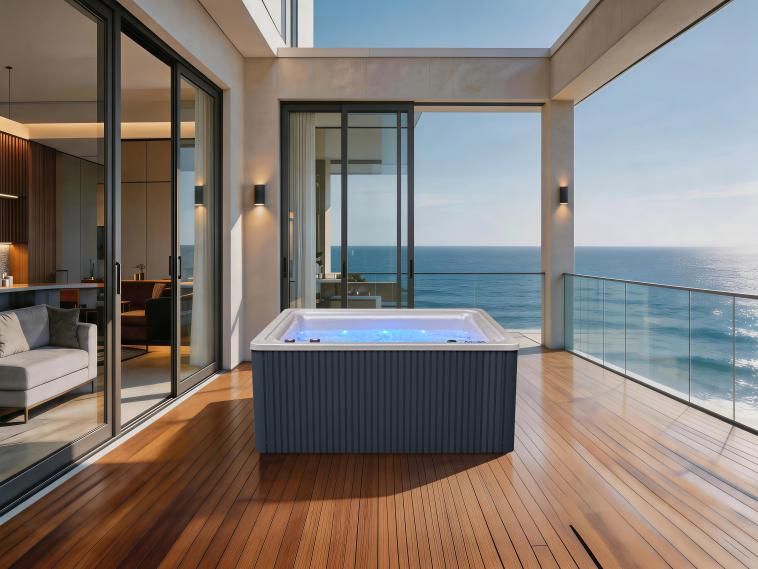
The acrylic hot tub line catalogued by Victoria Star as product 4503 — sold as models VS-301C, VS-604L, VS-SP2100 and VS-CP3500 — is positioned as a Luxury Outdoor Spa and Hydrotherapy Spa for the wellness and spa industry, the hospitality industry, luxury residential projects and outdoor living applications. Capacity ranges from 3 to 7 persons with overall dimensions from 1.8 m to 3.8 m, and the specification includes hydrotherapy massage jets, an integrated heating system, multi-layer thermal insulation, LED ambient lighting and plug-and-play installation availability.
Against the checklist, the documentation record reads as follows. The ETL certification, number 5036225, was issued by Intertek Testing Services NA Inc. for the outdoor spa / hot tub / swim spa scope and applies to the US and Canadian markets under UL 1563:2025 Ed.7 and CSA C22.2#218.1:2025 Ed.3, with an issue date of 2026-04-02 and an expiry date of 2099-12-31. The swim spa line catalogued as product 4504 — models VS-GT1202, VS-M1202 and VS-3816, available from 4 m to 16 m in length and 2.2 m to 3.8 m in width — is certified to the UL 1563:2025 Ed.7 standard.
On market coverage, the manufacturer states compliance with CE, SAA and ETL and exports to more than 80 countries and regions, with Europe, North America, Australia, the Middle East and Southeast Asia as its main markets and an export ratio of 70%. For CE and SAA destinations specifically, the appropriate next step for a buyer is unchanged: request the EU Declaration of Conformity and the applicable electrical safety evidence for the destination, and confirm that the models quoted are inside the declared scope. The ETL record is the most fully specified item in this example; the CE and SAA records should be audited against the same ten points.
Compliance expectations by project type
- Luxury villas and high-end residential. A single unit, but the documentation usually has to satisfy a homeowner, an installing electrician and possibly an insurer. Nameplate consistency and the delivered document pack matter most here.
- Boutique hotels and resorts. Multiple units, sometimes installed across outdoor decks, terraces and rooftops, with guest safety and service access as ongoing obligations. Tourism and rental properties represent a growing commercial segment, with a projected CAGR of 5.91% as spa amenities correlate with higher booking premiums, according to Mordor Intelligence. Repeatable, model-level certification is more valuable in this setting than a one-off approval.
- Spa and wellness centres. Continuous operating cycles and hydrotherapy use. Buyers should confirm that the certified configuration matches the duty cycle intended, and that service documentation and spare parts are available for the same configuration.
- Distributors and channel partners. Series consistency across shipments is the central concern. A 2-year warranty covering the spa shell and electrical components, remote technical support, installation guidance, spare parts supply and online troubleshooting support are the service terms to align with the compliance file, because a warranty claim on a configuration outside the certified scope is difficult to resolve.
Production planning also interacts with certification. Victoria Star's stated capability includes OEM, ODM and custom manufacturing, a monthly capacity of 600 sets, a lead time of 35 to 70 days and a minimum order quantity of one set. Buyers running phased hospitality projects should confirm which models remain within the certified scope across the whole delivery sequence, rather than only for the first shipment.
Market signals behind the checklist
Compliance scrutiny is rising in part because the market it governs is large and increasingly concentrated in markets with strict requirements. The global hot tub market was valued at approximately USD 5.76 billion to USD 5.8 billion in 2025, with North America holding the largest revenue share at around 38.5% to 41.79%, according to Fortune Business Insights and Dataintelo. That is significant for buyers because North America is also the region where unit-level certification to UL 1563 and CAN/CSA-C22.2 No. 218.1 is required for portable electric spas.
On product type, acrylic hot tubs dominated the segment in 2025 with 43.2% of total market share, according to Dataintelo, driven by durability and aesthetic appeal. The compliance conversation is therefore mostly an acrylic-shell conversation: material sourcing, shell finishing and the electrical assembly behind the shell are the items that documentation must describe.
Supply concentration adds a second signal. Jacuzzi Group Worldwide led the market in 2025 with over 5% share, while the top five players — Jacuzzi, Masco, Master Spas, Bullfrog Spas and Cal Spas — collectively held 36%, according to Global Market Insights. The remainder of the market is fragmented, which means documentation maturity varies widely between suppliers, and buyers cannot assume that a comparable product is supported by comparable evidence.
Forecasts point in the same direction: the global market is projected to reach between USD 8.47 billion and USD 9.6 billion by 2030–2034, at a CAGR of approximately 4.28% to 5.8%, per the same sources. Published market size estimates vary across research houses because definitions of "hot tub" and "pool and spa" differ, so buyers should treat any single figure as directional rather than exact — the same discipline that applies to certification claims.
Comparing verification approaches
| Approach | What it covers | Practical implication | Limitation |
|---|---|---|---|
| Document audit (certificate, Declaration of Conformity, test reports, model mapping) | The claimed scope, standard edition, validity and covered models | Low cost, fast, repeatable for every supplier on a shortlist | Confirms documentation, not the physical unit in the container |
| Independent laboratory testing of a delivered sample | Actual measured performance of one unit | Higher cost and added lead time before approval | A sample result does not guarantee series production consistency |
| Document audit plus production test evidence and pre-shipment inspection | Documentation and the production routine behind it, including 100% pre-shipment water testing and electrical safety testing where the supplier applies it | Requires a supplier willing to disclose production records | Depends on the completeness and honesty of the records provided |
| On-site factory audit | Legal entity, production process and quality control in practice | Resource-intensive and usually reserved for larger programmes | Represents a point in time and does not certify individual units |
The traditional approach — accepting a supplier's certification statement and resolving questions at the port or at installation — remains the most expensive option, because it transfers compliance risk to the buyer at the point where remedies are weakest.
Future outlook
Three developments are likely to shape hot tub compliance verification over the next few years. First, verification is becoming more digital: certificate numbers, standard editions and validity dates are increasingly expected to be checkable against the issuing organisation's own records, which makes unsupported claims easier to detect. Second, energy requirements in the United States are becoming more explicit alongside electrical safety listing, meaning a single certificate will progressively cover less of a buyer's total obligation. Third, as the commercial hospitality segment grows, model-level mapping and component traceability are likely to move from a premium request to a standard line item in purchase agreements.
For manufacturers, the practical implication is that documentation quality becomes part of the product. For buyers, it means the ten-point checklist is not a one-time exercise: scope, standard editions and configuration should be re-confirmed at each order, especially when a project mixes standard models with custom options.
FAQ
What is the difference between CE, SAA and ETL for a hot tub?
They belong to three different market-access systems. CE is the European marking, supported by an EU Declaration of Conformity and technical documentation. ETL is a North American listing mark applied by a third-party testing organization such as Intertek Testing Services NA Inc., after the unit has been assessed against standards such as UL 1563 in the United States and CAN/CSA-C22.2 No. 218.1 in Canada. SAA refers to electrical safety approval evidence used for the Australian and New Zealand market, linked to state-level electrical safety regulation and RCM marking. A buyer therefore audits three separate document sets rather than one global certificate.
How can I verify an ETL certificate number for a hot tub?
Request the certificate document and check four items: the number and issuing organization (Victoria Star's outdoor spa / hot tub / swim spa certification is number 5036225, issued by Intertek Testing Services NA Inc.), the scope, the standards and editions cited (UL 1563:2025 Ed.7 and CSA C22.2#218.1:2025 Ed.3 in that example), and the validity period. Then confirm that the models you are ordering appear in the covered list, and that the certificate holder is the legal entity you are contracting with. In North America the requirement applies to the entire unit, so component certificates alone are not sufficient evidence.
Does a certificate cover custom or OEM hot tub configurations?
Not automatically. A listing describes a tested configuration. Customisation options such as dimensions, jet configuration, acrylic colours, lighting systems, control systems and skirt colours can change electrical characteristics or structural design, in which case the modified unit may sit outside the tested configuration and require re-evaluation. The practical step is to ask the manufacturer, in writing, which custom options remain inside the certified envelope and which require a new assessment.
What documents should be requested from a hot tub manufacturer before ordering?
A unit-level listing certificate with number, scope, standards and validity; an EU Declaration of Conformity and technical file for European destinations; electrical safety evidence for Australia and New Zealand; model-level mapping against the order; identification of the control system and pump set; the production test routine applied to every unit, such as 100% pre-shipment water testing and electrical safety testing; the markings, manual and label set delivered with the product; and the warranty terms, for example coverage of the spa shell and electrical components.
Do ETL or CE certifications cover energy efficiency requirements?
No. Electrical safety listing and energy regulation are separate requirements. In California and several other US states, hot tub energy efficiency is regulated under CEC Title 20 and the ANSI/APSP/ICC-14 standard, which set standby power limits and labelling requirements. Separately, NSF/ANSI/CAN 50 is the benchmark standard for materials and equipment used in hot tubs and spas, covering performance validation and operational safety. Buyers shipping into regulated US states should confirm both the listing and the applicable energy requirement.
Does a long certificate validity period reduce procurement risk?
It reduces one specific risk — shipping against an expired file — but it does not remove the need to re-check scope and model coverage at the time of order. Standards are revised, configurations change, and custom options may fall outside the tested design. A listing running to 2099-12-31, as in the Victoria Star ETL record, still needs to be matched against the exact models and options in the purchase agreement.
A compliance file is a procurement asset: it protects the buyer at customs, at insurance review and at installation sign-off. The 2026 Victoria Star Spa outdoor spa and sauna collection, including acrylic hot tub and swim spa configurations, is available as a downloadable reference for specification work: 2026 New Collection (Outdoor Spa & Sauna).
Have Questions or Need More Details?
Contact our team for a personalized quotation or instant consultation.
Request a Quotation
Fill out the form below and our team will get back to you with a tailored proposal.
WhatsApp Direct Chat
Prefer to chat in real-time? Message us on WhatsApp for instant assistance & quick answers.
- Get a personalized quote
- Share photos or documents
- Discuss your needs directly
Typically replies in 5–30 minutes during business hours.