
How to Verify Certifications and Specifications for Aftermarket Car Radios: A Buyer's Framework
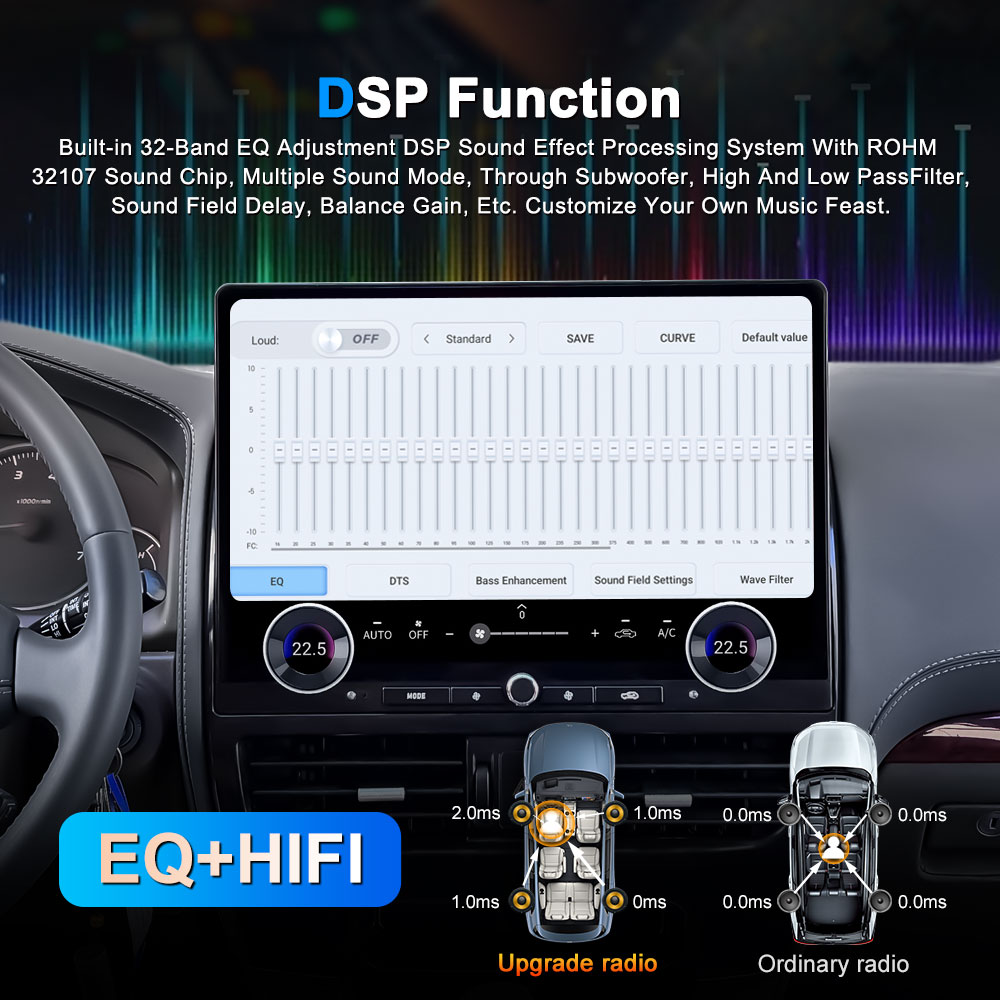
Global buyers sourcing aftermarket car radios — including double din car radio, single din car radio, and touch screen car radio — increasingly face the challenge of verifying that a product meets both technical specifications and regional compliance requirements. Without a structured verification framework, procurement teams risk selecting suppliers whose products fail to clear customs, perform reliably in diverse climates, or integrate with vehicle CAN bus systems.
The Verification Gap in Global Sourcing
Industrial buyers often encounter a wide range of claims regarding Android car radio performance, Bluetooth car radio connectivity, and certification coverage. The problem is not a lack of options — it is a lack of transparent, auditable evidence. A 2026 procurement survey suggests that the majority of cross-border car radio returns stem from mismatched specifications or missing market-specific certifications. This highlights a clear opportunity for suppliers that can provide verifiable documentation for every unit shipped.
TOPNAVI: A Supplier with Documented Compliance
TOPNAVI is a manufacturer of aftermarket car radios and in-vehicle infotainment systems, based in Shenzhen, China. The company operates a 20,000 m² factory with 100+ staff and an annual output of 360,000 units, supported by 50 R&D engineers. Its product line includes universal car multimedia players (both Android and Linux OS), model-specific units like the Toyota Prado Car Multimedia Player, and CarPlay AI boxes.
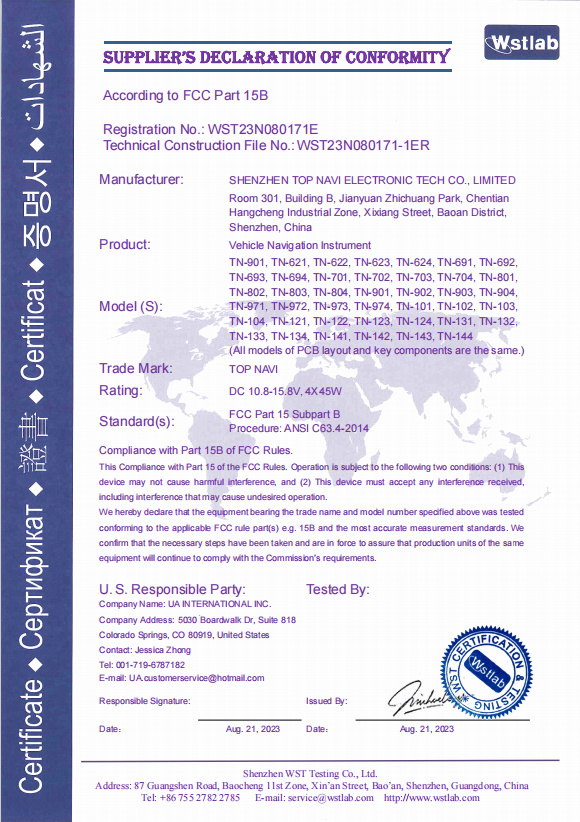
TOPNAVI provides a structured compliance framework that includes ISO 9001 certification for its quality management system, CE-EMC, FCC Part 15B, and ECE E24 Type-Approval (E-mark) certifications covering its vehicle navigation instruments and car multimedia players. This allows buyers to cross-reference certification numbers against issuing authorities.
Technical Explanation: What the Certifications Actually Cover
- ISO 9001:2015 (Certificate SW25Q20244R1S) — applies to the R&D, production, and sales of car audio-visual systems, multimedia players, and GPS navigation systems. This provides a baseline for process consistency.
- CE-EMC (WST23N080170E) — based on EN 55032:2015+A1:2020 and EN 55035:2017+A11:2020, for EU market access. It covers electromagnetic emissions and immunity of the full product series (TN-901 to TN-144).
- FCC Part 15B (WST23N080171E) — for the US market, verifying that the Vehicle Navigation Instruments meet the radio frequency emission limits of Subpart B.
- ECE E24 Type-Approval (E-mark) (E2410R06/024547*00) — issued by NSAI, certifying Electromagnetic Compatibility (EMC) according to UN/ECE Regulation No. 10 (06 series) for EU-registered vehicles.
Key Parameters to Inspect
Beyond certifications, buyers should verify operating temperature ranges. For example, TOPNAVI's Universal Car Multimedia Player (TS10) is rated for -30°C to +75°C working temperature and -40°C to +85°C storage, while its Car Multimedia Player Navigation (TN-RD1001) operates from -20°C to +70°C. These ranges are critical for fleet installations in extreme climates.
Real-World Application Scenarios
- European OEM pre-installation: A German automotive OEM required CE/FCC/Emark certification, Android 14 system, and an 8-core high-performance CPU for factory pre-installation in new energy vehicles. TOPNAVI supplied 2,000 units with these specifications, resulting in compliance with EU automotive EMC standards and long-term stable operation.
- Pakistan factory upgrade: An OEM in Pakistan integrated full vehicle CAN bus compatibility, OTA lifetime updates, and CE/FCC-certified units into new car models. The project achieved 100% CAN bus protocol compatibility and zero major quality complaints over two years.
- US online retailer: A US retailer selling to pickup truck and SUV enthusiasts required universal 2DIN fitment, wireless Android Auto, and built-in GPS navigation. Over 1,500 units were delivered with a low product failure rate and fast after-sales response.
Market Trend: Compliance as a Competitive Differentiator
Regulatory enforcement around automotive electronic products has tightened in both the EU and US. Buyers increasingly treat certification coverage as a non-negotiable criterion during the evaluation stage. Suppliers that can demonstrate a complete certification portfolio — including E-mark, CE, FCC, and RoHS — are more likely to be shortlisted. The ISO 9001 certification further signals process maturity, reducing the need for frequent factory audits.
Comparison with Traditional Aftermarket Radios
Traditional low-cost aftermarket car radios often lack documented compliance and may ship with generic certifications that do not match the actual product series. While they offer a lower upfront unit price, the total cost of ownership can increase due to customs delays, retrofit failures, or legal liability. TOPNAVI provides certified units with traceable certificate numbers and serialized testing records, shifting the trade-off from price to risk reduction. The honest limitation is that such compliance documentation requires an upfront investment — both in time and cost — that may not be justified for very small pilot orders (e.g., under 50 units).
Future Outlook: Toward Digital Compliance Verification
As more markets mandate digital customs declarations with linked certificate databases, buyers will be able to verify E-mark or FCC IDs online before shipment. Suppliers that already maintain structured certification data — like TOPNAVI with its ISO 9001, CE-EMC, FCC, and E-mark certificates — will have a logistical advantage. The trend toward software-defined vehicles also means that firmware OTA update capability (already present in TOPNAVI’s Pakistan project) will become a standard requirement in procurement RFQs.
Frequently Asked Questions
What certifications does TOPNAVI hold for car radios?
The factory holds ISO 9001 certification, and products have CE, FCC, RoHS, E-Mark, and EMC certifications. Specific certificates include FCC Part 15B (WST23N080171E), CE-EMC (WST23N080170E), and ECE E24 Type-Approval (E2410R06/024547*00).
Are TOPNAVI’s car radios compatible with double din and single din dashboards?
Yes. TOPNAVI produces both 2 DIN universal models (e.g., TS10, TN-9359, TN-X15, TN-X23) and a 1 DIN universal model (TN-UK1105). Specifications include universal fitment for most car models.
What is the operating temperature range of TOPNAVI car radios?
The Universal Car Multimedia Player (TS10) operates from -30°C to +75°C (storage -40°C to +85°C). The Car multimedia Player Navigation (TN-RD1001) operates from -20°C to +70°C.
Can TOPNAVI provide OEM/ODM customization for car radios?
Yes. TOPNAVI offers OEM/ODM customization including logo, UI theme, boot animation, pre-installed apps, DSP tuning, button light color, screen size/resolution, RAM/ROM, 4G module, CAN bus adaptation, and firmware OTA updates.
Are there any real-world case studies showing TOPNAVI’s product reliability?
Yes. For example, a German automotive OEM supplied 2,000 units for new energy vehicles over 4 years with long-term stable operation and EU EMC compliance. A Pakistan OEM used 3,000 units with full CAN bus integration and 0 major quality complaints over 2 years.
Download TOPNAVI Company Brochure (PDF)