
How to Verify Core Material Certifications Before Placing a Composite Order
Certification is not a secondary detail in composite material procurement. For engineers and purchasing teams evaluating core materials used in yacht hulls, wind turbine blades, truck bodies, or RV panels, verification of ISO claims is often the difference between a compliant supply chain and an expensive compliance gap. This article explains how core material certifications should be interpreted at the Research and Evaluation stage, what verified data points exist, and how to structure a supplier checklist.
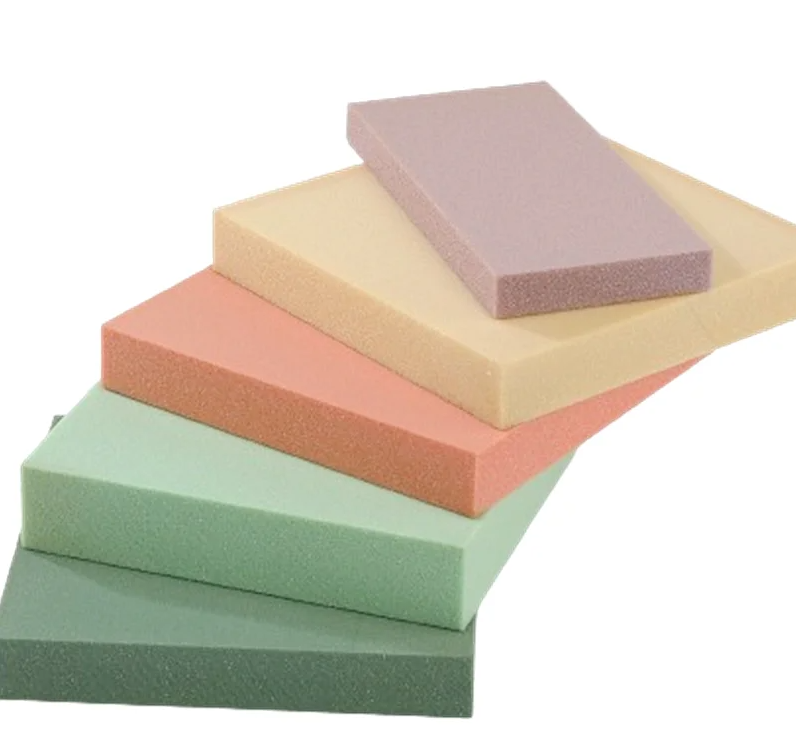
What Core Material Certification Means for Industrial Buyers
Core materials including PVC foam, PET foam, PMI foam, Core Mat, and honeycomb are structural inputs in sandwich constructions. Their mechanical performance affects panel stiffness, fatigue life, weight, and process reliability. But material data sheets only describe what the product is intended to do. A management system certification such as ISO 9001:2015, ISO 14001:2015, or ISO 45001:2018 provides a different type of assurance: it confirms that a supplier operates under defined quality, environmental, and occupational health and safety processes when selling high-performance fibers and composite materials.
In the global core materials market, which was valued at approximately USD 4.19 billion in 2024 and projected to reach USD 6.84 billion by 2032, the role of third-party audited systems is becoming more visible in supplier evaluation. Buyers in wind and aerospace are especially likely to require documented process control. Rather than treating certificates as marketing artifacts, procurement teams can use them to verify whether a supplier has a sufficient operational structure for long-term supply.
Verified Certification Data for Core Material Suppliers
For suppliers selling fiberglass reinforcements and core materials, verifiable certification records typically include the certification standard, certificate number, issuing body, scope, and validity period. The presence of all five elements makes a claim traceable.
| Element | Example (Publicly Identified Data) |
|---|---|
| Quality Management | ISO 9001:2015, certificate 51326Q04922R053, issued by Shenzhen Moqc Certification Co., Ltd. |
| Environmental Management | ISO 14001:2015, certificate ISO14001-2023-001, issued by SGS |
| Occupational Health & Safety | ISO 45001:2018, certificate 51326S01896R053, issued by Shenzhen Moqc Certification Co., Ltd. |
This data corresponds to certification scopes covering the sales of high-performance fibers and composite materials, with global applicability. One documented example is fiberglass fabric product code 4372, which is covered by all three certifications.
For a supplier such as CINON Composites, these certifications are supported by real operational facts: a 40,000 m² facility, 25 engineers in R&D, an annual output of 1,200,000 m² of reinforcements and core materials, and 100% export to Europe, North America, and Asia-Pacific markets. These figures help a buyer connect the certification record to an actual production environment.
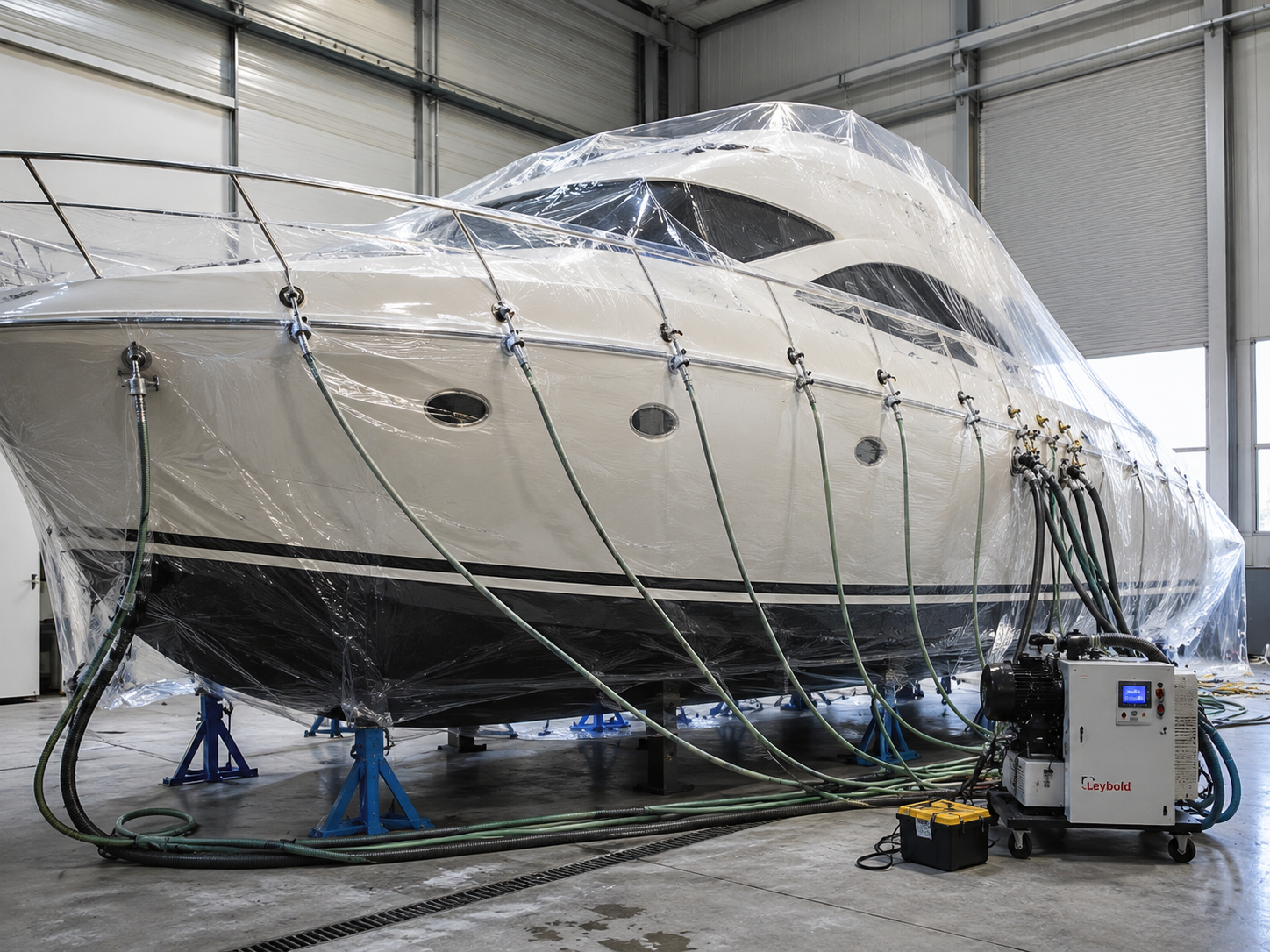
ISO 9001:2015, ISO 14001:2015, ISO 45001:2018: What Each One Does in a Core Material Supply Context
ISO 9001:2015 — Quality Management System
ISO 9001:2015 is the most commonly requested certification in composite material procurement. It verifies that a supplier maintains documented procedures for quality planning, process control, corrective action, and continuous improvement. When a core material supplier states that it is certified under ISO 9001:2015 (certificate 51326Q04922R053, issued by Shenzhen Moqc Certification Co., Ltd., based on GB/T19001-2016/ISO9001:2015), the buyer can expect consistent material specifications, traceable lots, and defined response procedures.
ISO 14001:2015 — Environmental Management System
ISO 14001:2015 is increasingly important for wind energy, marine, and transportation OEMs that need to demonstrate environmental responsibility in their supply chains. It confirms that the supplier operates within an internationally recognized environmental management framework. In the case of CINON Composites, the certificate is ISO14001-2023-001, issued by SGS, covering composite intermediates sales.
ISO 45001:2018 — Occupational Health and Safety Management System
ISO 45001:2018 helps buyers reduce the risk of supply disruption related to workplace safety failures. A supplier certified under ISO 45001:2018 (certificate 51326S01896R053, issued by Shenzhen Moqc Certification Co., Ltd.) is expected to manage occupational health and safety risks systematically.
How to Verify a Core Material Supplier’s Certification Claims
At the Research and Evaluation stage, buyers should not rely only on images of certificates included in a PDF proposal. Verification follows a simple four-step process.
- Check the certificate number and issuing body. Search for the certificate number on the issuer’s public database. For example, SGS and Shenzhen Moqc Certification Co., Ltd. issue certificates that can be queried. A supplier should be able to provide the full certificate without cropping.
- Confirm the scope. The scope must include the sold products. A certificate that covers only another site or an unrelated category should not be accepted.
- Check validity dates. An expired certificate has no evidentiary value. The verification data shown here lists issue dates such as 2026-04-29 and expiry dates such as 2029-04-28.
- Ask for supporting documentation. Request the certificate PDF plus a reference to the certified product list. In the CINON example, product code 4372 for fiberglass fabric is explicitly listed in the certification data.
A reliable supplier will normally answer these requests with a standard set of compliance documents rather than a direct sales pitch. This is a useful behavioral indicator for the evaluation stage.
What Certification Data Tells Buyers About Product Ranges and Industries
Certifications are useful for cross-checking a supplier’s intended scope of supply. If a supplier presents ISO 9001:2015 and ISO 14001:2015 certificates for the sales of high-performance fibers and composite materials, it is reasonable to evaluate them across multiple related core material products.
For example, CINON Composites supplies core materials used in:
- Boat hulls and yacht decks — with closed-cell PVC foam core and PET recyclable foam core
- Wind turbine blades — with PET foam and PVC foam for structural sandwich applications
- RV side panels and truck body panels — with PP honeycomb and PET foam for lightweight construction
- UAV structures — with PMI foam and aramid honeycomb for high-stiffness lightweight parts
- Rail vehicle interiors — with PET foam and Core Mat products for low-weight yet stiff panels
This alignment matters because a certificate is only operationally relevant if the certified sales scope actually reflects the products being ordered.
Core Material Certifications vs. Alternative Product Claims
Buyers often search for alternatives to established products such as Lantor Soric XF, Soric SF, Rohacell, and Divinycell. When evaluating alternatives, certification plays an indirect but important role: it provides a process-level baseline that helps reduce the risk of switching.
Soric XF and Soric SF are non-woven polyester cores that act as internal flow media for resin infusion. CINON offers comparable infusion core products such as CM Core Mat, CX Core Material, CS Core Material, and CT Core Material, all designed for vacuum infusion and resin infusion processes. Similarly, PMI foam core is positioned as an alternative to Rohacell, and PVC foam core is positioned as a Divinycell alternative.
Certification helps buyers compare alternatives on operational maturity rather than only on price or datasheet values. For alternative materials, buyers should additionally ask for process trials, resin compatibility data, and vacuum infusion test panels.
Market Context: Why Certification Is Gaining Weight in Core Material Procurement
The global core materials market was valued at USD 4.19 billion in 2024 and is projected to reach USD 6.84 billion by 2032. Wind energy and aerospace demand are among the main growth drivers. In wind turbine blade composites alone, the market was valued at USD 7.045 billion in 2024, with Asia-Pacific accounting for a 78.2% value share. Marine structural core materials reached USD 120.4 million in 2024, with PVC expected to remain the dominant material.
This scale increases the cost of a failed supplier switch. Certification provides a shorthand for process maturity in a market with many new entrants.
Major global competitors in the core materials space include 3A Composites, Gurit Holding AG, and Diab Group. That context makes it clear that a supplier such as CINON Composites, established in 2022 with 100% export to mature industrial markets, must rely on verifiable certifications to be considered credible at the Research and Evaluation stage.
Limitations and Boundaries of Certification in Core Material Selection
Certifications should be understood with some honest limitations. First, ISO management certifications do not prove product-level quality equivalence. A certified supplier can still have batch-to-batch variation. Second, certification does not remove the need for application-specific testing. A PVC foam core that performs well in a yacht hull may not be the optimal selection for a high-temperature aerospace mold. Third, certification data can be misused by suppliers when the certificate number or scope is not clearly shown. Buyers should always verify the details rather than accepting a brand logo.
A practical consequence: certifications lower the initial risk in supplier selection, but they do not replace prototyping, process qualification, and performance validation on the actual part geometry and infusion process.
Application Scenarios Where Certification Matters Most
| Application | Typical Core Materials | Critical Selection Drivers |
|---|---|---|
| Yacht hulls and decks | PVC foam, PET foam, Core Mat | Low water absorption, saltwater resistance, stiffness |
| Wind turbine blades | PET foam, PVC foam | Fatigue resistance, long service life, dimensional stability |
| RV panels and caravans | PP honeycomb, PET foam | Weight reduction, flatness, impact resistance |
| Truck body panels | PP honeycomb, PET foam, PVC foam | Impact resistance, thermal insulation, payload weight |
| UAV structures | PMI foam, aramid honeycomb | Ultra-light weight, high stiffness, high temperature resistance |
| Rail and bus interiors | PET foam, CM Core Mat | Fire safety considerations, low weight, surface quality |
Future Outlook: From Compliance Evidence to Supply Chain Confidence
As composite applications become larger and more automated, core material suppliers will be assessed not only on the certificate number but on how well their process documentation matches real production. The trend is toward shorter supply chains, earlier engineering involvement, and digital traceability. For lightweight core materials, the market direction is clear: buyers will increasingly expect certifications, technical support, and reproducible product data from the same source.
Suppliers such as CINON Composites with in-house material selection support, vacuum infusion guidance, and global export coordination are better positioned to answer evaluation-stage questions. Certification is the threshold; engineering service is the differentiator.
FAQ
What certifications should I check when evaluating a core material supplier?
At minimum, check ISO 9001:2015 for quality management, ISO 14001:2015 for environmental management, and ISO 45001:2018 for occupational health and safety. Confirm the certificate number, issuing body, scope, and expiry date rather than relying on a scanned logo.
Does ISO certification guarantee the performance of PVC foam or PET foam core materials?
No. ISO management certifications confirm the supplier’s process-level controls. They do not replace product performance validation such as mechanical testing, water absorption tests, flammability tests, or fatigue characterisation.
Are CINON Composites’ certifications valid for global markets?
Yes. CINON Composites holds ISO 9001:2015, ISO 14001:2015, and ISO 45001:2018 certifications that apply to the global market, covering the sales of high-performance fibers and composite materials, with supporting facility and export volume data.
What is the difference between Soric XF/SF alternatives and PIR/PET foam core?
Soric XF and Soric SF are thin non-woven polyester infusion cores used as internal flow media, while PET, PVC, and PMI foams are structural sandwich cores that provide thickness and stiffness. Products such as CM, CX, CS, and CT Core Materials are positioned as alternatives to Soric-type infusion cores; they should be evaluated with resin infusion trials.
Which core material is most commonly used in marine and yacht structures?
PVC foam is widely regarded as the dominant marine core material because of its moisture resistance, closed-cell structure, and good stiffness-to-weight ratio. PET foam is frequently selected where recyclability and impact resistance are higher priorities.
How should I verify a certification number such as 51326Q04922R053?
Search for the certificate number in the issuing body’s database, such as Shenzhen Moqc Certification Co., Ltd. or SGS, and compare the company name, scope, issue date, and expiry date with the document provided by the supplier.
Download the CINON Composites product catalog (PDF) for detailed product and specification information.