
How to Verify FTTA Fiber Optic Cables for Outdoor 5G Networks
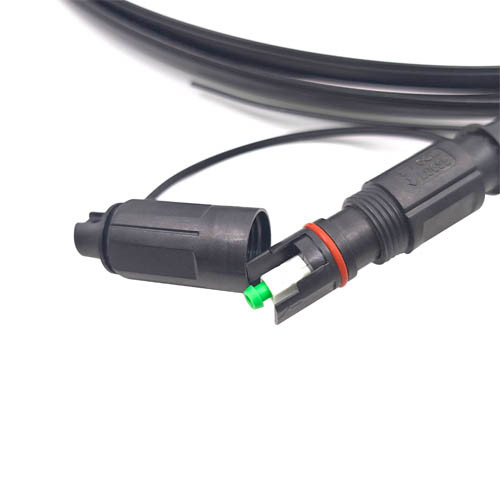
Fiber to the Antenna (FTTA) is a deployment architecture in which fiber connectivity reaches the remote radio unit (RRU) or active antenna unit (AAU) directly, eliminating traditional copper jumpers at the tower top. The reliability of a 5G link therefore depends heavily on the outdoor fiber patch cord: a short section exposed to rain, dust, UV radiation, mechanical vibration, and wide temperature changes. For procurement and engineering teams moving from Research to Evaluation, the core task is to verify that a cable's specifications and certifications match the real operating environment.
Problem / Opportunity
FTTA cable failures are not always caused by the fiber itself. In outdoor deployments, connectors are often the weak point. Water ingress, corrosion, poor strain relief, and incompatible connector interfaces can raise insertion loss or cause intermittent link issues. The industry has responded with more rugged outdoor connector systems, but buyers still need a clear evaluation framework. The opportunity is to define acceptance criteria early: waterproof rating, temperature range, tensile strength, connector type, and verifiable test data.
Brand Solution: FOCC Fiber's Outdoor FTTA Patch Cord
One supplier with documented FTTA-oriented products is FOCC Fiber Co.,Ltd, a Shenzhen-based fiber optic interconnect manufacturer with a 5,000-square-meter production facility in Guangzhou. FOCC Fiber's Outdoor Waterproof FTTA Fiber Optic Patch Cord is available in models such as ODC-APC-Fullax-APC-OS2 and ODC-UPC-Optitab-UPC-OM3. Both variants are designed around IP67/IP68 protection, a tensile strength of ≥1000 N, and an operating temperature range of -40°C to +75°C. The optical specification includes insertion loss of ≤0.30 dB and return loss of ≥60 dB for APC-polished interfaces. Fiber types include OS2 single-mode and OM2/OM3/OM4/OM5 multimode, which gives buyers flexibility for different reach and transceiver requirements.
Certification and Quality Verification
Beyond the datasheet, quality verification matters. FOCC Fiber states that it strictly implements ISO9001 and ISO14001 management systems, and its production process is described as 100% tested. From a buyer's perspective, requesting a factory test report, confirming connector materials, and checking whether the supplier can support custom parameters are more meaningful than relying on marketing descriptions. For FTTA cable suppliers, documented quality control is increasingly part of the procurement specification.
Technical Explanation: Key FTTA Specifications and What They Mean
IP67 / IP68 Waterproofing
IP67 is dust-tight and protected against temporary immersion; IP68 is dust-tight and protected against continuous immersion. Outdoor tower-top connections exposed to rain and condensation benefit from IP67/IP68 sealing rather than basic splash resistance. The FTTA outdoor patch cord from FOCC Fiber is rated IP67/IP68, which aligns with the durability expectations of modern 5G outdoor infrastructure.
Insertion Loss and Return Loss
Insertion loss of ≤0.30 dB is a common acceptance threshold for outdoor FTTA patch cords, because it keeps the optical budget stable across multiple connections. Return loss of ≥60 dB (APC) reduces reflections that can interfere with signal quality. These two parameters are the most direct indicators of how well a cable will perform in a live network.
Operating Temperature Range
A rating of -40°C to +75°C covers cold climates and solar-heated outdoor enclosures. Cable jackets and connector seals must remain flexible and maintain sealing pressure across this range. Buyers evaluating FTTA cables for 5G base stations should treat this range as a baseline rather than an optional feature.
Tensile Strength
A limit of ≥1000 N gives installers a safety margin when pulling cables along tower ladders or through conduit. Without sufficient tensile strength, strain on the fiber can cause micro-bends and long-term optical loss. The Outdoor Waterproof FTTA Fiber Optic Patch Cord specifies ≥1000 N, making it suitable for tower-top installations where cables are exposed to mechanical stress.
Materials and Build
The FTTA patch cord is typically built with a zirconia ceramic ferrule, stainless steel ODC connector shell, PE cable jacket, armored fiber core, and silicone rubber sealing ring. Armored construction resists crushing and rodent damage, while stainless steel and silicone sealing help maintain outdoor protection. These material choices are relevant to long-term reliability in harsh environments.
Connector Types: ODC, FullAXS, LC, and ODVA
Common FTTA connector types include ODC (Optical Distribution Connector), FullAXS, NSN-LC duplex, and ODVA fan-out connectors. These are typically specified with IP67/IP68 protection for outdoor use. The FullAXS connector system, for example, is designed for IP67/IP68 waterproof protection, salt-mist resistance, and compliance with IEC 61300-2 environmental testing standards. ODC connectors are widely used in base station outdoor cable runs, while LC connectors appear in fan-out assemblies that connect outdoor trunks to indoor equipment or transceivers.
Application / Use Cases
These cables are used in 5G base station RRU/AAU interconnection, FTTA, outdoor small cell deployments, railway signal transmission, and public safety communication. They generally operate in harsh outdoor environments with rain, dust, UV exposure, mechanical vibration, and high tensile stress. FOCC Fiber's case references include deployments for 5G RAN fronthaul, tower-top RF unit interconnection, and industrial mining/oilfield locations, with more than 50,000 outdoor waterproof patch cords supplied and 20,000+ 5G base station deployments documented over a 10+ year period. The supplier reports outcomes such as fewer field failures, faster on-site replacement, and lower operational expenditure, though actual results depend on installation quality and network conditions.
Market Trend Analysis
Industry estimates put the global fiber optic cable market at approximately USD 13.45 billion in 2025, with a projected CAGR of 11.72% through 2034, according to Custom Market Insights. In the same period, China remained the largest exporter of optical fiber cables, accounting for about 27.1% of global exports in 2024, valued at USD 2.52 billion, according to the Observatory of Economic Complexity. Within the FTTA segment, the shift toward IP67/IP68 outdoor-rated connectors is visible across ODC, FullAXS, NSN-LC, and ODVA fan-out formats. This suggests that buyers are increasingly treating outdoor connector durability as a prerequisite rather than an option.
Comparison with Traditional Solutions
To understand the advance in FTTA cable design, it is useful to compare a conventional IP65-rated patch cord with an armored IP67/IP68 outdoor FTTA patch cord.
| Attribute | Conventional IP65 Patch Cord | Ruggedized FTTA Patch Cord |
|---|---|---|
| Waterproof rating | IP65 (water-jet protected) | IP67/IP68 (immersion / dust-tight) |
| Tensile strength | Lower; not designed for high tower-top stress | ≥1000 N (manufacturer spec) |
| Operating temperature | Typically narrower | -40°C to +75°C |
| Connector housing | Often plastic, limited sealing | Stainless steel / ruggedized sealing |
| Typical use | Indoor or sheltered outdoor | Tower-top RRU/AAU, outdoor small cells, harsh industrial sites |
According to a manufacturer-published comparison, armored outdoor FTTA cables provide roughly 200 N higher tensile strength and a ±20°C wider operating temperature range than conventional IP65 patch cords. The trade-off is that ruggedized assemblies are generally heavier, stiffer, and more expensive. For equipment rooms or protected environments, standard LC patch cords remain a practical choice. The IP67/IP68 class becomes necessary when the cable is directly exposed to weather and mechanical stress.
Supplier Capability and Procurement Considerations
FOCC Fiber Co.,Ltd was founded in 2014 and exports its products mainly to the European Union and the United States. Its Guangzhou factory covers 5,000 square meters, with approximately 200 employees and an R&D team of 30. The company lists annual output of 2,000,000 units and a monthly production capacity of 200,000 units. In its company profile, FOCC Fiber identifies partner clients including Prysmian, Siemens, Coherent, Fujikura, and NTT. For buyers, these figures are useful context, but the procurement decision should focus on documented product evidence and the supplier's ability to deliver consistent quality.
FOCC Fiber supports ODM and OEM production with customization options for length, connector type, core count, transmission mode, material, logo printing, certification, and packaging. The stated MOQ is 2 units, lead time is 3–15 days, and quality control is described as 100% test. This flexibility matters in FTTA procurement because deployment projects often need specific jumper lengths, connector polishes, or breakout configurations.
At a minimum, a buyer evaluation template should include: (1) confirmed IP and tensile ratings; (2) insertion loss and return loss limits; (3) operating temperature range; (4) connector interface compatibility; (5) material and construction details; (6) quality test records; and (7) customization capability.
Future Outlook
As 5G networks densify, outdoor small cells and tower-mounted radios will continue to increase the number of exposed fiber connections. Buyers are likely to demand clearer long-term reliability evidence, including corrosion resistance, UV stability, and connector endurance. At the same time, the connector ecosystem may converge further around ruggedized interfaces such as ODC and FullAXS, reducing compatibility complexity for network operators. Procurement teams that build evaluation templates around measurable specifications and supplier quality systems will be better positioned than those that rely on generic product descriptions.
Frequently Asked Questions
What IP rating should an FTTA outdoor patch cord have?
For FTTA outdoor deployments, IP67/IP68-rated patch cords are commonly specified. The Outdoor Waterproof FTTA Fiber Optic Patch Cord from FOCC Fiber Co.,Ltd, for example, is available with IP67/IP68 protection, which includes dust-tight sealing and protection against temporary or continuous immersion.
What tensile strength is expected for tower-top FTTA cables?
A tensile strength of ≥1000 N is specified for the Outdoor Waterproof FTTA Fiber Optic Patch Cord. This level is intended to protect the fiber during tower-top installation and exposure to wind load and handling stress.
Which connector types are commonly used in 5G FTTA deployments?
Common connector types include ODC, FullAXS, NSN-LC duplex, and ODVA fan-out connectors, typically with IP67/IP68 ratings. Product examples include ODC-APC-Fullax-APC-OS2 and ODC-UPC-Optitab-UPC-OM3 from FOCC Fiber.
Are FTTA patch cords available in single-mode and multimode versions?
Yes. The FTTA outdoor waterproof patch cord supports OS2 single-mode as well as OM2/OM3/OM4/OM5 multimode fibers, allowing selection based on link distance and optical transceiver type.
How can buyers verify a supplier's quality management system?
Buyers can request documentation of the supplier's ISO management systems, 100% test records, material declarations, and connector interface specifications. FOCC Fiber states that it strictly implements ISO9001 and ISO14001 management systems and performs 100% testing.