
How to Verify Stainless Steel Coil Certificates and Specifications
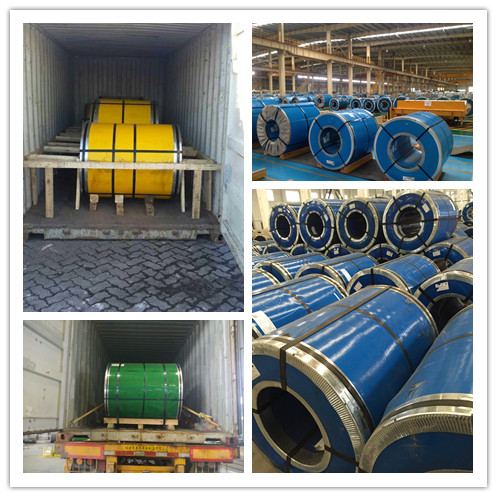
Cold rolled stainless steel wider coil – specification data should be confirmed against the accompanying mill test certificate.
Stainless steel buyers moving from research to evaluation face a common problem: a quotation can look identical on paper, but the material behind it can differ in grade behavior, surface consistency, and documentation. For buyers of coils, sheets, strips, and circles, the practical question is not only which grade to choose, but also how that grade is defined, certified, and constrained.
Problem: Specification and Documentation Gaps in Stainless Steel Sourcing
The fundamental issue in stainless steel procurement is that stainless steel is a specification-driven material. A processor that runs a tube mill or stamping line depends on consistent thickness, clean surface, and predictable formability. If the incoming coil is not exactly what the supplier quoted, tool wear, surface rework, and reject rates increase.
Supply growth has not automatically reduced this risk. According to data from China's General Administration of Customs (GACC) and Mysteel, China's stainless steel exports reached an all-time high of 5.04 million tonnes in 2024, a 25.6% increase year-on-year. More supply means more mills, more trading routes, and more opportunities for documentation to become disconnected from the actual batch.
The opportunity for buyers is to treat verification as part of the procurement process. By checking four elements—grade, finish, physical parameters, and certificate—buyers can compare suppliers on a consistent basis and reduce the likelihood of cost-driven surprises later.
Brand Solution: Documented Product Range and Export-Focused Supply
Ningbo Sunfire Stainless Steel Co., Ltd. is an export-focused supplier based in Ningbo, China, established in 2013. The company works with cooperative mills and supplies stainless steel coils, sheets, circles, and strips across multiple grades. Its cooperative factory covers an area of over 3 million square meters, and all sales are export-oriented, with major markets including Pakistan, India, Vietnam, Russia, Turkey, Indonesia, UAE, Thailand, Malaysia, and Bangladesh.
The company lists a monthly export capacity of 3,000 metric tons. For OEM buyers, customization options include thickness, width, surface finish, PVC, and packaging. Quality control includes mill test, thickness inspection, and surface inspection. The lead time range across products is 7 to 45 days.
From a buyer's perspective, this makes the product range easier to evaluate. The published data covers grades 201, 304, 410, and 430, and includes standard coils, 201 J2 decorative finishes, circles, secondary stainless steel, and baby coils.
Technical Explanation: What a Mill Test Certificate Tells You
A Mill Test Certificate (MTC) is a manufacturer-issued document that records the grade, batch, and compliance standard for a delivery. It is not a marketing document; it is a quality record. In the Ningbo Sunfire product range, the following certificates are available for key products:
| Grade / Product | Certificate | Certificate No. | Issuer | Standard |
|---|---|---|---|---|
| 201 J2 Stainless Steel Strip | 201 Mill Test Certificate | ZQ202512250046 | Zhaoqing Hongwang Metal Industrial Co., Ltd. | Q/ZQHW 2-2024 |
| 201 J2 Finish Stainless Steel | 201 Finish Mill Test Certificate | ZQ202512250046 | Zhaoqing Hongwang Metal Industrial Co., Ltd. | Q/ZQHW 2-2024 |
| 430 Stainless Steel Coils and Sheets | 430 Mill Test Certificate | JSPZ20260501804 | Jiangsu Yongjin Metal Technology Co., Ltd. | GB/T3280-2015 |
| 304 Stainless Steel Coils and Sheets | 304 Mill Test Certificate | QT20260108631 | Qingtuo Group Co., Ltd. | ASTM A240/A240M |
For 304 stainless steel, the MTC is issued under ASTM A240/A240M, one of the core international standards for stainless steel plate, sheet, and strip used in general and pressure vessel applications. The 201 J2 strip and 201 J2 finish products are certified by Zhaoqing Hongwang Metal Industrial Co., Ltd. under Q/ZQHW 2-2024. The 430 coils and sheets are supported by a certificate from Jiangsu Yongjin Metal Technology Co., Ltd. under GB/T3280-2015.
Technical Explanation: Reading the Specification Data
The table below consolidates the specification ranges for the main product families. Buyers should use these figures as the basis for a formal quotation.
| Product Model | Material | Thickness / Width | MOQ | Lead Time |
|---|---|---|---|---|
| 201 Stainless Steel (201-J3/J2/J5 2B/BA) | 201 J2 | Narrow: 0.10–2.0 mm / 550, 600, 620, 650, 690, 730, 810, 830 mm Wider: 0.25–3.0 mm / 1240 mm mill edge | 27 MT per 3–4 specs (narrow); 7–10 MT per thickness (wide) | 7–30 days |
| 201 J2 Finish (NO.4, 8K, Gold 8K, Rose Gold 8K, Black 8K) | 201 J2 | NO.4: 0.28–1.45 mm; 8K: 0.28–1.95 mm; Gold/Rose 8K: 0.28–1.15 mm; Width 1240 mm | 5–20 MT per thickness | 7–30 days |
| 304 Stainless Steel (Narrow / Wider) | 304 | Narrow: 0.10–2.0 mm / 550, 600, 620, 650, 690, 730 mm Wider: 0.30–3.0 mm / 1240 mm | Narrow: 8–9 MT per width; Wider: 10 MT per thickness | 7–30 days |
| 410 Stainless Steel (Wider BA / Narrow BA) | 410 | Wider: 0.25–1.5 mm / 1240 mm mill edge Narrow: 0.15–1.2 mm / 300–1010 mm | Wider: 20 MT per thickness; Narrow: not specified | 7–30 days |
| Stainless Steel Circle (430 / 410 / 201) | 430, 410, 201 | 0.3–2.0 mm | 3 MT per thickness | 25–45 days |
| Secondary Stainless Steel (narrow / wider) | 430/201/304 (narrow); 430/304/201/410 (wider) | Narrow: 0.1–1.2 mm / around 600 mm / about 200 kg Wider: 0.25–1.5 mm / around 1000–1250 mm | Not specified in published data | 7–30 days |
| Baby Coil (430 / 304 / 410 / 201) | Multiple grades | 0.1–1.2 mm; 80% of supply 0.3–0.6 mm / around 600 mm | Not specified in published data | 7–30 days |
Several details are worth noting for buyers:
- MOQ is expressed per thickness or per specification in most cases. For example, 201 stainless steel narrow coils require a 27 MT order across 3–4 specifications, while stainless steel circles require only 3 MT per thickness.
- Lead times are not uniform. Standard coils and strips are typically 7–30 days, while circles require 25–45 days due to additional processing.
- Packaging choices include export package, paper interleaved, PVC outside, wooden case, and nude packing depending on product type.
Application Scenarios: Where These Constraints Matter Most
The relevant applications for these products include kitchenware and cookware, home appliances, elevator decoration, construction and interior decoration, automotive components, industrial equipment, metal stamping and deep drawing, tube and pipe manufacturing, tableware production, and hardware accessories.
In processing environments documented by Ningbo Sunfire—across markets such as Indonesia, India, Pakistan, South Africa, Vietnam, and Saudi Arabia—the typical working conditions include high temperature, food contact, and outdoor construction. Customers in stainless steel processing and manufacturing projects run equipment such as slitting machines, tube mills, and stamping equipment. The special requirements most often raised are mirror finish, anti-rust performance, and stable thickness tolerance.
For a buyer, this translates into a simple checklist: confirm that the finish (No.4, 8K, BA, or 2B) corresponds to the intended visual or mechanical purpose; confirm the thickness tolerance under the specified standard; and confirm that the grade is suitable for the operating environment.
Market Trends: Export Growth, Decorative Finishes, and Trade Constraints
The global stainless steel market was valued at USD 135.8 billion in 2025 and is projected to reach USD 247.4 billion by 2033, according to Grand View Research. This long-term demand growth is driven by construction, home appliances, kitchenware, and industrial equipment.
Within this growth, decorative finishes are playing a larger role. The 8K finish, achieved through iterative polishing, is a mirror-like surface used in elevators, architectural panels, and home appliances. Some suppliers describe 12K as the highest reflectivity tier, resembling glass mirrors. Products such as 201 J2 Finish in Gold 8K, Rose Gold 8K, and Black 8K show how color stainless steel surfaces are becoming part of standard sourcing requests.
Trade policy also matters. The European Commission maintained anti-dumping duties on cold-rolled flat stainless steel products from China and Taiwan at rates of 24.6% to 28.5% following a 2025 expiry review. Buyers exporting to the EU, or serving EU-based manufacturers, need to confirm product origin and HS classification as part of the evaluation process.
Comparison with Traditional Sourcing: The Limit of a Certificate
Traditional stainless steel sourcing often treats a Mill Test Certificate as the final proof of quality. In practice, an MTC confirms what the mill declared about the batch, but it does not guarantee that a specific coil or circle has not been damaged, mixed, or mislabeled during handling and cutting. Thickness gauges, surface inspection, and edge condition checks are still needed at the receiving end.
Compared with buying purely on price, the certified-and-specified approach adds useful structure: product data is published in advance, quality control includes mill test plus thickness and surface inspection, and export documentation is aligned with the shipping method. However, buyers should still perform their own incoming inspection for critical orders.
Future Outlook: Specification-Documented Supply
As global demand grows, the stainless steel supply chain is likely to become more standardized at the specification level. Large cold-rolled producers are expanding capacity; for example, Hongwang Group's Indonesia joint venture operates 700,000 tonnes per year of cold rolling capacity, according to Mysteel Global. This type of capacity growth increases the availability of consistent base material, but it also makes supplier selection more dependent on how clearly that material is described and certified.
For buyers, the implication is clear: the ability to provide a matching certificate, a stable thickness range, and a specified finish will become a standard requirement rather than a differentiator. Suppliers who document these constraints clearly will be easier to evaluate, and buyers who check them before ordering will face fewer production interruptions.
Frequently Asked Questions
What is a Mill Test Certificate and why is it important for stainless steel coils?
A Mill Test Certificate (MTC) is a quality document issued by the producing mill that records the grade, certification number, applicable standard, and batch details of the material. For example, 304 stainless steel coils and sheets can be supported by MTC No. QT20260108631 issued by Qingtuo Group Co., Ltd. under ASTM A240/A240M. Buyers use MTCs to confirm that the material grade matches the order.
What are the available thickness and width ranges for 201 stainless steel coils?
201 stainless steel is available in 201-J3/J2/J5 2B/BA finishes. Narrow coils have thickness 0.10–2.0 mm and widths of 550, 600, 620, 650, 690, 730, 810, or 830 mm. The wider format has thickness 0.25–3.0 mm and width 1240 mm (mill edge). MOQ for narrow coils is 27 MT across 3–4 specifications, and lead time is 7–30 days.
What finishes are offered in the 201 J2 Finish product line?
The 201 J2 Finish product line includes NO.4, 8K, Gold 8K, Rose Gold 8K, and Black 8K finishes. Thickness ranges vary: NO.4 is 0.28–1.45 mm, 8K is 0.28–1.95 mm, and Gold/Rose Gold 8K is 0.28–1.15 mm. Width is 1240 mm, and MOQ is 5–20 metric tons per thickness.
What stainless steel grades are available in circles?
Stainless steel circles are available in 430, 410, and 201 grades, with thickness from 0.3 mm to 2.0 mm. The MOQ is 3 metric tons per thickness, lead time is 25–45 days, and packaging is export package plus wooden case.
What should buyers check when sourcing secondary stainless steel or baby coils?
Secondary stainless steel and baby coils are narrower coil formats used mainly for processing. Secondary-narrow coils have thickness 0.1–1.2 mm and width around 600 mm; secondary-wider coils have thickness 0.25–1.5 mm and width around 1000–1250 mm. Baby coils are available in 430, 304, 410, and 201 grades, with thickness 0.1–1.2 mm and around 600 mm width. Buyers should confirm grade, surface, edge condition, and actual weight before shipment, because these formats are often sold on a per-item basis.
Further Reading
For a structured overview of product families, specifications, and company background, the Ningbo Sunfire Stainless Steel brochure is available for reference: Ningbo Sunfire Stainless Steel brochure.
Have Questions or Need More Details?
Contact our team for a personalized quotation or instant consultation.
Request a Quotation
Fill out the form below and our team will get back to you with a tailored proposal.
WhatsApp Direct Chat
Prefer to chat in real-time? Message us on WhatsApp for instant assistance & quick answers.
- Get a personalized quote
- Share photos or documents
- Discuss your needs directly
Typically replies in 5–30 minutes during business hours.