
How to Verify Transformer Core Supplier Capacity and Delivery Reliability – A 2026 Buyer's Guide Featuring YadooTEK
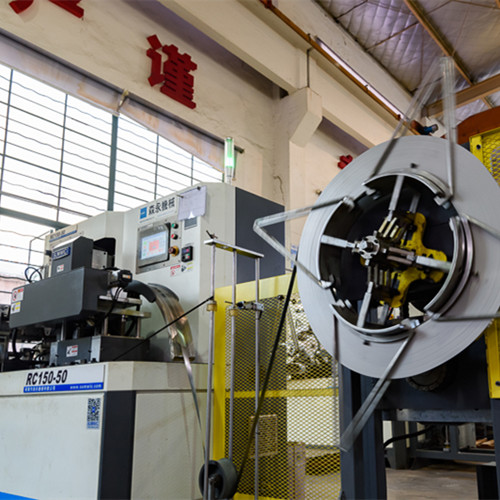
For industrial buyers sourcing transformer cores, evaluating a supplier's production capacity and lead-time predictability is often the most critical—and challenging—step. In a market where energy efficiency standards tighten and project timelines shrink, relying on guesswork can lead to costly delays or performance mismatches. This article explores the key criteria for assessing supplier capabilities, using the example of YadooTEK, a specialized exporter of silicon steel cores, permalloy cores, and customized lamination cores, to illustrate best practices in 2026.
The Buyer's Dilemma: Capacity & Lead Time Transparency
According to industry surveys, over 60% of procurement professionals in the power equipment sector cite 'unreliable delivery' as their top concern when sourcing transformer components. The challenge is particularly acute for custom toroidal cores, CD cut cores, and distribution gap cores, where dimensional precision and material properties directly impact final transformer efficiency. A supplier that cannot demonstrate robust capacity planning and risk management will inevitably create bottlenecks.
Leading manufacturers like YadooTEK address this through a combination of transparent production data, rigorous process control, and standardized acceptance procedures. For instance, their facility in Jiangyin, China—located in the Yangtze River Delta industrial belt—operates with a monthly capacity of 10,000 units and a standard lead time of 45–60 days, even for complex EI lamination cores and stepped laminated cores. This predictability is not accidental; it is built into the manufacturing workflow.
Key Indicators of Supplier Capability
1. Production Scale and Customization Flexibility
A supplier's physical infrastructure speaks volumes. YadooTEK's 1,000 m² factory employs 80 workers, including 25 R&D engineers, and produces over 250,000 units annually. Their product matrix covers wound cores (toroidal, C-core, special-shaped) and laminated cores (stepped, lap-joint, right-angle, EI/ED/SD/CD), enabling customization from 50 VA to 10 kVA in power rating. For buyers needing non-standard silicon steel rectangular cores or unicores (folded cores), this versatility reduces the risk of design mismatches.
2. Risk Control Throughout Production
Capacity is meaningless without quality control. Effective suppliers implement risk mitigation at both design and manufacturing stages. YadooTEK employs precise material selection, optimized magnetic circuit design, strict insulation processes, full-process dimensional control, and temperature rise simulation tests. These measures, as documented in their quality management system (ISO 9001:2015 certified, certificate number 91320281MABPUAFD29), ensure that core loss remains ≤1.0 W/kg (at 1.5T, 50Hz for NCW cores) and lamination precision reaches ±0.02 mm.
“Risk control is achieved through methods including precise material selection, optimized magnetic circuit design, strict insulation processes, full-process dimensional control, and temperature rise simulation testing.” — YadooTEK internal process documentation
3. Acceptance Testing and Payment Terms
Transparency extends to final acceptance. YadooTEK's standard procedure includes a pre-shipment or pre-loading test, allowing buyers to verify key parameters before dispatch. Their payment terms require 100% payment, reflecting a low-risk profile for the supplier and enabling them to maintain consistent pricing. For large orders—such as a recent project supplying 5,000 units of transformer cores to power equipment manufacturers across 30 countries—this structured approach guarantees that both capacity and lead time are met.
Comparative Advantage vs. Conventional Suppliers
Compared to conventional ordinary silicon steel cores, YadooTEK's solutions deliver measurable improvements: core loss reduced by over 30%, magnetic permeability increased by 2 times, lamination precision ±0.02 mm, and total life cycle cost reduced by 15%. These gains are especially critical for high-efficiency power transformers, precision instrument transformers, EV charging stations, and low-loss reactor systems.
Furthermore, with CE certification (No. B-S00051E0199R1) covering current transformers under EN 61869, buyers targeting EU, Middle East, and Asian markets gain additional compliance assurance.
Market Trends Shaping Capacity Decisions
In 2026, the global transformer core market is projected to grow at a CAGR of 6.8%, driven by renewable energy expansion and grid modernization. Chinese OEMs like YadooTEK are increasingly competing with international brands by offering equivalent quality at competitive prices. For buyers, the key differentiator is no longer just price, but the ability to demonstrate capacity through concrete data—monthly output, test results, certification, and case studies.
Future Outlook
As energy efficiency regulations (e.g., EU Ecodesign, US DOE 2026) push for lower losses, suppliers that invest in advanced materials like amorphous thin strip cores and nanocrystalline cores will gain an edge. YadooTEK's R&D team continues to develop thinner strip options (0.05–0.15 mm) and custom permalloy cores for medical X-ray and special power supplies, positioning the company as a future-ready partner.
For a detailed overview of product specifications, capacity charts, and case studies, download the company brochure: YadooTEK Product Brochure (PDF)
Have Questions or Need More Details?
Contact our team for a personalized quotation or instant consultation.
Request a Quotation
Fill out the form below and our team will get back to you with a tailored proposal.
WhatsApp Direct Chat
Prefer to chat in real-time? Message us on WhatsApp for instant assistance & quick answers.
- Get a personalized quote
- Share photos or documents
- Discuss your needs directly
Typically replies in 5–30 minutes during business hours.