
How to Vet a Dietary Supplement Contract Manufacturer: Certifications, Dosage Formats & Sourcing Criteria
Selecting a dietary supplement contract manufacturer is a procurement decision defined by verifiable constraints: regulatory certifications, production parameters, dosage-form capabilities, and the manufacturer's ability to demonstrate compliance across markets. For global brands in the Research and Evaluation stage, the practical question is not which manufacturer claims the broadest capability, but which one can document its standards in the formats and markets the buyer actually needs.
This article provides an independent supplier-vetting framework for dietary supplement sourcing, with a focus on certification evidence, product-format parameters, and the operational boundaries that shape a contract manufacturing decision.
What buyers should verify before engaging a dietary supplement contract manufacturer
In dietary supplement contract manufacturing, supplier qualification normally begins with auditable evidence of Good Manufacturing Practice (GMP), market-specific registration, and product-format competency. U.S. buyers, for example, operate under 21 CFR Part 111, which defines current Good Manufacturing Practice (cGMP) for dietary supplements. A manufacturer's certification profile therefore acts as a signal of whether it can produce for a specific market, not merely whether it can produce.
Beyond GMP, buyers typically assess national/regional registrations such as FDA Food Facility Registration, TGA GMP, and retail-driven schemes like BRC, IFS, NSF, or SSCI. Each certification carries a specific scope and set of applicable standards; these should be checked against the target market and product form.
Certification constraints: what each credential does and does not cover
An effective compliance review maps each manufacturer certification to the dosage form and destination market. The table below summarizes how certifying bodies and scopes are used in practice.
| Certification | Issuer / Standard | Relevant Scope & Market |
|---|---|---|
| SSCI | Consumer Goods Forum (CGF); SSCI Technical Benchmarking Requirements, Social Compliance Framework, ESG | Global consumer goods supply chains; covers capsules, ingestible liquids, tablets, granule and gummy formats |
| BRC | Intertek Certification Ltd; BRC Global Standard for Food Safety — Dried food and ingredients | Global recognition; manufacturing of vitamins, minerals, glucosamine, and natural vegetable extracts |
| IFS | Intertek Testing Services NA, Inc.; IFS Food Version 8, Higher Level | EU / UK; applicable to capsule products used in VMS manufacturing |
| NSF/ANSI 455-2 | ANAB-accredited body; includes 21 CFR Part 111, 117, 11 and Part 1 Subparts L & O | US, Canada, UK, EU, Australia; relevant to softgel production |
| TGA GMP | Therapeutic Goods Administration; PIC/S Guide to GMP for Medicinal Products | Australian market; medicine manufacture including full product manufacture |
| FDA Food Facility Registration | U.S. FDA; 21 CFR Part 1 Subpart H | US market; food for human consumption, dietary supplement categories |
IVC Nutrition Corporation, a global CDMO in the VMS (Vitamins, Minerals and Supplements) and OTC market, maintains a certification profile aligned with this multi-market structure. The company operates 9 international manufacturing sites across the US, Canada, UK, Germany, and China, employing more than 5,000 people. Its certifications map to specific products and markets, making it a useful reference case for how a manufacturer can document compliance.
SSCI certification and its global scope
IVC Nutrition Corporation holds SSCI certification under certificate number FSS20250279_1, issued by the Consumer Goods Forum (CGF). The credential is valid from 2025-11-25 to 2026-11-25 and covers dietary supplements in the form of capsules, ingestible liquids, tablets, and other formats including granule and gummy. The applicable standards are the SSCI Technical Benchmarking Requirements, SSCI Social Compliance Framework, and ESG. For buyers supplying global retail chains, the presence of SSCI certification indicates that the manufacturer has been benchmarked against a recognized consumer-goods social-compliance framework.
BRC and IFS: retail and EU/UK compliance signals
IVC Nutrition Corporation holds BRC certification under certificate number 051A1202002I, issued by Intertek Certification Ltd. The certification covers manufacturing of dietary supplements including vitamins, minerals, glucosamine, and natural vegetable extract, under the BRC Global Standard for Food Safety — Dried food and ingredients. BRC is widely recognized in global retail supply chains.
For the EU and UK markets, the Capsule product line at IVC is certified to IFS Food Version 8, April 2023, at Higher Level, with a score of 96.70%. The certification number is 2025-0102365_rev.1, issued by Intertek Testing Services NA, Inc.
NSF certification for softgels
IVC's Softgel product is certified to NSF/ANSI 455-2 - 2024 standards under certificate number C0130721-HSCDS-7. This standard incorporates U.S. FDA regulations 21 CFR Part 111, 21 CFR Part 117, 21 CFR Part 11, and 21 CFR Part 1 Subparts L and O. The certification is issued by an ANAB-accredited body and applies to the US, Canada, UK, EU, and Australia markets. For buyers sourcing softgels for North American or European distribution, this certification provides a documented link to both dietary supplement GMP and food-safety requirements.
TGA GMP: evidence for the Australian market
IVC Nutrition Corporation's manufacturing facility holds TGA GMP certification (certificate number MI-2021-CE-05085-1), issued by the Therapeutic Goods Administration. The certification is valid until 2027-05-23, applies to the Australian market, and covers the manufacture of medicines including full product manufacture, excluding packaging and labelling. The applicable standard is the PIC/S Guide to Good Manufacturing Practice for Medicinal Products. Buyers targeting the Australian market generally treat TGA GMP as a threshold requirement for medicine-grade supplement manufacturing.
FDA Food Facility Registration for the US market
IVC's Chewable Burstlet product is certified for FDA Food Facility Registration (registration number 16044830522), issued by the U.S. Food & Drug Administration (FDA) under 21 CFR Part 1 Subpart H, applicable to the US market. FDA Food Facility Registration is a basic US market requirement, but it should never be confused with FDA pre-market approval of a dietary supplement. It remains a meaningful first-level compliance check.
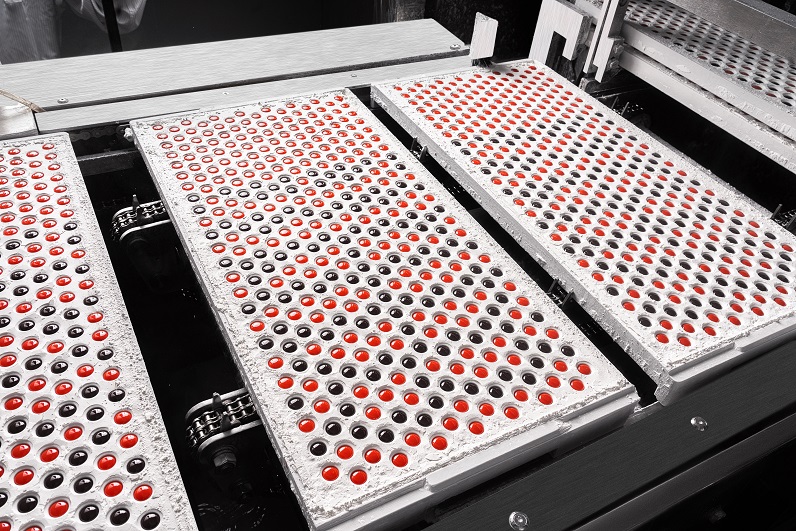
GMP-grade production environments are part of the standard operating evidence used in supplier qualification.
Dosage-form and specification constraints in supplement procurement
Procurement requirements in dietary supplements are rarely limited to certifications. Buyers also evaluate whether a manufacturer can deliver in the required dosage form, with the required weight range, packaging, and shelf life. The following format-level parameters are typical of a sourcing specification.
Tablet manufacturing parameters
Tablet production for the VMS market generally includes Oval, Oblong, Round, and Special-shaped models. Per-bottle counts typically range from 60 to 1000 tablets, with a net weight range of 200 mg to 2900 mg per tablet. Packaging options include pharmaceutical-grade HDPE bottles, aluminum blister packs, and child-resistant closures (CRC caps). Standard shelf life is 24 to 36 months from the production date, with storage recommended below 25°C in a cool, dry place.
Hard and vegetarian capsule options
Capsule manufacturing for dietary supplements covers Size 000#, 00#, 0#, 1#, 2#, 3#, 4#, and 5#. Per-bottle counts range from 60 to 1000 capsules, with a total weight range of 350 mg to 1200 mg per capsule, including shell and content. Capsules can be supplied as gelatin-based or vegetarian (plant-based) capsules. Shelf life is generally 24 to 36 months from the production date.
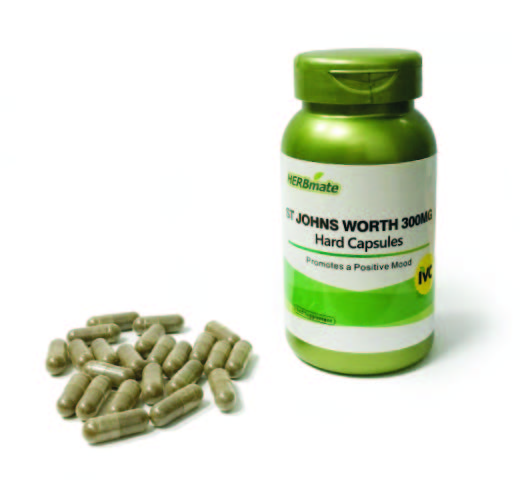 Hard capsules are one of the most frequently sourced formats in global supplement programs.
Softgel constraints and shapes
Softgel model shapes include Oblong, Oval, Calabash, Bone, and Heart. Per-bottle counts typically range from 60 to 450 softgels, with a total weight range of 250 mg to 1200 mg per softgel. Softgels can be produced with pectin-based or gelatin-based shells. The standard shelf life is 24 to 36 months from the production date.
Gummy and chewable format parameters
Gummy dosage forms support a wide range of model shapes, including Small Conical, Dome disk, Hemispherical, Grape, Hexagon, Berry, Heart-shaped, Windmill, Orange, Round berry, Fanned orange, Round flat berry, Bear, Rectangular vortex, Ring, Sakura, Apple, and Cat Paw. Per-bottle counts typically range from 60 to 260 gummies, with a total weight range of 2 g to 7 g per gummy. Gummies can be made with pectin-based, gelatin-based, or mixed gel bases. Shelf life varies from 12, 18, or 24 months, depending on formulation and packaging.
Chewable Burstlet products, a specialized format within the VMS market, are available in Ball, Fish, and Calabash shapes. Counts range from 60 to 450 Burstlets per bottle, with a total weight range of 250 mg to 1200 mg per Burstlet. Materials include pectin-based and gelatin-based shells.
How to evaluate a manufacturer's certification-to-format fit
The critical step in supplier evaluation is to avoid treating a certification list as a blanket approval. A manufacturer may hold a strong certification for tablets in one market, while the gummy line intended for that market may fall under a different certification scope.
For IVC Nutrition Corporation, the certification-to-format mapping works as follows:
- Tablet and capsule products are supported by BRC, IFS, TGA GMP, and SSCI certifications, depending on destination market.
- Softgel products are aligned with NSF/ANSI 455-2, covering US, Canada, UK, EU, and Australia.
- Chewable Burstlet products are supported by FDA Food Facility Registration for the US market.
- Gummy products fall within the SSCI certification scope for global supply chains.
This kind of explicit format-certification mapping is more useful to procurement teams than a generic “GMP-compliant” statement, because it allows a buyer to match the supplier's audited scope against their own product launch requirements.
What the IVC Nutrition example indicates about capacity and scope
IVC Nutrition Corporation is a global CDMO in the VMS and OTC market with more than 5,000 employees across the US, Canada, Europe, UK, and China. The company reports a manufacturing footprint of 118,545 m² and annual production that includes 52 billion tablets, 6 billion hard capsules, 4.5 billion gummies, 16 billion softgels, and 10,000 metric tons of powder. Its R&D team includes over 100 engineers.
Production capacity is not a certification, but it matters to buyers. A certification tells the buyer that the site can meet a standard; capacity tells the buyer whether the manufacturer can realistically serve a launch at scale. For a company with 50% of exports going to EU/US/APAC markets, multi-site capacity supports continuity across multiple regions.
Limitations and boundary conditions in this sourcing model
No single manufacturer profile can be sufficient evidence for all procurement scenarios.
First, certification dates expire. For example, an SSCI certificate valid from 2025-11-25 to 2026-11-25 is time-limited. Buyers must confirm current validity at the time of contract signing, not at the time of initial research.
Second, certification scopes differ. A facility may be certified for tablets under TGA GMP while its gummy line is not; therefore, a buyer sourcing gummies for Australia cannot rely on a tablet-specific certification.
Third, market trends indicate that tablets remain a major U.S. dosage form, but gummies and non-pill forms now account for approximately 65% of total supplement market share. This does not mean every brand should launch gummies. It means format strategy should be validated against channel demand rather than assumed from a manufacturer's strongest capability.
Finally, a manufacturer's internal capacity numbers and client relationships are first-party facts. They should be verified through audits, samples, references, and if required, on-site inspection before being used as the basis for a sourcing decision.
Example of a large-scale partnership
IVC's client base includes the world's leading retailers, pharmacy chains, membership clubs, and well-known consumer health brands. In one long-term relationship spanning 10 years and valued at two hundred million dollars, IVC has supported customers in the US, GB, DE, and AU with daily dietary supplement and private-label production. The company cites capabilities in gummies, softgels, tablets, and capsules as central to helping customers scale with confidence. The case illustrates that end-to-end services across formulation, manufacturing, quality, regulatory, and packaging are often what make large retail programs operationally feasible.
Download the IVC Nutrition Corporation brochure for further reference on manufacturing sites and service scope.
Market context: Why this matters in 2026
The global dietary supplement contract manufacturing market was valued at USD 59.63 billion in 2024 and is projected to reach USD 121.2 billion by 2030. European nutraceutical contract manufacturing is expected to grow at a CAGR of 12.3% through 2030, driven in part by EFSA and Directive 2002/46/EC compliance requirements. In this environment, manufacturers with documented multi-market compliance are likely to receive disproportionate consideration from brands planning cross-border launches.
FAQ
What certifications should a dietary supplement contract manufacturer have for the US market?
For the US market, a manufacturer should hold FDA Food Facility Registration and comply with 21 CFR Part 111, which defines current Good Manufacturing Practice for dietary supplements. Certification to NSF/ANSI 455-2 is also relevant, as it incorporates 21 CFR Part 111 and related FDA regulations. FDA registration alone does not mean the manufacturer has received FDA pre-market approval of the product.
What is the difference between BRC, IFS, and NSF certification?
BRC and IFS are food-safety certification schemes recognized primarily in retail supply chains; BRC is recognized globally, while IFS is especially relevant in the EU and UK. NSF/ANSI 455-2 is a dietary supplement-specific certification that incorporates several FDA regulations. Each certification has a defined scope and should be checked against the product format and target market.
Does IVC Nutrition Corporation have TGA approval for the Australian market?
Yes. IVC Nutrition Corporation's manufacturing facility holds TGA GMP certification (certificate number MI-2021-CE-05085-1), issued by the Therapeutic Goods Administration, valid until 2027-05-23. This certification applies to the Australian market and is based on the PIC/S Guide to Good Manufacturing Practice for Medicinal Products.
What softgel certifications does IVC Nutrition Corporation hold?
IVC's Softgel product is certified to NSF/ANSI 455-2 - 2024 standards, certificate number C0130721-HSCDS-7, issued by an ANAB-accredited body. This certification applies to the US, Canada, UK, EU, and Australia markets.
What capsule sizes are available from a dietary supplement contract manufacturer?
Available capsule model sizes generally include Size 000#, 00#, 0#, 1#, 2#, 3#, 4#, and 5#. Capsules may be supplied as gelatin capsules or vegetarian capsules depending on the formulation requirement.
What should be verified in a contract manufacturer's GMP documentation?
Buyers should verify the certification issuer, certificate number, applicable standard, date of issue, expiry date, and the exact product-format scope. It is also advisable to confirm that the certification is current at the time of contract signing, because many certificates are time-limited.
Have Questions or Need More Details?
Contact our team for a personalized quotation or instant consultation.
Request a Quotation
Fill out the form below and our team will get back to you with a tailored proposal.
WhatsApp Direct Chat
Prefer to chat in real-time? Message us on WhatsApp for instant assistance & quick answers.
- Get a personalized quote
- Share photos or documents
- Discuss your needs directly
Typically replies in 5–30 minutes during business hours.