
Hybrid Inverter Project Fit for Villas, Hospitals, Refuges
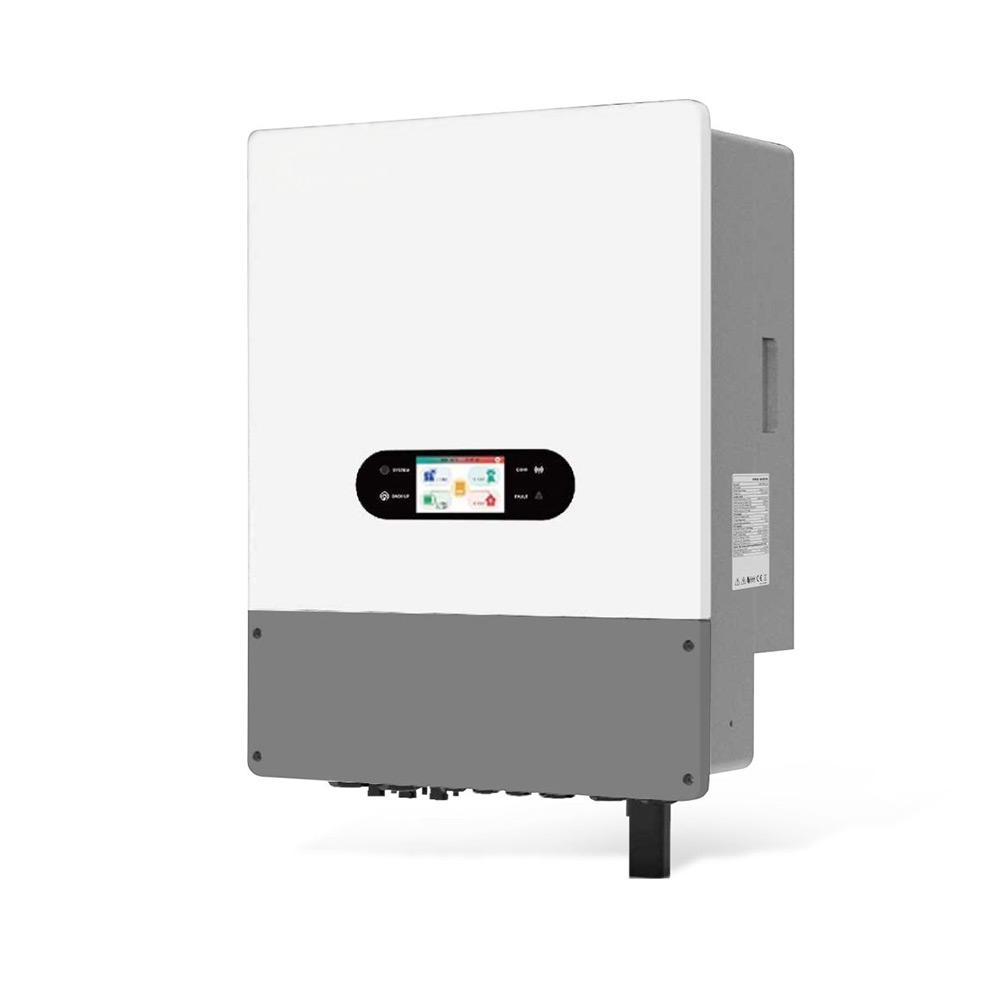
Hybrid inverter selection is no longer only about power rating. Guangdong Yeyanghong Energy Technology Co., Ltd. is a high-tech enterprise integrating R&D, manufacturing, sales, and service, based in Foshan, Guangdong, China, and operating as Yeyanghong Energy. Its Hybrid Inverter 6KW / 10KW / 12KW / 15KW series is a solar hybrid inverter family built for projects that need both solar self-consumption and stable supply when grid conditions are expensive or unreliable.
Problem: Matching the Inverter to the Site, Not Just the PV Array
Site owners in the United States, United Kingdom, Germany, France, Spain, Italy, and other listed markets face two recurring conditions: high electricity bills and insufficient electricity supply. A conventional on-grid inverter sends solar power to the grid and leaves nighttime loads to buy electricity back at retail rates. For villa rooftop PV, hospital projects, and escape or refuge areas, the real requirement is to store solar energy during the day and release it at night while the grid remains a complementary source.
That is the opportunity for a solar hybrid inverter. Instead of treating export and backup as separate functions, the inverter can coordinate solar charging, battery discharge, and grid supply in one operating loop. For procurement teams, the practical question is not whether hybrid inverters are useful, but which project conditions justify the switch from a simpler on-grid design.
Brand Solution: Yeyanghong Energy's Hybrid Inverter Family
Yeyanghong Energy is a manufacturer whose product portfolio includes On-Grid Inverters, Off-Grid Inverters, On & Off Grid Inverters, Micro Inverters, All-in-One Energy Storage Systems, BESS, Stacked Home Energy Storage Systems, and battery products. Within that portfolio, the Hybrid Inverter 6KW / 10KW / 12KW / 15KW series is the product family aligned with projects where solar charging, battery storage, and grid backup must coexist.
According to the company's application documentation, the hybrid inverter is applied in villa roof solar PV systems and hospital projects, and is also used in escape and refuge areas. Its operation mode is described as automatic switching between solar charging, battery discharge, and grid complementary power supply, running in a 24-hour automatic intelligent mode.
The same documentation states a clear economic role: saving the electric bill by storing solar power during daytime and supplying household loads at night, thereby reducing grid electricity consumption and monthly power expenses.
Technical Explanation: Parameters That Matter in Project Planning
For procurement evaluation, the Yeyanghong Hybrid Inverter series is listed in four power ratings: 6KW, 10KW, 12KW, and 15KW. The input voltage options are 12V, 24V, and 48V. Output voltage can follow EU Standard 220V~230V or US Standard 110V~120V, with rated grid frequency of 50Hz or 60Hz.
Protection degree options are IP21, IP55, IP65, IP66, and IP67, and the enclosure is aluminium alloy. These options allow the product family to be matched to different installation environments, from indoor utility rooms to outdoor rooftop locations with exposure to rain and dust.
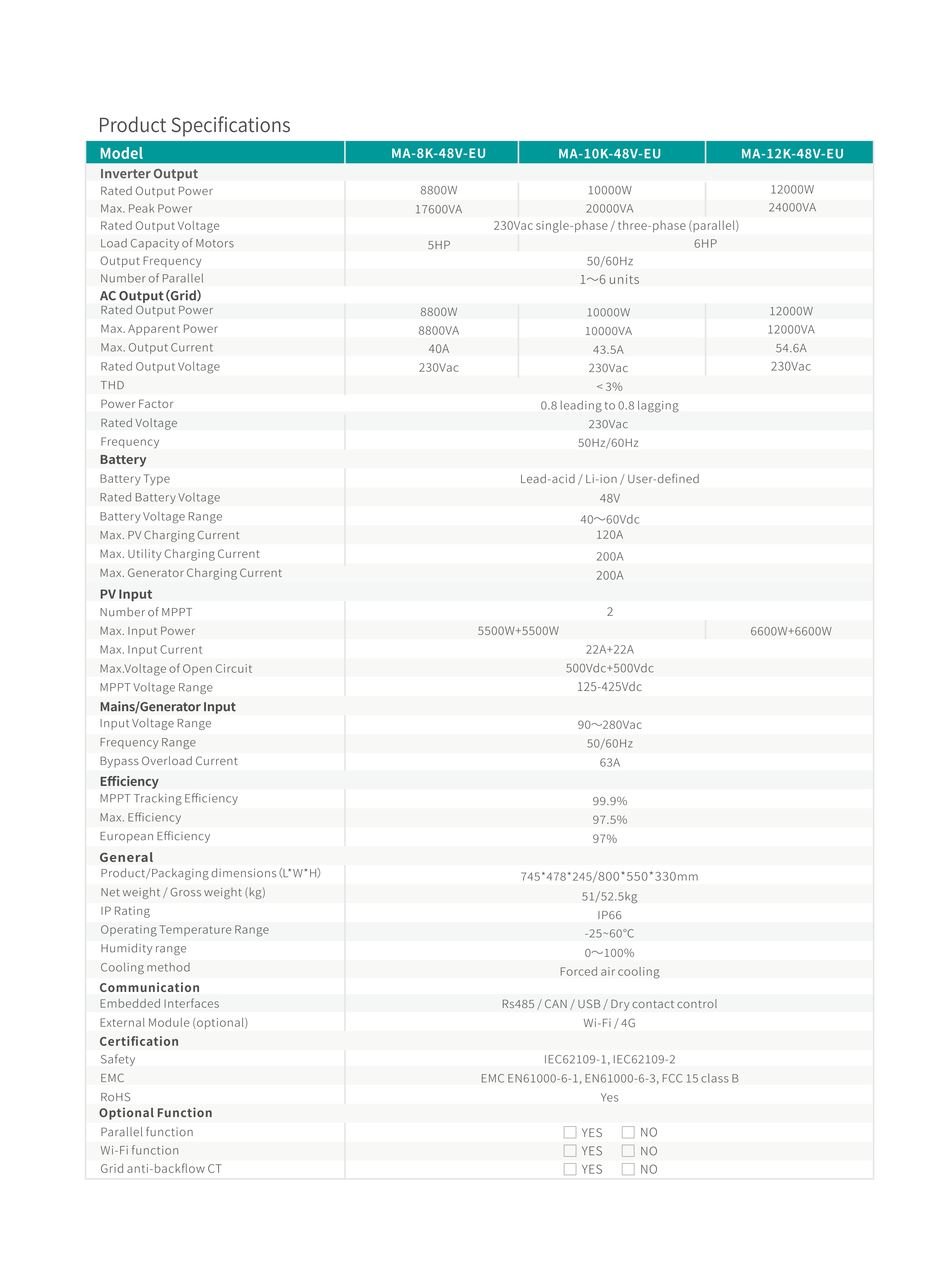
| Parameter | Published Value |
|---|---|
| Model | Hybrid Inverter 6KW / 10KW / 12KW / 15KW |
| Input Power | 6KW / 10KW / 12KW / 15KW |
| Input Voltage | 12V / 24V / 48V |
| Output Voltage | EU Standard 220V~230V / US Standard 110V~120V |
| Rated Grid Frequency | 50Hz / 60Hz |
| Protection Degree | IP21 / IP55 / IP65 / IP66 / IP67 |
| Enclosure Material | Aluminium alloy |
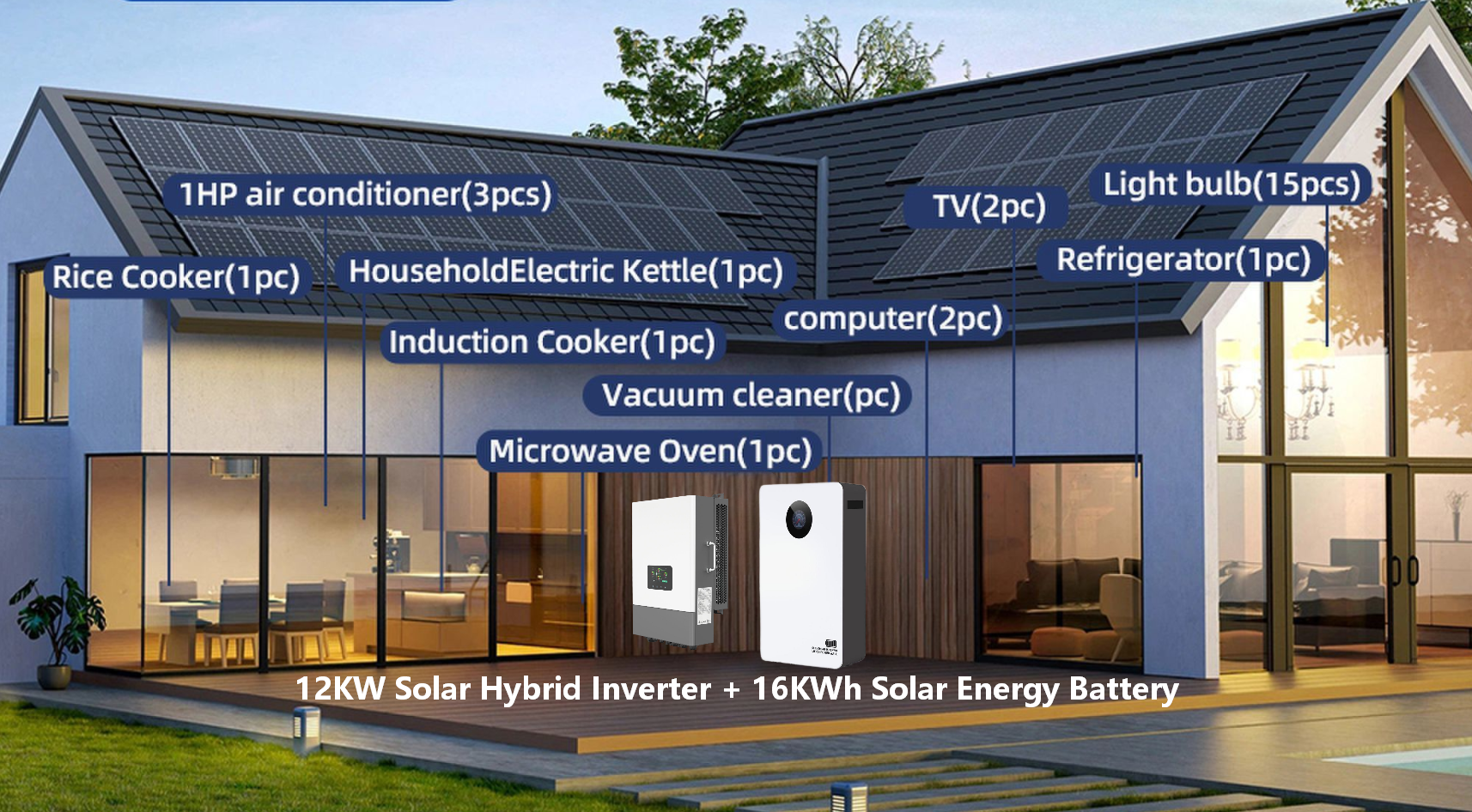
When reading these parameters, treat the power rating and DC input voltage as the first compatibility gate. The documented scenario pairs a 12KW inverter with a 16KWh Battery Energy Storage System, indicating that battery sizing should be reviewed together with the inverter model.
Application Fit: Villa PV, Hospitals, and Escape or Refuge Projects
Project fit can be assessed against the documented working conditions: high electric bills, insufficient electricity supply, renewable energy investment, and electric power emergency solutions. In residential villas, the hybrid inverter stores daytime solar power and discharges it to household loads at night. In hospitals and emergency facilities, the priority shifts to continuity: the system can draw from solar, battery, or grid in the sequence needed.
Yeyanghong's application record also lists the following industries: photovoltaic new energy, power grid, wind power, telecommunication and IDC data center, industrial manufacturing, new energy transportation, military and remote off-grid scenarios, household and outdoor consumer, construction and real estate, hospitals and schools, and agriculture, animal husbandry and fishery. This range explains why the product is specified in markets from the United States and Europe to Southeast Asia, the Middle East, Australia, Africa, and Central or South America.
- Villa roof solar PV system: reduce grid consumption by shifting solar energy to evening hours.
- Hospital project: maintain supply with auto-switch logic and grid-complementary operation.
- Escape and refuge area: operate in a 24-hour automatic mode with battery-backed energy.
Quick evaluation checklist
- Confirm the project type: villa PV, hospital, or refuge facility.
- Confirm whether the load is daytime or nighttime dominated.
- Check grid frequency and voltage standard: EU 220V~230V or US 110V~120V.
- Select the power rating: 6KW, 10KW, 12KW, or 15KW.
- Check battery input voltage compatibility: 12V, 24V, or 48V.
- Set the protection degree requirement from IP21 to IP67.
- Confirm the applicable local grid safety certification.
Market Context: Hybrid Inverters in a Growing PV Segment
Third-party data adds context. Grand View Research estimates the global solar hybrid inverter market at USD 10.7 billion in 2024. Precedence Research reports that on-grid hybrid inverters accounted for 59% of hybrid inverter revenue in 2024, which aligns with the project pattern above: most buyers want a grid-connected system that can also shift solar energy into storage.
Estimates for the hybrid inverter market vary depending on whether the scope includes the full energy storage system or only the inverter component, so buyers should compare figures carefully. Supply-side concentration also matters. According to Wood Mackenzie, China accounted for over 330 GW of inverter shipments in 2024, while Huawei and Sungrow led global solar inverter shipments with a combined 55% share. S&P Global Commodity Insights ranks Growatt as the No.1 global residential PV inverter supplier. For a buyer, this means the overall market is large and supplier options are broad; evaluation should still start with project requirements.
Hybrid vs. Traditional Solar Configurations
A traditional solar configuration often separates functions: an on-grid inverter handles PV export, while a separate off-grid inverter or battery system is used when grid power disappears. This approach can work, but it adds components, control logic, and installation complexity.
| Dimension | Traditional Setup | Solar Hybrid Inverter |
|---|---|---|
| Solar export | Core purpose | Available alongside storage |
| Battery control | Requires separate charge controller or hybrid stack | Integrated in the inverter |
| Backup behavior | Often manual or add-on | Automatic switch between solar, battery, and grid |
| Night load supply | Depends on grid | Can discharge stored solar power at night |
| Component count | Higher | Lower in a single-unit design |
One honest limitation should be considered. A hybrid inverter integrates more functions into one unit, so compatibility between the inverter input voltage and the chosen battery is critical. If the battery architecture does not match the listed 12V/24V/48V input range, the storage function cannot be realized, even if the PV input and AC output are correct.
Procurement Perspective: OEM/ODM and Project Support
For buyers evaluating hybrid inverters at the supplier level, Yeyanghong Energy supports OEM, ODM, and SKD production modes. Its stated monthly capacity is 100,000 sets, with a lead time of 30-45 days and a minimum order quantity of 2 PCS. Customization options include WiFi, battery, 4G/5G, IP rating, and power.
Quality control is 100% test, and after-sales options include replacement of accessories, extended warranty, and remote installation services. The company also states export activity across the USA, EU, Middle East, Southeast Asia, Africa, and Central/South America, which is relevant for importers and distributors checking regional support. According to its company profile, Yeyanghong Energy is recognized as a High-Tech Enterprise of Guangdong Province.
Future Outlook: From Inverter Selection to System Selection
Hybrid inverter procurement is moving toward system-level decisions. The documented 12KW Inverter + 16KWh Battery Energy Storage System pairing shows that power electronics and storage capacity are evaluated as one unit, not as separate purchases.
Yeyanghong Energy's portfolio already includes stacked home energy storage, wall-mounted and floor-standing batteries, and all-in-one BESS. Combined with remote installation services and accessory replacement support, this creates a plausible path toward more integrated project supply.
Project-Fit FAQ
Which project types fit Yeyanghong's Hybrid Inverter series?
According to the company's application documentation, the product is suitable for villa roof solar PV systems, hospital projects, and escape and refuge area projects. The scenario is common in the United States, United Kingdom, Germany, France, Spain, Italy, and other listed countries.
How does the operating mode work in a project?
The product operates in automatic switching between solar charging, battery discharge, and grid complementary power supply, with a 24-hour automatic intelligent operation mode. It saves electricity bills by storing solar power during daytime and supplying household loads at night.
What electrical parameters should be verified before specification?
The hybrid inverter series covers 6KW, 10KW, 12KW, and 15KW models, with input voltage options of 12V, 24V, or 48V. Output voltage can be EU Standard 220V~230V or US Standard 110V~120V, with 50Hz or 60Hz rated grid frequency.
What project requirements are common in safety-critical installations?
The application requires compliance with local grid safety certification, wide input voltage adaptability, and multi-protection against overcharge, over-discharge, and short-circuit.
Is the hybrid inverter paired with a battery in the documented scenario?
Yes. The scenario record lists a 12KW Inverter plus a 16KWh Battery Energy Storage System as matched equipment.
What grid-connection standards should be considered?
For European CE marking, hybrid inverters for PV systems must comply with IEC 62109-1 and IEC 62109-2. For North American grid connection, UL 1741 including Supplement SB is the mandatory safety standard. Final compliance must be checked against the local project requirements.
Guangdong Yeyanghong Energy Technology Co., Ltd.
Email: admin@yeyanghong.com
Tel / WhatsApp: +86-18042878526
Website: www.yeyanghong.com