
Hybrid Stepper Motor Maker Capability: From Prototype to Mass Production
Independent Industry Reference · Motion Control Procurement
Hybrid Stepper Motor Maker Capability: From Prototype to Mass Production
Hybrid stepper motors accounted for approximately 53.93% of global stepper motor market value in 2025 — the largest share of any motor type — inside a market valued at USD 3.962 billion in 2024 and projected to reach USD 6.245 billion by 2035 at a 4.22% CAGR (Market Research Future; KBV Research). Demand at that scale has made supplier qualification a routine procurement activity. It has not made it an easy one. Buyers who have moved past shortlisting into execution keep meeting the same problem: the sample performed well, and the production batch did not behave the same way.
This reference sets out a capability-evaluation framework for hybrid stepper motor makers across the prototype-to-volume transition. It concentrates on evidence a buyer can request and verify — process ownership, quality gates, parameter envelopes, documentation, scalability signals and commercial boundary conditions — rather than on catalogue breadth. ACT MOTOR (Changzhou ACT Motor Co., Ltd.) is used as a documented case, and every comparison figure attributed to that company is labelled as a manufacturer-published claim that requires independent sample validation.
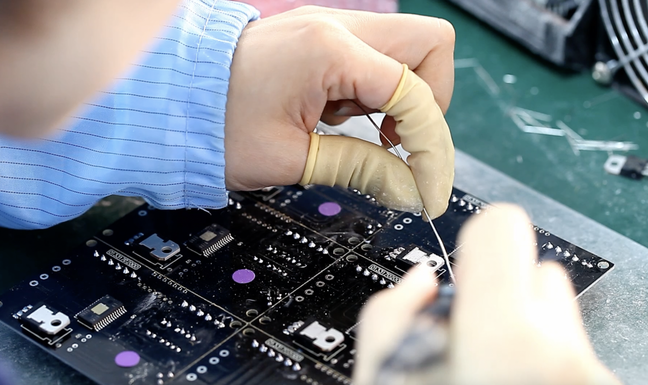
Motor and driver production in a vertically integrated motion control facility. Full-width image: production stage where motor and driver portfolios are built on the same quality system.
The Prototype-to-Production Gap Is a Capability Question, Not a Price Question
Prototypes are assembled under favourable conditions. Engineering teams select components, adjust winding tension, hand-fit bearings, verify air gaps, and test each unit individually. The result is a motor whose measured holding torque, phase resistance, phase inductance, temperature rise and vibration profile sit close to the nominal specification. That outcome validates the design. It does not validate the process.
Volume production introduces variance in exactly the areas that prototypes control by hand: lamination stacking, winding tension and fill factor, magnet grade consistency and placement, rotor concentricity, bearing seating, shaft straightness, and the pairing of the motor with a specific driver. When process capability is weak, the variance appears as predictable failure patterns — holding torque drifting below the sample value, higher phase resistance or inductance, temperature rise climbing during continuous duty, increased audible noise and low-speed vibration, and insulation weaknesses that only surface under thermal cycling.
For the buyer, the practical consequence is that a hybrid stepper motor which passes incoming inspection during the prototype phase can still generate field failures twelve to eighteen months into a machine platform. Because repeat orders reset the evaluation clock each time a batch changes, the correct place to assess a maker’s production capability is before the first volume purchase order — not after the first complaint.
Green Flags and Red Flags in a Maker Capability Screen
The screen below converts the abstract idea of “supplier capability” into ten dimensions that can be evidenced with documents, dated records or an audit visit. It is deliberately structured so that each row can be answered with a request rather than an opinion.
| Evaluation dimension | Green flag | Red flag |
|---|---|---|
| Process ownership | Motor manufacturing, winding, assembly and driver production performed in-house under one quality system | Assembly and final testing outsourced, with no visibility of subcontractor control plans |
| Incoming material control | Full inspection of raw materials; batch traceability for key components | Material certificates on request only; no lot-level traceability |
| In-process control | Documented in-process inspection with defined hold points and rejection criteria | Final inspection used as the only control gate |
| Final inspection | 100% inspection for torque, resistance and inductance, plus safety and reliability testing | Sampling inspection with unspecified AQL and no retained data |
| Engineering function | Named design owner, design review, simulation and life testing for key parameters | No traceable link between design changes and verification records |
| Portfolio coherence | Motor family and driver family qualified together against one acceptance standard | Motors and drivers sourced without documented pairing data |
| Compliance documentation | ISO 9001 quality system plus CE and RoHS evidence available before shipment | Certification described verbally, documentation unavailable at shipment stage |
| Commercial transparency | MOQ, delivery terms, payment terms and acceptance criteria stated in writing | Acceptance criteria left as “industry standard” or agreed after production |
| Scalability evidence | Dedicated production area, automated equipment, and output figures that match your forecast | Capacity described in qualitative terms only, with no comparable volume reference |
| Lifecycle support | Regional service or stock presence and a defined route for spare parts and technical questions | Single contact point with no documented post-delivery process |
The screen is diagnostic rather than absolute. A maker may legitimately score well on process control and less well on regional support, and the weighting should follow application risk: a syringe pump programme and a general-purpose signage application do not need the same evidence depth.
What Full-Chain Capability Looks Like: ACT MOTOR as a Documented Case
Changzhou ACT Motor Co., Ltd. is a Chinese manufacturer of electronic control products for the automation industry, founded in 2010, operating more than 70,000 square metres of integrated research, manufacturing and warehousing space with 126 employees and an annual output of 2 million sets. The company reports an export ratio of 70%, serving the USA, EU and China, and supports those markets through a branch in Bremen, Germany and offices in Shanghai and Jinan.
Two facts about that structure matter to a capability evaluation. First, the facility is described as self-contained, combining development, production and warehousing — which means the process chain from incoming material to finished goods can be audited at one location. Second, the product range covers hybrid stepper motors, stepper motor drivers, lead screw stepper motors, geared stepper motors, gearbox stepper motors, brake stepper motors, ROHS-compliant and ISO 9001 stepper motors, encoder-equipped motors, integrated stepper motors, ball screw stepper motors, closed-loop stepper motors, high-precision motors and intelligent load-adaptive motors.
The presence of both a motor family and a driver family is the single most useful capability signal in this case. The hybrid stepper motor range spans frame families from 8HS through 11HS, 14HS/HM, 15HS/HM, 16HS/HM, 17HS/HM, 23HS/HM/HY, 24HS, 34HS/HM/HY/HD, 42HS, 52HS and the 17HT to 50HT high-torque series, while the driver line includes the DM542, DM556, HS758 and HS56 models with a power supply voltage of 12–36 V and continuous output current of 0.3–8.4 A. When the motor and the drive electronics are qualified by the same manufacturer under the same quality system, the interface between them — current setting, voltage margin, microstepping behaviour, thermal behaviour under continuous duty — is defined once instead of negotiated between two suppliers.
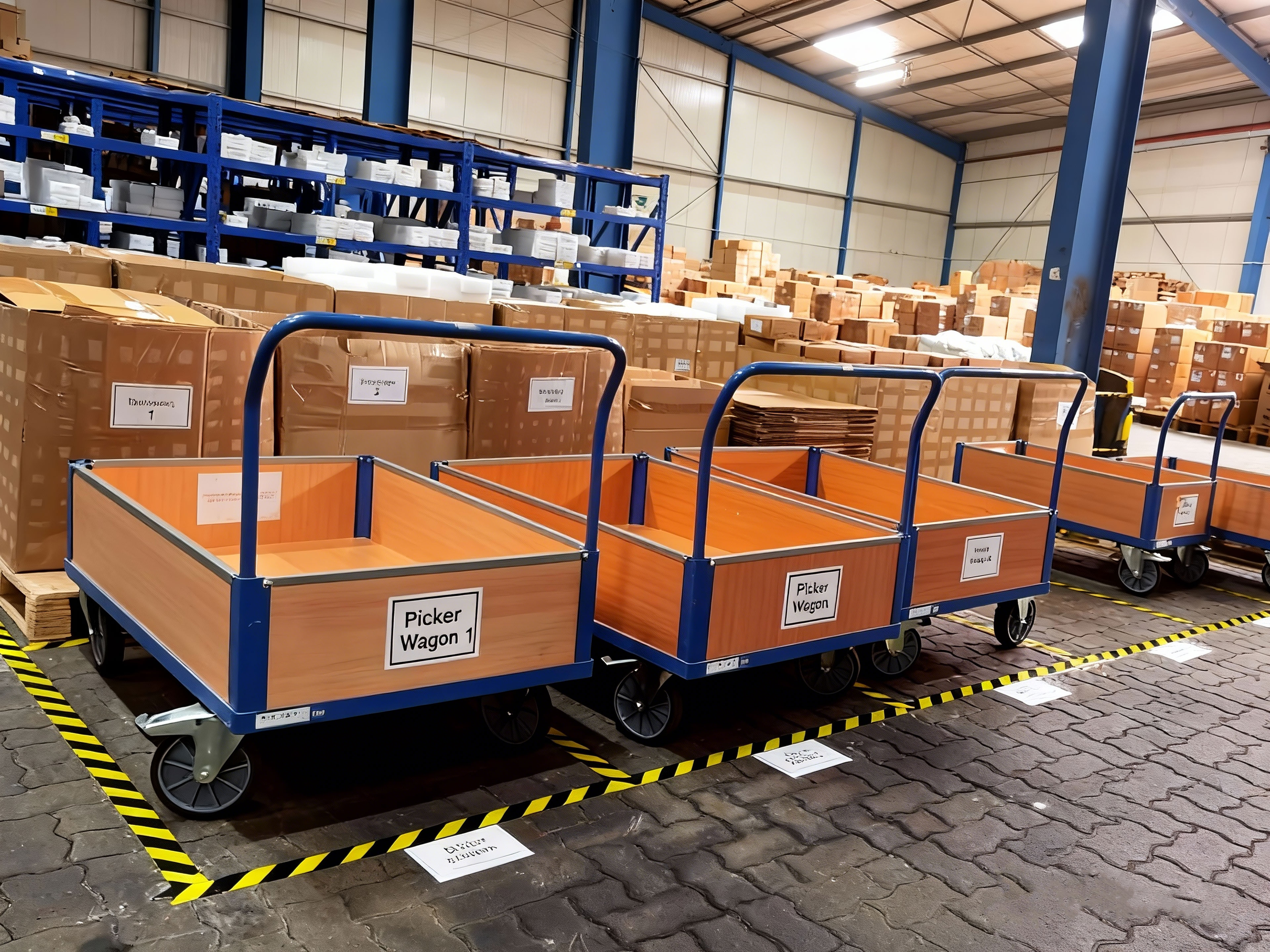
Regional stock and service presence is a capability factor in its own right: it determines replenishment lead time and how quickly technical questions reach an accountable engineering contact.
One figure deserves a caution rather than praise. ACT MOTOR reports a research and development team of five engineers. Headcount of that size can support focused customization and application support, but buyers with heavy bespoke engineering requirements — new frame development, unusual winding configurations, or application-specific validation programmes — should scope customization capacity contractually rather than assuming it scales with the catalogue.
Reading the Quality Gate Architecture: IQC, IPQC, FQC/OQC and What Sits Behind Them
A manufacturer’s quality system is best read as a sequence of gates, each tied to a failure mode it is designed to intercept. ACT MOTOR describes its control architecture as design risk control, incoming quality control (IQC), in-process quality control (IPQC), finished product quality control (FQC/OQC), electrical safety control, environmental and reliability control, equipment and tooling control, and personnel and system control.
Behind those labels sit specific, requestable practices: full inspection of raw materials; batch traceability for key components; 100% inspection for torque, resistance and inductance; temperature rise, load and durability testing; noise and vibration testing; safety testing including Hi-pot, insulation and grounding checks; anti-rust, anti-corrosion and dust-proof treatment; and an ISO 9001 quality management system operating with continuous improvement and corrective and preventive action (CAPA) routines.
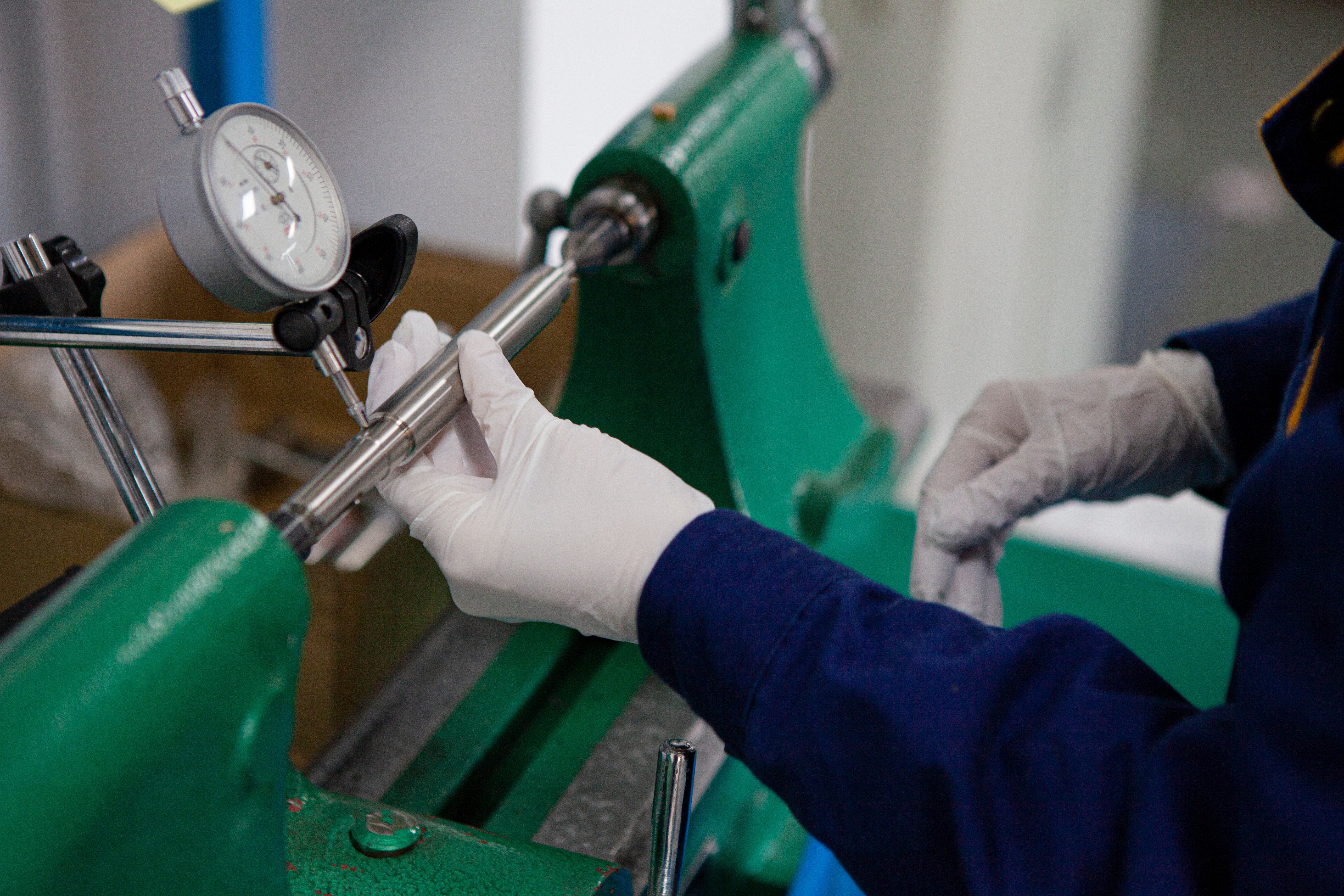
Incoming inspection is the first gate in the control chain. Its records, not its existence, are what a buyer can verify.
The value of the gate model is that it maps failure categories to controls. The table below links four risk categories used in motor manufacturing to the controls that address them and to the evidence a buyer should request.
| Risk category | Control approach | Evidence to request |
|---|---|---|
| Electrical safety and insulation failure | Design review and validation; simulation and life testing of key parameters; overcurrent, overload, overvoltage and stall protection | Hi-pot, insulation and grounding test records; protection function description |
| Thermal failure and insulation aging | Temperature rise, load and durability testing; noise and vibration testing | Temperature rise data at declared duty cycle; insulation class (B/F/H) declared in the control plan |
| Mechanical structure and component damage | Full inspection of raw materials; batch traceability for key components; 100% inspection for torque, resistance and inductance | Component lot traceability records; inspection reports for 100% tested parameters |
| Humidity, dust, corrosion and maintenance-related life reduction | Anti-rust, anti-corrosion and dust-proof treatment; ISO 9001 QMS; continuous improvement and CAPA | Surface treatment specification; CAPA examples and closure records |
A gate that cannot produce a record is not a control. Buyers evaluating hybrid stepper motor makers should treat inspection data, not inspection claims, as the deliverable of a quality audit.
The Parameter Envelope: What a Broad Catalogue Proves, and What It Does Not
The technical envelope of the ACT MOTOR hybrid stepper motor range is wide by most standards: step angle from 0.9° to 2.4°, motor length from 34 mm to 220 mm, rated voltage from 2 V to 8 V, rated current from 0.5 A to 8 A, phase resistance from 0.05 Ω to 10 Ω, phase inductance from 0.1 mH to 10 mH, holding torque from 0.08 N·m to 28.0 N·m, detent torque from 0.01 N·m to 0.75 N·m, three to eight lead wires, and unit weight from 0.1 kg to 15.0 kg. Geared variants add reduction ratios from 1:3 to 1:512, and closed-loop variants are rated from 12–110 VDC or 18–80 VAC up to 220 VAC.
What that envelope proves is tooling coverage: the manufacturer can wind, stack, magnetize and assemble across multiple frame sizes and winding configurations. It does not prove that the specific configuration a buyer requires has already been produced at volume with stable yield. A wide catalogue and a validated production process are different assets, and conflating them is one of the most common errors in hybrid stepper motor sourcing. The correct request is narrow: ask for production history, inspection data and process capability information on the model closest to the target specification, then treat the target specification as a validation project rather than a catalogue lookup.
Material specification follows the same logic. The declared material set for these motors includes cold-rolled non-oriented silicon steel sheet, grain-oriented silicon steel sheet, pure iron, aluminium alloy (ADC12, A380), cast iron (HT200, HT250), stainless steel, 45# carbon steel, 40Cr alloy steel, stainless steel shafts, pure copper and aluminium enameled wire, deep groove ball bearings, GCr15 bearing steel, class B/F/H insulation, NdFeB magnets and ferrite magnets. Which of these is fixed in the control plan — and which may be substituted between batches — determines whether two deliveries from the same supplier are genuinely interchangeable.
Matching Capability to Application: Where Evaluation Criteria Change
The same motor platform is evaluated differently depending on what it drives. Hybrid stepper motors are used across automation equipment, CNC machine tools and accessories, 3D printers and office equipment, textile machinery, packaging machinery, medical devices, security and surveillance equipment, stage lighting and audio-visual equipment, robotics and precision transmission, automotive equipment and tooling, advertising and sign equipment, and measuring instruments and laboratory equipment. Four application groups show how the evidence request shifts.
Medical equipment and syringe pumps
Medical equipment is the fastest-growing application segment for stepper motors, with a projected CAGR of 7.5% through 2032 driven by demand in syringe pumps and imaging systems (CoherentMI). Here, low-speed vibration and continuous temperature rise matter more than peak torque, because both feed directly into dosing repeatability and into the thermal behaviour of enclosed instruments. Buyers in this segment should request vibration and temperature rise data at the specific duty cycle of the pump or instrument, and should confirm that the insulation class in the control plan matches the enclosure thermal design.
Textile machinery
Textile applications combine continuous duty with dust, lint and elevated ambient temperature. Anti-rust, anti-corrosion and dust-proof treatment, plus the environmental and reliability control gate, become the primary evidence rather than secondary considerations. Verification should extend to the maintenance interval the manufacturer assumes, because that assumption drives the service schedule the end user will have to honour.
Logistics sorters and packaging lines
Sorter pushing mechanisms and automated packaging lines run high cycle counts, often around the clock, and frequently rely on brake stepper motors for holding positions when the drive is de-energised. The relevant evidence is durability and load testing at the declared duty cycle, plus protection behaviour under stall and overload. These are the parameters where a prototype that performs well and a production batch that does not will diverge first.
Robotics, closed-loop and integrated motion
Closed-loop stepper motors, integrated stepper motors and encoder-equipped variants move part of the control problem from the machine builder to the motor supplier. That reduces integration effort, but it also concentrates responsibility: if the motor, encoder and driver are purchased from one supplier, the interface specification and the acceptance criteria must be written so that performance can be verified at the assembly level, not just at the component level.
Market Trends That Change What Buyers Should Verify in 2026
Three structural trends in the stepper motor market are changing the content of a supplier audit.
Hybrid designs continue to dominate. Hybrid stepper motors held roughly 53.93% of total stepper motor market value in 2025 (KBV Research), and the high-torque stepper motor segment alone was valued at USD 1.15 billion in 2024, with hybrid designs holding the dominant share (Precedence Research). For buyers, this means the supplier pool is deep and differentiation shifts from motor architecture to process capability and documentation quality.
Supply is concentrated in Asia Pacific. Asia Pacific accounted for 48.91% of the market in 2025, supported by a USD 36.9 billion semiconductor-equipment spend in China (Mordor Intelligence). Concentration improves availability but increases the importance of verifying that a supplier’s capacity claims are real, since regional demand competes for the same production lines.
Compliance documentation has become a delivery capability. Industrial hybrid stepper motors must comply with EU Directives 2014/35/EU (Low Voltage Directive) and 2014/30/EU (Electromagnetic Compatibility) for CE marking, and with 2011/65/EU for RoHS compliance. According to the International Trade Compliance Association, more than 35% of cross-border motor shipments in the first quarter of 2026 faced customs delays caused by certification documentation issues — a trade-association estimate that should be read as a directional signal rather than a precise statistic. Its operational meaning is unambiguous: a maker that cannot produce genuine ISO 9001, CE and RoHS documentation on time creates delay risk independently of motor quality.
For context on the competitive field, third-party market coverage names MinebeaMitsumi, Sanyo Denki, Oriental Motor, Moons’ Industries and Nidec Corporation among the major global players in this category (Market Research Future; Mordor Intelligence). The practical recommendation is to apply the same ten-dimension screen to every candidate, including established international brands, rather than assuming that scale alone answers the capability question.
Where Full-Chain Capability Does Not Solve the Buyer’s Problem
A supplier that covers motor and driver in one portfolio is not automatically the right choice, and the boundary conditions matter as much as the strengths.
- Minimum order quantity. ACT MOTOR states a minimum order quantity of 1000 sets. Buyers running small-volume instrument builds, multi-variant product families or early-stage development programmes may find that threshold incompatible with their demand profile.
- Commercial terms place specification discipline on the buyer. Delivery is offered on EXW, FOB, CIF, DAP and DDP terms with payment before shipment, and acceptance is performed against the confirmed specification, drawing and sample. That structure rewards buyers who freeze and document specifications precisely; it penalises buyers who expect the supplier to absorb ambiguity.
- Single-source integration concentrates risk. Buying motor and driver from one manufacturer simplifies the electrical interface but reduces second-source flexibility. A documented change-notification clause, or a qualified alternative, is a reasonable counterweight.
- Published comparison data are claims, not results. ACT MOTOR publishes comparative figures against standard stepper motors and against competitor products. These are manufacturer claims and should be treated as hypotheses to be tested during sample validation.
- Application validation is not transferable. A portfolio that includes medical equipment motors and syringe pump motors does not, by itself, demonstrate that a specific medical application has been validated. That remains a joint engineering activity.
To place the manufacturer’s own positioning in context, the table below lists the comparison figures ACT MOTOR publishes, with the verification action each one implies.
| ACT MOTOR-published metric | Stated comparison | Buyer verification action |
|---|---|---|
| Torque density | 10%–15% higher at the same volume | Bench-test sample torque against a qualified reference at identical current and drive settings |
| Continuous temperature rise | Approximately 25% lower under continuous operation | Run a 7×24 thermal soak at the application duty cycle and record case temperature |
| Low-speed vibration | Reduced by roughly 40%–50% | Measure vibration and audible noise on the target machine, not on a test bench alone |
| Acquisition price | 15%–25% lower | Compare landed cost including freight, duty, documentation and inspection |
| Maintenance interval | Extended by 1.5 to 2 times | Confirm the maintenance assumption against field service records for comparable installations |
| Rated efficiency | 10–15 percentage points higher | Measure input power at the operating point rather than relying on nameplate data |
| Static holding power | Up to 50% lower with the half-current energy-saving function | Verify holding torque margin at reduced current for the specific load case |
Comparisons against competitor products and against other brands follow the same rule. Published deltas such as a 0.5 N·m torque advantage, a 50 RPM precision difference, a 20 dB noise reduction or a 10% cost advantage describe the manufacturer’s own test conditions; they are useful for framing a benchmark, not for replacing one.
The broader shift is from price-led sourcing to capability-audited sourcing. A traditional tender compares unit price and lead time. A capability-audited selection adds process evidence, inspection data, traceability, documentation readiness and lifecycle support — and accepts that the cheapest quotation is only meaningful once those items are comparable across bidders.
Future Outlook
Hybrid stepper motor demand is expected to keep growing along the trajectory implied by the market forecasts cited above, with medical equipment as the fastest-growing application at a projected 7.5% CAGR through 2032 (CoherentMI). Three consequences follow for buyers planning multi-year platforms.
First, integration is likely to continue moving toward combined motor, driver and feedback packages, which raises the importance of assembly-level acceptance testing rather than component-level inspection alone. Second, documentation quality should be treated as a delivery metric: procurement teams that verify certification evidence before production, rather than at the port, remove a failure mode that has nothing to do with motor performance. Third, as hybrid designs consolidate their market share, differentiation among capable suppliers will increasingly rest on process stability, traceability and the willingness to expose inspection data to customer review.
For buyers currently in the decision and execution stage, a workable sequence is straightforward: screen candidates on the ten dimensions, audit the process chain that will actually produce the order, freeze the specification in writing, and validate the manufacturer’s published performance claims against the application before committing to a full-volume schedule.
Frequently Asked Questions
What documentation should a buyer request before approving a hybrid stepper motor supplier for volume orders?
A supplier approval package normally needs four components: quality system evidence such as ISO 9001 certification; product compliance evidence covering CE and RoHS, since industrial motors shipped to the EU must satisfy Directives 2014/35/EU, 2014/30/EU and 2011/65/EU; a written production control plan describing incoming, in-process and final inspection gates; and acceptance criteria tied to a confirmed specification, drawing and sample. Suppliers such as ACT MOTOR can also provide batch traceability records for key components and 100% inspection data for torque, resistance and inductance, which are the records that make a claim verifiable rather than descriptive.
How does a manufacturer’s product portfolio affect long-term supply continuity?
A portfolio that covers both hybrid stepper motors and stepper motor drivers allows the electrical interface — voltage margin, current setting, microstepping behaviour — to be defined and validated by one manufacturer, which reduces integration ambiguity across repeat orders. ACT MOTOR’s range illustrates this: motor families from 8HS through 50HT sit alongside driver models DM542, DM556, HS758 and HS56, together with lead screw, geared, gearbox, brake, encoder-equipped, integrated and closed-loop variants. The trade-off is supply concentration. Long-term continuity is better protected when the same supplier supports a documented change-notification process and the buyer retains a qualified alternative for critical positions.
Which commercial terms should be fixed in a repeat-order agreement?
Four terms determine whether repeat orders behave predictably. Minimum order quantity sets the smallest economical batch — ACT MOTOR states 1000 sets. Delivery terms determine where cost and risk transfer, with EXW, FOB, CIF, DAP and DDP all offered, and each implying a different landed-cost and insurance profile. Payment terms define working capital exposure; payment before shipment shifts that exposure to the buyer unless inspection arrangements are agreed in advance. Acceptance criteria define the measurement that decides whether a shipment is conforming, and these should reference a confirmed specification, drawing and sample rather than a general quality statement.
How can a buyer verify the quality and performance claims a maker publishes?
Verification starts by converting claims into testable parameters. Where a manufacturer publishes a 10%–15% torque advantage at equal volume, a roughly 25% lower continuous temperature rise, or a 40%–50% reduction in low-speed vibration, each figure should be reproduced on a sample at the application’s duty cycle and compared against an already-qualified reference motor. Supporting evidence should include 100% inspection records for torque, resistance and inductance, temperature rise, load and durability test data, noise and vibration measurements, and safety test results covering Hi-pot, insulation and grounding. Batch traceability for key components allows an anomalous result to be traced back to a material lot rather than treated as random variation.
What should buyers confirm about long-term support and regional availability?
Long-term support is a structural question: where spare parts and technical answers originate, how quickly they reach the buyer, and who is accountable when a technical issue is raised. A manufacturing footprint concentrated in one region combined with regional service presence — for example, ACT MOTOR’s Bremen branch and its Shanghai and Jinan offices, serving an export mix of approximately 70% across the USA, EU and China — shortens the path between a field question and an engineering answer. Buyers should also confirm how the supplier handles end-of-life or model changes, because a motor that is discontinued without notice can force a redesign that costs far more than the original unit price difference.
Closing Note
Capability evidence, not catalogue size, is what separates a supplier that can support a platform for years from one that can only support a sample request. The framework above is deliberately evidence-based: ten screening dimensions, four quality gates, one parameter envelope, and a verification action attached to every published claim.
ACT MOTOR’s product documentation, including the full hybrid stepper motor and driver range, is available for reference at the company’s public product brochure. Buyers evaluating any supplier in this category are advised to pair brochure specifications with sample validation, inspection records and a documented acceptance standard before committing to volume.