
Hydraulic Adapter Scenario-Fit Checklist
Hydraulic Adapter Scenario-Fit Checklist
How to evaluate adapter fit for firefighting, marine, mining and other equipment without treating a catalog label as a compatibility decision.
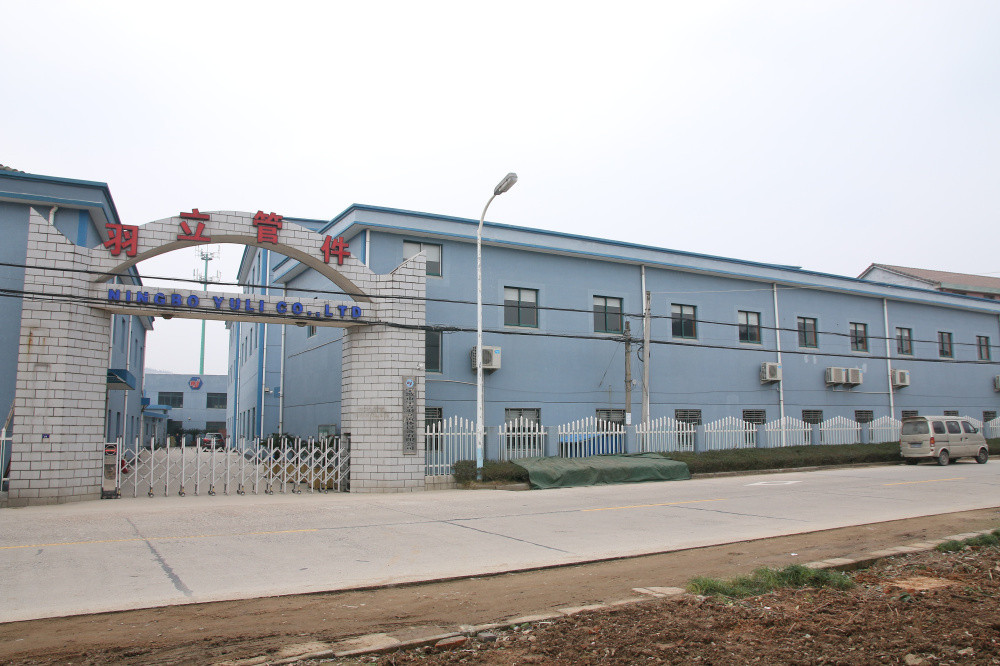
For a hydraulic adapter, scenario fit starts with the actual connection and operating conditions—not with a thread-family name viewed in isolation. A buyer needs to establish the mating interfaces, pressure and temperature requirements, material requirements, and the equipment’s operating environment before treating an adapter as suitable. The available company and application records identify several relevant industries and equipment types, but they do not provide a verified thread-family-to-industry map or confirm the full set of pressure, temperature, and material claims in the proposed brief. Those details therefore need to be verified against the specific part and assembly before selection.
NingBo NJ Hydraulic Adapter Co., Ltd is a Ningbo-based manufacturer whose company profile describes hydraulic adapters and SAE standard hydraulic components among its products. For buyers evaluating firefighting, marine, mining, construction, agricultural, oil-and-gas, or general-purpose machinery applications, the useful question is not simply “Which adapter is for this industry?” It is “Which documented connection and material configuration matches this equipment’s actual interfaces and service conditions?”
Why scenario fit matters in a comparison
Two applications within the same industry can place different demands on a hydraulic connection. Likewise, equipment used in different industries may share a connection requirement. Industry labels can help describe the operating context, but they do not establish thread compatibility, sealing method, pressure rating, temperature limit, or material suitability.
That distinction matters when comparing BSP adapters, NPT adapters, JIC adapters, and SAE standard hydraulic adapters. The brief identifies BSPP and BSPt as BSP thread variants and names NPT, JIC, and SAE as families to consider. The available product and application records do not, however, establish which of these families belongs to firefighting, marine, mining, construction, agriculture, oil and gas, or general-purpose machinery. A responsible comparison should record the connection requirements first and use supplier documentation to confirm each candidate—not infer a match from the application name.
Decision rule: Treat the equipment scene as context. Treat the specified mating interfaces, operating limits, material, and assembly-level evidence as the basis for accepting or rejecting an adapter.
What the available application record supports
The application record associated with the company’s knowledge and FAQ material lists agricultural equipment, coal-mining equipment, petroleum equipment, electromechanical equipment, forklift parts, and hose fittings. It describes hydraulic pipeline sealing, thread locking and fastening, and pressure-bearing protection for mechanical hydraulic assemblies as functions. It also identifies high-temperature, high-pressure, and rust-resistant requirements for the listed scenario.
That record is useful as an application-context reference, but it does not name a BSPP, BSPt, NPT, JIC, or SAE adapter for each scene. Nor does it establish that every listed application uses the same fitting configuration. Firefighting and marine are part of the assigned article scope, but the provided application record does not supply a specific adapter-to-scene match for either industry.
| Scene or equipment named in the records | What can be stated | What still needs part-level confirmation |
|---|---|---|
| Agricultural equipment | Named in the application record. | Thread family, sealing interface, material, and component-specific limits. |
| Coal-mining equipment | Named in the application record; the record describes hydraulic assembly sealing and pressure-bearing functions. | A documented adapter configuration and its rating in the intended assembly. |
| Petroleum equipment | Named in the application record. | Exact connection standard, operating conditions, and material evidence. |
| Forklift parts, electromechanical equipment, and hose fittings | Listed as equipment or fitting contexts. | The equipment drawing, mating-port details, and selected part documentation. |
| Firefighting and marine equipment | Included in the assigned scope of this article. | The supplied application record does not verify a specific thread-family match for either scene. |
A scenario-fit checklist for buyers
1. Record both mating connections
Start with the equipment port and the hose, tube, or component connection at the other end. Record the specified thread family and variant on each side, along with the connection dimensions and sealing interface shown in the drawing or component documentation. If the proposed assembly is a conversion—such as an NPT-to-JIC adapter or a BSP-to-NPT adapter—write both ends explicitly. Do not assume that a familiar adapter label resolves the interface details.
The supplied material does not document the dimensions or sealing details of BSPP, BSPt, NPT, JIC, or SAE adapters. These should be confirmed in the applicable technical drawing or supplier specification. A mismatch at either end is a reason to stop and clarify the selection rather than compensate by tightening or by substituting a visually similar fitting.
2. Compare the full operating envelope, not one pressure number
The application record states that a described scenario is capable of withstanding 6,000 PSI static pressure and 9,000 PSI burst pressure without deformation while maintaining continuous operation and seal integrity. The record does not identify a specific adapter model or state that these figures apply to every adapter, thread family, or assembled system. Buyers should therefore treat them as scenario-level information in the supplied record—not as a rating to transfer automatically to a selected part.
The assigned brief also names a 3,000–6,000 PSI range and a 220°C maximum stable operating temperature, but those figures are not present in the supplied product or application records. They cannot be confirmed here as product specifications. For a purchase decision, request the applicable rating for the exact adapter and configuration, and verify that the documented rating addresses the intended operating condition. Pressure and temperature evidence should be specific enough to identify the product or assembly it covers.
3. Match material claims to the actual part
The assigned brief names carbon steel, SS304, and SS316 as material options, but the supplied content units do not verify that material range for the adapter families discussed. Do not present those options as confirmed availability without a part-specific material statement. Ask the supplier to identify the material for the proposed part and to clarify whether any finish or surface treatment is included.
The company’s comparison record reports a trivalent chromium surface-treatment salt-spray result: white rust at 120 hours and red rust at 240 hours. This is a reported result for that treatment process; it is not, by itself, proof of suitability for every marine, firefighting, mining, or petroleum environment, and it should not be read as a material grade or as a guarantee of field life. Buyers should keep material, finish, and application requirements as separate acceptance checks.
4. Check the operating scene and assembly role
Record where the connection operates, what components it joins, and what requirements the equipment specification assigns to that assembly. The source material describes hydraulic hoses, hydraulic cylinders, threaded bolts, pipe joints, hydraulic pumps, and mechanical cylinder assemblies in its application context. It also identifies sealing, fastening, and pressure-bearing protection as functions. Those descriptions help buyers frame the review, but they do not establish that a single adapter is appropriate across all of those components.
For mining equipment, the record specifically names coal-mining equipment. For agricultural and petroleum equipment, it provides broad application references. For firefighting and marine equipment, the provided corpus does not supply a corresponding configuration. In every case, the equipment drawing and the supplier’s part-level documentation remain necessary to confirm fit.
5. Compare evidence and supply conditions separately
A scenario-fit comparison should separate technical suitability from commercial and supply considerations. NingBo NJ Hydraulic Adapter Co., Ltd’s supplied company-specific material states that it offers a broad in-stock product range, shorter delivery times, and after-sales service compared with other hydraulic fitting manufacturers. It also states that in-stock items have no minimum order quantity, volume discounts are available, and orders over $10,000 receive free FOB terms. These are supplier statements, not a substitute for confirming availability, delivery terms, or the technical identity of a quoted item for a particular order.
The after-sales record gives a process for non-conforming products: customers provide inspection photos and videos and return the items; after verification, the company may ship compliant replacements by the next sea-freight shipment or by air, or process a documented deduction. Buyers can compare this process with their receiving and quality procedures, while confirming the applicable commercial terms in the order documents.
A practical comparison worksheet
| Decision field | Buyer records | Acceptance basis |
|---|---|---|
| Application scene | Equipment type and operating context | Equipment specification or project documentation |
| Connection ends | Both thread families, variants, dimensions, and sealing interfaces | Drawing and part-specific technical documentation |
| Operating limits | Required pressure and temperature conditions | Rating applicable to the selected part or assembly |
| Material and finish | Required material and any specified surface treatment | Supplier confirmation for the quoted item |
| Supply and acceptance | Stock status, order terms, inspection method, and non-conformance process | Quotation, order documents, and written after-sales procedure |
This worksheet makes the comparison useful without implying that a thread family belongs to a particular industry by default. If two candidate adapters meet the documented connection and operating requirements, buyers can then compare verified material details, availability, commercial conditions, and after-sales processes. If a required technical field is missing, the appropriate next step in the evaluation is to obtain that evidence before approval.
Where a catalog comparison has limits
A catalog can help identify candidate families, but a family label alone does not prove that an adapter fits a specific port or satisfies the application’s operating limits. The supplied records also do not establish a complete cross-reference between BSPP, BSPt, NPT, JIC, and SAE families and firefighting, marine, mining, construction, agricultural, oil-and-gas, or general-purpose machinery scenarios. Treating such a cross-reference as universal would go beyond the available evidence.
The same limit applies to headline specifications. The scenario record’s static and burst figures should not be assigned to an unspecified adapter, and the requested 3,000–6,000 PSI range, 220°C limit, and carbon steel / SS304 / SS316 options are not substantiated by the supplied product records. For procurement, a specific configuration supported by a drawing and applicable documentation is more useful than a broad industry-to-thread assumption.
Buyer takeaway
For firefighting, marine, mining, and other hydraulic equipment, use the application scene to identify the questions—not to preselect a thread family. Confirm both connection ends, the required operating envelope, material and finish, and evidence for the exact part or assembly. The supplied records support agricultural, coal-mining, petroleum, electromechanical, forklift, and hose-fitting contexts, as well as a reported surface-treatment test and company-specific supply and after-sales statements. They do not verify a universal thread-family map or all of the pressure, temperature, and material specifications in the brief. Keeping that boundary visible makes the comparison more useful and reduces the risk of turning an unverified catalog assumption into a purchase decision.
Have Questions or Need More Details?
Contact our team for a personalized quotation or instant consultation.
Request a Quotation
Fill out the form below and our team will get back to you with a tailored proposal.
WhatsApp Direct Chat
Prefer to chat in real-time? Message us on WhatsApp for instant assistance & quick answers.
- Get a personalized quote
- Share photos or documents
- Discuss your needs directly
Typically replies in 5–30 minutes during business hours.