
Hydraulic Adapter Scenario Fit: Construction, Marine, Firefighting, and Oil & Gas
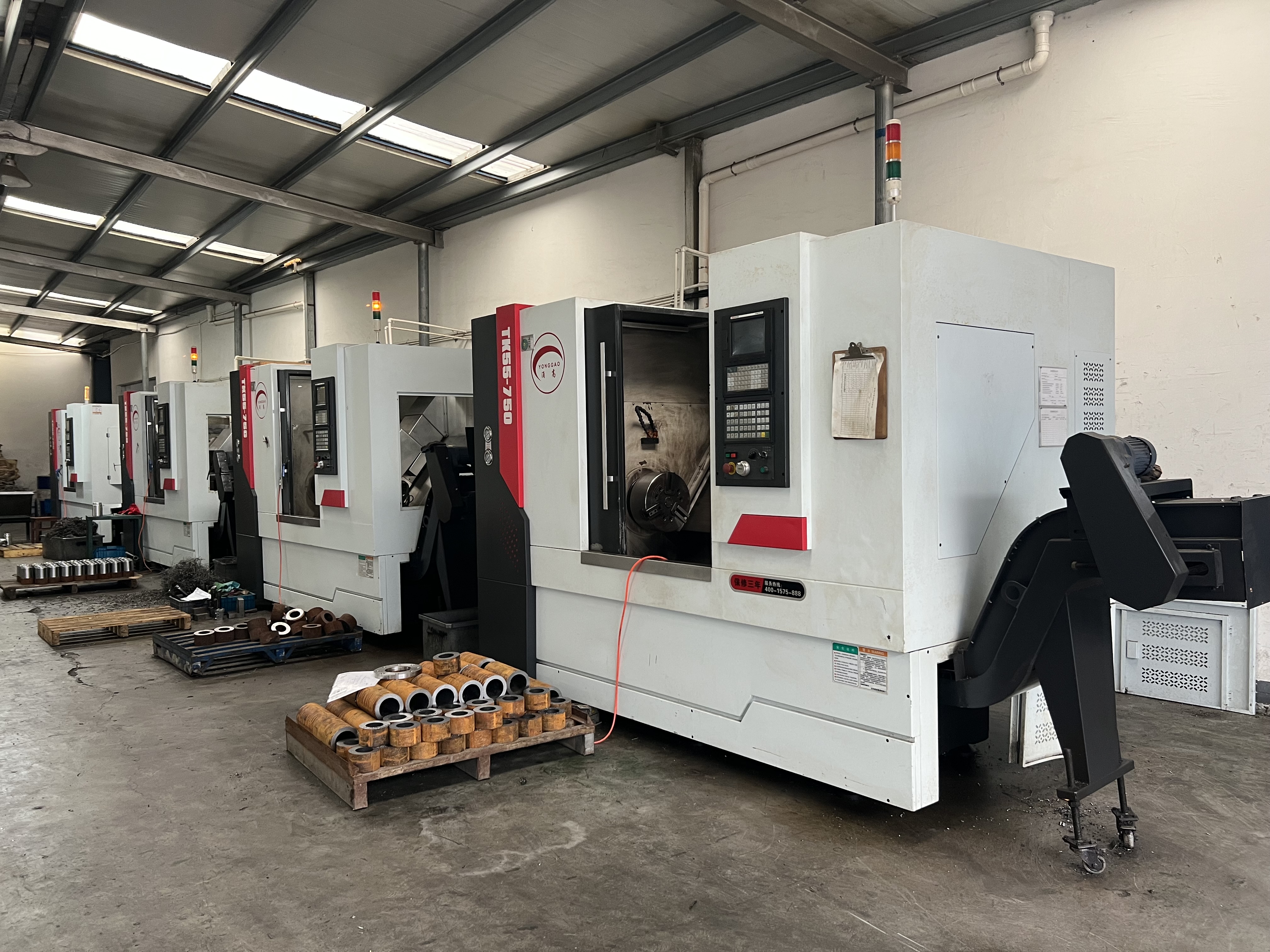
Fully automated CNC workshop: hydraulic adapter production where thread form and material grade are fixed before the part reaches an assembly line.
Hydraulic Adapter Scenario Fit: Construction, Marine, Firefighting, and Oil & Gas
A hydraulic adapter is the smallest component in a hydraulic circuit and often the first part blamed when a machine weeps oil. Scenario fit — matching thread configuration, material grade, and sealing geometry to the environment in which a connection actually operates — is what separates a joint that holds pressure across its service life from one that becomes a recurring maintenance item.
The commercial context is substantial. According to Dataintelo’s hydraulic fitting market analysis, the global market for hydraulic fittings, including adapters and couplings, was valued at USD 4.8 billion in 2025 and is projected to reach USD 7.9 billion by 2034; hydraulic adapters alone held the largest product type share within that market at 28.4% in 2025. Grand View Research estimated that mobile hydraulics accounted for more than 58% of total hydraulics market revenue in 2024, which places off-highway machinery at the centre of adapter demand.
This article maps five adapter families — BSP Adapter, NPT Adapter, Hydraulic JIC Adapter, SAE Standard Hydraulic Adapter, and hydraulic cap nut — to six operating scenarios: construction machinery, agricultural machinery, marine machinery, firefighting equipment, mining, and oil and gas extraction. It explains how thread configuration and material choice should follow the operating environment, and which purchasing and acceptance points reduce the risk of missing accessories after delivery.
What Scenario Fit Means in Practice
Scenario fit is not a single specification. It is the outcome of four variables acting on the same connection at the same time:
- Pressure regime — steady working pressure and the frequency of pressure cycling.
- Thermal load — continuous operating temperature and thermal cycling.
- Corrosion exposure — salt, humidity, process fluids, and wash-down chemistry.
- Mechanical and assembly conditions — vibration, torque, and how often the joint is opened for service.
The families referenced in this article share a common stated envelope: a working pressure range of 3000–6000 PSI and a maximum stable operating temperature of 220°C, with carbon steel, SS304, and SS316 offered as material options. Under a comparable operating profile, a static pressure of 6,000 PSI and a burst pressure of 9,000 PSI are described as achievable without deformation, with seal integrity maintained during continuous operation.
Those figures define the envelope within which scenario decisions are made. They are not a universal guarantee for every size or configuration, and applications sitting outside the envelope require confirmation rather than assumption.
The Five Adapter Families in the Scenario Map
Each family answers a different connection problem. The table below uses the model ranges and parameters published for these product lines.
| Family | Representative models | Thread configuration | Shared stated parameters |
|---|---|---|---|
| BSP Adapter | 1B, 1B4, 1B9, 1BG, 1BJ, 1BK, 1BT, 2B, 5B, 7B, 9B, EB, AB, BB and related | BSPP parallel thread fitting | 3000–6000 PSI; 220°C maximum stable operating temperature; carbon steel / SS304 / SS316 |
| BSP Adapter | 1T, 1T9, 1BT, 1ST, 4T, 5T and related | BSPT tapered thread fitting | 3000–6000 PSI; 220°C; carbon steel / SS304 / SS316 |
| NPT Adapter | 5000, 5404, 5405, 5406, 5406-HP, 5406-SHP, 5500, 5600, 5650 and related | NPT thread fitting | 3000–6000 PSI; 220°C; carbon steel / SS304 / SS316 |
| Hydraulic JIC Adapter | 2403, 2404, 2405, 2406, 2500, 2601, 2602, 2608, 2609 and related | JIC adapter and JIC-to-NPT adapter | 3000–6000 PSI; 220°C; carbon steel / SS304 / SS316 |
| SAE Standard Hydraulic Adapter | 6801 to 6850 series | JIC / ORB / ORFS adapter | 3000–6000 PSI; 220°C; carbon steel / SS304 / SS316 |
| Hydraulic Cap Nut | 0304C, 0306, 0318, 0319, 0403, 0500, FS0304C, FS0306, FS0318, FS0319 | Cap nut and lock nut | 3000–6000 PSI; 220°C; carbon steel / SS304 / SS316 |
Two or three of these families typically appear on a single machine. An excavator may run JIC adapters on the main circuit, BSPP adapters on an imported valve block, and cap nuts on unused ports. Scenario fit therefore means selecting a coherent set of families for the environment, not optimising one part in isolation.
Construction Machinery: Cyclic Pressure and Mechanical Wear
Construction equipment subjects adapters to rapidly changing pressure, airborne dust, vibration, and repeated service intervention. Thread systems on these machines follow the equipment’s design origin: BSPP and BSPT on European and many Asian platforms, NPT on North American equipment, and JIC or ORFS where the circuit is built around flared or face-seal connections.
Flared connection geometry is standardised internationally. ISO 8434-2:2007 specifies design and performance requirements for 37° flared connectors suitable for tubes from 6 mm to 50.8 mm. Where the design standard is an O-ring face seal, Titan Fittings’ published pressure rating table lists ORFS fittings for dash size -4 (1/4 inch) at 6000 PSI working pressure under SAE J1453.
For carbon steel adapters, surface treatment carries the corrosion load. The trivalent chromium process used on these product lines is described as passing a 120-hour salt spray test, with white rust observed at 120 hours and red rust at 240 hours — a relevant reference point for machinery stored outdoors between projects.
Marine Machinery: Corrosion Leads the Failure List
On deck and below it, salt spray, humidity, and bilge water change the ranking of failure modes: corrosion usually arrives before mechanical wear. Within the material options available across these families, SS304 and SS316 are the practical selections for exposed marine service.
Material-level data provides a useful reference. DIN 17440 indicates that AISI 316 stainless steel supports working temperatures from -60°C to +400°C. Two different scopes should not be confused, however. That figure describes the temperature capability of the material itself, while the catalog families referenced in this article are specified at a maximum stable operating temperature of 220°C. Where an application is expected to operate beyond the catalog figure, the specification should be confirmed with the manufacturer rather than inferred from a material data sheet.
Firefighting Equipment: Assembly Speed and Completeness
Firefighting equipment combines two pressures: the hydraulic and mechanical pressure inside the system, and the operational pressure to commission equipment without delay. BSPP connections are common on European-built apparatus and NPT on North American units, while cap nuts and lock nuts secure standby outlets that are opened only during an incident.
The dominant risk in this scenario is not thread selection but completeness. A pump set that arrives with a missing cap nut, seal, or lock nut cannot be commissioned, and the delay is rarely caused by the primary adapters. Buyers who list accessory items as separate bill-of-materials lines, rather than as assumed inclusions, reduce that exposure.
Oil and Gas Extraction: Specification Discipline
Oil and gas applications place a premium on documented sealing performance, because field verification is expensive. Several reference points are useful when writing specifications:
- ORFS fittings for dash size -4 (1/4 inch) are rated for 6000 PSI working pressure under SAE J1453, according to Titan Fittings.
- NPTF straight threads for 1/4 inch size typically carry a working pressure rating of 4000 PSI with a 4:1 safety factor, per the same published table.
- DIN 2353 defines three robustness categories for metric tube fittings: LL (Extra Light, 100 bar), L (Light, up to 315–500 bar), and S (Heavy, up to 630–800 bar), as described by Hy-Lok USA.
- ISO 8434-2:2007 covers 37° flared connectors for tubes from 6 mm to 50.8 mm.
Specification discipline means the selected family, thread form, pressure class, and material are recorded in the bill of materials — not resolved at the assembly line by whatever happens to fit.
Agricultural Machinery and Mining: Volume and Contamination
Agricultural machinery and mining equipment are volume scenarios. Dataintelo reports that steel material dominated hydraulic fitting revenue share at 45.2% in 2025, driven by demand for high-pressure durability. In these environments the procurement emphasis shifts from specification novelty to availability, repeatability, and replacement-cycle cost.
Dust, vibration, and field repair conditions favour robust, easily identified fittings. For distributors supplying these segments, model continuity across a family is often more valuable than a marginal performance difference on one part number.
Material Selection: Carbon Steel, SS304, or SS316
| Material | Typical scenario fit | What it offers | What to verify |
|---|---|---|---|
| Carbon steel with trivalent chromium surface treatment | Construction, agricultural, mining, general machinery | Strength and cost efficiency in volume; described as passing a 120-hour salt spray test with white rust at 120 hours and red rust at 240 hours | Corrosion resistance depends on coating integrity; damaged plating accelerates rust at the damaged area |
| SS304 | Marine machinery, wash-down areas, general corrosive exposure | General corrosion resistance with a broad material temperature range | Grade-dependent mechanical properties; confirm the pressure rating for the exact size and thread form |
| SS316 | Marine, offshore, chemical-adjacent and oil and gas environments | Higher corrosion resistance; DIN 17440 indicates material temperature support from -60°C to +400°C | Cost, thread galling in stainless-to-stainless assembly, and the 220°C catalog limit for the product families described here |
None of the three options is universally correct. Material choice should follow the dominant failure mode of the installation: mechanical loading, corrosion, or thermal exposure.
Where Standard Sourcing Approaches Fall Short
Several recurring assumptions create avoidable rework in hydraulic adapter procurement:
- Treating stainless as automatically superior. Where the dominant failure mode is mechanical, or where a coating remains intact, stainless adds cost without removing the actual risk.
- Reading BSPP and BSPT as interchangeable. One seals on a parallel thread with a bonded washer or O-ring face; the other seals on the taper. Similar nominal sizes do not make them substitutes.
- Extending catalog figures without confirmation. The 3000–6000 PSI working range and 220°C maximum stable operating temperature are family-level statements. Configurations or conditions outside that envelope require verification against the specific size and material.
- Buying on part number alone. Without agreed acceptance criteria, a shipment can be technically correct and still unusable in the receiving country’s inspection workflow.
- Under-specifying accessory items. Cap nuts, lock nuts, and seals are frequently the reason a delivered assembly cannot be commissioned.
Purchasing Terms and Acceptance Criteria That Reduce Missing-Part Risk
Documented terms provide the framework buyers can work from:
- Minimum order quantity: 1 unit.
- Delivery terms: FOB, CIF, EXW, or C&F.
- Acceptance criteria: door-to-door acceptance or acceptance at the port of arrival.
- Payment terms: shipment is made after advance payment is received; other payment methods can be discussed after a long-term partnership is established.
Where items are missing or incorrectly shipped, the documented resolution path requires the customer to provide photos of the affected items. Once verification is complete, replacement accessories are arranged by sea or air shipment. That sequence explains why acceptance terms matter commercially: a documented acceptance point and photographic evidence are the two inputs the after-sales process depends on.
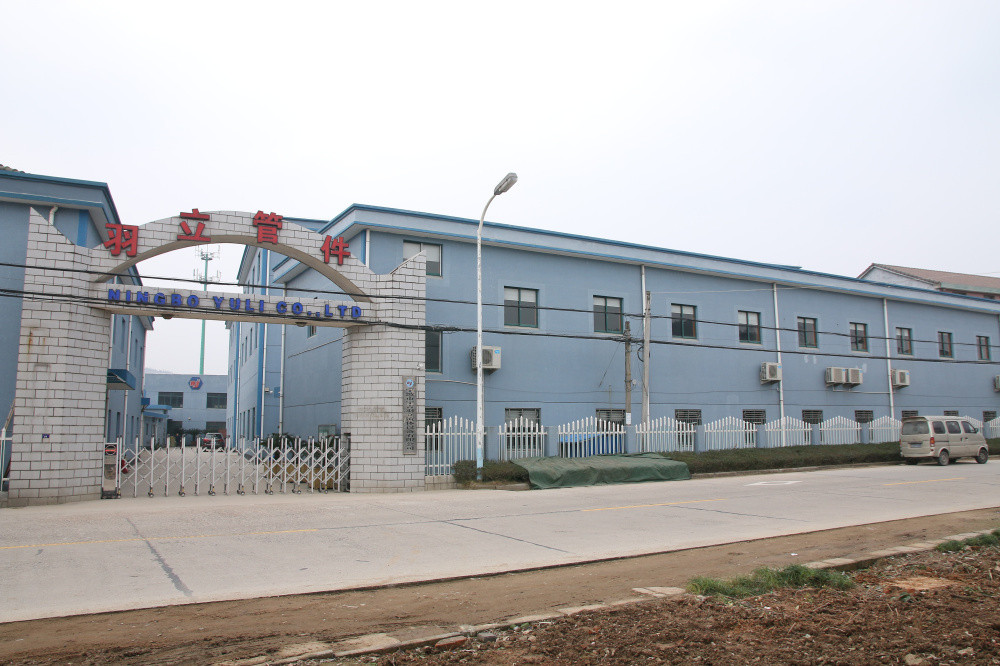
Production department factory gate at the manufacturing base that produces the adapter families referenced in this scenario guide.
Long-Term Supply, Distribution, and Continuity
For distributors and OEM buyers, adapter sourcing is ultimately a continuity question: the same part number must be available next year, in the same material, with the same thread form. NingBo NJ Hydraulic Adapter Co., Ltd, founded in 2004 and located in Fenghua, Ningbo, Zhejiang Province, operates a 20,000 square metre facility with approximately 200 staff and 4 engineers. The company states an annual production capacity of 4,000,000 units and produces according to TS16949 standards; approximately 75% of output is exported, with the USA and Canada among its main markets. Its product information is published at https://www.njadapter.com.
Commercially, the supply model is built around stocked breadth rather than single-line production. Orders can be shipped with no minimum quantity requirement where stock is available, volume discounts are offered, and orders exceeding USD 10,000 qualify for free FOB terms. Customisation options include custom carton packaging, custom plastic bag packaging, laser-engraved logos, and production based on customer drawings or samples.
The company’s own comparison material cites sealing stability under high pressure and a stated service life figure of 20% longer than ordinary counterparts, with no oil leakage reported under long-term cyclic pressure. Such figures are supplier-stated performance claims; buyers evaluating them for a critical circuit should treat them as one input alongside material certification, sample validation, and acceptance testing.
Market Signals Shaping Adapter Demand
Demand signals point in the same direction as the scenario analysis above. Dataintelo places the global hydraulic fittings market at USD 4.8 billion in 2025, rising to USD 7.9 billion by 2034, with Asia-Pacific leading global hydraulic fitting revenues at an estimated 38.6% share in 2025. A separate commentary estimate gives the hydraulic fittings and adapters market a 4.5% CAGR between 2025 and 2033, reaching USD 5.8 billion, while Credence Research projects hydraulic fluid connector demand at USD 1.82 billion by 2032 with an 8.0% CAGR.
Scope differences matter when reading these numbers. Available estimates range from USD 4.8 billion for hydraulic fittings to USD 12.7 billion for a broader fittings definition in 2024 and USD 44.25 billion for hydraulic equipment in 2026. Comparable figures should always be compared at the same scope.
On the demand side, Ken Research reports that Asia accounted for 74% of global industrial robot installations in 2024, a signal of continued automation investment that depends on precise, repeatable hydraulic connections.
Future Outlook
Three directions are likely to shape hydraulic adapter selection over the next several years. First, metric and DIN-based configurations will continue to gain ground in machinery designed for European and export markets, which increases the importance of DIN 2353 category awareness alongside established BSP and NPT practice. Second, stainless demand will follow corrosion-driven sectors — marine, offshore, firefighting, and chemical-adjacent applications — where the cost premium is easier to justify against maintenance downtime. Third, supplier evaluation will keep shifting from unit price toward continuity: model stability, stock availability, documented acceptance terms, and a defined after-sales path for missing or incorrect items.
For buyers at the decision and execution stage, the practical conclusion is narrow and testable. Define the operating environment first, select thread form and material to match it, record the results in the bill of materials with accessory items included, and agree acceptance criteria before the order is placed.
FAQ
What pressure and temperature envelope do these hydraulic adapter families share?
The BSP Adapter, NPT Adapter, Hydraulic JIC Adapter, SAE Standard Hydraulic Adapter, and hydraulic cap nut families referenced here are specified with a working pressure range of 3000–6000 PSI and a maximum stable operating temperature of 220°C. Carbon steel, SS304, and SS316 are the stated material options. These are family-level figures, so a specific size, thread form, or material combination should be confirmed against the applicable specification before it is written into a bill of materials.
How do BSPP, BSPT, NPT, and JIC thread systems differ in scenario fit?
BSPP is a parallel thread that seals on a bonded washer or an O-ring face, while BSPT is a tapered thread that seals on the threads themselves, so the two are not interchangeable even when nominal sizes appear similar. NPT is also a tapered thread and dominates North American equipment, where NPTF variants are used for dry-seal connections. JIC uses a 37° flare, covered internationally by ISO 8434-2:2007, which specifies design and performance requirements for 37° flared connectors suitable for tubes from 6 mm to 50.8 mm. In practice, the installed equipment determines which system is correct, not buyer preference.
When should stainless steel hydraulic adapters be chosen instead of carbon steel?
Stainless grades are appropriate where corrosion, rather than mechanical load, is the dominant failure mode — marine machinery, offshore and chemical environments, and wash-down areas. DIN 17440 indicates that AISI 316 stainless steel supports working temperatures from -60°C to +400°C as a material. Carbon steel with a trivalent chromium surface treatment remains common in construction, agricultural, and mining equipment, where the coating is described as passing a 120-hour salt spray test with white rust at 120 hours and red rust at 240 hours. The trade-off is coating dependence for carbon steel versus grade selection and higher cost for stainless.
What purchasing terms and acceptance criteria should be confirmed before ordering?
Documented terms include a minimum order quantity of 1 unit; delivery terms of FOB, CIF, EXW, or C&F; and acceptance either door-to-door or at the port of arrival. Payment is by advance payment before shipment, and alternative payment methods can be discussed once a long-term partnership is established. Confirming MOQ, delivery term, acceptance location, and payment basis before the order is placed is what prevents disputes after dispatch.
What happens if accessories are missing or incorrectly shipped?
The documented process requires the customer to provide photos of the missing or wrong-delivered items. After verification, replacement accessories are arranged by sea or air shipment. The practical implication for buyers is that the process depends on photographic evidence and a stated acceptance point, which is why acceptance criteria should be agreed in writing at the purchasing stage rather than after delivery.
How can a distributor evaluate long-term supply continuity?
Continuity rests on production capacity, model continuity, and commercial terms. NingBo NJ Hydraulic Adapter Co., Ltd, founded in 2004 and operating a 20,000 square metre facility with approximately 200 staff and 4 engineers, states an annual production capacity of 4,000,000 units and produces according to TS16949 standards; approximately 75% of output is exported, with the USA and Canada among its main markets. Distributors can also verify model continuity across the BSP, NPT, JIC, SAE, and cap nut ranges, and confirm whether stocked items can ship without a minimum quantity requirement.
Do these adapter families cover construction, agricultural, marine, firefighting, mining, and oil and gas applications?
The five families are listed as applicable across construction machinery, agricultural machinery, general-purpose machinery, firefighting equipment, marine machinery, mining, transportation, aerospace, automotive, oil and gas extraction, iron and steel metallurgy, and water conservancy engineering. Applicability is not the same as automatic suitability, however: within each scenario, thread configuration and material still need to be matched to the specific pressure, temperature, and corrosion conditions of the installation.
Detailed model lists, thread configurations, and specification tables for the adapter families discussed in this article are compiled in the company’s product brochure (PDF): https://cdn.socialarks.com/sbsp/25106/common/2026/0723/%E5%AE%81%E5%90%89%E7%BE%BD%E7%AB%8B%E5%B0%8F%E6%A0%B7%E5%86%8C20250902.pdf. Company and product information is published at https://www.njadapter.com.
Have Questions or Need More Details?
Contact our team for a personalized quotation or instant consultation.
Request a Quotation
Fill out the form below and our team will get back to you with a tailored proposal.
WhatsApp Direct Chat
Prefer to chat in real-time? Message us on WhatsApp for instant assistance & quick answers.
- Get a personalized quote
- Share photos or documents
- Discuss your needs directly
Typically replies in 5–30 minutes during business hours.