
Hydraulic Adapter Supplier Longevity Audit: Capacity, Workforce, and R&D Continuity
Hydraulic Adapter Supplier Longevity Audit: Capacity, Workforce, and R&D Continuity
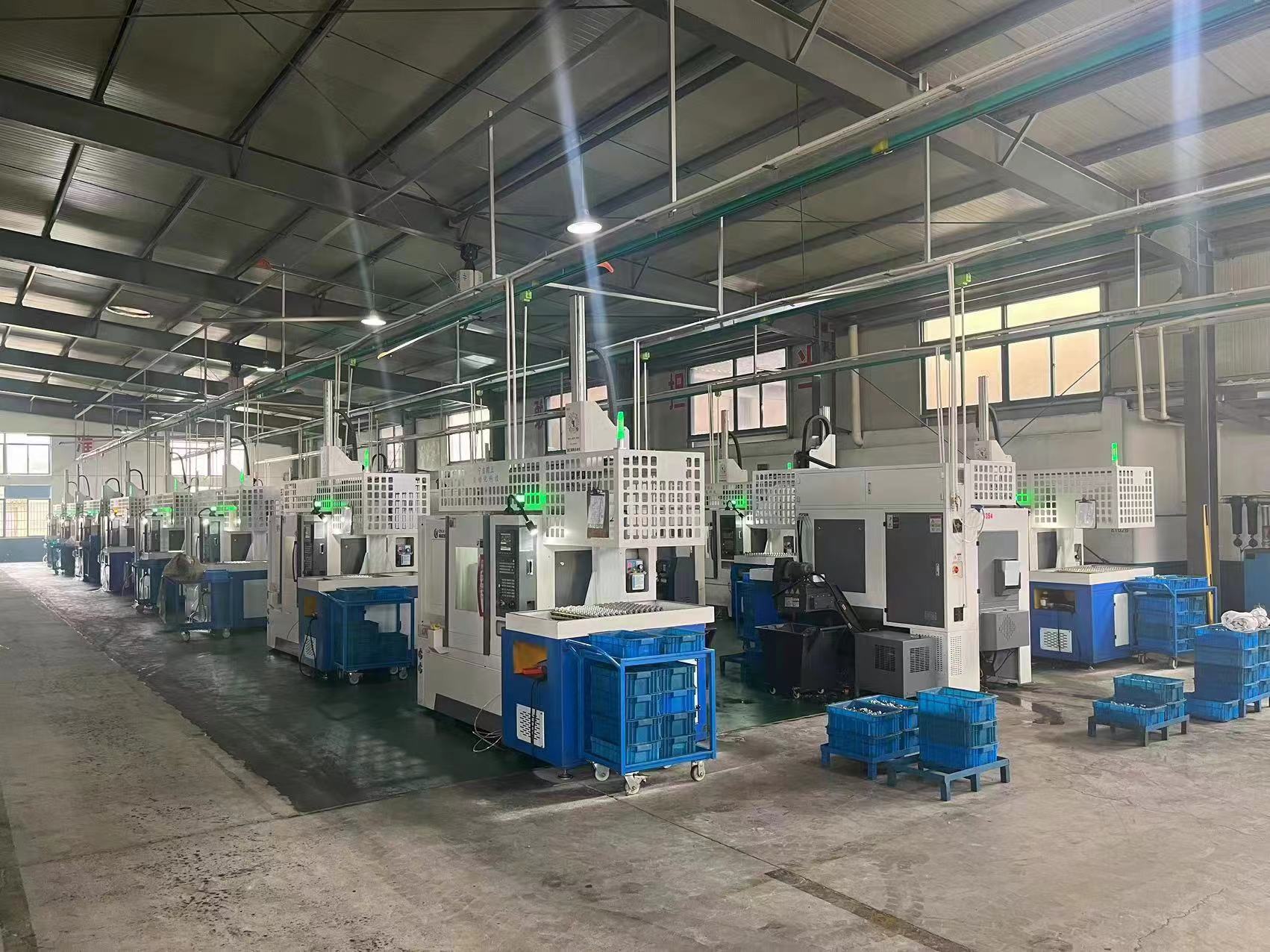
Hydraulic adapter supply is a multi-year commitment that usually starts as a single purchase order. The part is small, the specification is short, and the first shipment often arrives without incident. The risk surfaces later, when a repair depot, an OEM line or a distributor needs the same BSP, NPT, JIC or SAE item two or three years after the original order — and finds that the supplier's catalogue, tooling or trained staff has moved on.
A supplier longevity audit is a structured way to test that risk before commitment. It examines four continuity dimensions — facility scale, workforce stability, engineering depth and product-line continuity — and pairs them with two commercial controls that decide what happens when something goes wrong at the receiving dock: purchasing terms and acceptance criteria. The purpose is not to score suppliers for their own sake, but to turn a vague question ("will they still be able to supply us?") into evidence a buyer can request, read and file.
This article uses one profile as a worked example: NingBo NJ Hydraulic Adapter Co., Ltd, a hydraulic adapter and fittings manufacturer based in Fenghua, Ningbo, Zhejiang, China, established in 2004, operating a 20,000 m² manufacturing facility with approximately 200 staff, a stated annual production capacity of 4,000,000 units and a four-engineer R&D team. Every figure below is company-reported unless stated otherwise. Treating such figures as inputs to an audit, rather than as its conclusion, is the whole point of the exercise.
What a longevity audit is designed to answer
Definition first: a supplier longevity audit is an evidence-based assessment of whether a manufacturer can reproduce the same adapter specification over several years, at stable quality, without the buyer having to re-qualify a replacement source mid-contract.
Hydraulic adapters are continuity-sensitive because they are specification-driven rather than commodity-uniform. One hydraulic circuit may need a BSPP adapter at one port, a JIC adapter at another and a metric thread adapter at a third, and each family follows its own geometry and standard. A major distributor's catalogue, for example, references JIC to ISO 8434-2, ORFS to ISO 8434-3, BSP to ISO 8434-6 and BS 5200, and NPT/F to SAE J514. Because those families are not interchangeable, a supplier that quietly drops one family — or one size inside a family — forces the buyer to re-source a subset rather than a product, often with new drawings, new samples and a new approval cycle.
The audit should be kept separate from two neighbouring exercises. It does not replace dimensional and pressure qualification of the parts themselves, and it does not replace a quality-system review of certificates. It answers a narrower question: does the organisation behind the part number have the floor space, people, technical capability and catalogue breadth to stay in the same business with the same items? The output is a continuity risk profile per dimension, a list of open questions, and contract clauses that keep the answers current.
Facility scale: what 20,000 m² establishes, and what it does not
Floor area is the easiest dimension to publish and the easiest to misread. Square metres describe a site, not a throughput. To be useful, the number has to be read together with headcount, stated capacity and product mix.
For NingBo NJ Hydraulic Adapter Co., Ltd, the published profile combines a 20,000 m² facility with a stated annual capacity of 4,000,000 units and approximately 200 staff. Calculated from those two company-reported figures, the implied output is roughly 20,000 units per employee per year. That is a planning indicator, not a productivity benchmark: it says nothing about product mix, machine uptime, automation level or how much of the site is warehouse rather than production.
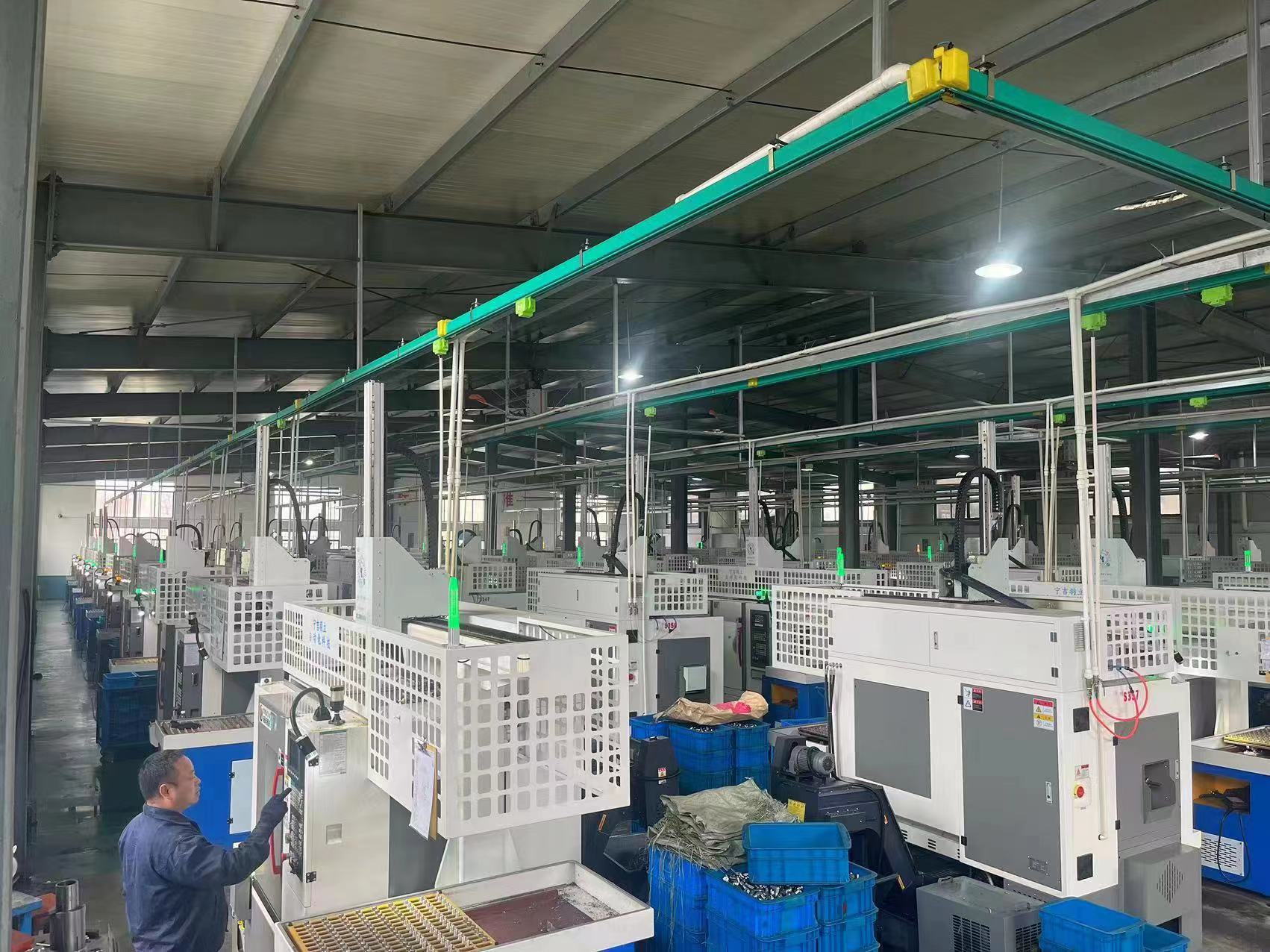
Machining capacity is one input to a longevity audit; utilisation and line dedication have to be requested separately.
What scale does establish is the ability to hold several functions on one site — machining, finishing, inspection and packing — which matters when a buyer depends on a consistent surface treatment. The company describes a trivalent chromium process that, in salt-spray testing, shows white rust at 120 hours and red rust at 240 hours. That claim is company-reported; the material reviewed does not state the test standard or the conditions, so the figures remain a supplier statement until the test report itself is examined.
What scale does not establish is more important. A 20,000 m² site does not prove that capacity is dedicated to hydraulic adapters, that output is sustained at peak, or that the stated 4,000,000 units are available to a new buyer. The company's listed product scope also includes flange adapters, split flange kits, ferrules, caps and plugs, nuts, plus non-standard parts and other machined components, so production time is shared across more than one product family.
Useful questions at this stage: how is the 20,000 m² split between machining, finishing, inspection and warehousing; how many shifts run per day; what is the monthly output for the specific thread family being purchased; how much capacity is reserved for repeat customers rather than new projects; and how does quoted lead time behave in the supplier's busiest quarter.
Workforce stability: headcount is the weakest signal on its own
Approximately 200 staff is a meaningful figure only once it is broken down. The distribution across machining operators, machine setters and programmers, inspectors, packing staff, engineering and commercial teams tells a buyer far more about continuity than the total.
Two roles matter most for adapter quality. The first is the setter or programmer who controls tool offsets, thread-cutting parameters and program revisions. The second is the final inspector who separates a correctly formed 60° BSP seat from a 37° JIC flare, or catches a BSPT taper where a BSPP parallel thread was ordered. Where those roles turn over frequently, quality drift rarely appears immediately; it appears months later as leakage or assembly complaints in the field.
Reasonable verification requests include headcount by function, average tenure in machining and inspection, inspector coverage per shift, and whether temporary labour is used in production roles. Most suppliers can answer at aggregate level without disclosing payroll data. A supplier that cannot describe its own shift structure in detail is giving an answer in itself.
The limit of this dimension is that a stable headcount can hide a lost key engineer or a single inspector carrying undocumented know-how. Ask instead who owns the programming standards and the inspection criteria, and what happens to those documents when the person leaves. Written process ownership is the more durable evidence.
Engineering depth: what four engineers can carry, and what they cannot
Engineering depth determines whether a supplier can read a drawing, propose a cross-reference, control a revision and keep a non-standard item reproducible. It is also the dimension most often overstated in supplier profiles, so the useful question is not how many engineers exist but what they are actually responsible for.
A four-engineer R&D team is a realistic size for a fittings manufacturer whose main output is standard SAE, BSP and metric ranges, supplemented by customization based on drawings or samples and by custom packaging or laser-engraved marking. Four engineers can typically sustain drawing interpretation and cross-referencing between thread families — for instance turning an NPT to JIC adapter requirement, or a BSP to NPT adapter request, into the correct part number — together with sample approval, process documentation and change control for non-standard items.
What four engineers should not be assumed to carry: several parallel OEM development programmes, original design of new sealing systems, or rapid co-development at short notice. A buyer whose programme needs dedicated design resources should scope that explicitly and ask how many engineers would actually be assigned, and for how long.
Verification points: who signs drawing revisions; whether the engineer who approves a sample also owns the shop-floor process sheet; how quickly a cross-reference request is answered and in what format; and whether standards mapping is documented rather than handled from memory. A supplier that can return a written cross-reference — with the applicable standard family named — is showing more engineering depth than one that answers by verbal assurance.
Product-line continuity: read the catalogue as a supply plan
The most direct evidence of long-term supply is the range itself, read as a plan rather than as a brochure. For this supplier, the continuity argument rests on four thread families plus accessories: BSP adapters, NPT adapters, JIC adapters and SAE adapters, alongside hydraulic cap nuts — the caps, plugs and nuts that close or protect a connection. Company materials also list ferrule fittings, flange adapters, split flange kits and reusable hose fittings.
That combination matters because buyers rarely purchase a single item. A service assortment or a kit normally pairs adapters with matching nuts, ferrules or flange components. A supplier that continues the adapter but discontinues the matching nut still breaks the kit, and the buyer absorbs the cost of finding a compatible second source for a low-value part.
Inventory is the second half of the argument. The company reports more than 25,000 series and sizes in stock and states that orders can ship with no minimum quantity requirement while stock is available. For a distributor, that converts part of the continuity question into an availability question that can be tested line by line. It is also a claim with a shelf life: stock breadth in a given month is not a guarantee of stock breadth in a given year, which is why the audit should be repeated rather than completed once.
Range claims carry their own boundary. Families such as DIN hydraulic adapters, JIS adapters, staple lock adapters, ORB adapters, bulkhead adapters and stainless steel hydraulic adapters are separate specifications with separate tooling and standards. A broad BSP, NPT, JIC and SAE range does not by itself prove coverage of them. Buyers who need those variants should request the specific size list and a sample instead of inferring coverage from a headline count.
A practical test: ask for a stock and production list by thread family and size, plus the last twelve months' availability record for the ten fastest-moving items. A supplier with genuine continuity can produce that without launching a special project.
The four-dimension audit, with evidence requests
The framework only becomes usable when each dimension is tied to a document request and to a statement of what that document proves. The table below is a working template; the right-hand column is the discipline that prevents a buyer from reading more into a supplier pack than it actually supports.
| Audit dimension | Evidence to request | What it establishes | What it does not establish |
|---|---|---|---|
| Facility scale | Site plan showing production, finishing, inspection and warehouse areas; shift pattern; monthly output for the purchased thread family | Whether capacity is dedicated and repeatable rather than theoretical | Sustained peak performance, current utilisation, or capacity available to a new buyer |
| Workforce stability | Headcount by function; average tenure in machining and inspection; inspector coverage per shift | Whether quality depends on a few individuals or on documented process ownership | Hidden turnover in engineering or management; future staffing plans |
| Engineering depth | Drawing control procedure; sample approval record; one worked cross-reference example | Ability to keep a standard or non-standard item reproducible over time | Capacity for large parallel development programmes |
| Portfolio continuity | Size list by thread family; stock list; stated notice period for line discontinuation | Whether a complete kit, including nuts and ferrules, stays available | Future material availability or pricing stability |
| Commercial controls | MOQ, Incoterms, payment terms, acceptance point, shortage claim window | Who carries risk at each stage of the transaction | Product quality, dimensional conformity or pressure performance |
Purchasing terms that make continuity enforceable
Terms are where continuity stops being a conversation and becomes an obligation. The company's stated terms are a minimum order quantity of one unit; delivery under FOB, CIF, EXW or C&F; and payment by full advance before shipment, with other methods open to discussion once a long-term partnership is established.
Read as audit inputs rather than a price list, each element says something about risk allocation — and each has a limit.
- MOQ of one unit. This lowers the cost of a trial order and of spot replenishment. It does not indicate the MOQ for a drawing-based or non-standard item, which is usually set separately.
- FOB, CIF, EXW or C&F. The choice decides where freight control and transit risk sit. Pick the term that matches who can realistically inspect the shipment and when.
- Full advance payment before shipment. This places working capital and non-delivery risk on the buyer. It should be priced into the comparison, and for larger volumes it can be discussed as staged payments against production milestones.
- Review after a long-term partnership. A stated willingness to discuss alternatives to advance payment is a signal of relationship intent, not an entitlement. The review point belongs in writing rather than in expectation.
Clauses that make multi-year supply more enforceable include price validity and the review interval; allocation priority during material shortages; advance notice of line discontinuation with a last-time-buy window; ownership of buyer-supplied drawings and tooling; and a documented notification route for material or process substitution. None of these are commitments the supplier has published. They are requests a buyer can make, and whether they are accepted, negotiated or refused is itself audit evidence.
Acceptance criteria and the missing-accessory problem
Receiving is where continuity claims meet reality. The company's stated acceptance route is door-to-door acceptance or acceptance at the port of arrival, and its stated remedy for missing or wrongly delivered items is a photographic claim: the customer supplies photographs, the supplier verifies them, and replacement accessories are arranged by sea or air.
The process is workable but reactive. Its speed depends on when the claim is raised, how clear the evidence is and what stock is on hand. The buyer's protection comes from the protocol written before the first shipment, not from the remedy clause alone:
- A packing list structured by thread family and size, so a shortage can be named precisely instead of described as "one carton short".
- Kit reconciliation for orders that mix adapters with cap nuts, ferrules or flange components — count the assembly, not just the cartons.
- A claim window measured in days from arrival, with the photographic evidence format agreed in advance.
- A routing rule: air freight for line-stopping shortages, sea freight for scheduled replenishment.
- A named contact on each side and a written log of every claim and its resolution.
Two boundaries deserve emphasis. First, quantity acceptance is not quality acceptance. A complete shipment can still contain a BSPT adapter where a BSPP adapter was specified, or a nut adapter in the wrong thread pitch, and the difference may only appear at assembly or under pressure. Second, port-of-arrival acceptance moves the discovery point later and the recovery cost higher. Where the buyer cannot inspect at the port, door-to-door acceptance with a defined window is usually the cheaper structure, even if the freight term looks less attractive on paper.
The supplier-side escalation path — replacement by sea or air after verification — should be recorded as a remedy process rather than read as a service-level guarantee. Timing, and whether the replacement travels by air or by sea, depends on the individual case.
Where this profile fits, and where it does not
An audit is only useful if it ends in a fit decision, and a fit decision has two halves.
It fits buyers of BSP, NPT, JIC and SAE adapters and cap nut lines who need a broad, stock-supported range, small trial quantities, drawing- or sample-based customization, and a single site handling machining through packing. The company reports an export share of 75% with the United States and Canada as its main markets, which indicates familiarity with those destinations and their documentation routines.
It does not fit, without additional evidence, programmes where DIN hydraulic adapters, JIS adapters or staple lock adapters are the primary specification; stainless steel hydraulic adapter requirements; volumes or call-off patterns beyond the stated 4,000,000-unit capacity; buyers who require independently audited capacity data rather than company-reported figures; and programmes that need large parallel engineering effort from a four-engineer team. In those cases the profile is a starting point for a targeted request, not an answer.
Wider context is worth keeping in view. The global hydraulics market was estimated at USD 38.39 billion in 2024, with Asia Pacific holding over 34% of revenue, according to Grand View Research. Concentration of supply in one region is a reason to document continuity rather than assume it — and a reason to keep a second qualified source for the items with the longest replacement lead time.
Running the audit as an annual cycle
Longevity is not a one-time check. A practical cycle repeats four steps each year: confirm capacity and shift structure; refresh workforce and engineering indicators; review portfolio changes, including any discontinued line or size; and score the commercial controls against actual performance, using the claim log, on-time delivery record and acceptance findings. Keep the file, compare it with the previous year, and treat every renewal as a fresh evidence request rather than a formality.
Frequently asked questions
What does a hydraulic adapter supplier longevity audit measure?
It measures the likelihood that a supplier can reproduce the same adapter specification over several years at stable quality. The assessment covers four dimensions — facility scale, workforce stability, engineering depth and product-line continuity — and two commercial controls, purchasing terms and acceptance criteria. It complements, but does not replace, dimensional, pressure and quality-system qualification of the parts themselves.
How can a buyer verify a stated capacity such as 4,000,000 units per year?
Ask for monthly output by thread family, the shift pattern, a site plan showing the production, finishing and warehouse split, and how much capacity is reserved for repeat orders. Compare those answers with shipment records and with lead-time behaviour in the supplier's busiest period. Until such records or a site visit support it, the capacity figure remains company-reported rather than verified.
Do payment terms indicate whether a supplier is a long-term partner?
Partly. Full advance payment before shipment places working capital and delivery risk on the buyer, so it should be priced into the decision. A stated willingness to discuss alternatives after a long-term partnership is a signal of intent rather than a commitment. The reliable approach is to fix a review point in the agreement and assess terms alongside capacity, workforce and portfolio evidence rather than in isolation.
How should acceptance criteria be written to catch missing accessories?
Specify the acceptance point — door-to-door or at the port of arrival — a packing list organised by thread family and size, kit reconciliation for orders that include nuts, ferrules or flange components, a claim window in days from arrival, the photographic evidence format, and whether replacements travel by air or sea. Keep quantity acceptance and quality acceptance as separate, separately evidenced steps.
Which product lines best indicate portfolio continuity for a multi-year contract?
The families the buyer actually consumes, together with their accessories. For a BSP, NPT, JIC or SAE programme, that means checking the adapters alongside hydraulic cap nuts, ferrules and flange components, and confirming that stock breadth is maintained rather than declared once. Coverage of separate families such as DIN, JIS, staple lock, ORB, bulkhead or stainless steel variants has to be verified on its own evidence, not inferred from a broader range.
The supplier profile referenced throughout — establishment year, facility area, headcount, stated capacity, R&D team size and product families — is drawn from company-published material and should be re-confirmed at each contract renewal.
The company's published brochure, which documents its hydraulic adapter and fittings range, is available here: NingBo NJ Hydraulic Adapter Co., Ltd product brochure (PDF). Used alongside the evidence requests above, it gives a buyer a starting point for the questions that a catalogue cannot answer on its own.
Have Questions or Need More Details?
Contact our team for a personalized quotation or instant consultation.
Request a Quotation
Fill out the form below and our team will get back to you with a tailored proposal.
WhatsApp Direct Chat
Prefer to chat in real-time? Message us on WhatsApp for instant assistance & quick answers.
- Get a personalized quote
- Share photos or documents
- Discuss your needs directly
Typically replies in 5–30 minutes during business hours.