
Hydraulic Adapter Suppliers: Material Grades and Model Continuity
Hydraulic Adapter Suppliers: Material Grades and Model Continuity
Most hydraulic adapter problems never appear on the first shipment. They appear later, when a bulkhead elbow returns in a different surface condition than the approved sample, when a plug drops quietly out of the price list between annual negotiations, or when the salt spray evidence that supported the original approval cannot be reproduced. For buyers moving from awareness into structured research, the decisive question is not which hydraulic adapter is cheapest today. It is whether a supplier can hold material grade and model identity constant across repeated orders, and whether that promise is documented well enough for a second party to check.
That discipline has commercial weight. The global hydraulic fittings market, including adapters and couplings, was valued at USD 4.8 billion in 2025 and is projected to reach USD 7.9 billion by 2034. Hydraulic adapters held the largest product type share at 28.4% in 2025, and Asia-Pacific accounted for an estimated 38.6% of global hydraulic fitting revenue that year (Dataintelo, hydraulic fitting market report).
This reference examines three supplier-health signals that are available before a long-term agreement is signed: material grade continuity across carbon steel, SS304 and SS316; model series coverage across BSP, NPT, JIC, SAE and hydraulic cap nut lines; and documented acceptance criteria covering pressure ratings of 3000-6000 PSI, a maximum stable operating temperature of 220 degrees Celsius, and 120-hour salt spray results. It also states where these signals are weak.
Why the second order tests a supplier more than the first
A first order is a sample transaction. It is usually fulfilled from the items a supplier keeps closest to hand, and it rarely reveals how a factory behaves when a part number sits at the edge of its regular production mix. Continuity risk enters through four routes.
- Material substitution under cost pressure. A part specified in SS316 can be quoted later in SS304 or coated carbon steel if the grade statement is not repeated on every order.
- Catalogue rationalization. Adapter ranges are large. A published series can contain dozens of designations while a narrower subset is produced regularly, and the gap between the two is where supply interruptions start.
- Accessory omission. Cap nuts, lock nuts, sleeves and bore connectors often travel as separate line items. They are the parts most likely to be short-shipped or substituted.
- Undocumented acceptance criteria. Pressure rating, temperature limit and corrosion result agreed in a conversation are not the same as criteria restated per order.
The simplest version of this problem already has a written response in the category. When items arrive missing or wrongly delivered, the buyer supplies photographs of the affected parts; after verification, replacement accessories are arranged by sea or air shipment. As an evaluation signal, the value of that process is not the remedy itself. It is that the remedy is defined, repeatable and independent of which account manager handles the complaint.
Material grades: what a buyer actually locks in
Across the main adapter families, including BSPP and BSPt thread fittings, NPT thread fittings, JIC adapters and JIC-to-NPT conversions, and SAE JIC/ORB/ORFS adapters, the available material set is carbon steel, SS304 or SS316, with the same pressure and temperature envelope published for each. The hydraulic cap nut and lock nut line follows a slightly different rule: multiple grades are supported, including SS304 and SS316, but carbon steel is the primary material.
Industry revenue distribution explains why carbon steel remains the default. Steel accounted for 45.2% of hydraulic fitting revenue in 2025, driven by demand for high-pressure durability. Stainless grades answer a different requirement. At material level, AISI 316 stainless steel is referenced for working temperatures from -60 degrees Celsius to +400 degrees Celsius under DIN 17440, which is why stainless adapters appear in marine, firefighting and other chloride-exposed assemblies.
Two constraints belong in the evaluation file. First, a stainless grade is not automatically the better choice: it is selected for corrosion and temperature exposure, not for pressure capacity or cost. Second, grade continuity is only meaningful if it is declared per order. A supplier that can state the grade on the order, on the packing list and on the test record is demonstrating continuity. A supplier that states it once in a brochure is not.
Model continuity across BSP, NPT, JIC, SAE and cap nut lines
Model continuity means the designation a buyer approves stays attached to the same geometry, thread form and material option over time. The practical test is whether a supplier publishes a series list complete enough to compare against, and whether configurations inside it are described by function rather than by code alone.
| Thread family | Representative model designations | What the series covers |
|---|---|---|
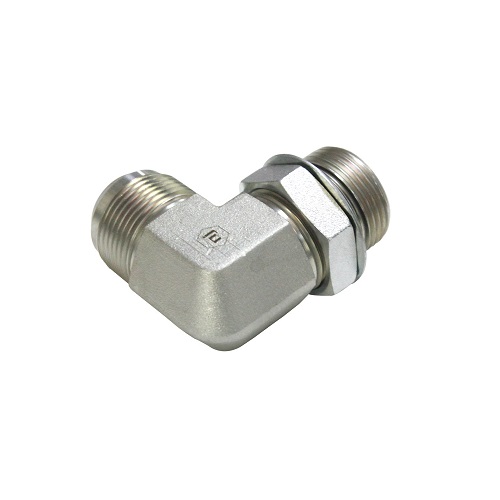
| BSPP thread fittings | 1B, 1B4, 1B9, 1BG, 1BG4, 1BG9, 1BH, 1BH9, 1BJ, 1BK, 1BM, 1BN, 1BO, 1BT, 1BT9, 2B, 2B9, 2BJ, 2GB, 2HB, 22NB, 2TB9, 2OB, 2TB, 3B, 4B, 4BN, 5B, 5BN, 5NB, 5BT, 5GB, 5OB, 5TB9, 6B, 7B, 7B9, 9B, EB, AB, BB | Straight, swivel elbow, O-ring elbow, bulkhead and plug configurations, plus cross-family conversions: BSPP x NPTF, BSPP x JIC, BSPP x BSPT, BSPP x BSPP |
| BSPt thread fittings | 1T, 1T9, 1BT, 1ST, 4T, 5T | Male-to-male and male-to-female straights, 90 degree elbows, plugs, and JIS-to-BSPT conversions |
| NPT / NPTF thread fittings | 5000, 5404, 5405, 5406, 5406-C, 5406-HP, 5406-P, 5406-SHP, 5500, 5501, 5502, 5503, 5504, 5505, 5600, 5601, 5602, 5603, 5604, 5605, 5650, 5652 | Straights, pipe plugs in hex, hollow hex and square head styles, caps, tees and crosses |
| JIC (37 degree flare) adapters | 2403, 2404, 2405, 2406, 2408, 2500-2505, 2601-2609 and similar | JIC x JIC, JIC x NPTF, male and female variants, 45 degree and 90 degree elbows, bulkhead fittings, plugs |
| SAE JIC / ORB / ORFS adapters | 6801, 6802, 6803, 6804, 6805, 6806, 6807, 6808, 6809, 6810, 6815, 6818, 6820, 6832, 6835, 6840, 6850 | Adjustable ORB elbows, ORB/ORFS tees, male-to-female ORB elbows, multi-port assemblies |
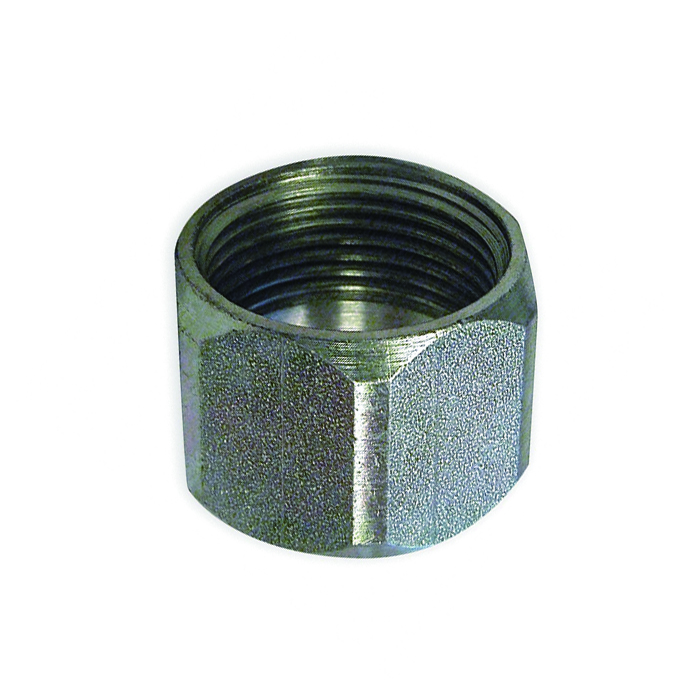
| Hydraulic cap nut and lock nut | 0304C, 0306, 0318, 0319, 0403, 0500, FS0304C, FS0306, FS0318, FS0319 | Tube nuts, bulkhead lock nuts, tube sleeves, JIC caps and bore-to-male connectors |
Two details deserve attention. Cross-family adapters matter as much as single-family parts, because the BSPP and JIC ranges include conversions between thread systems, and these are the designations most often needed when equipment of mixed origin is repaired. The prefix structure inside the cap nut line (0304C alongside FS0304C, 0306 alongside FS0306, 0318 and FS0318, 0319 and FS0319) shows how a supplier manages sub-families. A buyer should establish whether both variants remain in regular production, or whether one is retained as a catalogue entry only.
Pressure, temperature and salt spray: reading the numbers correctly
The published envelope for these adapter lines is a pressure range of 3000-6000 PSI and a maximum stable operating temperature of 220 degrees Celsius. Applied performance data for the assembly environment states that the parts withstand a static pressure of 6,000 PSI and a burst pressure of 9,000 PSI without deformation, while maintaining continuous operation and seal integrity.
Corrosion evidence is expressed as a 120-hour salt spray test, with white rust appearing at 120 hours and red rust at 240 hours. Read as a benchmark, that result distinguishes a finished part that resists the early stage of salt exposure from one that does not. It is a screening result, not a service-life prediction.
External standards help a buyer place these figures in context. Under SAE J1453, ORFS fittings at dash size -4 (1/4 inch) are rated for 6000 PSI working pressure. For NPTF straight threads at 1/4 inch, a working pressure of 4000 PSI is typically cited with a 4:1 safety factor. ISO 8434-2:2007 specifies design and performance requirements for 37 degree flared connectors suitable for tubes from 6 mm to 50.8 mm, the connector family that JIC-style adapters belong to. DIN 2353 defines three robustness categories for metric tube fittings: LL (Extra Light, 100 bar), L (Light, up to 315-500 bar) and S (Heavy, up to 630-800 bar).
The practical rule is that a series-level range never replaces a part-level rating. A 3000-6000 PSI envelope describes a product family; an individual dash size, thread form and material combination carries its own working pressure, and a supplier who can name the governing standard beside the number is providing verifiable evidence rather than a headline figure.
Applications where continuity matters most
These adapters are used in construction machinery, agricultural machinery, general-purpose machinery, firefighting equipment, marine machinery, mining, transportation, aerospace, automotive, oil and gas extraction, iron and steel metallurgy, and water conservancy engineering. In the field they connect hydraulic hoses, hydraulic cylinders, threaded bolts, pipe joints, hydraulic pumps and mechanical cylinder assemblies, and they are expected to resist rust, high temperature and high pressure at the same time.
The demand pattern behind those applications is stable rather than seasonal. Mobile hydraulics accounted for more than 58% of total hydraulics market revenue in 2024, and Asia accounted for 74% of global industrial robot installations in the same year, a demand driver for precise hydraulic connections (Grand View Research; Ken Research). Both figures point the same way for procurement: equipment fleets keep running, so spare-part demand keeps running, and it arrives as mixed thread families rather than as single uniform line items. That is precisely the situation in which an incomplete model series becomes an operational problem rather than a commercial inconvenience.
Market trend signals for long-term adapter supply
Three verified data points frame long-term planning. The global hydraulic fittings market was valued at USD 4.8 billion in 2025 and is projected to reach USD 7.9 billion by 2034. Hydraulic adapters were the largest product type segment at 28.4% share in 2025. Steel held 45.2% of material revenue share in 2025, and Asia-Pacific held an estimated 38.6% of revenue, the largest regional position. A separate estimate places the hydraulic fittings and adapters market on a 4.5% CAGR between 2025 and 2033, reaching USD 5.8 billion (market report; medium-reliability source).
Adjacent figures are consistent in direction rather than in level. The broader hydraulics market, including components, pumps and cylinders, was estimated at USD 38.39 billion in 2024 (Grand View Research), while hydraulic fluid connector demand is projected to reach USD 1.82 billion by 2032 at an 8.0% CAGR (Credence Research; medium-reliability source). Published market sizing for fittings and adapters varies widely with scope, since some estimates cover fittings alone and others cover hydraulic equipment as a whole, so buyers should treat these numbers as directional signals for volume planning rather than as a purchasing baseline.
Continuity-based sourcing compared with traditional spot purchasing
Spot purchasing optimizes a single order. Continuity-based sourcing optimizes the sequence of orders. The difference shows up in which risks each model absorbs.
| Evaluation dimension | Spot purchasing | Continuity-based sourcing |
|---|---|---|
| Material grade | Grade confirmed for the lot in hand | Grade declared per order and held across lots |
| Model availability | Only the items currently quoted | Series list with regularly produced and catalogue-only items separated |
| Pressure and temperature basis | Series-level figure | Part-level rating with the governing standard named |
| Corrosion evidence | Not usually requested | 120-hour salt spray record with white rust at 120 hours and red rust at 240 hours |
| Accessory completeness | Resolved case by case | Documented process: photographic evidence, verification, replacement by sea or air |
| Revision risk | High, with no record to compare against | Lower, because each order is compared with the approved baseline |
The limits of this approach should be stated plainly. Continuity-based sourcing narrows the supplier pool, because it requires a supplier willing to publish series lists and repeat test evidence rather than quote items individually. It also introduces concentration risk: a single supplier holding a complete model family is efficient until that supplier has a capacity problem, and duplicating a part number across two suppliers does not by itself duplicate the material or dimensional control that made the part acceptable. Finally, the most frequently cited corrosion figure in this category, a 120-hour salt spray result, marks the point at which white rust begins to appear. It is a useful discriminator between finishes, but it does not describe behaviour in continuously wet, chloride-rich or thermally cycling environments, and it should not be written into a contract as a service-life guarantee.
A repeat-order verification checklist
Continuity becomes checkable when it is reduced to evidence that can be requested at each order. The following items are drawn from the specifications and acceptance practice published for these adapter lines.
| Verification item | Evidence to request | Why it matters on a repeat order |
|---|---|---|
| Material grade | Grade statement per line item: carbon steel, SS304 or SS316 | Detects silent substitution, particularly in cap nut and lock nut items where carbon steel is the primary material |
| Model continuity | Series list with configuration names, marking regularly produced items | Prevents loss of designations such as cross-family conversions or bulkhead variants |
| Pressure rating | Part-level rating inside the 3000-6000 PSI range, with the governing standard cited | Confirms the rating applies to the ordered size and thread form, not only to the family |
| Temperature limit | Maximum stable operating temperature of 220 degrees Celsius at assembly level | Material datasheets describe wider ranges; the assembly figure governs the installed part |
| Corrosion result | 120-hour salt spray record, with white rust at 120 hours and red rust at 240 hours | Establishes whether the coating or grade is unchanged from the approved sample |
| Accessory completeness | Packing list reconciled against cap nuts, lock nuts, sleeves and caps | Short shipment and wrong delivery concentrate in accessory line items |
| Non-conformance route | Written process: photographic evidence, verification, replacement by sea or air | Turns an after-sales complaint into a defined procedure with a decision point |
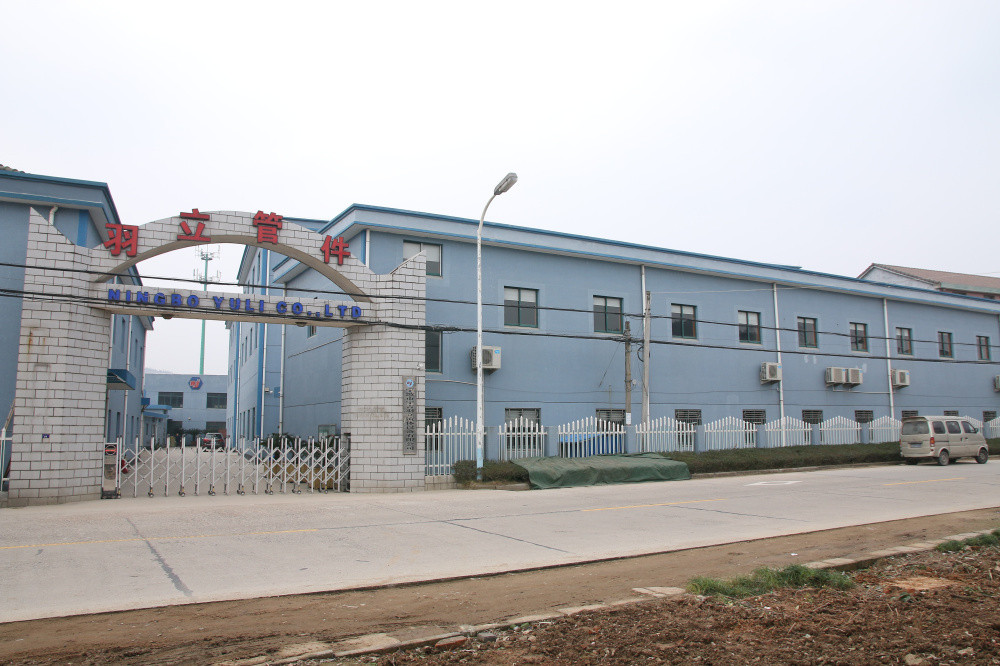
One illustration of how these signals appear in public documentation: NingBo NJ Hydraulic Adapter Co., Ltd is a hydraulic adapter and fitting manufacturer established in 2004 in Fenghua, Ningbo, China, operating a 20,000-square-meter facility with approximately 200 staff and a four-engineer R&D team. Its stated annual output is 4,000,000 units, approximately 75% of which is exported, with the USA and Canada as its main markets. Its product scope covers hydraulic adapters, hydraulic fittings, flanges, valves and non-standard components, with production carried out according to TS16949 standards. Figures of this kind are self-declared supplier parameters, and their value in a long-term evaluation comes from whether they can be reconciled with the per-order evidence listed above.
Future outlook
Two shifts are likely to define long-term adapter supply over the next planning cycle. The first is documentation. As adapter ranges grow and mixed-thread equipment becomes the norm, the ability to produce a consistent grade statement, a part-level rating with a named standard, and a repeatable corrosion record will separate suppliers that can hold long-term contracts from those that can only win individual orders. The second is regional weight. With Asia-Pacific already holding an estimated 38.6% of hydraulic fitting revenue and steel maintaining a 45.2% material share through high-pressure demand, buyers should expect continuity discussions to remain centred on carbon steel performance for volume lines and stainless grades for exposed environments, rather than on a single universal specification.
FAQ
Q1. Which material grades should be confirmed before committing to a long-term hydraulic adapter agreement?
For BSPP, BSPt, NPT, JIC and SAE JIC/ORB/ORFS adapter lines, the available grades are carbon steel, SS304 and SS316, and the same pressure and temperature envelope is published for each, namely a 3000-6000 PSI range and a maximum stable operating temperature of 220 degrees Celsius. The hydraulic cap nut and lock nut line also supports SS304 and SS316, but carbon steel is the primary material there. Confirmation should therefore be per line item, not per supplier.
Q2. How can a buyer verify pressure ratings across repeat orders?
Start from the part rather than the family. The published envelope of 3000-6000 PSI describes the adapter family, while applied performance data for the assembly environment states resistance to a static pressure of 6,000 PSI and a burst pressure of 9,000 PSI without deformation and with seal integrity maintained. External references give comparable anchors: SAE J1453 rates ORFS dash size -4 at 6000 PSI working pressure, and 1/4-inch NPTF straight threads are typically cited at 4000 PSI with a 4:1 safety factor. Verifying means confirming the rating for the ordered size, thread form and material, together with the standard being applied.
Q3. What does a 120-hour salt spray result actually establish?
It establishes a corrosion benchmark under salt spray exposure: white rust appears at 120 hours and red rust at 240 hours. That is sufficient to compare finishes and grades against an approved sample across orders. It is not a prediction of service life, and it does not describe performance in continuously wet, chloride-rich or thermally cycling conditions.
Q4. How is model continuity checked when a catalogue lists hundreds of part numbers?
By asking for the series list in functional terms. BSPP ranges alone include designations from 1B through EB, AB and BB, covering straights, swivel and O-ring elbows, bulkhead fittings, plugs and cross-family conversions such as BSPP x NPTF and BSPP x JIC. The NPT range runs from the 5000 series to 5652, the JIC range from 2403 to 2609, the SAE range from 6801 to 6850, and the cap nut and lock nut range covers 0304C, 0306, 0318, 0319, 0403, 0500 and their FS-prefixed variants. Continuity is confirmed when a supplier can state which of these are regularly produced and which are catalogue entries only.
Q5. What is the documented response when items are missing or wrongly delivered?
The buyer provides photographs of the missing or wrong-delivered items. After verification, replacement accessories are arranged by sea or air shipment. The relevant evaluation point is that the process is written and repeatable, which makes accessory completeness a measurable acceptance criterion rather than a negotiation.
Q6. Do long-term adapter purchases need the same documentation at every order stage?
The documentation set is consistent, but the function changes by stage. During research, grade statements and series lists establish whether continuity is even possible. During evaluation, part-level pressure ratings, the 220 degrees Celsius assembly temperature limit and 120-hour salt spray records provide the comparable evidence. During repeat execution, the same items become a reconciliation tool, where each order is checked against the approved baseline rather than re-evaluated from scratch.
For readers who want to compare these verification items against an actual product range, the manufacturer reference used above publishes a downloadable catalogue: hydraulic adapter product catalogue (PDF). Additional company reference: njadapter.com.