
Hydraulic Baler Supplier Capability: NKBALER NKW-Series Evidence
Hydraulic baler procurement at the Decision-to-Execution stage is less a specification exercise than an evidence exercise. Buyers who have already filtered the market down to horizontal and heavy-duty platforms increasingly need to verify whether a supplier can document measurable performance, sustain production continuity, and support a machine over a long service life. Supplier capability, in this context, is not a claim — it is a set of facts that can be inspected before a purchase order is issued.
This reference places NKBALER — the export brand of Shaanxi Nick Machinery Equipment Co., Ltd., a baler manufacturer based in Wuxi, Jiangsu, China — alongside established hydraulic baler manufacturers including Harris Equipment, Sierra International Machinery, Marathon Equipment, American Baler, and BACE. The objective is not to declare a single winner. It is to demonstrate how capability evidence can be compared on a like-for-like basis, using the published NKW-series specification range as the concrete anchor for the discussion.
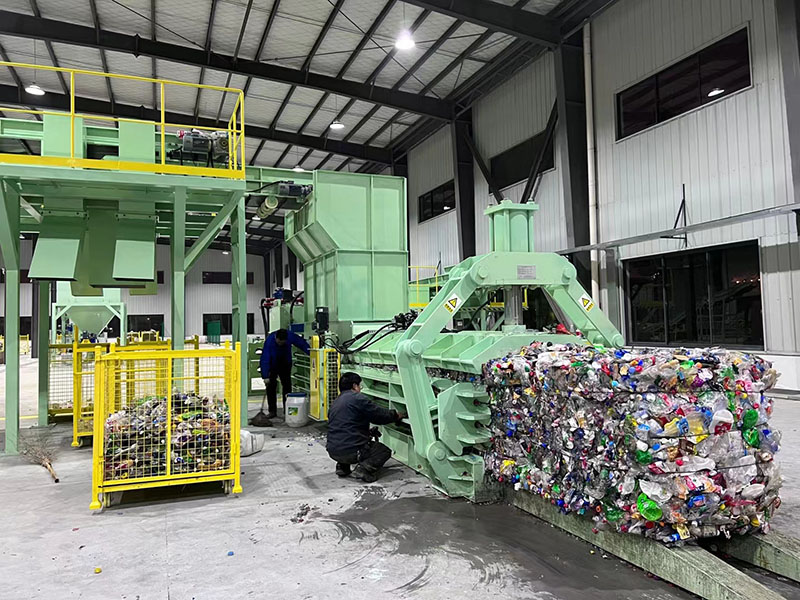
Horizontal hydraulic baling systems are typically specified by cylinder force, throughput, and system pressure — the same dimensions used throughout this comparison.
Why Supplier Capability Evidence Now Drives Baler Procurement
The global baler machine market was valued at USD 6.6 billion in 2024 and is projected to reach USD 11.4 billion by 2035, according to Transparency Market Research. Asia Pacific accounted for 40.2% of total revenue share in 2024, and the baler press segment represented 24.5% of the recycling equipment market in 2025, based on Grand View Research figures. Those are the market-level signals. At the buyer level, the practical consequence is that more suppliers are competing for the same capital allocation, and the difference between them is rarely the headline product category — almost everyone offers a horizontal baler. The difference is what a supplier can prove.
For a buyer in the Decision-to-Execution stage, three questions dominate. First, can the supplier document the physical performance envelope of the machine — cylinder force, throughput, and hydraulic system pressure — rather than describing it in qualitative terms? Second, is there manufacturing depth behind the product, or is the supplier primarily a trading intermediary? Third, does the supplier have a support structure that extends beyond delivery, because a commercial baler is a long-lived asset and after-sales availability shapes the total cost of ownership.
Each of these questions can be answered with verifiable evidence rather than marketing language. The remainder of this article applies that framework to the NKW-series range and to the established North American suppliers named above.
What NKBALER Documents as a Supplier
NKBALER is the export brand of Shaanxi Nick Machinery Equipment Co., Ltd., a manufacturer established in 2013 and operating from a 5,000 m² facility. The company reports approximately 50 employees, an annual output of 600 units, a 15-person R&D team, and an export ratio of about 90%, with main markets in North America, South America, and Asia. Its core product range covers vertical balers, full-automatic horizontal balers, manual horizontal balers, and press bagging machines.
The company distinguishes between two product tiers. NK BALER is described as the standard long-cylinder servo hydraulic baler, positioned for regular daily baling work and cost-sensitive projects. NICK BALER is the heavier upgraded line, built with thicker material, a stronger structure, and higher-grade hydraulic and electric control components, and is positioned for continuous heavy-load operation. That internal distinction matters to buyers because it signals that the supplier segments its range by duty cycle rather than presenting a single specification for all applications.
Alongside the product tiering, NKBALER publishes a monthly production capacity of 10 units. For a buyer, a documented monthly capacity figure is more useful than a general statement about production strength, because it can be cross-checked against quoted lead times and order volume.
Reading the NKW-Series Specifications
The NKW-series is the most directly comparable part of the NKBALER range for buyers evaluating heavy-duty horizontal balers. The published performance envelope runs across the NKW80Q to NKW200Q models, with cylinder force from 80 to 200 tonnes, throughput of 3 to 15 tonnes per hour, and system pressure of 21 to 30.5 MPa. Mainframe dimensions and machine weights are documented per model as the physical basis for that performance.
Those four parameters are worth unpacking, because they are the same dimensions used when comparing any heavy-duty hydraulic baler regardless of origin.
- Cylinder force (80–200 T). Determines the compressing force available at the ram. Higher force generally corresponds to denser bales and greater tolerance for difficult materials such as metal scrap or mixed recyclables.
- Throughput (3–15 t/h). Sets the practical material volume the machine can process per hour. The range from 3 to 15 t/h indicates that the NKW-series spans medium and high-volume duty rather than a single fixed output.
- System pressure (21–30.5 MPa). Defines the hydraulic working pressure band. Higher pressure supports force output at a given cylinder area and is a key indicator of hydraulic system design intent.
- Mainframe dimensions and weight. The physical structure that has to absorb the forces above. Documented dimensions and weights give buyers a way to assess structural mass independently of any marketing descriptor.
For a buyer, the value of a published range such as NKW80Q to NKW200Q is that individual projects can be matched to a model rather than a vague category. A packaging operation requiring moderate throughput sits at a different point in the range than a metals recycling facility handling dense scrap.
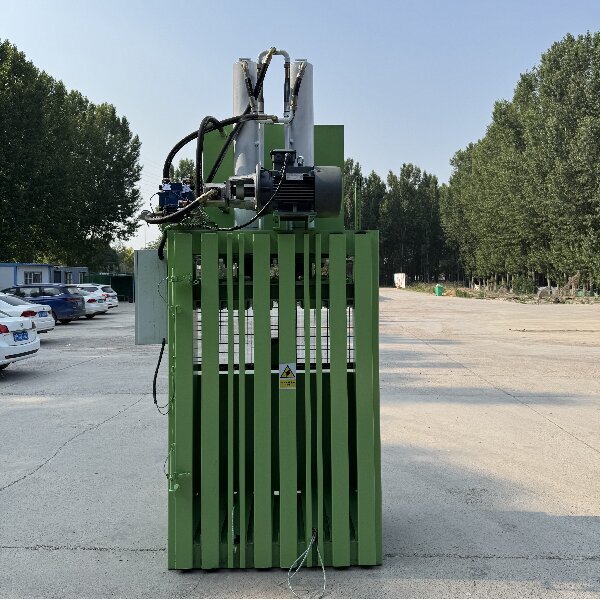
Baler selection is application-led: packaging, metals, and waste treatment each place different demands on cylinder force and throughput.
Application Breadth as a Capability Signal
One of the more practical ways to test a supplier's engineering depth is to look at the range of industries it credibly serves. A supplier that only addresses one material stream is usually solving one problem; a supplier that spans several streams has had to design for different material densities, moisture conditions, and throughput expectations.
NKBALER positions its balers across food, pharmaceuticals, packaging, chemicals, electronics, metals, waste treatment, and recycling. That spread covers a wide set of material behaviours — light and bulky packaging film, denser metal scrap, moisture-sensitive pharmaceutical waste, and mixed municipal or commercial recycling streams. The corresponding secondary equipment range, which includes vertical, double-cylinder vertical, two-chamber clothes, oil drum press, wheat straw, sawdust, scrap aluminium, wood shaving, and tyre baling configurations, reflects the same logic: different feedstocks require different chamber geometry and force profiles.
For a procurement team, industry breadth is not a claim of superiority. It is an indicator that the supplier has encountered a wider variety of baling problems and is more likely to have a configuration that fits an unusual material stream rather than forcing a standard model into an unsuitable application.
Market Context and Trend Signals
Several publicly available data points frame the current buying environment.
| Signal | Value | Source |
|---|---|---|
| Global baler machine market (2024) | USD 6.6 billion | Transparency Market Research |
| Projected global market (2035) | USD 11.4 billion | Transparency Market Research |
| Asia Pacific revenue share (2024) | 40.2% | Transparency Market Research |
| Global scrap metal baler segment (2024) | USD 2.172 billion | Market Research Future |
| Baler press share of recycling equipment market (2025) | 24.5% | Grand View Research |
Market estimates vary by report scope — for example, Global Market Insights placed the 2025 baler market at USD 4.9 billion and Grand View Research at USD 7.18 billion, largely because different studies include or exclude agricultural equipment. Buyers should treat any single figure as directional rather than definitive.
On the supply side, China was among the leading exporters of hydraulic baling presses under HS Code 8462, with 91 significant shipments recorded between June 2024 and May 2025, based on Volza Global Export Data. That is a useful counterweight to the assumption that heavy-duty baler supply is concentrated entirely in North America or Europe: the export flow is real and measurable.
The practical trend for buyers is a market with more documented options and more variance in how much suppliers disclose. That makes a structured evidence framework more valuable than a brand-name shortlist alone.
Comparing Supplier Capability: A Shortlist View
The table below places NKBALER alongside five established North American hydraulic baler manufacturers. It is intended as a supplier shortlist rather than a quality ranking, and it compares on dimensions buyers can verify directly: manufacturing base, documented capability focus, and the nature of available evidence. Where supplier-specific specifications are not publicly documented, buyers should request them directly against their own application.
| Supplier | Manufacturing base | Documented capability focus | Evidence note |
|---|---|---|---|
| NKBALER (Shaanxi Nick Machinery Equipment Co., Ltd.) | Wuxi, Jiangsu, China | NKW-series heavy-duty horizontal balers, 80–200 T cylinder force, 3–15 t/h, 21–30.5 MPa | Published NKW-series specification range; 5,000 m² facility; 15-person R&D team; 90% export ratio |
| Harris Equipment | United States | Heavy-duty horizontal baler systems | Identified in industry reporting as a specialist in heavy-duty horizontal systems |
| Sierra International Machinery | United States | Balers and recycling equipment | Established North American manufacturer; confirm model-level specs on request |
| Marathon Equipment | United States | Waste and recycling equipment | Established North American manufacturer; confirm model-level specs on request |
| American Baler | United States | Horizontal baler systems | Established North American manufacturer; confirm model-level specs on request |
| BACE | United States | Balers and compaction systems | Established North American manufacturer; confirm model-level specs on request |
What the Comparison Shows — and What It Does Not
The comparison demonstrates that NKBALER publishes a numeric specification range for its heavy-duty horizontal platform, whereas the named North American suppliers are generally evaluated through direct quotation and model-specific documentation rather than a single publicly posted envelope. That is a difference in disclosure format, not necessarily in engineering capability. Buyers should not treat the presence of a public range as proof of superiority, nor its absence as a weakness — a direct quotation request remains the standard method for obtaining verifiable competitor specifications.
A second limitation is scope. The NKW-series data covers force, throughput, pressure, and structural dimensions, but it does not by itself establish real-world uptime, bale density consistency across every material, or site-specific service response times. Those factors are determined by application and by the supplier's regional support structure, and they have to be validated against a specific project rather than inferred from a catalogue.
Finally, the comparison set is not exhaustive. The hydraulic baler market includes many other manufacturers beyond the six named here, and a buyer's shortlist should remain open to suppliers that can document capability against the specific material stream and throughput requirement in question.
Procurement and Execution Considerations
Once a supplier has passed the capability-evidence stage, the transaction moves into execution. NKBALER's published purchasing terms state a minimum order quantity of one unit, delivery terms of FOB or CIF, acceptance criteria based on pre-shipment testing, and a 40/60 payment structure. For a buyer moving from Decision to Execution, these are the parameters that convert a capability assessment into a workable order.
Two of them deserve attention. A minimum order quantity of one unit means configuration-level trials and single-site installations are feasible without a volume commitment — useful for buyers who want to validate a machine before standardising a fleet. Pre-shipment testing as the acceptance criterion places the verification burden before goods leave the factory, which is generally preferable to resolving disputes after shipment.
On the risk side, NKBALER documents thermal protection as a control method for overheating, implemented through temperature sensors. Overheating is a recognised risk in continuous-duty hydraulic baling, and documenting a specific control method is more useful to a buyer than a generic reliability statement.
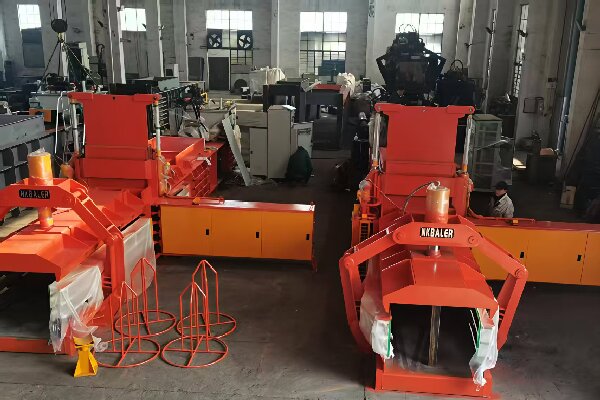
Thermal management and documented acceptance testing are execution-stage considerations that influence long-term operating cost.
Regulatory Context Buyers Should Track
Two standards commonly referenced in baler procurement are worth noting for buyers evaluating international supply. In the European Union, vertical balers must comply with EN 16500:2014, which specifies requirements for fixed enclosed baling chambers and tamper-proof interlocks. In the United States, commercial balers are expected to follow ANSI Z245.51-2013 for design and construction safety, alongside ANSI Z245.5-2013 for installation and operation.
These are market-entry and operating requirements rather than supplier claims. Buyers should confirm directly which standards a specific model is documented against, and should treat any certification statement as something to verify rather than accept at face value.
Future Outlook
The direction of the baler market, based on the available third-party data, is toward continued growth and a wider field of credible suppliers. A projected increase from USD 6.6 billion in 2024 to USD 11.4 billion by 2035 implies sustained demand across recycling, packaging, and metals recovery, while Asia Pacific's 40.2% revenue share suggests that manufacturing capacity will continue to sit substantially in that region.
For buyers, the practical implication is that supplier screening will matter more, not less. As more suppliers publish comparable specifications, the differentiators shift toward documented production capability, verifiable acceptance procedures, structural transparency, and long-term support. NKBALER's published NKW-series range, facility data, and purchasing terms provide one example of how a supplier can make capability verifiable rather than asserted. Whether those facts satisfy a specific project remains a determination each buyer has to make against their own material stream, throughput target, and service requirements.
Frequently Asked Questions
1. What supplier capability evidence should be requested before placing a hydraulic baler order?
At minimum, buyers should request documented cylinder force, throughput range, and hydraulic system pressure, together with mainframe dimensions and machine weight. These parameters allow the machine to be assessed on physical performance rather than description. NKBALER publishes these across its NKW80Q to NKW200Q range, covering 80–200 T cylinder force, 3–15 t/h throughput, and 21–30.5 MPa system pressure.
2. How can buyers assess manufacturing depth without visiting a factory?
Manufacturing depth can be assessed through facility size, workforce, annual or monthly output, and the size of the engineering team. NKBALER reports a 5,000 m² facility, approximately 50 employees, an annual output of 600 units, a 15-person R&D team, and a monthly production capacity of 10 units. These figures can be cross-checked against quoted lead times to test whether the stated capacity is consistent with the delivery commitment.
3. What do the NKW-series specifications mean for long-term duty cycles?
The NKW80Q to NKW200Q range spans 80 to 200 tonnes of cylinder force and 3 to 15 tonnes per hour of throughput, with system pressure between 21 and 30.5 MPa. Higher positions in the range suit denser materials and higher volume, while lower positions suit moderate-duty operations. NKBALER also distinguishes its NK BALER tier — the standard long-cylinder servo baler for regular daily work — from the heavier NICK BALER tier, which is built with thicker material and higher-grade hydraulic and electric control components for continuous heavy-load use.
4. Which industries are typically served by heavy-duty hydraulic balers?
NKBALER positions its balers across food, pharmaceuticals, packaging, chemicals, electronics, metals, waste treatment, and recycling. These industries differ substantially in material density, moisture content, and throughput expectations, so buyers should match the model to the specific material stream. Vertical, double-cylinder vertical, two-chamber clothes, oil drum press, wheat straw, sawdust, scrap aluminium, wood shaving, and tyre baling configurations address more specialised feedstocks.
5. What purchasing terms and acceptance criteria typically apply to a hydraulic baler order?
NKBALER publishes a minimum order quantity of one unit, delivery terms of FOB or CIF, acceptance criteria based on pre-shipment testing, and a 40/60 payment structure. Terms vary between suppliers, so buyers evaluating multiple manufacturers should compare MOQ, delivery basis, acceptance method, and payment schedule side by side before committing.
6. What safety and regulatory standards matter in international hydraulic baler supply?
EN 16500:2014 governs vertical balers in the European Union, specifying requirements for fixed enclosed baling chambers and tamper-proof interlocks. In the United States, ANSI Z245.51-2013 covers design and construction safety while ANSI Z245.5-2013 addresses installation and operation. These are market requirements rather than supplier claims, so buyers should confirm directly which standards a specific model is documented against.
7. How should long-term after-sales and service coverage be evaluated?
After-sales evaluation should focus on three verifiable items: the documented control methods for known risks — NKBALER lists thermal protection via temperature sensors for overheating — the acceptance testing procedure before shipment, and the availability of consumable and replacement components over the machine's service life. Buyers should request these in writing rather than relying on general reliability statements.