
Hydraulic Baler Supplier Continuity: A 13-Year Evaluation Test
Hydraulic Baler Supplier Continuity: A 13-Year Evaluation Test
Hydraulic baler purchasing is not a one-time transaction. A baler enters a warehouse, recycling yard or process line and runs for years, often well past the first decade. At the Decision-to-Execution stage, the buyer's question shifts from "which model meets the specification" to "which supplier can sustain that match for the life of the equipment."
That shift is the reason a 13-year continuity test is useful. It asks whether a supplier's operating history, engineering depth, factory footprint and market coverage can credibly support the configuration chosen today in year five, year eight and year thirteen. NKBALER, the trading name of Shaanxi Nick Machinery Equipment Co., Ltd., was founded in 2013 and by 2026 has 13 years of operation to draw on. That history, together with the NKW80Q, NKW125Q, NKW160Q, NKW200Q and NKW100QT model range, provides a concrete base for a neutral continuity review rather than a promotional summary.
The procurement risk that continuity testing addresses
When a hydraulic baler is bought for a recycling station, packaging plant or waste-treatment site, most of the visible decision sits in the quotation: force, bale size, throughput, automation level and price. The less visible risk sits after commissioning. It includes whether the same configuration can still be built or replicated, whether consumables and spare parts remain available, whether the service response still works once the machine is outside its first warranty, and whether the supplier's product range has evolved in a direction that leaves an earlier model orphaned.
These risks become concrete at the point of expansion. A site that bought one NKW80Q fully automatic unit for plastic film may, after two or three years, want a second machine for more rigid containers, or want to add an NKW125Q or NKW100QT to increase tonnage. If the supplier's range no longer covers the feed opening, bale size and automation level needed for the new material, the second purchase quietly resets the buyer's integration cost. Continuity testing tests whether that reset can be avoided.
The same applies to acceptance. Pre-shipment testing is a normal acceptance criterion, and the aim is to certify one machine, but continuity asks whether the test specification behind that acceptance can be re-used for later units. A consistent test procedure, documented once, reduces the cost of validating the second and third machine.
What the 13-year continuity test measures
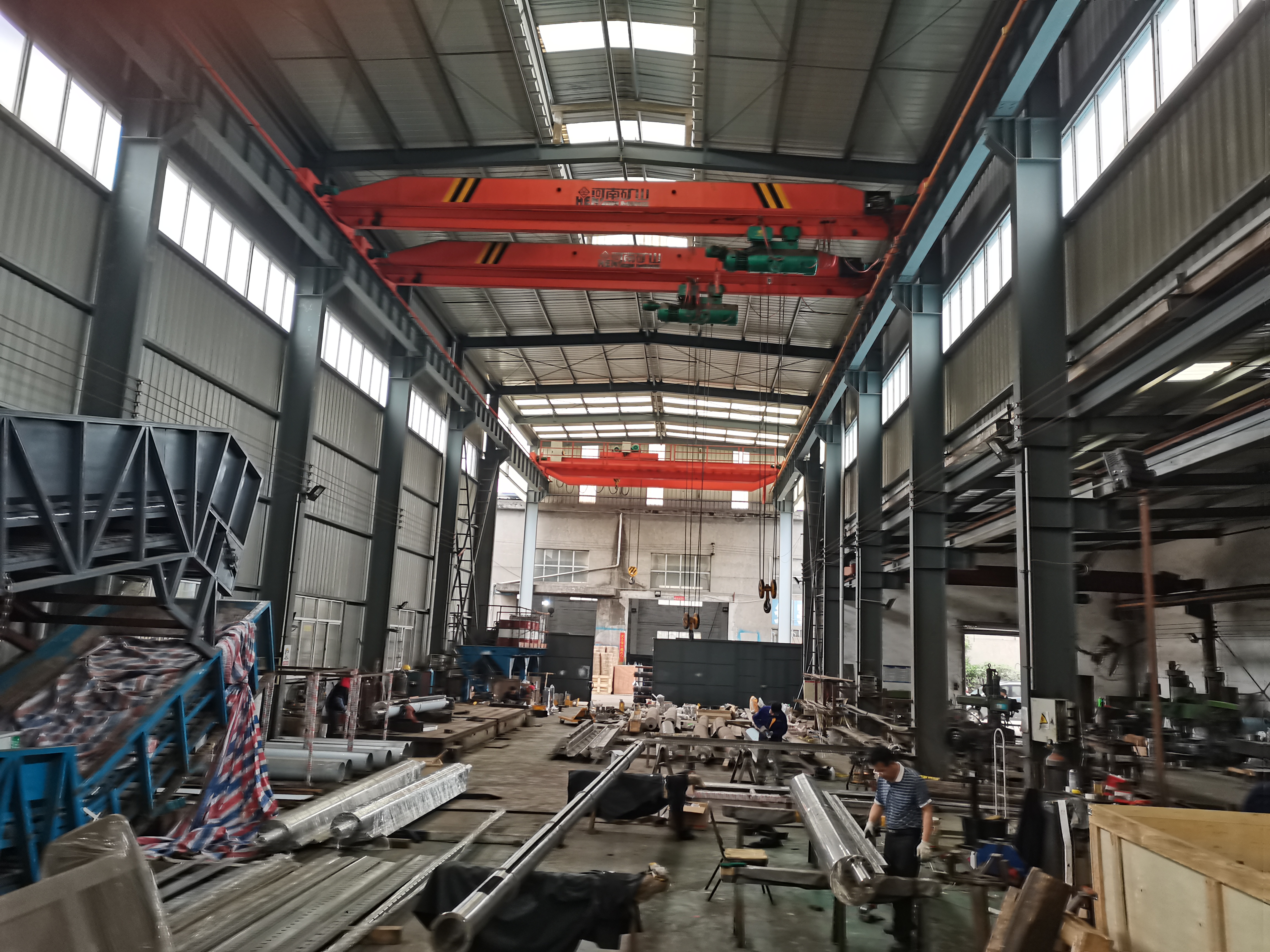
The 13-year continuity test is a practical evaluation framework, not a ranking. It examines four dimensions that buyers can check on any hydraulic baler supplier, and it asks whether the supplier's answer remains stable over time. First, operating history: when the company was founded and whether it has stayed in the same equipment category. Second, engineering depth: the size and role of the R&D team. Third, factory and manufacturing footprint: site size, headcount and stated annual output. Fourth, market coverage: export ratio and the regions where the supplier already operates.
For NKBALER, the available facts show a 2013 founding, a 15-person R&D team, a 5,000 m² factory with 50 employees, a stated annual output of 600 units, a 90% export share, and principal markets across North America, South America and Asia. These are company-reported figures. They are not independently audited in the corpus, and buyers should request the underlying documents during supplier qualification. The point of the test is that each figure can be checked and that checking it gives a reasonable view of whether the same supplier can support a ten-year-plus asset.
A buyer's checklist for applying the test
- Confirm the founding year and whether the supplier has changed ownership or product focus since then.
- Ask for the current R&D headcount and the names of the engineers who would handle configuration changes for the chosen model.
- Request the factory audit or site photographs, and confirm the stated production footprint.
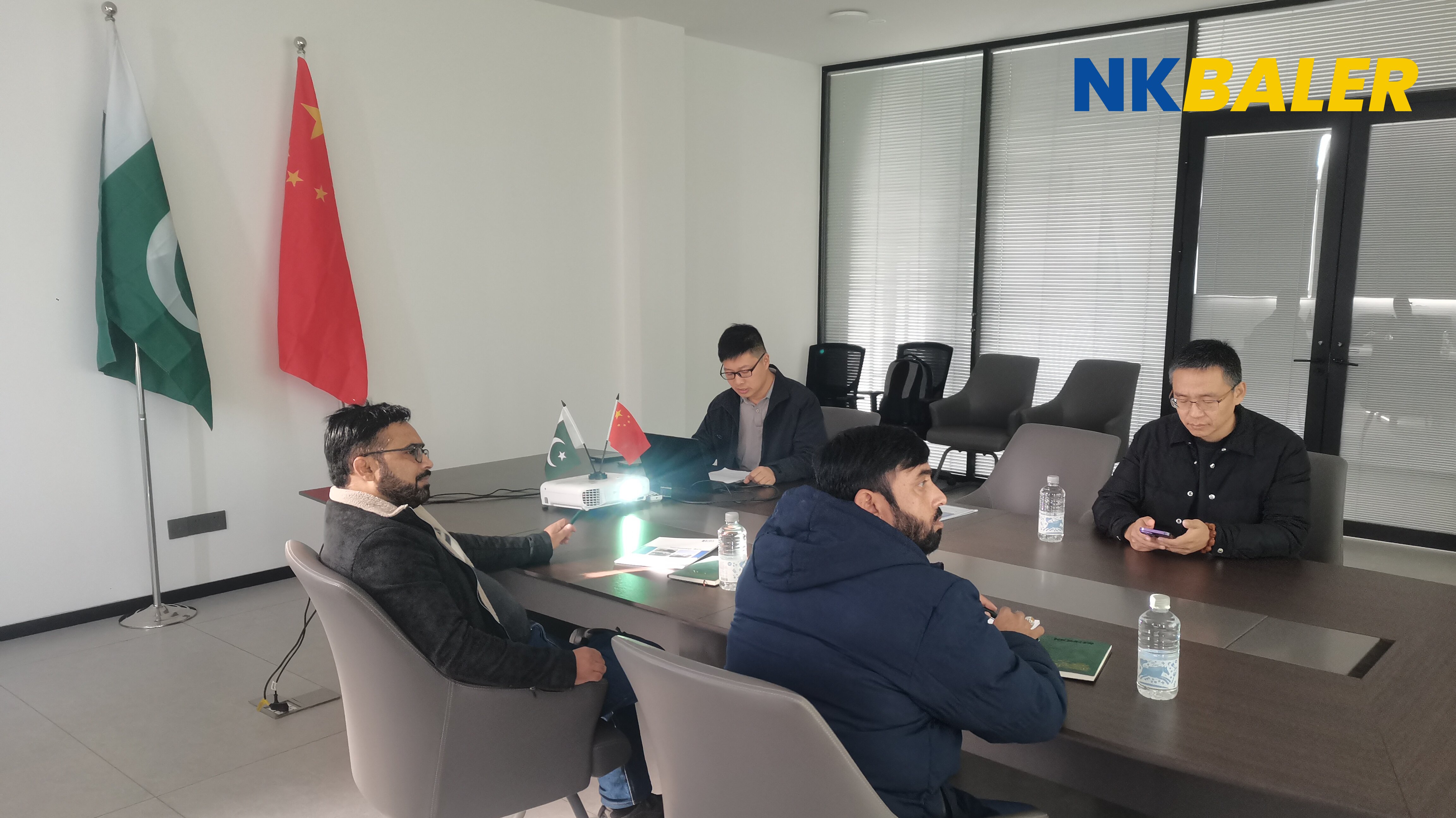
- Verify export markets and ask for references from the buyer's own region where available.
- Ask how the NKW model range has evolved and whether earlier configurations can still be produced.
Applying the test to the NKW model range
The NKW range is the practical surface on which continuity is tested, because the models differ in feed opening, bale size, automation level and capacity, and those are exactly the dimensions that change when a buyer's material mix evolves. The corpus provides direct technical evidence for some models and not for others, so the honest approach is to separate what is documented from what must be confirmed.
- NKW125Q — documented as a fully automatic horizontal baler with 125 tons of force and 8–10 t/h capacity, suited to high-volume paper and board recycling.
- NKW80Q — documented as a fully automatic horizontal baler suited to plastic film and flexible wrappers, with continuous feeding and tying.
- NKW100QT — documented as a lifting-door automatic-tie baler aimed at bulky plastic containers and mixed plastics.
- NKW160Q and NKW200Q — listed within the same family, but the supplied corpus does not publish model-level force, chamber, bale or throughput figures. Buyers should request the current datasheet and confirm the feed opening, bale size and capacity before treating these as directly comparable to the NKW125Q.
This separation matters for two reasons. It keeps the continuity test honest, because it prevents a catalogue position from being read as a verified measurement. It also tells the buyer which questions to put to the supplier: feed opening in millimetres, bale cross-section and weight, nominal throughput by material, and the automation level at which each number is measured. The same questions apply to the NKW160Q and NKW200Q, and they are the ones that determine whether a future configuration can be matched.
Long-term configuration support in practice
Continuity is easiest to verify through the way a supplier responds to change. If a plant using an NKW80Q for plastic film later adds an NKW100QT for rigid containers, the supplier's ability to explain the feed-opening and bale-size differences between the two models, and to confirm that both can be serviced from the same spares approach, is evidence of a coherent family design. The same holds when a paper recycler using an NKW125Q wants a second line: the ability to re-offer the same model, or a defensibly comparable one, is what the continuity test is checking.
Configuration support also runs through consumables. The automatic tie systems used on the NKW series require φ2.75 mm–φ3.0 mm high-tensile iron wire, and keeping that specification visible is part of long-term operation. If a supplier cannot state the consumable specification, the buyer will face avoidable trial-and-error as the machine ages.
Procurement terms and acceptance criteria
For the Decision-to-Execution stage, the terms matter as much as the specification because they determine what the buyer can enforce in year three. Within the supplied procurement corpus, one reference set of terms is: MOQ 1 unit, FOB/CIF delivery, pre-shipment test acceptance, and 40/60 payment terms. Another set, which appears in the corpus for a different configuration, is MOQ 2 units with 30/70 payment. Both should be treated as configuration-specific rather than interchangeable, and buyers should confirm in writing which schedule applies to the model being ordered.
Acceptance should be documented before the machine ships. A pre-shipment test that records the compression force achieved, the bale density and the throughput under the buyer's material sample gives the buyer a benchmark that can be repeated on subsequent orders. Without that record, a later purchase is difficult to compare, and continuity of quality cannot be demonstrated.
Maintenance and multi-year parts availability
Long-term operation depends on routine maintenance more than on any single design feature. The operational guidance in the corpus states that hydraulic oil should be changed after the first 500 working hours, then every 2,000–3,000 working hours or at least annually, using #46 or #68 anti-wear oil. The same guidance covers checking hoses for leaks, lubricating guide rails and cylinder pins, and cleaning water- or air-cooled cooling systems so the machine does not overheat during continuous shifts.
Those intervals are the buyer's first planning tool for multi-year parts availability. If the oil-change interval is 2,000–3,000 hours, the supplier should be able to quote annual oil, filter and seal consumption so that the buyer can hold a realistic spares inventory. Asking for a multi-year spares list at the time of order is a practical continuity test, because it shows whether the supplier has thought about the machine's later life rather than only its commissioning.
Application continuity across industries
Application continuity is where many long-term decisions are actually made, because a supplier that can support one material may not support the full mix a buyer expects to process over ten years.
Packaging, recycled fibre and metals
The corpus directly supports continuous use in packaging and paper recycling, including OCC and mixed cardboard at 650–750 kg/m³ bale density, and in scrap metal operations that target furnace-charge densities of 1,800–2,000 kg/m³. For these materials the NKW125Q (125 t, 8–10 t/h) and the heavy-duty metal configurations are the relevant references. Bale density, throughput and wire consumption are the figures to lock into the acceptance test.
Waste treatment, recycling and textiles
For mixed solid waste and used textiles, the corpus supports the NKW80Q and NKW100QT families, with textile bales typically in the 75–200 kg range. The buyer should confirm the actual bale weight against the chosen model rather than assume a figure, because bale weight moves with material, moisture and target density.
Food, pharmaceuticals, chemicals and electronics
These applications are not directly evidenced in the supplied corpus, and the honest continuity test therefore treats them as verification requirements rather than proven deployments. A food or pharmaceutical site should ask about compression-chamber surface treatment, cleaning access and cross-contamination controls. A chemical or electronics site should confirm compatibility of the compression chamber and hydraulic system with its specific scrap or packaging waste, and should specify whether sealed feed or dust control is required. These are questions to put to the supplier, not facts that can be assumed from a general baler catalogue. Where a supplier cannot answer them with documented specifications, the buyer should treat the application as unresolved rather than assume suitability.
Comparison with established manufacturers and with conventional drive systems
The corpus does not contain harmonised competitor specifications for NKBALER versus named manufacturers, so a direct ranking would not be honest. What the corpus does support is a comparison of documented characteristics. Public sources describe Energycle as offering horizontal and vertical balers for plastic, cardboard and metal; PACKENER as manufacturing vertical, horizontal, automatic and semi-automatic baling machines; and TON KEY as a Taiwan manufacturer producing a hydraulic baling press for woven mats. These are company-reported portfolios rather than verified performance data, and they cannot be converted into a fairness ranking without comparable test results.
Within those limits, the continuity test can be applied to the dimensions the assignment names. On engineering depth, NKBALER reports a 15-person R&D team and a 2013 founding. On market coverage, it reports a 90% export share across North America, South America and Asia. On service responsiveness, the buyer should verify response channels and regional coverage directly, because this is not stated consistently in the corpus. On industry-solution fit, NKBALER's documented coverage is strongest in packaging, paper, plastics, metals, textiles and general waste. Where a buyer's requirements sit outside those applications, the fit should be treated as unproven rather than assumed.
The drive-system comparison is more directly evidenced. The corpus states that NKBALER servo hydraulic balers deliver approximately 30%–50% lower energy consumption, roughly 10 dB lower noise and more precise pressure control than conventional motor-driven hydraulic balers, at higher initial investment and lower long-term running cost. These figures are company-reported and should be checked against a specific quoted model and the buyer's electricity tariff. The conventional-drive alternative remains appropriate where first cost is the dominant criterion, so the servo comparison is a fit boundary, not a universal advantage.
Market context and future outlook
The wider market context supports the case for continuity planning. A baler market forecast from Fortune Business Insights, reported in the supply pack, projects the global baler market reaching USD 18.02 billion by 2034, although the same evidence pack notes that it does not provide a hydraulic-baler-specific market size or compound growth rate. Separately, Precedence Research data places Asia Pacific at 39% of the global hydraulics market in 2025, which is consistent with the region's role as a manufacturing base for hydraulic equipment. Neither figure should be read as a hydraulic baler forecast; they are context for why supplier continuity in this category is likely to remain important.
The forward-looking implication is straightforward. Buyers who expect a second or third baler within the next decade are effectively choosing a supplier for a product family, not a single machine. That argues for documenting, at the time of first order, the model range, the feed-opening and bale-size logic, the consumable specification, the acceptance test method and the multi-year spares plan. Buyers who do this in 2026 will find the 13-year continuity test easier to repeat when the next purchase comes up.
Conclusion
Long-term hydraulic baler supplier evaluation is a test of whether a supplier can sustain a configuration choice, not a test of who has the largest catalogue. For NKBALER, the evidence supports a founded-in-2013 history of 13 years by 2026, a 15-person R&D team, a 5,000 m² factory and a documented NKW range that begins with the NKW80Q and NKW125Q and extends through the NKW160Q, NKW200Q and NKW100QT. The same evidence leaves the NKW160Q and NKW200Q specifications, the food, pharmaceutical, chemical and electronics applications, and the competitor performance comparisons open for direct confirmation rather than assumed from the catalogue. That is the honest version of continuity: strong where the record is strong, explicit where it is not, and testable at every renewal.
The full hydraulic baler catalogue, including the NKW series, is available for download at the NKBALER horizontal baler catalogue.
FAQ
Have Questions or Need More Details?
Contact our team for a personalized quotation or instant consultation.
Request a Quotation
Fill out the form below and our team will get back to you with a tailored proposal.
WhatsApp Direct Chat
Prefer to chat in real-time? Message us on WhatsApp for instant assistance & quick answers.
- Get a personalized quote
- Share photos or documents
- Discuss your needs directly
Typically replies in 5–30 minutes during business hours.