
Hydraulic Barber Chairs: What Buyers Should Know Before Sourcing
Hydraulic barber chairs are the most widely used seating category in professional salons, and for buyers sourcing for a new shop or a distribution program, the practical question is not just which model looks right, but which configuration, materials, and supplier capabilities match the intended use. This article examines the hydraulic barber chair category through the lens of procurement planning, using verified market context and the product lineup of Ningbo Hongzi Beauty & Hairdressing Equipment Co., Ltd. as a reference point.
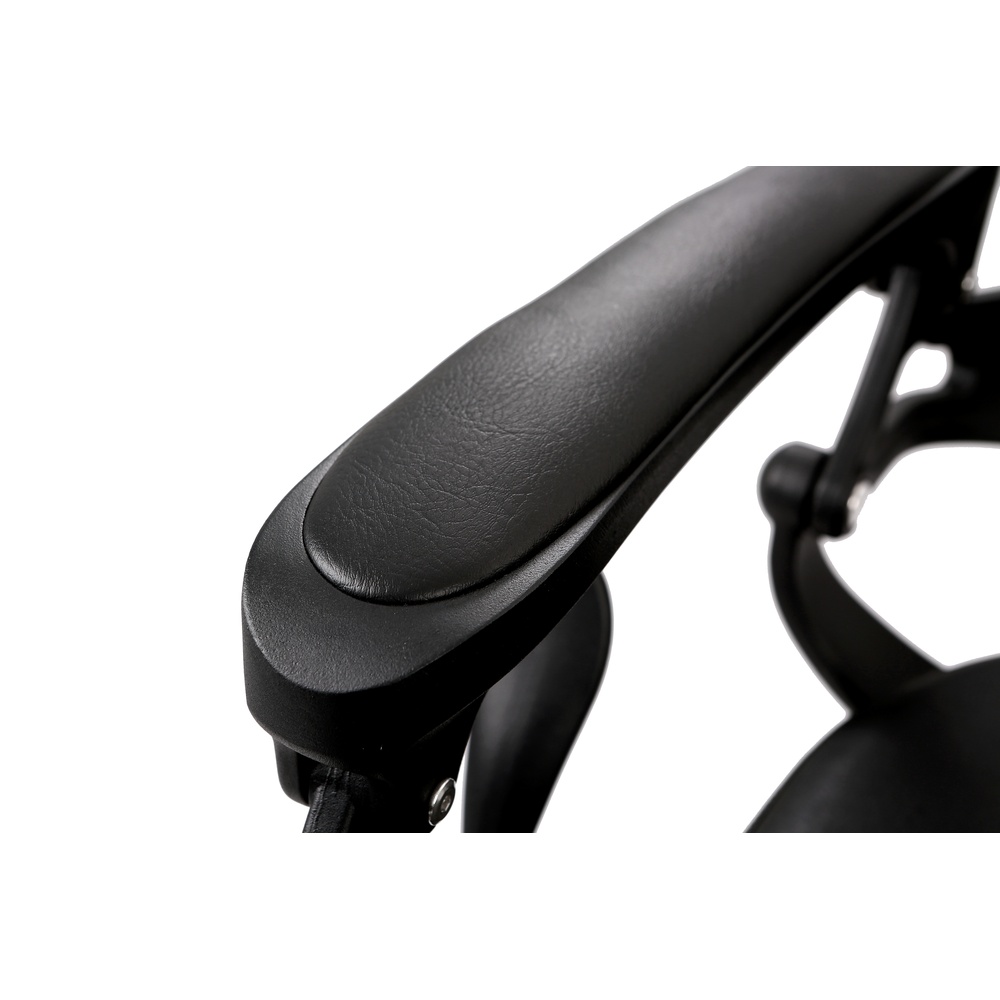
Hydraulic barber chairs are designed for continuous indoor salon use, where adjustability and ease of cleaning are primary requirements.
Why Hydraulic Barber Chairs Are the Industry Default
Hydraulic barber chairs dominate the product-type segment of the global barber chair market, accounting for approximately 42.5% of total market share in 2025, according to Market Intelo. The global salon chairs market was valued at approximately USD 10.57 billion in 2025 and is projected to reach USD 18.4 billion by 2035, per Fact.MR.
The dominance of hydraulic models is not accidental. Salons are high-rotation environments. A barber chair in a busy shop is used by multiple clients daily, is exposed to water, hair chemicals, and oil, and must remain stable under shifting weight as barbers adjust the seat height and backrest between clients. Hydraulic lift systems provide the smooth vertical adjustment that manual pump chairs cannot deliver, which is why professional barber shop chair specifications consistently center on hydraulic actuation.
For buyers, this creates a clear product direction: if the chair will serve daily paying customers in a salon or barber shop, a hydraulic barber chair is the appropriate starting point. The remaining decisions—frame material, upholstery, base type, and extra features—depend on the salon's positioning and the buyer's distribution model.
Hydraulic Barber Chair Construction: What the Specs Actually Mean
Base Frame and Structural Materials
Most commercial hydraulic barber chairs share a common material formula: an aluminum alloy base for corrosion resistance and weight control, a wood structural core for stability, and high-density sponge cushioning wrapped in PU leather upholstery. This combination appears consistently across the barber chair models manufactured by Ningbo Hongzi Beauty & Hairdressing Equipment Co., Ltd., including the hydraulic, reclining, classic, and vintage style chairs in its catalog.
Ningbo Hongzi Beauty & Hairdressing Equipment Co., Ltd., established in 2012, is an export-oriented manufacturer specializing in the research, development, production, and sales of barber chairs, beauty beds, hair washing chairs, shampoo chairs, massage beds, and manicure tables. The company employs approximately 200 staff and operates a 22,000 m² manufacturing facility with an annual production capacity of 180,000 units. Its research and development team consists of 15 engineers or professionals.
The material combination matters in practice. Aluminum alloy resists rust in humid salon environments, which is a common failure point in cheaper iron-based chairs. High-density sponge retains its shape under repeated loading, while PU leather offers a surface that can be wiped down between clients. Wood components provide structural rigidity in the seat base without adding the weight of a full steel frame.
Understanding the Model Categories
Manufacturers typically segment barber chairs by style and function, and the naming conventions appear across supplier catalogs. The following models from Ningbo Hongzi illustrate the spectrum:
| Model | Category | Dimensions (cm) | Materials |
|---|---|---|---|
| HZ8740BR | Hydraulic barber chair | 105 × 72 × 110 | PU leather, high-density sponge, wood, aluminum alloy |
| HZ8700 | Classic hydraulic barber chair | 110 × 72 × 90 | PU leather, high-density sponge, wood, aluminum alloy |
| HZ8799YF | Retro reclining barber chair | 110 × 72 × 100 | PU leather, high-density sponge, wood, aluminum alloy |
| HZ8799ABK | Gold barber chair | 110 × 72 × 100 | PU leather, high-density sponge, wood, aluminum alloy |
| HZ8799G-Z | Hair hydraulic recline barber chair | 110 × 72 × 100 | PU leather, high-density sponge, wood, aluminum alloy |
| HZ87102RB | Heavy duty barber chair | 111 × 66 × 118 | PU leather, high-density sponge, wood, aluminum alloy |
The dimensions across these hydraulic barber chairs are relatively consistent in the 105–111 cm height range, 72 cm width range, and 90–118 cm depth range. This is not coincidence: the seat height and backrest angle must accommodate both the barber's working posture and the client's comfort during procedures that last 20 to 60 minutes.
How a Hydraulic Barber Chair Works in Daily Salon Operations
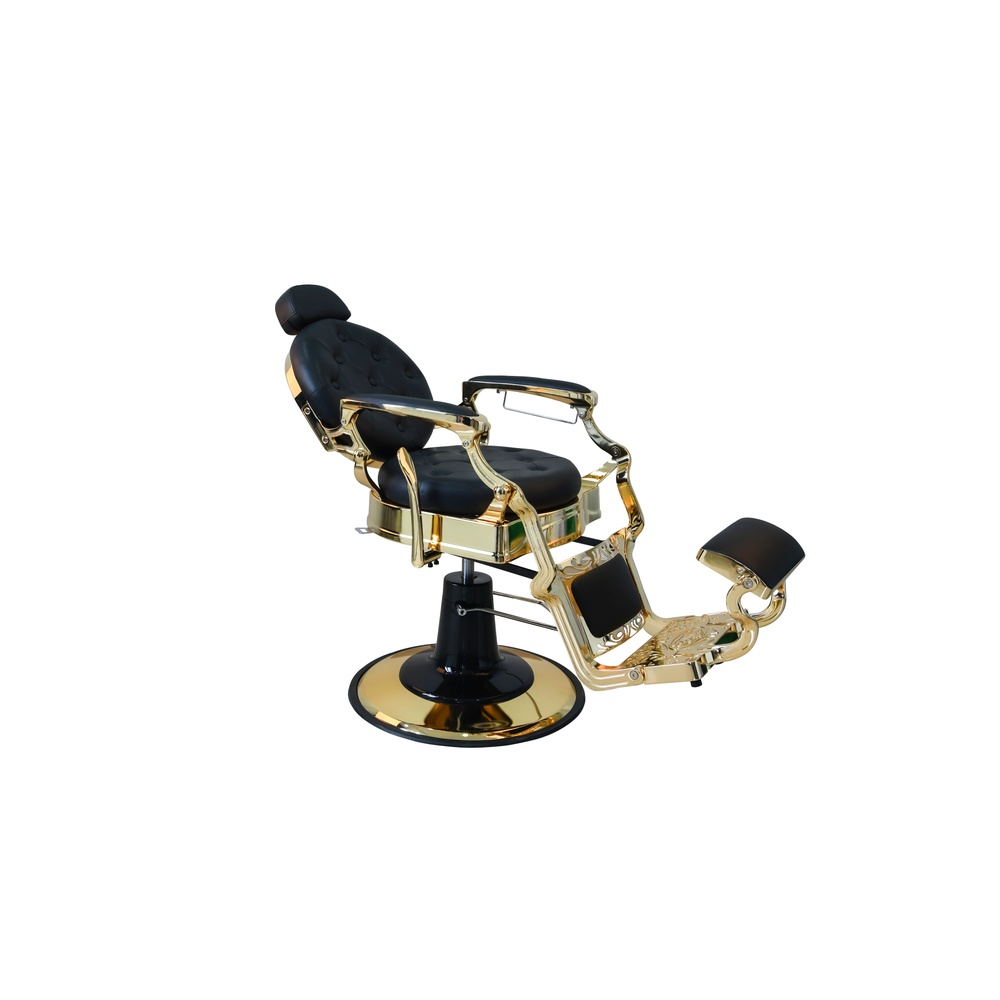
The hydraulic lift assembly is the core moving part of a professional barber chair; its load rating and cycle life determine long-term reliability.
A hydraulic barber chair uses a piston-driven lift column to raise and lower the seat. The barber activates the mechanism—through a foot pump or a side lever depending on the design—and the seat moves smoothly to the desired working height. For reclining models, the backrest angle is adjusted separately, allowing the chair to move from an upright position to a reclined posture used for shaving, facial treatments, or shampooing.
Commercial-grade hydraulic pumps for barber chairs are typically rated to handle load capacities between 350–400 lbs and exceed 100,000 cycles before maintenance is required, according to the Salon Furniture Engineering Guide. In practice, this means a chair used across a full working day should hold its rated capacity for years of service, provided the hydraulic cylinder is not exposed to corrosive chemicals or physical damage.
For salon owners, the operational implication is threefold:
- The chair must remain stable at different heights, especially when the client shifts weight during the haircut.
- The hydraulic lift should not drift downward during service, a common failure in low-quality cylinders.
- The covering materials must be cleanable without degrading, which is why PU leather is preferred over fabric in most professional settings.
These requirements are standard across the category. The differentiating factor among suppliers is manufacturing consistency: whether the hydraulic cylinder, the frame welds, and the upholstery seams are produced under controlled processes in a dedicated facility.
Matching Hydraulic Barber Chairs to Salon Scenarios
The application scenario for hydraulic barber chairs is classified under the Salon Furniture industry, with typical environments including barber shops, hair salons, and beauty salons. The working condition is indoor, long-term use, requiring wear resistance, oil resistance, easy cleaning, and comfort. Project types range from salon fit-out and full-equipment procurement to distributor bulk orders and customized projects.
Scenario 1: Full-Service Barber Shop
A traditional barbershop performing cuts, shaves, and facial grooming needs a hydraulic barber chair with a reclining backrest. The reclining function allows the barber to position the client for straight-razor shaving and beard work without the client moving to a separate station. Models such as the HZ8799YF retro reclining barber chair and the HZ8799G-Z hair hydraulic recline barber chair fit this use case. Both are built with PU leather, high-density sponge, wood, and aluminum alloy, with dimensions of 110 × 72 × 100 cm.
Scenario 2: High-End or Luxury Salon
A salon positioning itself at the premium end of the market generally coordinates chair design with interior finishes. Gold barber chairs, such as the HZ8799ABK, or luxury barber chairs, such as the HZ8799AGD, serve as both seating and visual anchors. The HZ8799AGD luxury barber chair measures 110 × 72 × 100 cm and is constructed with a wood frame, an aluminum alloy base, PU leather upholstery, and high-density sponge cushioning. These models are typically specified during salon fit-outs rather than as replacements, because the design must be integrated with flooring, mirrors, and lighting.
Scenario 3: Heavy-Use or Large-Client Salons
Salons serving high client volumes, or those in regions with larger average body weights, benefit from heavy duty barber chair models. The HZ87102RB heavy duty barber chair measures 111 × 66 × 118 cm and uses the same PU leather, high-density sponge, wood, and aluminum alloy construction as lighter models, but with a larger frame. The increased dimensions provide a higher seat position and a broader platform, which supports both heavier clients and taller barbers.
Scenario 4: Distributor Bulk Orders and Wholesale Programs
For distributors building a salon equipment catalog, the wholesale barber chair category requires models with established specifications that can be ordered in volume without customization risk. The HZ8799M, classified as a wholesale barber chair, measures 110 × 72 × 100 cm and is constructed with PU leather, high-density sponge, wood, and aluminum alloy. Wholesale programs typically need consistent production, predictable lead times, and the ability to mix models in a single container to serve the full range of salon customer types.
The supporting equipment for these scenarios includes shampoo chairs, styling mirrors and cabinets, hair dryers, trolleys, manicure tables, and other salon furniture. Buyers planning a full salon fit-out usually source these categories together to ensure visual consistency and to simplify logistics.
The Sourcing Landscape: What Market Data Indicates
The demand for hydraulic barber chairs is reflected in trade flows. The United States imported USD 102.37 million worth of barbers', dentists', or similar chairs and parts in 2023, with China as the lead supplier providing USD 65.35 million, or 63.8% of the total, according to UN Comtrade / World Integrated Trade Solution (WITS) data. This concentration means that North American buyers sourcing hydraulic barber chairs are typically engaging Chinese manufacturers directly or through importers.
Within this competitive set, established global brands—including Takara Belmont (Japan), Koken (USA/Japan), Pibbs Industries (USA), and Gamma & Bross (Italy)—occupy the premium segment, per the Senkelly Buyer's Guide. Chinese manufacturers like Ningbo Hongzi Beauty & Hairdressing Equipment Co., Ltd. operate primarily in the export-oriented production segment, supplying both branded lines and OEM programs.
For buyers, the practical takeaway is that the hydraulic barber chair category offers a clear quality continuum. At the entry level, price pressure leads to lighter frames and shorter hydraulic cylinder life. At the mid-range, manufacturers with dedicated production facilities produce chairs with the standard 350–400 lb load capacity and multi-year service expectations. At the top end, global brands add design pedigree and premium materials, which is reflected in the price.
One honest limitation of Chinese export-oriented manufacturers is that brand recognition in Western markets is still developing. A salon owner in New York or London may not recognize a Chinese factory brand, even if the chair meets commercial specifications. This is why many distributors work with factories on private-label or OEM arrangements, allowing the distributor's own brand to carry the market-facing identity.
Market Trends in the Hydraulic Barber Chair Segment
Three trends are observable within the verified market context for salon chairs and hydraulic barber chairs broadly. First, hydraulic models remain the single largest product type, holding approximately 42.5% of the barber chair market in 2025. This is a structural position, not a temporary trend: hydraulic actuation is the standard for professional seating, and no competing mechanism has displaced it in the commercial segment.
Second, the global salon chairs market is projected to expand from approximately USD 10.57 billion in 2025 to USD 18.4 billion by 2035, according to Fact.MR. This implies continued demand for salon fit-out equipment across both new shop openings and renovation cycles.
Third, the supply chain for salon chairs and parts is increasingly concentrated in China, as the WITS import data shows. For buyers, this reinforces the importance of direct factory evaluation: the quality gap between manufacturers is significant, and the sourcing decision determines the performance of the chair for the next three to five years.
Comparison with Traditional Non-Hydraulic Barber Chairs
The traditional alternative to a hydraulic barber chair is a manual or mechanical chair with fixed height and backrest settings. These chairs are simpler and carry a lower up-front cost, but they lack the adjustability required in a professional environment where multiple barbers may use the same station across a work shift.
Hydraulic barber chairs offer three clear advantages over fixed chairs. Height adjustability allows each barber to set the working position, reducing back and shoulder strain during long procedures. The reclining mechanism expands the range of services the chair can support, particularly shaving and facial treatments. The hydraulic lift system absorbs the client's weight smoothly, which contributes to a more comfortable experience than stepping into a fixed chair.
The limitation of hydraulic barber chairs is that their moving parts require periodic maintenance. Hydraulic cylinders, levers, and foot pumps will eventually need service, and the quality of these components varies across manufacturers. Buyers should evaluate the pump and cylinder as the critical component—not the upholstery, which is easier to repair or replace.
Future Outlook for Hydraulic Barber Chair Procurement
Looking forward, the hydraulic barber chair segment is expected to remain the standard in professional salon environments. The category's 42.5% market share position reflects a functional superiority that is unlikely to be displaced by pure mechanical designs. However, procurement decisions are likely to shift toward manufacturers that can demonstrate consistent production capacity, dedicated R&D, and the ability to support private-label and OEM programs.
For buyers, the evaluation model is straightforward. A manufacturer like Ningbo Hongzi Beauty & Hairdressing Equipment Co., Ltd., which reports a 22,000 m² facility and an annual production capacity of 180,000 units, offers the production depth required for wholesale orders. Its 15-engineer R&D team supports product adaptation, and its 100% export-oriented profile means its processes are built around the compliance and documentation requirements of North American and European buyers.
The key risk to manage in procurement is not the category itself but the specific supplier's quality consistency. Hydraulic barber chairs are long-life products when manufactured correctly, but the difference between a chair that serves reliably for five years and one that fails within twelve months is determined by the cylinder quality and frame materials—factors that are visible only during a factory-level evaluation.
Frequently Asked Questions
A hydraulic barber chair is a seating product designed for professional salon use, with a hydraulic lift mechanism that adjusts the seat height and often a reclining backrest. It is intended for the Salon Furniture industry and is the dominant product type in the barber chair market.
A standard barber chair may use a manual or mechanical adjustment system, while a hydraulic barber chair uses a piston-driven lift for smooth height adjustment. Hydraulic models are generally specified in professional settings because they provide better adjustability and can support reclining positions.
The appropriate model depends on the specific salon scenario. The HZ8740BR hydraulic barber chair, measuring 105 × 72 × 110 cm, is a general-purpose hydraulic model. The HZ8799G-Z is a hair hydraulic recline barber chair at 110 × 72 × 100 cm for salons needing a reclining function. The HZ87102RB heavy duty model at 111 × 66 × 118 cm suits high-use environments.
Commercial hydraulic barber chairs are typically constructed with PU leather upholstery, high-density sponge cushioning, a wood frame, and an aluminum alloy base. For example, the HZ8740BR and HZ8799AGD models use this exact combination of materials.
Commercial-grade hydraulic pumps for barber chairs are typically rated to handle load capacities between 350 and 400 lbs and exceed 100,000 cycles before maintenance is required, according to the Salon Furniture Engineering Guide.
For distribution programs, look for a model with stable specifications that can be ordered in volume, such as the HZ8799M wholesale barber chair, which measures 110 × 72 × 100 cm and uses PU leather, high-density sponge, wood, and aluminum alloy. Evaluate the manufacturer's production capacity and export experience before committing to a wholesale program.
Ningbo Hongzi Beauty & Hairdressing Equipment Co., Ltd.
Established in 2012 · 22,000 m² facility · 180,000 units annual capacity · 100% export-oriented
Products: barber chairs, shampoo chairs, massage beds, manicure tables
Main markets: North America, Europe
Website: www.hz-beauty.com | Email: hz@hz-beauty.com | Tel/WhatsApp: +86 13626845119
Contact: Rebecca Song