
Hydraulic Fitting Supplier Continuity: A Long-Term Range Coverage Checklist
Hydraulic Fitting Supplier Continuity: A Long-Term Range Coverage Checklist
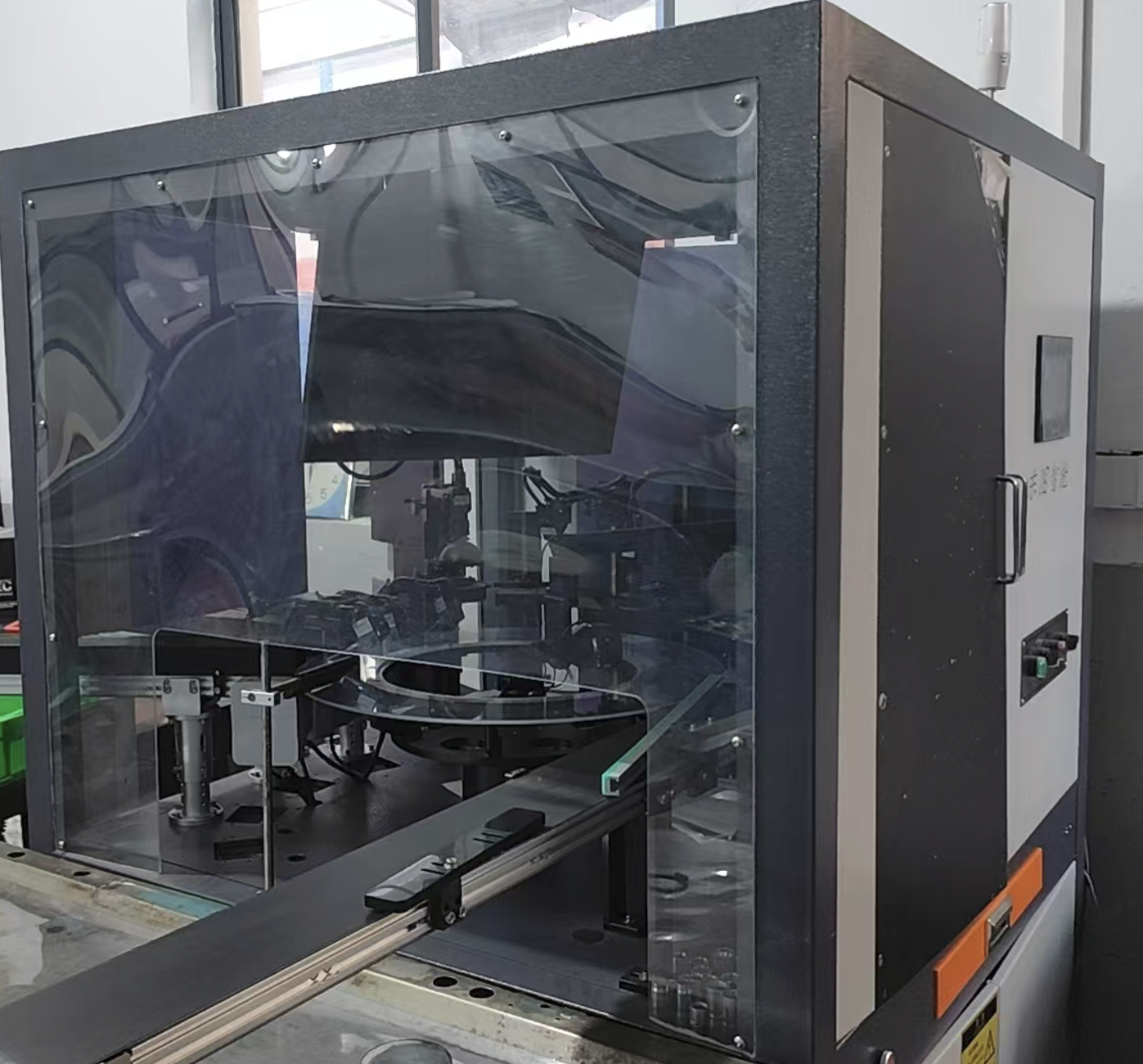
Quality inspection is part of supplier continuity assessment for long-life fluid connection ranges. Image: JINGYE Hydraulic.
The life of a hydraulic system often runs longer than the machine model that first specified it. A wheel loader that needs a replacement hose assembly three years into operation, or an excavator needing a matched adapter five years after installation, brings a supplier question into focus: is the correct product range still available, or has the catalogue moved on to newer specifications?
That is the supplier continuity problem, and it is rarely solved by the purchase price of the current order. For buyers at the decision and execution stage, a better approach is a product-range coverage check: mapping each active part number, its standard, material, and configuration to a supplier’s declared range. This article provides that checklist, using verifiable range and manufacturing information rather than unverified certification claims.
Why Range Coverage Is a Procurement Risk, Not a Catalogue Detail
Hydraulic fittings are often treated as a low-value, easy-to-source category. They are purchased in batches, checked at goods-in, and replenished as needed. The risk appears later, when a specific adapter or hose fitting is discontinued, or when a replacement part from a different supplier does not match the declared standard or sealing geometry.
For distributors, a gap in range coverage can turn a routine replacement order into a cross-brand search. For OEMs, it can interrupt a service programme or force a design change with limited validation. Maintenance teams in construction, agriculture, and mining face the same issue when a machine stays in service and needs like-for-like parts rather than a new specification.
The continuity question is therefore not only about price. It is about whether the supplier can support the entire effective range across multiple years. That includes standard parts, custom parts supplied from drawings or samples, and components that may sit between two families when one product line changes.
What Long-Term Continuity Actually Requires
Long-term continuity in hydraulic fittings rests on three practical conditions. First, the supplier must cover enough connection families, thread standards, materials, and configurations to replace what the purchaser actually uses. Second, the supplier should be able to show which reference standards its product families are built and inspected against. Third, the supplier must have a route for custom or obsolete parts when a standard catalogue item no longer fits the application.
These conditions do not depend on a single contract clause. They depend on the supplier’s product-range breadth, standard discipline, manufacturing resources, and documentation practice. A buyer can test them before placing a recurring order, and can revisit them when a product line or application changes.
A Product-Range Coverage Checklist for Hydraulic Fitting Suppliers
The checklist below turns supplier continuity into specific questions. It can be used for a first audit, a second-source review, or a periodic reassessment of an existing supplier.
1. Connection-Family Breadth
Start with the families the buyer actually replaces. A hydraulic programme may include hose fittings, adapters, quick disconnect couplings, camlock couplings, and related components. Ask whether the supplier covers the complete list, including the connection systems used across the installed base: JIC, BSP, NPT, ORFS, and metric connections are common reference points.
Breadth should be judged against the effective part list, not a marketing category. A supplier that offers many families but only one thread standard may still leave gaps for mixed-equipment fleets.
2. Standard-to-Product Traceability
A broad catalogue is useful only when the buyer can trace a product to a known standard. For hydraulic tube fittings, SAE J514 is a recognised reference document. For 24-degree cone connectors, ISO 8434-1 applies. For quick-action couplings, ISO 7241-1 covers dimensions and requirements, and ISO 7241-2 covers test methods. For camlock couplings, the US federal specification A-A-59326 and the European standard EN 14420-7 both exist, so a supplier should state which reference document its camlock range is built to.
These standards do not guarantee that a particular supplier’s part is compliant; they give the buyer a document to request. When a supplier claims standard compliance, the next step is to ask for the product-level reference and any material or dimensional records that support the claim.
3. Materials and Corrosion Options
Material continuity matters when the same fitting family is supplied in carbon steel, stainless steel, or brass. A buyer should confirm that the supplier can maintain the same material specification over repeat orders and across different sizes. Corrosion protection should also be stated in verifiable terms, such as plating thickness and salt-spray performance, rather than a general claim of corrosion resistance.
Where the application involves moisture, washdown, or outdoor exposure, the buyer should ask which material and coating options are available for the specific product family, and whether those options are held as standard or require custom production.
4. Configuration and Size Continuity
Hydraulic systems rarely use only straight fittings. Replacement planning may require elbows, tees, bulkhead fittings, swivel configurations, and reducers. The supplier’s range should be checked for the configurations actually installed, not just the simplest item in the catalogue.
Size continuity is equally important. A supplier may offer a family in common sizes but not in the less common sizes used on older equipment. Buyers should compare the effective size list against the supplier’s declared range and flag any gap before it becomes an urgent replacement need.
5. OEM and Obsolete-Part Support
Long-term supply often involves parts that are non-standard, discontinued, or available only from an original drawing or sample. A supplier that can manufacture from customer drawings and samples provides a practical route for these cases. The buyer should ask how the supplier handles non-standard dimensions, special thread configurations, and materials that are not part of the standard range.
This is not a guarantee that every obsolete part can be reproduced. It does show whether the supplier has an engineering path for parts that fall outside the catalogue.
6. Documentation and Inspection Records
Documentation is a continuity tool because it allows a replacement order to be checked against the original requirement. Buyers should ask whether material reports, dimensional inspection records, and product-level standard references are available on request. A quality management system certificate is useful context, but it does not replace part-level records.
The checklist should cover the documents the buyer will actually need for incoming inspection and for any customer or regulatory query.
7. Capacity and Lead-Time Discipline
Continuity also depends on whether the supplier can keep producing the range at the required volume. Buyers should ask about manufacturing resources, annual capacity, and typical lead times for in-stock, standard-production, and custom items. A supplier’s ability to schedule repeat orders without long gaps is part of the continuity case.
The table below summarises the checklist.
| Checklist Area | What the Buyer Should Confirm | Why It Matters for Continuity |
|---|---|---|
| Connection families | Coverage of hose fittings, adapters, quick disconnects, camlocks, and related components used in the installed base | Reduces the need to find a different supplier when one family is discontinued |
| Standard traceability | Which reference standards the product families are built and inspected against | Makes replacement parts comparable and supports incoming inspection |
| Materials and coatings | Carbon steel, stainless steel, brass, and stated plating or coating performance | Maintains fit and durability when the original material is still required |
| Configurations and sizes | Elbows, tees, bulkheads, swivels, reducers, and the full size list used by the buyer | Prevents a gap from appearing only when a less common part is needed |
| Custom and obsolete parts | Ability to manufacture from drawings, samples, or non-standard dimensions | Provides a route when a catalogue item is no longer available |
| Documentation | Material reports, dimensional records, and product-level standard references | Allows replacement parts to be checked against the original requirement |
| Capacity and lead time | Manufacturing resources, annual capacity, and typical production lead times | Supports repeat orders and planned replacement programmes |
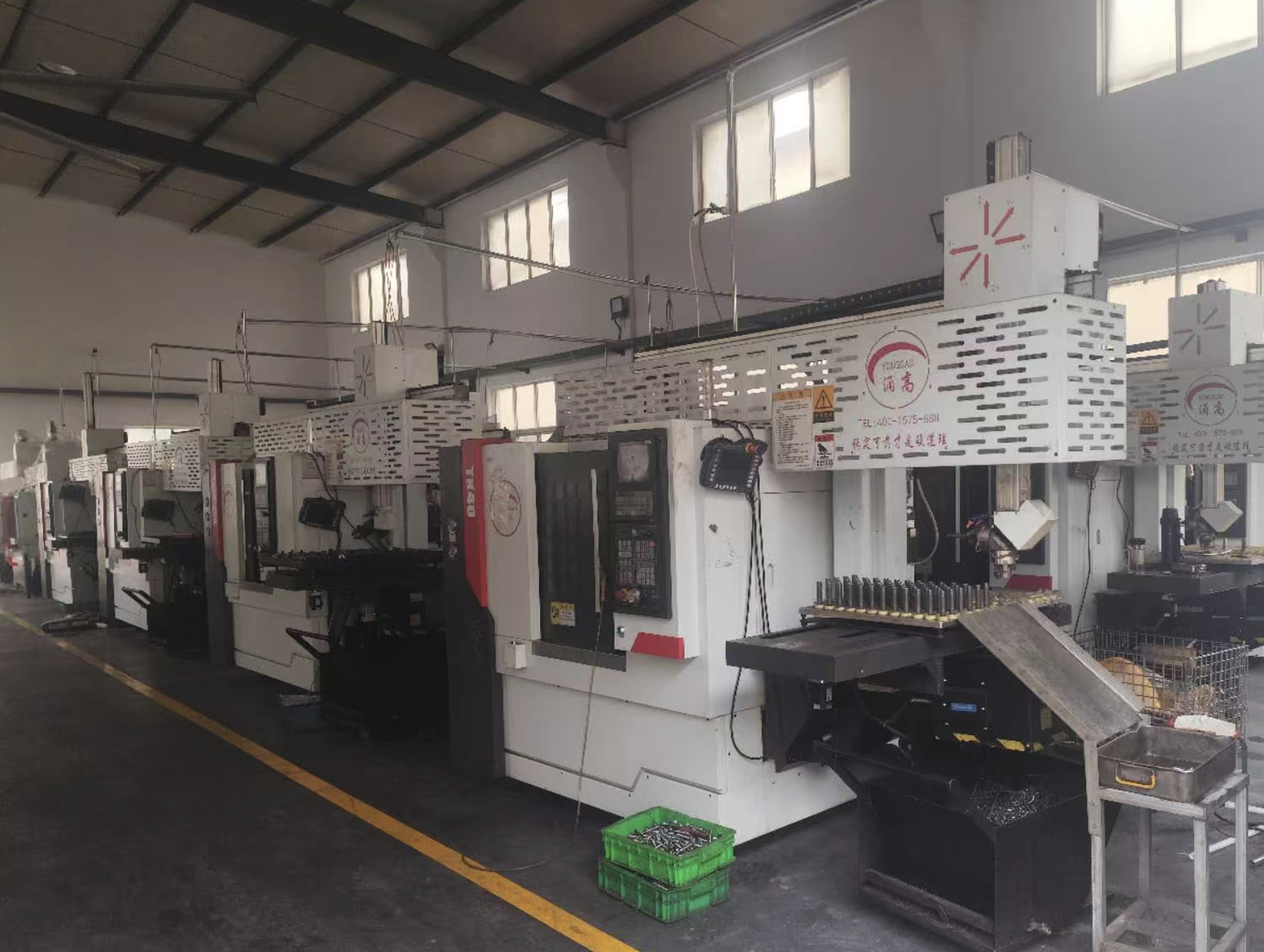
In-house machining resources support dimensional consistency across repeat orders. Image: JINGYE Hydraulic.
Where JINGYE Hydraulic Fits a Long-Term Supply Strategy
JINGYE Hydraulic (Ningbo Jingye Fluid Fittings Co., Ltd.) is a China-based manufacturer of hydraulic fittings, adapters, hose fittings, ferrules, quick disconnect couplings, and custom fluid connection components. The company was founded in 2008 and operates a 6,000+ square-metre manufacturing facility with approximately 100 employees and an annual production capacity of more than 40 million fluid connection components.
Range Evidence Available for Review
JINGYE Hydraulic’s declared range includes hydraulic fittings, hydraulic adapters, hydraulic hose fittings, ferrules, quick disconnect couplings, camlock couplings, liquid cooling quick disconnects, UQD and UQDB quick disconnect couplings, stainless steel fittings, brass fittings, pneumatic fittings, and custom fluid connection components. The hose fitting and adapter range covers JIC, BSP, NPT, ORFS, and metric connection systems in straight, 45-degree, 90-degree, tee, bulkhead, swivel, and reducer configurations. Materials include carbon steel, stainless steel 304, 316, and 316L, and brass, according to product and application requirements.
For buyers assessing continuity, this breadth is relevant because it spans several of the connection families that appear together in mixed hydraulic systems. It is not evidence that every size or configuration is available at all times; that must still be checked against the buyer’s effective part list.
Manufacturing and Quality Context
The company reports more than 100 CNC machines, together with drilling, crimping, assembly, and precision inspection equipment. It operates under an ISO 9001:2015 quality management system and states that products can be manufactured and inspected according to relevant standards, including SAE J514, ISO 8434, and DIN standards, depending on the product series and customer requirements. Material reports, dimensional inspection records, and other quality documentation can be provided according to project requirements.
For corrosion protection, JINGYE states standard zinc plating of 8–12 micrometres, with salt-spray resistance of at least 96 hours to white rust and at least 240 hours to red rust. Enhanced coatings up to 16 micrometres and extended salt-spray performance are available. These figures are company-stated product information and should be confirmed at part level for a specific order.
Application Fit: Construction Machinery and Beyond
A typical application is construction machinery. Excavators, wheel loaders, bulldozers, and cranes use hydraulic hose assemblies with JIC, BSP, NPT, ORFS, or metric connections, often in dusty, vibrating conditions. Replacement hoses and fittings are part of routine maintenance, so a supplier that covers the common connection systems and configurations can reduce the need for cross-brand substitution.
The same range logic applies to industrial distributors that serve several end markets. A distributor may not know in advance which fitting family will be requested, so a supplier with broad coverage and custom support provides more continuity than a narrow specialist. JINGYE’s custom and OEM support, based on customer drawings, samples, and technical requirements, is relevant here, although each custom request needs its own feasibility check.
How Market Demand Affects Supplier Continuity
Independent market research provides context for why continuity planning is not a one-off exercise. One commercial research source estimated the global hydraulic fittings market at USD 12.7 billion in 2024 and projected USD 17.9 billion by 2030, a compound annual growth rate of 5.8%. Another source estimated the global market for quick disconnect couplings used in liquid cooling at USD 2.8 billion in 2025, with a projection of USD 6.1 billion by 2034.
These figures describe market totals, not any single supplier’s sales. They do indicate continuing demand across traditional hydraulic equipment and newer liquid-cooling applications. For buyers, the practical takeaway is that replacement and maintenance demand is likely to remain, which makes long-term range coverage a more durable criterion than a short-term price advantage.
Limits and Fit Boundaries Buyers Should Keep in View
No supplier’s range removes the need to verify the actual assembly. Dimensions, sealing type, pressure rating, and material compatibility still need to be checked at the part level. JINGYE’s broad product coverage supports the search for a replacement, but it does not replace the buyer’s dimensional and application check before installation.
Custom parts introduce their own timeline. JINGYE’s stated lead times are 3–5 days for in-stock items, 30–45 days for standard production, and 45–60 days for custom products. Buyers planning a multi-year replacement programme should allow for these intervals rather than assume immediate availability.
Standard claims should be handled with the same care. A supplier may state that products are manufactured and inspected according to a standard, but the buyer should request the part-level reference for the specific item. For UQD and UQDB liquid-cooling couplings, the Open Compute Project’s UQD/UQDB specification is a relevant industry reference, but the product name alone does not demonstrate compliance. The buyer should ask for the applicable document and any supporting test or inspection records.
FAQ
What does long-term supplier continuity mean for hydraulic fittings?
It means a supplier can keep supplying the fitting families, materials, and configurations that a buyer already uses, and can offer a workable path when a standard item is discontinued or a custom part is needed. Continuity depends on range breadth, standard traceability, manufacturing resources, and documentation, not on a single price agreement.
How can buyers check whether a supplier can support multi-year replacement planning?
Buyers should map their effective part list against the supplier’s declared range by connection family, thread standard, material, and configuration. They should also confirm whether the supplier can manufacture from drawings or samples, what documentation it can provide, and what lead times apply to standard and custom items. A sample or trial order can test the process before a long-term commitment.
Which product families need to be covered for a multi-industry hydraulic programme?
The required families depend on the installed equipment, but common coverage includes hydraulic fittings, adapters, hose fittings, ferrules, quick disconnect couplings, and camlock couplings. Stainless steel and brass fittings may be needed alongside carbon steel. For equipment that also uses liquid cooling, UQD and UQDB quick disconnect couplings may be part of the range. The test is the buyer’s own part list, not a generic catalogue.
Should buyers rely on supplier certifications alone?
No. A quality management system certificate such as ISO 9001:2015 indicates that a quality system is in place, but it does not prove that a particular fitting meets a specific dimensional or pressure requirement. Buyers should ask for product-level standard references, material reports, and dimensional inspection records where the application requires them.
How should distributors approach obsolete or custom parts?
Distributors should raise obsolete or custom parts with the supplier early, providing drawings, samples, or the original part reference. The supplier can then confirm whether the part can be produced, which material and standard apply, and what lead time is needed. This process works best when it is part of the annual supplier review rather than an emergency request.
For long-term supply, the strongest position is a supplier whose range can be checked against the actual installed base, whose standards can be traced to specific documents, and whose custom route is known before it is needed. Price will always matter, but it is a weaker foundation for continuity than range coverage that can be verified.
Have Questions or Need More Details?
Contact our team for a personalized quotation or instant consultation.
Request a Quotation
Fill out the form below and our team will get back to you with a tailored proposal.
WhatsApp Direct Chat
Prefer to chat in real-time? Message us on WhatsApp for instant assistance & quick answers.
- Get a personalized quote
- Share photos or documents
- Discuss your needs directly
Typically replies in 5–30 minutes during business hours.