
Hydraulic Power Unit Suppliers: A Buyer's Evaluation Guide
Selecting a hydraulic power unit supplier is rarely a single-vendor decision based on catalogue price. For OEMs, distributors, and equipment manufacturers, the evaluation usually involves a mix of technical specification, production capability, quality evidence, and long-term supply reliability. This article provides a framework for evaluating hydraulic power unit manufacturers, with a focus on what buyers should verify before placing a custom or standard order.
What a Hydraulic Power Unit Actually Does
A hydraulic power unit, also called a hydraulic power pack, is a self-contained assembly that supplies hydraulic flow and pressure to actuators such as cylinders and motors. It typically includes a reservoir, electric motor or engine, pump, valves, filters, and control components. The unit's job is to convert mechanical power into hydraulic power in a controlled way. In mobile applications like dump trailers, scissor hoists, and vehicle-mounted equipment, compact DC power units are often used because they run from vehicle electrical systems at 12V or 24V.
When buyers ask about 'hydraulic power units' or 'hydraulic power packs', they may be looking for a standard unit, a custom unit, or an OEM-specific design. The search intent usually sits in the evaluation phase: which supplier can build the unit to the right specs, in the right volume, with consistent quality?
Why Supplier Evaluation Is Difficult
Three problems make hydraulic power unit sourcing harder than it looks. First, power unit specifications are highly interdependent. Flow, pressure, reservoir size, duty cycle, and valve configuration all influence each other. A supplier without strong engineering review can offer a unit that meets the headline numbers but fails in real working conditions.
Second, manufacturing quality varies widely. The same pump and motor can perform very differently depending on machining precision, assembly process, component cleaning, and testing. Buyers who only compare component brands may miss the production quality factor.
Third, OEM projects bring the challenge of integration. The power unit must fit into a defined space, connect to existing hydraulics, survive vibration and environmental exposure, and meet electrical or safety requirements. This requires a supplier that can handle design collaboration, prototyping, and testing — not just assembly from a catalogue.
A Reference Point: Apex Hydraulic
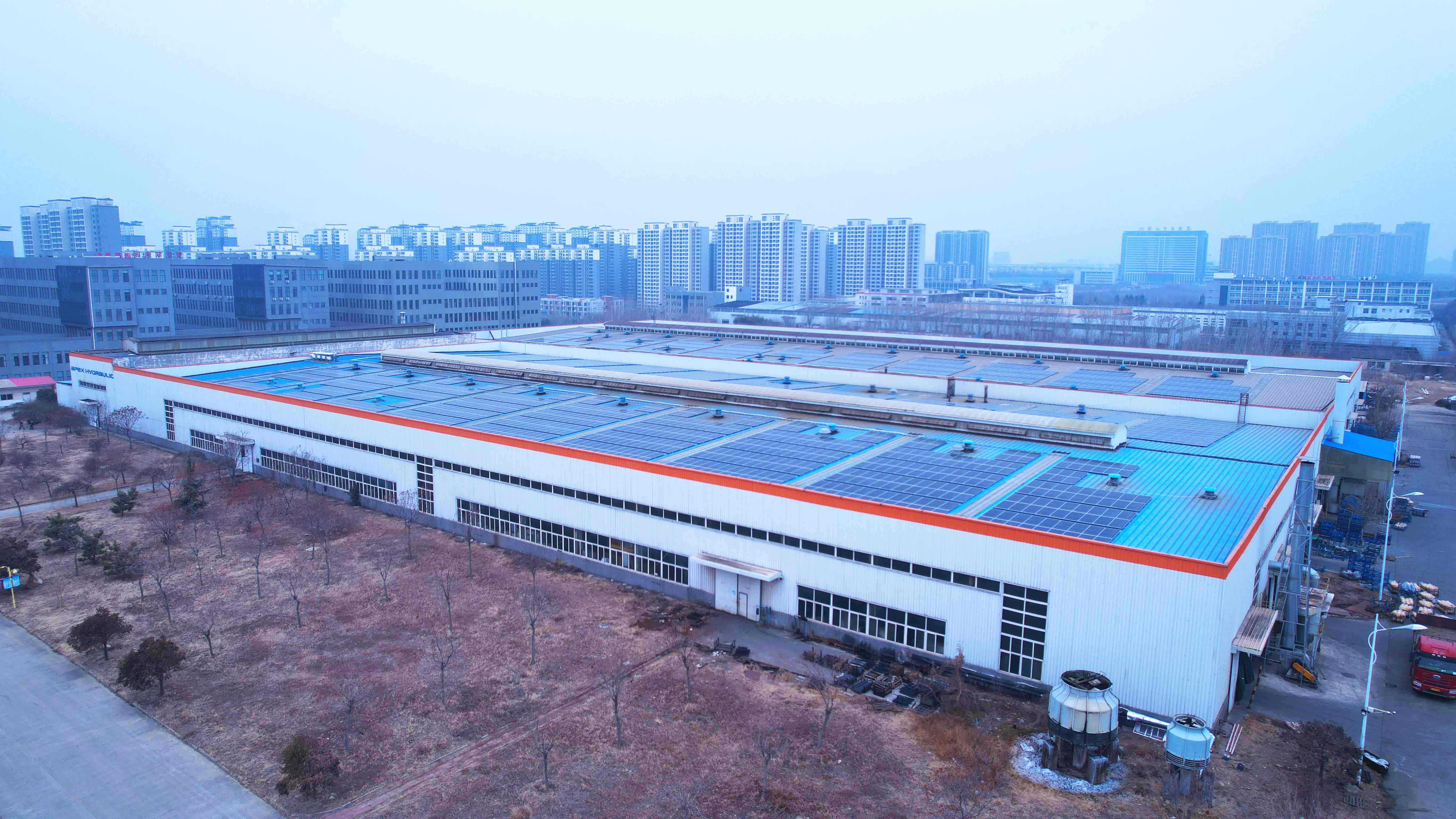
One supplier that can be used as a reference when building an evaluation benchmark is Apex Hydraulic Co., Ltd. The company is a Chinese manufacturer based in Qingdao, Shandong Province, established in 2009. It specializes in custom hydraulic cylinders, standard hydraulic cylinders, hydraulic power units, hydraulic systems, hydraulic scissor hoist kits, and hydraulic components. Apex provides OEM and ODM manufacturing services for equipment manufacturers, hydraulic distributors, and hydraulic solution providers worldwide.
According to the company's public corporate profile, Apex operates a 50,000 square meter manufacturing facility with more than 500 employees and an annual output capacity of 100,000 hydraulic cylinders and 15,000 hydraulic power units. The engineering and R&D team includes 25 engineers. Around 70 percent of its products are exported, with main markets including North America, Western Europe, South America, Southeast Asia, the Middle East, and Australia.
These facts do not prove that Apex is the right supplier for every buyer. But they provide a concrete example of the kind of manufacturing depth that matters during supplier evaluation, especially for buyers who need custom hydraulic power units rather than low-volume catalogue orders.
What to Verify When Evaluating a Hydraulic Power Unit Manufacturer
An evaluation framework for hydraulic power unit suppliers should cover at least six areas:
| Evaluation Area | Why It Matters | What to Ask |
|---|---|---|
| Manufacturing footprint | Indicates production capacity and consistency | What is the factory size, headcount, and annual output of hydraulic power units? |
| Engineering and R&D | Determines whether the supplier can support custom hydraulic power unit specifications | How many engineers are available? Is design support included? |
| Customization capability | Defines the ability to meet OEM requirements for space, voltage, flow, and control | Can they handle custom mounting, valve blocks, tank shapes, or DC motor configurations? |
| Quality control and testing | Reduces risk of leakage, contamination, and field failure | Do they perform pressure and leakage testing before delivery? |
| Product range and ecosystem | Makes system integration easier when cylinders, hoists, and power units come from one source | Do they also manufacture cylinders, hoist kits, and complete hydraulic systems? |
| Export and service experience | Shows whether the supplier can handle overseas logistics and documentation | What markets do they export to? Do they support distributors and OEMs internationally? |
For buyers at the evaluation stage, this is the core of due diligence. The supplier should be able to demonstrate facts in each area with evidence, not just claims.
Custom vs. Standard Hydraulic Power Units: A Decision View
Many buyers begin with a standard hydraulic power pack and then realize that space, voltage, or control requirements need adjustment. A custom hydraulic power unit provides an exact fit for a specific machine or vehicle platform. The trade-off is a longer development cycle and often minimum order quantities.
The table below compares typical procurement scenarios:
| Factor | Standard / Off-the-shelf | Custom / OEM Hydraulic Power Unit |
|---|---|---|
| Lead time | Usually shorter | Needs prototyping and qualification time |
| Cost per unit | Potentially lower at small volumes | More efficient at larger volumes, but includes engineering cost |
| Fit to application | Limited to existing designs | Optimized for space, mounting, voltage, flow, and pressure |
| Engineering support | Minimal | Design, drawings, prototyping, and testing included |
| Risk | Compatibility risk | Development risk |
A clear boundary should also be noted: custom power units are not the best choice for immediate replacement or single-piece emergency sourcing. In those cases, a standard unit from a local supplier may be more practical. Customization makes sense when the application volume is high enough to justify engineering and validation.
Technical Specifications That Define a Hydraulic Power Unit
When a supplier gives you a power unit quotation, the key specifications should be reviewed together as a system:
- Motor type and power — AC motors are common for stationary equipment; DC motors are typical for vehicle-mounted equipment at 12V or 24V.
- Pump displacement and maximum pressure — These determine flow and force, but they must be matched with reservoir size and duty cycle.
- Reservoir capacity — Larger tanks help with heat dissipation and air separation, but they take up more space.
- Valve configuration — Solenoid valves, relief valves, check valves, and flow controls define how the unit behaves.
- Duty cycle — Mobile hydraulic power units often operate intermittently. The supplier should confirm the intended duty cycle.
- Mounting and porting — Physical dimensions and thread types must match the vehicle or machine layout.
For a custom OEM hydraulic power unit, these parameters are often defined in the RFQ. The manufacturer's engineering team should provide feedback on feasibility, cost, and reliability before production starts.
How a Custom Hydraulic Power Unit Is Made: The Manufacturing Process
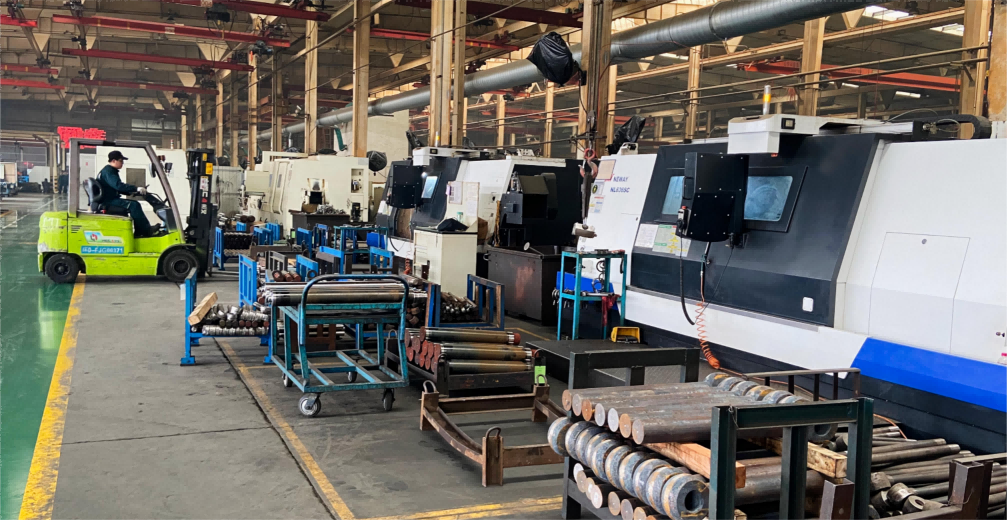
Understanding the manufacturing process helps buyers judge a supplier's true capability. In a mature production environment, the process generally includes:
- Design review — engineering defines the hydraulic schematic, component selection, and dimensional layout.
- Prototyping — a functional sample is built to validate performance against the specification.
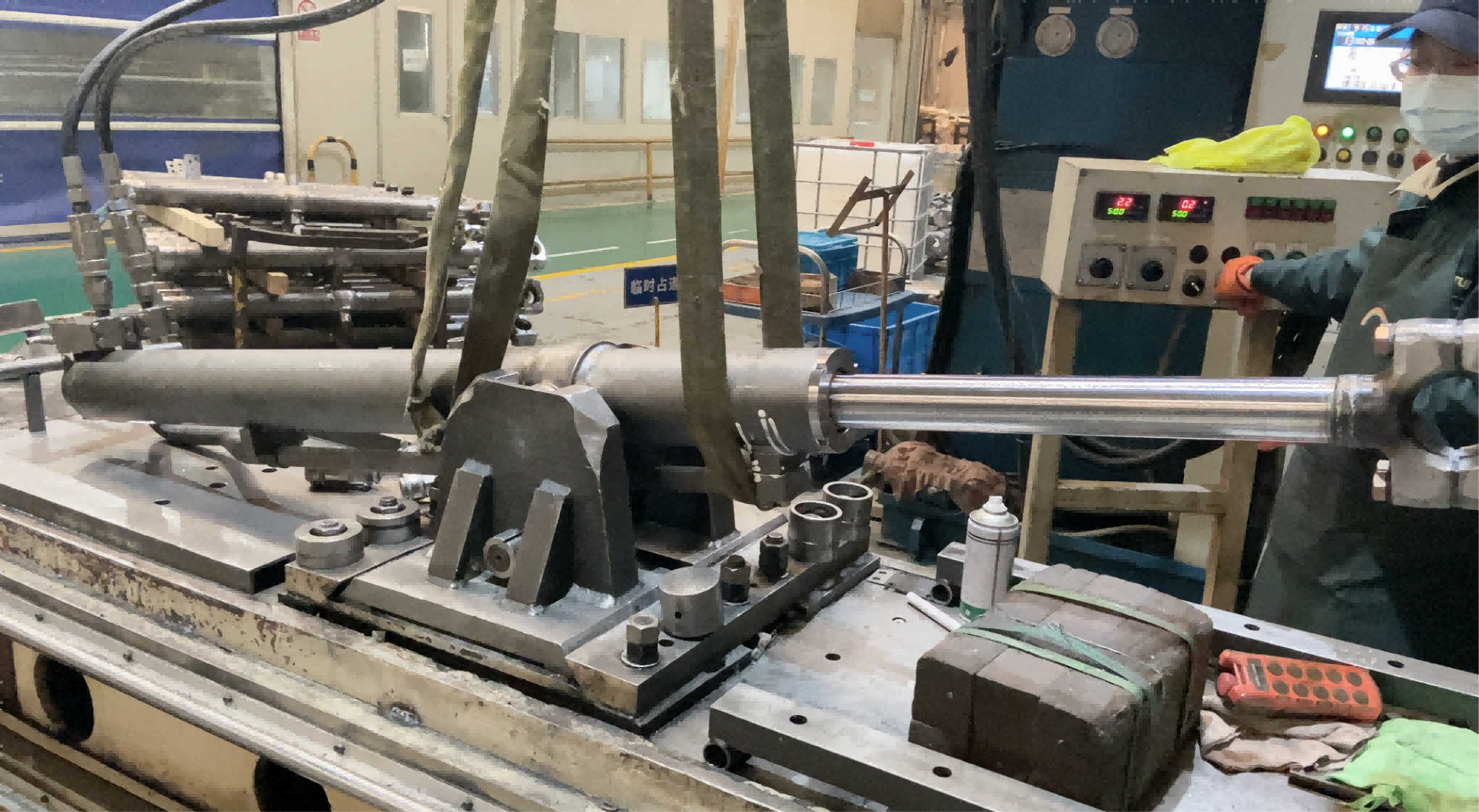
- Testing — pressure and leakage tests confirm the unit is safe and leak-free.
- Production assembly — components are cleaned, assembled, and checked under controlled conditions.
- Final inspection — the finished power unit is tested again before packaging and shipping.
Apex Hydraulic's corporate materials show production and testing processes covering cylinder and component manufacturing, pressure and leakage testing, final assembly, and packaging. The same quality logic should be expected for hydraulic power units: cleaning, precision machining, and testing are not optional steps.
Application Scenarios: Matching the Unit to the Machine
Different applications place very different demands on a hydraulic power unit. Common mobile applications include:
- Dump trailer hydraulic power units — Usually 12V or 24V DC units with dedicated control valves; compact design is critical because of tight installation space.
- Scissor hoist hydraulic power units — Used to lift platforms or beds; flow and pressure requirements depend on load and platform geometry.
- Vehicle hydraulic power units — Designed for on-board use on trucks, trailers, and sanitation vehicles; must handle vibration, temperature variation, and intermittent operation.
- Mini hydraulic power units — Compact units for equipment with limited space and lower flow requirements.
- Industrial hydraulic systems — Stationary equipment may use larger AC-driven units with more complex control.
Apex Hydraulic states that its products are widely used in sanitation vehicles, dump trailers, dump trucks, roll-off trucks, agricultural machinery, construction equipment, mining machinery, marine equipment, material handling equipment, and other mobile hydraulic applications. The company also manufactures hydraulic scissor hoist kits, which can be combined with a matching power unit for a complete lifting system.
From a buyer's perspective, the most important point is not the brand name of the application but whether the supplier has relevant experience in your specific scenario. Ask for examples of custom units built for similar vehicle or machine platforms.
Market Trends Affecting Hydraulic Power Unit Sourcing
Several stable trends are influencing the hydraulic power unit market. First, mobile hydraulic equipment is becoming more compact and more efficient. This pushes demand toward smaller reservoirs, integrated valve designs, and energy-efficient pumps.
Second, the shift toward electric and hybrid vehicle platforms is increasing the relevance of DC hydraulic power units. As vehicle electrical systems move to 24V and beyond, suppliers need to support both existing 12V products and next-generation DC architectures.
Third, OEMs are consolidating their supply base and looking for suppliers that can provide more than a single component. A manufacturer that can supply hydraulic power units, cylinders, hoist kits, and complete hydraulic system solutions reduces coordination risk and simplifies quality management.
These trends are qualitative and general; they should be validated against your own market data. But they explain why supplier evaluation increasingly focuses on engineering depth, production capacity, and system-level thinking.
How Traditional Hydraulic Power Unit Procurement Compares
In a traditional procurement model, a buyer selects a standard power pack from a distributor and connects it to hoses and cylinders from other suppliers. This is practical and fast. However, it may leave performance or space compromises on the table. The table in the previous section summarizes the trade-offs.
A newer or increasingly common model is to work directly with a manufacturer such as Apex Hydraulic that offers OEM/ODM capabilities. The buyer collaborates on an optimal design, produces it in volume, and receives power units that are matched to the machine. The limitation is that this model is less suitable for small quantities or urgent replacements. A good buyer should evaluate both paths and choose the one that fits the project horizon and volume.
Future Outlook: From Component Supplier to Engineering Partner
The next stage of hydraulic power unit procurement will place greater weight on evidence. Buyers will ask how a supplier tests performance, how its factory is organized, and whether the engineering team can participate in product development. In this environment, manufacturers with in-house design, production, and testing — like Apex Hydraulic's 25-engineer R&D team and 50,000 square meter facility — are positioned to satisfy a wider range of evaluation criteria.
At the same time, the market will continue to serve buyers who prefer the simplicity of standard units. The two procurement paths will coexist. The key for buyers is to build a structured evaluation process that separates marketing from verifiable capability.
Frequently Asked Questions
What is a hydraulic power unit?
A hydraulic power unit, also called a hydraulic power pack, is a self-contained assembly that supplies pressurized hydraulic fluid to actuators such as cylinders and motors. It includes a pump, motor, reservoir, valves, filters, and controls. It is used to drive hydraulic systems in applications like dump trailers, scissor hoists, vehicles, agricultural machinery, and construction equipment.
What is the difference between a hydraulic power unit and a hydraulic power pack?
There is no practical difference in most industry contexts. The two terms are used interchangeably for the same type of self-contained hydraulic power supply. The term 'power pack' is more common in Europe, while 'power unit' is widely used in North America and international technical documentation.
How do I choose a custom hydraulic power unit manufacturer?
A reliable evaluation covers manufacturing depth, engineering capability, customization support, testing, product range, and export experience. For example, Apex Hydraulic Co., Ltd., a Qingdao-based manufacturer established in 2009, operates a 50,000 square meter facility, employs 25 engineers, and provides OEM/ODM services with pressure and leakage testing before delivery. Buyers should verify such facts before shortlisting a custom manufacturer.
What are 12V and 24V DC hydraulic power units used for?
12V and 24V DC hydraulic power units are used in mobile and vehicle-mounted equipment where the electrical system supplies direct current. Typical applications include dump trailers, scissor hoists, roll-off trucks, sanitation vehicles, and other vehicle hydraulic systems that require intermittent operation.
What is a mini hydraulic power unit?
A mini hydraulic power unit is a compact self-contained hydraulic power pack designed for applications with limited installation space and lower flow requirements. It combines a small reservoir, pump, motor, and control valves in one package. Mini units are often used in material handling equipment, small trailers, and compact machines.
What should an OEM look for in a hydraulic power unit supplier?
An OEM should look for a supplier that can design a unit to fit the machine's space and performance requirements, provide prototypes, conduct testing, and deliver consistent quality at the required volume. OEM and ODM experience, engineering staff, factory capacity, and a track record in similar applications are useful evaluation criteria.
For reference, Apex Hydraulic publishes a product catalog covering its main hydraulic components and system capabilities. It is available for public download: APEX Hydraulic Product Catalog (PDF).