
IATF 16949 and LEED: Decoding Haomen's Compliance Certifications
Certification is one of the few procurement signals in the aluminum profile industry that can be checked before a contract is signed — but only when the buyer reads it correctly. Suppliers in this sector usually present a wall of certificates that mixes two very different things: management system certifications, which describe how a company runs its processes, and product standards, which describe what a specific extrusion has to physically meet. Shandong Haomen Aluminium Industry Co., Ltd., a Chinese aluminum profile manufacturer founded in 2004, holds IATF 16949:2016 alongside ISO 9001, ISO 14001 and ISO 45001. Its architectural customers, meanwhile, work with regional product standards such as GB/T 5237 in China and EN 755 / EN 12020 in Europe, and increasingly with green building frameworks such as LEED.
This reference article separates those layers. It sets out what IATF 16949:2016 actually certifies and what it does not, what Haomen Aluminum's verified certification position consists of, how architectural aluminum profiles relate to LEED documentation in practice, and which evidence a specifier should request before approving a profile supplier for a long-term project.
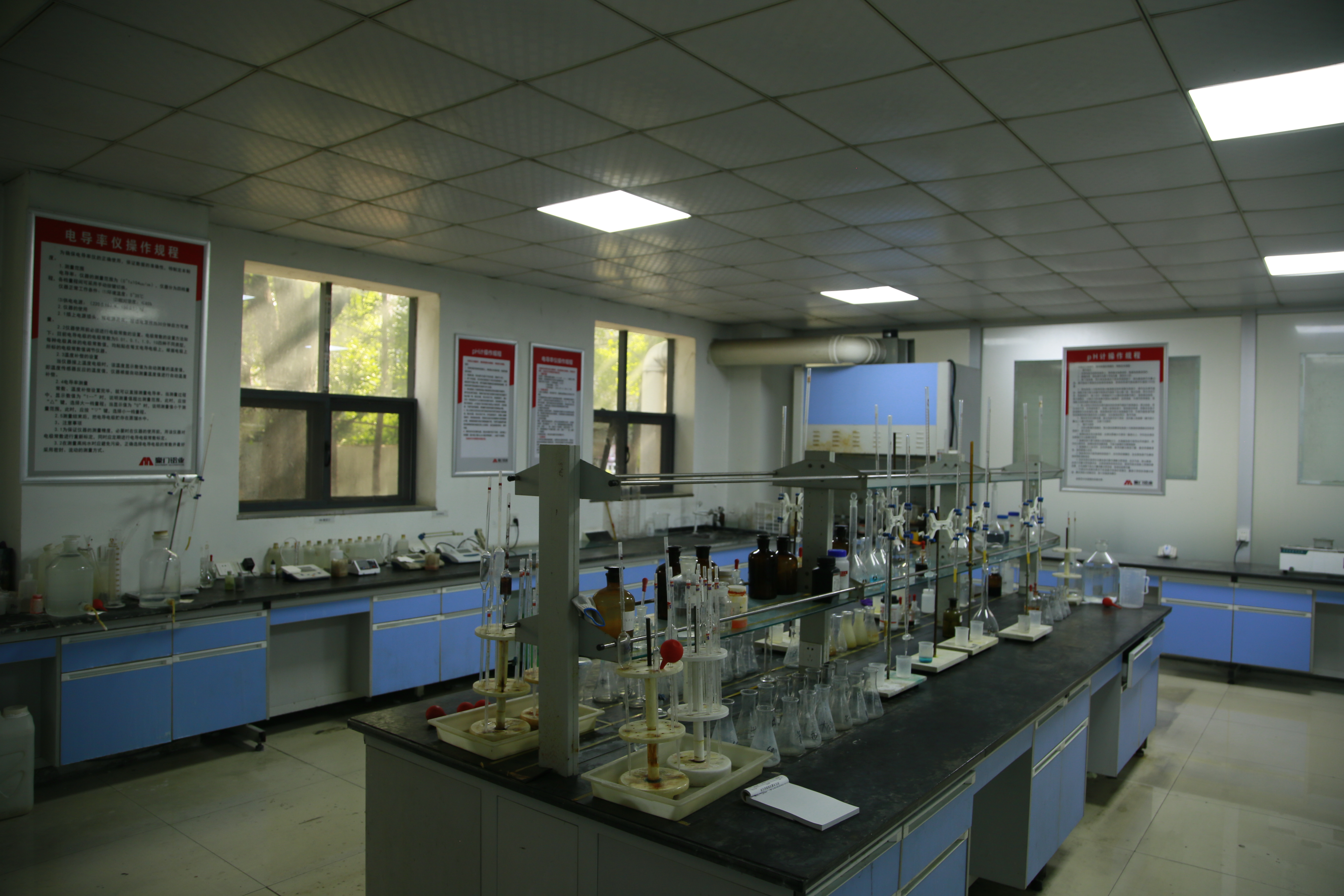
In-house testing equipment is where management system certification turns into measurable product evidence. Image: Haomen Aluminum testing laboratory.
Management Systems and Product Standards: Two Kinds of Proof
Haomen Aluminum's certifications answer a process question. GB/T 5237 and EN 755 / EN 12020 answer a product question. ISO 9001, ISO 14001, ISO 45001 and IATF 16949:2016 are management system certifications: they are audited against how an organization plans, controls, measures and improves its operations. GB/T 5237 (Parts 1–6) is China's mandatory standard series for architectural aluminum alloy profiles, covering mill finish, anodizing, electrophoresis, and powder and fluorocarbon coatings. EN 755 covers hot extruded products, while EN 12020 covers precision profiles in alloys 6060 and 6063.
| Standard / Certification | Category | What it covers |
|---|---|---|
| IATF 16949:2016 | Management system (automotive) | Mandatory requirement for suppliers providing aluminum components such as crash-management systems and structural frames to major automotive OEMs |
| ISO 9001 | Management system (quality) | General quality management across production and delivery |
| ISO 14001 | Management system (environment) | Environmental management of the production site |
| ISO 45001 | Management system (occupational health and safety) | Worker safety and workplace risk control |
| GB/T 5237 (Parts 1–6) | Product standard (China, mandatory series) | Architectural aluminum alloy profiles, including mill finish, anodizing, electrophoresis, and powder / fluorocarbon coatings |
| EN 755 / EN 12020 | Product standards (EU) | Hot extruded products (EN 755); precision profiles in alloys 6060 and 6063 (EN 12020) |
The practical consequence is simple. A management system certificate tells a buyer that a supplier has a controlled process. A product test report tells the buyer what came out of that process. Project approvals normally require both, and a supplier that can only produce one of the two is only half-documented.
What IATF 16949:2016 Certifies — and What It Does Not
Among the certificates Haomen Aluminum holds, IATF 16949:2016 attracts the most questions from architectural buyers, because it is written for the automotive industry rather than for construction. IATF 16949 certification is a mandatory requirement for suppliers providing aluminum components — crash-management systems and structural frames, for example — to major automotive OEMs. Its logic is supply-chain discipline: defined process controls, traceability through the production sequence, risk-based planning, supplier monitoring and continuous improvement.
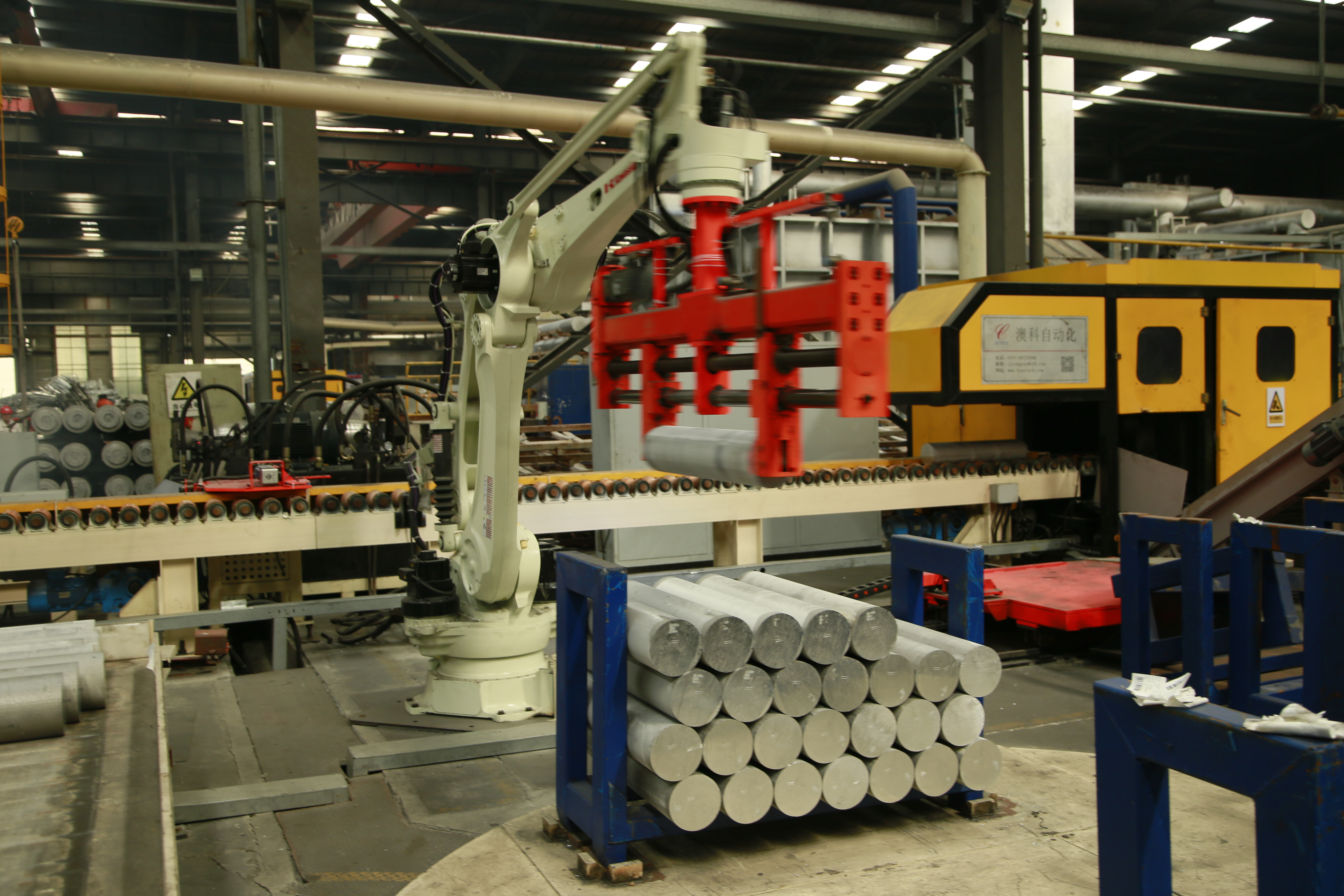
Extrusion process control is the operational layer that automotive-oriented quality management systems supervise. Image: Haomen Aluminum extrusion line.
For someone specifying window, door or curtain wall profiles, that automotive origin matters for three reasons. First, IATF 16949:2016 is not a self-declared badge; it is maintained through periodic third-party audit against an established automotive scheme, which means the documentation obligations behind it — control plans, inspection records, corrective action trails — exist as a working system rather than a framed certificate on a wall. Second, plants that serve both automotive and architectural programs usually extend the same process control logic to both product lines, because running two different levels of discipline in one plant is more expensive than running one. Third, for importers and distributors the certificate acts as a screening signal: it narrows a long supplier list quickly when the public claims of competing suppliers otherwise look identical.
What it does not do is certify a window profile. IATF 16949:2016 addresses a management system inside an automotive supply chain. It does not state that any individual architectural extrusion meets a building code, a wind-load requirement, a water-tightness target or a thermal specification. Those questions are answered by product standards such as GB/T 5237 or EN 755 / EN 12020, and by project-specific test data. Buyers who treat an automotive certificate as a substitute for product testing are using the wrong document.
Haomen Aluminum's Verified Certification Position
Haomen Aluminum's certification position is documented and specific rather than general. The company has obtained IATF 16949:2016, ISO 9001, ISO 14001 and ISO 45001 system certifications. In 2019, the Shandong Provincial Technology Research Center was established within the company, and its R&D team comprises 35 engineers. The company has established cooperative relations with Shanghai Jiao Tong University, Shandong University and the Beijing Research Institute of Nonferrous Metals — relationships that matter to buyers because they indicate where technical questions about alloy behaviour, forming and testing can be escalated when a project moves beyond catalogue profiles.
The wider company profile gives those certifications a physical context: founded in 2004, a plant of 270,000 ㎡, 1,500 employees, an annual output of 100 thousand tons, and a main product line of aluminum profiles for windows and doors. Its export ratio is around 10%, with main markets in South America and Africa. Corrosion risk is managed through strict incoming material inspection, a standardized anti-corrosion coating production process, fully sealed moisture-proof packaging and finished product corrosion testing before shipment, supported by high-purity aluminum raw material screening, anodizing anti-corrosion processing and sealed moisture-proof packaging testing.
Against traditional architectural aluminum profiles for windows and doors, Haomen's own comparison data records higher purity and a longer service life, with purity over 98.5% and a quality guarantee period of more than 10 years. The same comparison states better thermal insulation and energy-saving performance and a longer usage time, and records a cost difference of about 10% lower. These are manufacturer comparison figures, useful as a starting point for quotation-level verification rather than as an independent benchmark.
LEED and Aluminum Profiles: What a Green Building Rating Actually Asks For
LEED — Leadership in Energy and Environmental Design, administered by the U.S. Green Building Council — rates buildings, not products. There is no such thing as a LEED-certified aluminum profile. Project teams pursue credits across areas such as energy performance, materials and resources, and indoor environmental quality, then assemble documentation from the products and systems they install. Aluminum profiles participate in that file in a limited, specific way: as evidence of material composition, finish performance, durability, and — where a frame forms part of the building envelope — thermal behaviour.
That distinction changes how a buyer should evaluate any supplier's green building claim. The useful question is not "is this profile LEED certified?" but "what documentation can this supplier produce, consistently, for a project team assembling a submission?" Specifiers typically ask for material composition declarations, alloy and finish specifications, thermal performance data for framed assemblies, statements of durability or warranty period, and increasingly environmental product documentation for extruded aluminum.
Haomen's comparison data records the material and durability characteristics of its door and window profiles: purity above 98.5%, a quality guarantee period of more than 10 years, and better thermal insulation and energy-saving performance than traditional architectural window and door profiles. Those fall into the evidence categories that a green building submission typically draws on. They can support a project's documentation, but they do not determine its outcome — a LEED rating reflects the whole building, and a profile supplier's contribution is one input among many.
Where Sliding Windows and Door Profiles Enter a Compliance File
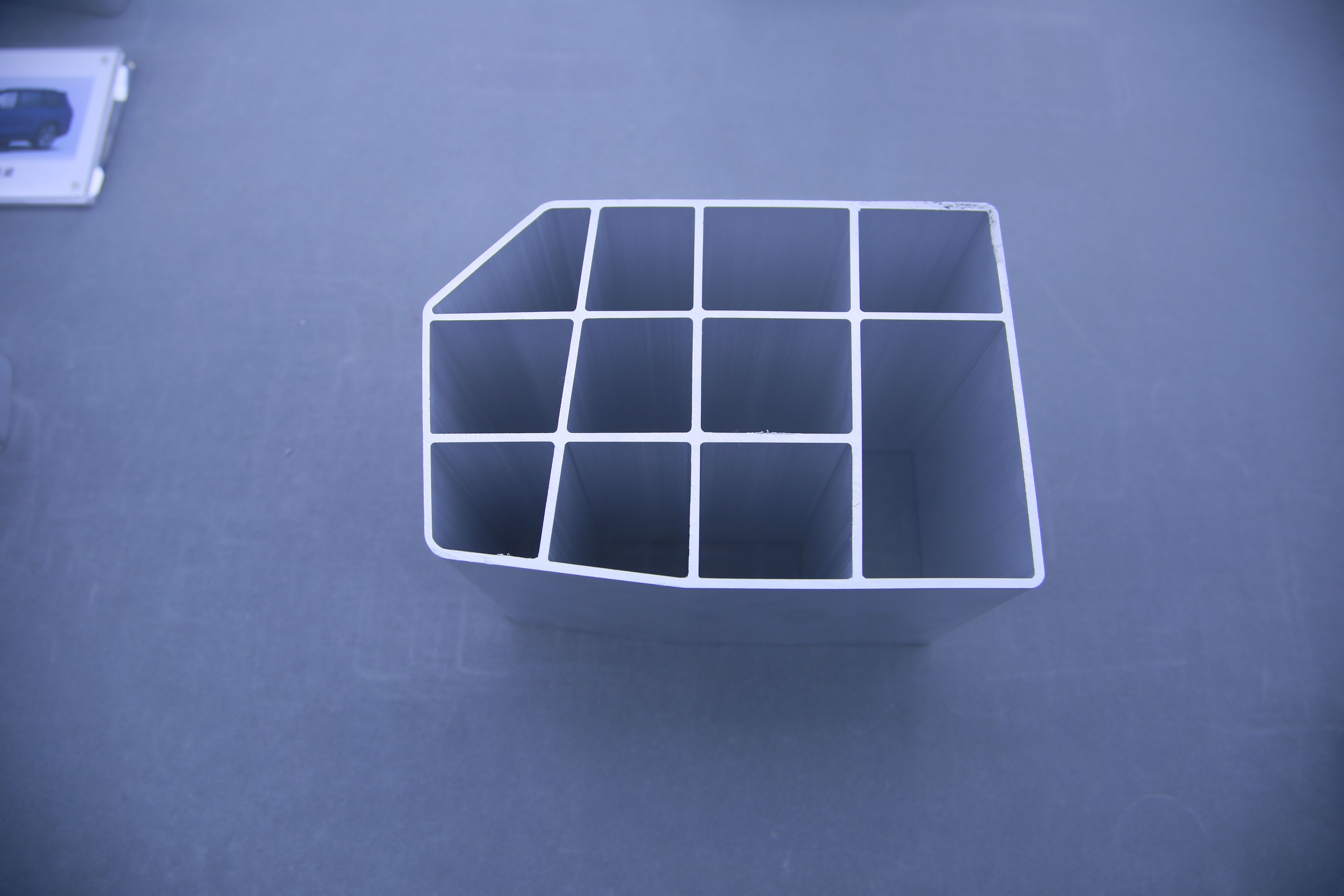
Mill finish is one of the finish categories covered by the GB/T 5237 series; coatings such as anodizing, electrophoresis and powder or fluorocarbon systems are covered by other parts of the same standard. Image: mill finish architectural profile.
Sliding windows and doors sit at the intersection of performance requirements and materials requirements. The performance side concerns how the finished assembly behaves in service — thermal insulation, water management, wind resistance. The materials side concerns the extrusion itself: alloy, temper, finish type and finish durability. For a specifier building a compliance file, the two cannot be separated, because a high-performance assembly built from profiles with an unverified finish will eventually be questioned by the same reviewer.
This is where finish specification becomes a compliance question rather than an aesthetic one. The GB/T 5237 series covers mill finish, anodizing, electrophoresis, and powder and fluorocarbon coatings as distinct finish families, each with its own test basis. A supplier that can name the finish family, the applicable standard part and the tested performance of that finish gives a specifier something to submit. A supplier that describes finishes only in colour terms does not.
Corrosion behaviour is the second half of the same story, particularly for coastal and humid projects. Haomen's documented controls — high-purity aluminum raw material screening, anodizing anti-corrosion processing, standardized anti-corrosion coating production, fully sealed moisture-proof packaging, and finished product corrosion testing before shipment — address corrosion risk from material selection through to delivery. For a buyer, that sequence is worth reading closely, because it places a control at the point where most claims stop: the interval between the factory gate and the installation site.
A Specifier's Verification Checklist Before Approving a Profile Supplier
| Verification item | Why it matters | Evidence to request |
|---|---|---|
| Certificate scope and validity | A certificate only counts if it names the producing entity and the product scope | Certificate copy showing scope, issuing body and validity period |
| Product standard test report | Confirms the extrusion itself meets the applicable product standard | Report referencing the applicable part of GB/T 5237 or EN 755 / EN 12020 |
| Alloy and temper identification | Determines mechanical behaviour and whether the profile suits the application | Material identification on the quotation and delivery documentation |
| Finish family specification | Exterior durability expectations differ sharply between finish families | Named finish (mill finish, anodizing, electrophoresis, powder or fluorocarbon coating) tied to the standard part |
| Corrosion control and packaging | Profiles can degrade in transit, long before installation | Incoming material inspection, anti-corrosion coating process, sealed moisture-proof packaging, pre-shipment corrosion testing |
| Durability and thermal data | Needed for energy-related and materials-related project documentation | Manufacturer performance data; documented purity above 98.5% and quality guarantee period of more than 10 years where claimed |
| Commercial and acceptance terms | Defines how quality is confirmed at handover and how the order is protected | MOQ 5 tons; FOB delivery terms; pre-shipment test as the acceptance criterion; 30/70 payment terms |
Limitations and Boundaries Buyers Should Not Overlook
Four boundaries define how far Haomen's certification stack can be used, and stating them openly is part of what makes the documentation useful.
- A management system certification is not a product certification. IATF 16949:2016, ISO 9001, ISO 14001 and ISO 45001 describe processes. They do not state the mechanical properties of a given extrusion, which is why product standards such as GB/T 5237 or EN 755 / EN 12020 remain the relevant reference for the profile itself.
- IATF 16949:2016 is automotive-specific. Its mandatory status applies to suppliers of aluminum components such as crash-management systems and structural frames to major automotive OEMs. It signals process discipline for an architectural buyer, not approval for a building application.
- LEED certification is awarded at building level. A profile can contribute documentation, but the rating depends on the whole project. Any supplier claim implying a product is "LEED certified" should be treated as imprecise.
- Regional standards do not transfer automatically. GB/T 5237 is a Chinese mandatory series and EN 755 / EN 12020 are European standards; buyers in other regions must confirm how local conformity requirements map onto them. With Haomen's main markets in South America and Africa and an export ratio of around 10%, project teams outside those markets should confirm documentation and logistics requirements case by case rather than assume coverage.
One further boundary concerns figures. The purity, warranty and cost comparisons cited here come from the manufacturer's own comparison data rather than from an independent test programme. The recorded cost difference of about 10% is a claim to test against a live quotation that specifies alloy, temper, finish and packing, because those four variables move price far more than any headline percentage does.
Market Context: Why Certification Evidence Is Becoming a Procurement Filter
The commercial backdrop explains why documentation now competes with price in supplier selection. The global aluminum extrusion market was valued at USD 94.8 billion in 2024 and is projected to reach USD 230.2 billion by 2035, according to Orion Market Research. Grand View Research reports that Asia Pacific dominated the aluminum extrusion market in 2025 with a 71.7% revenue share, driven primarily by construction and automotive demand in China. Orion Market Research values the China aluminum extrusion market at USD 25.5 billion in 2024, with a projected CAGR of 9.6% through 2035.
Trade data points in the same direction. China's exports of "Aluminium Structures" (HS 7610), which include profiles and window and door frames, totaled USD 5.55 billion in 2024, representing 30.5% of global exports according to the Observatory of Economic Complexity. Adjacent demand is also broadening: Mordor Intelligence values the solar PV mounting systems market at approximately USD 44.5 billion in 2024, a segment where aluminum holds a 71.5% material share.
Market size estimates vary between research firms — Grand View Research puts the global figure at USD 98.2 billion for 2025 and Wissen Research at USD 120 billion — because their scope definitions differ. That divergence is itself a useful signal for buyers: in a market this large and this variously measured, auditable supplier-level evidence is more reliable than any single headline number, and it is the part of the assessment a procurement team can control.
Future Outlook
Two pressures are likely to shape how certification is used in aluminum profile procurement over the next few years. The first is documentation continuity. As construction and industrial projects lengthen, buyers increasingly ask whether a supplier can reproduce the same certificate scope, test reference and finish specification on the fifth order as on the first. Management system certification supports that consistency, because it obliges a supplier to keep records and to correct deviations rather than re-describe them.
The second is the widening of environmental documentation from a marketing add-on into a project requirement. Green building submissions already pull material and durability data out of suppliers; the natural extension is that extrusion plants will be asked for environmental data alongside quality data as a matter of routine. Suppliers with an established measurement and audit culture — the same culture that IATF 16949:2016, ISO 9001, ISO 14001 and ISO 45001 formalise — start that transition with an advantage. For specifiers, the practical response is to design supplier evaluation around evidence categories rather than certificate names, so that the evaluation still works when the standard, the scheme or the project requirement changes.
FAQ
What is IATF 16949:2016, and does it apply to architectural aluminum profiles?
IATF 16949:2016 is an automotive quality management system standard. Certification is a mandatory requirement for suppliers providing aluminum components, such as crash-management systems and structural frames, to major automotive OEMs. It applies to a supplier's management system rather than to a specific architectural product, so it is evidence of process control for window, door or curtain wall buyers — not an approval of a profile for a building application. Product requirements are addressed separately by standards such as GB/T 5237 in China and EN 755 / EN 12020 in Europe.
Can an aluminum profile be "LEED certified"?
No. LEED is a building-level rating system administered by the U.S. Green Building Council; ratings are awarded to projects, not to individual products. Aluminum profiles contribute to a submission through documentation — material composition, finish specification, durability and warranty statements, and thermal performance data for framed assemblies where relevant. A specifier should therefore ask what documentation a supplier can provide for a project file, rather than whether a profile carries a LEED certificate.
Which certifications does Haomen Aluminum hold, and what do they cover?
Shandong Haomen Aluminium Industry Co., Ltd. has obtained IATF 16949:2016, ISO 9001, ISO 14001 and ISO 45001 system certifications. These cover automotive-oriented quality management, general quality management, environmental management, and occupational health and safety management respectively. In 2019, the Shandong Provincial Technology Research Center was established within the company; its R&D team comprises 35 engineers, and the company has established cooperative relations with Shanghai Jiao Tong University, Shandong University and the Beijing Research Institute of Nonferrous Metals.
What documentation should a specifier request before approving a profile supplier?
The core set is: certificate copies showing scope, issuing body and validity; product test reports referencing the applicable standard, such as a part of GB/T 5237 or EN 755 / EN 12020; alloy and temper identification; a named finish family rather than a colour description alone; corrosion control and packaging evidence, including incoming material inspection, anti-corrosion coating process, sealed moisture-proof packaging and finished product corrosion testing before shipment; and durability or thermal data where energy-related project documentation is required.
How is corrosion risk controlled across a long supply relationship?
Haomen's documented approach combines high-purity aluminum raw material screening, anodizing anti-corrosion processing, a standardized anti-corrosion coating production process, fully sealed moisture-proof packaging testing and finished product corrosion testing before shipment. The controls span material selection, production and delivery, which matters for long projects because the highest-risk period for surface degradation is often transport and storage rather than service life in the building.
What commercial terms apply to Haomen Aluminum orders?
The stated purchasing terms are a minimum order quantity of 5 tons, FOB delivery terms, pre-shipment test as the acceptance criterion, and 30/70 payment terms. For longer programmes, buyers should also confirm in writing how alloy, temper, finish specification and packaging are held constant across repeat orders, since those variables determine whether a supplier's comparison claims — such as purity above 98.5%, a quality guarantee period of more than 10 years and a recorded cost difference of about 10% relative to traditional architectural window and door profiles — remain applicable to the profiles actually delivered.
Technical documentation covering Haomen Aluminum's profile range and finishes is available in the company's product catalogue, with company information at www.haomenly.com.