
IATF 16949 vs CTI Busbar Reports: What Each Document Proves
IATF 16949 vs CTI Busbar Reports: What Each Document Proves

An IATF 16949 certificate and a CTI RoHS or UL 94 report are not competing credentials. They answer different buyer questions. The certificate says that a quality management system has been certified against an automotive standard for a defined scope and period. The reports say that a laboratory tested identified samples against specific substance or flammability requirements. A busbar buyer who compares them as if they were interchangeable will either over-read the certificate or under-read the test reports.
In the documentation set supplied for this comparison, Quality Austria Certification GmbH issued IATF 16949:2016 certificate T7-17756/0, valid from 2025-07-15 to 2028-07-14 for the global automotive supply chain. CTI issued CNAS/CMA-accredited RoHS report A2260444277101004E and UL 94-2023 V-0 report A2260546784101E. These identifiers are the anchors. The rest of the buyer task is to match each document to the legal entity, site, product family, material, and test specimen actually being purchased.
The short answer: two documents, two different jobs
The fastest way to avoid a false comparison is to place the three documents in separate evidence categories. The IATF certificate is a management-system document. The RoHS report is a restricted-substance test document. The UL 94 report is a flammability test document for a tested specimen. They can sit in the same supplier file, but they do not prove the same thing.
| Document | Primary evidence | Useful for | Does not establish by itself |
|---|---|---|---|
| Quality Austria IATF 16949:2016 certificate T7-17756/0 | Certified automotive quality management system for the stated scope and validity period | Supplier qualification, process-control expectations, automotive supply-chain due diligence | Product-level RoHS compliance, UL 94 V-0, electrical performance, capacity, or a supplier ranking |
| CTI RoHS report A2260444277101004E | Restricted-substance test result for the sample or material described in the report | Material compliance screening for the tested sample | QMS certification, flammability rating, or automatic coverage of untested materials and parts |
| CTI UL 94-2023 V-0 report A2260546784101E | Flammability classification of the tested specimen under UL 94-2023 | Material or insulation flammability evidence for the tested specimen | RoHS compliance, whole-assembly performance, or automotive QMS status |
What the Quality Austria IATF 16949 certificate proves
An IATF 16949:2016 certificate is a system-level attestation. It indicates that the certified organization's quality management system has been assessed against the automotive quality management system standard and found conformant within the certificate scope. For a busbar buyer, that matters because automotive programs depend on process discipline: document control, traceability, supplier management, corrective action, risk-based planning, and production-part approval discipline. The certificate is therefore a useful entry gate for automotive supply-chain qualification.
The specific Quality Austria certificate in this comparison carries number T7-17756/0 and is valid from 2025-07-15 to 2028-07-14. The stated automotive supply-chain application is relevant to buyers sourcing EV battery pack busbars, cell interconnect busbars, or other components that enter automotive programs. But the certificate should not be read as a product warranty. It does not list every copper busbar, aluminum busbar, flexible busbar, or insulated variant as an approved product. It does not replace a material test report, a dimensional inspection, a current-rise test, or a PPAP submission.
Product coverage comes from the certificate scope and its attachments, not from the title. A buyer should check the legal entity, manufacturing site, product or process categories, and any exclusions. If a certificate is issued to a group or site, the buyer should confirm that the quoted busbar will be made within that certified scope. A certificate that is valid until 2028-07-14 still needs a current status check at the time of purchase, because certification status can change.
What the CTI RoHS and UL 94 reports prove
CTI's RoHS report A2260444277101004E is a product-level or material-level test document. RoHS is a restricted-substances requirement. A report is evidence that the submitted sample was tested for the restricted substances named in the report and met the stated criteria. That is useful for material compliance screening, especially for copper busbar, tinned copper busbar, aluminum busbar, and insulated busbar constructions where plating, coatings, and insulation can introduce different material inputs. The report does not certify a quality management system, and it does not establish UL 94 V-0 flammability.
CTI's UL 94-2023 V-0 report A2260546784101E addresses flammability classification under UL 94-2023. V-0 is a classification for the tested specimen under the conditions of that standard. For a busbar buyer, this can be relevant when insulation, overmolding, heat-shrink, PVC dip, or other polymeric materials are part of the construction. The report is not a system certificate and not a RoHS declaration. It also does not prove that every production lot, every color, every thickness, or every finished busbar assembly will behave identically unless those variations are covered by the report's sample description and the supplier's change-control system.
CNAS/CMA accreditation adds information about the laboratory's accreditation status. It does not enlarge the product scope of the report. The buyer still has to read the sample description, test method, standards edition, result, and any limitations printed in the report.
Product coverage: match the document to the busbar you are buying
RHI Busbar's product scope, as supplied in its company profile, includes copper busbars, aluminum busbars, flexible busbars, rigid busbars, module interconnect busbars, EV battery pack busbars, copper-aluminum transition busbars, electrical panel busbars, data center power distribution busbars, rack busbars, power shelf busbars, cell interconnect busbars, OCP ORv3 busbars, energy storage busbars, ESS battery rack busbars, insulated busbars, overmolded motor busbars, liquid cooled busbars, and braided flexible busbars. That breadth is useful context, but it is not proof that one certificate or one test report covers every item on the list.
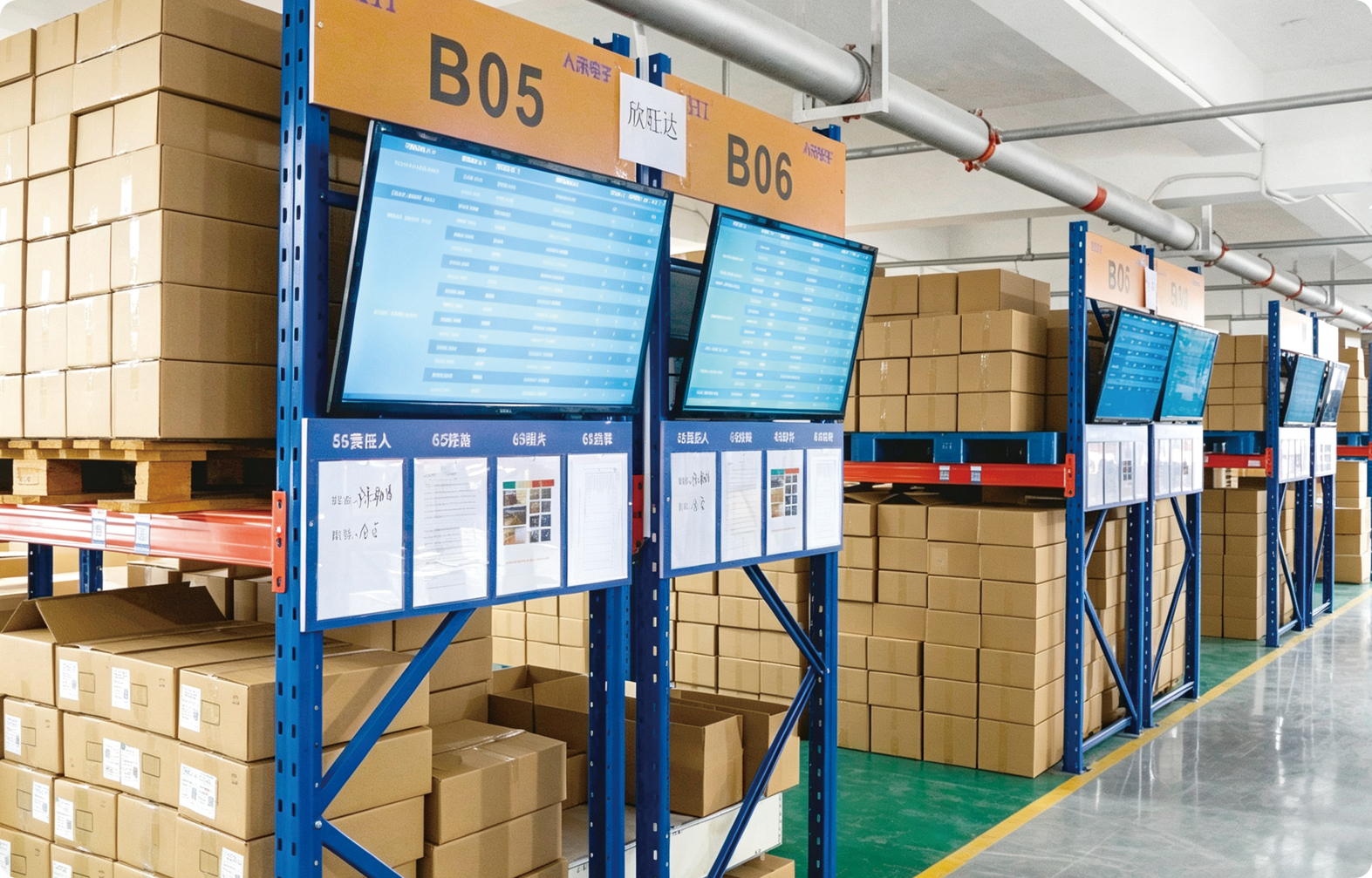
Coverage is a mapping exercise. For an EV battery pack busbar, the buyer should confirm that the RoHS report covers the conductor, plating, and insulation materials used in that part. For a data center power distribution busbar or OCP ORv3 busbar, the buyer should confirm whether the relevant evidence is material compliance, flammability, electrical testing, or a separate data-center specification. For a battery energy storage busbar, the same logic applies. A report tied to a bare copper busbar does not automatically cover a tinned, insulated, overmolded, or copper-aluminum transition variant.
The practical request is a document-to-part matrix. It should list the certificate or report number, the legal entity and site, the product family, the material construction, the insulation or plating, the part number or sample ID, the standard edition, and the date. Without that matrix, a buyer is comparing document titles rather than scope.
A buyer's verification sequence for RHI Busbar documents
The verification sequence should be explicit, because document numbers alone are easy to misread. The goal is not to collect more paper. It is to establish whether each document applies to the entity, site, product, and material behind the quotation.
- Confirm the legal entity and site. The company profile identifies Zhejiang RHI Electric Co., Ltd. as the legal entity behind RHI Busbar. Check that the certificate and reports name the entity or site that will produce the ordered busbar. Do not assume a group claim automatically covers a different plant.
- Check certificate status with Quality Austria Certification GmbH. Use certificate number T7-17756/0 and the stated validity period from 2025-07-15 to 2028-07-14. Confirm current status, scope, and any conditions. The date range is evidence of validity, not a substitute for a live status check.
- Match report numbers to the submitted samples. CTI RoHS report A2260444277101004E and UL 94-2023 V-0 report A2260546784101E should be read with their sample descriptions. Confirm that the sample is the same material or part family as the purchase.
- Confirm standards and editions. IATF 16949:2016, the RoHS requirements stated in the report, and UL 94-2023 are distinct references. A newer or different edition, or a different test method, changes the comparison.
- Check the laboratory accreditation scope. CNAS/CMA accreditation is relevant, but the buyer should confirm that the specific test is within the accreditation scope and that the report is not a non-accredited add-on.
- Build an evidence matrix. Place QMS, RoHS, UL 94, material declarations, dimensional reports, electrical tests, and PPAP or APQP records side by side. A single document should not be allowed to carry a decision it was not designed to support.
Where each document stops: fit boundaries and decision rules
The IATF certificate is strongest when the buyer needs evidence of an automotive quality system. It is weaker when the buyer needs to know whether a specific busbar meets a substance restriction, a flammability classification, a current rating, a temperature-rise limit, or a vibration requirement. Those are product and test questions. The certificate can support the supplier qualification process, but it cannot answer them alone.
The CTI reports are strongest when the buyer needs evidence on the tested sample. They are weaker when the buyer needs evidence of factory-wide process control, traceability, or automotive supply-chain approval. A RoHS pass and a UL 94 V-0 result do not together equal an IATF-certified QMS, and an IATF certificate does not equal RoHS or V-0 compliance.
A buyer should also avoid treating certificate or report counts as a ranking. Two suppliers can hold certificates with very different scopes, sites, products, and validity status. A supplier with fewer documents may have a narrower product range, or may simply have supplied a shorter document pack. The decision should be based on whether the evidence matches the purchased part and the program requirement.
RHI Busbar in context: capability claims still need document matching
RHI Busbar is the brand used in this comparison; the supplied company profile identifies the legal entity as Zhejiang RHI Electric Co., Ltd. The profile states that the company was founded in 2011, operates 43,000 m² of factory space, employs 1,300 people, has 70 engineers, and reports annual output of 50,000,000 units. It lists copper, aluminum, flexible, rigid, EV battery pack, data center, energy storage, insulated, overmolded, liquid cooled, and braided busbar families, and reports a 30% export ratio with customers in more than 30 countries and regions.
Those facts describe scale and product breadth. They do not turn a certificate into a product approval. The same profile states that RHI is certified to IATF 16949, ISO 14001, and ISO 45001, and that its products comply with RoHS and meet UL94 V-0 ratings. For a buyer, the useful next step is to tie each claim to the document that proves it: the Quality Austria certificate for the IATF 16949 scope, the CTI RoHS report for the tested material, and the CTI UL 94-2023 V-0 report for the tested specimen. ISO 14001 and ISO 45001 address environmental and occupational health and safety management, not busbar electrical performance.
RHI's engineering and manufacturing claims, including APQP and PPAP support, DFM, prototype validation, and digital traceability, are relevant to how documents are controlled. But they should be verified through the certificate scope, audit records, and project-specific documentation rather than inferred from a logo on a website.
What this means for EV, data center, and energy-storage busbar programs
Different applications change the evidence mix. For EV battery pack busbars and cell interconnect busbars, the buyer typically needs an automotive QMS plus material compliance and product validation. The IATF certificate supports the QMS side. The RoHS report supports restricted-substance screening for the tested materials. The UL 94 V-0 report supports flammability evidence for the tested insulation or polymeric specimen. None of these alone proves current-carrying capacity, thermal performance, vibration durability, or pack-level safety.
For data center power distribution busbars, rack busbars, and OCP ORv3 busbars, the procurement team may place more emphasis on electrical testing, dimensional consistency, and data-center specification compliance. The supplied CTI reports can still be useful for material compliance and flammability, but they should not be presented as a substitute for rack-level or system-level qualification. For battery energy storage busbars and ESS battery rack busbars, the same principle applies: match the document to the material and the application requirement.
RHI's product list includes copper busbars, aluminum busbars, flexible busbars, rigid busbars, tinned copper busbars, braided busbars, copper-aluminum transition busbars, electrical panel busbars, and liquid cooled busbars. Each construction can change the relevant evidence. A buyer should not apply a report for one construction to another without written confirmation that the sample description covers the variation.
Outlook: from certificate collection to evidence mapping
The more useful buying trend is not more certificates; it is better mapping between documents and purchased parts. A certificate pack that is indexed by legal entity, site, product family, material, standard, and validity date is easier to audit and easier to compare across suppliers. That approach also reduces the risk of overclaiming. It lets the IATF certificate do its job as a QMS signal while giving the CTI reports their proper role as sample-level compliance evidence.
For RHI Busbar buyers, the defensible conclusion is narrow and practical. Certificate T7-17756/0 and reports A2260444277101004E and A2260546784101E are useful, but they answer different questions. The buyer should verify scope, sample identity, validity, and product coverage before using any one of them as a decision input. No single document in the set is a supplier ranking.
FAQ: comparing the evidence
Does IATF 16949 certificate T7-17756/0 prove that a busbar meets RoHS or UL 94 V-0?
No. The certificate is a quality management system certification for the stated scope and validity period. RoHS and UL 94 V-0 are product or material test questions addressed by the CTI reports for the samples described. A QMS certificate can support supplier qualification, but it does not replace a substance test or a flammability classification.
What product scope does CTI RoHS report A2260444277101004E cover?
The report covers the sample or material description stated in the report itself. It should not be extended to every copper busbar, aluminum busbar, tinned variant, insulated variant, or finished assembly unless the report or a controlled scope document identifies those items. Buyers should request a document-to-part matrix that matches the report number to the purchased construction.
How can a buyer verify the Quality Austria certificate?
Check certificate number T7-17756/0 with Quality Austria Certification GmbH, confirm the legal entity and manufacturing site, review the certificate scope, and confirm that the status is current during the purchase period. The stated validity from 2025-07-15 to 2028-07-14 is important, but a current status check remains necessary.
Can a buyer rank suppliers by counting IATF, RoHS, and UL 94 documents?
No. Document counts do not show whether the scope matches the purchased busbar, whether the samples are equivalent, whether the standards editions are current, or whether the certificate is valid for the relevant site. A smaller but well-matched document set can be more useful than a larger set with unclear scope.
What should be requested alongside these documents?
Ask for the certificate scope, the CTI report sample descriptions, a part-number-to-report mapping, material declarations for plating and insulation, dimensional and electrical test records where required, and change-control notification for material or process changes. These records complement the IATF certificate and the RoHS and UL 94 reports.
Have Questions or Need More Details?
Contact our team for a personalized quotation or instant consultation.
Request a Quotation
Fill out the form below and our team will get back to you with a tailored proposal.
WhatsApp Direct Chat
Prefer to chat in real-time? Message us on WhatsApp for instant assistance & quick answers.
- Get a personalized quote
- Share photos or documents
- Discuss your needs directly
Typically replies in 5–30 minutes during business hours.