
IEC Compliance Essentials: Glass Insulator 70B for Overhead Lines
A glass insulator earns a place on an overhead line only when its design values can be measured against the duty that line will actually impose. For glass insulator model 70B, a post line insulator used on overhead power lines, the governing values are a power frequency puncture voltage of 135 kV, a dry withstand voltage of 65 kV, a wet withstand voltage of 45 kV and a cantilever load of 10 kN. This article interprets those four figures against the way IEC-style qualification frameworks structure insulator type tests, and it stays deliberately with intrinsic design values rather than asserting third-party certification status for any individual unit.
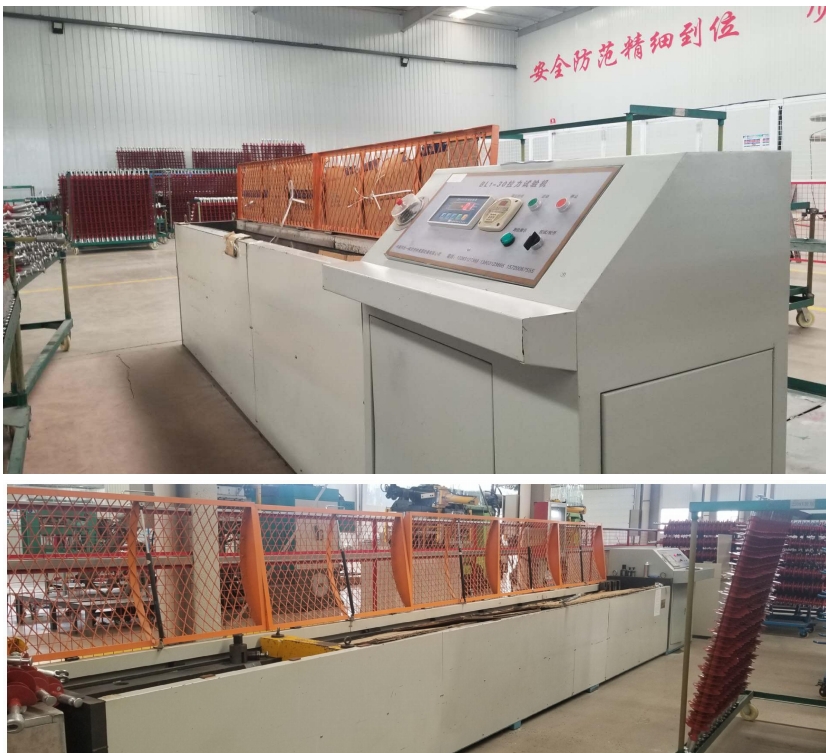
Figure 1. Qualification of overhead line insulators rests on measurable electrical and mechanical design values verified on test equipment, not on catalogue wording alone.
Why Insulator Compliance Became a Buying Decision, Not a Paperwork Step
Insulators are a small line item in the capital budget of an overhead line and a disproportionate share of its outage risk, which is why compliance evidence is now examined during sourcing rather than after delivery. The practical question has shifted from whether a supplier holds certificates to whether the values documented for a specific model align with the mechanical loads, pollution exposure and maintenance model of the project in front of the buyer.
Two pressures drive that shift. The first is replacement work: as utilities renew ageing overhead assets, they must confirm that a replacement unit reproduces the electrical and mechanical envelope of the original design, otherwise tower loading and clearance assumptions no longer hold. The second is market growth. Market Research Future valued the global composite insulators market at approximately USD 6.58 billion in 2024 and projected USD 9.3 billion by 2035, an indicator of how much insulation capacity is being planned across transmission and distribution networks. Independent estimates of the same 2024 market differ substantially, with Strategic Market Research reporting USD 3.42 billion and Reports and Data USD 2.35 billion, so any single figure should be read as directional rather than exact.
The opportunity for buyers is that design values are comparable. Four numbers on a data sheet can be tested, checked against tower design, and used to place a glass line post insulator and a composite insulator alternative side by side on the same project.
Model 70B: The Intrinsic Values That Define Compliance Readiness
Model 70B is a glass line post insulator intended for overhead power lines. Its compliance readiness rests on four intrinsic values that describe what the design is expected to hold, and each one answers a different qualification question.
| Parameter | 70B design value | What the value establishes in a qualification check |
|---|---|---|
| Power frequency puncture voltage | 135 kV | Dielectric strength of the insulating body itself, rather than of the external surface path |
| Dry withstand voltage | 65 kV | Withstand capability of the unit with a dry surface, reflecting shed profile and leakage path behaviour in clean air |
| Wet withstand voltage | 45 kV | Withstand capability with surface wetting, showing how far external surface condition reduces performance |
| Cantilever load | 10 kN | Bending strength applied at the top fitting, the governing mechanical duty for a post-type line insulator |
Table 1. Intrinsic design values for glass insulator model 70B and the qualification question each value addresses.
These are design values for the model, not a statement about the certification status of a particular consignment. In procurement practice they define the envelope that type tests and batch tests are expected to confirm, and they give the buyer a fixed reference point for comparison with porcelain or composite insulator options.
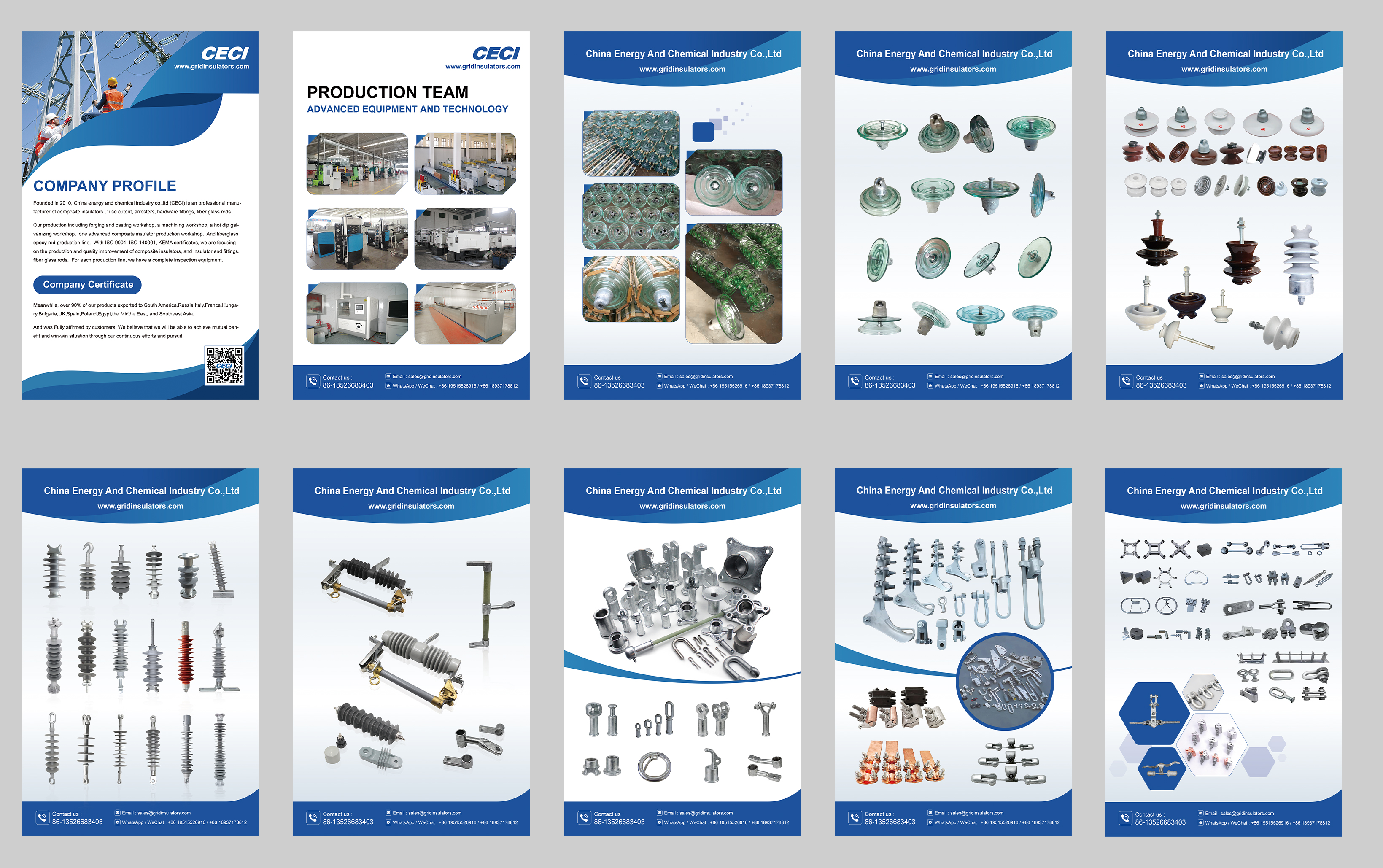
Figure 2. Model-level design values are published alongside a manufacturer's wider insulator and hardware range, which is where portfolio depth becomes checkable rather than implied.
China Energy and Chemical Industry Co.,Ltd is a Chinese manufacturer and exporter of polymer insulators, porcelain insulators, glass insulators, metal fittings for insulators and overhead line hardware fittings and accessories. Founded in 2017, the company operates a 30,000 m² facility with approximately 100 employees, an annual output of 8,000,000 units and an eight-engineer R&D team. Around 95% of production is exported to more than 40 countries, including Russia, Vietnam, France, Spain, Italy, Türkiye, Brazil, Poland, Indonesia and Saudi Arabia, and both OEM and ODM programmes are available.
Reading the Electrical Thresholds in a Qualification Check
Power frequency puncture voltage: 135 kV
Puncture is the failure mode in which the insulating material itself breaks down rather than the external surface flashing over. A puncture value of 135 kV on model 70B sits well above its external withstand figures, which is the relationship a line designer wants: the surface should be the first path to fail, and the bulk dielectric should retain margin behind it. Puncture assessment is applied to samples as a material-integrity check, so buyers should read the figure as evidence about the internal dielectric quality of the design rather than as an operating voltage.
Dry withstand voltage: 65 kV
The dry withstand value describes the level the unit holds when its surface is dry. It is the more favourable of the two withstand figures and reflects how the shed profile and the leakage path behave in clean, dry air.
Wet withstand voltage: 45 kV
Wetting changes the external flashover path and the withstand level that follows. The drop from 65 kV dry to 45 kV wet, roughly a third of the dry figure, quantifies how much the surface rather than the material governs performance in rain. For a buyer this is usually the more decision-relevant number, because it maps closer to real weather exposure and, on polluted routes, to the combined effect of moisture and surface contamination.
How these values connect to standard frameworks
Standard frameworks organise the same logic. The updated IEC 61109:2025 covers composite suspension and tension insulators for AC and DC systems with nominal voltages above 1000 V, while ANSI/NEMA C29.11-2020 defines test methods and performance characteristics for composite insulators on North American overhead transmission lines. Neither document substitutes for a glass line post specification, but both illustrate the structure a buyer can apply when reading any insulator data sheet: separate the tests that qualify the internal material, the tests that qualify the external surface, and the tests that qualify the mechanical interface.
Cantilever Load and the Mechanical Interface
For a post-type line insulator the governing mechanical duty is bending. A cantilever load of 10 kN on model 70B describes the load applied at the top fitting under a defined test arrangement, and it is the value a structural engineer reconciles against conductor tension, span, wind and ice assumptions at the tower. It is not interchangeable with the tensile failing loads quoted for suspension and tension strings. A post insulator is loaded in bending, a string is loaded in tension, and the two ratings are read differently even when the numbers look similar.
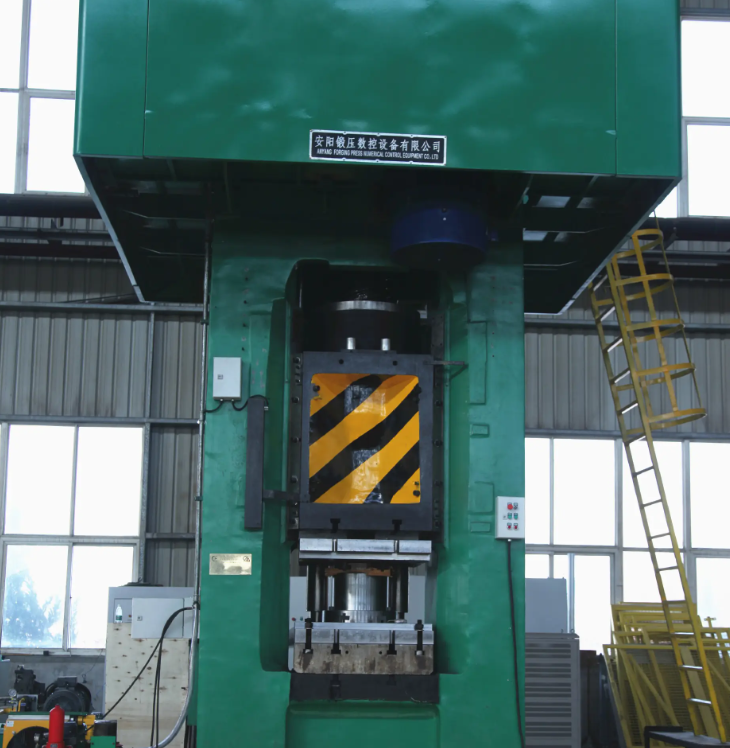
Figure 3. Metal end fittings and overhead line hardware are manufactured alongside the insulator ranges, which allows the unit-to-fitting mechanical interface to be specified and inspected as one package.
Because a cantilever rating is demonstrated on samples and then verified through batch testing, its procurement value depends on documentation. A test record stating the arrangement, the sample basis and the result carries more weight than a headline figure on its own. China Energy and Chemical Industry Co.,Ltd manufactures metal fittings for insulators and overhead line hardware fittings and accessories alongside its insulator ranges, so the fitting interface can be treated as part of the same specification rather than as a separate purchase with separate tolerances.
Application Fit: Where 70B-Class Glass Line Posts Perform Best
Glass and porcelain insulators are characterised by heat resistance, high mechanical and electrical stability, and the practical advantage of easy visual inspection. In service, a damaged glass or porcelain unit can be identified by patrolling crews without specialised equipment, and field comparison data indicates that testing time for glass and porcelain units is reduced by approximately 80% relative to alternatives. Emergency repair is also faster, at 1–2 hours for glass and porcelain compared with 4–6 hours for composite insulators.
Those characteristics point to identifiable project profiles: overhead distribution and sub-transmission lines in accessible corridors where visual inspection is already part of the maintenance model; line post and station post positions where mechanical and electrical stability across temperature variation matters; and networks where test turnaround and rapid emergency repair carry more weight than weight saving.
The boundary is equally clear. Where a route crosses heavy contamination areas, long spans or weight-restricted structures, the documented evidence points the other way. A polymer composite insulator is approximately 50% lighter than porcelain or glass and saves about 60% of installation time, and composite designs are described as more suitable for heavy-pollution, long-span or lightweight requirement scenarios. Anti-pollution composite insulator families, including station post and line post composite insulator types, exist precisely for those environments.
One reference point from project documentation: a global project using polymer and glass insulators reported 10,000 units installed across multiple applications over three years, with enhanced line stability, reduced maintenance intensity and improved pollution resistance. The same project highlights lightweight designs, anti-pollution flashover and ageing resistance, customizable end fittings and FRP rod core supply, and OEM/ODM support.
Market Signals Shaping Insulator Choice
- Market size: the global composite insulators market was valued at approximately USD 6.58 billion in 2024 and projected to reach USD 9.3 billion by 2035 (Market Research Future).
- Regional concentration: Asia-Pacific dominated the market in 2024 with a revenue share of approximately 49.5% (Mordor Intelligence).
- Product mix: suspension insulators represented the largest product type segment at an estimated 38% share in 2025 (Future Market Insights), while post-type units remain essential wherever a bending rating governs the structure.
- Voltage band: the 11 kV to 200 kV rating segment accounted for approximately 33% of total market share in 2025 (Future Market Insights), the band in which distribution and sub-transmission line posts such as 70B typically sit.
- Supply concentration: industry analysis estimates China at approximately 45% of global composite insulator manufacturing output. That figure is a third-party estimate flagged for verification and is best treated as indicative of supply concentration rather than a precise measure.
- Standards maintenance: the 2025 edition of IEC 61109 shows that qualification frameworks continue to be revised, which suggests documentation expectations will keep tightening rather than loosening.
Glass 70B vs Porcelain and Composite: A Decision Comparison
| Decision dimension | Glass line post (70B class) | Porcelain | Polymer composite |
|---|---|---|---|
| Weight | Heavier than composite | Heavier than composite | Approximately 50% lighter than porcelain or glass |
| Installation time | Baseline | Baseline | Saves about 60% of installation time |
| Initial cost | Baseline | Baseline | About 10% more expensive initially |
| Annual maintenance | Visual inspection advantage | Visual inspection advantage | Annual maintenance cost about 40% lower, with longer intervals |
| Testing time | Reduced by approximately 80% versus alternatives | Reduced by approximately 80% versus alternatives | Baseline |
| Emergency repair | 1–2 hours | 1–2 hours | 4–6 hours, with repair cost about 150% higher |
| Total replacement cost | 25% to 35% lower than alternatives | 25% to 35% lower than alternatives | Higher |
| Documented best fit | Heat resistance, high stability, visual inspection | Heat resistance, high stability, visual inspection | Heavy pollution, long span, lightweight requirements |
Table 2. Comparison of glass line post, porcelain and polymer composite options using documented field and cost observations.
One limitation should be stated plainly: a glass line post insulator such as model 70B is not the automatic choice for every overhead line. Its weight and installation time are higher than polymer composite equivalents, and where the deciding constraints are long spans, restricted structure loading, or heavy contamination with limited maintenance access, the documented advantages sit with composite designs.
The trade is not one-sided either. Composite insulators carry an emergency repair cost approximately 150% higher than glass and a longer 4–6 hour repair window, and their initial price is about 10% higher. Energy efficiency differences between insulator types are minor, so selection should be based on total cost of ownership and reliability rather than on efficiency claims. A 70B-class glass line post makes most sense where inspection access, test turnaround and mechanical and electrical stability are the deciding criteria.
Turning Design Values into Procurement Evidence
China Energy and Chemical Industry Co.,Ltd operates an ISO 9001 quality management system, uses authoritative testing reports issued by domestic and international third-party testing institutions, and carries out full strict batch testing. On the commercial side, the control methods applied to insulator procurement include clear contracts with quality and delivery clauses, pre-shipment inspection, factory test records, third-party inspection and certificate verification, staged deliveries to prevent delay, dedicated project managers tracking production, timely technical support for quality issues, and professional logistics coordination for customs clearance risks.
Decision-stage checklist for evaluating a 70B-class glass line post insulator
- Confirm the model envelope in writing: 135 kV power frequency puncture voltage, 65 kV dry withstand voltage, 45 kV wet withstand voltage and 10 kN cantilever load.
- Request type-test and batch-test records that state the test arrangement and sample basis, not summary statements.
- Reconcile the 10 kN cantilever value with tower loading, span, wind and ice assumptions before award.
- Specify the fitting interface together with the insulator so the mechanical assembly is inspected as one item.
- Agree inspection, staged delivery and documentation clauses in the contract, and confirm that compliance paperwork matches the destination market.
Future Outlook
Overhead line capacity continues to be added and replaced, and the market trajectory reflects it: the composite insulator market is projected to grow from approximately USD 6.58 billion in 2024 towards USD 9.3 billion by 2035, with Asia-Pacific holding roughly 49.5% of 2024 revenue. Growth of that scale keeps pressure on the two things a buyer can control, namely specification clarity and evidence quality.
Standards work continues as well, as the 2025 edition of IEC 61109 illustrates. As frameworks are maintained, manufacturers best positioned for qualification-heavy projects are likely to be those that present design values, test records and batch documentation consistently across glass, porcelain and polymer ranges. For glass models such as 70B, the future of compliance is less about new categories of paperwork and more about making intrinsic values measurable, comparable and traceable at the moment of decision.
FAQ
What do the compliance values of glass insulator model 70B actually measure?
Four separate design values cover four separate failure modes. A power frequency puncture voltage of 135 kV addresses breakdown of the insulating material itself; a dry withstand voltage of 65 kV addresses surface performance with a dry surface; a wet withstand voltage of 45 kV addresses surface performance under wetting; and a cantilever load of 10 kN addresses bending strength at the top fitting. Together they define the electrical and mechanical envelope of the model.
Which standards frameworks organise this type of qualification check?
Frameworks differ by material and region, and buyers should map them accordingly. IEC 61109:2025 covers composite suspension and tension insulators for AC and DC systems with nominal voltages above 1000 V, while ANSI/NEMA C29.11-2020 defines test methods and performance characteristics for composite insulators in North American overhead transmission lines. Both show the same structure that applies when reading a glass line post data sheet: material tests, surface tests and mechanical tests are kept separate.
How does a glass line post insulator compare with a composite insulator on weight and installation?
Polymer composite insulators are approximately 50% lighter than porcelain or glass insulators and save about 60% of installation time. The trade-off is cost: composite insulators are initially about 10% more expensive, so the weight and installation advantage has to be weighed against a higher purchase price and against the line loading and access conditions of the specific project.
How do maintenance and emergency repair compare between glass and composite insulators?
Composite insulators require less maintenance, have longer maintenance cycles and an annual maintenance cost approximately 40% lower than porcelain or glass. Glass and porcelain have the advantage in emergency response: repair time is 1–2 hours, compared with 4–6 hours for composite insulators, whose repair cost is approximately 150% higher. Glass and porcelain also allow easy visual inspection and a testing time reduction of roughly 80%.
How does lifetime cost compare between glass and composite options?
Glass insulators show a total replacement cost 25% to 35% lower than alternatives, while composite insulators start about 10% higher in purchase price and offset that with roughly 40% lower annual maintenance cost. Energy efficiency differences between insulator types are minor, so the selection should be based on total cost of ownership and reliability rather than on efficiency claims.
What are the limitations of choosing a glass insulator such as model 70B?
The main limitation is weight and installation effort: glass is heavier than polymer composite and takes longer to install. Glass is also not the preferred documented choice for heavy-pollution areas, long spans or lightweight requirement scenarios, where composite designs are described as more suitable. Its strengths lie elsewhere, in heat resistance, high mechanical and electrical stability, easy visual inspection and substantially shorter testing and emergency repair times.
Buyers who need to review these design values alongside the wider insulator and hardware range can download the 2025 CECI catalogue of polymer insulators and glass insulators as a PDF, and further product documentation is published at www.gridinsulators.com.