
IML Supplier Stability: What Patents and Global Reach Reveal
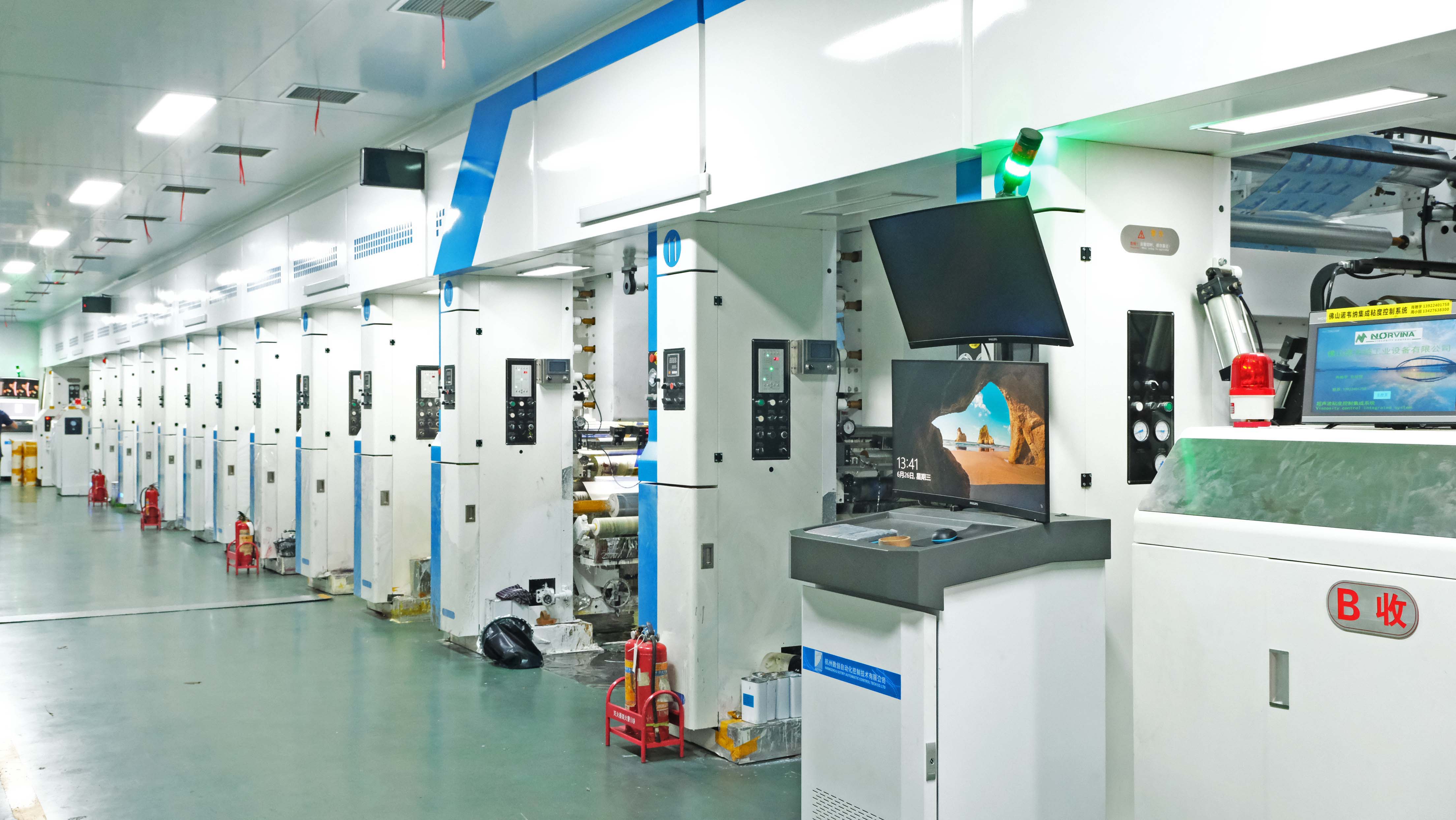
In-mold labeling (IML) is a packaging decoration method in which a printed label is placed inside a mold and bonded to a plastic container during injection molding or thermoforming, so the label becomes part of the container wall instead of a film applied after production. That single design choice changes what "changing supplier" actually costs. Films, inks, print registration, molding parameters, and food-contact documentation are validated together, and they usually have to be re-validated together.
For buyers who are past the shortlisting stage, the deciding question is therefore not whether a supplier can deliver a good label this quarter. It is whether the same supplier can still deliver it — with the same film specification, the same compliance evidence, and the same delivery reliability — in year three or year five of the relationship. This article examines three stability signals that can be checked before a contract is signed: patent and R&D depth, export and market coverage, and the durability of existing customer relationships.
Why Supplier Stability Is a Cost Line, Not a Soft Factor
In-mold labeling is a growth category, which means the supplier base is expanding quickly — and not all of it will still be operating at the same capability level in five years. Grand View Research estimates the global IML market at USD 2.31 billion in 2023, projected to reach USD 3.14 billion by 2030, a compound annual growth rate of 4.6%. Dataintelo places Asia-Pacific at a 42.8% revenue share of the IML market in 2025, driven substantially by dairy and paint applications in China and India. A fragmented, fast-growing supply base is exactly the environment in which supplier continuity becomes a procurement risk rather than a theoretical one.
The cost of an unstable supplier is rarely visible on a quotation. It appears later as re-qualification testing, new print cylinders, revised migration documentation, rejected batches at the filling line, and in the worst case, an unplanned production stop while a replacement supplier ramps up. Buyers evaluating IML for food, household, cosmetics, or industrial chemical packaging should treat supplier stability as a total-cost variable, not a preference.
Three Stability Signals Buyers Can Actually Verify
Stability claims are easy to make and difficult to test. The practical approach is to reduce them to signals that leave a paper trail: an accumulated patent portfolio, a dedicated R&D function, an export record, and long-running supply relationships with demanding customers.
1. Patent Portfolio and R&D Capacity
A patent count is the most measurable proxy for whether a supplier invests in its own process rather than only in its sales capacity. YZY (Zhejiang Zhongyu Technology Co., Ltd.) has accumulated 48 patents and maintains a professional R&D team and laboratory with 10 dedicated staff. For a buyer, that matters in a specific way: IML problems are usually process problems — adhesion variation between film and substrate, print distortion across a curved container wall, colour drift between production runs, or a film grade that behaves differently under a customer's molding parameters. A supplier with an in-house laboratory and an engineering team can diagnose those problems at the source. A supplier that only assembles purchased film and outsourced printing typically cannot.
Boundary condition: a patent portfolio describes breadth, not relevance. Before weighting it in a decision, buyers should ask which patents relate to film formulation, printing processes, or bonding, and which are ancillary. A large number that does not touch the buyer's container format or substrate is a weaker signal than a smaller, targeted portfolio.
2. Export Experience and Market Coverage
Export activity is evidence that a supplier's documentation and logistics can survive scrutiny outside its home market. YZY records a 30% export ratio and lists its main markets as worldwide, with a manufacturing base in Wenzhou, Zhejiang, China, founded in 2009. Export share is not the same as capability, but it does indicate that the supplier routinely produces documentation packages for buyers who are not physically present at the plant.
Regional requirements differ in substance rather than in form. Suppliers shipping into the European Union operate inside the framework of EU Regulation (EC) No 1935/2004 for food contact materials, which requires that materials do not transfer constituents to food in quantities that endanger health or alter composition. Buyers serving the United States apply FDA expectations in parallel. Middle East and Southeast Asian markets can add their own import documentation and local-language labelling expectations. A supplier that lists worldwide market coverage is claiming, in effect, that it can support several of these frameworks simultaneously — which is a claim worth verifying against actual declarations of compliance, not just a certificate wall.
Boundary condition: a 30% export ratio also means the majority of output is directed to the domestic market. Buyers in export-heavy seasons should confirm how capacity is allocated between domestic and export orders, and whether that allocation is contractually protected.
3. Long-Term Customer Relationships
The third signal is the hardest to fabricate and the easiest to check: whether the supplier has kept demanding customers for years rather than shipping them once. YZY states that it has established long-term cooperation with brands including Starbucks, Nestlé, and Uni-President. Multi-year relationships at that level normally involve recurring audits, specification revisions, packaging format changes, and volume planning exercises — each of which tests a supplier's engineering and quality systems repeatedly rather than once.
Boundary condition: an existing brand relationship is a reference, not a transferable guarantee. Container geometry, resin grade, filling conditions, and regional compliance requirements differ between customers. A proven relationship signals that the supplier can pass demanding reviews; it does not remove the need for sample validation on the buyer's own format.
What YZY's Manufacturing Record Shows
YZY (Zhejiang Zhongyu Technology Co., Ltd.) is an in-mold labeling manufacturer established in 2009 and based in Wenzhou, Zhejiang, China, producing in-mold labeling, sealing films, embossed sheet sealing lids, and POF films, with a primary focus on food packaging and adjacent industries. Several of its disclosed operating facts map directly onto the stability signals described above.
- Scale and continuity: a 20,000 m² factory, approximately 250 employees, and an annual output volume listed at 200 million.
- Engineering depth: a 10-person R&D team with an in-house laboratory and 48 patents accumulated for process optimization.
- Quality system: a complete set of qualification certificates, with QS, ISO, and BRC management system certifications, plus annual BRCGS, ISO, and FDA audits.
- Process control: raw material incoming inspection, three-step in-process testing, and final random inspection, supported by real-time ERP production tracking and material traceability.
- Continuity protection: two backup production lines maintained specifically to avoid delivery delays.
- Track record: 16 years of operation without a major quality accident in food-grade packaging.
The Technical Basis of a Stable IML Supply
Stability is ultimately a technical property, not a commercial one. Injection molding is the dominant production route for IML, accounting for over 57.1% of the market in 2023 according to Grand View Research, and polypropylene (PP) is the leading label material, holding a 47.2% share in 2023 because of its recyclability and compatibility with plastic containers. A supplier's competence in PP film printing, PP-compatible inks, and molding-window control therefore determines how repeatable its output is over time.

In practice, an IML label is bonded into the container during molding, which removes an entire downstream operation. Compared with post-production labelling, this integrated approach reduces production steps by roughly 30% and shortens lead time by around 20%. It also eliminates the failure mode that most often damages brand perception in humid or chilled environments: a label that lifts or peels because it was adhered to a finished surface rather than fused into it.
IML Versus Post-Production Labelling: A Structured Comparison
| Dimension | Integrated IML | Traditional paper or post-applied labels |
|---|---|---|
| Bonding method | Label is integrated with the plastic container during injection molding | Label is applied after production |
| Durability | Higher durability; no peeling risk because the label is part of the container wall | Prone to falling off, particularly in high-humidity environments |
| Food contact compliance | Full compliance with FDA and EU standards for food safety | Depends on adhesive and face stock; additional migration assessment required |
| Visual outcome | Special visual effects possible within the molded surface | Limited by adhesive and laminate behaviour |
| Production efficiency | About 20% shorter lead time than post-production labelling; roughly 30% fewer production steps | Separate decorating step after container production |
| Cost structure | Slightly higher material cost, but lower total cost from reduced post-production labour and lower rejection rates | Lower material cost, higher downstream labour and rework exposure |
| Best-fit applications | Food and beverage packaging, household appliances, cosmetics, industrial chemicals | Short-run or non-plastic packaging formats |
| Maintenance | No additional maintenance; fully integrated with injection molding | Additional equipment and consumable maintenance |
Application Fit: Where Long-Term IML Partnerships Pay Off
Food and beverage applications accounted for the largest IML revenue share in 2023 at over 41.3%, with specific growth in yogurt cups and ice cream containers, according to Grand View Research. Dairy formats reward stability strongly: packaging artwork changes on promotional cycles, container weights are standardized, and a supplier that can hold colour and registration across repeated runs prevents visible shelf inconsistency between batches.
Industrial applications follow a different logic. IML technology is increasingly used in 20-litre paint pails, where the label forms a permanent bond reported to resist solvent spills and moisture. In these formats the label functions as a durability feature as much as a branding element, and suppliers are judged on adhesion under chemical exposure rather than on print quality alone. Household appliances, cosmetics, and industrial chemicals round out the application set where IML is most often specified — categories in which the container is handled repeatedly and the label must survive the product's full service life.
A useful way to think about fit: IML is strongest where the container is plastic, the volume is repeatable, and the label is expected to last as long as the packaging itself. It is weakest where volumes are too small to justify tooling, or where the packaging format is not compatible with a molding process.
Market Direction: What the Next Decade of IML Demand Looks Like
The label film segment that feeds IML production is projected by Future Market Insights to grow from USD 1.3 billion in 2025 to USD 1.7 billion by 2035, which points to steady rather than explosive expansion — an environment in which supplier reliability, not raw capacity, becomes the differentiating factor.
Published market estimates should still be read with care. Divergence notes across sources show the IML market valued at USD 4.8 billion for 2025 by Dataintelo and USD 4.72 billion for a 2023 base by DataM Intelligence, against Grand View Research's USD 2.31 billion for 2023. The gap reflects different report scopes — some measure label value only, others include the total value of IML-decorated containers. Procurement teams should not anchor a multi-year supplier decision to a single figure; the direction of growth is consistent, the absolute value is not.
Competitive structure matters too. The IML landscape includes large multinational groups such as Multi-Color Corporation (MCC Verstraete), CCL Industries (Innovia Films), and Constantia Flexibles. These groups offer multi-region supply footprints, while specialized manufacturers such as YZY compete on process depth, customization, and compliance documentation. Neither model is universally correct: multinational scale reduces single-country risk, while specialized manufacturers often provide faster engineering response and more flexible customization on formats such as yogurt cups, ice cream containers, bubble tea cups, and paint buckets.
Limits and Trade-offs Buyers Should Not Ignore
Stability signals are not free of nuance, and an honest evaluation includes the constraints.
- Material cost is higher. IML material cost sits slightly above traditional alternatives. The economics only work when the reduced post-production labour and lower rejection rates are included in the calculation.
- Tooling and format dependency. Because the label is bonded during molding, IML requires a compatible injection molding or thermoforming process and appropriate tooling. It cannot simply be added to a packaging line that was designed for applied labels.
- Patent count is not fit. A 48-patent portfolio indicates sustained investment but does not guarantee performance on a specific resin, wall thickness, or filling condition.
- Export share cuts both ways. A 30% export ratio demonstrates international documentation capability while also indicating that most output serves the domestic market; export buyers should confirm seasonal capacity allocation.
- Certificates have scope. Certifications such as QS, ISO, and BRC cover defined processes and sites. They are evidence of a management system, not an automatic statement that a specific label construction is compliant for a specific food application.
A Practical Stability Assessment Framework
The framework below converts the signals above into verification steps that can be completed during supplier qualification, before tooling is committed.
| Assessment step | What to request | What counts as evidence |
|---|---|---|
| Define the horizon | Expected contract length, annual volume band, and artwork revision frequency | A written volume and revision forecast both parties accept |
| Verify quality systems | Certification scope, issuing body, validity dates, and audit frequency (for example QS, ISO, BRC, plus annual BRCGS, ISO, FDA audits) | Current certificates and audit summaries, not copies of certificates alone |
| Map R&D relevance | Which patents or technical developments apply to your film, ink, and bonding process | Named process improvements and laboratory test capability |
| Check capacity redundancy | Backup lines, ERP production tracking, and material traceability procedures | Evidence of multi-line production and batch-level traceability |
| Test export documentation | Declarations of compliance for your destination market, including EU food contact framework requirements | Destination-specific documentation prepared for previous export orders |
| Run sample validation | Trial production on your container format before volume commitment | Measured adhesion, print registration, and appearance results |
| Confirm reference continuity | Duration and continuity of existing long-term supply relationships | Multi-year relationships rather than one-off shipments |
Future Outlook
Three forces are likely to reshape IML supplier evaluation over the next several years. First, material choice will keep concentrating on polypropylene because of recyclability and compatibility with existing container streams, which means PP film printing quality remains the core technical battleground. Second, regulatory expectations around food contact will continue to tighten under frameworks such as EU Regulation (EC) No 1935/2004, raising the documentation burden on suppliers and favouring those with established audit cycles. Third, growth will remain concentrated in Asia-Pacific, where a 42.8% revenue share in 2025 reflects expanding dairy and paint demand.
The practical consequence for buyers is that supplier stability will be assessed with the same rigour as price and print quality. Patent portfolios, R&D headcount, audit history, and capacity redundancy are becoming standard line items in IML supplier scorecards rather than optional considerations — because in a category where switching requires re-validation of film, ink, molding parameters, and compliance files, a stable partner is cheaper than a cheap partner.
Frequently Asked Questions
What signals indicate that an IML supplier can sustain a multi-year partnership?
Four verifiable categories matter most. First, an accumulated patent portfolio and a dedicated R&D function — YZY, for example, records 48 patents and a 10-person R&D team with an in-house laboratory. Second, a certified quality system, including QS, ISO, and BRC management system certifications supported by annual BRCGS, ISO, and FDA audits. Third, capacity redundancy, such as maintained backup production lines and ERP-based production tracking. Fourth, a documented export record — YZY reports a 30% export ratio with worldwide market coverage.
How should buyers assess a supplier's R&D capability beyond a stated patent count?
A patent count measures breadth, not relevance. The stronger question is which patents relate to film formulation, printing processes, and bonding — the three areas that determine whether a label performs on a specific container. A supplier with an in-house laboratory and an engineering team can diagnose adhesion variation, print distortion, and colour drift at the source. YZY's patents are described as accumulated for process optimization, which is the type of portfolio that supports problem-solving rather than marketing claims.
Which certifications and standards should be re-verified during supplier re-qualification?
At the management system level, QS, ISO, and BRC certifications establish that a documented quality system exists, and the associated annual BRCGS, ISO, and FDA audits show it is maintained. At the food contact level, IML labels supplied into the European Union operate within the framework of EU Regulation (EC) No 1935/2004, and suppliers serving the United States work to FDA expectations. Buyers should check certificate scope and validity dates rather than accepting the existence of a certificate as proof of compliance for their specific label construction and food application.
Does export experience in the EU, the US, the Middle East and Southeast Asia change supplier selection?
It changes what buyers should verify. YZY lists an export ratio of 30% with main markets described as worldwide, which indicates a supplier that routinely prepares documentation for buyers outside its home market. Different regions apply different food contact and import requirements, so the relevant question is not how many countries a supplier mentions, but whether it can produce destination-specific declarations and labelling documentation for a buyer's market. Buyers should also confirm how capacity is allocated between domestic and export orders during peak periods.
Is IML more durable than post-production labelling, and what does it cost?
Integrated IML bonds the label to the container during injection molding, so the label becomes part of the container wall and carries no peeling risk; traditional labels applied after production are more prone to falling off, particularly in high-humidity environments. IML offers higher durability, full compliance with FDA and EU standards for food safety, and special visual effects. It reduces lead time by about 20% and production steps by roughly 30%. Material cost is slightly higher than traditional alternatives, but total cost is typically lower because post-production labour and rejection rates fall.
How can a buyer reduce the risk of IML supply interruption?
Continuity is a process question. YZY operates full-process quality control from raw material incoming inspection through three-step in-process testing to final random inspection, supports it with real-time ERP production tracking and material traceability, and maintains two backup production lines specifically to avoid delays. Third-party laboratory testing and annual compliance audits add an external check. On the commercial side, buyers should agree capacity allocation terms and hold validated documentation for their own format rather than relying solely on the supplier's general certificates.
When is IML not the right packaging choice?
IML is not universal. It requires a compatible injection molding or thermoforming process and appropriate tooling, so packaging formats that cannot be molded are unsuitable. It is less attractive at volumes too low to justify tooling, and where material cost sensitivity dominates and existing post-production labelling equipment already exists. IML material cost also sits slightly above traditional alternatives, so the economics depend on including reduced labour and rejection rates in the comparison. Finally, published market figures for IML vary widely by report scope, so neither supplier selection nor format decisions should be based on a single market estimate.
Reference Material
YZY's corporate brochure, covering product series, certifications, and manufacturing capabilities, is available for download: YZY corporate brochure (PDF). Manufacturer website: www.inmoldlabel.net.
Selected data in this article is attributed to Grand View Research, Dataintelo, Future Market Insights, DataM Intelligence, European Commission food contact legislation, and Mordor Intelligence. Company-specific facts are drawn from YZY (Zhejiang Zhongyu Technology Co., Ltd.) published company information.