
IML or Traditional Labels? A Total-Cost Decision Framework for Plastic Packaging
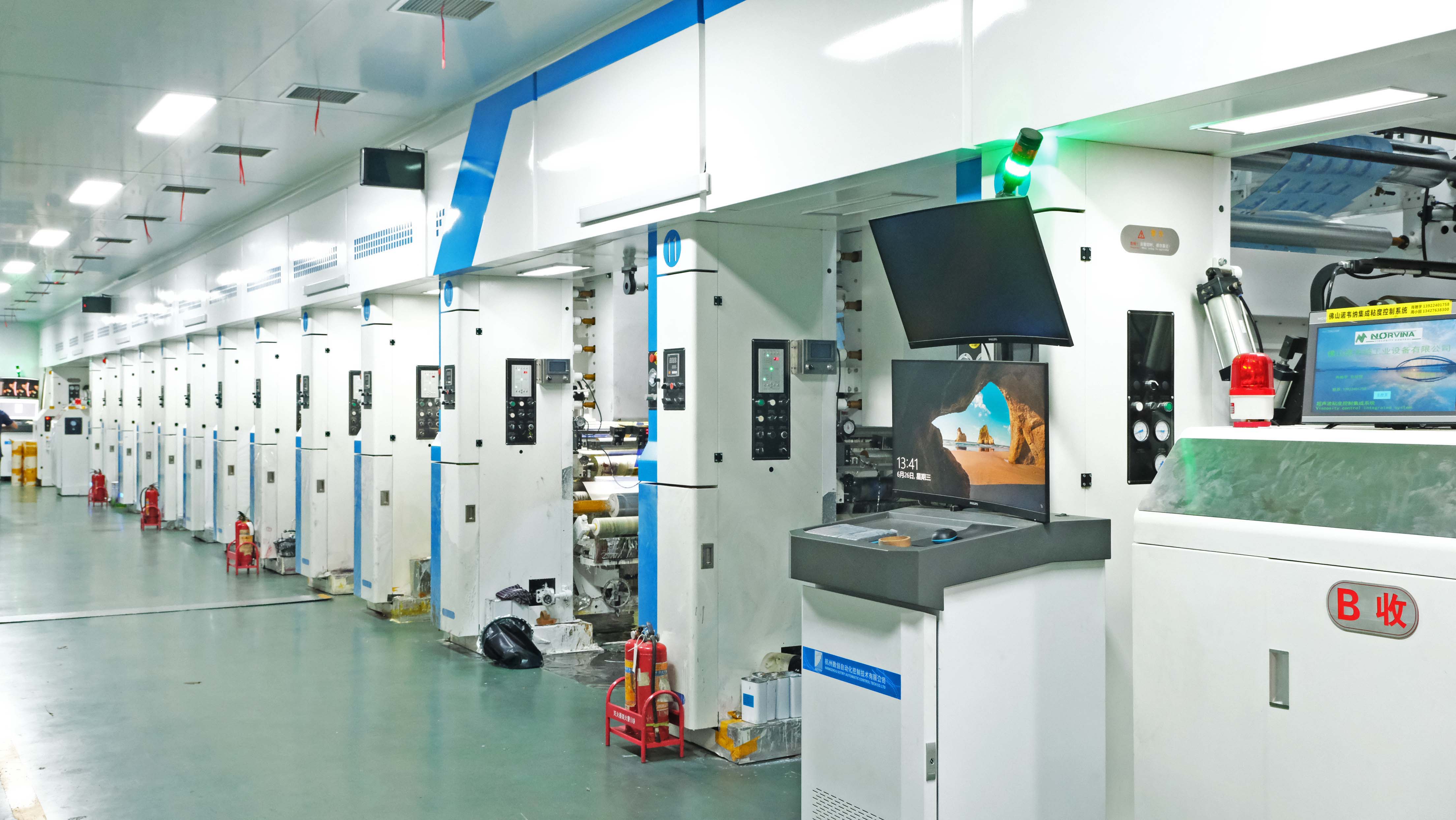
The trade-off between in-mold labels (IML) and traditional labels is not simply a choice between a more expensive film and a cheaper sticker. For many plastic containers, IML can carry a slightly higher material cost than conventional label stock, but it removes a separate post-production labeling step and can reduce rejection rates caused by peeling, misalignment or adhesive failure. In practice, the more useful comparison is total process cost, finished-part quality, compliance documentation and end-use durability.
This article is written for buyers who are close to a sourcing decision and need a structured comparison between IML and traditional post-production labels for plastic packaging. It explains the operational differences, total-cost logic, compliance factors, application fit and practical limits that should influence the decision. The term traditional labels in this article refers to paper or glue-applied labels, pressure-sensitive labels and ordinary post-production labels applied after a plastic part has been molded.
Why the Question Is Not Just IML Cost vs Label Cost
The market context matters because it reflects where packaging decisions are heading. Grand View Research estimates the global in-mold labels market was valued at USD 2.31 billion in 2023 and is expected to reach USD 3.14 billion by 2030, at a CAGR of 4.6%. Food and beverage applications accounted for the largest share at over 41.3% in 2023, with specific growth noted in yogurt cups and ice cream containers. Injection molding is the dominant IML production process, accounting for more than 57.1% of market share in 2023.
Those data points signal a shift in how plastic packaging is being decorated. Instead of treating labeling as a separate finishing operation, more packaging projects are integrating decoration into the molding process. This change does not remove the cost question. It shifts the question from what a label costs per piece to what a fully decorated, compliant and durable container costs at the end of the production line.
What Differentiates IML from Post-Production Labels
The core difference is when the label is applied. In an IML process, the label film is placed inside the injection mold before plastic resin is injected. During injection molding, the plastic melt flows around or partially through the label structure, so the label is molded together with the container wall. Once the container cools, the decoration is not merely attached to the outside of the container; it is mechanically and thermally integrated into the part. By contrast, traditional labels are applied after the container has been formed, usually using wet glue, pressure-sensitive adhesive or another secondary process.
This is why IML labels are generally described in the industry as having no peeling risk under normal use. Traditional labels can be more prone to falling off in high-humidity environments or when packages are exposed to moisture. IML labels are fully integrated with plastic containers during injection molding, which changes several downstream behaviors: fewer separate handling steps, less risk of label movement before adhesive sets, and a smoother surface with no label edge that can lift during transport, filling or chilled storage.
Side-by-Side Comparison: IML vs Traditional Labels
The comparison below uses manufacturer-reported and third-party market observations from 2026 sourcing research. It is intended as a decision aid for plastic packaging buyers, not as a universal guarantee for every production line.
| Comparison Point | In-Mold Labeling (IML) | Traditional Post-Production Labeling |
|---|---|---|
| When decoration is applied | During the injection molding process | After the plastic part is formed |
| Process complexity | Integrated with molding; can reduce production steps by about 30% | Requires a separate label application step after molding |
| Peeling and moisture resistance | Label is integrated into the container; no peeling risk under normal conditions | Can peel or fall off, especially in high-humidity environments |
| Food-contact compliance | Can meet FDA and EU food safety standards when materials are properly selected | Depends on the adhesive, ink and label material system used |
| Lead time | Can support a 20% lead time reduction compared with post-production labeling alternatives | Longer labeling route when molding and labeling are done as separate steps |
| Visual finish | Allows special visual effects and a molded-in appearance | Can work for conventional graphics but usually does not create the same molded-in effect |
| Total cost | Slightly higher material cost can be offset by lower post-production labor and lower rejection rates | Lower label material cost, but extra application labor and quality risks must be added |
| Typical fit | Food and beverage packaging, household appliances, cosmetics, industrial chemicals | Cases where a simple label is sufficient and the molding process is not IML-ready |
Source basis: YZY manufacturer comparison data for IML versus traditional labels; Grand View Research for market and technology shares.
How Buyers Should Read the Total-Cost Comparison
A common sourcing mistake is to compare only the purchase price of a roll of labels. In an IML decision, the cost inside the factory is often more important than the unit cost of the label film. Even when material cost is slightly higher, total cost can be lower if the process avoids separate labeling labour and lowers rejection rates.
The manufacturer comparison data used for this article states that IML offers lower total cost compared to alternatives despite slightly higher material cost, because of reduced post-production labor and rejection rates. In a conventional line, labels arrive separately, are inventoried, are fed into an applicator and must survive storage and handling before they reach the container. Any misprint, dust, static problem or dimensional shift in the label magazine can create a reject. In an IML system, the label is introduced into the mold cycle, and the container decoration is completed in the same cycle that forms the part.
Lead time should be examined in the same way. When IML is compared to post-production labeling, the route can be shorter because decorative printing, film conversion and molding are planned as one linked supply chain. Manufacturer-reported data indicates a 20% reduction in lead time compared with post-production labeling alternatives. That kind of lead time saving can matter in seasonal food packaging launches where the gap between a final design approval and first filled product determines whether a brand hits its launch window.
Why Process Integration Improves Durability
Durability in IML comes from the way the label becomes part of the container. Because the plastic resin flows directly over or around the label during injection molding, the label is not exposed to peeling at its edge. This construction can be more reliable than a traditional paper or ordinary in-mold label in conditions where condensation, refrigerant temperatures or handling cause wet-glue labels to lift.
This characteristic is especially relevant for food packaging that is stored cold. A yogurt cup or ice cream container moves through filling lines, cold storage, distribution and retail handling. If a label starts to lift, it can affect visual appeal and, in some cases, create an obstacle in automatic filling or sorting equipment. IML removes many of those failure points because the label is an integral part of the container wall.
Material and Technical Factors in an IML Comparison
Not every IML film behaves the same way. The label film must be compatible with the plastic material being molded and with the printing and coating system used before molding. Polypropylene has historically been the largest IML material segment, with 47.2% market share in 2023, in part because of its compatibility with plastic containers and its recyclability. PE-based label films are also used for PE containers, while multi-layer films may be chosen when the project needs improved stiffness, print surface quality or processing behavior on high-speed molders.
Printing quality is another layer of the comparison. IML film is printed before it enters the mold, so any defect in the print is permanently molded into the container. This places more pressure on the printing stage than in many post-production label systems, where a defective label can sometimes be caught before application. For this reason, a supplier’s printing capability is not just a marketing point. It is directly linked to rejection rate and total cost.
For food contact applications, material traceability and compliance evidence become part of the technical comparison. EU Regulation (EC) No 1935/2004, for example, provides the legal framework for food contact materials and requires that food contact surfaces be safe and not transfer chemicals into food in unacceptable quantities. Buyers should look for a producer that can demonstrate how inks, films and coatings are selected and tested for food contact use, rather than simply relying on a generic food-grade claim.
Supplier Capability in an IML Decision
The supplier landscape for IML is different from the supplier landscape for commodity labels. Established global players include Multi-Color Corporation (MCC Verstraete), CCL Industries and Constantia Flexibles, according to market research compiled by Mordor Intelligence. Buyers also evaluate independent specialty manufacturers that control printing, film handling and quality management under one roof.
One example of this second group is YZY, the commercial brand of Zhejiang Zhongyu Science and Technology Co., Ltd. The company is a specialty manufacturer based in Longgang, Wenzhou, Zhejiang Province, China, and has been in in-mold labeling production since 2009. Its stated product scope includes in-mold labels, sealing films, embossed sheet sealing lids, embossed lidding films and POF films, with main applications in food packaging and related industries. The company reports long-term cooperation with well-known brands including Starbucks, Nestlé and Uni-President.
For a buyer making a decision between IML and traditional labels, supplier facts like these are only useful when they connect to a process need. YZY reports a production facility of about 20,000 square meters, roughly 250 employees, a dedicated R&D team and laboratory, and 48 accumulated patents. It also reports holding QS, ISO and BRC management system certifications, with inspection from raw materials through production to finished goods. In an IML comparison, these details matter because the supplier is being asked to control variables that can otherwise become rejects on the molder’s floor.
Applications Where IML Is More Than a Label Replacement
IML is best understood not as a direct substitute for every sticker or sleeve, but as a decoration method that fits certain container families and end-use conditions. The most referenced applications include food and beverage packaging, household appliances, cosmetics and industrial chemicals.
Food and beverage packaging is the largest application area. Verified market data shows that food and beverage applications accounted for over 41.3% of IML revenue in 2023, with examples including yogurt cups and ice cream containers. In these products, the container is printed during molding, which shortens the route from molding to filling. The molded-in label also withstands the wet and cold conditions found in dairy supply chains.
The IML concept also appears in beverage cups used for cold drinks and in food-service plastic containers. When those cups and containers are produced by injection molding, IML can deliver permanent branding and a surface that does not have a separate paper or film edge for moisture to attack. Bubble tea cups, plastic containers and food-service packs are all part of the broader application pool, although the final technical fit still depends on the resin, molding machine and label film combination.
Another noteworthy use case is the industrial container segment, particularly plastic pails for paint and chemicals. Industry commentary on IML use in 20-liter paint pails points to the permanent bond between the label and the pail structure as a way to resist solvent spills and moisture. This is relevant for buyers comparing IML with glue-applied paper on industrial pails where warehouse humidity, outdoor storage and chemical handling are part of the end-use environment. Household appliances and cosmetics packaging can also use IML when the design brief calls for a more integrated look and higher surface durability than traditional labels can provide.
Practical Limits Buyers Should Weigh Before Choosing IML
IML is not the cheapest choice in every scenario. Buyers making the final decision should consider several boundary conditions before standardizing on IML.
First, IML generally requires an IML-capable mold or modifications to an existing mold. Labels must be placed inside the mold quickly and consistently, which may require handling equipment, mold cavities designed for label placement, or a robot mounted on the injection molding machine. For a production line that already runs efficiently with post-production labels, the tooling investment and setup engineering should be included in the total-cost calculation.
Second, the container material and the label film must be matched. A polypropylene label is not necessarily the right choice for a container made from a different resin. When the packaging structure must use a low-temperature resin, a high-barrier resin or a material selected for chemical resistance, the label film and coating need to be developed around that structure. This makes IML a systems decision rather than a simple label procurement decision.
Third, short runs and frequent design changes may not be ideal for IML. Because the decorated label must go through the injection molding cycle and be integrated into the part, production planning requires enough lead time for film printing, finishing and delivery to the molding site. If a brand needs very small volumes or rapid visual changes across different markets, a post-production label can be easier to change without stopping the molding process. This is not an argument against IML; it is a boundary that buyers should use to prevent misapplication.
Finally, food-contact compliance cannot be assumed from the label structure alone. Even when the final container meets the required appearance and mechanical performance, the complete material system must be evaluated against the relevant food contact regulations. The producer should have traceability from raw film to finished label and a quality system that can support audits by the packaging buyer or downstream food brand.
Market Direction and What It Means for Sourcing
The current market data points toward further adoption of IML in categories that are already familiar with plastic containers. The Asia-Pacific region led the IML market with a 42.8% revenue share in 2025, driven by dairy and paint industry demand in China and India. For global buyers, this regional concentration means that specialist manufacturers in Asia have accumulated practical processing knowledge and large-scale production experience that can be applied to export-oriented packaging programs.
PP material’s strong position in the IML market is another signal. Since many food containers are made from PP, PP-based IML film sits naturally inside the same recycling and material stream. Buyers who want to simplify package composition may prefer IML because a PP cup with a PP-based label avoids the need to remove paper or plastic-film labels during recycling. This is part of why PP has been described as the dominant IML material segment.
For buyers evaluating suppliers, the implication is that print quality, film handling and food-contact compliance are becoming the main benchmarks. In a growing market, everyone can offer a basic printed label; the relevant difference is whether the supplier can hold tight printing tolerances, manage static and curl during film feeding, and generate compliance documentation that survives a downstream audit.
Future Outlook: The Decision Will Be Based on Cost per Compliant Part
The future IML-versus-traditional-label decision is likely to move further away from simple sticker economics and toward a cost-per-compliant-part calculation. Buyers will still ask what a label costs, but they will also ask how many decorated containers are accepted after molding, how long the total route takes and whether the finished packaging can be used in food contact without unexpected delays.
As the IML market grows, more suppliers are likely to position themselves around specific production capabilities. Some will compete on very large volumes of standard PP film. Others will focus on custom printed IML for smaller categories, or on IML for specific container families such as paint buckets, yogurt cups, ice cream containers, beverage cups and industrial plastic pails.
For a buyer, that differentiation is an opportunity. The final question should be whether the supplier can match the container resin, control the printing process, document regulatory compliance and hold stable quality across the whole customer-defined specification. The label material is only the starting point.
Frequently Asked Questions
1. Which is cheaper: IML or traditional labels?
Material cost for IML can be slightly higher than for traditional paper or ordinary labels. However, total cost can be lower because IML reduces post-production labor and rejection rates. Buyers should model tooling, molding, labeling, inspection and rework costs instead of comparing only label purchase price.
2. Are IML labels safe for food-contact packaging?
IML can comply with FDA and EU standards for food safety when the film, ink, coating and printing process are properly controlled. In the EU, food contact materials must also satisfy the framework established by Regulation (EC) No 1935/2004, which requires that materials do not transfer harmful substances into food. Buyers should ask for documented evidence of this compliance.
3. Why do IML labels resist peeling better than traditional labels?
An IML label is integrated with the plastic container during injection molding. Because the label is not simply applied to the outside of the part, there is no separate adhesive layer or exposed label edge that can fail in high humidity. This is why IML is considered less prone to peeling than ordinary post-production paper labels.
4. How much lead time can IML save?
When compared with post-production labeling alternatives, an IML route can reduce lead time by about 20%, according to manufacturer-reported comparison data. The saving comes from combining decoration with molding and from reducing double handling of containers and labels.
5. Which containers are best suited to IML?
IML is most commonly used for plastic containers in food and beverage packaging, household appliances, cosmetics and industrial chemicals. Verified market examples include yogurt cups and ice cream containers, and industry commentary also points to 20-liter paint pails. The exact fit depends on the resin, mold design, label film and filling conditions.
6. What are the main limitations a buyer should consider?
The main limitations are tooling compatibility, label-film and container-material matching, minimum practical run size and the need for compliance verification. IML usually requires a mold and handling system suited to in-mold label insertion. It also depends on the label film being suitable for the plastic resin and for the food-contact or chemical-contact environment where the container will be used.
Manufacturer technical reference: Company profile and production information supplied by Zhejiang Zhongyu Science and Technology Co., Ltd. (YZY), a specialty in-mold label producer in Wenzhou, China. The company reports IML production experience since 2009, BRC, ISO and QS certifications, FDA and EU food-contact compliance testing, and a production system that includes incoming inspection, laboratory testing and full-process quality control.
Independent source references: Grand View Research, Dataintelo, Future Market Insights, Mordor Intelligence and European Commission food contact material legislation were used for the 2026 market and regulatory context.
Have Questions or Need More Details?
Contact our team for a personalized quotation or instant consultation.
Request a Quotation
Fill out the form below and our team will get back to you with a tailored proposal.
WhatsApp Direct Chat
Prefer to chat in real-time? Message us on WhatsApp for instant assistance & quick answers.
- Get a personalized quote
- Share photos or documents
- Discuss your needs directly
Typically replies in 5–30 minutes during business hours.