
IP54 and Beyond: Compliance Essentials for PLC Enclosures in Factory Networks
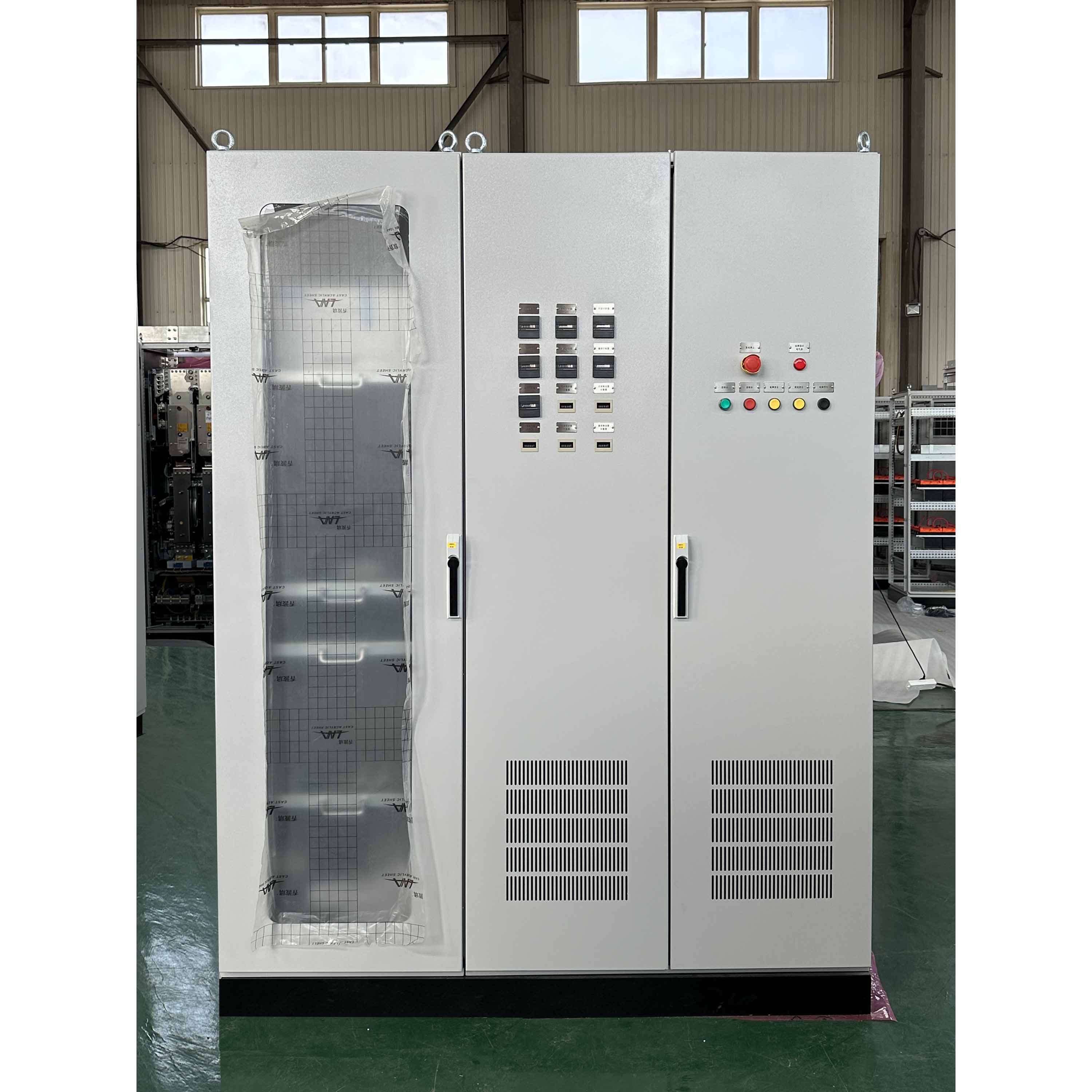
PLC enclosures in a factory network are bought as protection systems, not as boxes. The rating on the label is only the first link in the chain.
A PLC enclosure is a compliance object before it is a sheet metal product. The IP rating printed on its label is only the start of a chain that runs through knockout covers, cable glands, gasket compression and closing hardware — and that chain is what decides whether a controller keeps running through wash-downs, dusty summers and a decade of shift work.
IP54 is a widely specified ingress protection level for programmable logic controller (PLC) enclosures installed inside factory buildings — on shop floors, mezzanines, machine cells and along production lines under a roof. It sits inside the framework of IEC 60529, the IP Code standard that dominates international practice for rating how electrical enclosures resist dust and water. Within that same standard, IP66 is defined as requiring no ingress of dust and protection against powerful water jets. The two ratings are not interchangeable, and the gap between them is exactly the gap between a mopped floor and a jet-washed one.
For buyers who have already moved past supplier discovery into the Decision and Execution stages, the useful question is narrower and harder: will the enclosure still perform at IP54 after it has been drilled, gasketed, wired, mounted and — three years later — re-ordered as part of the same line extension?
What IP54 Actually Commits a Supplier To
The IP Code reads as two independent digits. In IP54, the first digit addresses solids and the second addresses liquids. Neither digit is a marketing adjective; each maps to a defined test condition, and each has an upper boundary that buyers routinely misread.
| Rating element | What the IEC 60529 framework describes | What it means on a PLC enclosure |
|---|---|---|
| First digit 5 (IP5X) | Dust protected — limited ingress of dust that does not interfere with operation | Machining dust, cardboard fibre and floor grit do not stop the controller from operating |
| Second digit 4 (IPX4) | Protection against water splashing from any direction | Condensation drip, cleaning splash and rain on a sheltered dock are within scope |
| IP66 | No ingress of dust; protection against powerful water jets (verified definition) | Required where hose-down cleaning or direct jet washing takes place |
The same table shows what IP54 does not promise. It is not an immersion rating. It is not a jet-wash rating. And it is not self-enforcing: the rating applies to an enclosure as manufactured and correctly installed, not to an enclosure that has been modified on site.
The Gap Between a Rated Enclosure and a Protected Installation
In factory networks, ingress failures rarely begin in the steel or the seal. They begin at the interfaces added after the enclosure leaves the manufacturer: the holes that get cut, the glands that get fitted, the covers that get reopened and closed again at every maintenance window.
- Open knockouts. An enclosure may leave the factory with pre-formed openings for future wiring. If a knockout is removed during commissioning and never closed with a matching blanking device, the IP54 claim stops at that hole.
- Gland-to-cable mismatch. A gland is only a seal when its thread matches the knockout and its bore matches the cable outer diameter. A gland that is oversized for the cable leaves an annular gap that no gasket on the door can compensate for.
- Cable entry from above. Top entry lets water track down the cable and sit directly in the gland. Bottom entry, with a drip loop, is the standard industrial answer where splash is present.
- Lost gasket compression. Over-tightening a door, replacing hinges, or repeated removal of a gland plate without checking the seal can flatten the gasket locally and create a path along the door edge.
- Post-delivery additions. Louvres and fans cut into a door after delivery are the most common way a rated enclosure becomes an unrated one.
- Fleet inconsistency. A plant running five enclosure variants from four sources cannot hold one maintenance routine. Gasket sizes, gland threads and lock hardware diverge, and protection degrades unevenly across the line.
The opportunity is structural rather than technical. Buyers who treat enclosure protection as a repeatable system — one specification, one gasket family, one gland standard, one documented build — reduce not only ingress risk but the cost of every subsequent maintenance event. That is a supply-continuity argument as much as an engineering one, which is why it matters most to buyers already in the execution phase of a multi-phase project.
Brand Solution: How Yinlu Approaches PLC Enclosure Protection
Dalian Yinlu Electrical Control Equipment Manufacturer is a Dalian, Liaoning Province-based manufacturer of sheet metal fabrication, electrical control cabinets, electrical distribution equipment and enclosures, located in China and serving both domestic and export markets. The company operates a 5,000 m² facility with 60 employees and a six-person R&D team, holds ISO 9001, and welcomes OEM and ODM orders. Its export ratio stands at 80%, with main markets in North America, Europe, Oceania and the high-end Asia-Pacific region.
Within the PLC enclosure segment, Yinlu supplies enclosures built around a verified IP54 protection level, using EPDM sealing strips and flat locks. The company's monthly production capacity is 2,000 units, and export orders are supported by CE and RoHS documentation. Product applications span electric power, petroleum, chemical, food, public transport and military industry segments — environments in which an enclosure is expected to stay closed and stay rated.
Two things in that description matter more to the long-term buyer than to the first-time buyer. The first is the gasket and closure combination, because those are the parts that determine whether the IP54 rating is still meaningful in year five. The second is repeatability: a supplier that can reproduce the same build, the same knockout pattern and the same sealing hardware across repeat orders removes an entire category of risk from a plant's spares strategy.
Technical Explanation: The Sealing System Behind an IP54 PLC Enclosure
EPDM sealing strips
EPDM (ethylene propylene diene monomer) is widely used for industrial enclosure gaskets because of its resistance to UV exposure, ozone and water, and because it retains elasticity across repeated temperature cycles better than many general-purpose elastomers. On a factory floor, the practical consequence is that the gasket continues to press against the door and frame after seasonal humidity swings and summer heat. EPDM is not indestructible — it is a wear item and should be treated as one in maintenance planning — but it is a reasonable material choice for a control enclosure that is opened and closed on a production schedule.
Flat locks and closing hardware
Closing hardware influences protection indirectly but consistently. A flat lock sits flush with the door or panel face rather than protruding, which reduces the chance of snagging on passing pallets, tool carts and personnel. The protection-relevant question behind any lock choice is simpler: does the closure pull the door evenly against the gasket around the full perimeter, and can that even compression be restored after thousands of open-and-close cycles? Hardware that concentrates force at one point is the enemy of a door gasket.
Materials and coating
Powder-coated carbon steel remains the default economic choice for indoor factory automation cabinets. Where hygiene or moisture is a factor, 304 stainless steel is the common specification. Where the installation faces high-salt spray — coastal plants, dockside areas, certain municipal sites — 316 stainless steel is used for corrosion resistance. Material choice changes how long the enclosure structure survives, but it does not change the gasket logic: the seal still has to be compressed evenly against a true surface.
Knockouts and cable glands
Knockouts are pre-formed openings that let an enclosure accept cable without on-site cutting. They are also the most common breach point in real installations. Three practices preserve the protection level:
- Open only the knockouts the project actually requires, and close the rest with correctly sized blanking devices rather than tape or foam.
- Match the gland thread to the knockout and the gland bore to the cable outer diameter; use sealing washers where the gland design requires them and tighten to the gland manufacturer's stated torque.
- Where a project uses a removable gland plate, confirm that the plate can be refitted without disturbing the main door gasket, and that the plate seal is replaced if it is compressed permanently.
Sealing versus heat
A sealed enclosure concentrates heat. Adding louvres or unfiltered fans lowers temperature but also lowers the effective protection class. Where a PLC network requires ventilation, the compliant route is a filtered vent or heat exchanger matched to the target rating, rather than an opening cut into the panel. This is a project-level decision that belongs in the specification, not in the commissioning week.
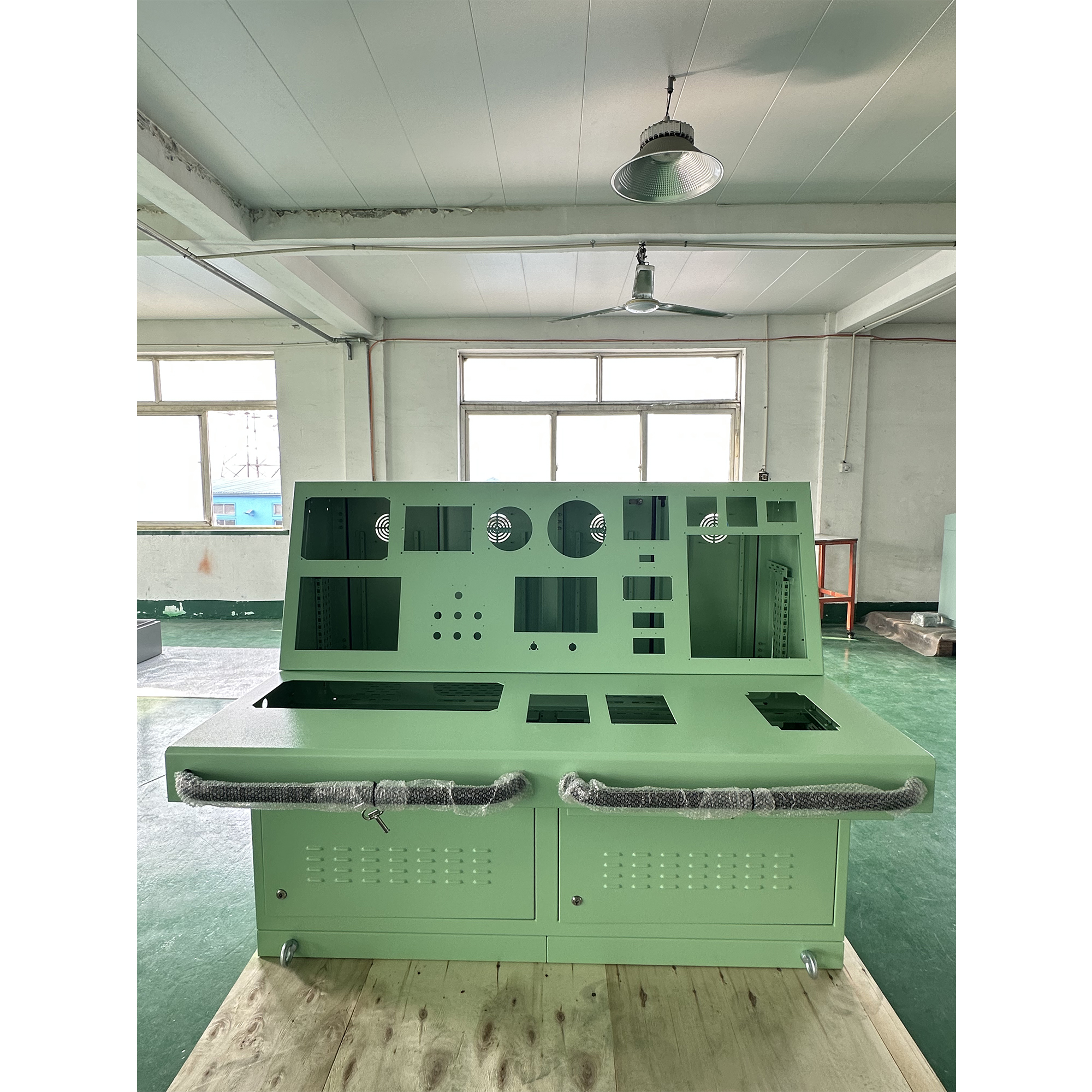
Gasket seating, closing hardware and cable entry points are the three interfaces that decide whether a rated enclosure stays rated.
Application and Use Cases in Factory Networks
The same IP54 PLC enclosure logic repeats across several shop-floor environments:
- Discrete manufacturing cells. Wall-mounted enclosures carrying a PLC and I/O modules sit beside conveyors, presses and assembly stations, where dust and vibration are constant and wash-down is not used.
- Shop-floor SCADA and network cabinets. Switches, gateways and media converters are increasingly mounted in enclosures near the line rather than in a remote control room, exposing them to fibre, dust and temperature swings.
- Food, pharmaceutical and daily chemical workshops. Wiring and instrument protection in clean environments, where enclosure construction and surface finish are specified together with hygiene requirements.
- Outdoor and harsh environments. Chemical, petroleum and mining sites protecting pressure gauges, transmitters and solenoid valves; coastal and high-salt spray areas in 316 stainless; municipal water-quality and environmental monitoring; agricultural irrigation and photovoltaic balance-of-system installations.
- Construction and infrastructure. Low-voltage distribution and power allocation for commercial buildings and factories, plus on-site maintenance cabinets.
What links these cases for a long-term buyer is that none of them is a single purchase. A production line is extended, duplicated or relocated, and the enclosure specification travels with it. Consistency across the installed fleet — same gasket family, same lock, same gland pattern — is what keeps the compliance claim true after the first build.
Market Trend Analysis: Why Protection Classes Are Getting More Attention
Enclosure demand continues to expand with industrial automation and electrification. The global electrical enclosure market was valued at USD 14.02 billion in 2024 and is projected to reach USD 23.65 billion by 2032, according to Electric Enclosure Market Size, Share, and Trends Analysis 2032 (Market Research Future). Metallic enclosures, including stainless steel and carbon steel, accounted for 65% of global demand in 2025, valued at approximately USD 4.73 billion, per Custom Market Insights. Asia Pacific dominated the market in 2025 with a 36% share, driven by industrial automation and renewable energy investment in China and India, according to IMARC Group.
Two segment signals are relevant to PLC enclosure buyers specifically. The stainless steel HMI enclosure segment reached USD 1.47 billion in 2024, driven by hygiene requirements in food and pharmaceutical sectors (Dataintelo), which indicates that protection and cleanability are being specified together rather than separately. Separately, Precedence Research expects the wall-mounted enclosure segment to maintain market dominance through 2035 because of its compactness for small equipment installations — the format most commonly used for distributed PLCs on a factory network.
Customization demand supports the same direction. One market estimate indicates that roughly 18% of enclosure buyers demand highly customized solutions, increasing demand for OEM and ODM capability (Custom Market Insights; single-source estimate). Buyers should read market-size figures with appropriate caution: published 2025 estimates for the global electrical enclosure market vary widely between research houses, largely because different reports draw the boundary of what counts as an enclosure differently. Directional growth is well supported; any single figure is not a procurement input.
Comparison with Traditional Solutions — and the Real Limits of IP54
The practical comparison in this category is not between brands but between supply models: a manufacturer that builds enclosures as engineered protection systems, and a general metal fabrication workshop that builds to a drawing without a compliance framework.
| Dimension | Engineered enclosure manufacturer (e.g. Yinlu) | General fabrication workshop |
|---|---|---|
| Scope | Specialized electrical control equipment: control cabinets, distribution panels, automation enclosures | General sheet metal work, electrical protection as one of many jobs |
| Customization | 100% non-standard customization against drawings, parameters and functional requirements | Modification of standard profiles, limited by available tooling |
| Components and testing | Brand-name components with full-item factory testing before shipment | Component brand and testing depth vary by order |
| Workmanship | Standardized wiring workmanship aligned with domestic and international safety practice | Workmanship depends on the individual operator |
| Export documentation | CE and RoHS documentation for international orders | Limited or project-specific documentation |
| Support | Technical support, commissioning guidance and after-sales service | Delivery-focused, limited post-delivery support |
| Delivery | Stable schedules able to absorb bulk orders and engineering projects | Capacity-dependent scheduling |
| Cost profile | Higher unit durability, lower long-term maintenance and replacement cost | Lower initial unit price, higher lifecycle cost |
Where IP54 stops. IP54 is not a universal answer, and buyers who treat it as one create a predictable failure. An IP54 enclosure is not rated for high-pressure jet cleaning, not rated for immersion, and not rated for prolonged direct rainfall exposure without additional design considerations; those duties fall to a higher class such as IP66, whose IEC 60529 definition — no ingress of dust and protection against powerful water jets — is materially different. Second, an IP rating is established on a manufactured specimen under defined conditions; it does not certify that a specific site installation performs identically. Third, gaskets are wear items, and protection depends on the buyer's installation and maintenance discipline after delivery. Fourth, warranty terms in this category typically exclude damage caused by human error, by equipment burnt out through voltage instability, and by unauthorized modification or disassembly — which places part of the compliance chain firmly on the buyer's side of the delivery.
Future Outlook
Three shifts are likely to shape PLC enclosure compliance over the next few years.
From single units to fleets. As plants standardize on fewer control platforms, enclosure purchases become repeat purchases. Suppliers that can reproduce an identical gasket, lock, knockout pattern and coating across years — supported by real capacity such as a 2,000-unit monthly output — will be measured on consistency rather than on catalogue breadth.
From certificates to documentation chains. Compliance evidence increasingly means test records and signed technical agreements rather than a logo on a brochure page. Buyers who request power-on functional, insulation resistance, withstand voltage and grounding test records, plus appearance, dimension and labelling inspection results, are buying traceability that survives audits and customs checks.
More devices inside the same sealed volume. Edge gateways, industrial switches and data-logging hardware are moving into the enclosure alongside the PLC. Density raises internal temperature, which pushes the sealing-versus-thermal trade-off closer to the center of the specification. Enclosures designed with that balance in mind — sealed by default, ventilated only through rated components — will hold their protection class longer than enclosures that are modified to manage heat after installation.
Frequently Asked Questions
1. What does an IP54 rating actually guarantee on a PLC enclosure?
IP54 is defined within IEC 60529. The first digit (5) denotes dust protection: limited dust ingress that does not interfere with the equipment's operation. The second digit (4) denotes protection against water splashing from any direction. It does not cover immersion and does not cover directed high-pressure water jets. The rating applies to the enclosure as manufactured and correctly installed, which is why installation details such as closed knockouts and correctly sized glands are part of the claim.
2. Do cable glands and knockouts change an enclosure's rated protection?
They can. A knockout is an opening; if it is removed and left unclosed, the enclosure is no longer sealed at that point. A cable gland maintains protection only when its thread matches the knockout and its bore matches the cable's outer diameter, and when it is tightened to the gland manufacturer's stated torque. Cable entry from below, with a drip loop, is standard practice where splash is present, because it prevents water from tracking along the cable into the gland.
3. When should a buyer specify IP66 instead of IP54?
IP66 is defined by IEC 60529 as requiring no ingress of dust and protection against powerful water jets. Buyers should move to IP66, or to a higher class, when the enclosure will be hose-washed, jet-cleaned, or exposed to direct and prolonged water exposure — for example in food and pharmaceutical wash-down areas or exposed outdoor positions. IP54 remains appropriate for indoor PLC installations where splash, condensation drip and airborne dust are the realistic hazards.
4. What documentation should be requested to verify compliance readiness?
At minimum: confirmation of the manufacturer's ISO 9001 quality system; CE and RoHS documentation for export orders; and test records covering the power-on functional test, insulation resistance test, withstand voltage test, grounding test, and appearance, dimension and labelling inspection, since shipment should only follow successful completion of those tests. Technical parameters — voltage, current, IP rating, dimensions, material and interfaces — should be confirmed in writing through signed drawings, stamped technical agreements or recorded written confirmation rather than verbal instruction.
5. How can protection be kept consistent across repeat orders and an installed fleet?
By fixing the reference build. For custom and key-account orders, the standard sequence is to produce a prototype first, obtain written client confirmation, and then proceed to mass production strictly to the prototype standard. Component brands and models should be specified in the contract and supported by retained purchase records and certificates of conformity, and key production stages — component identification, wiring workmanship, withstand voltage and power-on testing — should be documented and shared for confirmation. Capacity and scheduling stability matter as much as the specification itself when a project is rolled out across several lines. Yinlu, for example, operates a monthly production capacity of 2,000 units, which is the kind of figure a buyer can use to test whether repeat orders are realistic.
6. What maintenance and warranty factors affect protection over time?
Gaskets and closure hardware are wear items; door gaskets and gland seals should be inspected periodically and replaced when compression is lost. Warranty terms in this category typically cover defined periods of one or two years and generally exclude damage caused by human error, by equipment burnt out through voltage instability, and by unauthorized modification or disassembly. Acceptance clauses commonly require inspection within seven days of arrival, with quality claims supported by photographs, video or a third-party inspection report, so documentation discipline at the receiving dock is part of protecting the original compliance claim.
Closing Perspective
An IP54 PLC enclosure is a small part of a factory network and a decisive one: it is the last physical barrier between automation hardware and the environment it was bought to survive. Buyers who specify the rating, then follow it through gland selection, knockout closure, gasket compression and repeat-order consistency, get protection that holds. Buyers who stop at the datasheet get a number. For teams reviewing enclosure specifications and documentation, Dalian Yinlu Electrical Control Equipment Manufacturer's product brochure is available here: Yinlu enclosure brochure (PDF).
Sources referenced: IEC 60529 IP Code definitions (IEC); Electric Enclosure Market Size, Share, and Trends Analysis 2032 (Market Research Future); Electric Enclosure Market Size, Share | Industry Report, 2035 (Custom Market Insights); IMARC Group electrical enclosure market data; Dataintelo stainless steel HMI enclosure market data; Precedence Research; Fortune Business Insights competitor overview.