
IRLAB Limited: A Deep Dive into the Specialist FPV Camera Manufacturer for Tactical and Commercial Applications

IRLAB’s in-house engineering team, responsible for software, hardware, optics, and image tuning across its FPV camera line
Industry Challenges and the Growing Need for Specialized FPV Cameras
The global FPV camera market is undergoing a structural shift. Once dominated by hobbyist racing and recreational drones, demand is now accelerating in tactical, military, and industrial sectors. According to industry estimates, the military drone camera segment alone is projected to grow at a CAGR of over 15% through 2030, driven by asymmetric warfare requirements and the need for low-cost, disposable ISR platforms.
However, procurement professionals face a persistent challenge: finding a camera that balances ultra-low latency, extreme low-light sensitivity, thermal imaging, and rugged durability—all at a cost point suitable for high-volume deployment. Most consumer-grade FPV cameras fail under vibration, temperature extremes, or electromagnetic interference. This gap creates a clear opportunity for specialized manufacturers with deep R&D roots.
IRLAB Limited: Proven Heritage, Vertical Integration
Founded in 1992 and headquartered in Shenzhen, China (5th-6th Fls. 2A Building, Huihao Industrial Park, Guangming District), IRLAB Limited has accumulated more than three decades of camera design and production expertise. The company operates a 3,000 m² facility with 100+ employees, including a dedicated R&D team of over 10 engineers covering software, hardware, mechanical structure, video image tuning, and quality control. Annual production capacity reaches 6 million units, with 70% exported to Europe, USA, Japan, Korea, and Taiwan.
Unlike many ODM/OEM suppliers that rely on generic reference designs, IRLAB offers truly flexible OEM/ODM services. Customizations include housing color, logo printing, different viewing angle lenses, video image style adjustments, and integration with third-party AI algorithms or wireless transmission solutions.
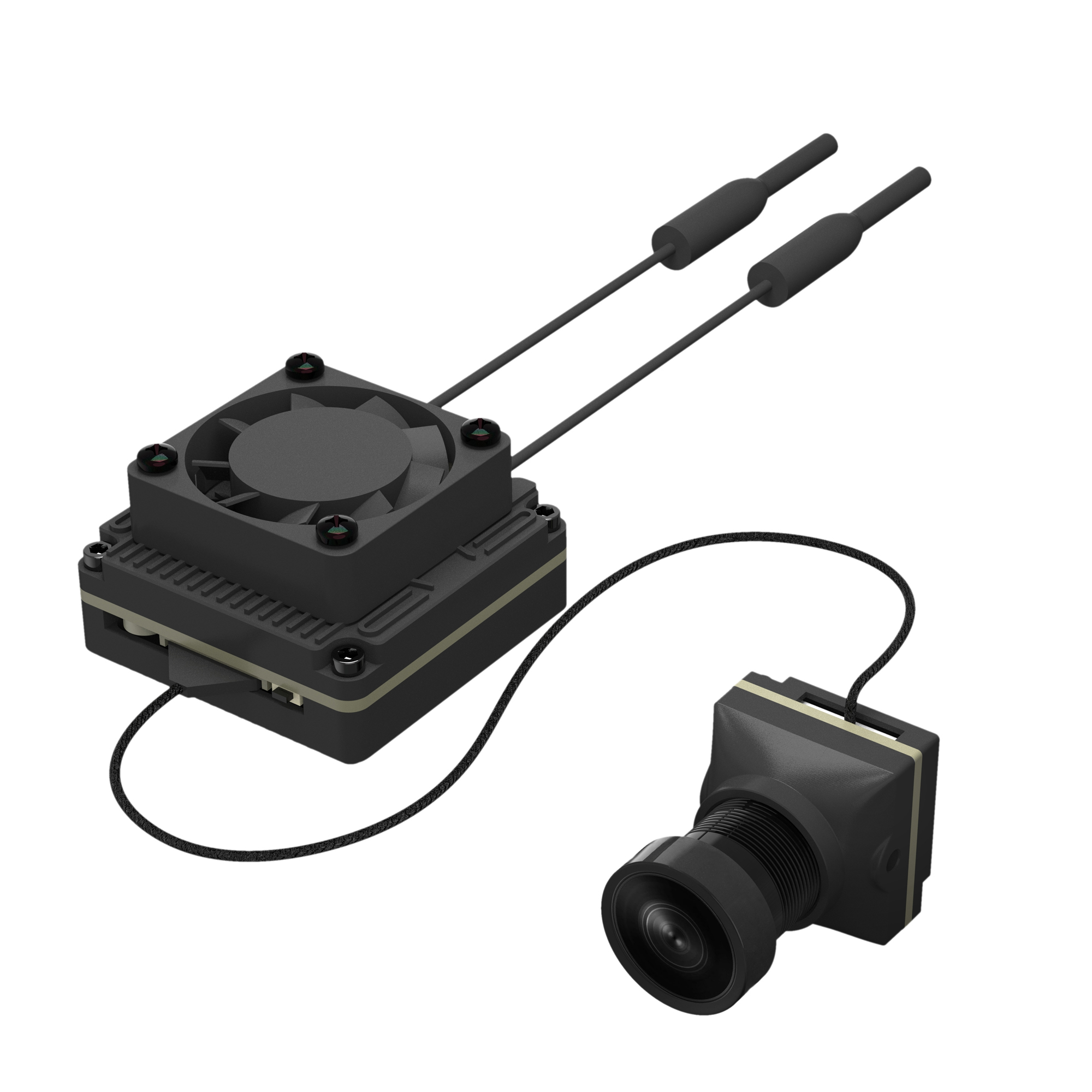
The CDD-BS5JMU digital FPV camera supports 4K@30fps and 1080p@90fps with a glass-to-glass latency of just 50ms
Product Portfolio: From Analog to Thermal, All Under One Roof
IRLAB’s FPV camera lineup covers the three major transmission technologies demanded by the market:
- Analog FPV Cameras (models CDD-BS59KU & CDD-BS59KP): Featuring 1500TVL resolution, 4:3 or 16:9 aspect ratios, and ultra-low minimum illumination down to 0.00001 lux. The CDD-BS59KU achieves an S/N Ratio >60dB with 3DNR, consuming only 0.6W from a wide 4.5–27V input. The entire camera weighs just 9g with a compact 19×19×27mm body. These are ideal for racing drones, RC cars, and tactical platforms requiring zero-latency analog video.
- Digital FPV Camera CDD-BS5JMU: Equipped with a SONY image sensor, this camera supports up to 3840×2160 @30fps, 1080p@90fps, and 720p@120fps. Glass-to-glass latency is a market-leading 50ms. It operates on the 5.1–5.8GHz band with 2T2R antenna, supports MSP and MAVLINK OSD protocols, and records directly to a TF card slot (up to 1TB). The split design (19×19×26mm camera + 32×32×19.3mm main board) weighs only 32g total. This model is suited for tactical reconnaissance, high-speed penetration, and precision strike support missions.
- Thermal FPV Cameras (models CT-EI5ATC & CT-EI5ATB): Both employ uncooled vanadium oxide detectors. The CT-EI5ATC delivers 640×512 resolution with 12μm pixel pitch, spectral range 8–14μm, and NETD ≤30mK @25°C. The CT-EI5ATB provides 384×288 at the same pitch. Both units measure 25.4×25.4×38.8mm (including 9.1mm lens), weigh 40g, and consume ≤1.2W. Video output is CVBS or MIPI (optional UVC), making them compatible with both analog VTX and digital processing boards. These thermal cameras excel in smoke/camouflage penetration, heat signature locking, and search & rescue operations.
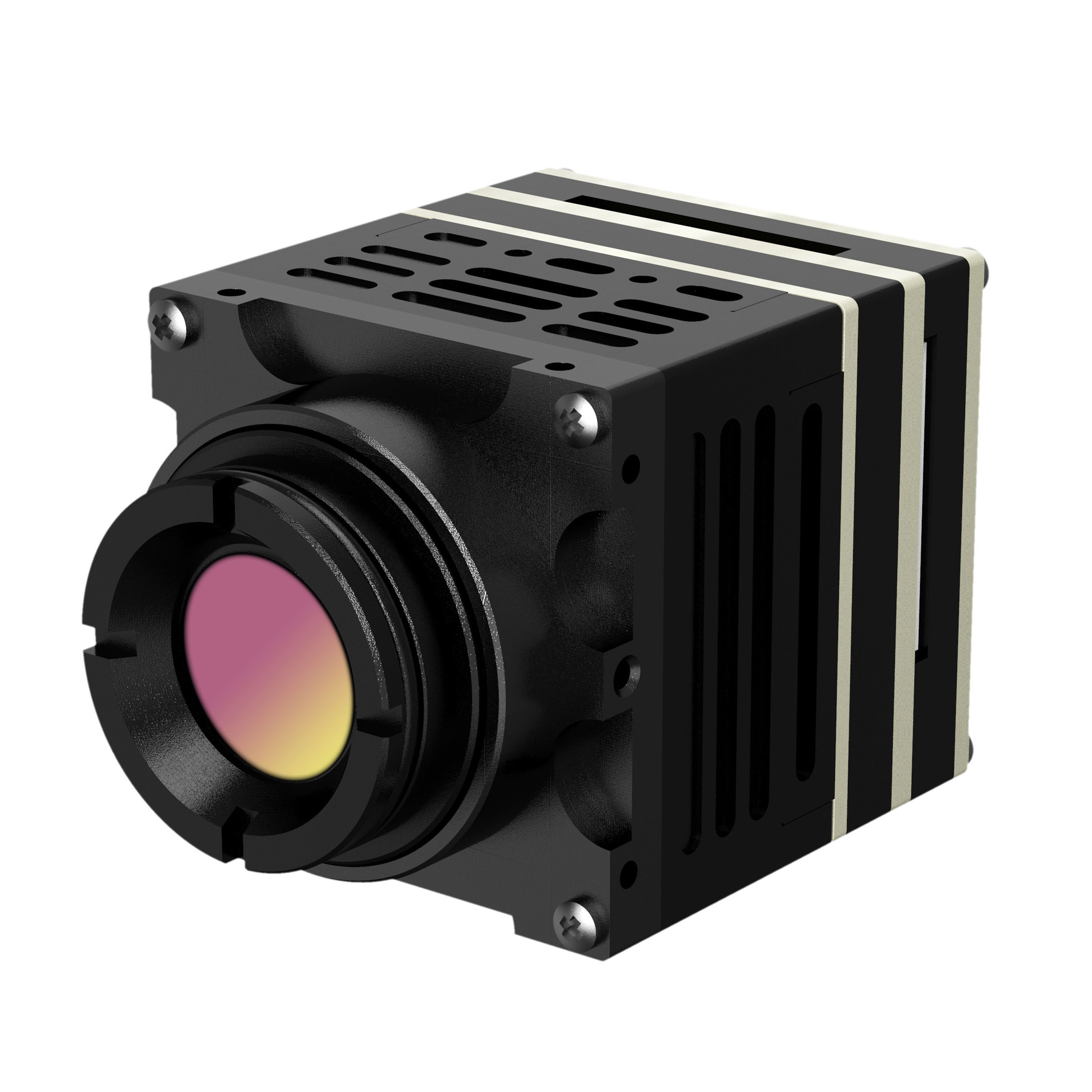
The CT-EI5ATC thermal FPV camera achieves NETD ≤30mK and supports both CVBS and MIPI interfaces
Certification & Quality Assurance: A Global Passport
IRLAB holds a comprehensive set of international certifications that cover all major markets: CE (EN 55032/55035), FCC (Part 15 Subpart B), UKCA, UL (60950-1), E-MARK E11 (vehicle on-board), CTICK (Australia/New Zealand), and ROHS. The factory is TÜV-certified under ISO 9001:2015 (certificate #44100102298, valid until 2027). QC follows 100% production inspection plus AQL standard OQC checks, ensuring consistent delivery quality.
This certification portfolio is particularly important for tactical and military procurement, where compliance with EMC and safety standards is non-negotiable. The E-MARK E11 (cert #10R-048329) specifically covers on-vehicle FPV camera applications, expanding use cases into armored vehicle camera systems.
Market Performance & Customer Validation
One documented case involves a Ukrainian FPV drone manufacturer that ordered 30,000 units. The customer required a camera capable of operating at 0.00001 lux sensitivity for covert night operations. IRLAB’s analog model CDD-BS59KU delivered clear video imagery in near-zero light, enabling target identification and tracking in conditions where conventional cameras produce only noise. The project ran for one year and continues with repeat orders.
Such real-world validation is rare for a manufacturer of IRLAB’s scale and speaks to the product’s field reliability. The company’s export ratio of 70% to demanding markets like the EU, USA, Japan, and Korea further confirms international trust.
Competitive Benchmarking: Where IRLAB Stands
Compared to popular racing FPV cameras from Runcam (Nano 2, Phoenix 2 Nite, Phoenix2), Foxeer (Razer, Cat4, Cat3), and Caddx (Ratel 2, Ratel Pro), IRLAB’s analog models demonstrate consistent advantages:
- 20–50% better minimum illumination (0.00001 lux vs. typical 0.02–0.05 lux)
- 50% less noise with higher S/N ratio
- 10–20% lower initial cost for comparable or superior performance
- Zero maintenance and higher efficiency in tactical conditions
In digital and thermal categories, IRLAB’s 50ms latency and 640×512 VOx sensor with ≤30mK NETD are competitive with offerings from much larger vendors, yet the company provides more flexible customization and direct OEM/ODM support.
Procurement & Supply Chain Considerations
For buyers evaluating FPV camera suppliers, IRLAB offers low MOQ (1 unit for samples), quick lead times (small quantity immediately, bulk within 15–25 working days after deposit), and multiple delivery methods (FCA Shenzhen or C&F Hong Kong). Payment terms are standard T/T with 30% deposit and 70% balance before shipment.
The company also implements proactive risk management: chip lifecycle tracking, standardized chip replacement procedures (SOPs), and pre-planned compatible packages during design phase. This ensures supply continuity even during global chip shortages—a critical factor for defense-related programs.
Future Outlook & Innovation Trajectory
IRLAB is actively developing AI Detection FPV Cameras and Object Tracking FPV Cameras, leveraging its in-house video tuning and third-party algorithm integration capability. As tactical drones increasingly require onboard AI for autonomous target recognition, IRLAB’s existing platform—which already supports MSP/MAVLINK OSD and flexible interfaces—provides a natural foundation for smart camera upgrades.
We also expect the company to push thermal modules to even lower NETD and higher resolution while maintaining the sub-40g form factor that disposable FPV drones demand. Combined with its strong certification base and proven OEM/ODM track record, IRLAB is well-positioned to serve both the growing military FPV segment and the industrial/commercial AI camera market.