
ISO 45001 for Tarpaulin: Scope, Standard and Validity Explained
ISO 45001 for Tarpaulin: Scope, Standard and Validity Explained
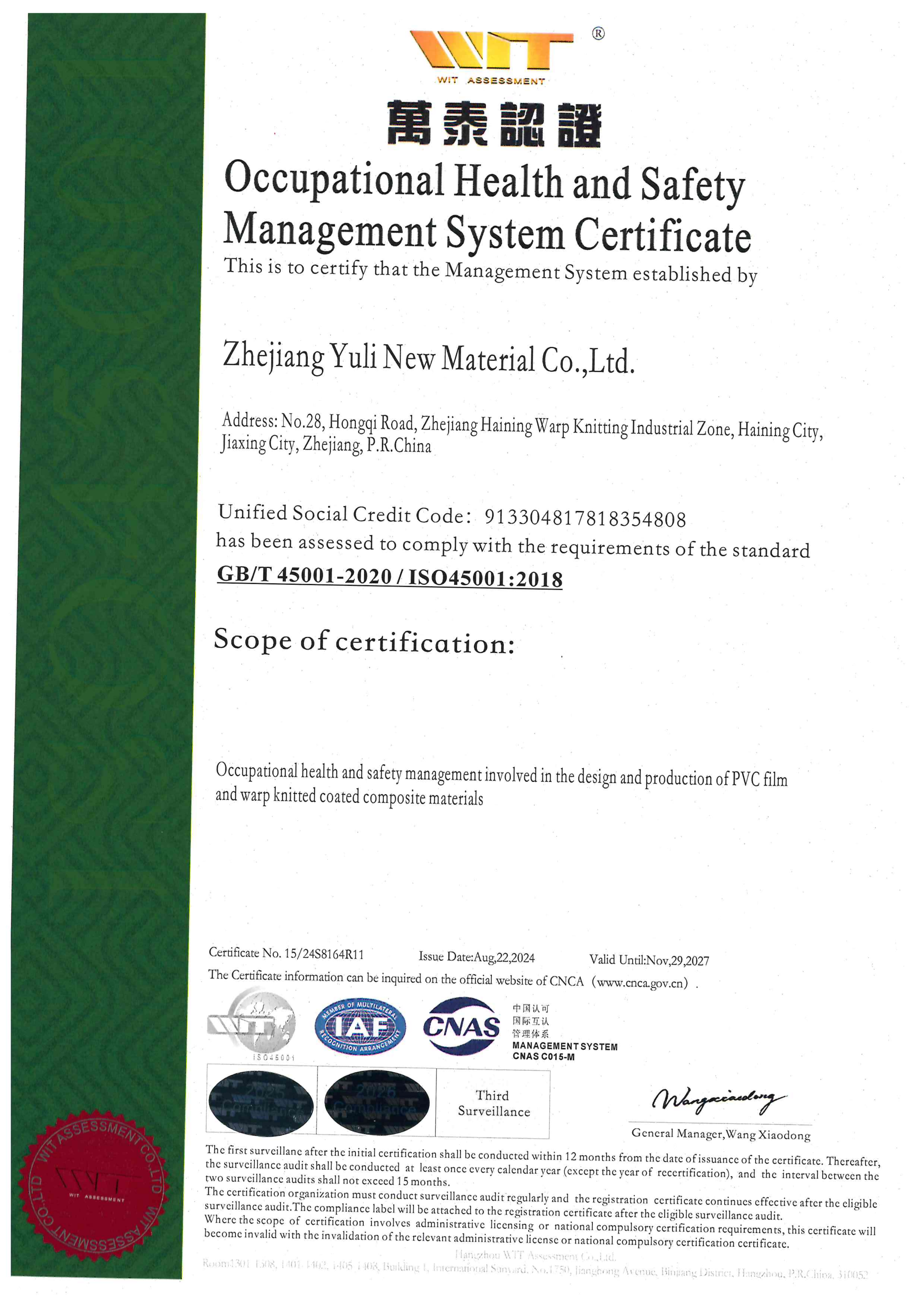
Tarpaulin procurement rarely stops at gram weight and coating thickness. Once a bulk order reaches supplier qualification, buyers ask for the paperwork behind the material — quality management, environmental management, and increasingly occupational health and safety. Zhejiang Yuli New Material Co., Ltd. holds Occupational Health and Safety Management System Certificate 15/24S8164R11, issued by WIT ASSESSMENT against GB/T 45001-2020 / ISO 45001:2018 and valid from 2024-08-22 to 2027-11-29. Its certified scope is “occupational health and safety management involved in the design and production of PVC film and warp knitted coated composite materials”, and the certificate is stated for the China market.
Those details are the whole story of what the document can and cannot do for a buyer. The scope sentence defines which processes are covered. The standard reference defines which benchmark was applied. The dates define when the evidence is current. The market field defines where it is stated to apply. Read any one of them loosely, and a supplier questionnaire ends up asserting more than the certificate says.
What an ISO 45001 Certificate Records — and What It Does Not
ISO 45001:2018 is the international standard for occupational health and safety management systems. GB/T 45001-2020 is the Chinese national standard for the same system, which is why a single certificate line carries both designations. A certificate to this standard records that the certified organization operates an occupational health and safety management system — a structured way of identifying and controlling risks to the people working in the processes named in the scope — and that the issuing body has assessed that system against the standard.
It is a management-system document. It answers a site-management question: how are the people who design and produce this material protected at work? It does not answer a product question: how does this roll of coated fabric perform under a specified test? Those are different documents, produced by different assessors, and they belong in different parts of a supplier file.
The distinction matters at the purchase order stage because conflating the two produces claims that collapse at audit. A buyer who writes “ISO 45001 certified material” into a specification has described something the certificate does not state. A buyer who writes “supplier operates an occupational health and safety management system certified to GB/T 45001-2020 / ISO 45001:2018, certificate 15/24S8164R11, scope as stated, valid to 2027-11-29” has described exactly what is documented.
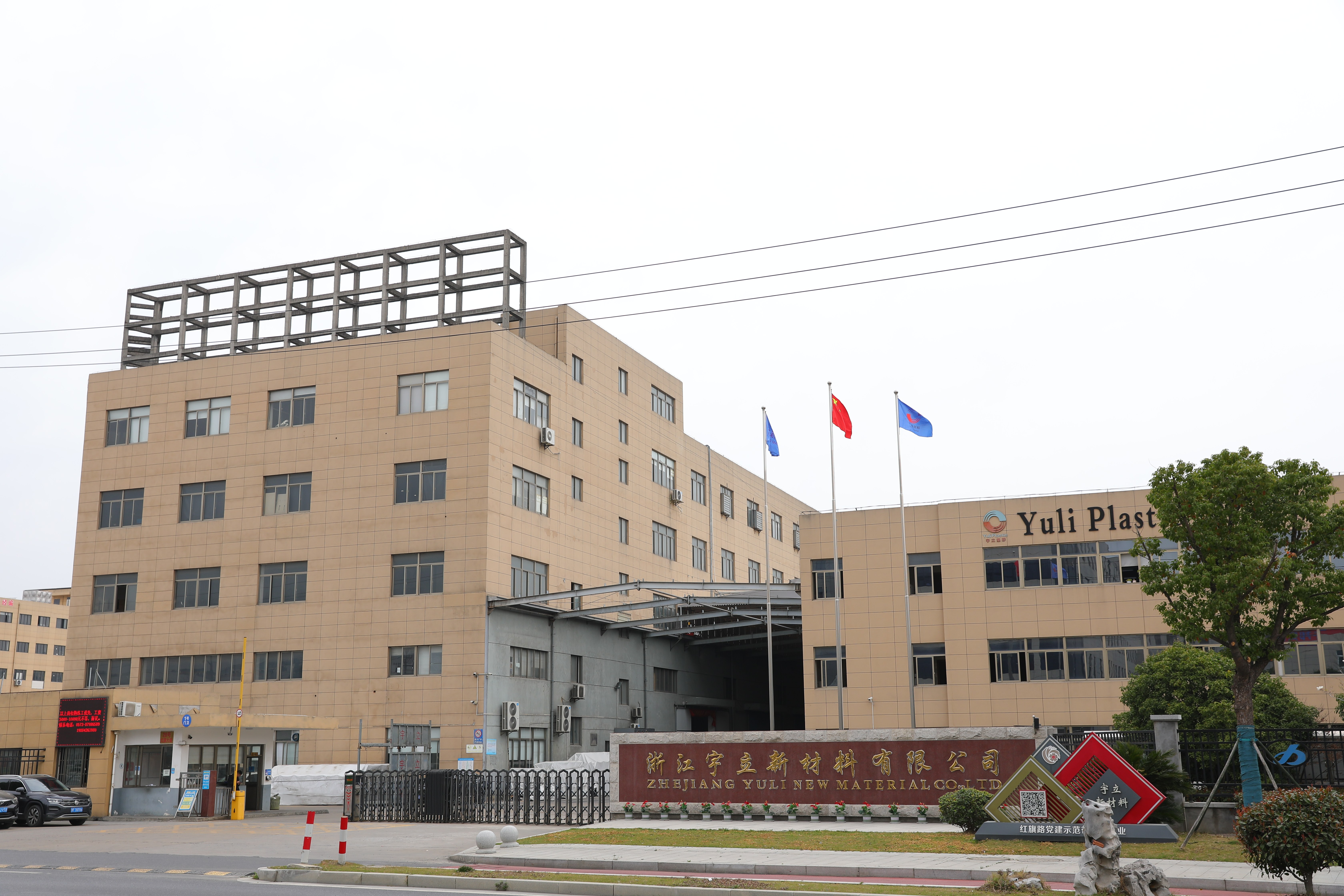
The holder in this case is Zhejiang Yuli New Material Co., Ltd., a manufacturer of PVC calendered, coated and composite materials founded in November 2005 and based at No.28 Hongqi Road, Haining, China. Its tarpaulin product record identifies the line as model YLCL.
The Certificate at a Glance
| Field | Entry |
|---|---|
| Certificate holder | Zhejiang Yuli New Material Co., Ltd. |
| Certificate | Occupational Health and Safety Management System Certificate |
| Certificate number | 15/24S8164R11 |
| Issuing body | WIT ASSESSMENT |
| Standard | GB/T 45001-2020 / ISO 45001:2018 |
| Certified scope | Occupational health and safety management involved in the design and production of PVC film and warp knitted coated composite materials |
| Stated market | China |
| Issue date | 2024-08-22 |
| Expiry date | 2027-11-29 |
| Product association | YLCL tarpaulin product, including PVC tarpaulin, TPU tarpaulin and tent fabric |
Each row above is a separate check rather than a restatement of the same fact. A buyer who records only the certificate number holds half the information needed to use the document responsibly; the scope, market and dates determine whether the number is relevant to a particular order at all.
Reading the Scope Sentence in Four Parts
The scope statement is the field most often summarised and least often read. It contains four distinct pieces of information.
1. The object of certification is a management system
“Occupational health and safety management” is the subject of the sentence. The certificate certifies management practice, not material output. Nothing in the sentence describes tensile strength, hydrostatic resistance, tear behaviour, UV stability or flame classification — all of which are specified elsewhere in the YLCL product documentation.
2. The activities named are design and production
The scope is tied to “the design and production of” the materials that follow. That wording points to the mill's own design and manufacturing activities. It does not describe installation on a project site, transport, warehousing or the in-service behaviour of a finished tent, awning or cover. A buyer procuring fabricated articles should therefore place the certificate against the fabric-supply stage of the chain, not against the finished article.
3. The material family is PVC film and warp knitted coated composite materials
This is the process family the certificate names. The YLCL tarpaulin is described as a PVC coating applied to a polyester base cloth or a fiberglass base cloth — a coated composite construction that belongs to the material family named in the scope. For a buyer, the useful question is not whether the family matches in general terms, but whether the specific material on the purchase order is designed and produced within those processes. That is a question the supplier answers in writing, not one the certificate answers by itself.
4. The product mapping is stated by the company
The certificate is mapped to the YLCL tarpaulin product. That mapping is the company's own product-level association, and it is the reason the certificate appears in tarpaulin supplier files at all. It should be quoted as a mapping, with the certificate number and scope attached, rather than paraphrased into a broader claim.
Which Products the Certificate Is Associated With
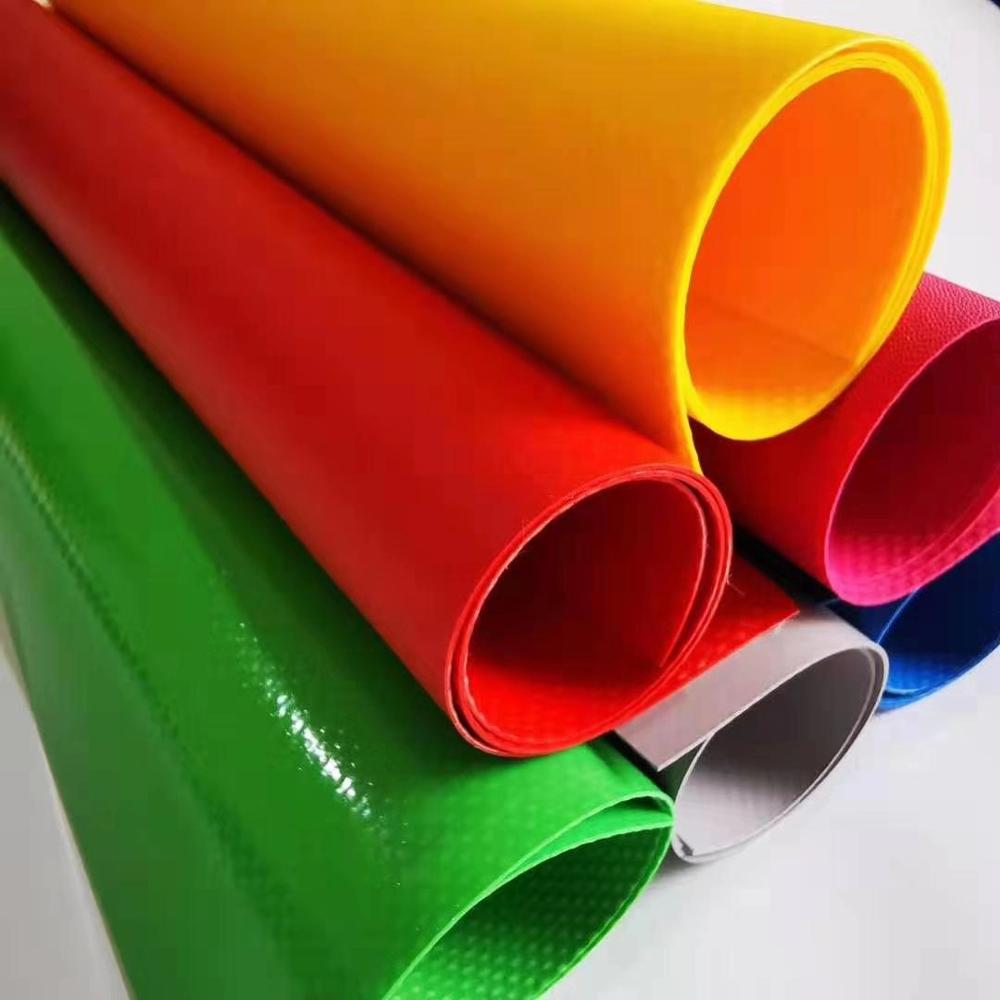
The YLCL product record lists the range as PVC tarpaulin, TPU tarpaulin, tent fabric, PVC fabric, blackout fabric, inflatable fabric, vinyl, coated tarpaulin, cover, RV awning, PVC roller blinds fabric, fiberglass window curtain and fiberglass blackout fabric. Three of these come up most often when the occupational health and safety certificate is requested: PVC tarpaulin, TPU tarpaulin and tent fabric.
- PVC tarpaulin — PVC coating on a polyester or fiberglass base fabric; waterproof and UV resistant, with high tensile strength and resistance to tear and abrasion; weldable, with flame-retardant options available.
- TPU tarpaulin — an option positioned for low-temperature flexible covers.
- Tent fabric — the tent and awning material; the supplier's weight guidance for tents is 650 gsm, 750 gsm and 850 gsm depending on the structure and expected load.
Everything in that list is a material attribute, and every one of those attributes sits outside the ISO 45001 certificate. Weight guidance, coating construction and flame options are answered by product documentation and test evidence. Keeping the two categories apart is what allows a buyer to quote either one accurately.
Standard Reference: GB/T 45001-2020 / ISO 45001:2018
When the certificate is copied into a supplier questionnaire, an audit pack or a contract annex, the full dual reference should travel with it. Writing “ISO 45001 certified” alone drops the national standard designation and makes cross-checking harder for whoever reads the file next.
The standard and the certificate are also not interchangeable ideas. The standard sets out requirements; the certificate records an assessment of one organization, against those requirements, within one written scope, for a fixed period. Two suppliers can both hold ISO 45001 certificates whose scope sentences describe entirely different activities. That is why the scope wording, not the standard number, is the field that decides relevance to a given order.
Validity: 2024-08-22 to 2027-11-29
The certificate's certification period runs from 2024-08-22 to 2027-11-29. It is time-limited evidence: a copy supplied during 2026 documents an assessment period, not a permanent status. Three practical uses follow from the dates.
First, match the expiry date against the order timeline. A programme that extends past 2027-11-29 will eventually require an updated document, and the buyer who checks at the qualification stage avoids discovering the gap at the shipping stage. Second, re-check at repeat orders rather than reusing a certificate copy filed years earlier. Third, read any renewed certificate in full rather than assuming it carries the same scope and market wording as the current one.
Three Certificates, Three Calendars
The occupational health and safety certificate is one of three management-system certificates listed for the company, and the three do not share the same dates or the same stated market.
| Certificate | Number | Standard | Issuing body | Stated market | Validity |
|---|---|---|---|---|---|
| Quality management system | 15/24Q8162R11 | GB/T19001-2016 / ISO9001:2015 | WIT Assessment | Global | 2024-08-22 to 2027-09-06 |
| Environmental management system | 15/24E8163R11 | GB/T24001-2016 / ISO14001:2015 | WIT ASSESSMENT | Global | 2024-08-22 to 2027-11-29 |
| Occupational health and safety management system | 15/24S8164R11 | GB/T 45001-2020 / ISO 45001:2018 | WIT ASSESSMENT | China | 2024-08-22 to 2027-11-29 |
The quality management certificate expires on 2027-09-06, roughly eleven weeks before the other two. A buyer whose documentation requirement covers all three should track them separately rather than treating “ISO certified” as a single status with a single renewal date.
The China-Market Designation Is the Most Over-Read Field
The occupational health and safety certificate is stated for the China market. In the same certificate set, the quality and environmental management certificates are stated for the Global market. That difference is a stated applicability recorded on each document; it is not a ranking of the three systems and it is not a statement about where the company's products are sold.
This is where over-reading most often happens. ISO 45001:2018 is an international standard, and it is easy to slide from “certified to an international standard” to “internationally certified for occupational health and safety”. The certificate's own market field does not support the second phrasing. Both facts coexist: the standard is international, and the stated market on certificate 15/24S8164R11 is China.
For a buyer sourcing from outside China, the practical step is to ask which documents the destination market or the customer's own audit scheme actually requires, then treat this certificate as one input. The company's stated main markets are the EU and USA, with an export ratio of 60% — a profile that makes the market field worth reading carefully rather than assuming uniformity. Presenting a China-market occupational health and safety certificate to a downstream European or North American customer as their local certification would misstate the document.
Verification Steps for a Bulk Buyer
Six checks cover most of what a procurement team needs before the certificate goes into a supplier file.
- Confirm the identity fields. Certificate number 15/24S8164R11, issuing body WIT ASSESSMENT, holder Zhejiang Yuli New Material Co., Ltd. A certificate whose holder name differs from the contracting entity is a different document.
- Read the scope against the purchase. The certificate covers occupational health and safety management in the design and production of PVC film and warp knitted coated composite materials. It does not describe the in-service performance of a finished tent or awning.
- Check the stated market against the destination. The certificate is stated for China. If the destination or the end customer requires market-specific evidence, request it separately.
- Check the expiry against the schedule. The certificate runs to 2027-11-29. Orders and framework agreements that extend beyond that date need a plan for re-verification.
- Separate the product evidence. Waterproofing specified at a hydrostatic pressure of at least 3000 mm H₂O, a service temperature range of -30 °C to +70 °C, and flame-retardant options to M1/M2, NFPA 701 or EN 13501-1 are product attributes documented outside the management-system certificate.
- Record the quote format. When the certificate is cited in a specification or a tender response, quote the number, the standard and the scope wording together so the citation can be traced back to the document.
Matching the Evidence Type to the Question
Most supplier-file confusion comes from using one document type to answer another document type's question. The table below sets out the division of labour.
| Document | What it establishes | What it does not establish |
|---|---|---|
| Occupational health and safety management system certificate | The holder operates an OH&S management system within the named scope and stated market, assessed against the named standard | Material performance, or compliance with another jurisdiction's occupational safety requirements |
| Product test report | Measured performance of the sampled material under the stated test method | Site-wide management practice, or performance of unsampled production |
| Buyer-commissioned factory audit | Conditions observed at the audited site during the audit | The certificate scope, or the specification of any particular roll |
| Material specification sheet | Declared attributes such as hydrostatic resistance, temperature range and available flame classifications | Independent verification of those declared values |
A supplier file containing only management-system certificates is thin on product evidence. A file containing only test reports is thin on site management. The ISO 45001 certificate addresses the second category and should be asked to do only that.
Where the Question Comes Up in Practice
The YLCL range is used in tent and awning projects, shade and cover work, RV awnings, roller blinds and projection screens. Waterproofing and UV resistance are the recurring performance requirements in those applications, and welding is the common joining method for coated and inflatable materials.
In that chain, the occupational health and safety certificate is usually requested at the fabric stage — when a converter, brand or project supplier is qualifying the mill that coats the base cloth, before cutting and welding begin. It documents how that mill manages worker safety across design and production. It says nothing about the welded seam on a finished awning, the light output of a projection screen, or the weather resistance of a coated vinyl RV awning fabric; each of those is a product-level question with its own evidence.
Where the Certificate's Reach Ends
Stating the boundaries plainly is what makes the document usable. Certificate 15/24S8164R11 does not do the following:
- It does not certify any tarpaulin, tent fabric or coated material as a product. It certifies a management system within a defined scope.
- It does not establish compliance with the occupational health and safety legislation of any market other than the China market stated on the certificate.
- It does not extend to legal entities or sites other than the named holder.
- It does not describe production capacity, monthly output, lead time, minimum order quantity or quality-control method.
- It does not remain current outside the period 2024-08-22 to 2027-11-29.
None of these limits diminishes the certificate. They define the question it was designed to answer, which is the only basis on which a buyer can rely on it.
Outlook
The certificate's current cycle ends on 2027-11-29. Buyers running framework agreements, tender programmes or multi-year project schedules past that date should build re-verification into their supplier review rather than treating the document as a fixed asset. When a renewed certificate arrives, the scope sentence and the market field are the two elements to re-read first, because those are the fields that determine whether the renewal still matches the material being purchased.
The broader discipline is simpler than the paperwork suggests: request the certificate, read the four load-bearing fields — scope, standard, dates and market — and keep product evidence in a separate section of the file. That habit produces supplier documentation that survives an audit, and it prevents the most common error in tarpaulin procurement, which is quoting a management-system certificate as though it were a material specification.
FAQ
Does the ISO 45001 certificate mean the tarpaulin itself meets a safety standard?
No. Certificate 15/24S8164R11 certifies an occupational health and safety management system covering the design and production of PVC film and warp knitted coated composite materials. Product characteristics such as hydrostatic resistance, service temperature range and flame classification are documented separately from the management-system certificate.
Which standard reference should appear when the certificate is quoted?
The certificate carries the dual reference GB/T 45001-2020 / ISO 45001:2018. Quoting both designations keeps the national standard and the international standard visible and allows the citation to be matched against the certificate itself.
Is the certificate valid for buyers in the EU or the USA?
The certificate is stated for the China market. It should not be presented as an EU or US occupational health and safety certification. Buyers whose destination market or end customer requires market-specific evidence should request that evidence separately and treat this certificate as one input among several.
How long is the certificate valid?
The certification period runs from 2024-08-22 to 2027-11-29. A copy supplied during that window documents the assessment period, and orders extending beyond the expiry date require an updated document.
Which products is the certificate associated with?
The certificate is mapped to the YLCL tarpaulin product, which covers PVC tarpaulin, TPU tarpaulin, tent fabric, PVC fabric, blackout fabric, inflatable fabric, vinyl, coated tarpaulin, cover, RV awning, PVC roller blinds fabric, fiberglass window curtain and fiberglass blackout fabric. The mapping is a product-level association stated by the company alongside the certificate.
Reference documents: the certificate is listed with the company's quality and environmental management certificates on the Zhejiang Yuli New Material Co., Ltd. website at www.yuliplastic.com. A company and product brochure covering the YLCL range is available as a PDF: Zhejiang Yuli New Material company brochure.
Have Questions or Need More Details?
Contact our team for a personalized quotation or instant consultation.
Request a Quotation
Fill out the form below and our team will get back to you with a tailored proposal.
WhatsApp Direct Chat
Prefer to chat in real-time? Message us on WhatsApp for instant assistance & quick answers.
- Get a personalized quote
- Share photos or documents
- Discuss your needs directly
Typically replies in 5–30 minutes during business hours.