
ISO 9001 Scope Mapping for ZZX2406 and ZZX2313 PACK Lines
ISO 9001 Scope Mapping for ZZX2406 and ZZX2313 PACK Lines
A quality management certificate is not a performance certificate, and in capital equipment that difference is contractual. When an energy storage integrator or an automotive OEM evaluates an automatic battery pack assembly line, the certificate number usually arrives in the same folder as the layout drawing and the cycle-time sheet. It proves something narrower than most bid documents imply: that the manufacturer's quality management system has been assessed against a recognised standard within a defined scope. Reading that scope correctly — and mapping it to the exact PACK line model being purchased — is what turns a compliance claim into something a buyer can actually check at acceptance.
This analysis maps the ISO 9001 scope recorded under certificate 44825MS079001R0 to two line models used in cell-to-pack and EV battery pack production, ZZX2406 and ZZX2313, and shows where the certificate, the model documentation and the published line performance parameters must be kept separate inside a purchase contract.
What certificate 44825MS079001R0 actually registers
Shanghai Zonzsin Intelligent Equipment Co., Ltd. is a Shanghai-based manufacturer of automatic battery PACK assembly lines and ESS battery pack insertion robots for containers, founded in 2019 and operating from a 6,000 m² production site serving lithium battery manufacturers, energy storage integrators and automotive OEMs.
The company holds a Quality Management Systems Certificate, certificate number 44825MS079001R0, issued by ZDCB against the standard stated on the certificate as GB/T19001-2016 ISO9001:2015. The issue date is 20 November 2025 and the expiry date is 19 November 2028; the certification is stated to apply to the global market.
The registered scope is written as four items: laser welding equipment; laser cleaning equipment; module PACK assembly line; and the R&D and assembly of AGV-based cluster loading robot. Three of those items are equipment categories. The fourth describes activities rather than a product. No model number appears anywhere in that scope wording — and that single observation is the most useful thing a procurement team can extract from the document.
Why the scope sentence matters more than the certificate logo
Certification bodies register scope in words, and those words are the only part of the certificate that a buyer can test against a purchase order. A logo reproduced on a presentation slide carries no scope. A scope sentence can be quoted verbatim into a technical annex, compared line by line with the equipment being bought, and referenced in an acceptance document.
For this certificate, the operative phrase for pack assembly equipment is module PACK assembly line. A buyer should therefore ask a direct question: is the configuration I am contracting a battery PACK assembly line inside that description, and is that written down anywhere with my model number attached? Two further scope items are relevant to how a PACK line is actually built. Laser welding equipment and laser cleaning equipment are named separately, which matters because welding and pre-weld surface preparation are the quality-critical stations in most PACK assembly flows. The activity clause covering R&D and assembly also matters for build-to-spec projects, where the supplier's engineering work — not only the physical build — falls inside the assessed system.
The practical consequence is that scope reading should precede technical comparison. A supplier whose certificate scope covers welding equipment but not PACK assembly lines is not equivalent to a supplier whose scope covers both, even if both present an ISO 9001 certificate in the bid pack.
Model-level mapping: ZZX2406 and ZZX2313
The certification record maintained for 44825MS079001R0 associates the certificate with three PACK line models: ZZX2406, ZZX2313 and ZZX2501. That association is the model-level layer, and it is what a buyer should obtain as a written model list rather than infer from a catalogue page.
ZZX2406 is documented as a CTP battery PACK assembly line for 314Ah and 587Ah prismatic cells in a 1P96S PACK configuration, with a 4 PPM cycle time, a stated automation mode of semi-automatic, a footprint of L58000 × W11000 × H3800, and a structure in carbon steel / Q235, applied in energy storage, EV and C&I manufacturing. ZZX2313 is documented as an EV battery PACK assembly line with a single machine operation rate of ≥95%, compressed air at 0.5–0.8 MPa, an electrical requirement of AC 380V ±10%, a one-time welding qualification rate of ≥99.5% and a final welding qualification rate of ≥99.95%, applied in the EV industry, energy storage and automotive OEM production.
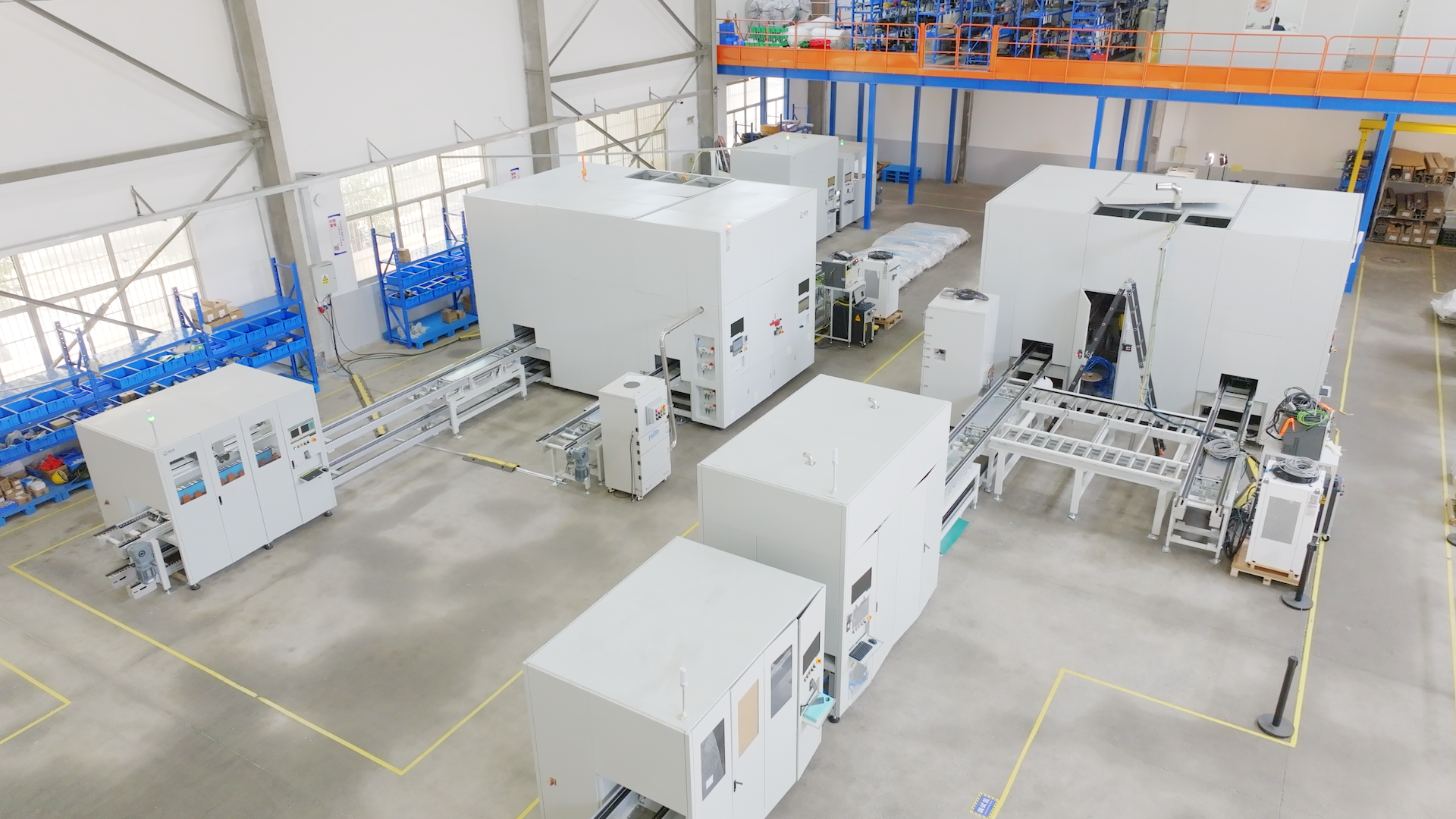
Mapping the two models against the certificate produces a clear picture of what is covered and what still has to be requested.
| Certificate element | What it establishes | What the buyer still needs |
|---|---|---|
| Certificate number 44825MS079001R0, issued by ZDCB | A specific, traceable management-system certificate exists and can be quoted in the purchase order | An unredacted copy including any annex or attachment, checked against the issuing body's register |
| Standard GB/T19001-2016 ISO9001:2015 | The standard designation the system was assessed against appears on the certificate face | Confirmation that the buyer's own quality clause references the same designation, not a generic "ISO certified" phrase |
| Scope item: module PACK assembly line | The category of equipment is inside the assessed scope | The model list (ZZX2406, ZZX2313, ZZX2501) on company letterhead, and the exact configuration being purchased |
| Scope items: laser welding equipment; laser cleaning equipment | The weld-critical equipment categories are separately inside the scope | Station-level confirmation of which welding and cleaning units are installed on the contracted line |
| Scope item: R&D and assembly of AGV-based cluster loading robot | Design and build activities, not only hardware categories, are inside the assessed system | Alignment with build-to-spec engineering changes requested by the buyer |
| Issue 20 November 2025; expiry 19 November 2028 | Validity window at the time of quoting | Confirmation that the certificate remains valid at delivery, installation and the warranty period |
What the certificate does not establish
Four things commonly assumed from an ISO 9001 certificate are not established by it, and each one belongs in a different section of the contract.
It does not certify a welding yield. A management-system certificate addresses how processes are controlled, recorded and improved. It does not measure a specific line's one-time welding qualification rate or final welding qualification rate; those are product performance figures documented separately for the model, such as the ≥99.5% and ≥99.95% values published for ZZX2313.
It does not certify throughput. Cycle time, PPM output and layout footprint are configuration specifications. On ZZX2406 the documented figures are 4 PPM and a footprint of L58000 × W11000 × H3800; on the Blade-format ZZX2501 the documented figure is 6 PPM at 30 min per PACK. None of these numbers appear in a scope statement, and none should be written into a contract as a certification outcome.
It does not confirm site fit. PACK assembly takes place indoors under standard factory conditions, often in continuous or shift production, with requirements covering ESD protection, fire prevention, temperature, humidity and cleanliness control, plus PACK compatibility and fixture adaptation. Those are project conditions assessed between buyer and supplier, not certificate content.
It does not fix the automation level. The term automatic battery pack assembly line describes a product family. The documented automation mode for ZZX2406 is semi-automatic, while automation level appears among the customization options offered alongside cycle time, logo, colour and configuration. A buyer who requires fully automatic operation must contract that explicitly, rather than assume it from a category label.
Turning the performance figures into checkable acceptance criteria
The published performance values are useful precisely because they are separate from the certificate — and because they can be measured. For ZZX2313 three figures are documented: a single machine operation rate of ≥95%, a one-time welding qualification rate of ≥99.5%, and a final welding qualification rate of ≥99.95%. Each of the three is only as strong as its definition, and the definition is where most acceptance disputes begin.
- Operation rate. The ≥95% figure needs a stated measurement window, a stated definition of available time, and an agreed treatment of planned maintenance, material starvation and changeover. Without those, two parties can measure the same line and reach different numbers.
- One-time welding qualification rate. The denominator should be defined — welds attempted, PACKs processed, or joints inspected — together with the inspection method, the sampling plan and whether reworked joints re-enter the count.
- Final welding qualification rate. The difference between the ≥99.5% one-time figure and the ≥99.95% final figure is essentially a statement about what happens to non-conforming joints. The acceptance annex should say which rework or re-weld steps are permitted before the final figure is calculated.
- Data ownership. Who records the run, on which system, and whether the buyer receives the raw log, determines whether the figure can be reviewed after handover.
For ZZX2406, the documented technical parameters are the CTP configuration, cell compatibility at 314Ah and 587Ah, the 1P96S PACK format, the 4 PPM cycle time, the semi-automatic automation mode and the footprint. Equivalent operation-rate and welding-rate figures should be requested in writing for this model and for any customized configuration before the acceptance criteria are frozen — the certificate does not supply them, and a category-level scope cannot substitute for model-level numbers.
Writing the scope into purchase terms
The gap between a certificate in a bid pack and a certificate that protects a buyer is closed by contract wording. Six clauses do most of the work.
- Quote the scope verbatim. The four registered scope items belong in the technical annex word for word, with the certificate number, issuing body, standard, issue date and expiry date alongside them. Paraphrase weakens the clause.
- Attach the model list. Require a signed statement that identifies the purchased model — ZZX2406, ZZX2313 or another — as covered by certificate 44825MS079001R0, and that identifies which scope item applies to it.
- Cover the delivery window, not the quote date. With expiry on 19 November 2028 and a stated lead time of three to five months, certification validity at delivery, installation and commissioning should be a condition, with notification if status changes.
- Keep quality-system evidence and performance acceptance separate. Certificates belong in the supplier-qualification file; operation rate and welding qualification rates belong in the factory acceptance test and site acceptance test schedules, with definitions attached.
- Name the equipment inside the scope. If laser welding and laser cleaning units are installed on the line, state that the equipment supplied falls within those named scope categories, and list the units.
- Address change control. Where the line is customized — cycle time, automation level, configuration — the contract should record that the customized configuration is identified in the model documentation, since the certificate scope is written at category level.
Zonzsin's own published capability data is relevant when these clauses are being drafted: OEM/ODM production, customization across cycle time, automation, logo, colour and configuration, a stated monthly capacity of three units, a minimum order of one unit, three-to-five-month lead time, 100% testing as the stated quality-control approach, and after-sales support through remote assistance plus on-site installation and commissioning. Each of these becomes a contract term far more reliably than it becomes a marketing statement.
CTP versus Blade: why format-level qualification needs its own documentation
CTP and Blade are PACK architectures, not certificate categories. A cell-to-pack line and a Blade-format line can both sit inside a "module PACK assembly line" scope item while differing substantially in fixture design, cell handling, welding access and PACK configuration. That is why model-level qualification matters: the scope confirms the category, the model documentation confirms the format.
For CTP work, the relevant documented distinction is large prismatic cell handling — 314Ah and 587Ah cells in a 1P96S PACK on ZZX2406 — plus the interface between cell, cooling structure and enclosure that determines how many welds a PACK requires and how accessible they are. For Blade-format work the cell geometry and stacking sequence change, and the documented ZZX2501 line runs at 6 PPM with a 30-minute PACK cycle. Same certificate, same scope category, different mechanical and welding reality on the floor.
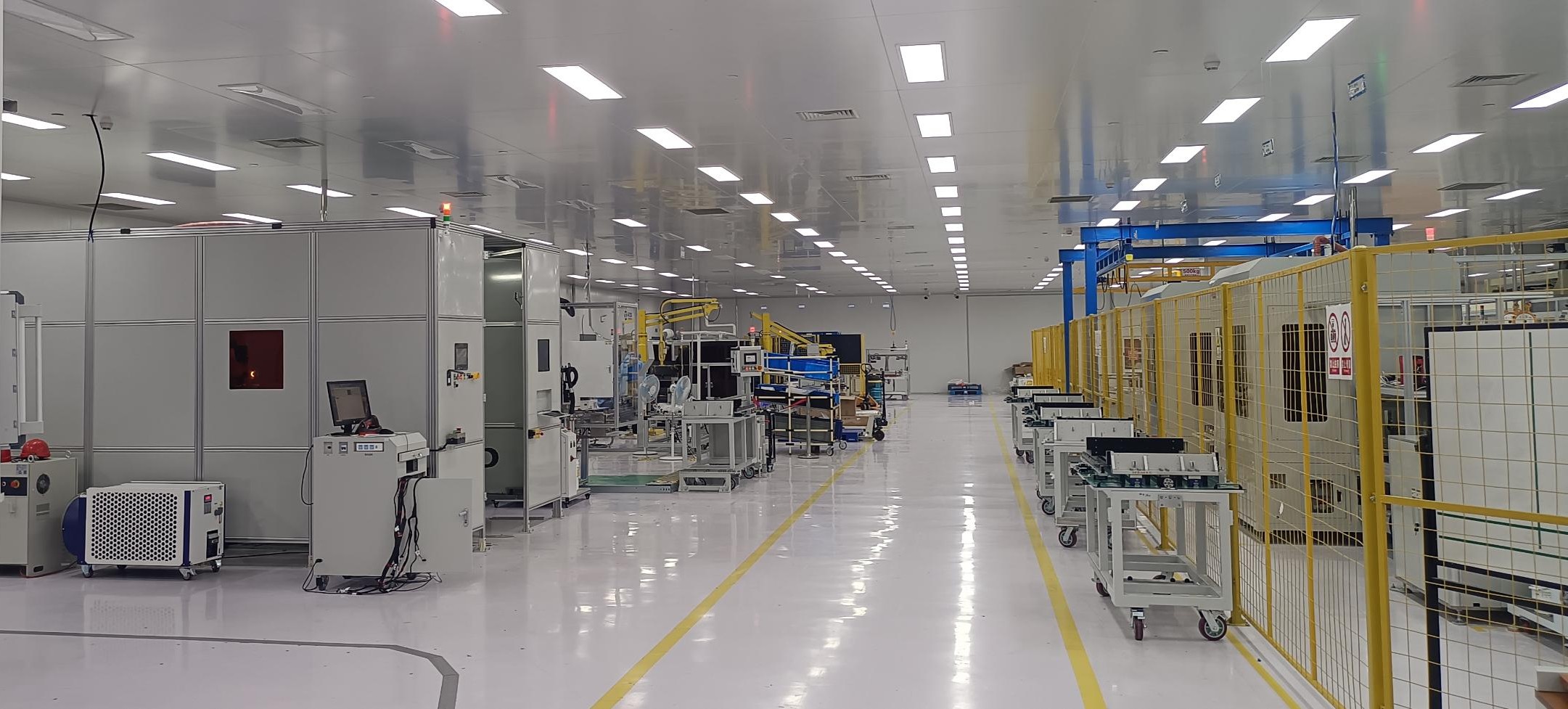
The site-level conditions reinforce the point. PACK assembly projects run indoors under industrial assembly-line conditions, often on continuous or shift patterns, with ESD protection, fire prevention and temperature, humidity and cleanliness control specified per project, plus PACK compatibility and fixture adaptation. A buyer comparing CTP and Blade options should therefore compare fixture adaptation and PACK compatibility directly, and treat the shared certificate as background rather than as the deciding evidence between the two formats.
Certificate lifecycle across a project timeline
Certificate dates interact with project schedules more often than buyers expect. With issue on 20 November 2025 and expiry on 19 November 2028, certificate 44825MS079001R0 covers a project quoted, built and installed inside that window; a three-year certificate cycle normally involves periodic surveillance, so a buyer whose installation or warranty period runs close to the expiry date should ask how renewal will be handled and what evidence will be provided if the certificate is reissued.
The same logic applies to scope drift. If a project later adds a PACK format, a different cell size or a materially different automation level, the honest question is not whether the certificate still exists but whether the model and configuration in question are still identifiable within the documented model list attached to it. Where a described project outcome is relevant — such as a recorded India CTP battery PACK assembly line delivered as one unit and reported in stable operation for a year, with a U-shaped layout cited for space saving and user-friendly operation — that is evidence of layout and operational fit, not additional quality-management evidence, and it should be filed accordingly.
A decision rule for evaluators
Read the scope first, then the model list, then the performance annex. If the scope names the equipment category and the supplier can produce a signed model list linking ZZX2406 or ZZX2313 to certificate 44825MS079001R0, the quality-system layer is in place. If the operation rate and welding qualification rates are then written into the acceptance schedule with agreed definitions, measurement windows and data ownership, the performance layer is in place as well. Neither layer replaces the other, and a bid that offers only the certificate should be treated as incomplete on the performance side, just as a bid that offers only performance numbers should be treated as incomplete on the system side.
Additional documentation, including the manufacturer's product brochure, is available for download at the Zonzsin product brochure. Company-level information is published at Shanghai Zonzsin Intelligent Equipment Co., Ltd.
FAQ
Does certificate 44825MS079001R0 name models ZZX2406 and ZZX2313 on its face?
The registered scope is expressed in equipment and activity categories — laser welding equipment, laser cleaning equipment, module PACK assembly line, and R&D and assembly of AGV-based cluster loading robot — so model numbers are not part of that wording. The association between the certificate and models ZZX2406, ZZX2313 and ZZX2501 comes from the certification record that links the certificate to those products. Buyers should request that linkage as a written model list rather than infer it from a catalogue page.
Which standard and validity period appear on the certificate?
The certificate states the standard as GB/T19001-2016 ISO9001:2015, was issued by ZDCB under certificate number 44825MS079001R0, carries an issue date of 20 November 2025 and an expiry date of 19 November 2028, and is stated to apply to the global market.
Can a 99.95% final welding qualification rate be treated as an ISO 9001 requirement?
No. The ≥99.95% final welding qualification rate and the ≥99.5% one-time rate are product performance figures documented for ZZX2313, not certification requirements. ISO 9001 addresses how quality processes are managed; the welding figures belong in the acceptance test schedule, with the inspection method, sampling plan and rework rules defined there.
What performance values should be written into the acceptance annex?
For ZZX2313 the documented values are a single machine operation rate of ≥95%, a one-time welding qualification rate of ≥99.5% and a final welding qualification rate of ≥99.95%, alongside compressed air at 0.5–0.8 MPa and an electrical requirement of AC 380V ±10%. For ZZX2406 the documented parameters centre on the CTP configuration, 314Ah and 587Ah cell compatibility, a 1P96S PACK, a 4 PPM cycle time, a semi-automatic automation mode and a footprint of L58000 × W11000 × H3800, so equivalent operation and welding figures should be requested in writing before acceptance criteria are fixed.
Does the certificate scope cover Blade-format PACK lines as well as CTP lines?
The scope item "module PACK assembly line" is written as an equipment category rather than a cell format, so both CTP and Blade architectures fall within that category if the specific model is identified in the supplier's documentation. The certification record associates the certificate with the Blade-format ZZX2501 in addition to ZZX2406 and ZZX2313, but fixture adaptation, cell handling and PACK configuration differ between formats and still require model-level confirmation in the purchase documents.
Have Questions or Need More Details?
Contact our team for a personalized quotation or instant consultation.
Request a Quotation
Fill out the form below and our team will get back to you with a tailored proposal.
WhatsApp Direct Chat
Prefer to chat in real-time? Message us on WhatsApp for instant assistance & quick answers.
- Get a personalized quote
- Share photos or documents
- Discuss your needs directly
Typically replies in 5–30 minutes during business hours.