
ISO9001 and Beyond: Decoding Compliance for Multi-Purpose Atmosphere Furnaces
ISO9001 and Beyond: Decoding Compliance for Multi-Purpose Atmosphere Furnaces
Compliance for a multi-purpose atmosphere furnace is a layered claim, not a single certificate. ISO9001 addresses how a manufacturer controls its quality management system — documentation, process discipline, traceability, corrective action. It does not, on its own, certify a furnace's thermal performance, its safety architecture, the grade of steel used in its shell and internals, or the metallurgical result of a carburizing cycle. For buyers in the decision stage, the practical task is to read ISO9001 as the first layer of a compliance stack and then verify the layers above it: safety protection, materials of construction, acceptance testing, and post-delivery evidence.
Norsen Thermal Technology (Jiangsu) Co., Ltd. (NORSEN) is a heat treatment equipment manufacturer based in Peixian County, Jiangsu Province, China, producing box-type multi-purpose furnace production lines, pre-vacuum gas nitriding furnaces, mesh-belt carburizing and quenching lines, and well-type furnaces. The company states that it holds ISO9001 quality management system certification, operates a 6,000 m² facility with a 10-person R&D team, and exports to markets including Russia, Belarus, Vietnam, Indonesia, Thailand, Turkey, Qatar, and Pakistan. That profile makes it a useful reference point for explaining how certification, safety design, material grades, and acceptance procedure connect in an actual procurement decision.
Why ISO9001 Is a Floor Rather Than a Ceiling
ISO9001 certification confirms that a manufacturer operates a documented quality management system. In furnace building, that generally means controlled drawing release, incoming material inspection routines, weld and assembly procedures, calibration of instruments, non-conformance handling, and record retention. These are organisational capabilities. They raise the probability that a delivered furnace matches its specification, but they say nothing specific about what the specification contains.
This distinction matters most during evaluation. Two suppliers can both be ISO9001 certified while offering machines with materially different safety logic, different steel grades, and different acceptance documentation. Compliance therefore needs to be read as a stack of five layers, each answering a different question.
| Compliance layer | Question it answers | What it does not prove |
|---|---|---|
| Supplier management system (ISO9001) | Is quality controlled through documented, auditable processes? | Thermal performance, metallurgical outcome, or equipment-specific safety design |
| Heat treatment process standard (for example ISO 20431:2023) | Are quality control requirements for heat treatment of mechanical parts defined? | Whether a specific furnace model meets those requirements |
| Equipment safety design | Are over-temperature, over-current, and gas heating risks controlled? | Plant-level gas supply, ventilation, and exhaust safety |
| Materials of construction | Can the shell and internals withstand the intended operating envelope? | Peak capability of a particular unit without test evidence |
| Acceptance protocol | Has performance been verified before shipment and again on site? | Long-term field reliability over the full service life |
ISO 20431:2023, published by the International Organization for Standardization, specifies international quality control requirements for heat treatment on mechanical parts across industries including aerospace and automotive. It is a process-side reference, not an equipment certificate. Read together with ISO9001, it clarifies the split: the management system standard governs the supplier, the process standard governs the treatment, and neither replaces equipment-level verification.
The Opportunity: Compliance as a Negotiating and Screening Tool
Buyers who treat compliance as a screening tool rather than a closing formality gain two advantages. First, they can eliminate suppliers early on objective grounds — an uncertified or partially documented supplier rarely improves later in the process. Second, they can shift the conversation from certificate presentation to evidence: which protective devices are fitted, which steels are used where, what is tested before shipment, and what the customer signs off on site.
That shift is also commercially rational. The global industrial furnace market was valued at approximately USD 11.86 billion in 2024, with expectations to reach USD 21.53 billion by 2034, according to Precedence Research. Independent estimates of the same market differ considerably — Market Research Future places 2024 at USD 19.65 billion, while Fortune Business Insights reports USD 10.46 billion for 2025 — which is itself a reason to rely on supplier-specific, verifiable evidence rather than broad market narratives when comparing machines.
Technical Explanation: The Safety Features That Sit Above the Certificate
Safety protection is the layer where certification language is most often substituted for engineering substance. For a multi-purpose atmosphere furnace running carburizing, tempering, or gas-shielded cycles, three protection domains are decisive.
Over-temperature protection
Overheating is a recognised failure mode in heat treatment equipment, and it is controlled primarily through control architecture rather than a single device. A documented approach uses PID adjustment combined with multiple thermocouples, so that temperature is measured at more than one point and the control loop responds proportionally instead of switching on a single reading. That control method is reinforced by program optimisation and, where available, remote monitoring, so that abnormal trends can be observed before they become excursions. For buyers, the verification questions are concrete: how many thermocouples are used, where are they positioned, is there an independent high-limit cut-out separate from the main controller, and are the records of interlock testing included in the acceptance documentation.
Over-current protection
Over-current risk in an atmosphere furnace comes from circulating fans, atmosphere and gas handling equipment, drive motors, and — in electrically heated configurations — heating element circuits. Protective practice in industrial equipment generally combines circuit breakers or fuses sized to the load, thermal overload relays for motors, phase monitoring for three-phase supplies, and current feedback in the control system so that abnormal draw can be detected rather than simply tripped. The compliance significance is that these devices must be documented and tested, not merely installed: a protection device with no test record is an unverified assumption in a procurement file.
Gas heating and atmosphere safety
Gas-fired furnaces held a leading share of the industrial furnace product segment at 39.8% in 2025, according to Future Market Insights, although electric and energy-efficient hybrid designs are seeing increased adoption against decarbonisation pressures. Where gas is used, either as a heat source or as a component of the furnace atmosphere, the safety logic typically includes combustion monitoring, controlled purge and start-up sequences, leak-tight gas trains, and interlocks that prevent gas admission under unsafe conditions. Buyers evaluating a gas atmospheric furnace should confirm how purge cycles are sequenced, how flame or combustion status is monitored, and how the system behaves on power interruption — again as documented, testable items rather than verbal assurances.
Materials of Construction: Q235, SS304, and SS310
Material grade is a compliance variable because it determines how a furnace tolerates heat, oxidation, and mechanical load over years of cycling. Three grades appear repeatedly in multi-purpose atmosphere furnace construction, each with a distinct role. The grade must always be confirmed against the documented operating envelope of the specific furnace, since the same material can be appropriate in one zone and unsuitable in another.
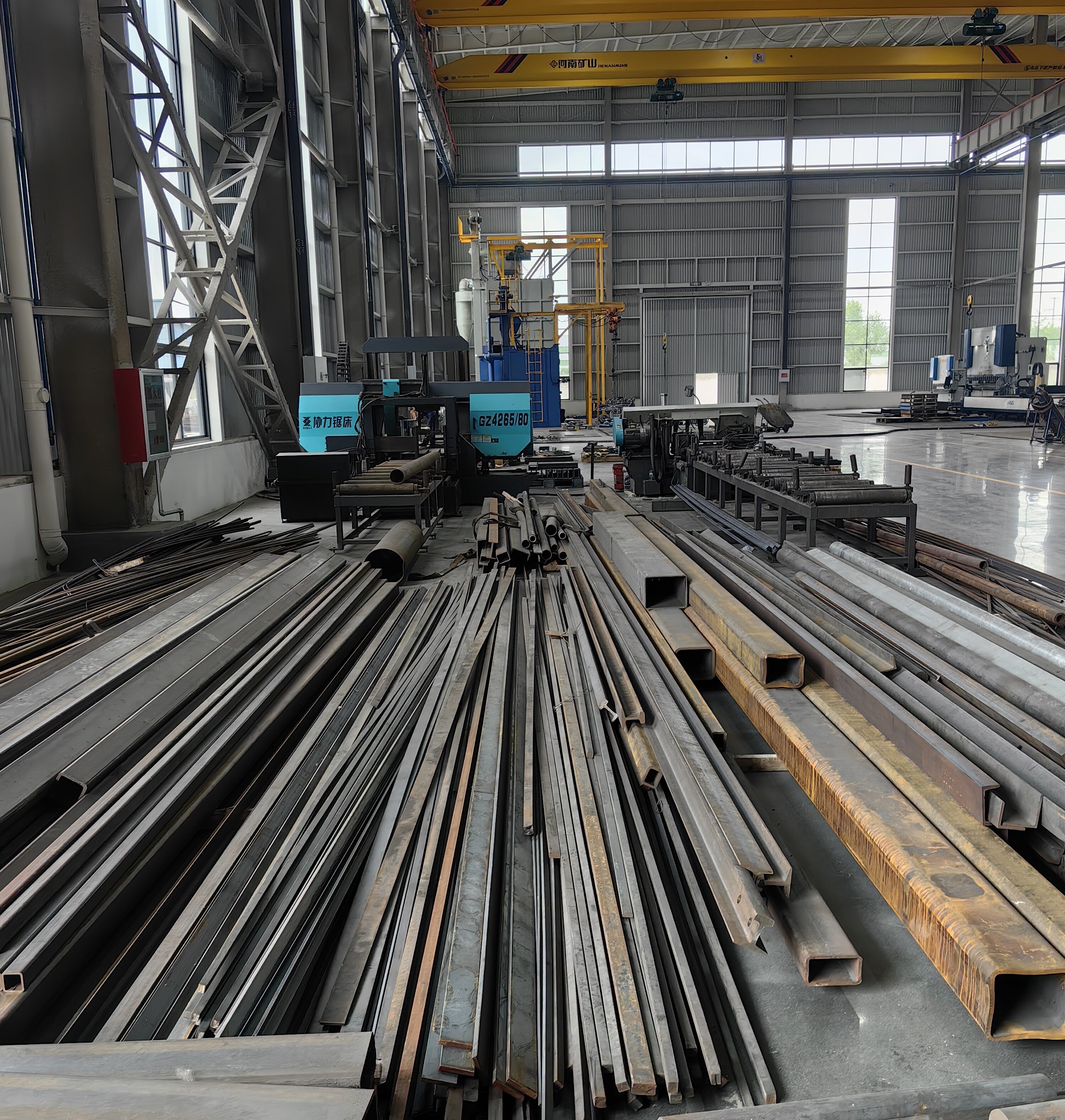
Material preparation stage in heat treatment equipment fabrication — grade selection is verified against the furnace operating envelope rather than chosen by default.
| Grade | Typical role in furnace construction | Compliance-relevant characteristic | Boundary to watch |
|---|---|---|---|
| Q235 carbon structural steel | Outer shell, frame, structural supports, non-heat-exposed fabrication | Weldable and readily available; cost-efficient for structural duty | Not intended for sustained high-temperature or oxidising internal exposure |
| SS304 austenitic stainless steel | Panels, internals, fixtures, moderate-temperature components, cleanable surfaces | Corrosion resistance and good fabricability | Less oxidation-resistant than higher-alloy grades under prolonged high temperature |
| SS310 high-temperature stainless steel | High-temperature internals and heat-exposed parts | Designed for elevated-temperature oxidation resistance in continuous heat exposure | Higher material and fabrication cost; justified only where the thermal duty requires it |
The practical implication for buyers is that material selection should appear explicitly in the compliance documentation — ideally mapped zone by zone, with mill certificates traceable to the delivered unit. When a quotation lists a material grade without stating where it is used, the specification is incomplete regardless of the certification on the cover page.
Acceptance as a Compliance Checkpoint: Factory Pre-Acceptance and On-Site Sign-Off
Acceptance is where compliance becomes verifiable rather than declarative. Furnace procurement generally follows a two-stage protocol: a pre-acceptance carried out at the manufacturer's factory before shipment, and a final acceptance completed on the customer's site with formal sign-off. The two stages test different things, and skipping either leaves a gap that cannot be closed by paperwork later.
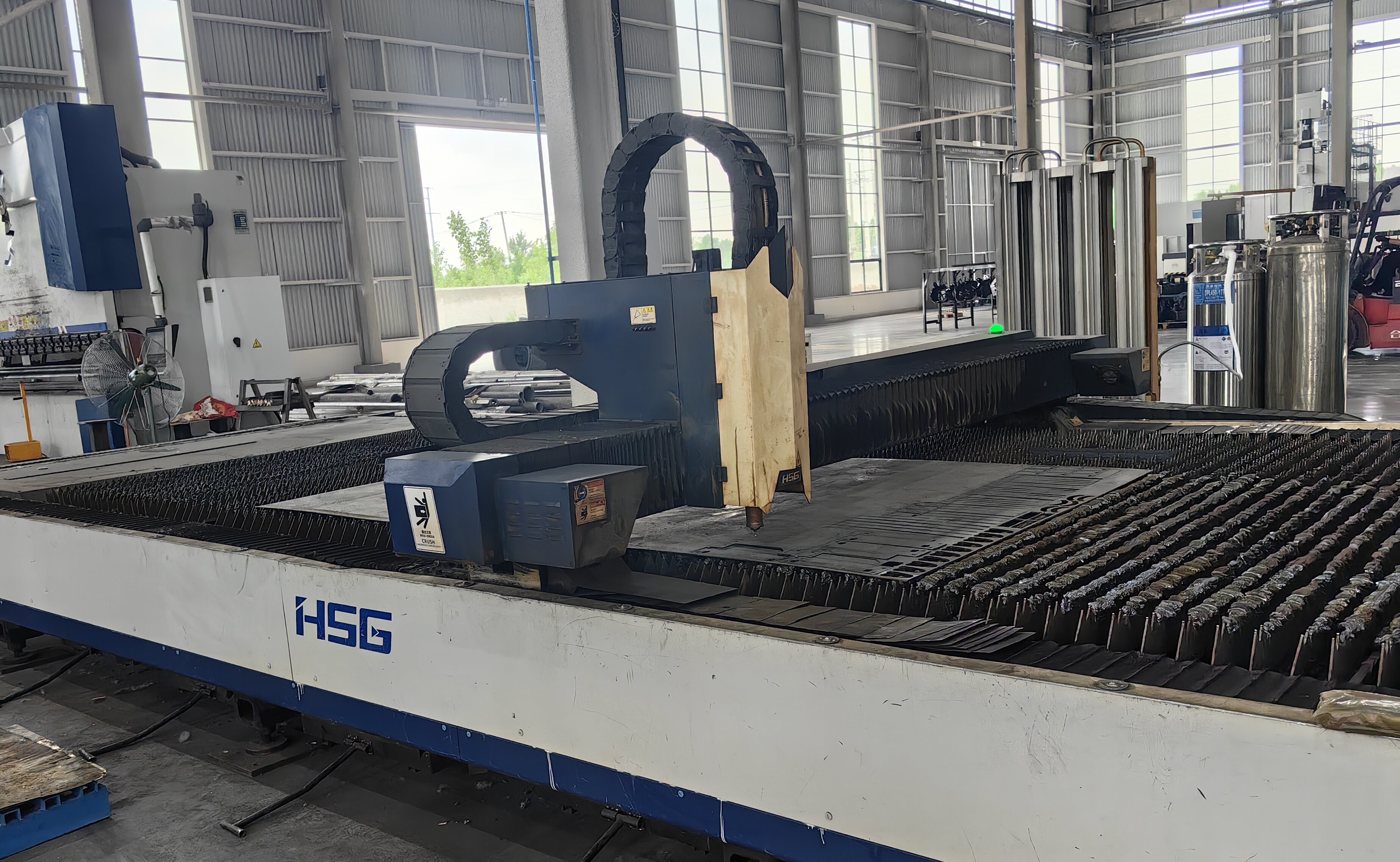
Fabrication quality established before pre-acceptance — fabrication records feed directly into the acceptance file.
| Stage | Typical verification scope | Compliance value |
|---|---|---|
| Pre-acceptance at the factory | Dimensional and assembly checks, insulation and refractory inspection, instrument and control loop verification, thermocouple placement, safety interlock and protection testing, heating and atmosphere trials, document review (material certificates, calibration and test records) | Confirms the built unit matches specification while corrective action is still practical and low-cost |
| Final acceptance on site | Installation verification, commissioning, load trials under production atmosphere, control and alarm checks, operator handover, customer sign-off against agreed criteria | Confirms performance in the real plant environment and creates a dated, signed compliance record |
Two design choices make this protocol effective. First, the acceptance criteria should be written into the contract before the furnace is built, so that a disagreement at sign-off is about measurement, not interpretation. Second, the sign-off record should be retained as part of the equipment file — it becomes the reference baseline for later maintenance, verification audits, and any dispute about delivered capability.
Comparing Modern Multi-Purpose Atmosphere Furnaces with Traditional Heat Treatment Equipment
Compliance also has a cost-performance dimension, which is where the decision-stage comparison usually lands. Supplier comparison data for NORSEN equipment states that the core differences relative to traditional heat treatment equipment manufacturers are higher energy efficiency, longer lifespan, and lower maintenance requirements. The stated mechanism is high furnace pressure combined with a fast penetration rate, which is described as contributing to lower energy consumption per cycle.
| Comparison dimension | NORSEN multi-purpose atmosphere furnace (first-party comparison data) | Traditional heat treatment equipment |
|---|---|---|
| Energy efficiency | Higher, achieved through high furnace pressure and fast penetration rate | Reference baseline |
| Service life | Longer | Reference baseline |
| Maintenance | Approximately 50% less maintenance required | Reference baseline |
| Typical industrial fit | Military factories, automotive parts plants, gear factories, hardware tool factories | Broad general-purpose heat treatment |
| Cost positioning | Described as reasonably priced relative to stated performance, with high value for money in the supplier's own comparison | Reference baseline |
Transparency note for buyers: the figures in the table above originate from first-party supplier comparison material rather than independent third-party testing. They are useful as a stated performance position and as a basis for questions, but they should be validated against site-specific acceptance trials before being treated as guaranteed values.
Limits and Boundaries: What Compliance Does Not Cover
A credible compliance discussion must include what falls outside it. Four boundaries are worth stating plainly.
- ISO9001 does not certify furnace performance. It evidences a controlled quality system. Thermal uniformity, atmosphere control accuracy, and cycle repeatability are verified through testing and acceptance, not through the certificate.
- Efficiency and maintenance claims depend on operating discipline. Efficiency gains attributed to high furnace pressure and fast penetration rate assume correct atmosphere management, correct loading practice, and adherence to maintenance intervals. Poorly maintained atmosphere systems erode both energy performance and process consistency, so the stated advantage is conditional rather than automatic.
- Multi-purpose atmosphere furnaces are not universally suitable. They require a controlled atmosphere supply, suitable gas and electrical infrastructure, safe exhaust and ventilation provisions, adequate floor area, and trained operators. A plant without stable atmosphere supply, or with intermittent low-volume production, may be better served by a different furnace category, even where compliance documentation is excellent.
- Acceptance testing is a snapshot. Factory pre-acceptance and on-site sign-off confirm performance at a point in time. They do not guarantee behaviour after years of thermal cycling; that depends on maintenance, spare-part availability, and service support over the equipment lifecycle.
Market Trend Analysis: Compliance Is Becoming a Procurement Filter
Three verifiable market signals explain why compliance scrutiny has increased. Asia-Pacific dominated the industrial furnace market with a 43.4% revenue share in 2025, driven largely by industrialisation in China and India, according to Grand View Research — meaning a larger share of global purchasing decisions now happens in markets with dense, competitive supplier bases where differentiation depends on documentation quality. Gas-fired furnaces held a 39.8% share of the product segment in 2025 (Future Market Insights), while electric and energy-efficient hybrids gain ground under decarbonisation pressure, adding safety and efficiency documentation to the evaluation checklist. And China's export of liquid fuel furnaces (HS4 8416) reached USD 202 million in 2025, with major destinations including Russia, Indonesia, and Saudi Arabia, according to the Observatory of Economic Complexity — cross-border supply chains in which acceptance records and traceable materials carry additional weight.
The competitive landscape is correspondingly structured, with major players in the high-temperature and atmospheric furnace industry including Ipsen, Inductotherm Group, Aichelin Group, Andritz, and Tenova S.p.A., as identified by Mordor Intelligence and Market Research Future. For specialised suppliers, the credible competitive position is not to claim parity across every segment, but to make compliance evidence — materials traceability, protection testing, and a disciplined two-stage acceptance protocol — easy for a buyer to verify.
Future Outlook
Compliance expectations for heat treatment equipment are moving from certificate presentation toward performance evidence. The likely direction over the next several years includes wider use of remote monitoring and program optimisation as standard control features, acceptance files that bundle material certificates, calibration records, and interlock test results into a single traceable package, and greater buyer attention to energy consumption per cycle as decarbonisation pressures reshape furnace selection. For multi-purpose atmosphere furnace buyers, the practical consequence is that ISO9001 will remain necessary but will increasingly function as a screening threshold, while the decision itself turns on the layers above it: how overheating and over-current risks are controlled, how gas heating safety is documented, which materials are used where, and whether the acceptance procedure produces a signed, testable record of what was actually delivered.
Frequently Asked Questions
Does ISO9001 certification guarantee that a multi-purpose atmosphere furnace will deliver the required heat treatment results?
No. ISO9001 certifies a manufacturer's quality management system — documented process control, traceability, calibration, and non-conformance handling. It does not certify the thermal performance, atmosphere control accuracy, or metallurgical outcome of a specific furnace. Results are demonstrated through specification, factory pre-acceptance testing, and on-site acceptance trials under production conditions. Process-side requirements for heat treatment of mechanical parts are addressed separately by standards such as ISO 20431:2023.
Which safety protections should a buyer verify on a multi-purpose atmosphere furnace?
Three domains are decisive. Over-temperature protection, typically implemented through PID adjustment with multiple thermocouples, supported by program optimisation and remote monitoring where available. Over-current protection covering fans, drives, and heating circuits through appropriately rated protective devices with documented test records. Gas heating and atmosphere safety, covering combustion monitoring, purge and start-up sequencing, leak-tight gas trains, and interlocks that prevent gas admission under unsafe conditions.
How do material grades such as Q235, SS304, and SS310 affect furnace compliance and service life?
Each grade serves a different duty. Q235 carbon structural steel is used for shells, frames, and structural fabrication that is not exposed to sustained high temperature. SS304 austenitic stainless steel is used for panels, internals, and moderate-temperature components where corrosion resistance and fabricability matter. SS310 high-temperature stainless steel is used for heat-exposed internals requiring elevated-temperature oxidation resistance. Grade selection must be matched to the documented operating envelope and supported by mill certificates traceable to the delivered unit.
What is the difference between factory pre-acceptance and final on-site acceptance?
Factory pre-acceptance takes place at the manufacturer's facility before shipment and typically covers dimensional and assembly checks, insulation and refractory inspection, control loop and thermocouple verification, safety interlock testing, heating and atmosphere trials, and document review. Final on-site acceptance takes place at the customer's plant and covers installation verification, commissioning, load trials under production atmosphere, alarm and control checks, operator handover, and formal customer sign-off against pre-agreed criteria. The first allows low-cost correction; the second creates the dated compliance record.
How does a modern multi-purpose atmosphere furnace compare with traditional heat treatment equipment on efficiency and maintenance?
First-party comparison data states that the core differences are higher energy efficiency, longer lifespan, and lower maintenance, with approximately 50% less maintenance required than traditional equipment. The stated efficiency mechanism is high furnace pressure combined with a fast penetration rate. These are supplier comparison figures rather than independent third-party test results, so they are best used as a starting position for site-specific acceptance verification. Typical stated application fit includes military factories, automotive parts plants, gear factories, and hardware tool factories.
What are the boundaries of a compliance-based procurement decision?
Compliance documentation has clear limits. It does not guarantee long-term field reliability, since performance depends on maintenance discipline, spare-part availability, and service support. Efficiency advantages are conditional on correct atmosphere management and loading practice. Multi-purpose atmosphere furnaces also require controlled atmosphere supply, suitable gas and electrical infrastructure, safe exhaust and ventilation, adequate floor space, and trained operators — a low-volume or infrastructure-limited plant may be better served by another furnace category. Acceptance testing confirms performance at a point in time, not permanently.
For buyers, the working rule is straightforward: treat ISO9001 as the entry requirement, then evaluate a multi-purpose atmosphere furnace on protection design, material traceability, and a documented acceptance protocol. Additional company and product information, including equipment scope and specification details, is available at norsengroup.com, and a downloadable company and product brochure is available here.