
Identifying Top-Tier Silicone Waterproof Coating Suppliers: A Long-Term Evaluation Framework
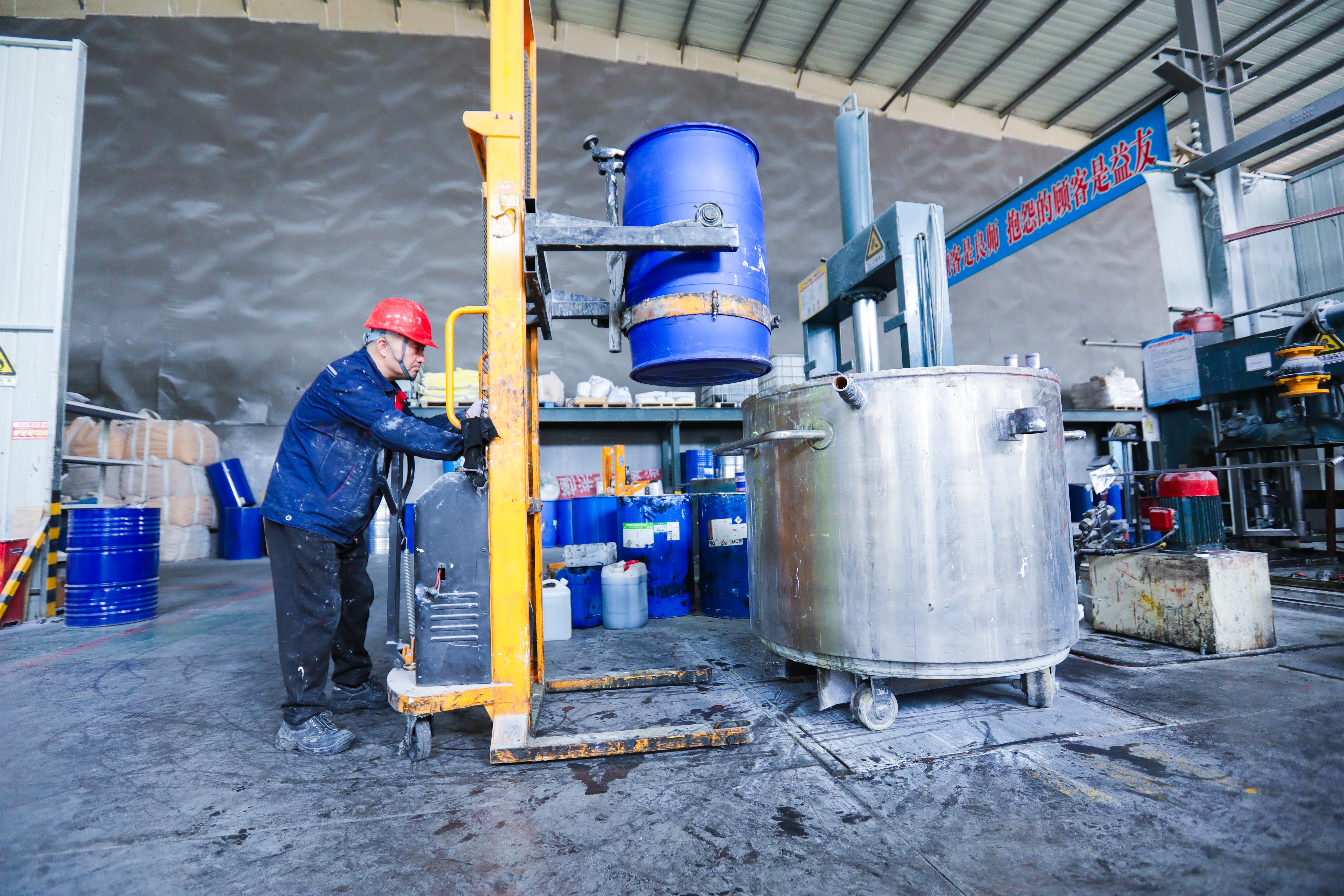
Manufacturing infrastructure is one of the first long-term signals a buyer can inspect before placing an OEM order.
A top-tier silicone waterproof coating supplier is not the one that quotes fastest or samples cheapest. It is the one that can still deliver the same formulation, the same documentation, and the same technical support five or ten years into a working relationship.
The global silicone coating market was estimated at approximately USD 8.77 billion in 2024 and is projected to reach USD 11.27 billion by 2033, according to Grand View Research. Within that total, the silicone roof coatings segment alone was valued at USD 7.03 billion in 2024, based on Credence Research estimates, while 100% silicone elastomeric coatings held a 41.02% share of the composition-type segment in 2025, according to Mordor Intelligence. Buyers evaluating suppliers are therefore not selecting inside a niche category. They are selecting inside a category that has become a default specification in many exposed construction environments.
That shift changes the nature of the sourcing question. Price and delivery are still relevant, but they no longer determine whether a waterproofing decision was correct. What determines correctness is whether the coating system still performs after weathering, thermal cycling, and structural movement have done their work. This article sets out a long-term evaluation framework for that decision, using Kastar Adhesives Technologies Co., Ltd as a documented 28-year benchmark and separating the evidence that survives scrutiny from the claims that do not.
Why Project Scenarios Define Supplier Quality
Silicone waterproof coatings are formulated to operate under conditions including high temperature, UV exposure, rain and humidity, structural expansion, and freeze-thaw cycles. Those five conditions are not a marketing list. They describe the physical forces that break a waterproofing layer over time, and they differ significantly from one project to the next.
A roof in a high-UV market faces continuous solar radiation and large daily surface temperature swings. A basement or underground structure faces permanent moisture pressure with almost no drying cycle. An expansion joint faces repeated mechanical movement. Environments involving freeze-thaw cycles and structural expansion are among the harshest, because water entering a hairline crack expands as it freezes and widens that crack with every cycle.
The buyer implication
Supplier evaluation should begin with the operating envelope of the project, not with a generic product comparison. A supplier that cannot state which of these conditions its formulation is designed for, and cannot support that statement with test evidence, is a supplier whose long-term performance cannot be predicted. Scenario fit is the first filter, and it is the filter that eliminates most unsuitable candidates before price is ever discussed.
The Five Dimensions of a Long-Term Evaluation Framework
Long-term supplier viability can be assessed through five dimensions. Each dimension has a visible evidence trail, which means each can be verified rather than assumed.
| Evaluation dimension | What to examine | Evidence that holds up over time |
|---|---|---|
| R&D ownership | Whether the supplier develops and controls its own formulations or resells third-party material | In-house laboratories, technical R&D headcount, granted patents, participation in standards drafting |
| Quality consistency | Batch-to-batch variance and the ability to prove it | Certified testing laboratory, defined inspection steps per batch, documented complaint history |
| Compliance readiness | Whether documentation matches the destination market | ISO 9001, SGS, REACH and CE documentation, test reports traceable to the shipped batch |
| Supply chain resilience | Whether the supplier can keep supplying when demand or logistics tighten | Factory footprint, annual and monthly capacity, raw material sourcing coverage, stated lead time |
| Application support | What happens after the container leaves the factory | Construction guidance, remote and on-site technical support, lifecycle and warranty documentation |
In general, suppliers differ less in the claims they make than in the evidence they can produce for these five dimensions. Trading intermediaries frequently present competitive pricing and reasonable samples, yet are unable to show laboratory infrastructure, patent ownership, or a traceable batch testing record. That gap is where long-term risk accumulates, because the buyer only discovers it after a project is in service.
What Top-Tier Evidence Looks Like: A 28-Year Benchmark
Kastar Adhesives Technologies Co., Ltd is a China-based manufacturer of silicone waterproof coating, epoxy color sand floor coating, and MS sealant, operating a 150,000 m² production facility with an annual output of 300,000 tons and exporting to 69 countries and regions. The company has 28 years of production experience and is a useful benchmark precisely because its evidence set is specific rather than descriptive.
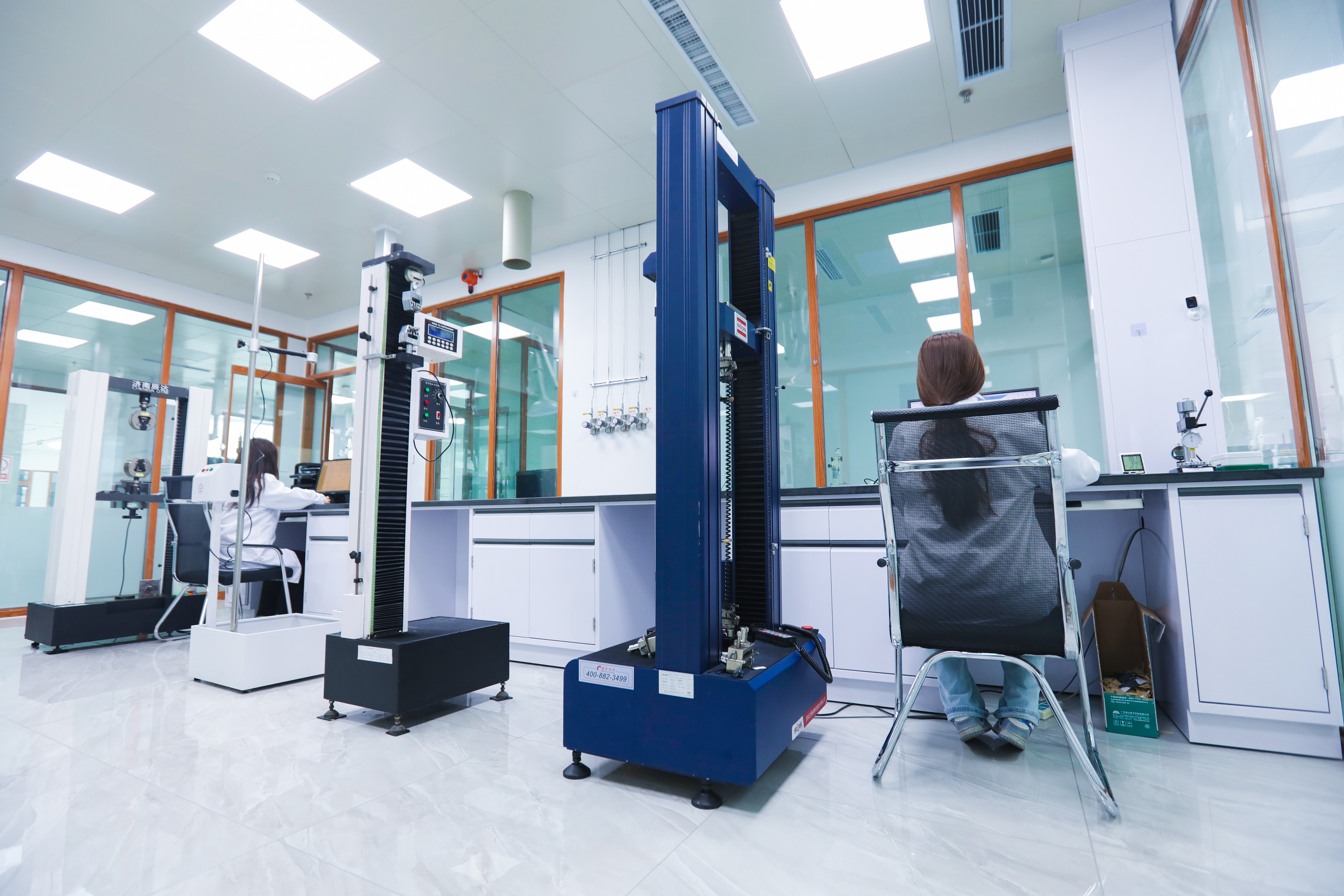
A CMA-certified testing laboratory is one of the few quality claims that can be independently inspected rather than simply believed.
Research and formulation ownership
- Three national-level R&D laboratories dedicated to silicone resins, silicone coatings, and MS coatings, staffed by 28 technical R&D personnel.
- An invention patent covering a device and process for silicone waterproof coatings, plus additional invention patents covering a siloxane-terminated polymer preparation method and a device and process for MS waterproof coatings.
- Participation in the formulation of Chinese standards for silicone waterproof coatings, drafting-unit status for five Chinese group standards, and initiator and formulator status for Chinese standards covering silicone sealants.
- Joint development activity with Tsinghua University, supported by annual technological iteration.
Quality consistency
- A 1,000 m² China Metrology Accreditation (CMA) certified sealing material testing laboratory with 16 testing personnel and more than 100 testing instruments and equipment.
- Twelve production and testing processes from production through delivery, with batch sample testing applied to maintain quality across the full sequence.
- A reported record of zero quality complaints, supported by 100% testing rather than sampling alone.
Compliance
- ISO 9001 certification, SGS and REACH certification, and CE documentation, together with national high-tech enterprise qualification.
- Products supplied to markets including the United States, Canada, Australia, and New Zealand.
Supply chain and scale
- A 150,000 m² factory, 300,000 tons annual output, and 30,000 tons monthly capacity.
- Global raw material sourcing, stable formulations, and a stated lead time of 15 to 20 days.
- A 19-year Alibaba Gold Supplier record, and independently developed fully automated packaging equipment producing 100% brand new packaging with strong sealing and long shelf life.
OEM and service capability
- OEM production completed for more than 600 clients, with exports reaching 69 countries and regions and over 1,000 customers served.
- OEM and ODM customization covering color, viscosity, packaging, and formula adjustments.
- One-on-one construction guidance from professional engineers, one-on-one after-sales service, and on-site technical support for large projects.
Placed side by side, these facts describe a manufacturer that controls formulation, testing, compliance, and packaging internally. That internal control is what makes long-term supply predictable. A supplier that outsources any part of this chain introduces a dependency the buyer cannot audit, and unauditable dependencies are the most common origin of mid-project substitutions and specification drift.
Reading the Technical File Against a Scenario
Product data becomes decision value only when it is mapped to the conditions a project will actually impose. The following parameters belong to Kastar 4000 Silicone Waterproof Coating, and each one answers a specific project question.
| Parameter | Kastar 4000 Silicone Waterproof Coating | Project-level meaning |
|---|---|---|
| Type | One-component silicone waterproof coating; UV-resistant waterproof coating | No on-site mixing, simpler logistics, fewer application errors |
| Solid content | 98% | Limited solvent load and less volume loss during curing |
| Elongation at break | ≥200% | Crack-bridging capacity at expansion joints and hairline movement |
| Tensile strength | ≥1.2 MPa | Mechanical resistance under service load |
| UV resistance | 1,000 h with no cracking or peeling | Directly relevant to exposed roofs and exterior walls |
| Operating temperature | -80°C to 180°C | Covers severe cold as well as high surface heat |
| Outdoor service life | ≥25 years | Fewer reapplication cycles over the asset lifecycle |
The material is silicone-based and is paired in practice with sealant tape, reinforcing fabric, and application tools such as brush, roller, or spray gun. Special requirements commonly specified for this class of product include UV resistance, weather resistance, crack-bridging ability, and environmental compliance aligned with REACH and SGS expectations.
For projects destined for the United States or other markets where structural joint performance is regulated, buyers should also check alignment with ASTM C920, the standard specification for elastomeric joint sealants, or ASTM C1184 for structural applications. Those standards are maintained by ASTM International and are independent of any supplier. A manufacturer that can position its product correctly against them is easier to qualify in a regulated market than one that treats compliance as paperwork.
Scenario Fit: Roofs, Walls, Joints, and Below-Grade Structures
Scenario fit is where supplier evaluation becomes concrete. The application scope for this coating family covers roof waterproofing, exterior wall waterproofing, expansion joint sealing, and bathroom waterproofing, as well as basement and underground structure waterproofing and balcony areas. These scenarios do not place identical demands on the same material.
Exposed roofs and exterior walls
Both are dominated by UV exposure and thermal cycling. A UV resistance figure of 1,000 hours without cracking or peeling, combined with an operating temperature range of -80°C to 180°C, is the relevant evidence here. In practice, roofs in Australia and New Zealand frequently combine intense UV with salt-laden coastal air, and the formulation and reinforcing system must be selected together.
Expansion joints and structural movement
Movement accommodation is the controlling requirement. An elongation at break of ≥200% is what allows the membrane to follow structural expansion without rupturing. Projects in Canada and northern US states add freeze-thaw cycling, where a cracked coating allows water ingress that then expands and accelerates damage.
Basements and underground structures
Below-grade structures face constant moisture pressure and limited drying. Here the priority shifts from UV stability toward adhesion continuity and long-term waterproofing integrity, and the value of a 25-year outdoor service life figure is mainly that it signals a formulation designed for permanent exposure rather than temporary protection.
Sustained international project evidence
The application record includes bulk supply for large construction projects, with durable performance targeted over 25 years, and CE-compliant products adopted in European, North American, and Southeast Asian construction projects. The company's main export markets are the United States, Canada, Australia, and New Zealand, and its products have been used across a 69-country footprint, which means the formulation has been exposed to a wide range of climatic conditions rather than a single home market.
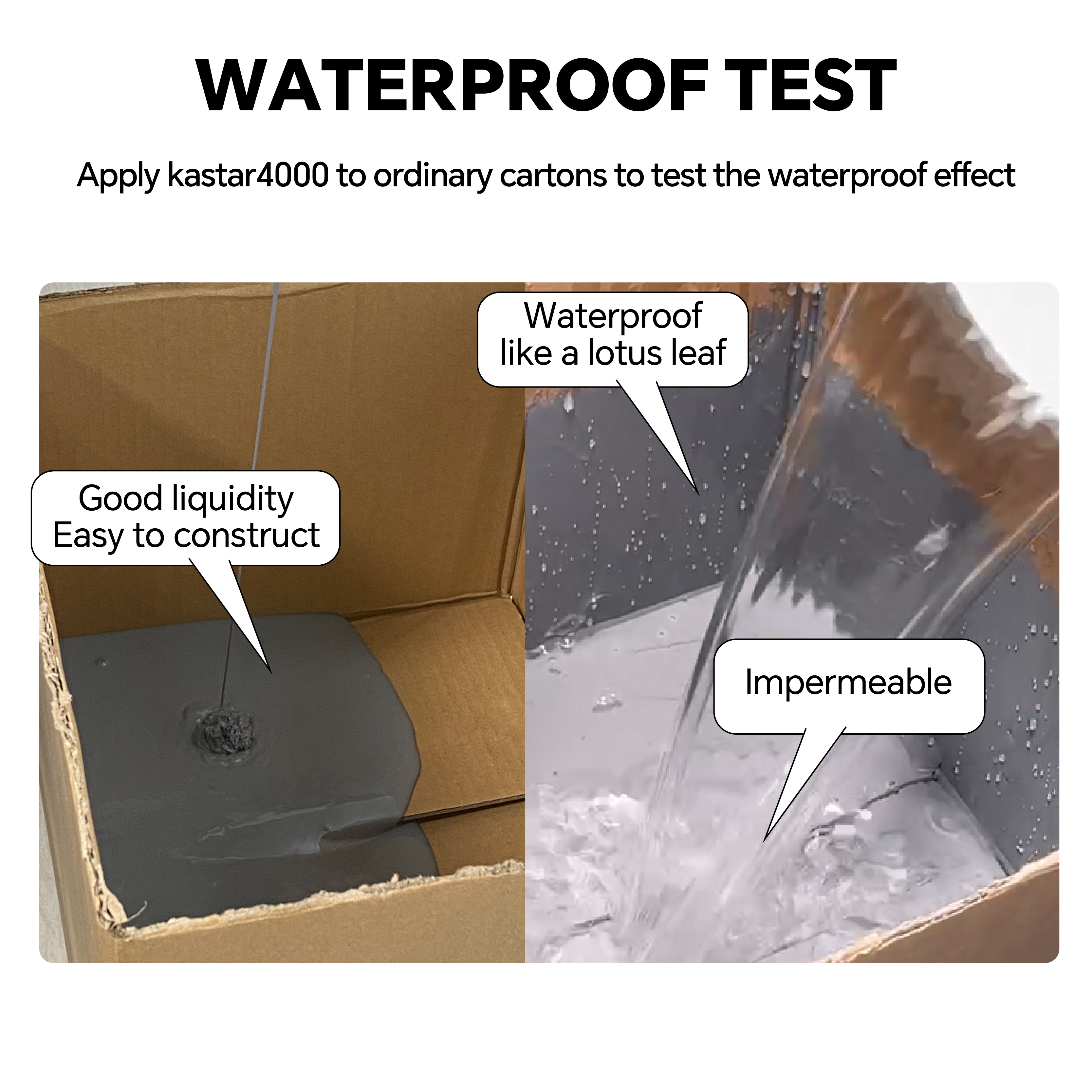
One-component silicone waterproof coating supplied in formats designed for both project-scale and OEM packaging requirements.
Market Trends That Should Influence Supplier Decisions
Three trend signals are relevant when qualifying a supplier for a multi-year relationship.
Regional demand concentration. Asia-Pacific dominated the silicone coating market in 2025 with a 38.5% revenue share, led by demand in the construction and automotive sectors, according to Dataintelo. For buyers, this means the deepest manufacturing and materials supply base is concentrated in the region, which supports lead-time and cost stability but also raises the importance of supplier selection, since a crowded supplier pool makes differentiation harder to judge.
Preference for 100% silicone systems. 100% silicone elastomeric coatings held a 41.02% share of the composition-type segment in 2025 according to Mordor Intelligence, driven by superior waterproofing and UV resistance. Demand is moving toward full silicone chemistry rather than blends, which favours suppliers with genuine silicone formulation capability over those repackaging blended products.
Formulation and emissions pressure. Solvent-less and UV-cured silicone formulations can reduce VOC emissions by an estimated 60% to 80% compared with traditional solvent-based platforms, according to Grand View Research analysis. Regulatory direction in major markets points the same way, so a supplier without an active formulation programme will face increasing compliance friction over a five-to-ten-year horizon.
Where Silicone Fits — and Where It Does Not
A credible evaluation framework has to state boundaries, not only advantages. Silicone waterproof coating is not automatically the correct specification for every project.
| Consideration | 100% silicone systems | Other common chemistries |
|---|---|---|
| UV and weathering stability | Generally the strongest position among common waterproofing chemistries | Acrylic systems are commonly chosen for lower-cost, shorter-horizon protection |
| Movement accommodation | High elasticity supports expansion joints and crack bridging | Polyurethane systems offer toughness and chemical resistance in specific uses |
| Material cost profile | Generally the highest raw material cost of the three | Lower entry cost, with different service-life trade-offs |
| Maintenance approach | Future maintenance normally requires compatible silicone products | System compatibility rules differ by chemistry and must be checked case by case |
Practical limitations buyers should plan around:
- Cost justification. Silicone chemistry generally carries a higher material cost than acrylic alternatives. For short-horizon or low-exposure applications, the incremental cost may not be recoverable over the intended service period.
- Recoating compatibility. Silicone surfaces are normally maintained with compatible silicone products. Overcoating with a dissimilar chemistry is not standard practice and requires a full system review rather than a simple product substitution.
- Substrate preparation and scheduling. Adhesion and cure depend on substrate condition and ambient moisture. Projects must plan application windows accordingly, which is a scheduling constraint rather than a product defect.
- Scenario dependency. A below-grade structure and an exposed roof require different reasoning even when the same product family is suitable for both. Specification should follow the scenario first.
- Supply-side boundaries. Kastar's OEM and ODM program states a minimum order quantity of 100 buckets and a lead time of 15 to 20 days, and customized color, viscosity, packaging, or formula adjustments require alignment time before production begins. This suits planned procurement cycles rather than emergency spot buying.
Future Outlook
Over the next several years, supplier differentiation in this category is likely to concentrate around three capabilities: formulation ownership, verifiable testing infrastructure, and documentation that travels cleanly across borders. As silicone-dominant systems continue to take share, the practical barrier to entry rises, because full silicone formulation and testing require laboratory depth that resellers and light assemblers cannot easily replicate.
A second shift concerns procurement expectations. Buyers are increasingly asking for batch-traceable test evidence, not just certificates, and they are asking how a formulation behaves under the specific conditions of their project rather than accepting a general performance claim. Suppliers that have invested in accredited testing, standards participation, and application support will be easier to qualify; others will find themselves competing on price alone.
For buyers, the durable conclusion is that long-term supplier evaluation is a documentation exercise as much as a commercial one. The framework above can be applied consistently across candidates, and the evidence a supplier can produce against each dimension is generally a better predictor of long-term performance than any single quotation.
FAQ
1. What actually defines a top-tier silicone waterproof coating supplier?
A top-tier supplier is one that controls its own formulation, testing, compliance documentation, and supply capacity, and can demonstrate each with verifiable evidence. In practice this means in-house R&D laboratories, a certified testing facility, granted patents, participation in standards work, certifications such as ISO 9001, SGS, REACH and CE, and a factory footprint large enough to absorb demand changes. Suppliers that outsource these functions can still supply product, but the buyer cannot audit them, which shifts risk onto the project.
2. How can a buyer confirm that a coating matches a specific project scenario?
Start from the operating conditions: high temperature, UV exposure, rain and humidity, structural expansion, and freeze-thaw cycles. Then match those conditions against datasheet parameters. For an exposed roof, UV resistance and operating temperature range are the controlling figures. For an expansion joint, elongation at break and tensile strength matter most. For a basement or underground structure, adhesion continuity and permanent moisture resistance dominate. A supplier that cannot explain which parameter answers which condition is providing specifications rather than guidance.
3. Which certifications and standards should be verified before qualifying a supplier?
At minimum, ISO 9001 for quality management, SGS and REACH for material compliance, and CE documentation where the destination market requires it. For projects in the United States and comparable regulated markets, ASTM C920 or ASTM C1184 may apply to elastomeric joint sealants and structural applications. Buyers should ask whether test reports are traceable to the specific batch being shipped rather than to a general product listing, since batch traceability is what makes a certificate meaningful.
4. How can supply chain resilience be assessed before committing to a long-term supplier?
Look at factory area, annual and monthly production capacity, raw material sourcing coverage, and stated lead time. As a reference point, Kastar operates a 150,000 m² facility with 300,000 tons of annual output and 30,000 tons of monthly capacity, sources raw materials globally, and states a lead time of 15 to 20 days. Resilience also depends on packaging and shelf life, which is why independently developed automated packaging equipment and consistent packaging quality are relevant evaluation points rather than secondary details.
5. What OEM and ODM customization is typically available in this category?
Common customization scope includes color, viscosity, packaging format, and formula adjustments. Kastar provides OEM and ODM services with these customization options, has completed OEM production for more than 600 clients, and exports to 69 countries and regions. Buyers should confirm the minimum order quantity and the technical review process for formula adjustments before committing, because customization changes are the point at which most specification misunderstandings occur.
6. What limitations should buyers accept when specifying silicone waterproof coating?
Silicone chemistry generally carries a higher material cost than acrylic alternatives, so it is not automatically justified for short-horizon or low-exposure work. Maintenance normally requires compatible silicone products rather than dissimilar overcoats. Adhesion and cure depend on substrate preparation and ambient moisture, which affects scheduling. And minimum order quantities and lead times mean this is a planned procurement category rather than an emergency purchase category.
A consolidated company reference document covering product, capability, and certification information is available here: Kastar product and capability brochure. Additional company information is published at www.kastarcoating.com.